|
Spring 2024
Milwaukee Sustainability Newsletter
| |
|
Message from the Director
For years, scientists and concerned citizens sounded the alarm about the major threats that global warming and climate change pose to our planet, economy and children’s futures. Extreme temperatures, drought, and famine will push people to migrate to cooler climates in search of a better life. July 2023 was the hottest on record, with the heat index in Rio de Janeiro, Brazil hitting 144 degrees Fahrenheit in March 2024.
The good news is that the City of Milwaukee adopted a Climate and Equity Plan in June 2023 and we are acting on every major strategy in the Plan. In fact, ECO is part of the largest mobilization to address climate change in U.S. history.
Under the Biden Administration, the U.S. government has allocated hundreds of billions of dollars in tax credits, grants, and rebates to accelerate the transition to clean energy, plant trees, make our homes and buildings more energy efficient, and encourage more people to purchase electric vehicles to reduce our dependence on foreign oil for gasoline. These climate investments are being coordinated with other massive investments in traditional infrastructure like streets, bridges, lead-pipe replacements, and more. They also support the rebuilding of America’s manufacturing muscle and good-paying construction jobs. Through Biden’s Justice40 executive order, “40 percent of the overall benefits of certain Federal climate, clean energy, affordable and sustainable housing, and other investments flow to disadvantaged communities that are marginalized by underinvestment and overburdened by pollution” including Milwaukee.
We are at just the start of this major transition. Mayor Johnson has fully mobilized ECO, the Department of Public Works, and other agencies to pursue these federal opportunities to activate the Climate and Equity Plan and to rebuild our neighborhoods in a more equitable way. This involves taking the high-level goals and ideas of the Climate and Equity Plan and turning them into operational plans with community input; applying for federal grants; negotiating plans and metrics with federal agencies; hiring new staff; training workers on the new skills needed; and then hiring contractors to implement the work. We expect that residents will really start to feel the benefits later this year and especially in 2025 and beyond.
Here’s a few examples of the exciting progress:
-
ECO and partners were awarded a $12 million urban forestry grant to support the “Nature in the City” idea in the Climate and Equity Plan
-
Over $90 million in funding for pedestrian and bike-friendly street improvements spearheaded by the Department of Public Works that supports the “People-Centered Transportation” idea, including major renovations on 6th street, Villard Ave, Lisbon, Vliet, Sherman Boulevard, and more.
-
$1.6 million to WRTP-Big Step to train installation workers for EV infrastructure
- $400,000 to develop plans for doing energy efficiency in rental properties and houses of worship.
-
The City has approved over 10 MW of new solar projects that will allow us to achieve our 25% by 2025 renewable energy goal for City operations. That’s enough renewable electricity to fully power over 80 city buildings, including all of our police and fire stations, libraries, port buildings, and more.
-
ECO supported the Southeast Wisconsin Regional Planning Commission in developing a regional Preliminary Climate Action Plan based on Milwaukee’s Climate and Equity Plan and applied for a $10m regional grant that will allow suburban communities to hire shared sustainability staff for the first time.
In short, we are working as quickly and diligently as we can to wisely use these funds to transform our City and country for the better. I hope you are as excited and supportive of this transformation as I am. Please help us spread the word to give hope to our residents and children. Climate action is important and we are acting boldly now. Please continue to stay engaged and help us make Milwaukee a world class eco-city!
With gratitude,
Erick Shambarger
Director of Environmental Sustainability
City of Milwaukee
| |
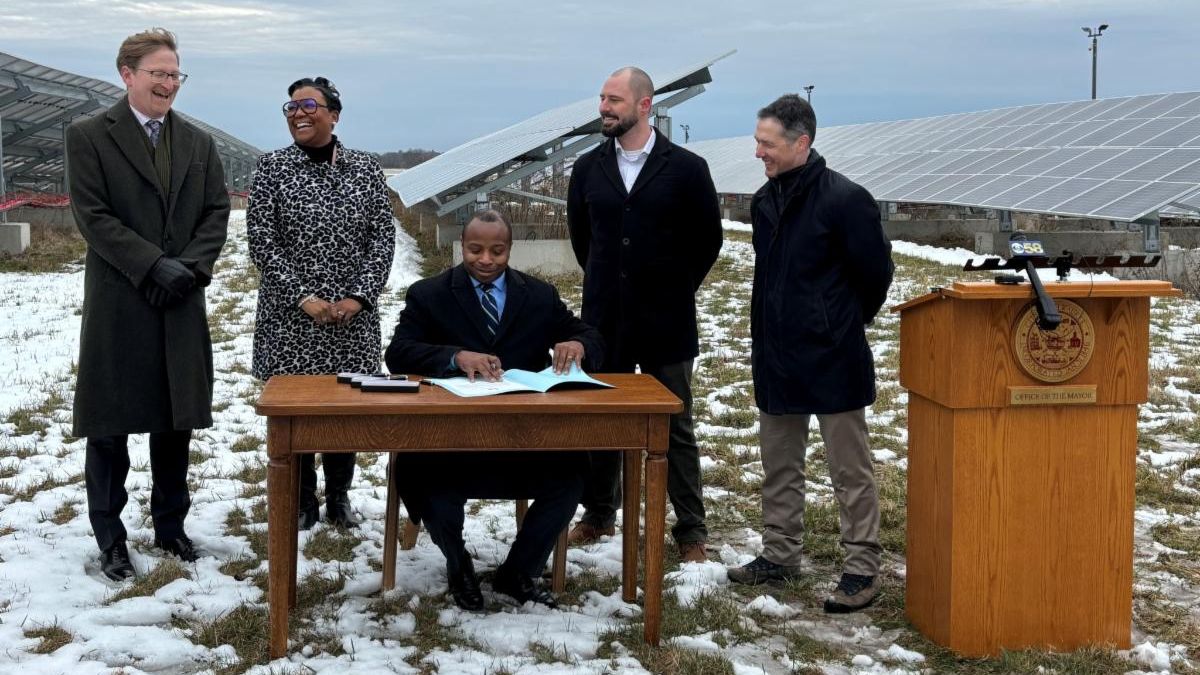
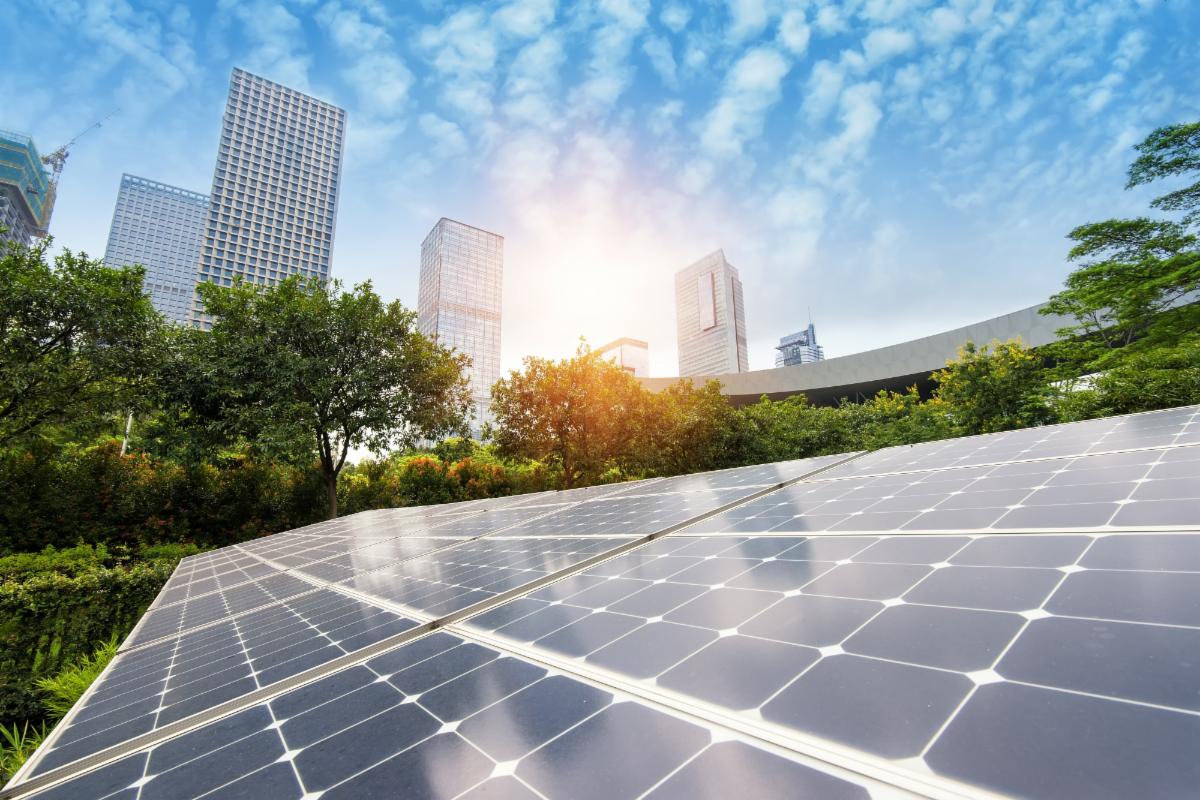
City to Achieve 25% by 2025 Renewable Energy | Major solar projects at the College Avenue Landfill next to General Mitchell Airport and in Caledonia will produce 11 megawatts of renewable energy, enough to power over 84 City-owned buildings, including all libraries, fire stations, and police stations. Approval of these solar projects means the City will achieve it’s long-standing goal to achieve 25% renewable energy by 2025. Plans will be made to reach 100%. | |
U.S. Department of Agriculture Composting and Food Waste Reduction Cooperative Agreement | |
The City of Milwaukee has been selected as one of 38 cooperative agreements by the U.S. Department of Agriculture to receive a total of $11.5 million in funding through the American Rescue Plan Act to support waste management by reducing and diverting food from landfills.
In Wisconsin, over 1 billion pounds of food goes to waste annually while 1 in 7 households experience food insecurity. Organic waste, like food scraps, decompose in landfills to release methane, a highly potent greenhouse gas that is a great contributor to climate change.
This funding will support the implementation of the Milwaukee Climate and Equity Plan through the FEED MKE project, which will advance public education, capacity-building for community-based organizations and community composting sites through mini grants, and private sector food waste reduction.
| |
Provide Feedback on the Milwaukee Efficient Buildings Benchmarking Program | |
ECO has conducted a series of community conversations to inform and solicit feedback from the public about an upcoming program designed to support building energy efficiency, save money, and help meet climate goals. Watch a recording of the presentation here.
The proposed benchmarking policy would ultimately apply to commercial and multifamily buildings over 50,000 square feet and public buildings over 10,000 square feet, totaling about 950 buildings. Each year, building owners will report energy and high-level building characteristic data for the City to publish in an interactive map and annual report. Owners who do not comply annually may face enforcement. Email pritge@milwaukee.gov with questions.
| |
Post-Earth Month Actions You Can Take | |
|
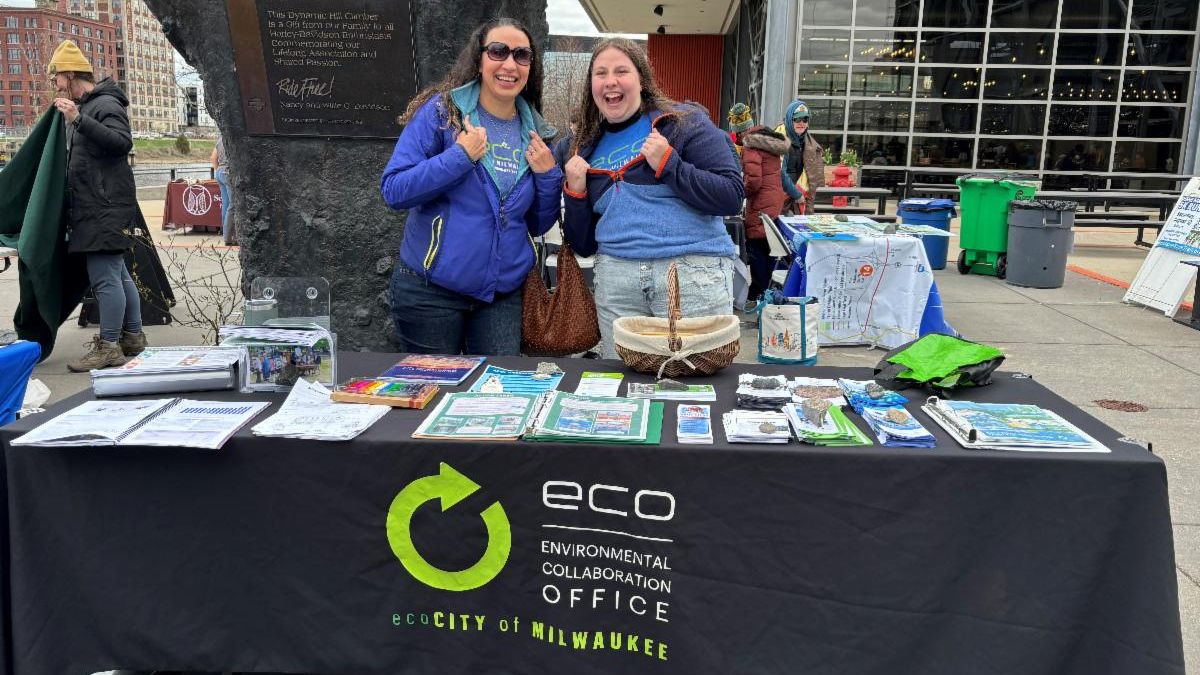
Over 4,000 volunteers from across the city attended the 29th Annual Milwaukee Riverkeeper Spring Cleanup at more than 80 locations across the Milwaukee River Basin. This is the largest single-day clean up event in Southeast Wisconsin.
Unfortunately, each year at cleanup the total number of trash found increases. Annually, 100,000 pounds of trash are removed from the river and surrounding lands. 90% of this trash is plastic, such as takeout containers, food wrappers, cigarette butts, and bottles.
This number is part of the estimated 22 million pounds of plastic pollution that enters the Great Lakes each year, half of which flows into Lake Michigan alone. We see this pollution littering our beaches, our streets, and our waterways every day—especially following snowmelt in the spring. Plastic never really decomposes, but rather breaks down into smaller and smaller pieces called microplastics that eventually end up in our water, our food, and our bodies.
What Can You Do?
-
In addition to the one-day Spring Cleanup, Milwaukee Riverkeeper offers the Adopt-A-River Program. A group of residents commits to cleaning up a section of the river at least twice a year.
-
You may remember the common phrase, “Reduce, Reuse, Recycle.” You can add in two more key words: “Refuse and Repair.” The best way to reduce waste, and plastic waste in particular, is to not produce it in the first place. Refuse items that are quickly thrown away, called “single-use.” As a consumer, prioritize reusable items that won’t fill your garbage cans.
-
If you are recycling, take care to do so correctly. Aluminum, steel, paper, and glass are always recyclable. With plastics, you have to check the number on the container. Only #1, #2, and #5 are recycled in Milwaukee.
| |
Grow Solar Greater MKE Group Buy Program | |
|
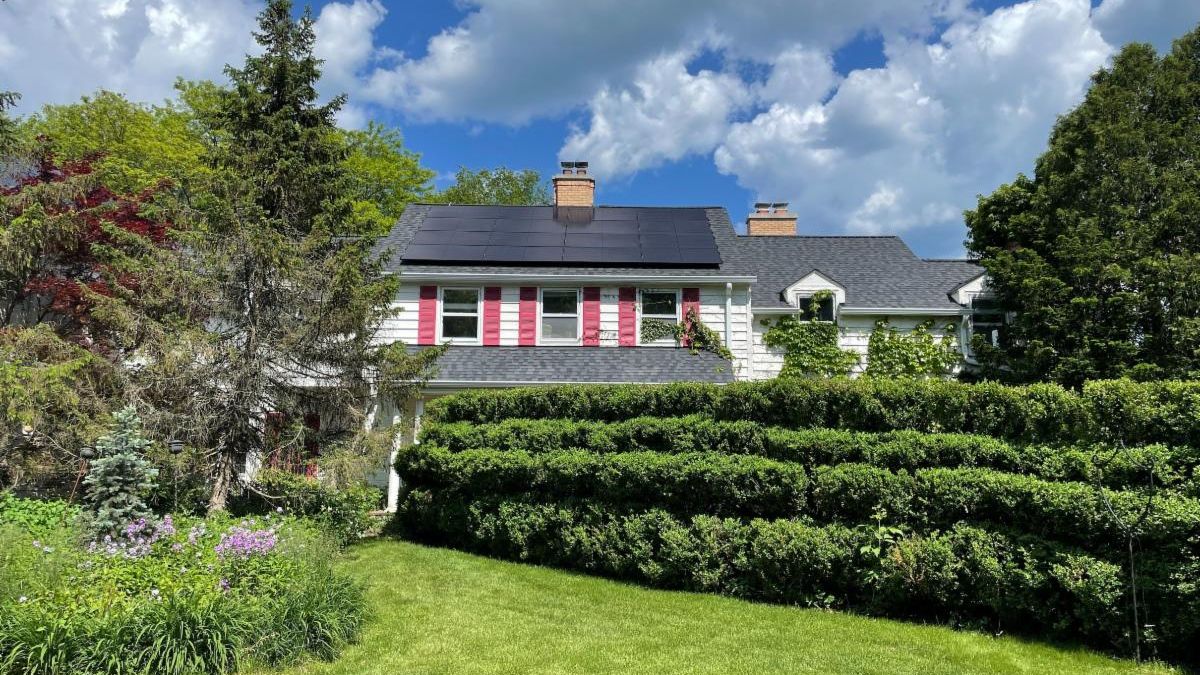
The Midwest Renewable Energy Association (MREA) in partnership with ECO launched its 2024 Grow Solar Greater Milwaukee Group Buy Program designed to bring community members together to learn about residential solar and purchase solar panels in bulk for significant cost savings and incentives not available to individual buyers.
The Grow Solar Program is open to residents and small businesses in Milwaukee County and offers free solar education and financing sessions, solar site assessments, cost estimates for custom-designed solar systems, and below-market-rate costs for a warrantied solar system with a reputable contractor. Solar discounts can be combined with federal incentives to further reduce the cost of solar. The recently enacted Inflation Reduction Act includes a number of measures designed to promote electrification and renewable energy, including expanded tax credits for solar installations. Plus, financing for solar projects is also available through a partnership with Summit Credit Union.
Solar Power Hours will be held this summer virtually and in-person at locations throughout the city. A full list of events is available on the MREA website. Watch a virtual recording to learn the basics of solar and more about program details.
| |
NOW OPEN: City Compost Bin Sale | | |
|
|
The City's 13th Annual Compost Bin Sale features a highly-rated compost bin, The Home Composter for $68. It's easy to assemble, made from 100% recycled materials, and not available in stores. Also available for purchase is a stainless steel Kitchen Katcher for collecting food scraps in your kitchen for $25.
Pre-order by May 19 and pick up the compost bin on June 1 from 9AM-4PM at 4031 S. 6th St. Order online here.
| |
Learn About ECO with Webinar Recordings | | |
|
|
Curious to learn more about ECO's current programs and projects?
This March and April, ECO hosted a series of webinars on topics including sustainable commercial buildings, wind and solar energy, the Milwaukee Climate and Equity Plan, water, and sustainable public events.
Watch the Online Recordings
on our YouTube Page.
| |
Follow us on Social Media | |
ECO posts daily news, resources, and events on on social media. Follow us on the below social media channels using the handle @ecocitymke: | |
|
City of Milwaukee
Environmental Collaboration Office
200 E. Wells St., Room #603
Milwaukee, WI 53202
| |
|
sustainability@milwauke.gov
milwaukee.gov/eco
| | | | |