|
Spring 2025
Milwaukee Sustainability Newsletter
| | |
Message from the Director
Working to protect the environment for over 20 years, I have heard the language go from “conservation” to “green” to “sustainability” to “eco-friendly” to “resilience.” Our vision at the City of Milwaukee’s Environmental Collaboration Office (ECO) has been to make Milwaukee a world class eco-city on America's Fresh Coast. We develop practical solutions that improve people’s lives and the economy while working to protect and restore the natural ecosystems that support our long-term prosperity. But this year, being “resilient” is taking on new meaning. It means moving forward when you face obstacles. It means standing strong for your principles.
Over the next few years, we have a real battle ahead. We are living a climate tragedy. In 2023, the United States of America passed the largest infrastructure, environmental, and clean energy funding in our nation’s history as part of a global effort to reduce the worst effects climate change while rebuilding economy and community. Milwaukee was awarded millions in funding for tree planting, new net-zero energy housing electric vehicle charging, healthy home upgrades, river restorations, protected bike lanes, lead-pipe replacements, and more. It took time to roll out many of those programs, but we were on the cusp of transformative change in our community and nation. Unfortunately, we are seeing a staggering retreat from these opportunities. Yet the planet has not stopped warming. Destructive storms, wildfires, and other challenges are not going away just because they are unsettling to think about.
I can on only hope that with further review, tireless advocacy, and building coalitions, our federal partners will see that many of these projects are ready to go and will create American jobs, support American manufacturing, and contribute to affordable and abundant clean energy for homes and businesses.
In the face of these challenges, I reiterate our values at ECO: Servant Leadership where we put the common good first; Collaboration to solve problems by talking with the people most affected; Understanding of eco-systems and natural resource limitations so that we do not waste our resources, but rather protect them for our long-term economic prosperity, enjoyment, and human health; Professionalism and trained staff to strategically bring technologies to the community that work while saving money. (I was saddened this week at the passing of Pope Francis, whom I greatly admired. He exemplified what it means to be a servant leader by modeling humility, kindness, effective dialogue, moral clarity, mercy, and concern for marginalized in society.)
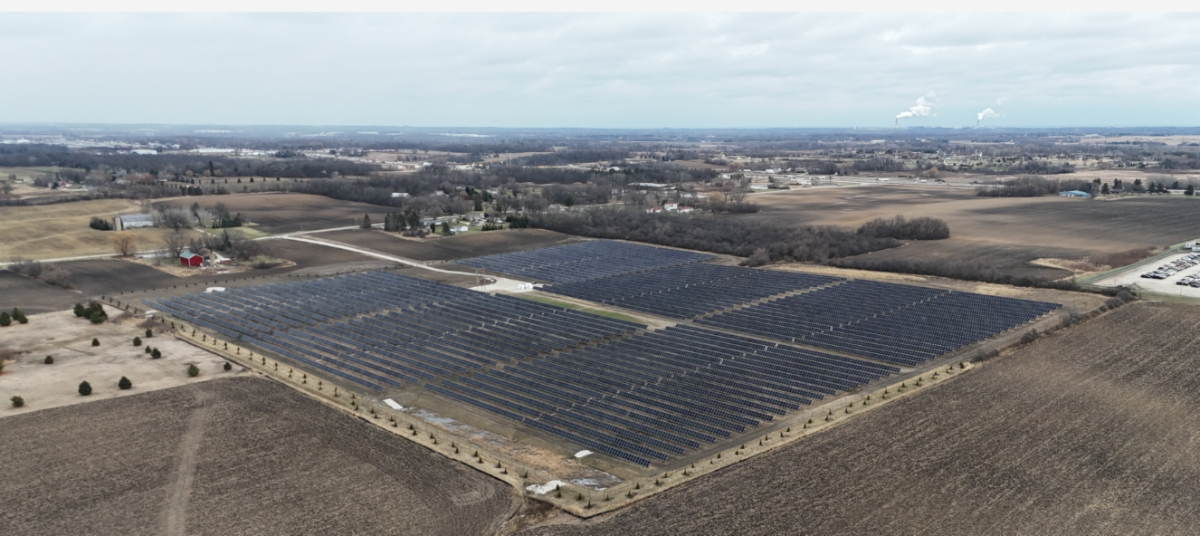
In April, a new 6MW solar field in Caledonia was energized dedicated to providing 100% renewable electricity to 57 City buildings, with plans for 4 more MW planned for construction later this year. Our team has launched a new Food Saver Challenge as part the FEED MKE initiative. We launched a new Green Job Career website to connect people to the training and employers who will help re-build our city. We are also coordinating over $2.6 million in energy efficiency and rooftop solar projects on city buildings, while planning a new public EV charging network.
As always, we stand ready to collaborate with partners that share our values and vision. We want hard-working Americans to build and install clean energy technologies. At ECO, we do this work because we want a strong, healthy, and vibrant Milwaukee and a strong and vibrant United States of America. By staying resilient and true, we can make Milwaukee a world class eco-city.
With resilience,
Erick Shambarger
Director of Environmental Sustainability
City of Milwaukee
| | 60 City Buildings Now Powered by 100% Clean Energy | | |
More renewable energy is now powering southeastern Wisconsin.
The Environmental Collaboration Office, with support of Mayor Johnson and the Milwaukee Common Council, facilitated the Caledonia solar project in collaboration with We Energies through their "Renewable Pathway" program. The clean energy from this 6 MW system is dedicated to powering 57 City of Milwaukee police stations, fire stations, and libraries with 100% renewable electricity. Although these buildings still have gas heating systems, the move to renewable electricity is a massive milestone. We have further agreements in place to build 4MW of additional solar on a city-owned landfill next to General Mitchell Airport. When that project is completed, the City will get 25% of our electricity from renewable energy (excluding the Milwaukee Water Works). These projects are good for the environment and create good paying Wisconsin jobs.
| | |
Green Jobs Guide Now Available
ECO, in collaboration with many partners, is pleased to offer a new website featuring green career pathways in fields with the highest potential for employment and wage growth, including electricians, urban foresters, plumbers, HVAC workers and more. The resource lists various support services for people who may need immediate entry level employment or support while seeking further training.
Visit Milwaukee.gov/GreenJobs
| | | |
EV Charging Plan Drives On
ECO is moving forward with engineering and public engagement for a new electric vehicle charging network totaling approximately 53 locations. We currently have a nearly $15 million federal grant to support this work, with engineering and public engagement scheduled for 2025 and construction of the first 10 sites to start in 2026. The sites that are being considered first include Zablocki Library, Good Hope Library, MLK Library, McKinley Marina parking, the Domes, and Lincoln Park. The first public engagement session is scheduled for the Rotary Club of Milwaukee Community Room at the Central Library on May 20, 2025 from 5:30pm - 6:30pm. More information at Milwaukee.gov/EV
| | |
ECO Neighborhoods Update
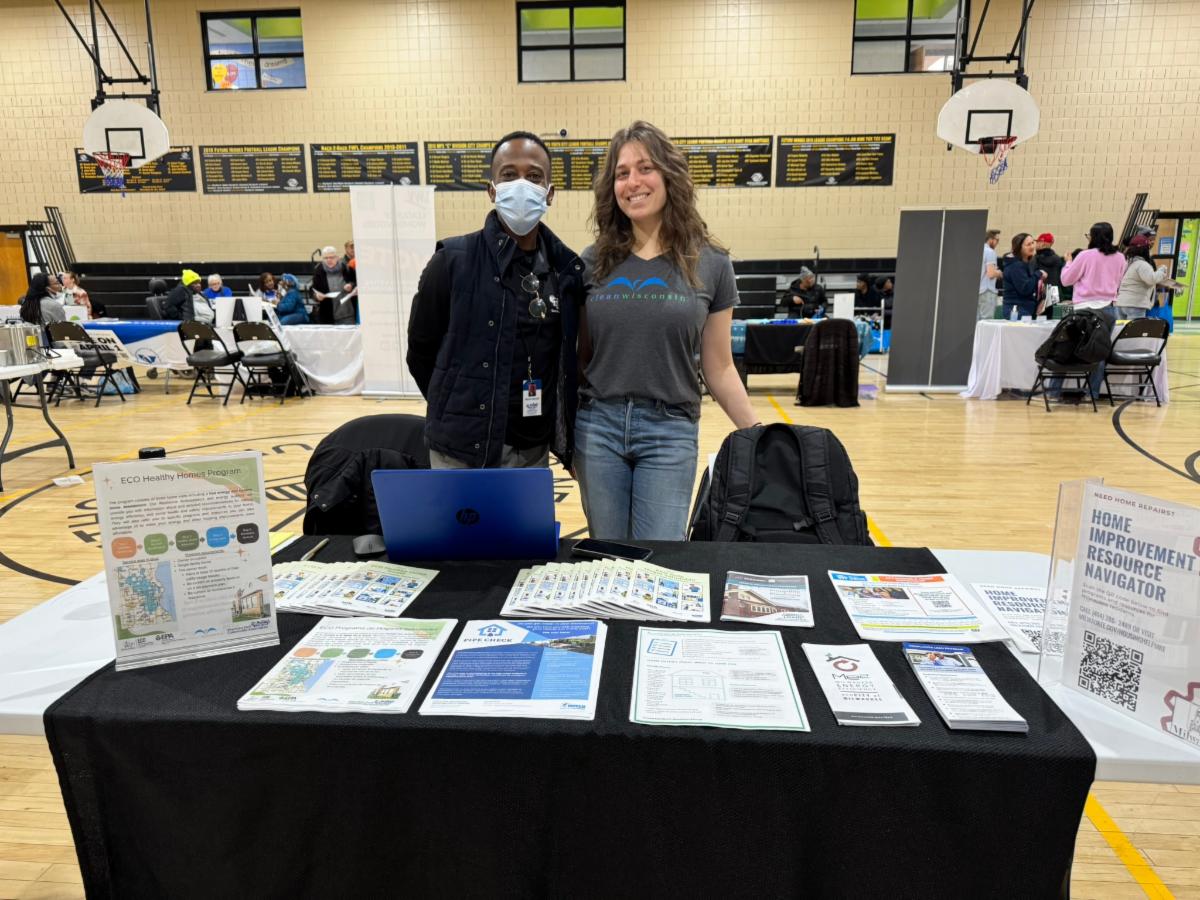
The Environmental Collaboration Office understands that community collaboration is key to achieving Milwaukee's climate action goals. The ECO Neighborhoods Initiative promotes a collaborative, neighborhood-level effort to achieve these goals by providing additional support to the residents and community leaders who are already making an impact in their communities. ECO currently focus on Sherman Park, Lindsay Heights, Century City/Triangle Neighborhood, and Harambee neighborhoods. Earlier this year through an EPA grant, ECO and its partners, Sherman Park Community Association and Clean Wisconsin hired and trained new "Resilience Ambassadors" to provide resident education on energy efficiency and healthy home repair programs. Unfortunately, EPA terminated this and hundreds of community environmental grants across the country. Although ECO has had to pause the "Healthy Homes" portion of our work while we dispute this EPA decision, we plan to continue collaborating with ECO neighborhoods to better educate the public about all of our available programs and upcoming events.
| | |
Commercial Building Benchmarking
One of the “Big Ideas” from the City of Milwaukee’s Climate and Equity Plan is being implemented this spring to fall of 2025. On July 2nd, 2024, the City of Milwaukee Common Council adopted the Milwaukee Efficient Buildings Benchmarking Ordinance, joining more than 50 other cities, counties, and states have adopted benchmarking policies, including 14 in the Midwest (see map). The ordinance requires City of Milwaukee and Milwaukee Public School buildings 10,000 square feet and larger, as well as commercial buildings 50,000 square feet and larger to track and report their energy use to the City of Milwaukee once per year, with an initial compliance deadline of September 30th, 2025.
Simply through benchmarking, buildings generally reduce their energy use 2.4% per year for the first 3 years, while also saving hundreds to thousands of dollars per year on energy costs. Many buildings in the City of Milwaukee already benchmark their energy use to track and reduce annual operating costs. Details about this ordinance, the buildings that will need to comply, instructions on tracking and reporting energy use, as well as available resources can be found at milwaukee.gov/benchmarking. ECO recently selected a consultant to assist building owners with compliance, and we plan to launch the Commercial Buildings Help Desk and Resource Center in next several weeks. Please stay tuned and check the benchmarking website for further updates on the launch of the Help Desk, as well as upcoming webinars to learn more.
| | |
Mayor Johnson Launches Food Waste Challenge
| |
Over the last nine months, ECO has been working with partners in the FEED MKE initiative to address food insecurity by reducing food waste, distributing surplus food, and diverting food from landfills through composting. Through a USDA Composting and Food Waste Reduction grant, ECO is providing eleven mini-grants to to food pantries and other organizations to both feed hungry people and increase composting of what can't be saved. ECO announced the mini-grant awardees in February at the Gathering of Southeast Wisconsin. One of the mini-grant recipients is My Soul Brew Kambucha, pictured below. They hosted the launch of the Mayor Cavalier Johnson's Food Waste Challenge during National Food Waste Prevention Week in April. The effort was featured in a great story on CBS 58. Get involved today at Milwaukee.gov/FoodSaverChallenge.
For those wanting to contribute at their homes, ECO and Milwaukee's Department of Public Works are offering homeowners a chance to purchase home composting gear, now through May 25th.
| | |
Federal Financing Update
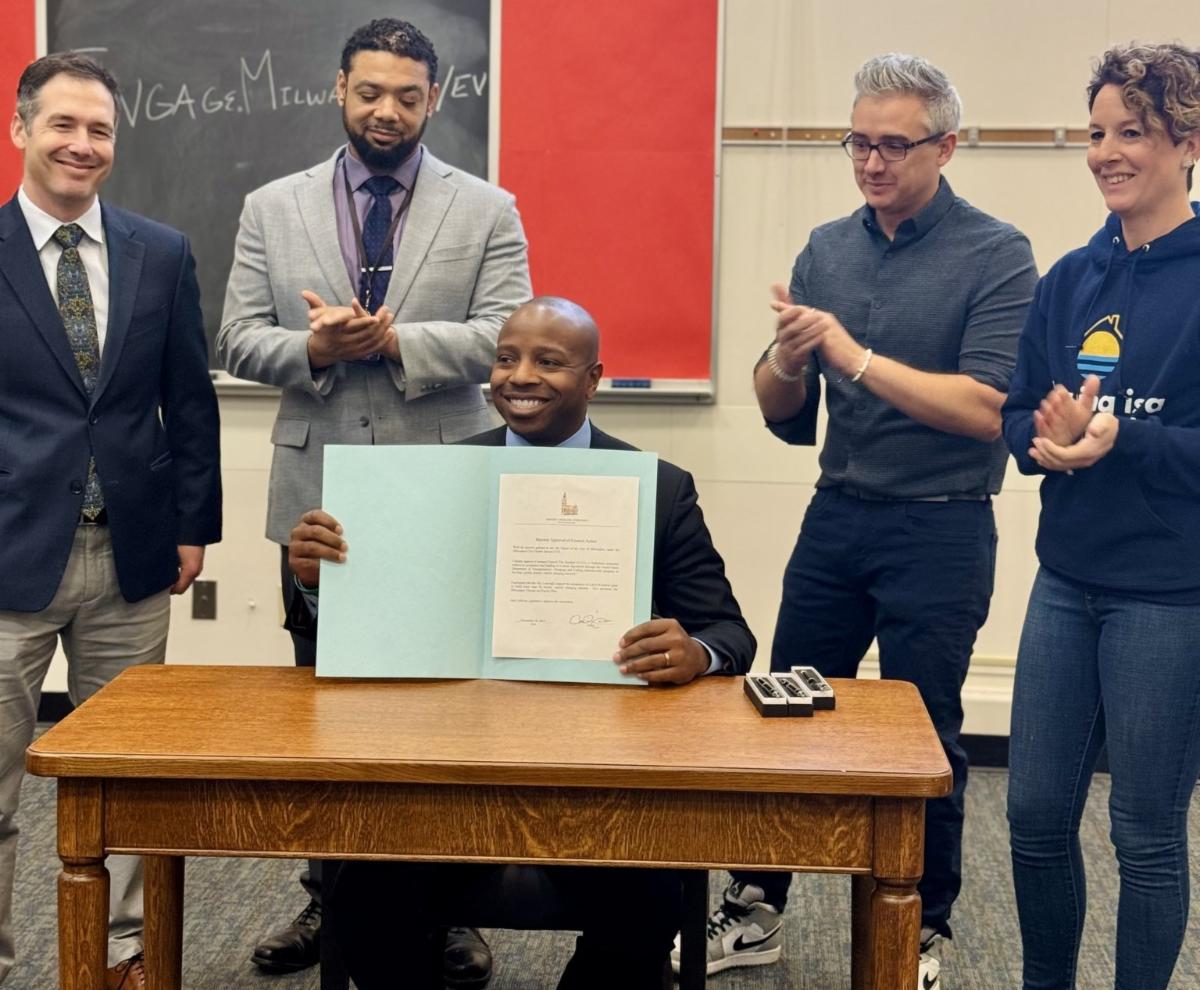
In our last newsletter, ECO described how all 10 of the Big Ideas in the Climate and Equity Plan had received major federal funding. However, early executive orders from the current presidential administration caused major disruptions, including on contracts that have already been awarded. This includes disruptions to the federal reimbursement system on our grants, staff departures from federal agencies that we work with, and federal agencies that simply stopped providing meaningful communication for several weeks. However, a recent and critical court ruling ordered the administration to unfreeze funds that had been allocated by Congress. ECO had one environmental justice grant that was terminated by the Administration in March, on which we have filed a dispute claim. We are currently reviewing options to unlock other federal funds that had been announced and/or awarded to ECO.
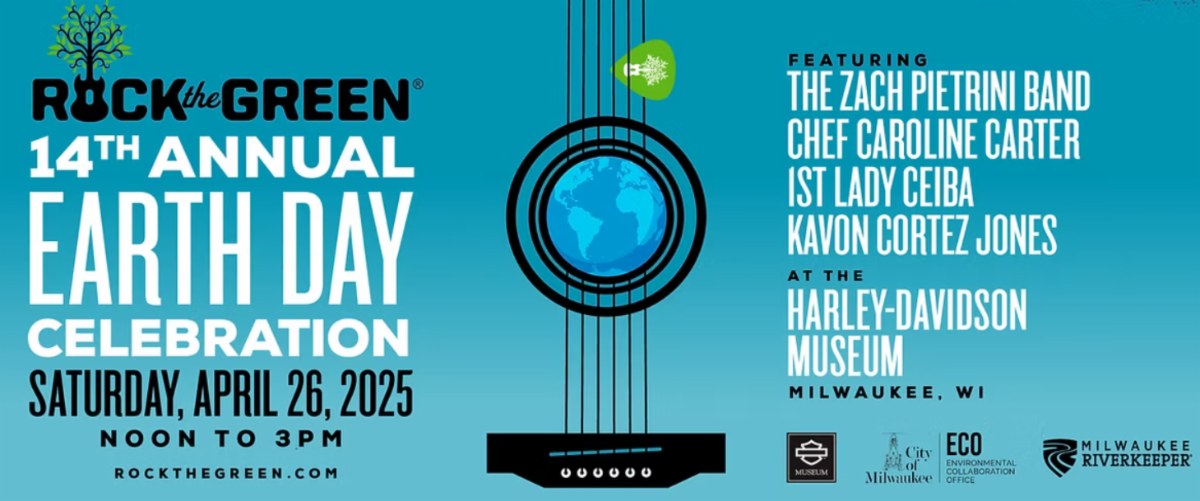
| | Rock the Green Tomorrow! | | ECO and partners are helping small commercial buildings and houses of worship save energy | | |
Two ECO pilot projects are providing resources to houses of worship a small businesses to reduce their reliance on fossil fuels, or what is sometimes called "decarbonization."
The Greening Congregations project, is a partnership between ECO, Slipstream, EcoBalance Technologies, West Care, the Sherman Park Neighborhood Association, Walnut Way Conservation Corporation, Greenprint Partners, Clean Wisconsin and other organizations to support building decarbonization and add green stormwater infrastructure to houses of worship and to small to medium-sized commercial and multifamily buildings in three Milwaukee neighborhoods: Sherman Park, Harambee, and Lindsay Heights. The pilot program is funded by the Daybreak Fund, a federal Department of Energy Buildings Upgrade Prize, and in-kind donations from Greenprint Partners and other organizations. To date, ten energy assessments, also known as decarbonization roadmaps, have been completed. Community awareness of building decarbonization and green stormwater infrastructure has increased significantly, thanks mostly through community engagement events including webinars, luncheons, and dinners, with over 700 participants to date, hosted and facilitated in large part by Sherman Park Community Association and the Sherman Park ECO Neighborhood Green Team. Many of the organizations with completed energy assessments have begun their decarbonization journeys, starting with energy efficiency improvements such as improved insulation and LED lighting retrofits, and all entities are currently evaluating funding and financing opportunities to implement their building decarbonization roadmaps. Regarding green stormwater infrastructure, two large-scale projects are currently in the design phase, and demonstrations of smaller-scale green stormwater infrastructure, such as rain barrels and rain gardens, and being planned for this summer. Another important benefit of this project are the significant local job growth potential for this work, as it involves employing local individuals from energy assessors, to lighting and HVAC technicians, landscape architects and other green infrastructure experts, to solar panel and heat pump installers, to make these improvements to buildings citywide. Young people have already engaged through the Greening Congregations project and received training on building energy assessments and LED lighting retrofits, while more young people will be trained on small-scale green stormwater infrastructure installations this summer.
The City of Milwaukee is also one of nine jurisdictions across the country to participate in the Decarbonization in a Box program, which provides support to commercial and multifamily buildings seeking to reduce their energy use and achieve cost savings through making their buildings more energy efficient, installing clean energy, and electrifying building equipment. Building owners receive support including free virtual energy assessments, identification of available incentives and rebates, and support evaluating the cost savings potential of various building energy improvements. Building owners interested in making such improvements to their buildings can complete the Intake Form located on ECO’s Sustainable Commercial Buildings website.
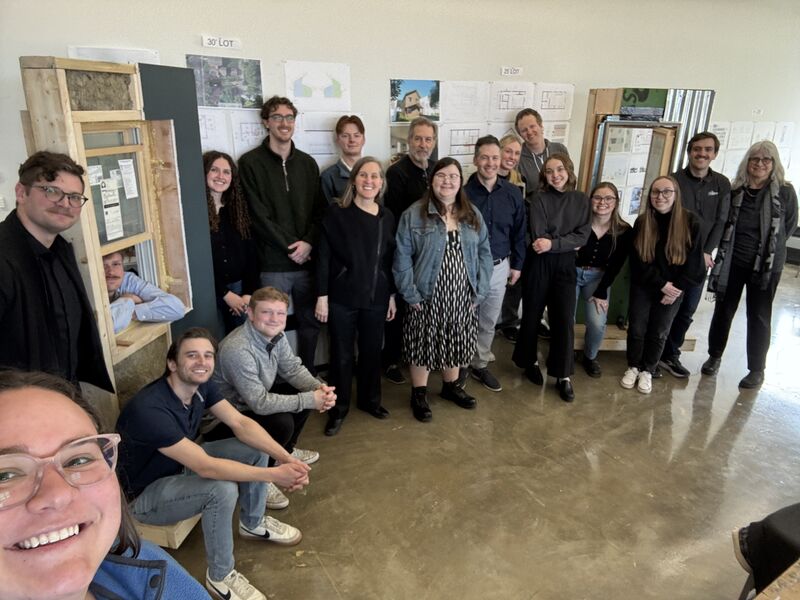
| | At ECO, we innovate, working with our university partners that help commercialize new technology. Working with students at the University of Wisconsin-Milwaukee School of Architecture and Urban Planning, students built demonstration walls to learn and teach others about the Department of Energy's Net Zero Energy home construction. Students combined their architectural ideas for starter homes with research and application of off-site built wall panel systems. Students also got great hands-on experience to bridge academic concepts with hands-on learning about real construction. This is hopefully just a first step in kick-starting new and better home construction in Milwaukee. Thanks to Rachel Wagner at Just Housing for providing the designs for the demonstration walls. ECO continues to await the outcome of a $3.4 million US Department of Energy grant for this project that had been announced, but indefinitely delayed to the current presidential administration's executive orders. We remain hopeful that as they review this project, they will see that it is consistent with the goal of boosting American manufacturing. | | Follow us on Social Media | | ECO posts daily news, resources, and events on on social media. Follow us on the below social media channels using the handle @ecocitymke: | | |
City of Milwaukee
Environmental Collaboration Office
200 E. Wells St., Room #603
Milwaukee, WI 53202
| | |
sustainability@milwaukee.gov
milwaukee.gov/eco
| | | | |