2026 Annual Civic Awards Recap | | |
On June 9 at the Annual Civic Awards, we brought together some of Chicago's most notable public servants, community partners, and civic catalysts. With almost 400 people in the room, we gathered to celebrate the achievements of two titans of leadership, Sean Garrett, President and CEO of United Way of Metro Chicago, and EY, accepted by Kevin Cole, Chicago Office Managing Partner.
This event was grounded by the theme, Everything is Connected, which is a reminder of how deeply our city's challenges and opportunities are intertwined. President Joe Ferguson opened the program by highlighting the importance of cross-sector collaboration and the need to break down the silos that too often separate business, government, and civic institutions. During a thoughtful fireside chat, Kevin Cole and Sean Garrett shared their perspectives on Chicago’s future and explored how we can work together to address the challenges and opportunities facing our city and region.
On behalf of the 2026 Annual Civic Awards Event Co-Chairs and the Civic Federation team, thank you to our dedicated members and sponsors, especially our Trailblazers, Blue Cross and Blue Shield of Illinois, GCM Grosvenor, and Robert R. McCormick Foundation, for generously supporting the event and celebrating Sean and EY.
| | |
Survey of Property Tax Limitations: Understanding the Tradeoffs and Policy Options for Illinois
Research by Roland Calia
Property taxes are the largest single source of state and local government revenue in the United States — and among the most politically contentious. Because they are highly visible and sensitive to rising property values, most states have adopted some form of property tax limitation to curb growth and provide taxpayer predictability. Our latest report examines these limitations — including rate limits, levy limits, and assessment caps — and weighs their benefits against their tradeoffs. While these policies can provide short-term relief and budgetary discipline, they often reduce local fiscal capacity, shift reliance to alternative revenue sources, and create inequities between long-term and newer property owners. In Illinois, the Property Tax Extension Limitation Law (PTELL) has fallen short of its intended purpose due to structural loopholes that allow tax growth well beyond its nominal cap.
The report outlines several strategies Illinois policymakers could pursue to meaningfully reduce property tax burdens — from closing PTELL loopholes and expanding its application statewide, to shifting school funding away from property taxes through increased state-level support, reducing the number of taxing bodies to cut duplication, and limiting unfunded state mandates that drive local tax increases. The central challenge for policymakers is balancing taxpayer protection with the need to maintain adequate, stable, and equitable funding for essential public services.
| |  | |
What Chicago Can Learn from New York City's Budget Requirements
Research by Roland Calia
Chicago's budget debate has increasingly focused on whether the City should adopt stricter standards for structural budget balance and long-term financial planning. New York City provides one example of a major U.S. city operating under a more rigorous legal framework. New York City is required by state law to adopt a structurally balanced operating budget along with a long-term financial plan. The city is also guided by Generally Accepted Accounting Principles (GAAPs) which establish standard accounting rules, conventions, and procedures that city government uses to prepare financial information in a transparent manner. Finally, the New York City Charter, among other specific accounting and financial best practices, stipulates:
- Annual operations cannot show a GAAP deficit unless the deficit is covered by withdrawals from the revenue stabilization fund.
- The mayor must prepare and regularly update a rolling four-year financial plan aligned with these standards.
- Budgets must be structurally balanced (excluding capital items) and consistent with the financial plan, and debt cannot be issued unless it aligns with the plan.
This report examines how major U.S. cities prepare budgets and compares Chicago’s flexible budgeting with New York City’s stringent budget-preparation requirements.
| | | |
Term of the Month:
Rate Limit / noun
A property tax rate limit is a statutory cap on the maximum rate at which a local government can tax property, designed to provide taxpayers with predictability and constrain government spending. Thirty-six states have adopted some form of rate limit, though their structure and effectiveness vary widely depending on their design and the exemptions they include.
EX: In Illinois, rate limits set maximum allowable tax rates for specific funds, like general operating funds, while some funds, like bond and interest levies, are exempt to ensure debt obligations are fully paid.
| | |
New Early Childhood Newsletter
Following the launch of the new Illinois Department of Early Childhood (IDEC), the Civic Federation published our first Early Childhood newsletter to track all the updates related to this exciting new department. This monumental shift will consolidate several programs that were previously spread out across multiple agencies into one cohesive department, allowing children and families across the state to have greater access and transparency to the services they rely on. Throughout this pivotal transition period, Civic Federation will continue to monitor progress and keep our members apprised of the latest updates.
Find the link to our most recent Early Childhood newsletter below and visit our website to access our new interactive Early Childhood dashboard.
| |
Policy Pulse
A snapshot of the issues, legislation, and fiscal debates shaping Illinois' public policy conversation.
| | |
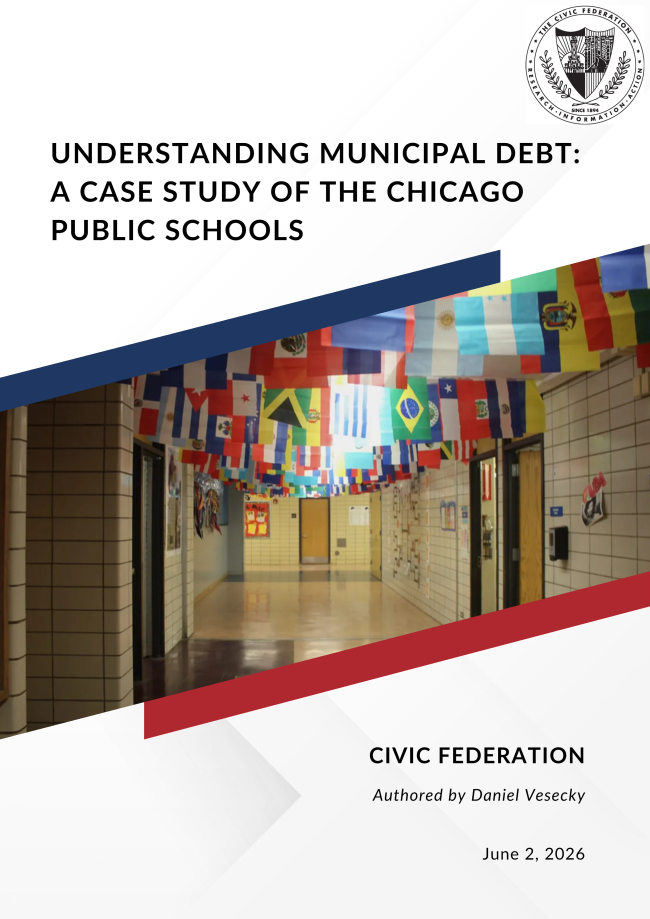
CPS Debt Burden
After releasing our latest analysis on CPS’ debt burden President Joe Ferguson issued the following statement:
“CPS’ debt strategy reflects years of fiscal crisis and limited fiscal flexibility. Faced with persistent deficits and few good options, the District has often had to prioritize immediate budget stability over longer-term debt restructuring. Recent refinancing decisions generated meaningful savings and avoided harmful practices, but they did little to improve CPS’s long-term financial stability. The consequences of short-term decision-making will come due, and CPS is rapidly running out of options to address it. There are no easy debt solutions left for CPS. The District cannot continue relying on one-time refinancing savings or other short-term measures to balance recurring structural deficits. The challenge now is not simply managing debt differently, but addressing the underlying structural imbalance between recurring revenues and expenditures. Long-term fiscal stability will require sustainable budgeting and structural solutions that reduce the need for crisis-driven decision-making.”
| | |
End of Illinois General Assembly Session
Following the end of the Illinois General Assembly at the end of May, Civic Federation issued the following statement:
“Illinois has once again settled for a budget that relies on new taxes and interfund transfers rather than adopting the meaningful structural reforms needed to ensure fiscal stability. While the decision to defer action on the megaproject proposal was prudent, for legislation of such significance, there was a troubling lack of legislative coordination and transparency. Because of the long-term significance of the issue, strong consideration should be given to a special session to provide more public-facing information, evaluation, and debate. That same commitment to long-term planning must be applied to the State’s broader fiscal outlook. In the coming months, the Civic Federation will provide analysis and recommendations to support more meaningful and informed conversation ahead of the fall veto session.”
| |
Get Involved with the Civic Federation
Join a network of civic, business, and nonprofit leaders who are shaping the future of Chicago and Illinois. Civic Federation members bring deep expertise across a wide range of sectors—and a shared passion for civic engagement, collaboration, and driving real change.
Membership includes access to a series of exclusive programs and events held throughout the year, connecting you directly with Civic Federation staff, public officials, subject-matter experts, and fellow leaders. These gatherings spark dynamic conversations, foster new partnerships, and turn bold ideas into actionable solutions for our region’s most pressing challenges. We offer several levels of membership, thoughtfully calibrated to organization type and size, individual needs, and the desired level of engagement and impact.
| | Civic Federation In the News | | |
Highlights from Recent Months
Each month builds on the last. Explore our past work on Chicago and Illinois’ fiscal health, governance reform, and good government:
| | Want to dive deeper into the Civic Federation's work? Visit our Research Library to explore our research by government and topic area. | | | | |