|
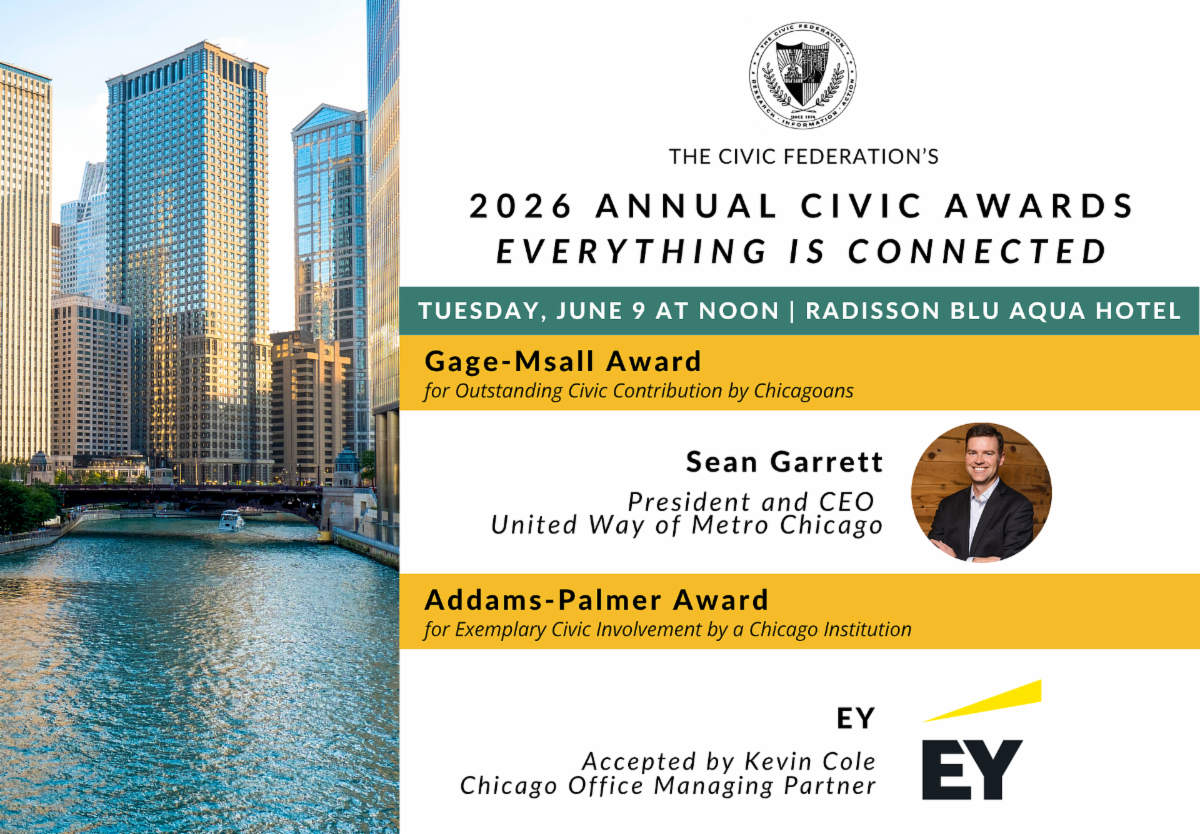
The Annual Civic Awards are only a couple weeks away!
This year’s theme, Everything is Connected, highlights the deep interdependence of Illinois governments—across state, city, county, and local levels—and how decisions around taxation, budgeting, and fiscal policy ripple across systems, often without coordination or shared understanding. The theme underscores the critical role of civic leaders and institutions in bringing the expertise, collaboration, and clarity needed to strengthen how government works.
In that spirit, the Civic Federation is proud to honor two leaders advancing cross-sector collaboration and good governance. Sean Garrett, President and CEO of United Way Metro Chicago, will receive the Gage-Msall Award for demonstrating a longstanding commitment to civic leadership, including expanding the Neighborhood Network initiative, launching the Chicago BridgeBuilders Fund, and partnering with government to create 211 Metro Chicago. EY will receive the Addams-Palmer Award for its exemplary civic involvement, including providing strategic fiscal analysis and long-term planning support to public sector leaders, while also working across corporate and community partners to advance economic opportunity and workforce development initiatives in the Chicago region.
| | |
Gas Tax Holidays:
Savings At What Cost?
Research by Lily Padula and Paula R. Worthington
Gas prices across the nation have soared since the beginning of the US’ prolonged conflict with Iran. Across the country, federal motor fuel tax holidays have been introduced and several states including Georgia, Indiana, and Kentucky have instituted cuts or suspensions to taxes on fuel.
In Illinois, legislation has been introduced that would reduce the state sales tax on fuel from 6.25% to 1.25% for six months starting in July. The ramifications for this tax holiday are significant. Potential losses in revenue at current tax rates range from $420-$540 million for the six-month period. These implications are more staggering considering recent adjustments to the allocation of motor fuel tax revenues—as of July 1st, 2026 100% of fuel tax revenues will be directed to transit agencies statewide, 85% of which will be directed to the newly created Northern Illinois Transit Agency (NITA). Even a short term sales tax suspension would substantially reduce much needed funding for transit across the state.
To read more about the implications of this proposed motor fuel tax holiday click the link below.
| | | |
What Chicagoans Pay: A Guide to Consumer Taxes in 2026
Research by Mahnoor Ashraf
Civic Federation just released our biennial consumer tax report, which provides a comprehensive overview of the taxes and fees paid by Chicago consumers across federal, state, regional, county, and municipal levels of government.
Consumer taxes are broadly defined as taxes imposed on the purchase, use, or consumption of goods and services and include both general sales taxes and
targeted excise taxes on specific products or activities. The report compiles and explains a wide range of taxes that affect everyday economic activity in Chicago, including:
- Sales taxes
- Restaurant and beverage taxes
- Tobacco and cannabis taxes
- Utility taxes
- Accommodations taxes
- Transportation-related taxes
- Other consumer fees and excise taxes
One of the report’s key findings is that Chicago continues to have one of the highest combined consumer tax burdens among major U.S. cities. Chicago’s composite sales tax rate on general merchandise currently stands at 10.25%. Pending approval of a Regional Transportation Authority (RTA) sales tax increase, that rate could rise to 10.50%, which would make Chicago the highest taxed major city in the nation for general sales taxes.
Find out more about your local consumer taxes at the link below.
| |  | |
Frequently Asked Questions: Tax Increment Financing
Tax Increment Financing (TIF) is one of the most widely used — and widely misunderstood — economic development tools in Illinois. In March, we released a landscape report breaking down how TIF works in Illinois, addressing common misconceptions and criticisms along the way.
Since then, we've been building out a fuller picture: last month we released our first TIF explainer video, and earlier this month we followed up with a comprehensive FAQ designed to answer the questions we hear most often ranging from:
- What TIF funds are used to pay for
- How TIF districts are made
- The effects of TIF districts on local property taxes
- How TIF surpluses are used and why they are so controversial here in Chicago
- How much revenue TIF districts generate
And many more!
Check out the TIF FAQ document and stay tuned for our next TIF video.
| | | |
Term of the Month:
Municipal Debt / noun
Money borrowed by local governments, usually through bonds, to finance long-term projects such as roads, schools, or infrastructure. Debt allows governments to spread the cost of expensive projects out over the years residents will benefit from them.
EX: CPS relies on municipal debt to finance capital projects like school construction and renovation, but the District's $9.5 billion debt load raises questions about whether borrowing has stretched beyond its intended purpose.
| | |
Member Spotlight:
Damion Heron
| | |
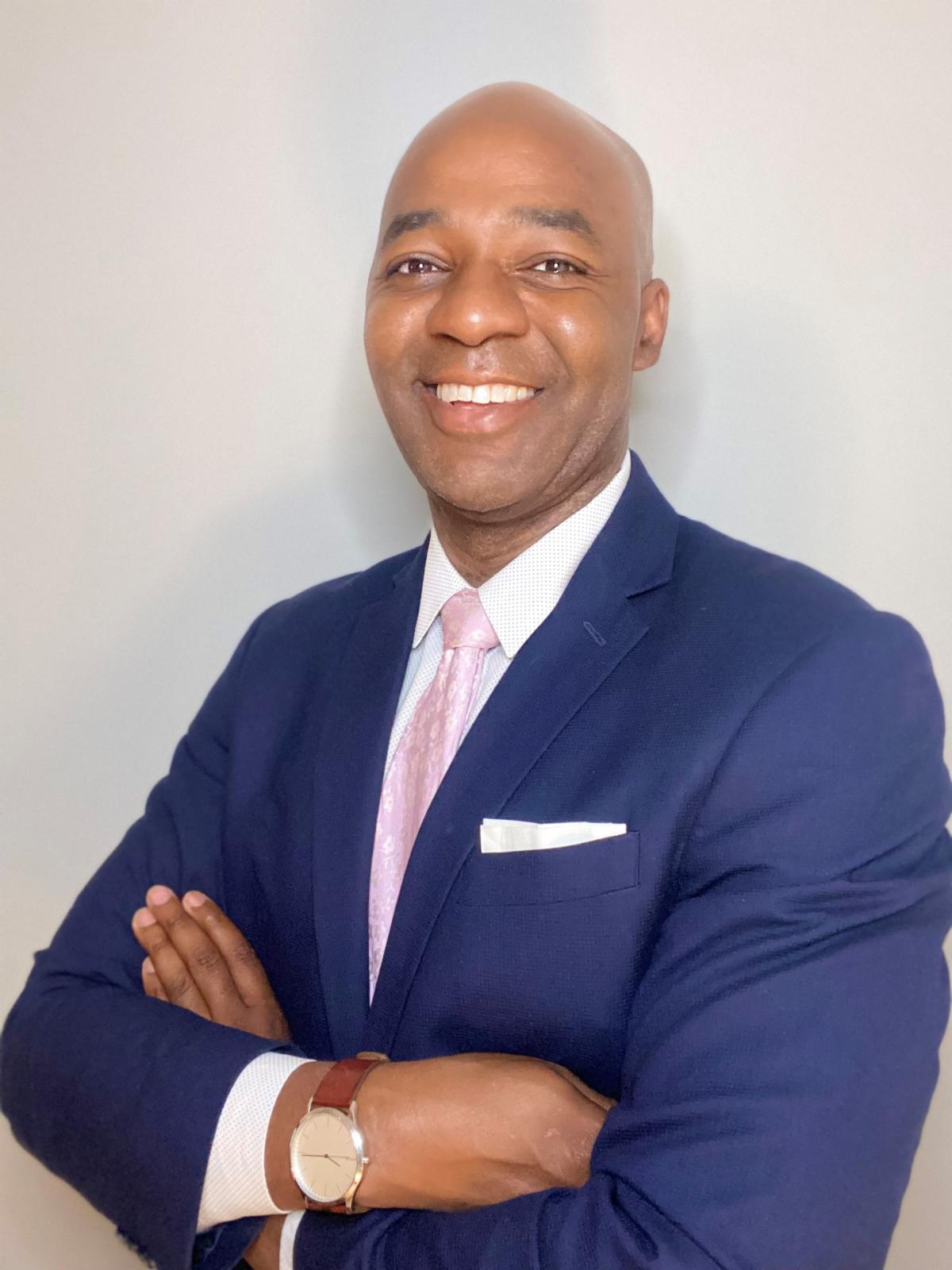
Damion Heron is the Midwest Executive, Corporate Responsibility at JP Morgan Chase Bank.
First and foremost, Damion is a dedicated father and husband. When he’s not doing that, he is a corporate responsibility executive at JPMorgan Chase leading the firm’s public engagement strategies across a fourteen-state region. He Joined JPMorgan Chase in 2008, and over the past 16 years has held leadership roles in philanthropy, community engagement and development, and public affairs. He currently leads a team of philanthropists and community and economic development professionals dedicated to investing resources, building partnerships, and informing our business on how to create products and services that best serve all our customers and communities.
Prior to his time with JPMorgan Chase, Damion held similar roles in the private and public sectors with The Boeing Company Chicago Office of Emergency Management and Communications, Britain’s House of Commons. Outside of work and family he's active as a civic leader with one goal in mind, to make the City of Chicago and state of Illinois a better place to live. He is 2014 Edgar Fellow, and a proud 2018 Leadership Greater Chicago Signature Fellow. He was also humbled to be named to Crain’s Chicago list of who’s who in Community Development. Damion has served on boards and steering committees of several prominent organizations including Civic Federation of Chicago, Leadership Greater Chicago, Neighborhood Housing Services, Forefront, Asset Funders Network and Social Responsibility Chicago.
Damion holds B.A degrees in Political Science and Philosophy from Bradley University and a Master of Public Policy from the University of Chicago.
| | | |
Spring Speaker Series -
Chicago's Fiscal Reality: What Come's Next?
May 26
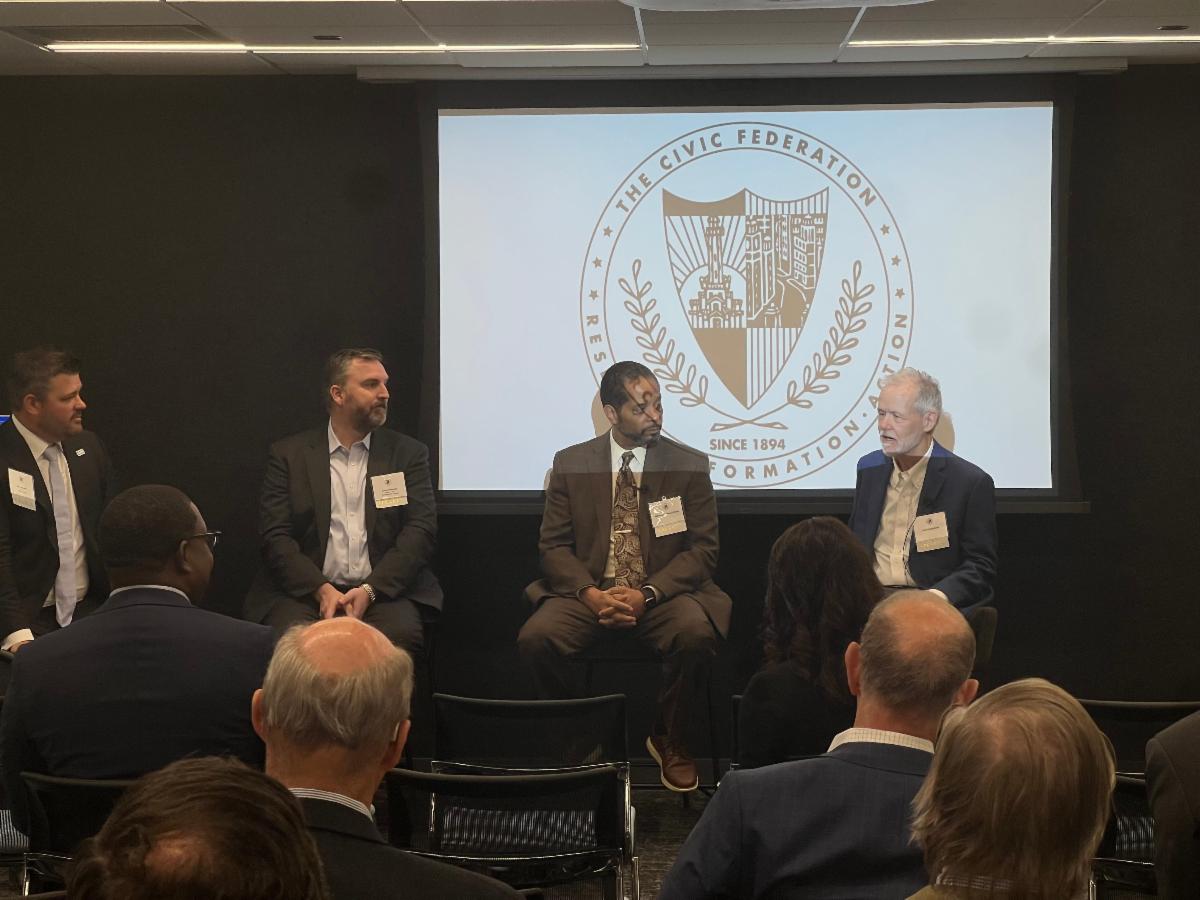
On May 26th, Civic Federation held our Spring Speaker Series which focused on the future of Chicago's fiscal wellness. We were privileged to have an incredible panel of experts on Chicago policy and practice including:
- University of Chicago Public Policy Professor Justin Marlowe
- 9th ward Alderman Anthony Beale
- Former 46th ward Alderman James Cappleman
- Moderated by Daily Line founder Don Vincent
The conversation was aimed at tackling some of Chicago's most daunting fiscal challenges including the city budget process, pension obligations, and Chicago's declining credit rating. In spite of all of these challenges, our panelists emerged with a clear and resolute outlook for the city narrowing in on key solutions to improve the quality of life for all Chicagoans.
| | | | | |
Joe's Speaking Engagement:
Chicago Fed Economic Policy and Tax Conference
May 14
Earlier this month, Civic Federation President Joe Ferguson took the stage as a featured speaker at the Federal Reserve Bank of Chicago's Economic Policy and Tax Conference.
The event brought together regional leaders and policy experts to examine the fiscal challenges facing the Chicago area and explore solutions toward greater economic stability. Joe's participation reflects the Civic Federation's ongoing commitment to advancing evidence-based solutions to the region's most pressing fiscal questions.
| | |
New Early Childhood Newsletter
Following the launch of the new Illinois Department of Early Childhood (IDEC), the Civic Federation published our first Early Childhood newsletter to track all the updates related to this exciting new department. This monumental shift will consolidate several programs that were previously spread out across multiple agencies into one cohesive department, allowing children and families across the state to have greater access and transparency to the services they rely on. Throughout this pivotal transition period, Civic Federation will continue to monitor progress and keep our members apprised of the latest updates.
Find the link to our most recent Early Childhood newsletter here and visit our website to access our new interactive Early Childhood dashboard.
| |
Policy Pulse
A snapshot of the issues, legislation, and fiscal debates shaping Illinois' public policy conversation.
| | |
CPS Budget Deficit
Chicago Public Schools (CPS or The District) currently faces a $732 million budget deficit as it prepares to finalize it's FY2027 budget. With Board of Education elections taking place in November of this year and Dr. Macquline King's recent appointment, 2026 is already shaping up to be a busy year for CPS.
The District will be faced with making difficult decisions in order to preserve the student experience in the wake of junk status credit rating and increasing pension obligations.
Despite this daunting deficit, solutions still remain that would not include sweeping classroom cuts and school closures. While both of these solutions will certainly be on the table this year, Dr. King and her staff have other options they can turn to in order to reconcile this year shortfall.
Solutions may include:
- Furlough days for teachers
- Consolidating central office staff
- Increased pension support from Illinois
Review some of our recent media coverage on CPS' budget deficit in the section below.
| | |
Bears Megaproject Bill
One news topic has dominated Illinois and Chicagoland headlines in 2026: The Bears newfangled search for their next home. With only three days left in the Spring legislative session, Springfield lawmakers are scrambling to pass a resolution that satisfies both local taxing bodies and the Bears organization — not an easy task given the competing interests at play. At the center of the tension is a growing rift between Mayor Johnson and Governor Pritzker. Johnson's continued efforts to keep the Bears in Chicago has been met with significant resistance from lawmakers and Bears representatives alike, who maintain that Arlington Heights and Indiana remain the only viable paths forward.
As of the writing of this newsletter, here are the latest updates in regard to the “megaprojects” bill:
- HB0910 or the “megaproject” bill, sponsored by Rep. Kam Buckner (D-Chicago), would allow the Bears and other megaproject developers to freeze property tax assessments for 25 to 45 years and negotiate long-term Payments in Lieu of Taxes (PILOTS) with local taxing bodies rather than paying higher property tax bills that would come with rising assessments.
- A newly released report by Cook County Treasurer Maria Pappas’ office estimates that under the bill, the Bears’ property tax bill on the Arlington Heights site would be frozen at less than $4 million annually. Assuming the Bears negotiate a $10 million PILOT on top of that frozen bill, the team would receive approximately $39 million in tax breaks yearly, totaling around $1.5 billion over the course of the 40 year term[AK4.1] agreement.
- Senate lead negotiator Sen. Bill Cunningham (D-Chicago) has acknowledged “substantial opposition” in the upper chamber, calling the obstacles “not small.” Three issues have emerged as the primary sticking points: opposition from Chicago-area lawmakers holding out hope for a lakefront solution, the Bears’ failure to submit a traffic impact study for the Arlington Heights site, and unresolved concerns about the PILOT structure’s effect on local property taxpayers. Traffic studies for stadium developments typically take between three to six months to complete, raising questions about whether one can be delivered before the May 31 deadline.
- Meanwhile, Indiana lawmakers have already passed Senate Bill 27, which names a site near Wolf Lake in Hammond for a new Bears stadium and provides a framework for the project, giving the Bears a ready alternative if Illinois fails to act.
The clock is running. If Springfield cannot deliver a Senate-passed bill by May 31, Illinois risks losing the Bears, and the economic development they represent, to Indiana for the foreseeable future.
| |
Get Involved with the Civic Federation
Join a network of civic, business, and nonprofit leaders who are shaping the future of Chicago and Illinois. Civic Federation members bring deep expertise across a wide range of sectors—and a shared passion for civic engagement, collaboration, and driving real change.
Membership includes access to a series of exclusive programs and events held throughout the year, connecting you directly with Civic Federation staff, public officials, subject-matter experts, and fellow leaders. These gatherings spark dynamic conversations, foster new partnerships, and turn bold ideas into actionable solutions for our region’s most pressing challenges. We offer several levels of membership, thoughtfully calibrated to organization type and size, individual needs, and the desired level of engagement and impact.
| | Civic Federation In the News | | |
Highlights from Recent Months
Each month builds on the last. Explore our past work on Chicago and Illinois’ fiscal health, governance reform, and good government:
| | Want to dive deeper into the Civic Federation's work? Visit our Research Library to explore our research by government and topic area. | | | | |