|
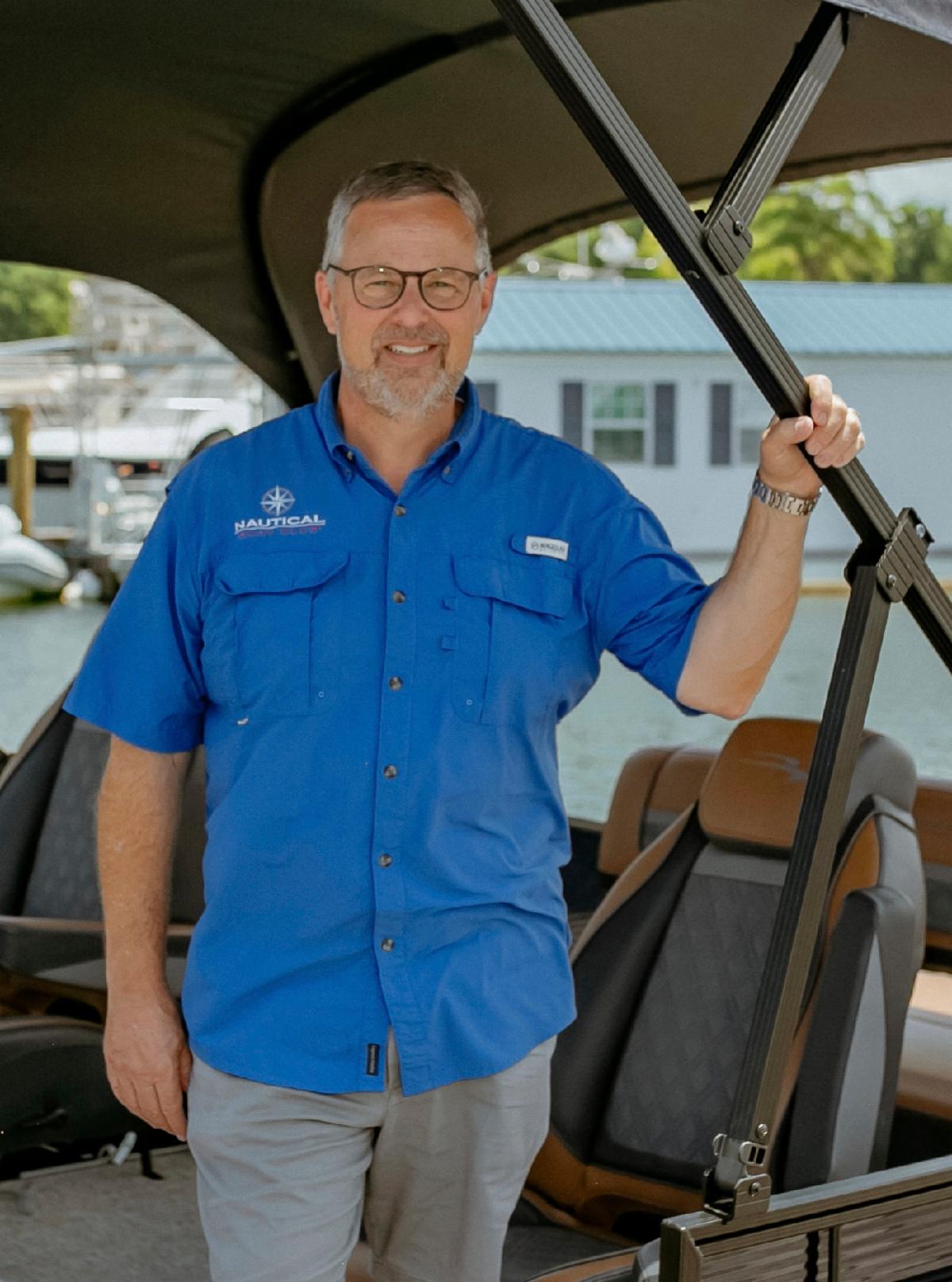
Owner & President, Nautical Boat Club and Better Boat Rental
B.S., Mechanical Engineering, 1992; MBA, 2003
What role do you play in the entrepreneurial ecosystem?
My primary role in the entrepreneurial ecosystem is as an entrepreneur and operator. For the past 20 years, I have built and operated businesses in the boating, engineering, and equipment leasing industries. In boating, I expanded Nautical Boat Club from my initial location on Lake Murray to additional locations in Charleston, South Carolina, and Savannah, Georgia.
As my role in my businesses continues to evolve, mentoring and connecting others has become more important to me. I enjoy sharing what I have learned with students, interns, younger entrepreneurs, and employees, while helping connect them with people, ideas, and opportunities that may help them move forward. I also enjoy giving people within our businesses opportunities to take on more responsibility, develop leadership skills, and grow into larger roles.
At this stage of my career, I hope that sharing both my experiences and my mistakes can help others navigate some of the challenges that come with building a business.
What are some of your best memories of your time at Clemson?
Some of my best memories at Clemson are really the everyday experiences that came with being a student there. I lived on campus my first two years, in Johnstone and then Calhoun Courts, and made friendships that have lasted a lifetime. I also joined a fraternity, which gave me another great group of friends and many opportunities to serve others through philanthropy and service projects.
Engineering was demanding for me, particularly because I was also participating in the co-op program and working at Fluor Daniel Engineering in Greenville every other semester. Staying on track required taking summer classes. My two summers taking classes and living in Clemson were quieter experiences, quite different from the regular school year, and gave me a chance to enjoy Clemson in a different way.
I also have great memories of the things I enjoyed in between classes and work: reading The Tiger on Friday afternoons while figuring out plans for the weekend, playing cards with roommates and fraternity brothers, Thursday nights downtown after engineering labs, attending football and basketball games, and taking road trips to visit friends at other colleges.
I graduated in 4½ years, which meant I got one extra football season at Clemson. Today, so many students arrive with AP credits that graduating in three and a half or even three years is much more common. My son is one of them, and I remind him that graduating early certainly has its advantages, but I am still pretty happy I got that extra football season.
What were the key inflection points in your career after you left Clemson?
While working as an engineer with Jacobs and Fluor in Greenville early in my career, I set a goal of earning my Professional Engineer license. Standardized tests were never one of my strengths, so passing the PE exam was particularly meaningful. More importantly, earning that license gave me one of the credentials I would later need to start my own engineering firm.
Clemson also played another important role in my career through its Professional MBA program in Greenville. It allowed me to continue working while earning my MBA and broadened my perspective beyond engineering through greater exposure to business, management, and leadership.
Another major inflection point came when I left Fluor and took an outside sales position with a manufacturing company, calling on manufacturing plants throughout Upstate South Carolina. I had no sales experience, and a meaningful portion of my compensation was commission-based, so there was much less certainty than I had been accustomed to as an engineer.
That experience ended up being incredibly important. I learned how to develop relationships, understand what customers needed, communicate value, and become comfortable selling myself and the products I represented. I credit that transition with giving me much of the confidence I eventually needed to start my own businesses.
Fourteen years after graduating from Clemson, those experiences came together in 2006 when I left my full-time job and started two businesses at essentially the same time: my engineering and energy consulting firm and Nautical Boat Club on Lake Murray.
Looking back, that was probably one of the biggest and riskiest inflection points in my career. We had a young child at home, and my wife carried a tremendous amount of the burden during that transition by providing the steady income and benefits our family needed while I worked to get both businesses established. I could not have made that leap without her support.
For several years, I pursued two entrepreneurial paths at once. Eventually, the boating business grew to the point where I had to choose where to focus my time and energy. The engineering work required substantial travel, we had a young family, and the boat club was creating opportunities I wanted to pursue. Choosing to focus on the boating business became another major inflection point in my career.
What are your personal and professional dreams?
Personally, I want to create more work-life balance and continue transitioning toward spending less time on work and more time with my family, friends, and church. I also want to stay involved with Clemson, increase my volunteer involvement with other organizations, and continue mentoring others as they move through their own career journeys.
And I would like to get back to boating and fishing a little more myself. I’ve learned there’s a lot of truth to the old warning about turning your hobby into your business: sometimes you spend so much time working around something you enjoy that you no longer have much time to simply enjoy it. After 20 years in the boating business, I’d like to spend a little more time being the guy in the boat instead of the guy responsible for all the boats.
Professionally, I want to continue improving the businesses I already have by developing strong leaders who can serve as Integrators and run the day-to-day operations effectively. My goal is to increasingly move into the Visionary role, spending less time solving the immediate problems of the day and more time thinking three to five years ahead, setting direction, developing people, and identifying opportunities to make our businesses better.
What would you recommend students do to maximize their remaining time at Clemson?
My biggest piece of advice would be to take advantage of everything Clemson has to offer, not just the classroom.
One of my biggest regrets is that I probably did not fully appreciate how many opportunities were available while I was there. You may never again have such a diverse range of things to do, people to meet, organizations to join, and experiences to try on any given weekday or weekend.
Use Clemson to build experiences and relationships, not just a résumé. Some of the friendships and connections you make there will stay with you for life, and experiences that seem small at the time may shape you in ways you do not appreciate until years later.
And somewhere in between all of that, don't forget to take advantage of the professional resources Clemson puts in front of you. Seek out internships and co-ops, get to know professors, connect with alumni, find mentors, and use the career and entrepreneurial resources available to you such as the Brook T. Smith Launchpad.
Your college journey will go by much faster than you think. Explore as much as you can while you have the opportunity.
What else should we know about you?
I have always been more comfortable letting the work speak for itself, and I have a great deal of respect for skilled tradespeople and for the craftsmanship that comes from learning how to build, fix, and create things with your hands. I think much of that came from my father, who had a significant influence on me growing up. He taught me to take pride in doing things well, lead by example, work hard, and treat people the right way. I was also fortunate to have other people give me opportunities to work and learn when I was a student, and I wanted to carry some of those same lessons forward when I became a business owner.
One part of the last 20 years that means a great deal to me is the opportunity we have had to employ more than 150 high school and college students, many of them in their first or second jobs.
The real reward has been watching those students grow. Many returned for multiple summers, took on increasing responsibility, and developed leadership skills along the way. Several of our current leaders originally started with us as students, and one former intern is now a long-term employee and business partner.
I also enjoy it when former employees stop by years later to say hello and tell me where life has taken them. Most are now working professionals, including a few engineers, which makes me smile given where my own career started. Sometimes those former employees return to join the boat club with their families or introduce me to a son or daughter who is now looking for their first job.
Those are pretty special full-circle moments and a reminder that, after 20 years, the impact of a business can extend far beyond the products or services it provides.
|