|
Lessons for Maine lobster from Alaska's crab collapse
By Annie Ropeik
News broke last week that Alaska's snow crab fishing season would be canceled for the first time ever, after the species' stock suddenly suffered an apparent near-total collapse. Over the past three years, biologists say, 90% of the snow crabs that several dozen vessels go out to catch each winter in the Bering Sea have disappeared. It's not yet clear why. Some suspect warming waters — snow crabs, true to their name, love the cold, and climate change may have pushed them into a pocket of water that didn't have enough food to support their population.
More than one person has described Maine to me as the Alaska of the east. I have lived in both places, and I love their similarities — both huge, mostly rural, remote and wild, though Alaska is obviously an order of magnitude beyond Maine on all counts. Both are also traditionally dependent on a precarious system of natural resources, and reliant on timber, mining, tourism and, of course, seafood.
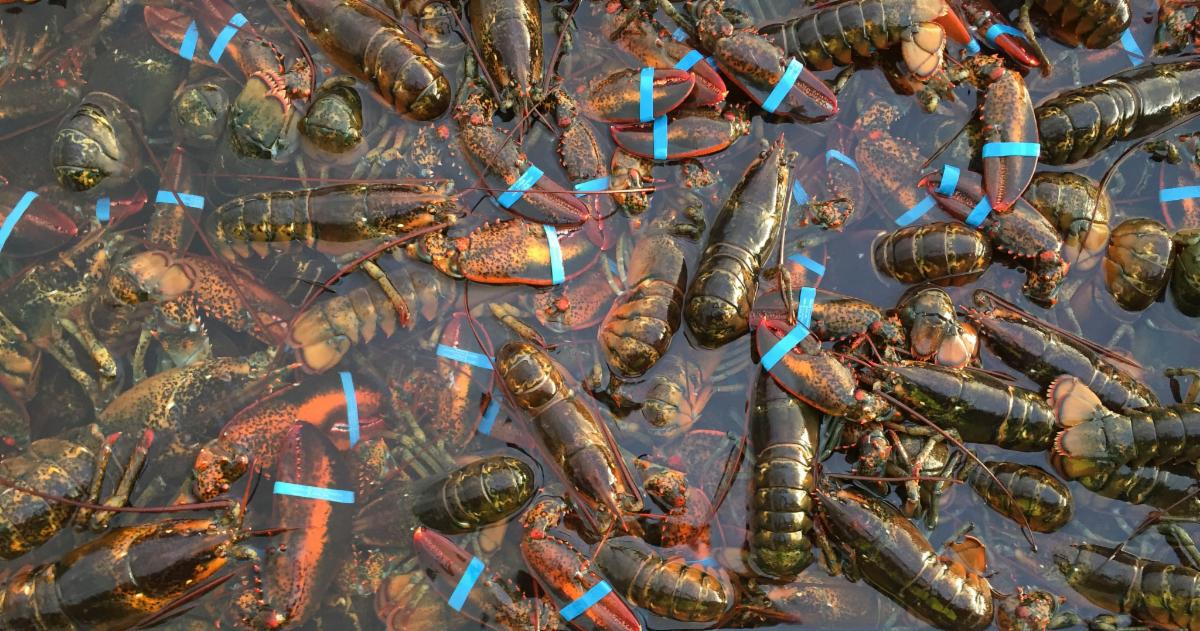
So these similarities came to mind when I read that the snow crab season had been canceled, as well as part of the king crab fishery, which has seen a similar decline. Could Maine lobster ever face this kind of sudden disaster?
"Snow crabs are a cold-water species that are highly sensitive to changing ocean temperatures, loss of sea ice, and bottom habitat availability for young to settle and grow. Other cold water species, like cod and lobster, have similar requirements and face similar risk of rapid population decline," said Janet Duffy-Anderson, the chief scientific officer at the Gulf of Maine Research Institute and a former Alaska fisheries researcher. "Typically the factors that contribute to mass die-offs are multifold (fishing, ocean heat, poor survival of young, loss of older stages through predation or disease) and act together to create a 'perfect storm' of mortality.
"It can be difficult to know when this perfect storm of conditions will arise, but marine heat waves, long, extended warming periods, disruptions in the food web, or changes in species distributions are all causes for concern," Duffy-Anderson said.
Lobsters are now far more abundant in the Gulf of Maine and Georges Bank than in Southern New England, where warming waters have already sent the fishery into steep decline. The Gulf of Maine is warming faster, increasingly so, than almost any other part of the world's oceans. Southerly species are moving in, and the change cuts both ways — like lobster, North Atlantic right whales, infamously endangered by lobster gear and shipping traffic, may also be following their food north from Maine into more dangerous Canadian waters.
There are so many economic and cultural ripple effects that flow from climate change in a place like Maine, where our lives are deeply entwined with both the land and sea. This is why I see the sharp decline in Alaska's crab stocks as a useful cautionary tale.
When I lived up there for about a year and a half early in my career, I was a reporter for KUCB, the westernmost NPR station, in the city of Unalaska — on a remote, windswept island in the middle of the Aleutian archipelago, which divides the Bering Sea from the North Pacific and Gulf of Alaska. Unalaska is home to fewer than 5,000 year-round residents, seven miles of paved roads, a lot of grimy bald eagles and the famed port of Dutch Harbor — tops in the country for volume of seafood landings thanks to pollock, used to make everything from McDonald's sandwiches to imitation crab. (Scallops make New Bedford, Mass., the top port by value.)
Unalaska serves as a so-called "last gas station" for trans-Pacific shipping leaving the U.S. and was once eyed by Shell Oil as a hub for Arctic drilling exploration, as the region's closest year-round ice-free port — but those plans died in the 2010s amid political, climatic and economic uncertainty. Unalaska also can't rely on tourism like certain other parts of Alaska, or, say, coastal Maine — it remains hugely fishing-dependent, and the loss of these crab seasons is a big deal.
Still, most of the Bering Sea crab fleet (fewer than 100 vessels) does have other prospects. Fishing in the region is diversified, with overlapping seasons for things like pollock and cod to give fishers options when environmental or economic conditions shift — I wrote about an example of this for National Fisherman Magazine once while living in Unalaska. Lobster, meanwhile, is the only game in town for most of the thousands of Maine boats that fish for it. They enjoy nearly year-round harvesting, with few of the intense catch limits that exist for species like crab.
But it would be a challenge for many lobstermen to branch out if times got tough — New England's groundfish and shrimp stocks, for example, are badly depleted. So as with row-crop farming in the Midwest, and maybe even maple syrup in New England, diversification is a crucial way to adapt to climate change in Maine's oceans. For example, some have suggested kelp aquaculture as an option for lobster fishers who need new business.
Another lesson, according to GMRI's Duffy-Anderson, is that proactive conservation measures may help mitigate the potential effects of a sudden "perfect storm" of climate impacts. Precautions include "v-notching" the tails of egg-bearing female lobsters, and "slot limits that protect vulnerable undersized individuals and highly productive oversized individuals."
Scientists and public officials are also still working to factor climate change into their planning processes, Duffy-Anderson said.
"Since climate change is still in the process of altering the ecosystem, the system hasn't stabilized in to a new normal. Change is still happening," she said. "As such, managers tend to adopt a precautionary approach to planning fishery quotas. Considerable effort is underway to incorporate climate and ecosystem metrics into projections and stock assessments and use them to help make more informed decisions. Careful observation of current conditions, 'nowcasts' of fisheries populations status, and strategic planning and foresighting based on this information is what is needed to be out in front of emergent issues."
Adaptation takes time, and fisheries will see ups and downs and new normals along the way. The communities that rely on that industry must then figure out how to weather the change. As Maine headlines announce every day, the lobster fleet is deeply anxious about perceived threats from planned offshore wind farms and new right whale protection — but lobstermen can still make money with whales and wind turbines in the water. The problem that remains is how to sustain the industry, if and when lobster stocks and their habitats grow too unstable to rely upon.
|