CLOSING THE CIRCLE - FALL 2022


HOME | ABOUT | EVENTS CALENDAR | PUBLICATIONS


National Collaborating Centre for Indigenous Health (NCCIH)
3333 University Way, Prince George, BC, Canada, V2N 4Z9
T: (250) 960-5250 | F: (250) 960-5644
nccih@unbc.ca
nccih.ca


Follow the NCCIH on Twitter Like the NCCIH on Facebook Connect to the NCCIH on LinkedIn Watch NCCIH videos on Vimeo Watch NCCIH videos on YouTube Listen to NCCIH on SoundCloud Read NCCIH knowledge resources on ISSUU


Welcome


Greetings from the traditional unceded territories of the Lheidli T'enneh First Nation, upon which the National Collaborating Centre for Indigenous Health (NCCIH) is located. In this region, as in so many, the nights are becoming cooler and the days are becoming shorter. As fall turns to winter, I trust each of you are ready for the winter and what it may bring.


Looking ahead is also the theme of our four-part webinar series, “Visioning the Future,” a development of the NCCIH’s 2021 publication Visioning the Future: First Nations, Inuit, & Métis Population and Public Health. This collaborative report offers a vision for First Nations, Inuit, and Métis Peoples’ public health. The series recordings are now available, and feature Indigenous leaders, researchers and practitioners discussing governance and health data, the determinants of health, current challenges and opportunities for leadership, as well as the relationship between the natural environment and mental health and wellness of First Nations, Inuit, and Métis peoples from coast to coast to coast. Concluding the series is an NCCIH-produced podcast featuring Deputy Chief Medical Officer at Indigenous Services Canada, Dr. Evan Adams, and NCCIH Academic Leader, Dr. Margo Greenwood, discussing how the “Visioning the Future” project came about and the role of public health in making that vision a reality.


Planning and preparedness are also essential to health and well-being as our climate changes. As a follow-up to the NCCIH’s contribution to a major national report on climate change and several related resources, we have released an fact sheet on Indigenous knowledges, rights and climate change, as well as a webinar recording featuring the climate change strategies of five national and regional First Nations leaders.


This winter, many students will have the opportunity to learn from the NCCIH's newly-released undergraduate-level textbook, Introduction to Determinants of First Nations, Inuit, and Métis Peoples’ Health in Canada, which offers an introductory overview of the determinants of health for Indigenous Peoples in Canada and an understanding of coloniality in healthcare. This new Indigenous-led resource is accompanied by a series of eight videos that illuminate key concepts in the book. The videos can also be used as stand-alone learning tools for anyone teaching or promoting Indigenous health and well-being.


We are pleased to announce the recent publication of two other reports, both of which shed light on systemic inequities and the need for Canada to become more inclusive of Indigenous peoples. A conceptual framework for Indigenous cultural safety measurement puts a spotlight on cultural safety interventions, experiences and outcomes, and constitutes a starting point to addressing system-level inequities in our health care system. Alzheimer’s disease and related dementias in Indigenous populations: Knowledge, needs, and gaps sheds light on barriers to culturally-relevant dementia care as well as solutions and resources available to health care providers.


If you are interested in knowing about other publications, please see our visit our web site or subscribe to our mailing list to receive notifications of newly released NCCIH resources, upcoming webinars and our regular seasonal newsletters. Please enjoy and share our knowledge resources with your community and networks, and if you have not already done so, join us on Twitter, Facebook, LinkedIn, Vimeo, YouTube, SoundCloud, or ISSUU to participate in updates as they happen.


On behalf of all the staff at the NCCIH, we hope you stay safe, healthy and we look forward to sharing our work with you.


Hiy Hiy


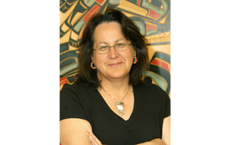
Margo Greenwood, Academic Leader
National Collaborating Centre for Indigenous Health (NCCIH)


NCCIH News & Promotions

Dr. Margo Greenwood honoured with two prestigious appointments

Her Excellency, the Right Honourable Mary Simon, has appointed Dr. Margo Greenwood as an independent Senator, filling a vacancy for British Columbia.


Dr. Greenwood was also appointed interim scientific director of the Canadian Institutes of Health Research (CIHR)'s Institute of Indigenous Peoples’ Health (IIPH) for a term of three years.


University of Northern British Columbia institutes working to increase safety and respect for Indigenous Peoples in Canada’s health systems

The National Collaborating Centre for Indigenous Health (NCCIH) and the Health Arts Research Centre (HARC), both housed at the University of Northern British Columbia (UNBC), are receiving new funds to support health care professionals to address anti-Indigenous racism, practise in anti-oppressive ways, and foster cultural humility.


Call to participate - Survey on burnout among people working in public health

Dr. David Poon, a Public Health and Preventative Medicine Resident, and Dr. Jessica Hopkins, Chief Health Protection and Emergency Preparedness Officer with Public Health Ontario, invite you to participate in an online survey that explores burnout among people who work in public health settings in Canada. You are invited to participate by completing a 10-minute survey about your experience during the pandemic as a public health worker. Please complete the survey before 31 December 2022.


Attended Events

Upcoming Event

CPHA Public Health 2022


Virtual event, June 14-16 2022


Visit the CPHA conference archives page to review final program and access recordings.


First Nations Health Managers Association Annual Conference


Victoria, BC, November 1-3, 2022


The NCCIH attended this in person event held at the Victoria Conference Centre, in Victoria, BC. Delegates were able to browse our latest resources and meet with NCCIH staff at our booth in the exhibitors’ area of the conference. Visit the FNHMA conference archives page to review final program.


CPHA Public Health 2023


The Canadian Public Health Association (CPHA)'s annual conference will take place online from June 20 to 22, 2023. You have until January 10th, 2023, to make a submission. For full details, visit the CPHA 2023 overview page.


Please visit the online NCCIH calendar of events, which highlights conferences, workshops, and other events of interest in the field of Indigenous Health including regional, national and global listings.


New NCCIH Publications & Resources


Three new episodes in the Voices from the Field podcast series

Episode 21 – A discussion on the higher COVID-19 rates in Manitoba’s First Nations compared to non-First Nations linked to limited infrastructure on reserves


Episode 22 – A discussion of the importance of cultural safety in health care and how it can be achieved


Episode 23 – A discussion of Visioning the Future: First Nation, Inuit, and Métis Population and Public Health


Voices from the Field Series


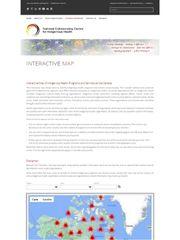
Interactive Map of Indigenous Health Programs and Services across Canada


Find Indigenous health programs and services across Canada in a few clicks using NCCIH’s new Interactive Map of Indigenous Health Programs and Services across Canada. The map provides location and contact information for over 1 400 Indigenous-focused health organizations such as mental health and substance use counselling and treatment services, as well as urban and rural Indigenous health clinics, nursing stations, wellness centres, dental clinics, health promotion and prevention services, Friendship centres, cultural centres, as well as midwifery services.


Interactive Map of Indigenous Health Programs and Services across Canada


A conceptual framework for Indigenous cultural safety measurement


The NCCIH report A conceptual framework for Indigenous cultural safety measurement undertakes a review of available literature to build a system-level conceptual framework for understanding the relationship between cultural safety interventions, experience, and outcomes.


A conceptual framework for Indigenous cultural safety measurement


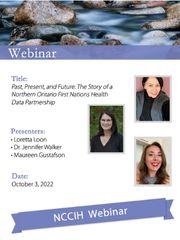
Webinar recording - Past, Present, and Future: The Story of a Northern Ontario First Nations Health Data Partnership


Held on October 3, 2022, Past, Present, and Future: The Story of a Northern Ontario First Nations Health Data Partnership tells the story of Mamow Ahyamowen through lenses of self-determination and Indigenous Data Sovereignty. The presenters provide an overview of the Partnership’s history, work to date, and path forward.


Watch on Youtube | Listen on SoundCloud


Webinar recording - Past, Present, and Future: The Story of a Northern Ontario First Nations Health Data Partnership


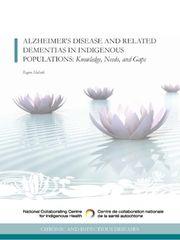
Alzheimer’s Disease and Related Dementias in Indigenous Populations: Knowledge, Needs, and Gaps


The report Alzheimer’s Disease and Related Dementias in Indigenous Populations: Knowledge, Needs, and Gaps summarizes what is known about the knowledge, needs, and gaps of First Nations, Inuit, and Métis peoples and healthcare practitioners working in Indigenous communities related to dementias.


Alzheimer’s Disease and Related Dementias in Indigenous Populations: Knowledge, Needs, and Gaps


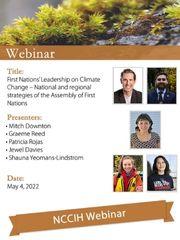
Webinar recording - First Nations’ Leadership on Climate Change – National and regional strategies of the Assembly of First Nations


Held on May 4, 2022, First Nations’ Leadership on Climate Change – National and regional strategies of the Assembly of First Nations provides an overview of the work underway at the national and regional levels in order to understand how First Nations leaders and communities are uniquely experiencing climate change and the strategies being employed to address the climate crisis.


Watch on Youtube | Listen on SoundCloud


Webinar recording - First Nations’ Leadership on Climate Change – National and regional strategies of the Assembly of First Nations


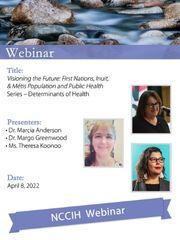
Webinar recording - Visioning the Future: First Nations, Inuit, & Métis Population and Public Health Series – Determinants of Health.


Held on April 8, 2022, Visioning the Future: First Nations, Inuit, & Métis Population and Public Health Series – Determinants of Health features presentations by Dr. Marcia Anderson, Ms. Theresa Koonoo and Dr. Margo Greenwood on subjects such as self-determination as a means of achieving health equity, preserving traditional health knowledge as a path to better health outcomes, and role of racism as a driver of inequities.


Webinar recording - Visioning the Future: First Nations, Inuit, & Métis Population and Public Health Series – Determinants of Health


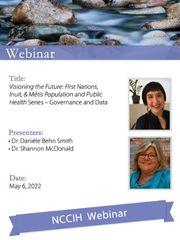
Webinar recording - Visioning the Future: First Nations, Inuit, & Métis Population and Public Health Series – Governance and Data


Held on May 6, 2022, Visioning the Future: First Nations, Inuit, & Métis Population and Public Health Series – Governance and Data presenters Dr. Danièle Behn Smith and Dr. Shannon McDonald show how Indigenous Peoples’ ownership and control of their past, present, and future are critical elements of their individual and collective health and well-being.


Webinar recording - Visioning the Future: First Nations, Inuit, & Métis Population and Public Health Series – Governance and Data


Webinar recording - Visioning the Future: First Nations, Inuit, & Métis Population and Public Health Series – National Indigenous Organizations


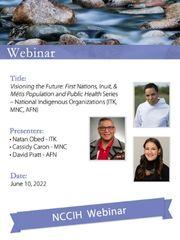
Held on June 10, 2022, Visioning the Future: First Nations, Inuit, & Métis Population and Public Health Series – National Indigenous Organizations features public health visions articulated by three National Indigenous Organizations: Inuit Tapiriit Kanatami, Métis National Council, and the Assembly of First Nations.


Webinar recording - Visioning the Future: First Nations, Inuit, & Métis Population and Public Health Series – National Indigenous Organizations


Webinar recording - Visioning the Future: First Nations, Inuit, & Métis Population and Public Health Series – Environmental and Mental Health


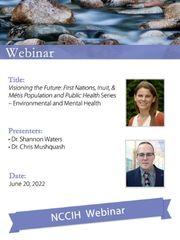
Held on June 20, 2022, Visioning the Future: First Nations, Inuit, & Métis Population and Public Health Series – Environmental and Mental Health takes a holistic approach to considering Indigenous health. Such an approach looks into and beyond the physical environmental factors affecting Indigenous Peoples’ health to include the emotional, spiritual, and intellectual landscapes that influence their overall well-being.


Webinar recording - Visioning the Future: First Nations, Inuit, & Métis Population and Public Health Series – Environmental and Mental Health


Healthy Land, Healthy People Collection


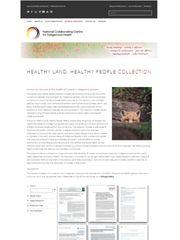
We have added over 370 new resources to our Healthy Land, Healthy People Collection online library. The Healthy Land, Healthy People Collection is a selective repository of resources that profiles connections between land and health for Indigenous peoples, and the importance of these connections to attain the best possible health outcomes for First Nations, Inuit, and Métis peoples living in urban, rural, remote and northern communities across Canada.


Healthy Land, Healthy People Collection


Fact Sheet - Indigenous Knowledges, Rights, and Climate Change in Canada


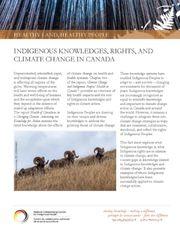
This fact sheet explores what Indigenous knowledge is, what Indigenous rights are in relation to climate change, and the current gaps in knowledge related to Indigenous knowledges and climate change.


Fact Sheet - Indigenous Knowledges, Rights, and Climate Change in Canada


Introduction to Determinants of First Nations, Inuit, and Métis Peoples’ Health in Canada

Compiled by experienced editors from the NCCIH, Introduction to Determinants of First Nations, Inuit, and Métis Peoples’ Health in Canada offers an introductory overview of the determinants of health for Indigenous Peoples in Canada and an understanding of coloniality in health care and how it determines First Nations, Inuit, and Métis peoples’ health and well-being.


The NCCIH has produced an accompanying series of eight videos that illuminate key concepts in the book, but that can also be used as stand-alone learning tools for anyone teaching or promoting Indigenous health and well-being.


Introduction to Determinants of First Nations, Inuit, and Métis Peoples’ Health in Canada


Request NCCIH Knowledge Resources


Did you know you can request NCCIH publications free of charge? Send your request to us by filling out the “Request this Publication” form found at the bottom of each online publication page, indicate how many copies you’d like, a note about how you will utilize the resource, your name and mailing address. We will do our best to accommodate your request based on our current available printed inventory. If you have multiple publication requests, please use the “Request Publications” text link found in the top right hand corner of the NCCIH web site.


Do you have a particular NCCIH publication that you or your organization found to be an excellent resource? If so, we would appreciate you letting us know what it was and how you found it useful, by filling out the “Publication Feedback” form. We welcome your feedback.


All NCCIH materials can be reproduced in whole or in part with appropriate attribution and citation. These materials are to be used solely for non-commercial purposes. To measure the impact of these materials, we would appreciate your informing us of their use by filling out the “Publication Use Notification” form, including information about whether you distributed the resource to others, quoted it or cited it.


Online Resources


In support of creating a health community focused on knowledge synthesis, transfer and exchange we have chosen a sampling of current online resources to share. Please note the links provided in the NCCIH newsletters are for general interest only and do not indicate an endorsement. The views expressed in the linked resources do not necessarily represent the views of the NCCIH or our funder the Public Health Agency of Canada.


Send us an email to nccih@unbc.ca with "Online Resource" in the subject line if you have an online resource you would like added to our next newsletter.


Unmet health care needs during the pandemic and resulting impacts among First Nations people living off reserve, Métis and Inuit - Stats Canada


Mobilizing Public Health Action on Climate Change in Canada - PHAC


Getting Started with Monitoring, Evaluation and Learning (MEL) - Inuit Tapirit Kanatami


Statistics Canada -The Daily- Indigenous peoples


Inuktitut – Issue 130


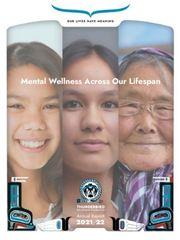
Thunderbird Parnership Annual Report 2021/22 – Mental Wellness Across Our Lifespan


The NCCs of NCCPH

Established in 2005 and funded through the Public Health Agency of Canada (PHAC), the six National Collaborating Centres (NCCs) for Public Health (NCCPH) work together to promote the use of scientific research and other knowledge to strengthen public health practices, programs and policies in Canada.


A unique knowledge hub, the NCCs identify knowledge gaps, foster networks and provide the public health system with an array of evidence-based resources, multi-media products, and knowledge translation services.


Connect with the NCCs

The NCCs are located across Canada, and each focuses on a different public health priority.


The six centres are:


NCC for Indigenous Health (NCCIH), University of Northern British Columbia, Prince George, BC


NCC for Determinants of Health (NCCDH), St. Francis Xavier University, Antigonish, Nova Scotia


NCC for Healthy Public Policy (NCCHPP), Institut national de sante publique du Quebec (INSPQ), Montreal, Quebec


NCC for Infectious Diseases (NCCID), University of Manitoba, Winnipeg, Manitoba


NCC for Environmental Health (NCCEH), British Columbia Centre for Disease Control, Vancouver, BC


NCC for Methods and Tools (NCCMT), McMaster University, Hamilton, Ontario