CLOSING THE CIRCLE - SPRING 2026

The NCCIH
The NCCIH  

HOME | NEWS | PUBLICATIONS | RESOURCE LIBRARY
 

National Collaborating Centre for Indigenous Health
3333 University Way, Prince George, BC, Canada, V2N 4Z9
T: (250) 960-5250 | F: (250) 960-5644
nccih@unbc.ca
nccih.ca


Follow the NCCIH on BlueSky Like the NCCIH on Facebook Connect to the NCCIH on LinkedIn Watch NCCIH videos on Vimeo Watch NCCIH videos on YouTube Listen to NCCIH on SoundCloud Read NCCIH knowledge resources on ISSUU


Welcome


As the days get warmer and the snow begins to recede across the traditional territories of the Lheidli T'enneh First Nation, we are pleased to share the spring edition of the National Collaborating Centre for Indigenous Health (NCCIH) newsletter. Over the winter months, the NCCIH team has been busy developing resources to support learning and dialogue around Indigenous health.


From January to March, NCCIH hosted a four-part webinar series led by Canada Research Chair in Indigenous Environmental Health Governance, Dr. Diana Lewis. Alongside co-presenters ranging from research students to colleagues, Dr. Lewis explored topics including Indigenous-based health research, health impact assessment, Indigenous-led community-based participatory research, and impact measurement. View this series and other NCCIH webinars on our Webinars webpage.


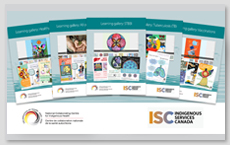
The launch of five learning galleries offers arts-based insights into Indigenous perspectives on health. Developed with support from Indigenous Services Canada (ISC), Indigenous Peoples and Indigenous organizations were invited to submit artworks to be featured in upcoming communicable disease prevention and awareness campaigns. We received nearly 150 high quality entries, reflecting a strong engagement of time and talent of Indigenous artists across the country. The submissions include a broad range of visual and crafting arts, poetry, songs, and storytelling. Visit the web story to learn more.


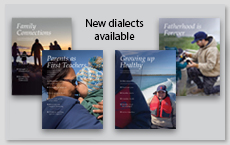
New dialects have been added to the NCCIH’s Inuit resource booklets for parents and care-givers of children (0-6 years) and are now available in Nunavimmiutitut (Nunavik Inuktitut - Tarramiutut, Hudson Bay and Itivimiutut, Ungava Bay dialects). Based on Inuit teachings outlined in inunnguiniq, or making capable human beings, a series of four booklets were developed in 2021 through a partnership between the Aqqiumavvik Society and the NCCIH. These resources for Inuit families and caregivers of children up to six years of age include: Family Connections, Fatherhood is Forever, Growing up Healthy, and Parents as First Teachers. This web story provides access to these resources in all available dialects.


NCCIH is excited to introduce its new Advisory Committee members, including two new Youth members. Our Advisory Committee represents diverse Indigenous communities and includes public health professionals, researchers, representatives from national organizations, and experts who bring both community-based and organizational experience. These Indigenous representatives are an important presence at NCCIH – they provide valuable insight into Indigenous health and wellbeing and help guide and inform NCCIH to strengthen connections with Indigenous communities across the country. We encourage you to visit the webpage to read more about the NCCIH Committee members and the perspectives they bring to this important work.


If you are interested in knowing about our publications, visit our website or subscribe to our mailing list to receive notifications of newly released NCCIH resources, podcasts, webinars, and our regular seasonal newsletters. Please enjoy and share our knowledge resources with your community and networks, and if you have not already done so, join us on Bluesky, Facebook, LinkedIn, Vimeo, YouTube, SoundCloud, or ISSUU to participate in updates as they happen.


After a busy winter season, we hope these latest updates, resources, and stories help reinvigorate your ongoing work and dialogue in Indigenous health. Have a safe and healthy spring, and stay tuned as we continue sharing new updates and resources with our community.


Sna Chaylia
Dr. Terri Aldred, Academic Lead
National Collaborating Centre for Indigenous Health (NCCIH)


NCCIH news and promotions

Inuit resource booklets for parents and care-givers of children (0-6 years), additional dialects

New dialects have been added to the NCCIH’s Inuit resource booklets for parents and care-givers of children (0-6 years). Now available in Nunavimmiutitut (Nunavik Inuktitut - Tarramiutut, Hudson Bay and Itivimiutut, Ungava Bay dialects).


View the resource booklets

View the resource booklets


ISC and NCCIH communicable
disease prevention art galleries:
Sharing grassroots perspectives on preventing communicable diseases

The NCCIH is pleased to announce the launch of five learning galleries, which are multimedia showcases of First Nations, Inuit, and Métis artworks sharing grassroots perspectives on preventing communicable diseases. Each gallery pairs these artworks with relevant NCCIH resources and downloadable public health awareness posters.


Each gallery features a collection of posters for downloading and printing. Please share these posters which feature artistic perspectives on preventing communicable diseases.


Indigenous early learning and child care knowledge resources

Read the web story


Visit the galleries:


Attended events


Public Health (CPHA), Montréal, QC, March 11-13, 2026. cpha.ca/publichealth2026


Upcoming events


The International Congress on Academic Medicine (ICAM), Ottawa, ON, April 16-19, 2026. icam-cimu.ca


New NCCIH publications and resources


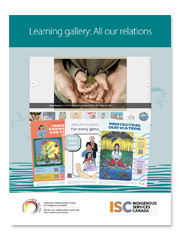
Learning gallery: All our relations

This learning gallery All our relations is premised on the belief that good health encompasses not only physical, mental, spiritual, and emotional well-being, but also harmonious relationships with our family, community, animals, waters, and lands.


View the gallery | Read the web story


Learning gallery: All our relations

Learning gallery: All our relations


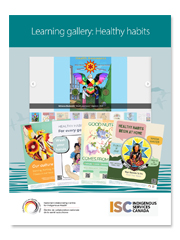
Learning gallery: Healthy habits

This learning gallery Healthy habits focuses on the habits of daily life that make us healthy, happy, and well. Topics include washing hands, exercise, and nutrition.


View the gallery | Read the web story


Learning gallery: Healthy habits

Learning gallery: Healthy habits


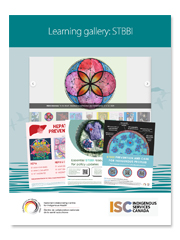
Learning gallery: STBBI

This learning gallery STBBI brings together art and educational resources that address sexually transmitted and blood-borne infections (STBBl). Topics include HIV/AIDS, HPV, Hepatitis B and C, and syphilis.


View the gallery | Read the web story


Learning gallery: STBBI

Learning gallery: STBBI


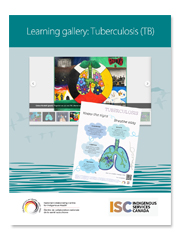
Learning gallery: Tuberculosis (TB)

This learning gallery Tuberculosis (TB) focuses on TB, which is a bacterial infection that mostly affects the lungs. TB is more prevalent in Indigenous communities because of the lasting impacts of colonization, like crowded housing.


View the gallery | Read the web story


Learning gallery: Tuberculosis (TB)

Learning gallery: Tuberculosis (TB)


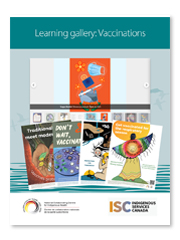
Learning gallery: Vaccinations

This learning gallery Vaccinations focuses on childhood, adult, and prenatal vaccinations. Vaccines are used to prevent infections and the spread of diseases for individuals as well as to maintain broader community health.


View the gallery | Read the web story


Learning gallery: Vaccinations

Learning gallery: Vaccinations


Report - Indigenous health
impact assessment: Systematic
review of the literature

The report Indigenous health impact assessment: Systematic review of the literature examines Indigenous participation in the assessment of resource and infrastructure developments, utilizing an inclusive (i.e., rights-, gender-, and equity-based) approach, the paper provides an overview of Indigenous community-specific frameworks of health and well-being.


Read the report | View the webinar


Report - Indigenous health impact assessment: Systematic review of the literature

Indigenous health impact assessment: Systematic review of the literature


Resource booklet - Fatherhood is forever: A resource booklet about providing for a healthy family based
on Inunnguiniq teachings

The resource booklet Fatherhood is forever gives guidance to Inuit men on becoming confident and effective fathers.


Read the web story | View the booklets:


Resource booklet - Fatherhood is forever

Fatherhood is forever: A resource booklet about providing for a healthy family based on Inunnguiniq teachings


Resource booklet - Family connections: A resource booklet about building strength in families based on Inunnguiniq teachings

The resource booklet Family connections gives guidance to Inuit parents on how to build a strong family and support a healthy future for your children.


Read the web story | View the booklets:


Resource booklet - Family connections

Family connections: A resource booklet about building
strength in families based
on Inunnguiniq teachings


Resource booklet - Growing up healthy: A resource booklet about providing
for a healthy family based on
Inunnguiniq teachings

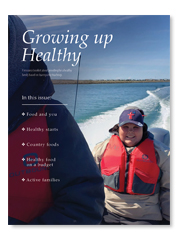
The resource booklet Growing up healthy provides supports to Inuit parents and families by sharing knowledge and activities of Inuit in the past to set an example for healthy living today. Harvesting food, physical activity, strength and endurance, and positive well-being are, then and now, required in order to live successfully.


Read the web story | View the booklets:


Resource booklet - Growing up healthy: A resource booklet about providing for a healthy family based on Inunnguiniq teachings

Growing up healthy: A resource booklet about providing for a healthy family based on Inunnguiniq teachings


Resource booklet - Parents as first teachers: A resource booklet about providing for a healthy family based on Inunnguiniq teachings

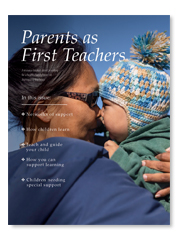
The resource booklet Parents as first teachers provides supports to Inuit parents on raising children in a strong environment of close relations.


Read the web story | View the booklets:


Resource booklet - Parents as first teachers

Parents as first teachers: A resource booklet about providing for a healthy family based on Inunnguiniq teachings


Webinar - H.E.A.L. healthcare:
Hearts-based education and
anticolonial learning in healthcare

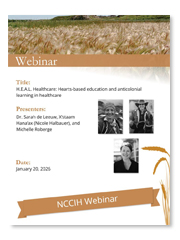
The webinar H.E.A.L. healthcare: Hearts-based education and anticolonial learning in healthcare engaged participants in anti-bias training using anticolonial arts-based learning tools available from the H.E.A.L. Healthcare website – HEALhealthcare.ca. In the webinar, the facilitators introduced the project and website, then worked through two of the curricula with participants.


Watch on Youtube | Listen on SoundCloud


Webinar - H.E.A.L. healthcare: Hearts-based education and anticolonial learning in healthcare

H.E.A.L. healthcare:
Hearts-based education and anticolonial learning in healthcare


Webinar - Indigenous-specific
health impact assessment:
What might it look like in Canada?

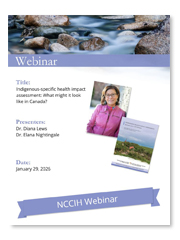
The webinar Indigenous-specific health impact assessment: What might it look like in Canada? explored what distinctions-based Indigenous-specific health impact assessment (HIA) could look like in Canada, advancing Indigenous Peoples’ knowledges, values, and priorities throughout the HIA process.


Watch on Youtube | Listen on SoundCloud


Webinar - Indigenous-specific health impact assessment: What might it look like in Canada?

Indigenous-specific health
impact assessment: What
might it look like in Canada?


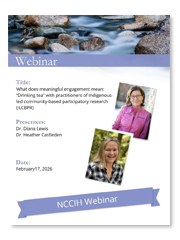
Webinar - What does meaningful engagement mean: “Drinking tea”
with practitioners of Indigenous-led community-based participatory
research (ILCBPR)

In the webinar What does meaningful engagement mean: “Drinking tea” with practitioners of Indigenous-led community-based participatory research (ILCBPR) Drs Diana Lewis and Heather Castleden shared their experiences of working in collaborative and meaningful relationships with Indigenous communities across Canada.


Watch on Youtube | Listen on SoundCloud


Webinar - What does meaningful engagement mean: “Drinking tea” with practitioners of Indigenous-led community-based participatory research (ILCBPR)

What does meaningful engagement mean: “Drinking tea” with practitioners of Indigenous-led community-based participatory research (ILCBPR)


Request NCCIH knowledge resources


Did you know you can request NCCIH publications free of charge? Send your request to us by filling out the “Request this Publication” form found at the bottom of each online publication page, indicate how many copies you’d like, a note about how you will utilize the resource, your name and mailing address. We will do our best to accommodate your request based on our current available printed inventory. If you have multiple publication requests, please use the “Request Publications” text link found in the top right hand corner of the NCCIH web site.


Online resources


In support of creating a health community focused on knowledge synthesis, transfer and exchange we have chosen a sampling of current online resources to share. Please note the links provided in the NCCIH newsletters are for general interest only and do not indicate an endorsement. The views expressed in the linked resources do not necessarily represent the views of the NCCIH or our funder the Public Health Agency of Canada.


Send us an email to nccih@unbc.ca with "Online resource" in the subject line if you have an online resource you would like added to our next newsletter.


AlterNative: An International Journal of Indigenous Peoples

AlterNative: An International Journal of Indigenous Peoples, Vol. 22 Issue 1, March 2026


INSPQ - Indigenous Health Research Monitoring

INSPQ - Indigenous Health Research Monitoring,
March 2026


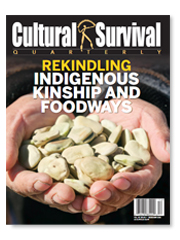
Cultural Survival

Cultural Survival - Rekindling Indigenous Kinship and Foodways


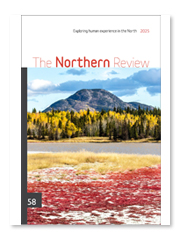
The Northern Review, No. 58 (2025)

The Northern Review,
No. 58 (2025)


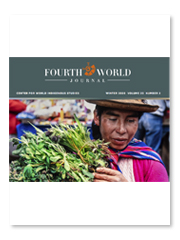
Fourth World Journal, Winter 2026, Vol. 25 No. 2

Fourth World Journal,
Winter 2026, Vol. 25 No. 2


Sage Journals - Regenerative Healing

Sage Journals -
Regenerative Healing


Best practice recommendations for physiotherapists providing telerehabilitation to First Nations people: a modified Delphi study

Carrier Sekani Family Services - Best practice recommendations for physiotherapists providing telerehabilitation to First Nations people: a modified Delphi study


The right to health: Indigenous data sovereignty in Canada during and beyond the COVID-19 pandemic

The Lancet Regional Health – Americas - The right to health: Indigenous data sovereignty in Canada during and beyond the COVID-19 pandemic


Canadian Journal of Public Health – Honoring Indigenous self-determination, and Canada’s responsibility to address health inequities: Reflections on the Lalonde Report

Canadian Journal of Public Health – Honoring Indigenous self-determination, and Canada’s responsibility to address health inequities: Reflections on the Lalonde Report


Frontier Global Women’s Health - Indigenous women's mental health across the life course: a global policy brief for rights-based, culturally safe care

Frontier Global Women’s Health - Indigenous women's mental health across the life course:
a global policy brief for rights-based, culturally safe care


The Lancet Public Health - The association of child removal by child protective services and mortality among First Nations and non-First Nations mothers in Canada: a retrospective cohort study

The Lancet Public Health -
The association of child
removal by child protective services and mortality among
First Nations and non-First Nations mothers in Canada:
a retrospective cohort study


Medscape - Historic and Ongoing Harms Drive Indigenous Patients’ Mistrust of Healthcare System

Medscape - Historic and Ongoing Harms Drive Indigenous Patients’ Mistrust of Healthcare System


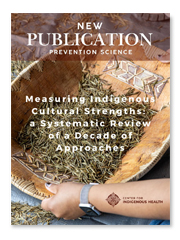
Johns Hopkins Center for Indigenous Health - Measuring Indigenous Cultural Strengths: a Systematic Review of a Decade of Approaches

Johns Hopkins Center for Indigenous Health - Measuring Indigenous Cultural Strengths:
a Systematic Review of a
Decade of Approaches


Animikii Indigenous Technology – How would I want my Aunty treated? Matriarchs Talk About Data

Animikii Indigenous Technology – How would I want my
Aunty treated? Matriarchs
Talk About Data


Canadian Medical Association Journal, Inuit experiences of and expertise on the 21st-century tuberculosis epidemic in Nunavik, Quebec: a qualitative community-based participatory study

Canadian Medical Association Journal - Inuit experiences of and expertise on the 21st-century tuberculosis epidemic in Nunavik, Quebec: a qualitative community-based participatory study


Unlearning and Undoing White Supremacy and Indigenous-Specific Racism Lab for Population and Public Health - Unlearning Club ToolKit

Unlearning and Undoing White Supremacy and Indigenous-Specific Racism Lab for Population and Public Health - Unlearning Club ToolKit


Health Standards Organization - The Winds of Change

Health Standards Organization - The Winds of Change


Signal49 Research - Indigenous Community Health Workers Across Canada

Signal49 Research -
Indigenous Community Health Workers Across Canada


Centre for Indigenous Environmental Resources - When Climate Changes, Everything Changes poster

Centre for Indigenous Environmental Resources -
When Climate Changes, Everything Changes poster


First Nations Major Projects Coalition – Primer for the Spirit of the Land Indigenous Cultural Rights and Interests Toolkit

First Nations Major Projects Coalition – Primer for the Spirit of the Land Indigenous Cultural Rights and Interests Toolkit


First Nations Major Projects Coalition – Implementation Guide for the Spirit of the Land Indigenous Cultural Rights and Interests Toolkit

First Nations Major Projects Coalition – Implementation Guide for the Spirit of the Land Indigenous Cultural Rights
and Interests Toolkit


Statistics Canada – The Daily – Indigenous peoples

Statistics Canada - The Daily - Indigenous peoples


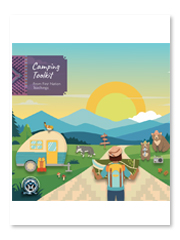
Thunderbird Partnership Foundation - Camping Toolkit from First Nation Teachings

Thunderbird Partnership Foundation - Camping Toolkit
from First Nation Teachings


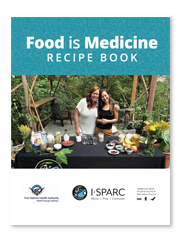
First Nations Health Authority – Food is Medicine Recipe Book

First Nations Health Authority – Food is Medicine Recipe Book


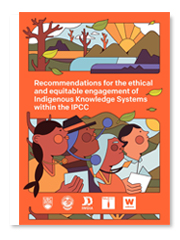
International Work Group for Indigenous Affairs  -Recommendations for the ethical and equitable engagement of Indigenous Knowledge Systems within the IPCC

International Work Group
for Indigenous Affairs -Recommendations for the
ethical and equitable
engagement of Indigenous Knowledge Systems within
the IPCC


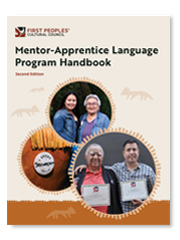
First Peoples’ Cultural Council - Mentor-Apprentice Language Program Handbook

First Peoples’ Cultural Council - Mentor-Apprentice Language Program Handbook


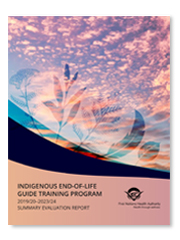
First Nations Health Authority - FNHA Indigenous End-Of-Life Guide Summary Evaluation 2019/20-2023/24

First Nations Health Authority - FNHA Indigenous End-Of-Life Guide Summary Evaluation 2019/20-2023/24


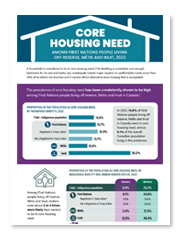
Statistics Canada - Core housing need among First Nations people living off reserve, Métis and Inuit, 2022 infographic

Statistics Canada - Core housing need among First Nations people living off reserve, Métis and Inuit, 2022 infographic


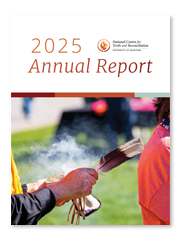
National Centre for Truth and Reconciliation – 2025 Annual Report

National Centre for Truth
and Reconciliation –
2025 Annual Report


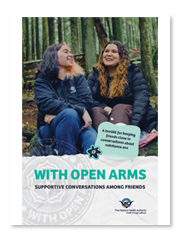
FNHA - With Open Arms: Supportive conversations among friends

First Nations Health Authority - With Open Arms: Supportive conversations among friends


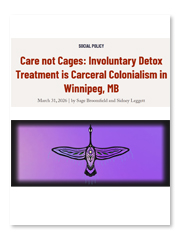
Yellowhead Institute - Care not Cages: Involuntary Detox Treatment is Carceral Colonialism in Winnipeg, MB

Yellowhead Institute -
Care not Cages:
Involuntary Detox Treatment
is Carceral Colonialism in Winnipeg, MB


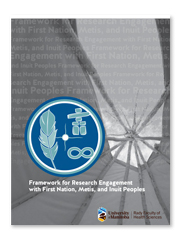
University of Manitoba Rady Faculty of Health Sciences – Framework for Research Engagement with First Nation, Metis, and Inuit Peoples

University of Manitoba Rady Faculty of Health Sciences – Framework for Research Engagement with First Nation, Metis, and Inuit Peoples


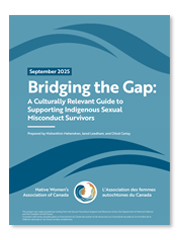
Native Women’s Association of Canada - Bridging the Gap: A Culturally Relevant Guide to Supporting Indigenous Sexual Misconduct Survivors

Native Women’s Association of Canada - Bridging the Gap: A Culturally Relevant Guide to Supporting Indigenous Sexual Misconduct Survivors


Online multimedia


This section features infographics, interactives, apps or videos that we found interesting or educational. Please note the links provided in the NCCIH newsletters are for general interest only and do not indicate an endorsement. The views expressed in the linked resources do not necessarily represent the views of the NCCIH or our funder the Public Health Agency of Canada.


Send us an email if you have multimedia resources you would like included in our next newsletter to nccih@unbc.ca with "Multimedia submission" in the subject line.


Nunavik Regional Board of Health & Social Services - Caring for Elders and Adults in Vulnerable Situations

The Indigenous Planetary Health Podcast

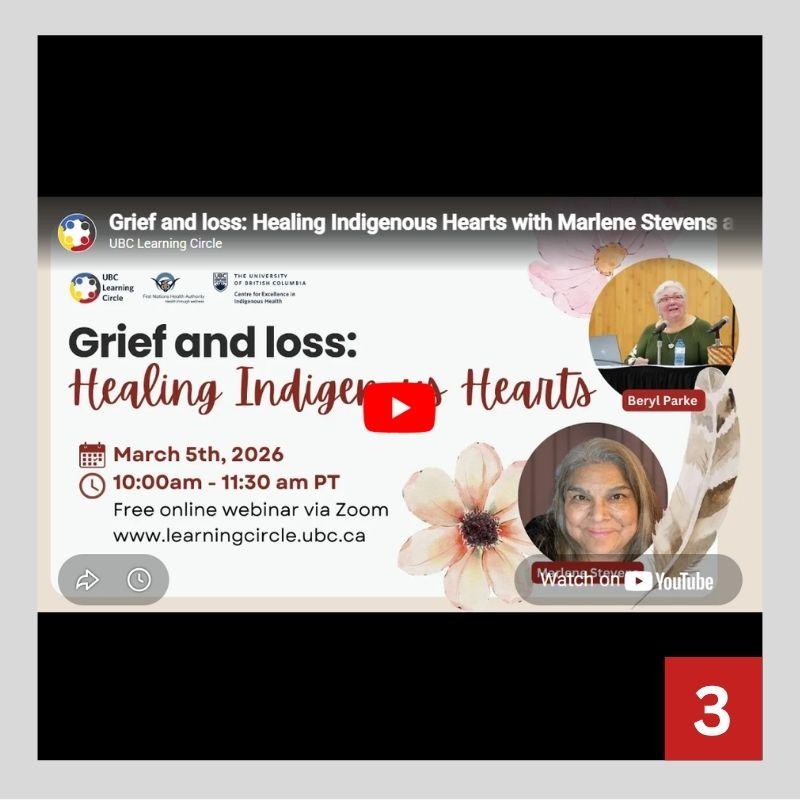
Grief and loss: Healing Indigenous Hearts with Marlene Stevens and Beryl Parke


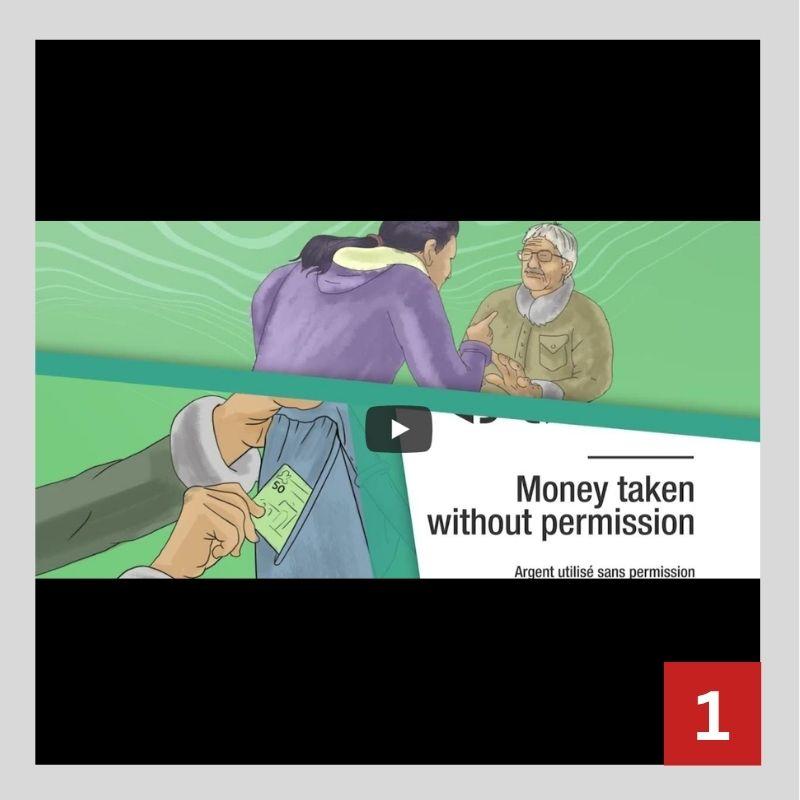
1) Nunavik Regional Board of Health and Social Services – Caring for Elders and Adults in Vulnerable Situations / ᑲᒪᓂᖅ ᐃᓄᑐᖃᕐᓂᒃ ᐃᓄᒻᒪᕆᓐᓂᓗ ᐊᑦᑕᓇᕐᑐᒦᑦᑐᓂᒃ. This webinar explores signs of mistreatment and what one can do to help. Signs of mistreatment include: hurtful or threatening words; feeling unsafe or uncomfortable; physical injuries; money taken without permission.


2) The Indigenous Planetary Health Podcast. Indigenous peoples have ideas for planetary health through resurgence and restoration. From the Archipelagos Collective, Heather Castleden and Hōkūlani Aikau bring you conversations with Indigenous artists, activists, and academics who are tackling the triple crisis of climate change, biodiversity loss, and pollution through daily acts of asserting self-determination to broad trans-Indigenous collective action.


3) Grief and loss: Healing Indigenous Hearts with Marlene Stevens and Beryl Parke. This webinar is geared specifically for Indigenous people who are grieving the death of loved ones due to toxic drug poisoning, from suicide or health issues related to their substance use. The webinar is designed to inform participants about Vancouver Island’s experience hosting the Healing Indigenous Hearts program. This program has prepared individuals to practice selfcare as a facilitator, navigate challenging conversations about drug use, drug poisoning, and grief with empathy through an Indigenous Trauma Informed lens.


The NCCs of NCCPH

Established in 2005 and funded through the Public Health Agency of Canada (PHAC), the six National Collaborating Centres (NCCs) for Public Health (NCCPH) work together to promote the use of scientific research and other knowledge to strengthen public health practices, programs and policies in Canada.


A unique knowledge hub, the NCCs identify knowledge gaps, foster networks and provide the public health system with an array of evidence-based resources, multi-media products, and knowledge translation services.


NCCPH


NCCPH news

NCCMT – Webinar - Moving Research into Practice:
Arts-Based and Community Partnership Knowledge
Translation Strategies

May 13, 2026 from 1:00-2:30pm (ET).


Get a first-hand look at the 2026 NCCPH Knowledge Translation Student Award winners’ crucial work in bridging the gap between research and practice. This session will showcase their impressive efforts leading innovative knowledge translation (KT) strategies in the fields of mental health care for South Asian migrant women, culturally safe care for Indigenous women, Two-Spirit, Indigiqueer, and gender-diverse (IW2SIQGD) peoples, and Black mental health in Canada. Learn more.


NCCMT – Webinar - Moving Research into Practice: <br>Arts-Based and Community Partnership Knowledge Translation Strategies


Learn more and register at nccmt.ca/workshops-webinars.


Read the announcement on the 2026 NCCPH Knowledge Translation Student Award winners.


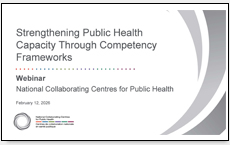
NCCHPP webinar resources - Strengthening Public Health Capacity Through Competency Frameworks

Hosted by the National Collaborating Centre for Healthy Public Policy and the National Collaborating Centre for Determinants of Health on behalf of the National Collaborating Centres (NCCs), this webinar highlighted the NCCs’ leadership in renewing the 2.0 Core Competencies for Public Health in Canada through extensive national engagement. This updated set of competencies offers a common foundation for effective, responsive, and innovative public health practice today. This webinar was held on February 12, 2026. Learn more


CCHPP webinar resources - Strengthening Public Health Capacity Through Competency Frameworks


Learn more at
ccnpps-ncchpp.ca/webinar.


NCCIH

NCC for Indigenous Health (NCCIH), University of Northern British Columbia, Prince George, BC


NCCDH

NCC for Determinants of Health (NCCDH), St. Francis Xavier University, Antigonish, Nova Scotia


NCCHPP

NCC for Healthy Public Policy (NCCHPP), Institut national de sante publique du Quebec (INSPQ), Montreal, Quebec


NCCID

NCC for Infectious Diseases (NCCID), University of Manitoba, Winnipeg, Manitoba


NCCEH

NCC for Environmental Health (NCCEH), British Columbia Centre for Disease Control, Vancouver, BC


NCCMT

NCC for Methods and Tools (NCCMT), McMaster University, Hamilton, Ontario