CLOSING THE CIRCLE - SUMMER 2026

The NCCIH
The NCCIH  

HOME | NEWS | PUBLICATIONS | RESOURCE LIBRARY
 

National Collaborating Centre for Indigenous Health
3333 University Way, Prince George, BC, Canada, V2N 4Z9
T: (250) 960-5250 | F: (250) 960-5644
nccih@unbc.ca
nccih.ca


Follow the NCCIH on BlueSky Like the NCCIH on Facebook Connect to the NCCIH on LinkedIn Watch NCCIH videos on Vimeo Watch NCCIH videos on YouTube Listen to NCCIH on SoundCloud Read NCCIH knowledge resources on ISSUU


Welcome


As we reach the midpoint of summer in the traditional territories of the Lheidli T'enneh First Nation, we are enjoying the warmth, renewal, and opportunities for connection that this season brings. Whether you are taking a break during summer holidays or seeking respite from the heat, we invite you to explore the summer edition of the National Collaborating Centre for Indigenous Health (NCCIH) newsletter.


On May 8, the NCCIH had the honour of signing a Memorandum of Understanding with the University of Northern British Columbia (UNBC), reaffirming a partnership that has spanned more than two decades. The agreement will see UNBC continue to host NCCIH on its Prince George, BC campus, extending a relationship that began when NCCIH was established in 2005. We look forward to the future of this partnership and the many opportunities it will continue to create for our organization and the communities we serve. Learn more about this partnership and event on NCCIH’s webpage.


At the end of May, we gathered in Iqaluit for our annual Advisory Committee meeting to discuss the future direction, priorities, and impact of the NCCIH. Raising up my hands to our Advisory Committee members who continue to play a vital role in guiding NCCIH’s work by providing valuable insights on Indigenous health and wellbeing. Their knowledge and perspectives help strengthen our connections with Indigenous communities across the country and inform our efforts to advance meaningful and impactful initiatives. We invite you to visit our webpage to learn more about the members of the NCCIH Advisory Committee and the diverse perspectives and expertise they bring to this important work.


All four sessions of NCCIH’s webinar series on Indigenous Health Impact Assessment are now available online. Hosted between January and March, the series was led by Dr. Diana Lewis, Canada Research Chair in Indigenous Environmental Health Governance. We extend our sincere thanks to Dr. Lewis, her co-presenters, and the team at the IndigenERA Lab for delivering such insightful and informative webinars – their expertise and contributions helped foster timely discussions on Indigenous approaches to health impact assessment. View NCCIH webinars.


We concluded our conference season this past April at the International Congress on Academic Medicine, where we had the opportunity to connect with colleagues and partners engaged in public health and Indigenous health and wellbeing. We encourage you to request NCCIH publications through our website, or contact us any time. We welcome any comments or questions you may have!


If you are interested in knowing about our publications, visit our website or subscribe to our mailing list to receive notifications of newly released NCCIH resources, podcasts, webinars, and our regular seasonal newsletters. Please enjoy and share our knowledge resources with your community and networks, and if you have not already done so, join us on Bluesky, Facebook, LinkedIn, Vimeo, YouTube, SoundCloud, or ISSUU to participate in updates as they happen.


Summer is a time to strengthen relationships – not only with the land, but also with one another. In this spirit, NCCIH is pleased to share updates on the resources, collaborations, and opportunities that continue to support Indigenous health and wellbeing across the country.


Sna Chaylia
Dr. Terri Aldred, Academic Lead
National Collaborating Centre for Indigenous Health (NCCIH)


NCCIH news and promotions

UNBC and the NCCIH extend partnership

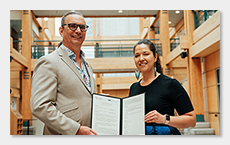
On May 8, the University of Northern British Columbia and the NCCIH signed an agreement to continue a partnership spanning more than two decades.


The agreement will see UNBC continue to host NCCIH on its Prince George, BC campus.
Learn more


UNBC and the NCCIH extend partnership

UNBC Interim President Dr. Bill Owen and NCCIH Academic Lead Dr. Terri Aldred.


The NCCIH is seeking
Research Associates

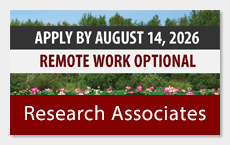
The NCCIH invites applications for the position of Research Associate. First Nations, Inuit, and Métis applicants will receive priority.


Apply by August 14, 2026.


The NCCIH is seeking two Research Associates

View the job posting


Attended events


The International Congress on Academic Medicine (ICAM), Ottawa, ON, April 16-19, 2026. icam-cimu.ca


New NCCIH publications and resources


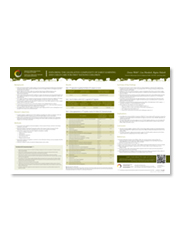
Poster - Exploring the legislative complexity of early learning and
child care for First Nations children

This poster Exploring the legislative complexity of early learning and child care for First Nations children summarizes a study on the legislative complexities of on-reserve early learning and child care programs for First Nations children and families across Canada. It was presented at the 11th International Meeting on Indigenous Child Health conference in Winnipeg, Manitoba.


Read the web story | View the poster


Exploring the legislative complexity of early learning and <br>child care for First Nations children

Exploring the legislative complexity
of early learning and child care
for First Nations children


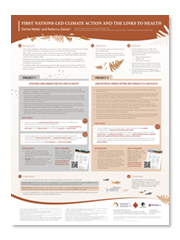
Poster - First Nations-led climate action and the links to health

This poster First Nations-led climate action and the links to health presents the results and implications of a collaborative study on climate action through a public health lens. The study investigated a series of environmental projects run by Whitefish (Goodfish) Lake First Nation #128 and drew connections between the projects and human health and well-being. This poster was presented in March 2026 at the Canadian Public Health Association Public Health 2026 conference in Montreal, Quebec.


View the poster | View the land changes fact sheet | View the carbon capture fact sheet


First Nations-led climate action and the links to health

First Nations-led climate action
and the links to health


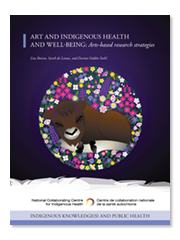
Report - Art and Indigenous health
and well-being: Arts-based
research strategies

This report Art and Indigenous health and well-being: Arts-based research strategies examines the motivations and structures for arts-based research (ABR) into Indigenous Peoples’ health. The authors present three main ABR frameworks: participatory action research, Two-Eyed Seeing, and Indigenous-led research. While each of these frameworks vary on leadership commitments and philosophies, they all exemplify the benefits of ABR as democratizing, insightful, and healing approaches to Indigenous health research.


Read the report


Art and Indigenous health and well-being: Arts-based research strategies

Art and Indigenous health
and well-being: Arts-based
research strategies


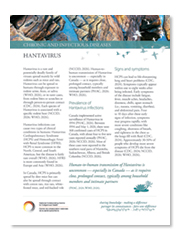
Fact sheet - Hantavirus

This fact sheet Hantavirus discusses basic information about Hantavirus illnesses in humans, including what it is, how it spreads, its prevalence in Canada, signs and symptoms of Hantavirus infection, and potential health outcomes of the disease. The fact sheet also presents information on what people can do to protect themselves from Hantavirus illnesses.


Read the fact sheet


Fact sheet - Hantavirus

Hantavirus


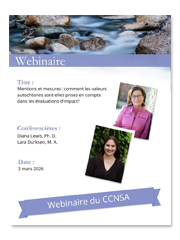
Webinar - Mentions and measures:
How are Indigenous values considered
in impact assessments?

The webinar Mentions and measures: How are Indigenous values considered in impact assessments? Dr. Diana Lewis and Lara Durksen discuss how Indigenous values are understood and considered alongside standardized economic measures in decision-making. Their findings evidence how Indigenous values shared in the IAs are interconnected to health and well-being, emphasizing the importance of Indigenous leadership in IA for informed decision-making.


Watch on Youtube | Listen on SoundCloud


Webinar - Mentions and measures: How are Indigenous values considered in impact assessments?

Mentions and measures:
How are Indigenous values considered in impact assessments?


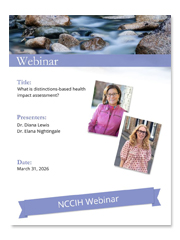
Webinar - What is distinctions-based health impact assessment?

The webinar What is distinctions-based health impact assessment? Drs. Diana Lewis and Elana Nightingale discussed distinctions-based health impact assessment: what it is, what it could look like in Canada, and how it could transform HIA into a process that reflects Indigenous Peoples’ diverse worldviews, knowledge systems and values.


Watch on Youtube | Listen on SoundCloud


Webinar - What is distinctions-based health impact assessment?

What is distinctions-based
health impact assessment?


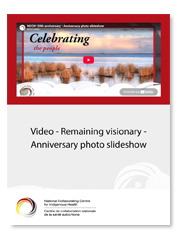
Video - Remaining visionary -
Anniversary photo slideshow

The video Remaining visionary - Anniversary photo slideshow features a retrospective slideshow of photos collected by the NCCIH over the past 20 years.


Read the web story | Watch on YouTube


Video - Remaining visionary - Anniversary photo slideshow

Remaining visionary -
Anniversary photo slideshow


Request NCCIH knowledge resources


Did you know you can request NCCIH publications free of charge? Send your request to us by filling out the “Request this Publication” form found at the bottom of each online publication page, indicate how many copies you’d like, a note about how you will utilize the resource, your name and mailing address. We will do our best to accommodate your request based on our current available printed inventory. If you have multiple publication requests, please use the “Request Publications” text link found in the top right hand corner of the NCCIH web site.


Online resources


In support of creating a health community focused on knowledge synthesis, transfer and exchange we have chosen a sampling of current online resources to share. Please note the links provided in the NCCIH newsletters are for general interest only and do not indicate an endorsement. The views expressed in the linked resources do not necessarily represent the views of the NCCIH or our funder the Public Health Agency of Canada.


Send us an email to nccih@unbc.ca with "Online resource" in the subject line if you have an online resource you would like added to our next newsletter.


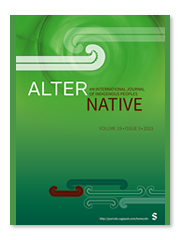
AlterNative: An International Journal of Indigenous Peoples

AlterNative: An International Journal of Indigenous Peoples, Volume 22 Issue 2, June 2026


INSPQ - Indigenous Health Research Monitoring

INSPQ - Indigenous Health Research Monitoring,
June 2026


CMAJ - Canadian Medical Association Journal, Indigenous Health

CMAJ - Canadian Medical Association Journal,
Indigenous Health


International Indigenous Policy Journal, Vol. 16 No. 3 (2026)

International Indigenous Policy Journal, Vol. 16 No. 3 (2026)


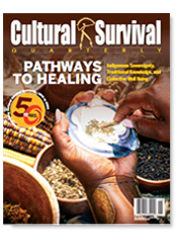
Cultural Survival – Pathways to Healing

Cultural Survival –
Pathways to Healing


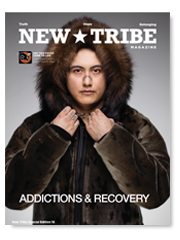
New Tribe Magazine, Addictions and Recovery

New Tribe Magazine,
Addictions and Recovery


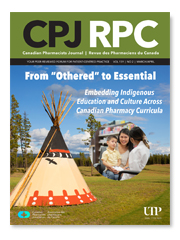
Canadian Pharmacists Journal - Volume 159 Issue 2, March/April 2026

Canadian Pharmacists Journal - Volume 159 Issue 2,
March/April 2026


Fourth World Journal - Volume 26, Number 1 (2026)

Fourth World Journal -
Volume 26, Number 1 (2026)


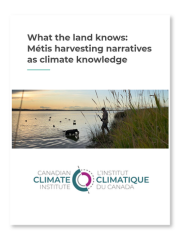
Canadian Climate Institute - What the land knows: Métis harvesting narratives as climate knowledge

Canadian Climate Institute - What the land knows: Métis harvesting narratives as climate knowledge


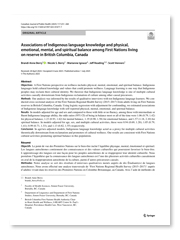
Canadian Journal of Public Health – Associations of Indigenous language knowledge and physical, emotional, mental, and spiritual balance among First Nations living on reserve in British Columbia, Canada

Canadian Journal of Public Health – Associations of Indigenous language knowledge and
physical, emotional, mental,
and spiritual balance among
First Nations living on reserve in British Columbia, Canada


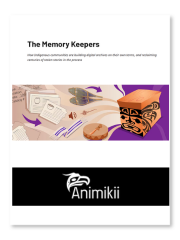
Animikii Indigenous Technology - The Memory Keepers: How Indigenous communities are building digital archives on their own terms, and reclaiming centuries of stolen stories in the process

Animikii Indigenous Technology - The Memory Keepers:
How Indigenous communities
are building digital archives
on their own terms, and
reclaiming centuries of stolen stories in the process


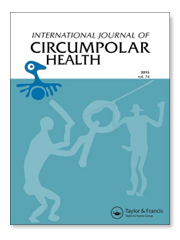
International Journal of Circumpolar Health - Naapinneq: strengthening Inuit maternal and child health through gathering Inuit from Kalaallit Nunaat and Nunavut

International Journal of Circumpolar Health -
Naapinneq: strengthening
Inuit maternal and child health through gathering Inuit from Kalaallit Nunaat and Nunavut


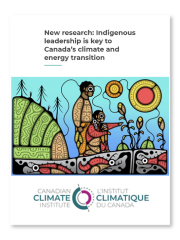
Canadian Climate Institute - New research: Indigenous leadership is key to Canada’s climate and energy transition

Canadian Climate Institute -
New research: Indigenous leadership is key to Canada’s climate and energy transition


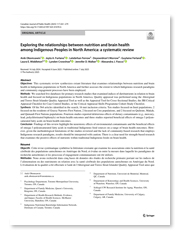
Canadian Journal of Public Health – Exploring the relationships between nutrition and brain health among Indigenous Peoples in North America: a systematic review

Canadian Journal of Public Health – Exploring the relationships between nutrition and brain
health among Indigenous
Peoples in North America:
a systematic review


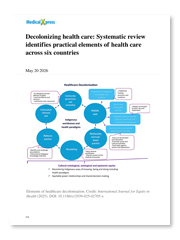
George Institute for Global Health - Decolonizing health care: Systematic review identifies practical elements of health care across six countries

George Institute for Global Health - Decolonizing health care: Systematic review identifies practical elements of health
care across six countries


Genetics in Medicine - Forced resilience: Indigenous perspectives on systemic barriers and humanizing genomic medicine in British Columbia, Canada

Genetics in Medicine -
Forced resilience: Indigenous perspectives on systemic
barriers and humanizing
genomic medicine in British Columbia, Canada


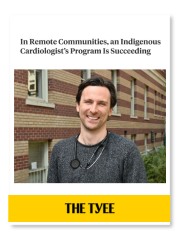
The Tyee - In Remote Communities, an Indigenous Cardiologist’s Program Is Succeeding

The Tyee - In Remote Communities, an Indigenous Cardiologist’s Program
Is Succeeding


Canadian Journal of Public Health – Trends in the dispensing of opioids for pain and concurrent benzodiazepine use among First Nations People in Ontario, Canada, from 2013 to 2021

Canadian Journal of Public Health – Trends in the dispensing of opioids for pain and concurrent benzodiazepine use among First Nations People in Ontario, Canada, from 2013 to 2021


Centre for Indigenous Environmental Resources - A Quick Guide to Indigenous-Led Health Impact Assessment

Centre for Indigenous Environmental Resources - A Quick Guide to Indigenous-Led Health Impact Assessment


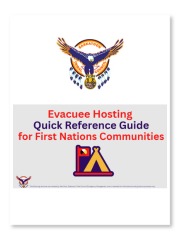
Saskatoon Tribal Council - Evacuee Hosting – Quick Reference Guide for First Nations Communities

Saskatoon Tribal Council - Evacuee Hosting -
Quick Reference Guide for
First Nations Communities


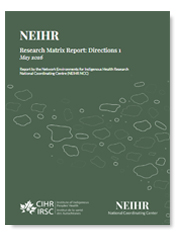
Network Environments for Indigenous Health Research National Coordinating Centre - NEIHR Research Matrix Report: Directions 1

Network Environments for Indigenous Health Research National Coordinating Centre - NEIHR Research Matrix Report: Directions 1


City of Vancouver - Urban Indigenous Engagement Framework

City of Vancouver -
Urban Indigenous
Engagement Framework


Canada Mortgage and Housing Corporation - Housing design and construction innovation in practice among First Nation, Inuit and Métis communities

Canada Mortgage and Housing Corporation - Housing design and construction innovation in practice among First Nation, Inuit and Métis communities


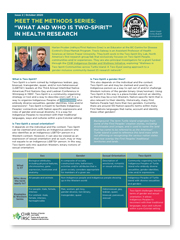
Institute of Gender and Health – Meet the Methods Series: What and Who is Two-Spirit in Health Research

Institute of Gender and Health – Meet the Methods Series:
What and Who is Two-Spirit
in Health Research


Starting Home Fires – HIV Resource Collection

Starting Home Fires –
HIV Resource Collection


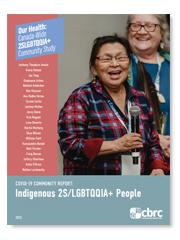
Community-Based Research Centre - Our Health COVID-19 Community Report: Indigenous 2S/LGBTQQIA+ People

Community-Based Research Centre - Our Health COVID-19 Community Report: Indigenous 2S/LGBTQQIA+ People


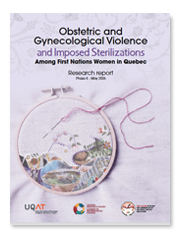
First Nations of Quebec and Labrador Health and Social Services Commission – Obstetric and Gynecological Violence and Imposed Sterilization Among First Nations Women in Quebec – Research report, Phase II, - May 2026

First Nations of Quebec and Labrador Health and Social Services Commission - May 2026


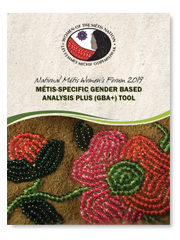
Women of the Métis Nation – Métis-Specific Gender Based Analysis Plus (GBA+) Tool

Women of the Métis Nation – Métis-Specific Gender Based Analysis Plus (GBA+) Tool


BC First Nations Justice Council - Indigenous Women’s Justice Plan (IWJP): Wage Narrative Report – The 15 Month Journey of the Women’s Team

BC First Nations Justice Council - Indigenous Women’s Justice Plan (IWJP): Wage Narrative Report – The 15 Month Journey of
the Women’s Team


Native Women’s Association of Canada - Indigenous Women and Self-Government

Native Women’s Association of Canada - Indigenous Women
and Self-Government


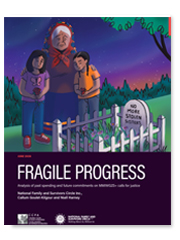
Canadian Centre for Policy Alternatives - Fragile progress: Analysis of past spending and future commitments on MMIWG2S+ calls for justice

Canadian Centre for Policy Alternatives - Fragile progress: Analysis of past spending
and future commitments on MMIWG2S+ calls for justice


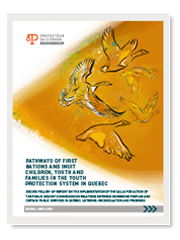
Protecteur du citoyen - Pathways of First Nations and Inuit Children, Youth and Families in Youth Protection in Québec

Protecteur du citoyen -
Pathways of First Nations and Inuit Children, Youth and Families in Youth Protection in Québec


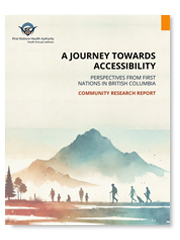
First Nations Health Authority - A Journey Towards Accessibility Perspectives from First Nations in British Columbia

First Nations Health Authority -
A Journey Towards Accessibility Perspectives from First Nations
in British Columbia


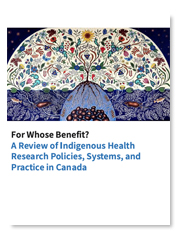
Forum for Indigenous Implementation Research and Evaluation (FIIRE) and Well Living House - For Whose Benefit? A Review of Indigenous Health Research Policies, Systems, and Practice in Canada

Forum for Indigenous Implementation Research and Evaluation (FIIRE) and Well Living House - For Whose Benefit?
A Review of Indigenous Health Research Policies, Systems,
and Practice in Canada


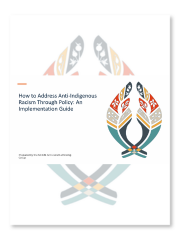
PNational Circle for Indigenous Medical Education - How to Address Anti-Indigenous Racism Through Policy: An Implementation Guide

National Circle for Indigenous Medical Education -
How to Address Anti-Indigenous Racism Through Policy:
An Implementation Guide


Sioux Lookout First Nations Health Authority - Opioid Use Disorder Guide: For community members

Sioux Lookout First Nations Health Authority - Opioid
Use Disorder Guide:
For community members


Statistics Canada – The Daily – Indigenous peoples

Statistics Canada - The Daily - Indigenous peoples


Government of Canada - Indigenous Peoples Thematic Series: The use of Indigenous languages in urban areas in Canada

Government of Canada - Indigenous Peoples
Thematic Series: The use
of Indigenous languages in
urban areas in Canada


First Nations Health Authority - Alhgoh Together as One, Together as Community: Pathway to Indigenous Cultural Safety course

First Nations Health Authority - Alhgoh Together as One, Together as Community: Pathway to Indigenous Cultural Safety course


Online multimedia


This section features infographics, interactives, apps or videos that we found interesting or educational. Please note the links provided in the NCCIH newsletters are for general interest only and do not indicate an endorsement. The views expressed in the linked resources do not necessarily represent the views of the NCCIH or our funder the Public Health Agency of Canada.


Send us an email if you have multimedia resources you would like included in our next newsletter to nccih@unbc.ca with "Multimedia submission" in the subject line.


Tending Our Roots podcast

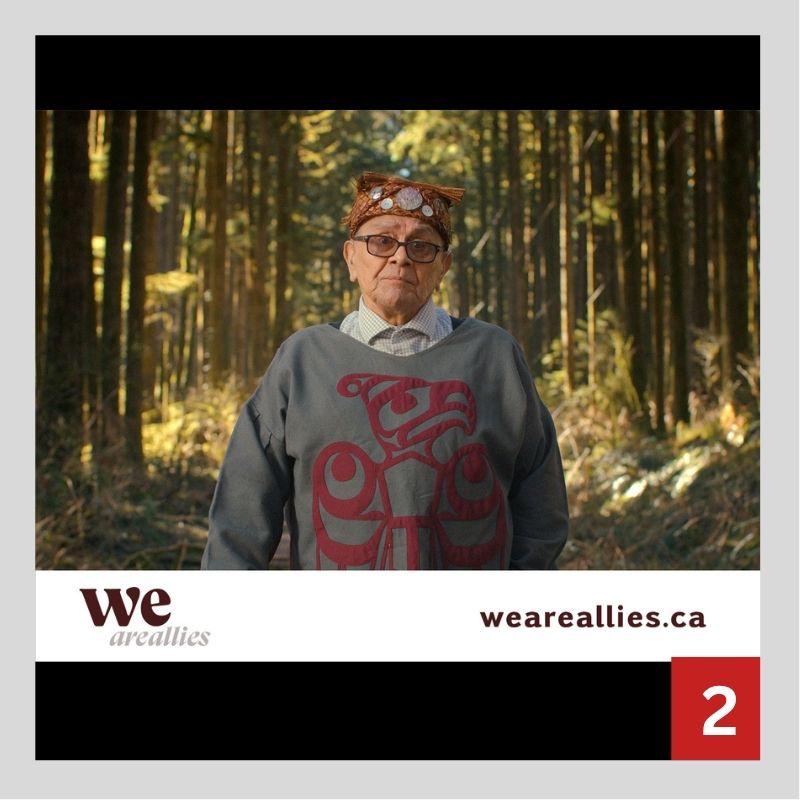
WeAreAllies.ca - Trans, Two-Spirit and non-binary people have always existed

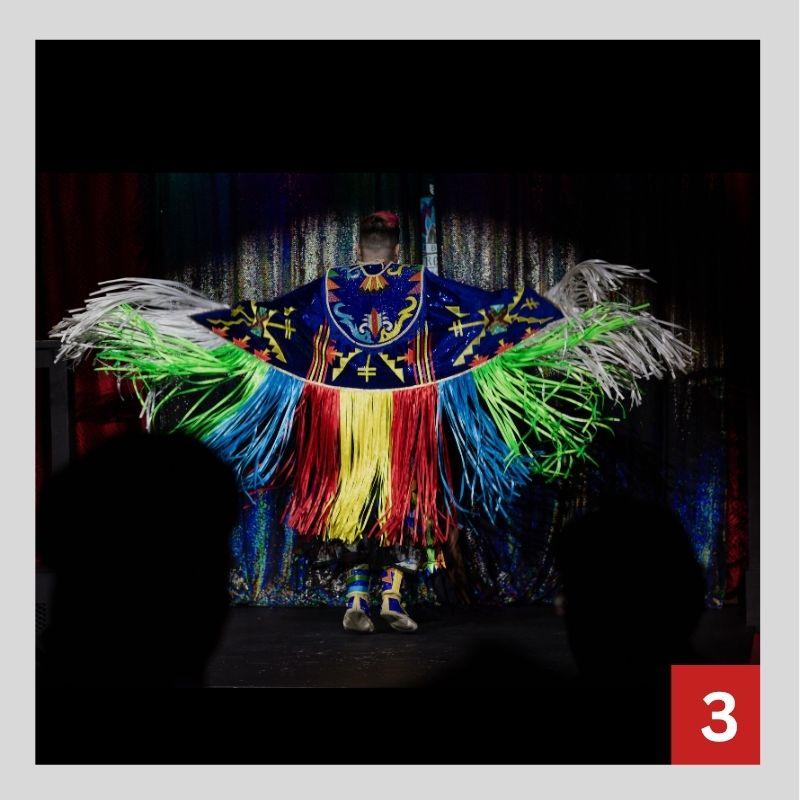
Community-Based Research Centre - Two-Spirit Resurgence


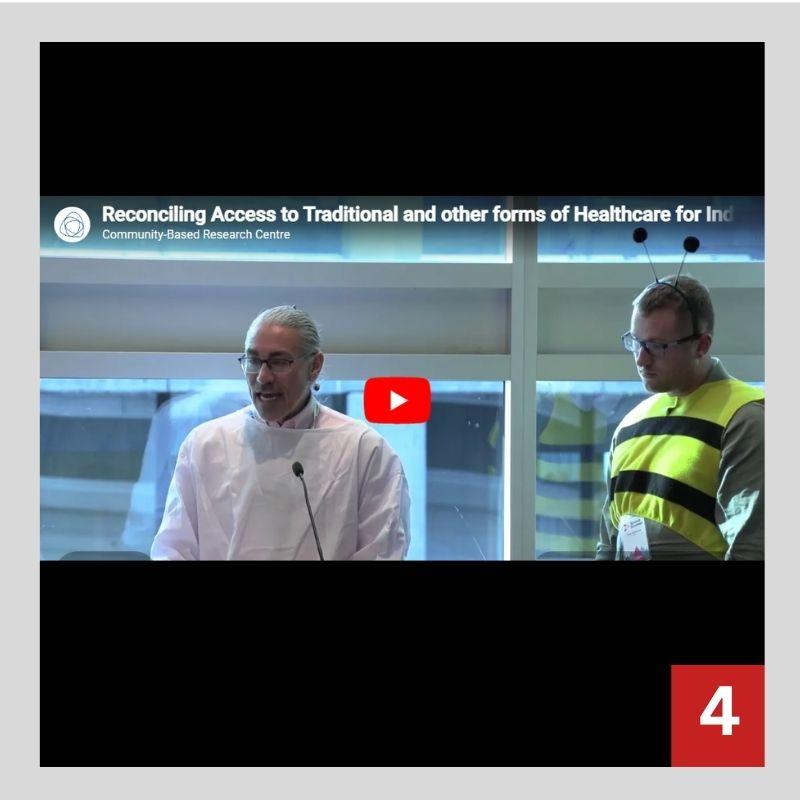
Community-Based Research Centre - Reconciling Access to Traditional and other forms of Healthcare for Indigenous 2S/GBQ People

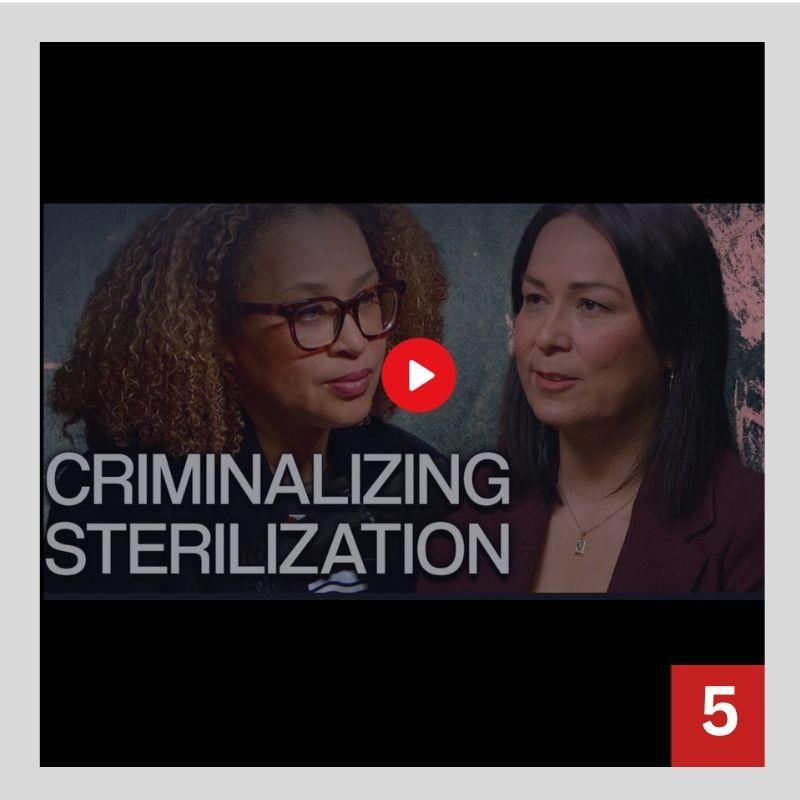
(MIS)Treated podcast - S01 E27 - How Canada stops forced sterilization of Indigenous women

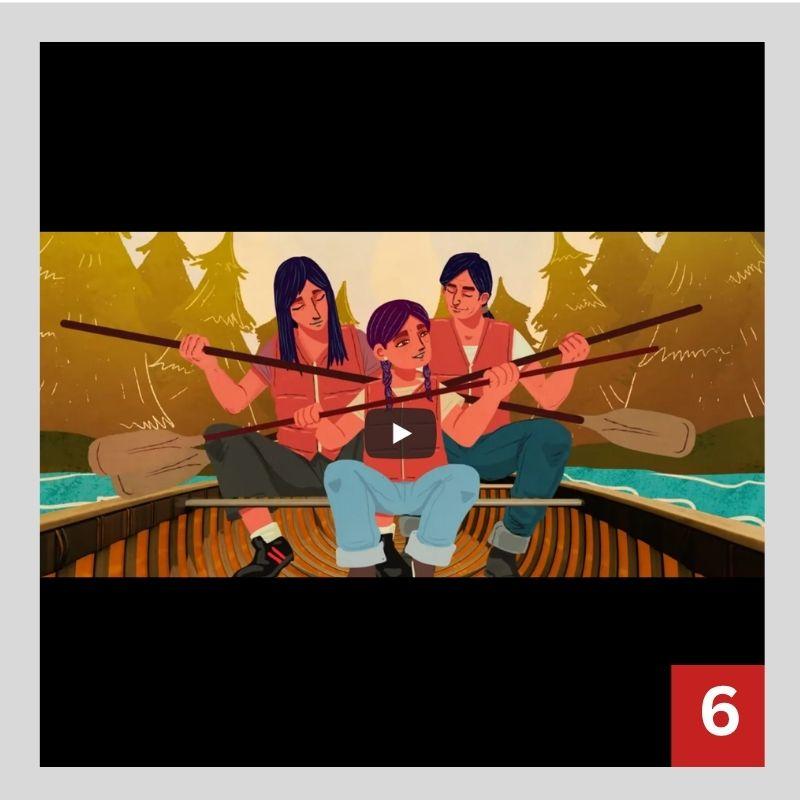
FNHA - The River of Life - A Shared Journey With Your Community Health Nurse


1) Tending Our Roots podcast. “Tending Our Roots” is a conversation-based podcast that uplifts Indigenous voices, knowledge, and ways of being as pathways to well-being. Hosted by Dr. Miigis Gonzalez (Lac Courte Oreilles Ojibwe) and Dr. Jill Fish (lineal descendant of the Tuscarora Nation), the podcast creates space for stories grounded in relationships—to land, to community, to spirit, and to self. Each episode brings listeners into conversation with guests whose lives and work reflect Indigenous approaches to living well.


2) WeAreAllies.ca - Trans, Two-Spirit and non-binary people have always existed. We all have a role to play as allies to trans, Two-Spirit, and non-binary youth. We Are Allies was created to help adults learn how to support and care for the youth in their lives. Learn more about the Two-Spirit and Indigenous leaders who share their knowledge, lived experiences and perspectives about gender diversity.


3) Community-Based Research Centre - Two-Spirit Resurgence. The Two-Spirit team at CBRC is proud to share a short documentary film created in 2024 that celebrates and documents the ongoing resurgence of Two-Spirit and Indigiqueer identity happening across Turtle Island. Recorded during the 2022 Two-Spirit Symposium, with footage from Vancouver’s Two-Spirit and Indigenous LGBTQQIA+ Celebration and Awareness Day festivities in March 2023, the film features edifying interviews with Elders, community leaders and Two-Spirit team staff members.


4) Community-Based Research Centre - Reconciling Access to Traditional and other forms of Healthcare for Indigenous 2S/GBQ People. Presented by Harlan Pruden and Ryan Stillwagon at Summit 2019: Queering Healthcare Access and Accessibility, in Vancouver October 31 - November 1.


5) (MIS)Treated podcast - S01 E27 - How Canada stops forced sterilization of Indigenous women. This episode is about forced and coerced sterilization of Indigenous women and girls in Canada. Please listen with care. In 2025, Senator Yvonne Boyer, Ontario’s first Indigenous senator, proposed a bill to criminalize forced and coerced sterilization. If passed, Bill S-228 will amend the Criminal Code to ensure that forced sterilization would be included in the definition of aggravated assault, punishable by up to 14 years in prison. Host and producer Nam Kiwanuka features Harmony Redsky from the Survivor's Circle for Reproductive Justice. The episode discusses the history of forced and coerced sterilization, the organization's survivor-led initiatives, and the current push for legislative change to criminalize these violations.


6) First Nations Health Authority - The River of Life - A Shared Journey With Your Community Health Nurse. The River of Life is an animated film that shows how First Nations community health nurses paddle alongside individuals, families and communities from birth to Elderhood, promoting wholistic wellness and blending First Nations knowledge with public health practice.


The NCCs of NCCPH

Established in 2005 and funded through the Public Health Agency of Canada (PHAC), the six National Collaborating Centres (NCCs) for Public Health (NCCPH) work together to promote the use of scientific research and other knowledge to strengthen public health practices, programs and policies in Canada.


A unique knowledge hub, the NCCs identify knowledge gaps, foster networks and provide the public health system with an array of evidence-based resources, multi-media products, and knowledge translation services.


NCCPH


NCCPH news

NCCPP and the Canadian Public Health Association - Webinar -
Core Competencies for Public Health in Canada: Release 2.0

The Core Competencies for Public Health in Canada: Release 2.0 provide a modernized framework outlining the essential knowledge, skills, and attitudes required for effective public health practice. This webinar introduced the updated framework, explored its practical applications for workforce development and professional learning, and discussed some new initiatives to integrate the competencies for a coordinated, future-ready public health system in Canada.


Webinar - Core Competencies for Public Health in Canada: Release 2.0


Watch the webinar.


NCCPH - Three articles released
by the various NCCs to support
the Core Competencies for
Public Health in Canada:
Release 2.0 resource

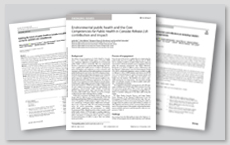
Article - Environmental public health and the Core Competencies for Public Health in Canada - Release 2.0 - contribution and impact


Article - Building the future of public health in Canada: A modified Delphi survey for updated core competencies


Article - Commentary—presentation and reflections on renewing Canada’s public health core competencies


Three articles released by the various NCCs to support <br>the Core Competencies for Public Health in Canada: Release 2.0 resource


Read:
Core competencies for public health in Canada: Release 2.0.


NCCDH - Mind the Disruption podcast - Season 4, Episode 3: Disrupting for culturally safe
health systems

What can we do to promote culturally safe places and spaces across the health system? Listen to this episode to learn about how Dr. Terri Aldred, the Academic Lead for the NCCIH, disrupts dominant narratives about Indigeneity. Terri shares stories from her journey to become an Indigenous physician, outlines concrete actions practitioners can take to foster cultural safety, and encourages us all to work together for a brighter future.


NCCDH - Mind the Disruption podcast - Season 4, Episode 3: Disrupting for culturally safe health systems


Listen to the episode.


NCCIH

NCC for Indigenous Health (NCCIH), University of Northern British Columbia, Prince George, BC


NCCDH

NCC for Determinants of Health (NCCDH), St. Francis Xavier University, Antigonish, Nova Scotia


NCCHPP

NCC for Healthy Public Policy (NCCHPP), Institut national de sante publique du Quebec (INSPQ), Montreal, Quebec


NCCID

NCC for Infectious Diseases (NCCID), University of Manitoba, Winnipeg, Manitoba


NCCEH

NCC for Environmental Health (NCCEH), British Columbia Centre for Disease Control, Vancouver, BC


NCCMT

NCC for Methods and Tools (NCCMT), McMaster University, Hamilton, Ontario