CLOSING THE CIRCLE - WINTER 2025

The NCCIH
The NCCIH  

HOME | NEWS | PUBLICATIONS | RESOURCE LIBRARY
 

National Collaborating Centre for Indigenous Health
3333 University Way, Prince George, BC, Canada, V2N 4Z9
T: (250) 960-5250 | F: (250) 960-5644
nccih@unbc.ca
nccih.ca


Follow the NCCIH on BlueSky Like the NCCIH on Facebook Connect to the NCCIH on LinkedIn Watch NCCIH videos on Vimeo Watch NCCIH videos on YouTube Listen to NCCIH on SoundCloud Read NCCIH knowledge resources on ISSUU


Welcome


As winter settles over the traditional territories of the Lheidli T'enneh First Nation, we hope this edition of the National Collaborating Centre for Indigenous Health (NCCIH) newsletter finds you well. Family gatherings during this holiday season are a valuable opportunity for reflection, renewal, and connection. The long evenings are also an ideal time to explore new resources, including our latest First Nations Early Learning and Child Care (ELCC) resource series, digital storytelling project, and new Learning Galleries.


Developed by the NCCIH with funding from Employment and Social Development Canada (ESDC) and in collaboration with the First Nations Information Governance Centre (FNIGC), we hope our recently published resources on Early Learning and Child Care will support the growth and the well-being of First Nations children, families, and communities. We invite you to take some time this season to explore these materials and share them within your networks.


We are also excited to share the digital storytelling project, Stories of our health: Perspectives of First Nations, Inuit, and Métis youth. Developed in collaboration with Birchbark Collaborative, this project highlights what health and well-being mean to Indigenous youth. Through their stories, they explore how cultural safety and health equity shape their experiences, communities, and visions for a healthier future. These digital stories offer valuable insights into the diverse strengths and challenges faced by Indigenous communities today.


Our team has been busy sharing these and other resources at conferences and gatherings. Many thanks to those that came to visit us at our exhibit booths at the First Nations Health Managers Association Annual Conference November 4-6 and Journées annuelles de santé publique 2025 December 1-3. Our NCCIH team will also host a booth at the upcoming Canadian Public Health Conference from March 11-13 in Montreal, where we invite you to visit us, say hello, and take home our latest NCCIH resources.


If you are interested in knowing about our publications, visit our website or subscribe to our mailing list to receive notifications of newly released NCCIH resources, podcasts, webinars, and our regular seasonal newsletters. Please enjoy and share our knowledge resources with your community and networks, and if you have not already done so, join us on Bluesky, Facebook, LinkedIn, Vimeo, YouTube, SoundCloud, or ISSUU to participate in updates as they happen.


This season, we hope you are able to take some time to relax, reflect, and recharge. May these latest updates, resources, and stories offer inspiration and support as you prepare to welcome the new year with renewed energy. Thank you for being a valued part of our community.


Sna Chaylia
Dr. Terri Aldred, Academic Lead
National Collaborating Centre for Indigenous Health (NCCIH)


NCCIH news and promotions

Stories of our health: Perspectives of First Nations, Inuit, and Métis youth

Over 2025, the NCCIH undertook a national digital storytelling project, Stories of our health: Perspectives of First Nations, Inuit, and Métis youth to better understand what health and well-being mean to Indigenous young people.


Two digital storytelling workshops took place in Winnipeg, Prince George, and Ottawa with Indigenous youth (aged 14-20). These resulted in eleven digital stories and nine podcast episodes.


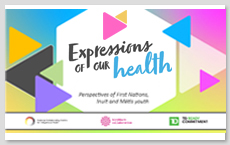
The Expressions of our health: Perspectives of First Nations, Inuit, and Métis children and youth zine came about through a call for submissions for a zine art contest for First Nations, Inuit and Métis children and youth. Youth, aged 5 through 18, were asked to creatively express what health and wellness meant to them, through any type of artwork that could be translated to a print format.


This NCCIH project was completed in collaboration with Birchbark Collaborative and Indigenous youth facilitators Victoria Grisdale and Meadow Isabell.


Learn more about the project on NCCIH's web story.


View the video playlist

View the video playlist


View the podcast playlist

View the podcast playlist


View the youth zine

View the youth zine


Indigenous early learning and child care knowledge resources

The NCCIH, with support from Employment and Social Development Canada (ESDC), has developed a series of knowledge resources to inform and strengthen programs and policies designed to serve families with young children in First Nations communities.


The knowledge resources present the collective results of three interrelated qualitative studies examining different aspects of early learning and child care (ELCC) programming for First Nations children on reserve.


Indigenous early learning and child care knowledge resources

Learn more


Ongoing call for photographs:
Seeking First Nations, Inuit and
Métis photographs for NCCIH
knowledge products

The NCCIH is seeking photographs for use in upcoming knowledge products focused on First Nations, Inuit, and Métis topics.


Photographs can feature a variety of subjects related to First Nations, Inuit, and Métis peoples, including children in an educational setting, cultural activities, families/intergenerational relationships, and more. There will be a $50.00 honorarium for use of photographs that are selected for inclusion in the resources.


NCCIH Call for Photography

Learn more


Attended events


First Nations Health Managers Association 12th Annual Conference,
Montréal, QC, November 4-6, 2025. fnhmaconference.ca/2025


JASP Conference, Montréal, QC, December 1-3, 2025. inspq.qc.ca/jasp (French only)


Upcoming events


Public Health (CPHA), Montréal, QC, March 11-13, 2026. cpha.ca/publichealth2026


New NCCIH publications and resources


Report - Quality care and young First Nations children: An exploration of optimal learning and development in early childhood settings on reserve

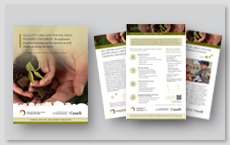
The report Quality care and young First Nations children: An exploration of optimal learning and development in early childhood settings on reserve presents the results of a three-part project that the NCCIH started in 2021. The report concludes with six key recommendations for enhancing ELCC program practice, practitioner education and training, and legislation and regulations in First Nations communities.


Read the web story | Read the report


Quality care and young First Nations children: An exploration of optimal learning and development in early childhood settings on reserve

Quality care and young First Nations children: An exploration of optimal learning and development in early childhood settings on reserve


Infographic - Key characteristics
of quality ELCC programming in
First Nations communities

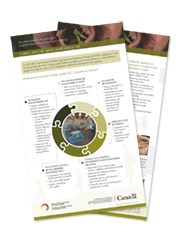
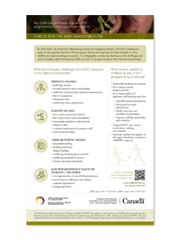
The infographic Key characteristics of quality ELCC programming in First Nations communities presents key findings from the quality ELCC programming study. The presented results offer a general outline of the qualities that First Nations people value and believe are important for their children in ELCC program settings on reserve, including components of quality program practices, quality program curriculum and activities, and quality program structures and centre operations.


Read the web story | Read the infographic


Infographic - Key characteristics of quality ELCC programming in First Nations communities

Key characteristics of quality
ELCC programming in
First Nations communities


Infographic - Key challenges and
needs of quality ELCC programming
in First Nations communities

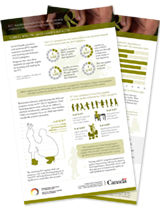
The infographic Key challenges and needs of quality ELCC programming in First Nations communities presents key findings from the quality ELCC programming study. The presented results outline the difficulties First Nations communities face with early childhood program delivery on reserve, including major obstacles and critical hindrances to ELCC program progress, as well as what’s needed for quality enhancement in on-reserve ELCC programming.


Read the web story | Read the infographic


Infographic - Key challenges and needs of quality ELCC programming in First Nations communities

Key challenges and needs of
quality ELCC programming in
First Nations communities


Infographic - ELCC legislative complexities for on-reserve
early childhood programs and
First Nations children

The infographic ELCC legislative complexities for on-reserve early childhood programs and First Nations children summarizes legislative complexities that influence the regulation, licensing, funding, quality, and cultural appropriateness of reserve-based early learning and child care (ELCC) programs for First Nations children. It offers recommendations based on these complexities to support promising ELCC practice, practitioner training, and policy-making.


Read the web story | Read the infographic


Infographic - ELCC legislative complexities for on-reserve early childhood programs and First Nations children

ELCC legislative complexities for
on-reserve early childhood
programs and First Nations children


Plain language summary - Incorporation of First Nations knowledges and perspectives in ELCC training
programs across Canada

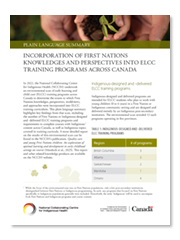
The plain language summary Incorporation of First Nations knowledges and perspectives in ELCC training programs across Canada presents the number of ELCC training programs in each province and territory across Canada (with the exception of Nunavut), categorized into six program types based on the degree of First Nations control of the program and the extent to which First Nations knowledges and perspectives were incorporated into the curricula.


Read the web story |
Read the plain language summary


Plain language summary - Incorporation of First Nations knowledges and perspectives in ELCC training programs across Canada

Incorporation of First Nations knowledges and perspectives
in ELCC training programs
across Canada


Report summary - Quality care and young First Nations children:
Summary of findings from the
quality ELCC programming study

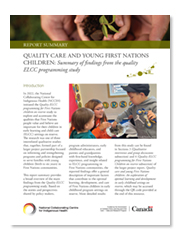
The report summary Quality care and young First Nations children: Summary of findings from the quality ELCC programming study provides a broad overview of the main findings from the Quality ELCC programming study.


Read the web story | Read the report summary


Report summary - Quality care and young First Nations children: Summary of findings from the quality ELCC programming study

Quality care and young First Nations children: Summary of findings from the quality ELCC programming study


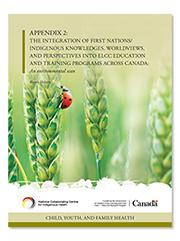
Appendix 2 - The integration of First Nations/Indigenous knowledges, worldviews, and perspectives into
ELCC education and training programs across Canada: An environmental scan

The digital companion Appendix 2 - The integration of First Nations/Indigenous knowledges, worldviews, and perspectives into ELCC education and training programs across Canada: An environmental scan provides a snapshot of ELCC, early childhood development, and early childhood education training curricula offered by post-secondary institutions across Canada.


Read the web story | Read the appendix


Appendix 2 - The integration of First Nations/Indigenous knowledges, worldviews, and perspectives into ELCC education and training programs across Canada: An environmental scan

Appendix 2 - The integration of First Nations/Indigenous knowledges, worldviews, and perspectives into ELCC education and training programs across Canada:
An environmental scan


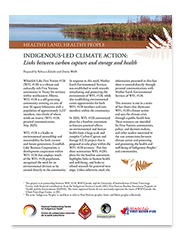
Fact sheet - Indigenous-led climate action: Links between carbon capture and storage and health

The fact sheet Indigenous-led climate action: Links between carbon capture and storage and health explores an Indigenous-led baseline assessment to forecast the effects of a potential large-scale Carbon Capture and Storage (CCS) project. It highlights the many connections between CCS and health and well-being.


Read the fact sheet


Fact sheet - Indigenous-led climate action: Links between carbon capture and storage and health

Indigenous-led climate action:
Links between carbon capture
and storage and health


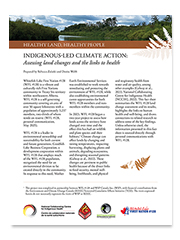
Fact sheet - Indigenous-led climate action: Assessing land changes and the links to health

The fact sheet Indigenous-led climate action: Assessing land changes and the links to health explores an Indigenous-led land change assessment and the vast connections to health and well-being.


Read the fact sheet


Fact sheet - Indigenous-led climate action: Assessing land changes and the links to health

Indigenous-led climate action: Assessing land changes and
the links to health


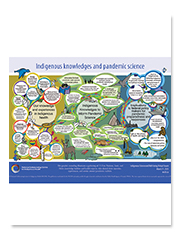
Poster - Indigenous knowledges and pandemic science: Graphic recording

The poster Indigenous knowledges and pandemic science presents results from virtual, open-forum conversations on Indigenous science and well-being in the context of pandemic preparedness and response. Several key themes emerged from the conversation, including decolonizing data and addressing the determinants of health and systemic inequities.


View the poster


Poster - Indigenous knowledges and pandemic science: Graphic recording

Indigenous knowledges
and pandemic science:
Graphic recording


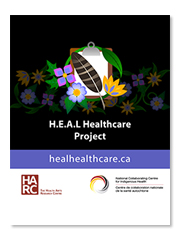
Interactive learning - H.E.A.L. Healthcare: Hearts-based Education and Anti-colonial Learning

The Hearts-based Education and Anti-colonial Learning curriculum brings together artists, writers, activists, and people with lived experience to create arts-based anti-oppression learning materials for healthcare educators, professionals, and practitioners.


Read more


Interactive learning - H.E.A.L. Healthcare: Hearts-based Education and Anti-colonial Learning

H.E.A.L. Healthcare: Hearts-based Education and Anti-colonial Learning


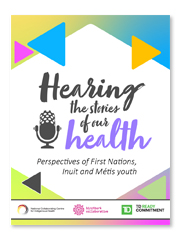
Podcast - Hearing the stories of our health: Perspectives of First Nations, Inuit and Métis youth

The NCCIH undertook a national digital storytelling project, Hearing the stories of our health: Perspectives of First Nations, Inuit and Métis youth to better understand what health and well-being mean to Indigenous young people. Nine of the digital storytellers participated in this podcast series where they could further reflect on their lives, their communities, and what health really means to them in a world that often forgets to ask them.


Read the web story | Listen on SoundCloud


Listen on:

Listen on Soundcloud Listen on Spotify Listen on Apple Podcasts Listen on Amazon Podcasts Listen on YouTube Music  


Podcast - Hearing the stories of our health: Perspectives of First Nations, Inuit and Métis youth

Hearing the stories of our health: Perspectives of First Nations,
Inuit and Métis youth


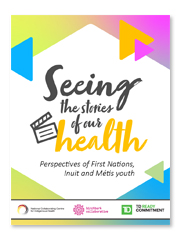
Video - Seeing the stories of our health: Perspectives of First Nations, Inuit,
and Métis youth

The NCCIH undertook a national digital storytelling project, Seeing the stories of our health: Perspectives of First Nations, Inuit and Métis youth to better understand what health and well-being mean to Indigenous young people. These resulted in eleven digital stories. The youth expressed multiple and intersecting topics in their digital stories related to their health and well-being.


Read the web story | Watch on YouTube


Video - Seeing the stories of our health: Perspectives of First Nations, Inuit, and Métis youth

Seeing the stories of our health: Perspectives of First Nations,
Inuit, and Métis youth


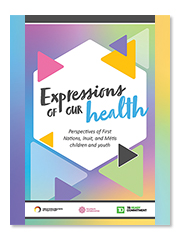
Zine - Expressions of our health: Perspectives of First Nations, Inuit,
and Métis children and youth

The Expressions of our health: Perspectives of First Nations, Inuit, and Métis children and youth zine came about through a call for submissions for a zine art contest for First Nations, Inuit and Métis children and youth. Youth, aged 5 through 18, were asked to creatively express what health and wellness meant to them, through any type of artwork that could be translated to a print format.


Read the web story | Read the zine


Zine - Expressions of our health: Perspectives of First Nations, Inuit, and Métis children and youth

Zine - Expressions of our health: Perspectives of First Nations, Inuit, and Métis children and youth


Digital storytelling workshop guide

The Digital storytelling workshop guide aims to guide First Nations, Inuit, and Métis peoples, communities, and organizations in creating meaningful digital storytelling projects and workshops with Indigenous youth. Derived from the methods and approaches used by the NCCIH and Birchbark Collaborative in a digital storytelling project, Stories of our health: Perspectives of First Nations, Inuit, and Métis youth, the guidebook takes readers through a step-by-step process of organizing and facilitating their own digital storytelling activities.


Read the web story | Read the guide


Digital storytelling guide

Digital storytelling guide


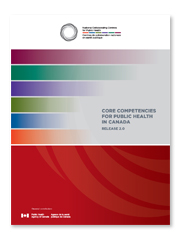
Report - Core Competencies for Public Health in Canada: Release 2.0

The report Core Competencies for Public Health in Canada: Release 2.0 includes 64 core competency statements organized into 10 categories. Core competencies are the essential knowledge, skills and attitudes necessary for the practice of public health.


Read the report


NCCPH – Core Competencies for Public Health in Canada: Release 2.0

Core Competencies for
Public Health in Canada:
Release 2.0


Request NCCIH knowledge resources


Did you know you can request NCCIH publications free of charge? Send your request to us by filling out the “Request this Publication” form found at the bottom of each online publication page, indicate how many copies you’d like, a note about how you will utilize the resource, your name and mailing address. We will do our best to accommodate your request based on our current available printed inventory. If you have multiple publication requests, please use the “Request Publications” text link found in the top right hand corner of the NCCIH web site.


Online resources


In support of creating a health community focused on knowledge synthesis, transfer and exchange we have chosen a sampling of current online resources to share. Please note the links provided in the NCCIH newsletters are for general interest only and do not indicate an endorsement. The views expressed in the linked resources do not necessarily represent the views of the NCCIH or our funder the Public Health Agency of Canada.


Send us an email to nccih@unbc.ca with "Online resource" in the subject line if you have an online resource you would like added to our next newsletter.


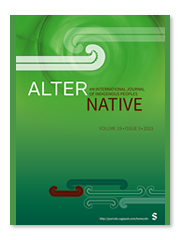
AlterNative: An International Journal of Indigenous Peoples

AlterNative: An International Journal of Indigenous Peoples, Vol. 21 Issue 4, December 2025


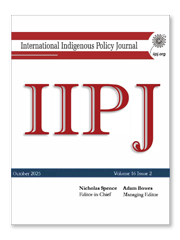
International Indigenous Policy Journal

International Indigenous Policy Journal, Vol. 16 No. 2 (2025)


CMAJ - Canadian Medical Association Journal

CMAJ - Canadian Medical Association Journal,
Indigenous Health


INSPQ - Indigenous Health Research Monitoring

INSPQ - Indigenous Health Research Monitoring,
October 2025


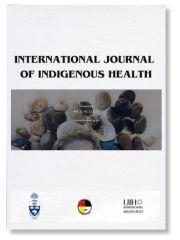
International Journal of Indigenous Health

International Journal of Indigenous Health, Vol. 21 No. 1


The Conversation - Reconciliation without accountability is just talk — especially when it comes to Indigenous health

The Conversation - Reconciliation without accountability is just talk - especially when it comes to Indigenous health


Assocation of Research Libraries - Honouring Indigenous Data Sovereignty in Ceremony and Practice: A Collaborative Pathway at the University of Alberta

Assocation of Research Libraries - Honouring Indigenous Data Sovereignty in Ceremony and Practice: A Collaborative Pathway at the University of Alberta


First Nations Health Authority Newsletter, November 27, 2025

First Nations Health Authority Newsletter, November 27, 2025 - Standing up against gender
based violence and more


Statistics Canada – The Daily – Indigenous peoples

Statistics Canada - The Daily - Indigenous peoples


Ki-Low-Na Friendship Society – Supporting Indigenous health and wellness in the journey towards home

Ki-Low-Na Friendship Society – Supporting Indigenous health
and wellness in the
journey towards home


TFirst Nations Health Authority - A System that Works for us: Upholding Indigenous Perspectives for Decolonizing Patient-Centred Measurement

First Nations Health Authority - A System that Works for us: Upholding Indigenous Perspectives for Decolonizing Patient-Centred Measurement


First Nations Health Managers Association - Bridging Worlds, Creating Safety: An Environmental Scan, Competency Framework, and Strategic Vision for the Indigenous Health Navigator Profession

First Nations Health
Managers Association - Bridging Worlds, Creating Safety:
An Environmental Scan, Competency Framework, and Strategic Vision for the Indigenous Health Navigator Profession


Thunderbird Partnership Foundation - Which Medicines will Support my Recovery from Opioid Addiction?

Thunderbird Partnership Foundation - Which Medicines
will Support my Recovery from Opioid Addiction?


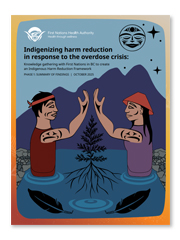
First Nations Health Authority - Indigenizing harm reduction in response to the overdose crisis: Knowledge gathering with First Nations in BC to create an Indigenous Harm Reduction Framework

First Nations Health Authority - Indigenizing harm reduction
in response to the overdose
crisis: Knowledge gathering
with First Nations in BC to
create an Indigenous Harm Reduction Framework


Thunderbird Partnership Foundation - Stand Up to Stigma – Stand Up for Peace

Thunderbird Partnership Foundation - Stand Up to Stigma - Stand Up for Peace


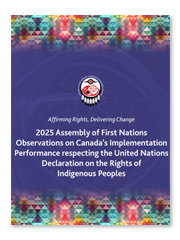
Assembly of First Nations - Affirming Rights, Delivering Change: 2025 Assembly of First Nations Observations on Canada’s Implementation Performance respecting the United Nations Declaration on the Rights of Indigenous Peoples

Assembly of First Nations - Affirming Rights, Delivering Change: 2025 Assembly of First Nations Observations on Canada’s Implementation Performance respecting the United Nations Declaration on the Rights of Indigenous Peoples


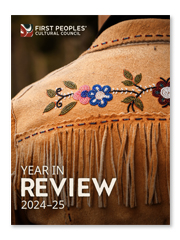
First Peoples’ Cultural Council - Annual Report to Communities 2024-25

First Peoples’ Cultural
Council - Annual Report to Communities 2024-25


Statistics Canada - The importance of cultural continuity in foster care for the long-term mental health of Indigenous people in Canada

Statistics Canada -
The importance of cultural continuity in foster care for the long-term mental health of Indigenous people in Canada


National Collaborating Centre for Infectious Diseases - Sustainable Development Goal (SDG) 6, Infectious Diseases, and Climate Change

National Collaborating Centre
for Infectious Diseases - Sustainable Development
Goal (SDG) 6, Infectious Diseases, and Climate Change


Government of Ontario - Chief Medical Officer of Health 2024 Annual Report Protecting Tomorrow: The Future of Immunization in Ontario

Government of Ontario - Chief Medical Officer of Health 2024 Annual Report Protecting Tomorrow: The Future of Immunization in Ontario


The Chief Public Health Officer - Working together to thrive: Well-being and public health

The Chief Public Health Officer - Working together to thrive: Well-being and public health


Online multimedia


This section features infographics, interactives, apps or videos that we found interesting or educational. Please note the links provided in the NCCIH newsletters are for general interest only and do not indicate an endorsement. The views expressed in the linked resources do not necessarily represent the views of the NCCIH or our funder the Public Health Agency of Canada.


Send us an email if you have multimedia resources you would like included in our next newsletter to nccih@unbc.ca with "Multimedia submission" in the subject line.


Mind the Disruption Podcast - Disrupting for well-being with Recover Edmonton

Indigenous Dental Association of Canada - Joyce’s Tooth Tales: A Journey of Courage and Wisdom

Quite a morning - Sandro Echaquan, a life dedicated to combining Indigenous and occidental medicine


1) Mind the Disruption Podcast – Disrupting for well-being with Recover Edmonton. In response to rising tensions and unmet needs in its downtown core, the City of Edmonton’s RECOVER Urban Wellbeing team and partners questioned assumptions and embarked on a journey of deep listening and co-creation of solutions with residents to cultivate connectedness and well-being. Check out this episode, featuring former RECOVER project manager Sue Holdsworth, to discover how RECOVER’s well-being framework can be used to transform how we design, deliver and evaluate programs and services to foster essential, but often overlooked, non-material aspects of health and well-being.


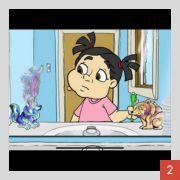
2) Indigenous Dental Association of Canada - Joyce’s Tooth Tales: A Journey of Courage and Wisdom. This video project features a series of insightful stories introducing a young girl who shares her oral health journey; from her first loose tooth and first cavity to becoming a dental specialist. The content also delves into the unique challenges faced by Indigenous communities in accessing dental care and the innovative solutions to overcome these barriers. Also available in Cree.


3) Quite a morning - Sandro Echaquan, a life dedicated to combining Indigenous and occidental medicine. The nurse Sandro Echaquan works today to integrate Indigenous knowledge into our health system to make members of Indigenous communities feel safe. Notably, he works to implement Joyce’s Principle, committed to the right to equitable and discrimination-free access to health care. This principle was developed after the passing of his cousin Joyce Echaquan, in 2020, a victim of racism in the hospital in Joliette. (Available in French only)


The NCCs of NCCPH

Established in 2005 and funded through the Public Health Agency of Canada (PHAC), the six National Collaborating Centres (NCCs) for Public Health (NCCPH) work together to promote the use of scientific research and other knowledge to strengthen public health practices, programs and policies in Canada.


A unique knowledge hub, the NCCs identify knowledge gaps, foster networks and provide the public health system with an array of evidence-based resources, multi-media products, and knowledge translation services.


NCCPH


NCCPH news

NCCID Webinar - Supporting TB Care in First Nations, Inuit and Northern Communities

Date TBD (in the new year).


Join us in the new year for a webinar discussing the social realities of tuberculosis (TB) in First Nations and Inuit communities, and the importance of a culturally responsive approach to TB care. Learn more.


NCCID - Webinar - Supporting TB Care in First Nations, Inuit and Northern Communities


Learn more and register at nccid.ca/webcast.


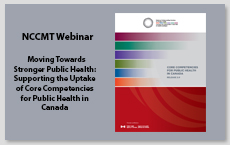
NCCMT Webinar - Moving Towards Stronger Public Health: Supporting the Uptake of Core Competencies for Public Health in Canada

March 4, 2026, 1:00PM - 2:30PM ET


Public health in Canada has faced many challenges over the past few years, including the COVID-19 pandemic, the resurgence of measles and ongoing environmental health impacts related to climate change. To overcome these challenges and move towards a healthier, more equitable Canada, we need a competent, agile and engaged public health workforce. Join our upcoming free webinar to learn more about the Core Competencies for Public Health in Canada: Release 2.0 and how you can boost competence in these essential building blocks for public health practice. Learn more


NCCHPP Series – Portrait of Health in All Policies in Canada


Learn more and register at nccmt.ca/workshops.


NCCIH

NCC for Indigenous Health (NCCIH), University of Northern British Columbia, Prince George, BC


NCCDH

NCC for Determinants of Health (NCCDH), St. Francis Xavier University, Antigonish, Nova Scotia


NCCHPP

NCC for Healthy Public Policy (NCCHPP), Institut national de sante publique du Quebec (INSPQ), Montreal, Quebec


NCCID

NCC for Infectious Diseases (NCCID), University of Manitoba, Winnipeg, Manitoba


NCCEH

NCC for Environmental Health (NCCEH), British Columbia Centre for Disease Control, Vancouver, BC


NCCMT

NCC for Methods and Tools (NCCMT), McMaster University, Hamilton, Ontario