Tax Reforms in a Multi-level Environment and an Uncertain 21st Century | |
|
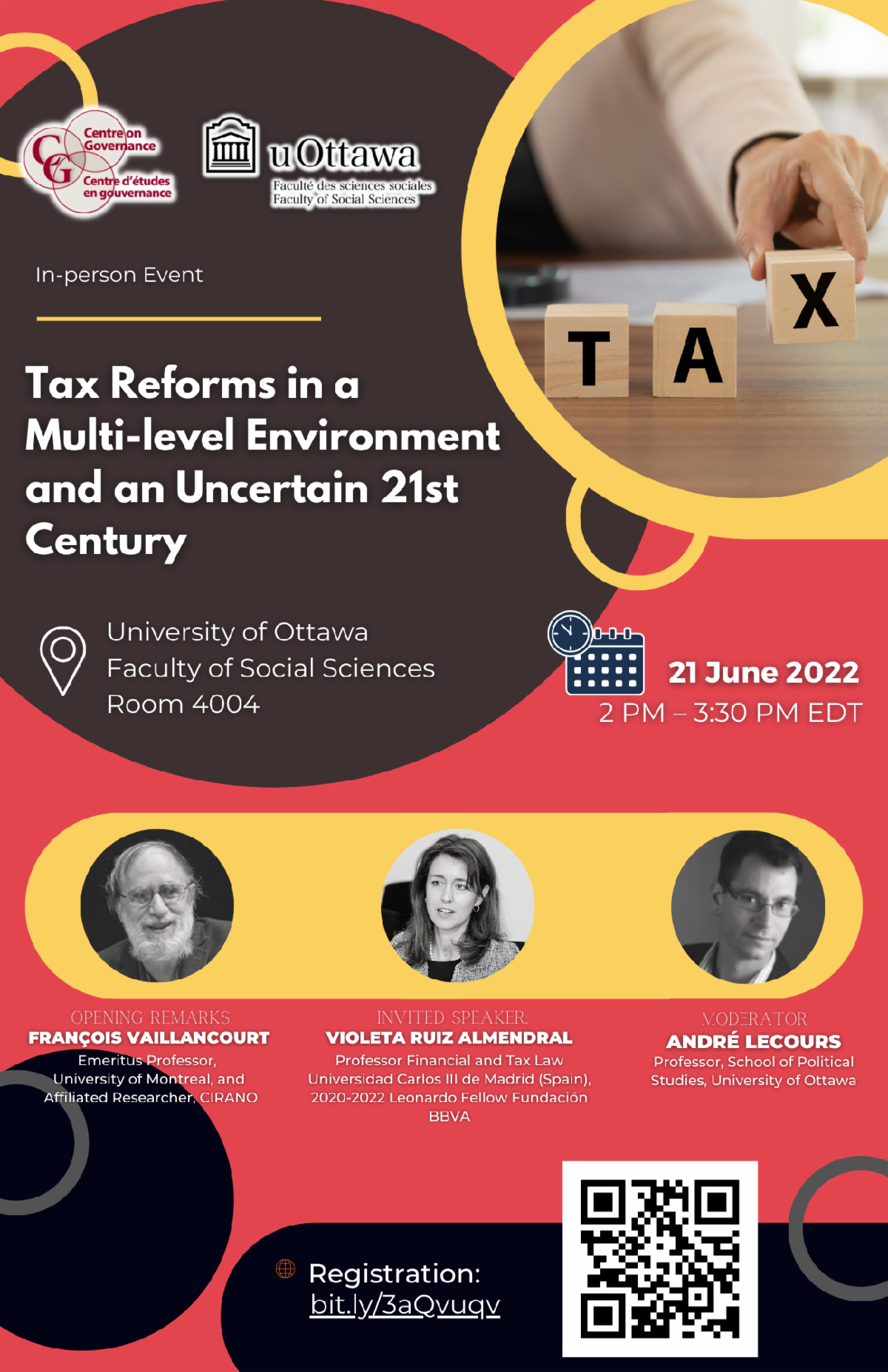
21 June 2022
2:00 pm to 3:30 pm EDT
In-person event, room FSS 4004
| |
Presented by the Centre on Governance
On 3 March 2022, the so-called White Paper for Tax Reform was presented. However, reform of the tax system has been urgent in Spain, and also beyond its borders, for years. As is well known, the foundations on which taxation is based in the countries of our political and economic environment (EU, OECD) have not changed substantially since their construction in the 20th century, although the economic structure has, following the confluence of factors such as globalization and digitalization. In this presentation, Professor Violeta Ruiz Almendral will set out some of the main challenges and problems, but also the limits, facing the Spanish tax system beyond the proposals contained in the aforementioned White Paper.
READ MORE
| |
|
Guest Speaker:
Violeta Ruiz Almendral
Professor Financial and Tax Law, Universidad Carlos III de Madrid (Spain), 2020-2022 Leonardo Fellow Fundación BBVA
Openning Remarks:
François Vaillancourt
Emeritus Professor, University of Montreal, and Affiliated Researcher, CIRANO
Moderator:
André Lecours
Professor, School of Political Studies, University of Ottawa
| | | |
Assessing Coalitions in Community Action | |
|
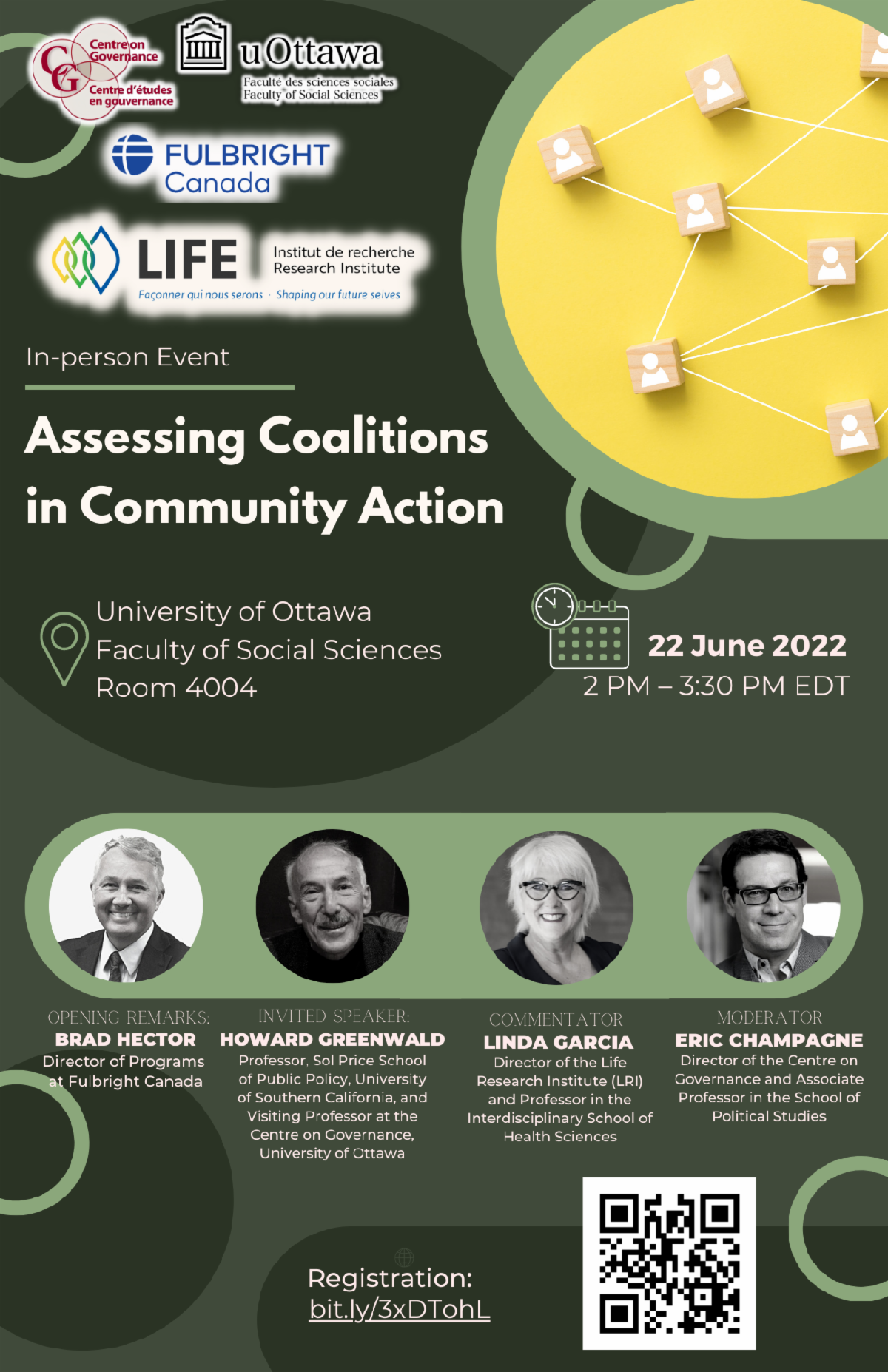
22 June 2022
2:00 pm to 3:30 pm EDT
In-person event, room FSS 4004
| |
Presented by the Centre on Governance and Fulbright Canada
It is widely believed that the most effective way to promote community empowerment and social change is to form coalitions among local organizations. According to this formulation, successful coalition formation can be considered a criterion for success, or, from an evaluation point of view, an "intermediate outcome." To help evaluate a community-based project in Minnesota, a colleague and I developed a measure of the extent to which coalition formation took place and to improve our understanding of associated challenges. This measure can be developed further for use by evaluators. More fundamentally, concerns with coalition formation raise questions for validity of evaluation design.
READ MORE
| |
|
Guest Speaker:
Howard P. Greenwald
Professor, Sol Price School of Public Policy, University of Southern California, and Fulbright Research Fellow at the Centre on Governance, University of Ottawa
Opening remarks:
Brad Hector
Director of Programs, Fulbright Canada
Commentator
Linda Garcia
Director of the Life Research Institute (LRI) and Professor in the Interdisciplinary School of Health Sciences
Moderator
Eric Champagne
Director of the Centre on Governance and Associate Professor, the School of Political Studies, University of Ottawa
| | | |
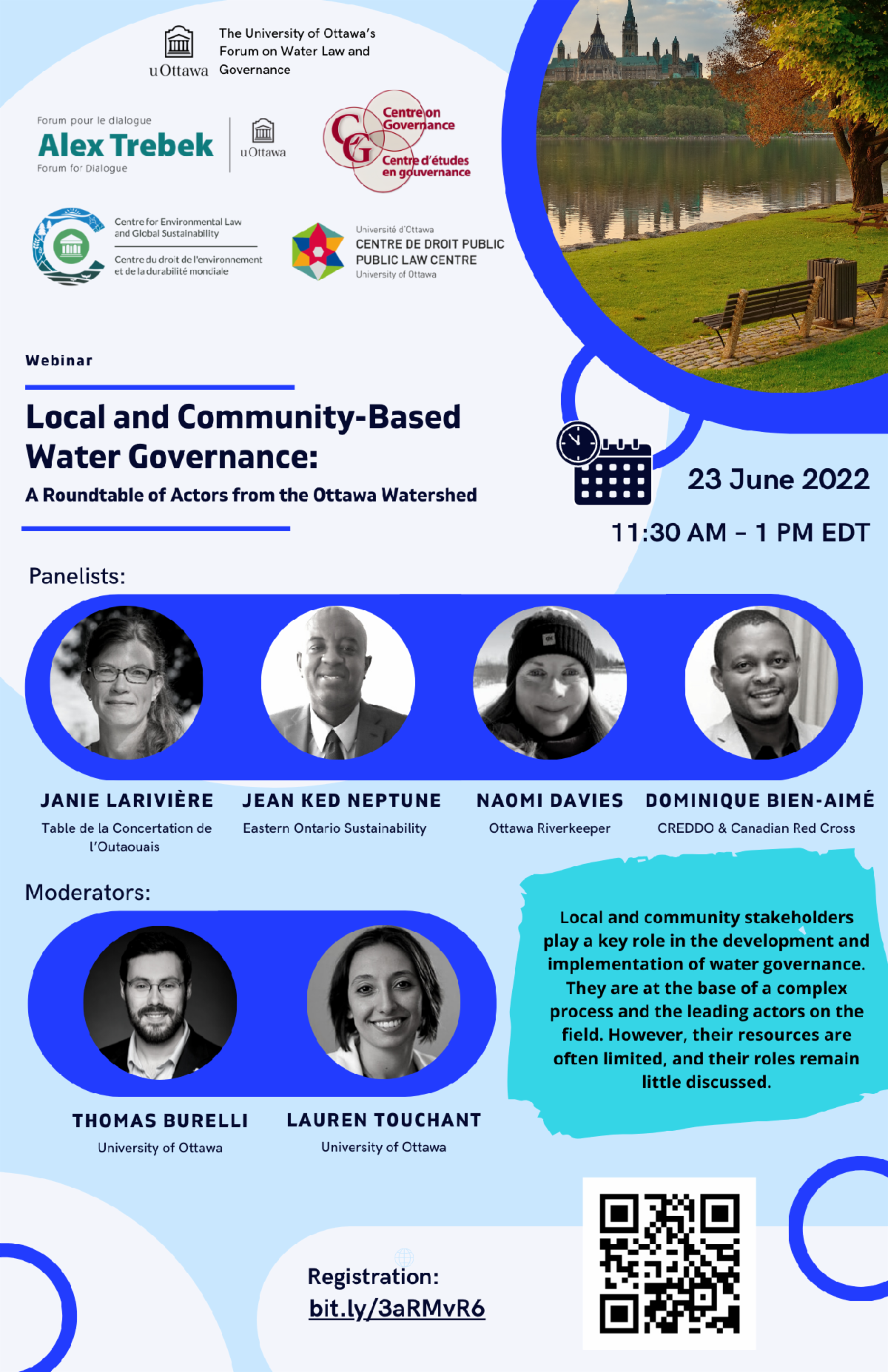
Local and Community-Based Water Governance: A Roundtable of Actors from the Ottawa Watershed | |
|
23 June 2022
11:30 pm to 1:00 pm EDT
Webinar
| |
Presented by the University of Ottawa's Forum on Water Law and Governance, in partnership with the Centre for Environmental Law and Global Sustainability, the Public Law Centre, the Centre on Governance, and the Alex Trebek Forum for Dialogue
Local and community stakeholders play a key role in the development and implementation of water governance. They are at the base of a complex process and the leading actors on the field. However, their resources are often limited, and their roles remain little discussed.
With a focus on social science and law, this event will explore the diversity of issues, challenges, and dynamics of local water governance. More specifically, this roundtable will focus on water stakeholders at the local and community level and will propose a discussion between actors from the Ottawa watershed.
READ MORE
| |
|
Panellists:
Janie Larivière
Table de la Concertation de la rivière des Outaouais
Jean Ked Neptune
Eastern Ontario Sustainability
Naomi Davies
Ottawa Riverkeeper
Dominique Bien-Aimé
CREDO & Canadian Red Cross
Moderators:
Thomas Burelli
University of Ottawa
Lauren Touchant
University of Ottawa
| | | |
|
The latest issue of Revue gouvernance/Governance Review on
Governance and territorial reforms
| |
|
The latest issue of Revue gouvernance/Governance Review "Governance and territorial reforms" (Vol. 19, No 1 – 2022) is now available.
This thematic issue is part of the twentieth anniversary of the municipal territorial reorganization of Quebec, which gave birth to 42 cities in 2002, reformed the metropolitan level in Montreal and Quebec, and created the so-called agglomeration level in eleven urban complexes. This upheaval of structures was not exclusive to Quebec, since it closely followed the example of Ontario municipal mergers, an integral part of Mike Harris's common sense revolution, and concomitant with one of the great reforms of intermunicipal co-operation in France (the Chevènement reform of 1999).
This issue brings together five contributions that each explore in their own way the processes or effects of multiscalar territorial reorganizations, highlighting the power games between a diversity of actors. Like other sectoral reforms, territorial reforms call for analysis from a governance perspective. If their formulations take place during political and administrative negotiations, most often behind closed doors, their implementation involves a variety of actors from the economic, social, public or private sectors.
Gouvernance et réformes territoriales
Anne Mévellec andt Nathalie Burlone
Centralisation et décentralisation au coeur de Montréal : le défi de l’harmonisation fiscale
Jean-Philippe Meloche
Une histoire d’oléoducs : l’autonomie évolutive des municipalités canadiennes
Benoît Frate andDavid Robitaille
Vers une gouvernance inframunicipale de la transition écologique ? Le cas de l’Arrondissement de Rosemont–La Petite-Patrie à Montréal
René Audet, Mathilde Manon, Michel Rochefort nd Laurie Laplante
Les défis de l’aménagement du territoire en Tunisie : du gouvernement à la gouvernance ?
Houda Baïr
Intercommunalités versus communes : actualité des luttes d’institutions autour de l’apprivoisement municipaliste des institutions coopératives françaises
Thomas Frinault
More details
| |
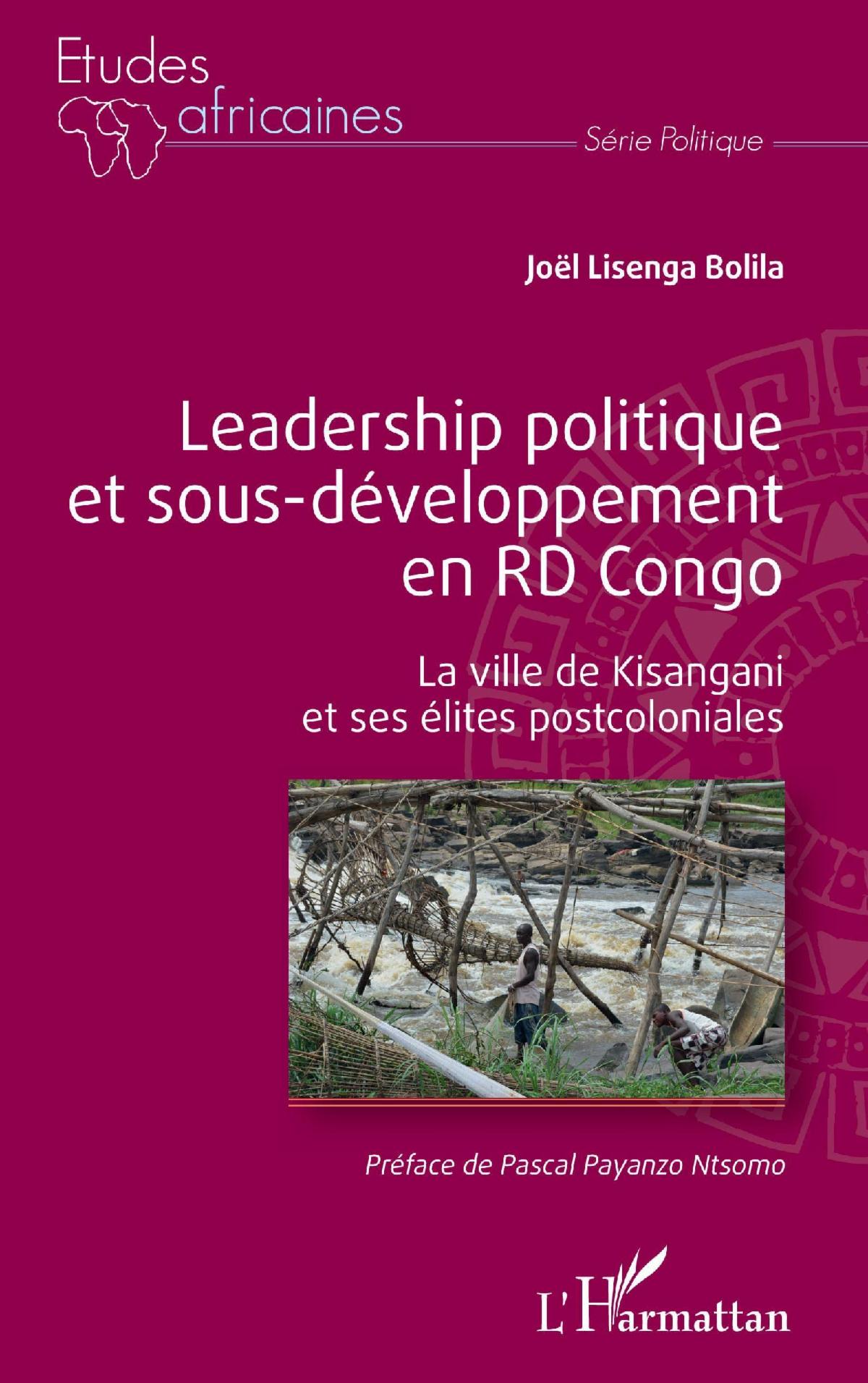
What political leadership for economic, social and cultural development of the DR Congo? | |
|
Presented by the Centre on Governance
Centered around the exercise of political leadership in the DR Congo, the talk is based on the case study of the city of Kisangani and the analysis of its old and new experiences of leadership. I propose an implementation of political leadership backed by change along the lines of visionary and revolutionary leadership (development leadership), articulated with development nationalism.
Author:
Joël Lisenga Bolila holds a PhD in Sociology and is an Affiliated Researcher with the Centre on Governance at the University of Ottawa. He is Professor at the Faculty of Social, Administrative and Political Sciences at the University of Kinshasa (DR Congo). Member of several academic associations, he has served as Administrator of the board of directors of the Association Canadienne des Sociologues et Anthropologues de Langue Française (ACSALF) from 2015 to 2017.
READ MORE
| |
|
Main discussant:
Michel Kifinda Ngoy is a professional journalist specializing in political topics for the United Nations Radio in the DR Congo since 2010, and an officer for the United Nations mission in the DRC. He holds a PhD from the University of Kinshasa, and is a researcher in media, governance and development as well as conflict resolution.
Moderator:
Ignace Ndongala Maduku is Assistant Professor at the Institut d’études religieuses of the University of Montréal. He leads the research group called le Groupe des théologies africaines et afrodescendantes (GTAS). Under his direction this group has published an edited volume in 2021 with the press Éditions L’Harmattan in Paris entitled Cultures africaines et modernités. Perspectives pour un dialogue prospectif. His current research focuses on decolonial approaches in theology and religious studies.
| | | |
In Focus: Social Policy Research Network | |
|
This research network focuses on the effect of social policies and the institutions that deploy them on the direction of human lives, as well as on the simultaneous influence of individuals, groups and institutions on social public action. The very nature of social policies is examined, including the more common notions of needs, well-being, protection and social inclusion that relate to the issues of solidarity, justice, freedom, and rights. The research network also studies social policies through the construction of social issues and their conversion into a policy object where ideas, actors and frameworks participate in their formulation and transformation.
DIRECTOR: Nathalie Burlone
Professor, School of Political Studies, University of Ottawa
More Details
| |
Centre on Governance
Faculty of Social Sciences
University of Ottawa
120, University
FSS Building
office 5043
Ottawa, Ontario, Canada K1N 6N5
| | | | | |