|
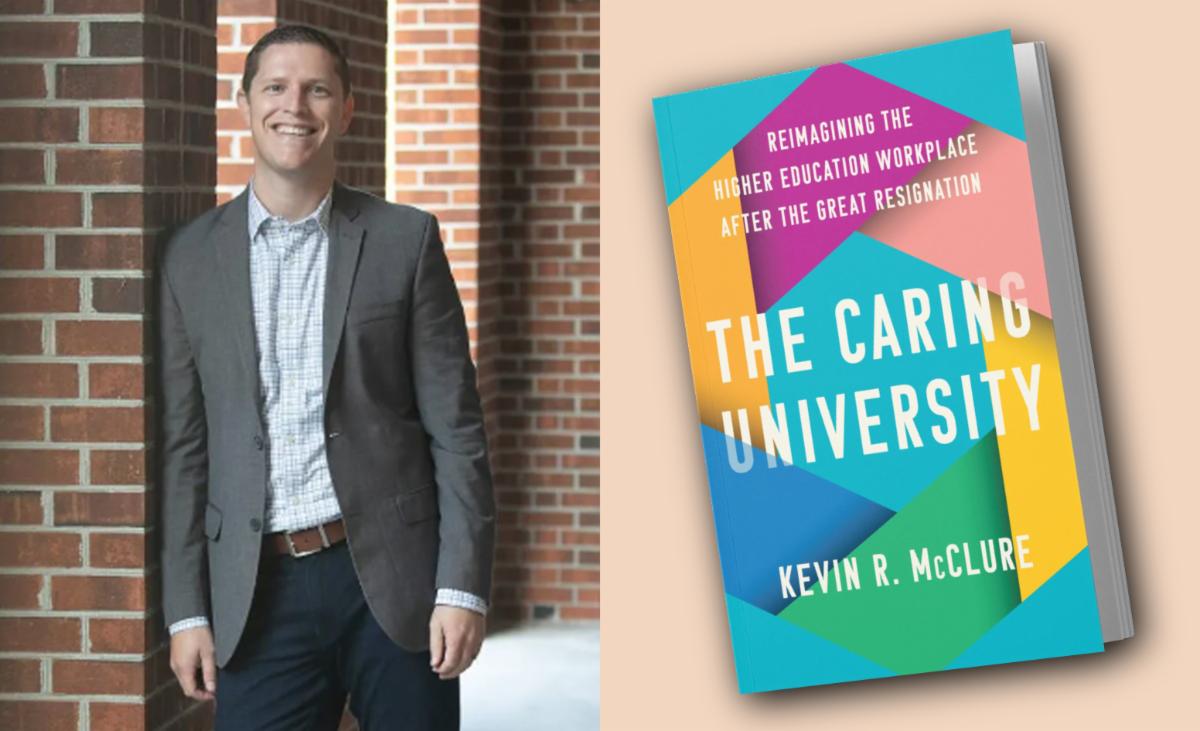
Last week, I attended the third annual Student Success Conference at our institution, where the keynote speaker was Dr. Kevin McClure, Chair of the Department of Educational Leadership at the University of North Carolina-Wilmington and recently published author of The Caring University (Hopkins Press, 2025). As he details in this transcribed interview, the genesis of the book was his experience of burnout during the pandemic. He began interviewing staff and faculty at a variety of institutions about burnout, disengagement, and what change might be needed. Of the many valuable insights from the work, one that stands out is the need for institutions to focus on the wellbeing of their employees, in a way that goes beyond encouraging them to up their own self-care game.
During the Q and A, a seasoned staff member raised a compelling point: One of the challenges of the idea of being caring in the higher education space is that it often implies boundary-busting giving on behalf of students. For example, someone who gives maximally — staying late at work, answering student queries in the middle of the night, staffing events on weekends — might be seen as more caring than someone who works within the bounds of their stated schedule and tasks.
This turned my thoughts to academic coaches, who so often are called upon to give of their time, attention, and energy. If "going above and beyond" is code for "being caring," while also serving as a key driver of burnout, what is an empathic coach to do? How can we achieve the goal of caring for others as well as the goal of caring for ourselves, within the confines of our job descriptions and the 24-hour day?
One part of the answer, as I perceive it, is in a central principle of coaching: We want to drive agency on behalf of our coachees. The more we do for them, the less they are able to do. This argues for our doing less. If we are overloaded sending reminders to coachees, for example, how might that mental load be transferred to the student? Perhaps we ask them to designate an accountability partner elsewhere in their lives.
Another part of the answer could be how we define "caring." I propose we do whatever we can to unyoke "caring" from "doing more," in our conversations, in our formal written language, and within our teams. Whether you are a coach or a supervisor of coaches, you can be part of the solution in this regard.
Finally, and this is a challenge but I believe a productive one, pay attention to your own work experience. Notice what is asked of you in an official capacity, what you do, and any difference between the two. Notice how you are feeling, and what level of burnout you may be experiencing. As McClure encourages, look beyond "I should take more walks and do more yoga" (even though those are good ideas). Engage with the institution and your teammates and supervisor. Offer ideas about ways to scale and adjust your work so that you are more resourced to start another day with the energy you need to do right by students. Start a conversation — you never know where it might go.
Connect with coaches at a LifeBound training to share ideas about how others are redefining caring and how you can care for yourself in these times of challenge.
Explore which course is right for you at www.lifebound.com.
|