April 2025

Facebook  Instagram  LinkedIn

Director's Note

A heartfelt thank you and exciting future ahead

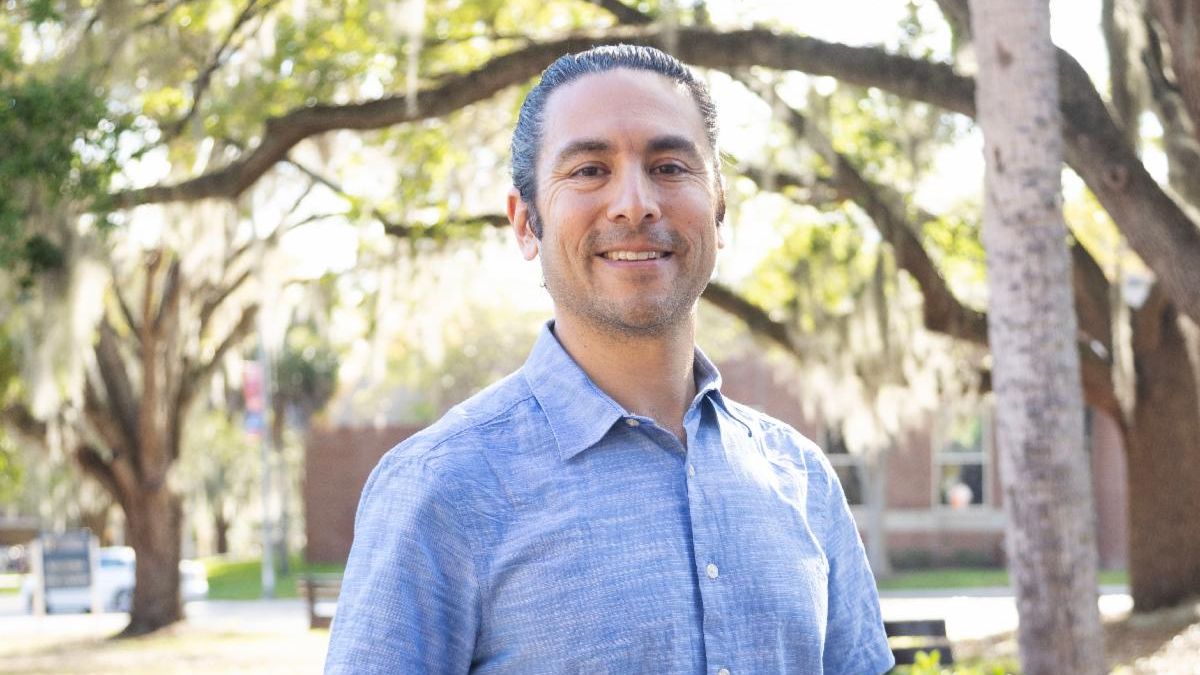
(Photo credit: Brianne Lehan)

We sincerely appreciate everyone’s support during our Giving Day campaign on February 20. Whether you made a gift, helped spread the word, or cheered us on, we truly appreciate you. Your generosity and encouragement are essential to the work we do at the Center for Coastal Solutions. Because of you, we’re advancing our mission to protect and preserve the coastlines we all love — and we couldn’t be more excited for what’s ahead.  

Read more

Feature

$7.5M research project aims to improve safety on hazardous tidal mudflats

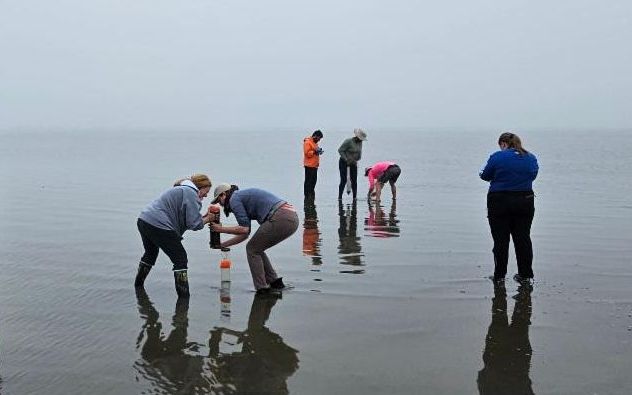
(Photo credit: Nina Stark)

A $7.5 million, five-year project funded by the Office of Naval Research is breaking new ground in tidal mudflats research. Led by Nina Stark, Ph.D., an associate professor in the Department of Civil & Coastal Engineering, this ambitious initiative brings together an interdisciplinary team of researchers from five universities across the country. The project focuses on understanding the geomechanical properties of tidal mudflats, which span vast coastal areas worldwide, pose navigation hazards and remain poorly understood. 

Full story

In the Field

Storm surge and superbugs: How hurricanes may help spread antibiotic-resistant bacteria

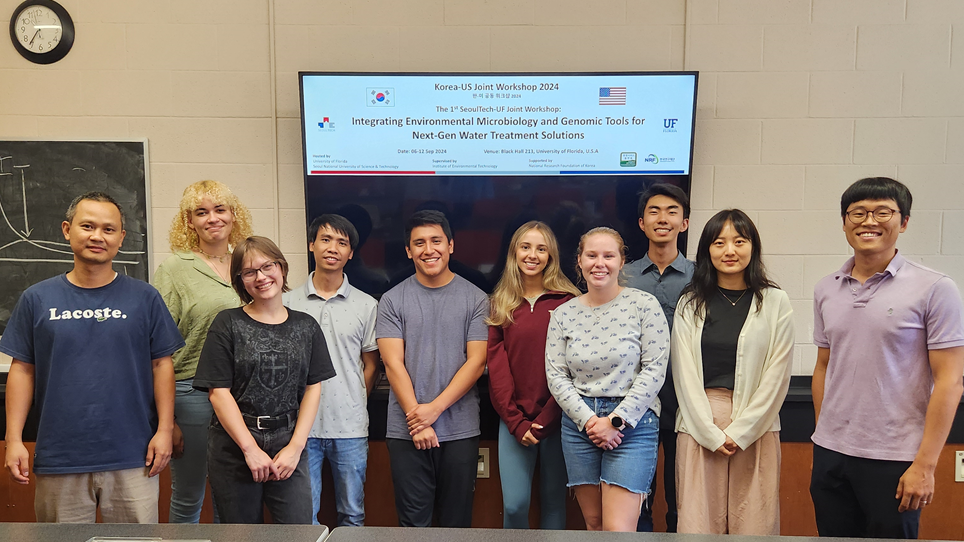
(Photo credit: Chamteut Oh)

Could hurricanes be fueling the spread of microplastics and harmful bacteria in our oceans? With support from a National Science Foundation (NSF) RAPID grant, Chamteut Oh, Ph.D., an assistant professor in the University of Florida’s Department of Environmental Engineering Sciences (ESSIE), is launching a new research project to investigate how back-to-back storms might accelerate the spread of antibiotic resistance — the ability of bacteria to survive treatments like antibiotics — in coastal waters. He suspects that microplastics could act as tiny “rafts” for bacteria, allowing them to grow, exchange genes, and persist in marine environments. 

Full story

Tech Dive

Revolutionizing coastal flood forecasting: Faster, smarter models on the horizon

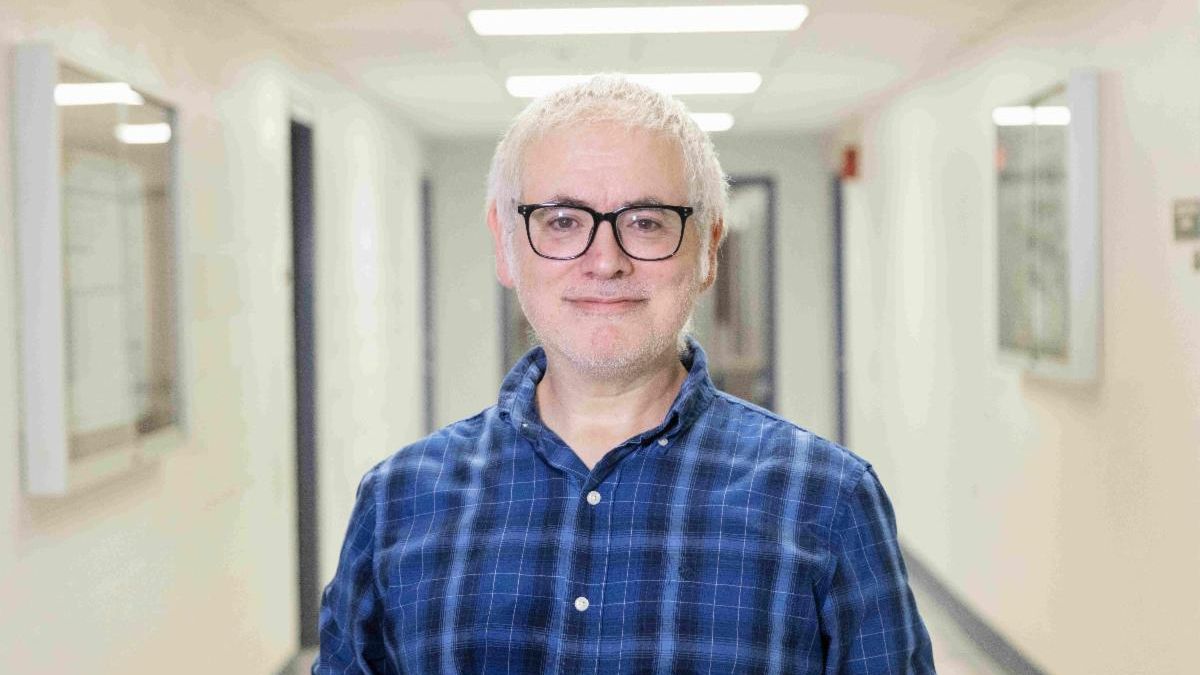
(Photo credit: Brianne Lehan)

Current flood forecasts in coastal areas often lack the precision people need. It's like being told, “it will rain this afternoon,” without knowing whether it’ll be a light drizzle or a heavy downpour. But scientists are working to change that. By leveraging powerful graphics processing unit (GPU) technology, researchers are making coastal flood predictions faster, more accurate and more detailed — more like knowing there’s a 70% chance of rain and whether it will be light, moderate or heavy.  

Full story

SeaSquad

Dakota Lewis named 2025 Guy Harvey Fellow for research on fish communities and climate resilience

(Photo credit: Geoff Cook)

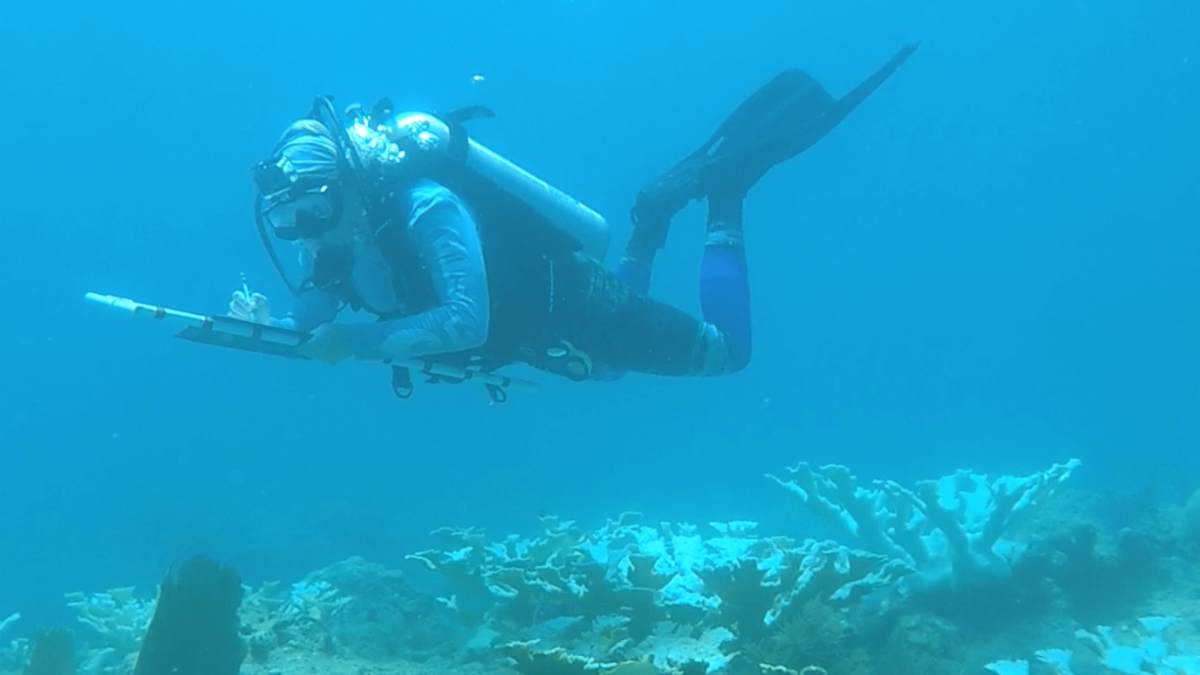
Congratulations to Dakota Lewis, recipient of the 2025 Guy Harvey Fellowship! With this support, she’ll be diving deeper into how environmental changes affect fish populations in Florida Bay and predicting how they’ll respond to our changing climate.  

Full story

Events

Braving the swamp! Graduate students share the thrill of wetland science with kids

(Photo credit: Katie Schoenberger)

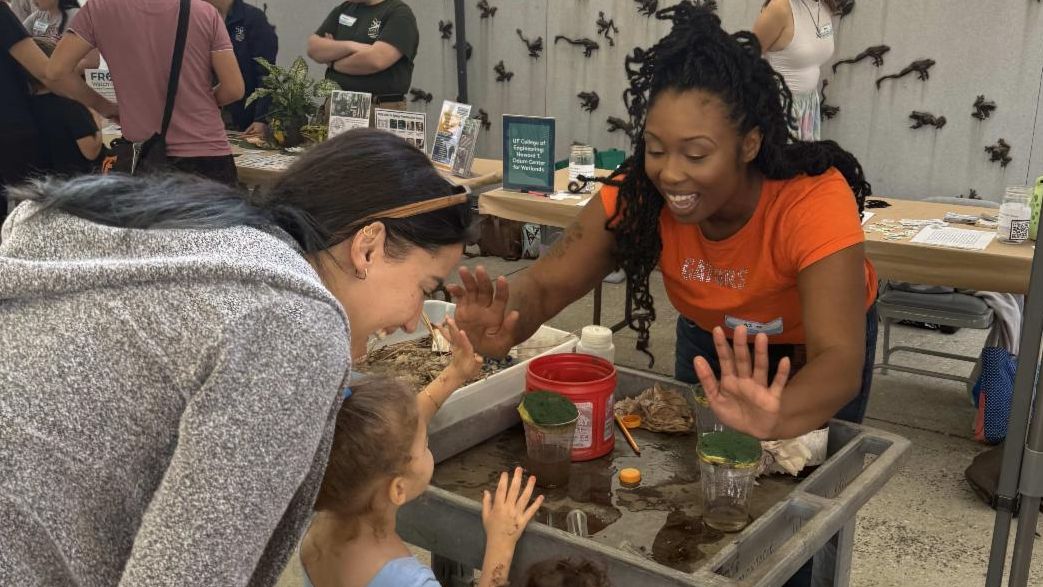
When children see photos of Alexis Jackson wading through muddy wetlands — swarmed by insects, enduring scorching heat and working alongside alligators and snakes — their first question is usually, “Why are you doing this?” On February 8, at the Florida Museum of Natural History’s Girls Do Science event, which was attended by more than 1,300 visitors, Jackson answered that question, giving Gainesville’s youth a glimpse into the life of a scientist and the passion that drives her work. 

Full story 

Opportunities

Professor of Practice in Coastal Water Resources Resilience


The UF Center for Coastal Solutions (CCS) is seeking a Professor of Practice in Coastal Water Resources Resilience to lead research development initiatives focused on coastal resilience, water resource management, ecosystem restoration, disaster preparedness and climate adaptation. This non-tenure-track, full-time position will play a key role in fostering interdisciplinary collaborations and securing external funding to drive impactful solutions.


Postdoc and Ph.D. student in coastal resilience

Dr. Andrew Altieri’s research team is recruiting for two new positions: a postdoc in nature-based solutions, and a PhD student in coral reef resilience. Both positions offer the opportunity to pursue independent interests while conducting collaborative field-based research in a conservation and restoration context. The postdoc will examine coastal wetlands (i.e., marshes and mangroves) and/or coastal dunes, primarily in coastal Florida, towards the development of strategies to mitigate coastal hazards and habitat loss. The PhD student will investigate recovery dynamics in coral reefs, primarily in Caribbean Panama, to better understand ecological trajectories following disturbance. Applications are being accepted now and reviewed on a rolling basis.

More Research News

Shielding effects of neighbor particles on flocculation dynamics of cohesive sediment


An analytical solution for watershed delineation in a marsh platform drained by tidal creeks


Coastal sediments record decades of cultural eutrophication in Tampa Bay, Florida, USA


Combination of shoreline stabilization approaches offers best long-term protection in Chesapeake Bay

Subscribe to Coastal Edges

Editor: Sharon Ryan

Writer / Designer: Megan Sam