Wisconsin Coastal Resilience Newsletter | | |
Greetings from the Wisconsin Coastal Resilience Team!
This month's newsletter contains:
Member-to-Member Updates:
- Register for the CALM Field Trip to Upper Lake Park & Valley Creek in Port Washington!
- Gov. Evers, DOA Announce Over $750,000 to Promote Resilience in Wisconsin Coastal Communities
Lake Michigan Water Level Update
Resource Highlights:
- ASFPM No Adverse Impact How-To Guides
- GSI Impact Hub Resources
Around the Great Lakes:
- Explore Flooding in the East River with a New Interactive Map
Funding Opportunities:
- Port Infrastructure Development Program
- Brennan Ocean Mapping Fund
- Wetland General Permit (GP) Surcharge Restoration Program
Trainings:
- NOAA’s Disaster Preparedness Program Interactive Webinar
- WI Stormwater Week Shoreline Restoration Webinar
-
Green Stormwater Infrastructure Field Tour
Conferences & Events:
- Lake Michigan Day
- OCEANS 2025 Great Lakes Conference
- 23rd Annual WAFSCM Conference
- Midwest Climate Resilience Conference
- Great Lakes Commission 70th Anniversary Annual Meeting
| | |
Register for the CALM Field Trip to
Upper Lake Park & Valley Creek in Port Washington!
| | |
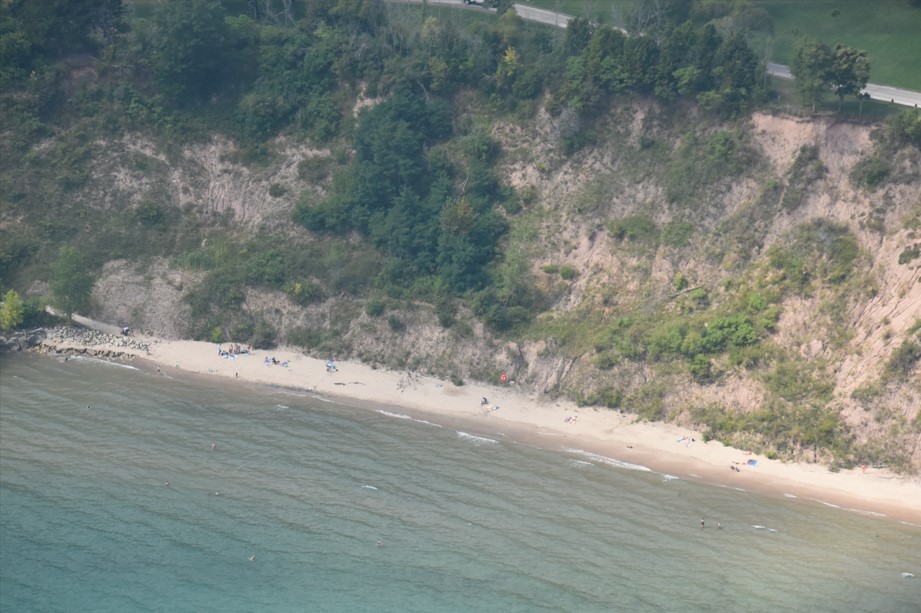
CALM is excited to bring members to Upper Lake Park & Valley Creek, where we will be joined by Interim Executive Director of Lakeshore Natural Resource Partnership Amy Lentz and Port Washington Public Works Director Robert Vanden Noven on a tour of both project sites.
At Upper Lake Park we will learn about how the city is planning to address bluff instability and preserve beach access through measures like cutting back and revegetating the bluff, installing subsurface drainage lines, and utilizing beach nourishment. At Valley Creek we will learn how resiliency strategies are being used used to design and implement a watershed-wide project that reduces flooding, restores streambanks and riparian wetlands, and increases ecosystem adaptability to climate change. Following the tour, we will have time to connect with fellow CALM members, discuss what we learned, and consider how it can inform our own coastal resilience work. This is an opportunity to get down to the lake, learn about coastal projects in your area, and grow your restoration knowledge!
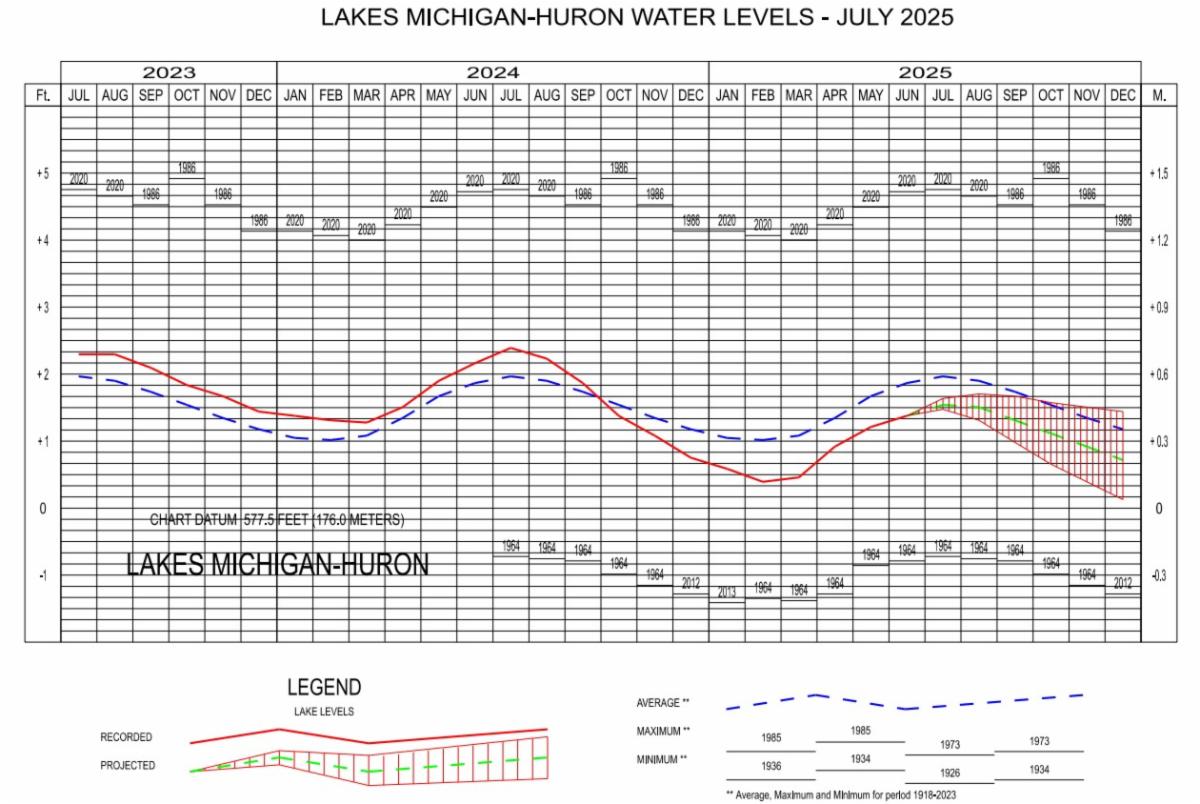
| | Gov. Evers, DOA Announce Over $750,000 to Promote Resilience in Wisconsin Coastal Communities | Gov. Tony Evers, together with the Wisconsin Department of Administration (DOA), recently announced that the Wisconsin Coastal Management Program (WCMP) has received over $750,000 from the National Oceanic and Atmospheric Administration (NOAA). The investments awarded will support the WCMP’s ability to plan for and implement habitat restoration and conservation projects in Wisconsin’s coastal communities, including supporting ongoing flood management, assessing shoreline erosion, restoring wetlands, and building more resilient coastal communities. On the Lake Michigan side, funding was awarded to the Southeastern Wisconsin Regional Planning Commission (SEWRPC) and the Milwaukee Metropolitan Sewerage District (MMSD). | | July 2025 Water Level Update | | Lake Michigan water levels continued their seasonal rise through June and July. Lake Michigan is now about 4 inches below the long-term average water level for the month. Water levels are expected to peak in July or August and before beginning their seasonal decline. | | ASFPM No Adverse Impact How-To Guides | | |
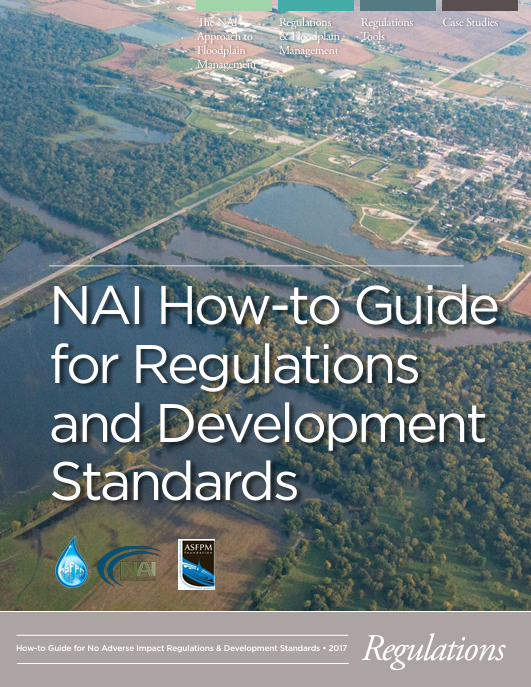
The Association of State Floodplain Managers has developed a collection of seven No Adverse Impact How-to Guides for communities dealing with flood hazards. No Adverse impact (NAI) is an approach to floodplain stewardship that ensures that the action of any community or property owner, public or private, does not adversely impact the rights of others. These how-to guides cover emergency services, hazard identification and floodplain mapping, regulations and development standards, education and outreach, planning, mitigation, and infrastructure.
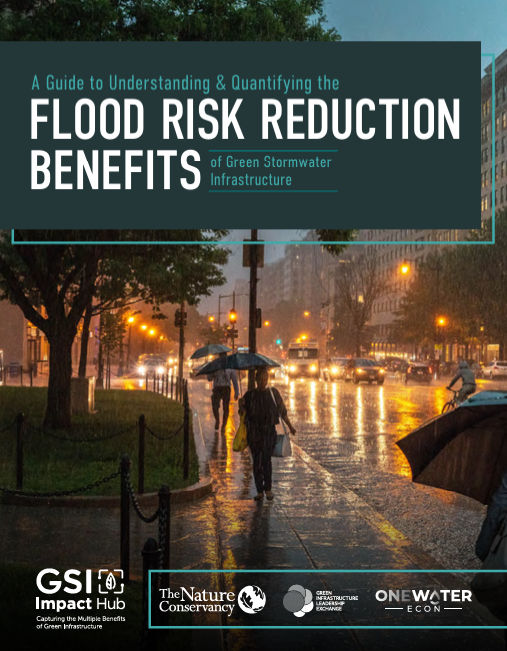
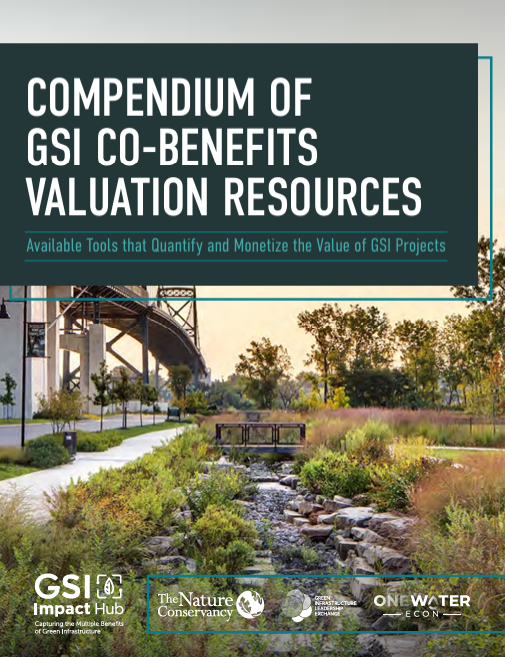
| | | | The GSI Impact Hub houses an expansive range of resources valuing the multiple benefits of GSI (Green Stormwater Infrastructure) to support practitioners, advocates, policymakers, and leaders. From summary documents to in-depth guides on topics like Flood Risk Reduction and GSI Co-Benefits Valuation, these resources are free to download and use. | | | Explore Flooding in the East River with a New Interactive Map | |
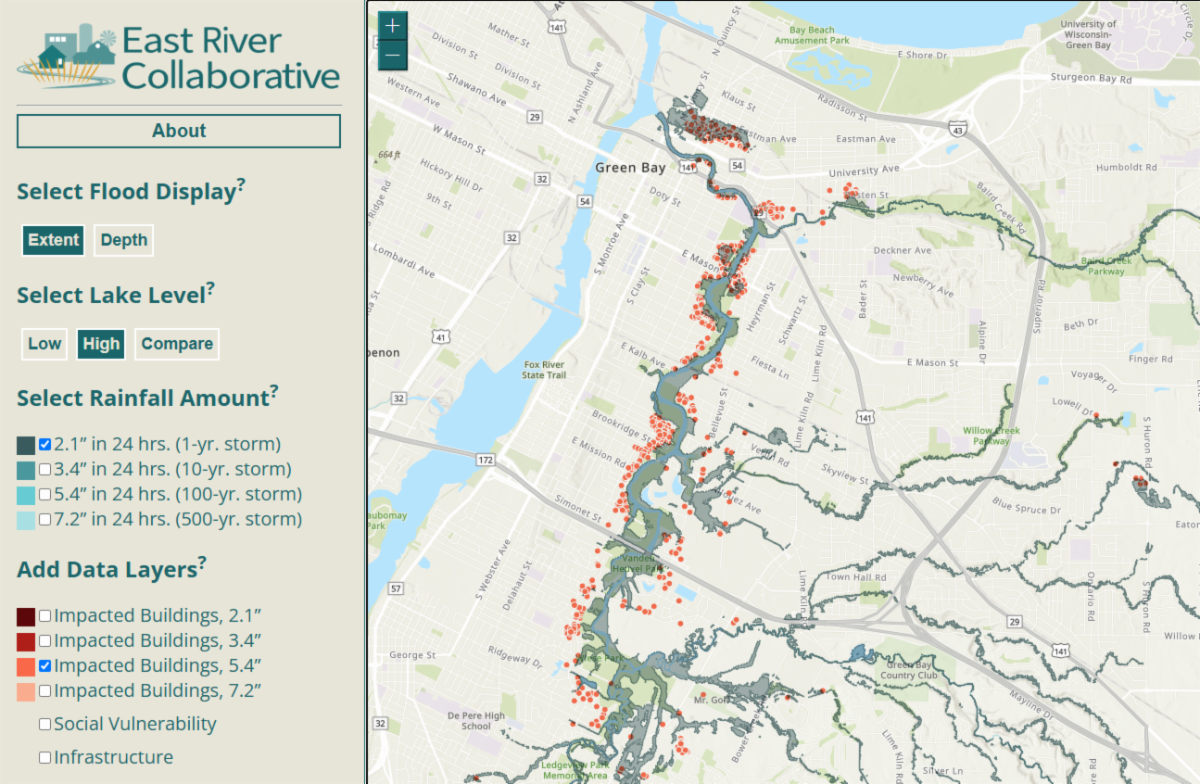
A new interactive mapping tool from the East River Collaborative is available to help visualize flood risk and impacts in the East River Watershed (Brown, Calumet, and Manitowoc Counties). Users can compare different rainfall and lake levels scenarios and explore affected buildings, infrastructure, and demographic data. Previously, much of this information was only available as separate, static PDF maps. The tool was created in collaboration with the UW-Madison Cartography Lab. Launch the map and discover how flooding impacts these communities.
| | Port Infrastructure Development Program | | |
The Port Infrastructure Development Program (PIDP) is a discretionary grant program administered by the Maritime Administration (MARAD). Funds for the PIDP are awarded on a competitive basis to projects that improve the safety, efficiency, or reliability of the movement of goods into, out of, around, or within a port.
Eligible Applicants: City, town, county, state, tribal (federally recognized), or special district governments
Application Deadline: September 10, 2025
| | Brennan Ocean Mapping Fund | |
NOAA's Brennan Ocean Mapping Fund invites non-Federal entities to partner on jointly funded ocean and coastal mapping projects of interest. NOAA will match selected non-Federal partners at a 70:30 NOAA: partner ratio for contract mapping projects totaling up to $1,000,000 for ocean, coastal and/or Great Lakes mapping data. Partners benefit from this opportunity by leveraging NOAA's contracting expertise, including its pool of pre-qualified technical experts in surveying and mapping, as well as data management to ensure that the mapping data are fit for purpose and are usable for a broad set of purposes.
Eligible Applicants: Non-federal entities including state and local governments, Tribal entities, universities, researchers and academia, the private sector, non-governmental organizations (NGOs), and philanthropic partners may apply.
Applicant Webinar: August 14, 2025 at 12 PM Central. Register here.
Application Deadline: October 10, 2025
| Wetland General Permit (GP) Surcharge Restoration Program | | |
The Wetland General Permit (GP) Surcharge Restoration Program funds projects that benefit wetlands and associated aquatic resources through an annual request for proposal (RFP) process. Funds come from a Wisconsin DNR surcharge on each Wetland General Permit 1 issued. The DNR is currently seeking project proposals totaling less than $100,000. Projects in past years have typically ranged from $20,000 - $40,000. All projects should target the restoration of wetlands or aquatic resources and ideally contain a hydrologic restoration component (tile breaking, ditch filling, stream re-meandering). Projects must be open to the public for hunting, fishing, trapping, cross-country skiing, or hiking or some combination thereof. All potential applicants should contact the DNR (JoshuaA.Brown@wisconsin.gov) before applying.
Eligible Applicants: Anyone is eligible to apply for funding. Nonprofits, private consultants, landowners, and DNR programs all may apply.
Application Deadline: December 15, 2025
| | NOAA’s Disaster Preparedness Program Interactive Webinar | | |
July 31
2p - 3p CT
Virtual
This interactive session hosted by the Coastal Inundation Community of Practice will introduce attendees to the mission and work of NOAA’s Disaster Preparedness Program. This program supports preparedness, response and recovery efforts across NOAA and with federal, state, and local partners through trainings, exercises and coordination activities. Learn how the program strengthens resilience to disasters and coastal hazards, and hear firsthand how it supports your region. This webinar will include also include regional breakout sessions to meet your Preparedness Coordinators, discuss regional priorities, and ask questions. Whether you're new to NOAA's preparedness efforts or an experienced partner, this is a great chance to build regional connections.
| WI Stormwater Week Shoreline Restoration Webinar | |
September 23
12p - 1p CT
Virtual
Speakers Keir Peckham with Natural Landscapes and CW Purpero, and Katie Reed with Fox-Wolf Watershed Alliance, will discuss the benefits of shoreline restoration, programming related to their organizations, and tips for WI residents. This webinar one of several presented as part of Wisconsin Stormwater Week (September 20-28).
| Green Stormwater Infrastructure Field Tour | |
October 2
1p - 4p CT
Virtual
Join the East River Collaborative in the field this fall to see local green stormwater infrastructure in action! On this field tour, participants will visit a few sites that showcase different types of green stormwater infrastructure and discuss the benefits, successes, and challenges of implementation and maintenance. This event may be of particular interest to those interested in flood mitigation and erosion control.
| | |
August 8
Manitowoc, WI
Lake Michigan Day highlights the significant opportunities for continued restoration and protection of Lake Michigan and the broader Great Lakes Basin, while also addressing ongoing challenges. With an excellent lineup of panelists, speakers, and lightning talks, every August Lake Michigan Day provides a forum for practitioners, decision-makers, and community leaders to learn about ongoing collaborative, community-focused water and land conservation work.
| | OCEANS 2025 Great Lakes Conference | |
September 29-October 2
Chicago, IL
Join the leading innovators, analysts, and producers of marine technology, research, and education for the OCEANS 2025 Great Lakes Conference. This year’s theme is New Horizons in Blue Tech: Bridging Knowledge and Innovation. OCEANS 2025 will highlight a bevy of topics including entrepreneurship for the blue economy, coastal resiliency, spill response, cold climate ecosystem observations, Indigenous observing in the Great Lakes, and more.
| |
October 15-16
Eau Claire, WI
The Wisconsin Association for Floodplain, Stormwater, and Coastal Management (WAFSCM) will hold its 23rd Annual Conference on Wednesday, October 15th and Thursday, October 16th at the Lismore Hotel in Eau Claire, Wisconsin. A field tour, workshops, and social reception will be held on Wednesday, and the main conference including plenary and speaker sessions will occur on Thursday.
| Midwest Climate Resilience Conference | |
October 20-22
Milwaukee, WI
The Midwest Climate Resilience Conference is the premier forum focused specifically on climate adaptation and resilience for the Midwest and Great Lakes region. Join the University of Minnesota Climate Adaptation Partnership (MCAP) in advancing adaptation and resilience for communities and ecosystems, fostering stronger relationships among climate adaptation practitioners, expanding the scope of climate adaptation work, and coordinating actionable steps beyond the conference. To prepare for the conference, join Realizing Resilience: Coordinating efforts from across the Great Lakes basin, the second of a three-part webinar series from the Great Lakes Commission.
| |
October 28-30
Duluth, MN
This meeting offers an opportunity for Great Lakes stakeholders to convene with colleagues and share perspectives on important Great Lakes issues. Join the GLC as they continue to address issues of common concern, develop shared solutions, and collectively advance an agenda to protect and enhance the region’s economic prosperity and environmental health.
| | |
For questions about the CALM Network, or to submit something to the newsletter, contact:
Jake Kolanowski
jacob.kolanowski1@wisconsin.gov
608-261-9197
| | |
For questions about Lake Michigan coastal hazards or how to address them, contact:
Adam Bechle
bechle@aqua.wisc.edu
608-263-5133
| | University of Wisconsin Sea Grant Institute | (608) 262-0905 | 1975 Willow Drive, 2nd Floor, Madison, WI 53706 | | | | |