CoastalScience@Work

Updates from the S.C. Sea Grant Consortium - Issue 57

July 18, 2025

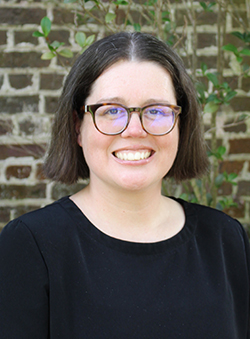
Photo of Deborah Peralez

Consortium Welcomes Peralez as Administrative Coordinator


Deborah Peralez recently joined the Consortium as an administrative coordinator. With guidance from the director for Administration and Administration manager, she provides support for the Consortium’s Extension, Communications, and Education departments. Peralez oversees procurement and purchasing for these departments and handles supplies and maintenance services for the office.


Peralez received an A.A. degree from Trident Technical College in Charleston, S.C. Prior to joining the Consortium, she was a workforce specialist at the S.C. Department of Employment and Workforce and a customer service supervisor and learning and development trainer at Verizon.

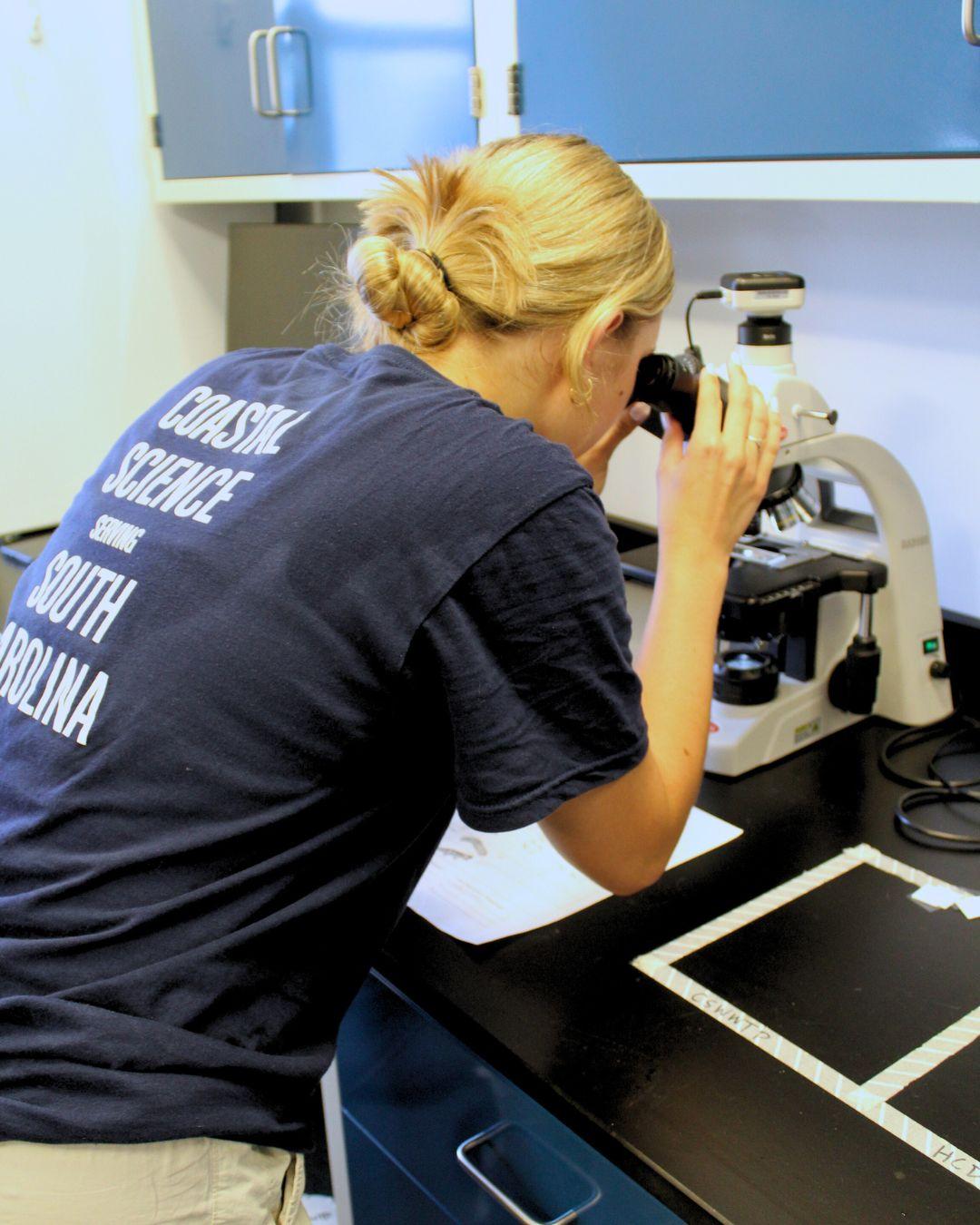
Photo of Mary Lide looking through a microscope at a water sample

Interns Delve Into Science Surrounding CECs


This summer, the Consortium welcomed two contaminants of emerging concern (CECs) collaborative research project interns: Blakely Durham and Mary Lide Wallace.


Durham is a second-year law student at the University of Oregon School of Law who is exploring the legal and policy dimensions of CECs at the National Sea Grant Law Center (NSGLC). Wallace is pursuing a B.A. in environmental studies at the University of South Carolina (USC) and is assisting with per- and polyfluoroalkyl substances (PFAS) water-sampling efforts, as well as interviewing Sea Grant-funded researchers on the forefront of CECs science.


CECs are chemicals or substances that may not have regulatory standards, are not included in routine monitoring programs, and could have adverse toxicological effects. These contaminants include PFAS, persistent organic pollutants, pharmaceuticals and personal care products, and nanomaterials. The NOAA National Sea Grant Office awarded grant funds to establish the Southeast CEC Program, a collaboration between the Consortium, University of Georgia Marine Extension and Georgia Sea Grant (MAREX), and NSGLC.


As part of their Sea Grant experience, the interns toured key water quality and CEC research areas along the South Carolina coast. They were joined by Brooke Saari, Consortium Coastal Environmental Quality and Extension Services specialist, Lola Renauer, Consortium CEC graduate assistant, and Katy Smith, Water Resources specialist at MAREX.


The team visited the City of Charleston’s Stormwater Management Department, USC’s Baruch Marine Field Laboratory, North Inlet-Winyah Bay National Estuarine Research Reserve (NERR), Clemson University’s Baruch Institute of Coastal Ecology and Forest Science, Mount Pleasant Waterworks’ Henry Clay Duffie Water Resource Facility, GEL Laboratory’s environmental testing facility, and the ACE Basin NERR.


Visit the program webpage to learn more about ongoing contaminants of emerging concern research and outreach.


Mary Lide Wallace looks at a water sample while visiting Mount Pleasant Waterworks’ Henry Clay Duffie Water Resource Facility. Photo: Hailey Murphy, S.C. Sea Grant Consortium.

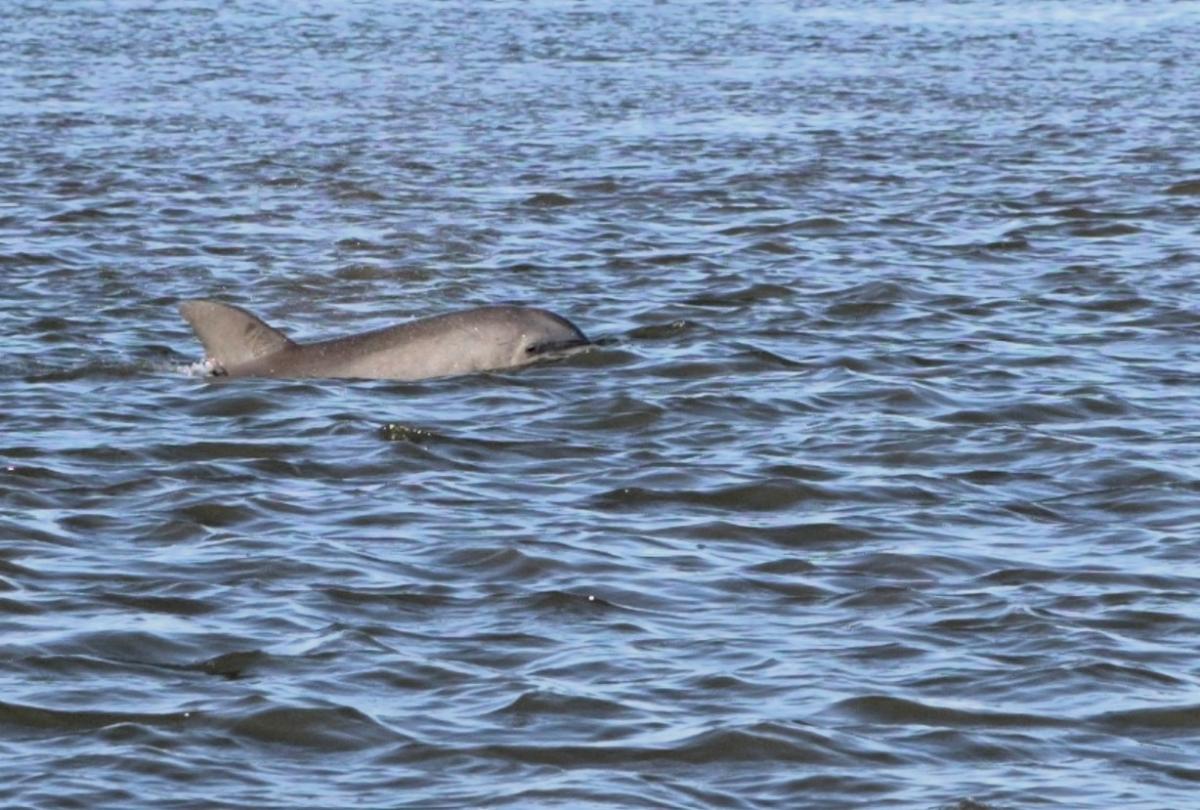
A bottlenose dolphin swims in the waves at Edisto Beach SC

Webinars to Focus on CEC Regional Research Results


The four-part Science in Session webinar series will bring together Sea Grant-funded researchers from the southeastern U.S. and Great Lakes regions to share findings from their projects focused on contaminants of emerging concern (CECs). Each session will spotlight two projects—one from the Southeast Initiative and one from the Great Lakes Initiative. This pairing will offer a unique opportunity to explore regional perspectives, methodologies, and solutions to shared environmental challenges.


All sessions are from 2:30-3:30 p.m. EST and registration is required for each session.


Session 1, July 18, 2025:

Impact of drinking water treatment on the fate of per- and polyfluorinated alkyl substances (PFAS) and precursors in wastewater reuse application. Jiaqi Li, Ph.D. postdoctoral researcher at Georgia Institute of Technology.


Comparative analysis of state regulation of PFAS in the Great Lakes and Lake Champlain regions. Catherine Janasie, research counsel II (Sr.) at the National Sea Grant Law Center.


Session 2, July 24, 2025:

Develop a community-based participatory approach to evaluate the dietary exposure of per- and polyfluoroalkyl substances (PFAS). Xiaoyu Xu, Ph.D., assistant research scientist at University of Georgia.


From Awareness to Action: Assessing PFAS exposure in communities and evaluating the effectiveness of its mitigation strategies. Ruohao Zhang, Ph.D., assistant professor at Pennsylvania State University.


Session 3, July 31, 2025:

Climate factor influences, spatiotemporal variability, and bottlenose dolphin health related to phthalate exposure measured over 30 years in Sarasota Bay, Florida (1993-2023). Leslie Hart, Ph.D., associate professor at College of Charleston.


Fish consumption and knowledge of PFAS among communities in the Lake Michigan region. Susan Buchanan, M.D., M.P.H., clinical associate professor at University of Illinois Chicago.


Session 4, August 7, 2025:

Elucidating patterns of microplastic and PFAS contamination using alligators and environmental sampling to assess coastal watershed vulnerability. Dorothy Aldridge, graduate research assistant at Clemson University.


The role of risk and efficacy in communicating about PFAS. Lyn van Swol, Ph.D., professor at University of Wisconsin-Madison.


For more information about this webinar series, contact Brooke Saari, Coastal Environmental Quality and Extension Services specialist, at (843) 953-6406.


A bottlenose dolphin swims in the waves at Edisto Beach, S.C. Photo: Susan Ferris Hill, S.C. Sea Grant Consortium.

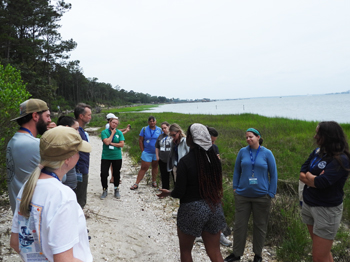
Teachers learn about salt marsh ecology at the SCDNR Fort Johnson campus overlooking Charleston Harbor

Eleven K-12 Teachers Learn about Salt Marsh Restoration Program


In June, Consortium and S.C. Department of Natural Resources (SCDNR) educators held a one-day training in Charleston, S.C., for 11 teachers who were interested in joining the From Seeds to Shoreline® (S2S) salt marsh restoration program for the 2025-2026 school year.


The S2S program, coordinated by the Consortium in partnership with SCDNR and Clemson University, is the only salt marsh restoration program in the state designed specifically for K–12 students and teachers. During the workshop, the teachers learned how to grow Spartina alterniflora throughout the school year, and then how to transplant the young seedlings in the spring to areas of the coastline in need of restoration. The teachers gained knowledge about salt marsh ecology, restoration techniques, and classroom applications. Engaging students in the process teaches them about the importance of this critical ecosystem and environmental stewardship.


Contact Morgan Treon, Marine Education specialist, at (843) 953-2086 for more information about the S2S program.


Teachers learn about salt marsh ecology at SCDNR’s Fort Johnson campus overlooking Charleston Harbor. Photo: Morgan Treon, S.C. Sea Grant Consortium.

We Need Your Support: Please Contact Elected Officials


The NOAA Sea Grant College Program relies on federal funding and, unfortunately, the budget request for fiscal year 2026 proposes that the Sea Grant program is terminated. This funding is critical in providing science on vital coastal issues—such as improving water quality, sustainable fisheries, disaster preparedness, workforce development, and a thriving economy—to our coastal communities and businesses.


Please consider supporting Sea Grant in two ways: 1) Contact your Congressional delegation directly to let them know how important Sea Grant is to you (you may easily reach your delegation here) and 2) sign a letter of support that we will share with them. The letter is available on the Sea Grant Network’s Supporters website. Select SC on the ALL PROGRAMS drop-down menu in the top-right corner to see a map of S.C. Sea Grant supporters and their comments. To read and sign the support letter, click on the Sign the letter! button at the top center of the website, select SOUTH CAROLINA from the drop-down menu, and click on GO TO LETTER. Simply fill out the form and add any comments you feel may be useful. Thank you in advance for your support to keep Sea Grant in the federal budget!

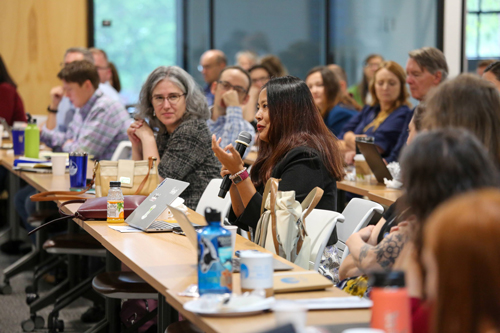
Participants at the Blue Carbon Law Symposium

Upcoming Conferences


·  Lowcountry Resilience Conference, July 31, 2025, Bluffton, S.C.


· American Shore and Beach Preservation Association Conference, October 7-10, 2025, Long Beach, CA.


·  Coastal and Estuarine Research Federation Conference, November 9-13, 2025, Richmond, VA.

Interested in coastal research, education, and outreach? Join our email list to receive Consortium news, publication announcements,
and upcoming events!
Feel free to forward this email to a friend or colleague.
Thank you!
Facebook  Instagram  LinkedIn  YouTube