|
Conserving the natural resources of the Chihuahuan Desert Borderlands
through research, education, and outreach.
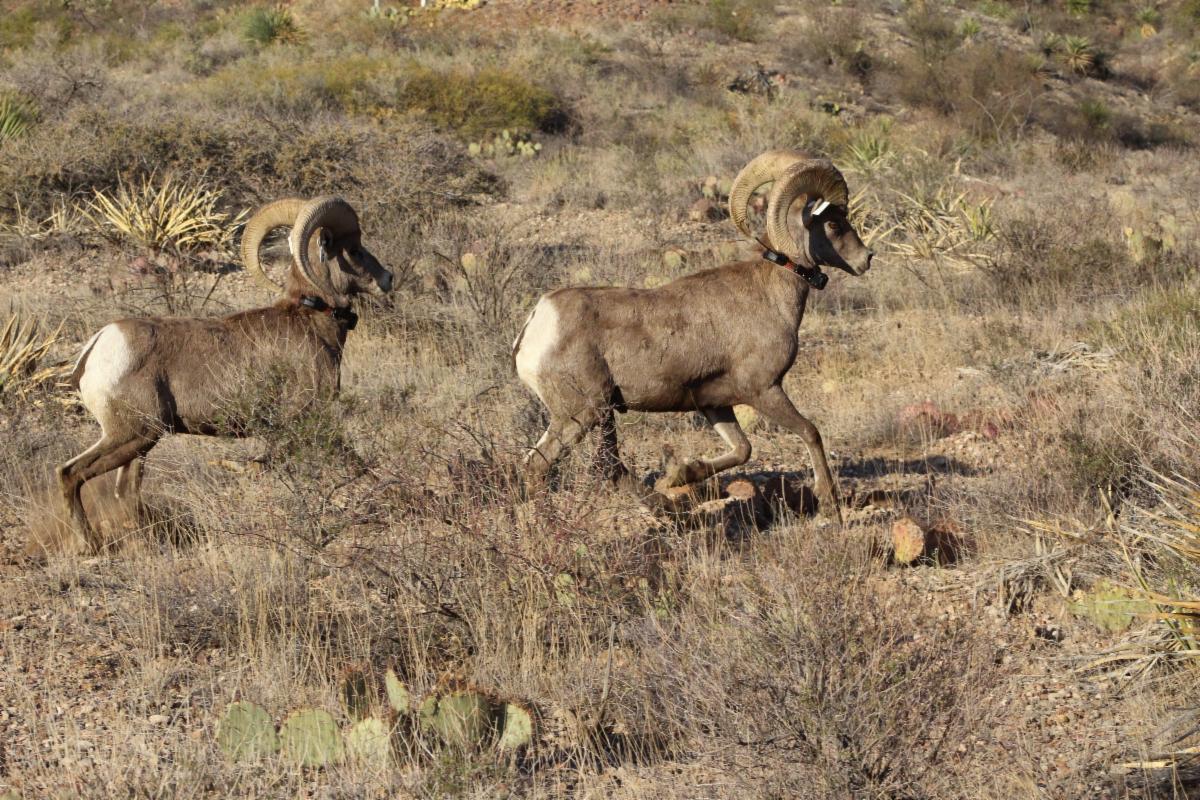
| | Symposium Tackles New Threats to Desert Bighorn Sheep | | Desert bighorn sheep, once one of the greatest conservation success stories in Texas, are now facing new threats from a pathogen that is quickly spread by exotic aoudad. | | |
Hosted by Texas Parks and Wildlife Department (TPWD) in partnership with Texas Parks and Wildlife Foundation (TPWF), Borderlands Research Institute (BRI), Texas Bighorn Society, and Wild Sheep Foundation, a full-day symposium on May 15 brought more than 100 stakeholders to Sul Ross State University in Alpine for an urgent discussion on the steep decline of desert bighorn sheep in West Texas.
The event—Managing Desert Bighorn Sheep in Texas: Challenges of the 21st Century—focused on the alarming spread of Mycoplasma ovipneumoniae (M. ovi), a respiratory pathogen driving population crashes of more than 50% in several herds across the region.
The symposium convened state and federal biologists, landowners, veterinarians, university experts, and conservation partners from across the U.S. to examine the disease threat, the role of exotic aoudad in transmission, and the broader challenges of bighorn management in rugged, privately owned landscapes.
Dr. Louis Harveson, Director of BRI and Associate Provost of Research and Development at Sul Ross, served as emcee for the day. “This isn’t a simple issue,” said Harveson. “It’s ecological, biological, economic—and personal for those of us who care about West Texas.”
Among the national experts who presented were wildlife disease specialists and public land managers from Idaho, Nevada, and Utah. But West Texas researchers played a central role. Dr. Justin French, a wildlife biologist with BRI, shared new data from thermal aerial surveys showing extremely high densities of aoudad in the Chinati Mountains—nearly 8,000 animals in a single range, or one every 40 acres.
“We’re likely looking at a six-figure aoudad population across the Trans-Pecos,” said French. “That level of abundance, combined with their ability to transmit M. ovi, poses a serious risk to native bighorns. If we want to see bighorns persist in Texas, aggressive aoudad management is going to have to be part of the conversation.”
Texas Parks and Wildlife Commission Chairman Paul Foster reinforced that message in his opening remarks: “The threat posed by disease is very real and it’s urgent. But so is the opportunity we have to work together once again to find a way forward. No agency, no organization or landowner can solve this alone. Collaboration is the only way.”
Dr. David Yoskowitz, Executive Director of TPWD, closed the symposium with a call to action: “We can’t wait for perfection. We have to move forward using the best available science, and we need partners, resources, and sustained commitment. We have that in this room—so let’s get to work.”
The symposium underscored the urgent need for collaboration among researchers, landowners, and agencies. BRI remains committed to supporting science-based strategies that protect West Texas wildlife and the landscapes they depend on.
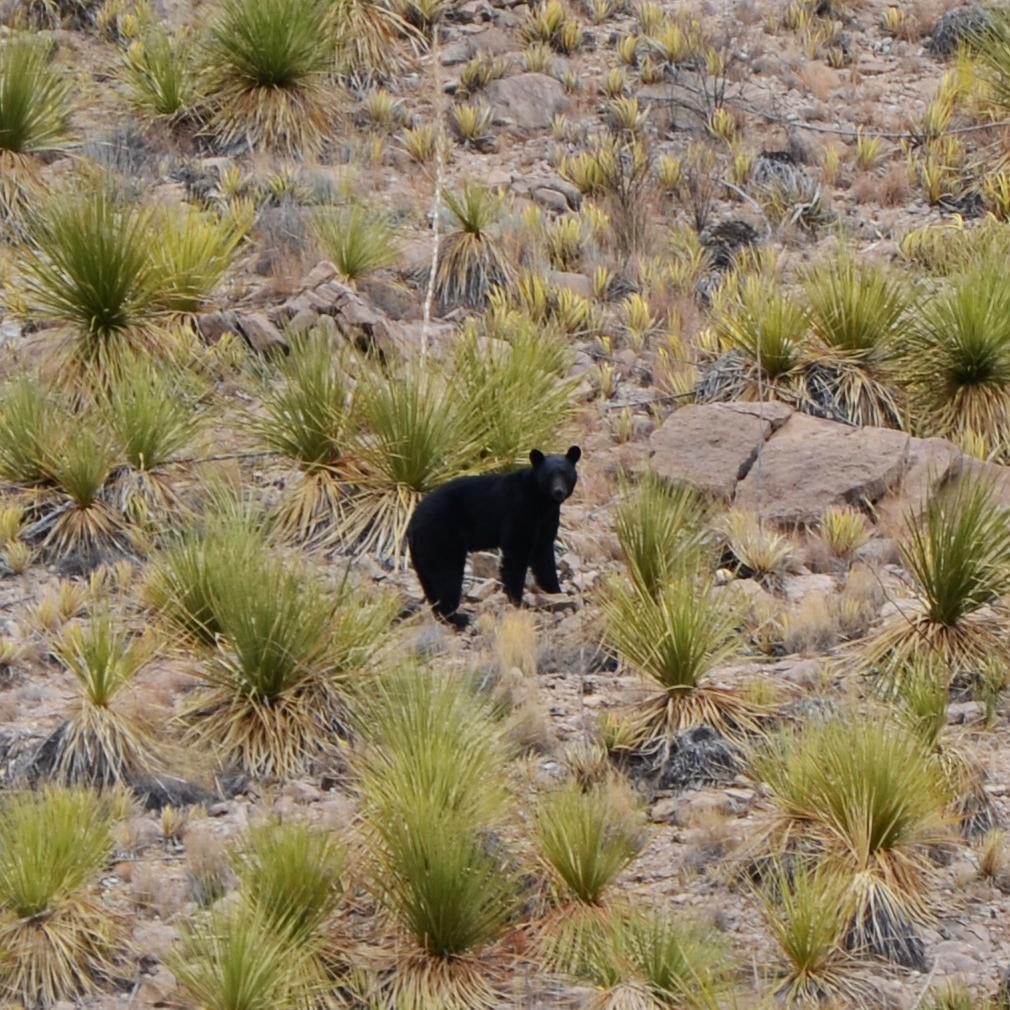
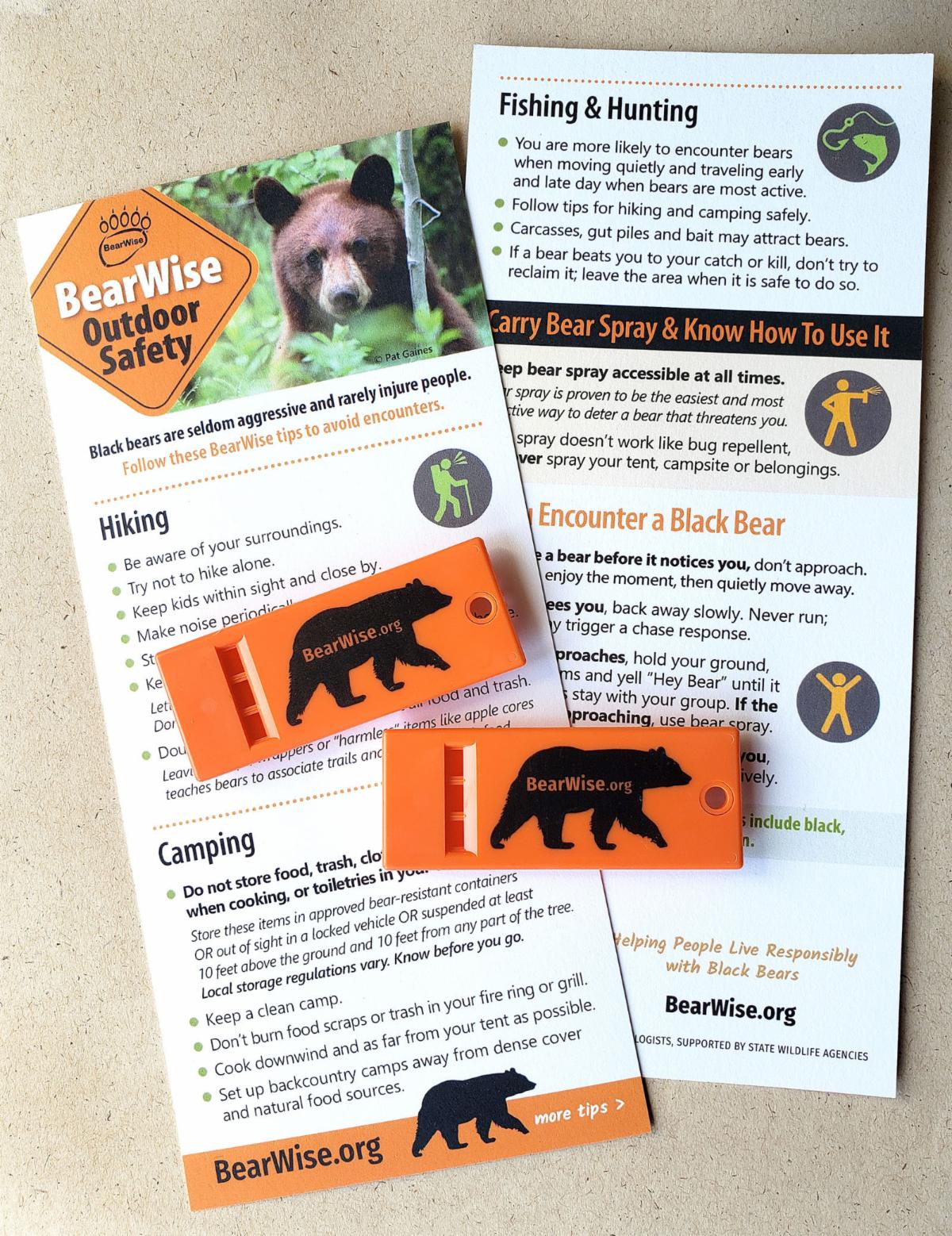
| | Welcoming Bears Back to West Texas — Responsibly | | Visit bearwise.org for more information and resources to help homeowners, businesses and communities coexist with bears. | | |
In the rugged backcountry of Brewster County, black bears are quietly reclaiming territory they once called home. It’s a natural success story—but one that comes with new responsibilities for the people who share that landscape.
“Brewster County is bear country,” said Dana Karelus, State Mammal Specialist for Texas Parks and Wildlife Department (TPWD). “These bears have recolonized the region on their own, and that’s something to celebrate. But it also means we need to adapt to living alongside them.”
That’s where BearWise® comes in—a national outreach program that helps communities and individuals live responsibly with black bears. TPWD recently hosted a public meeting in Alpine to introduce BearWise principles to residents. Nearly 50 attendees turned out, many who previously have never had to consider the potential for bears to be attracted to their trash bins, bird feeders, chicken coops, or outdoor pet food.
Karelus emphasized the importance of securing attractants and spreading awareness: “We’re asking people to do simple things—take down bird feeders when bears are active, lock up trash, don’t leave pet food outside, secure chicken coops and feed. These small actions can make a big difference.”
The department hopes the Alpine area could become Texas’ first official BearWise community. But success hinges on local leadership.
“It’s not something we can do for them. The community has to take the lead,” Karelus said. “When neighbors work together, it really works.”
READ MORE
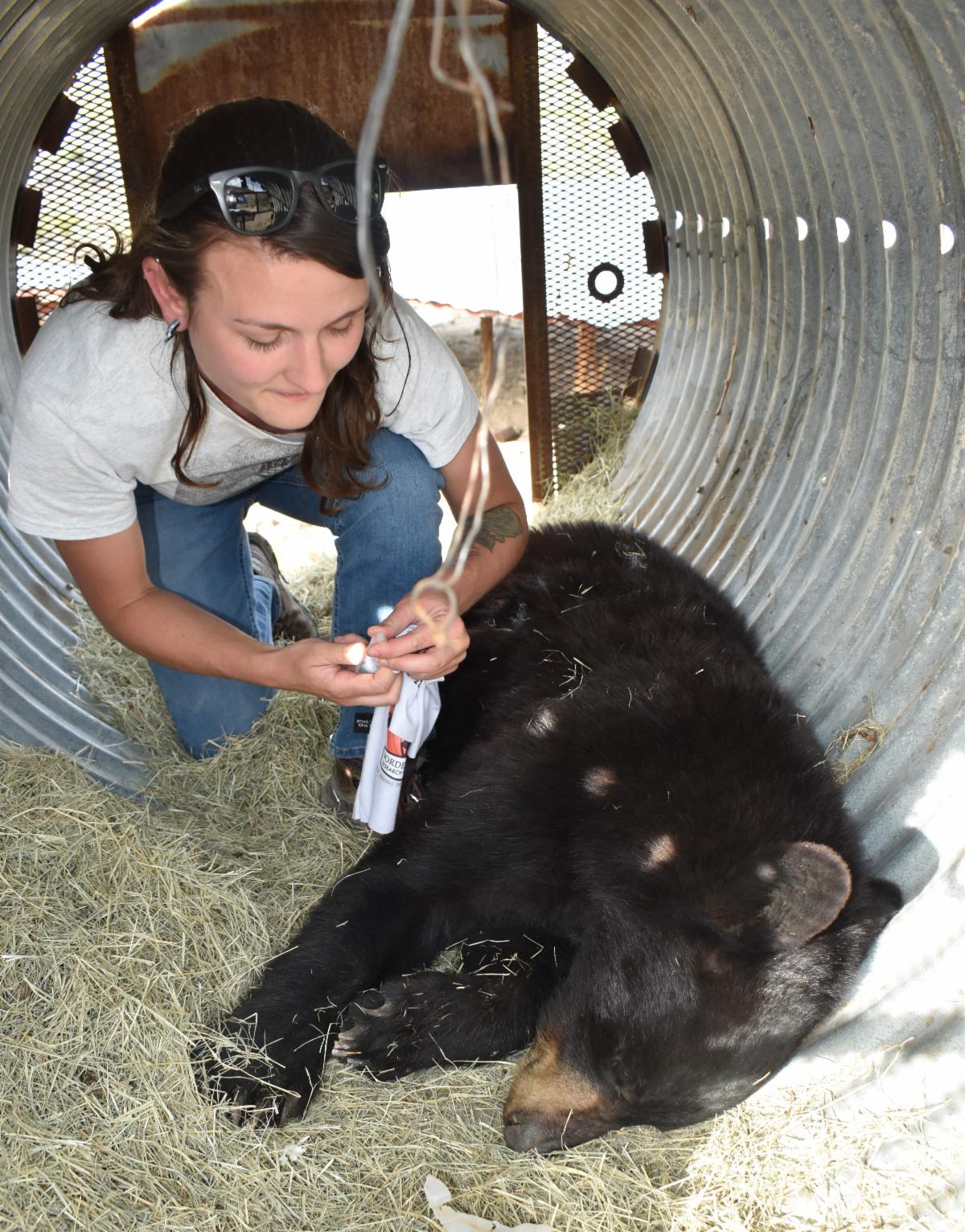
| | On the Bear Trail: Nicole Dickan’s Wild Path from Student to Scientist | | |
Nicole Dickan didn’t set out to become a bear biologist at first. In fact, she didn’t even know wildlife biology was a field she could enter. What she did know—after years of hiking, camping, and working in an animal shelter as a teenager—was that she wanted to work with animals. That interest led her to Canisius College, where she double majored in animal behavior, ecology, and conservation, and psychology. Somewhere between animal cognition courses, fieldwork in the Belizean rainforest, and collaring bobcats in the Black Hills, a new path took shape—one defined by curiosity, grit, and an uncommon empathy for the animals she studies.
“I spend a lot of time trying to get into the mind of whichever animal I am studying. I think about what may be motivating them, how those motivations change over time, and what factors may be impacting their risk assessment strategies,” she said. “That helps me when I’m tracking them and trying to understand their behavioral decisions.”
That mindset—equal parts scientific and intuitive—led Nicole from New York to Texas, where she earned her master’s degree in Range and Wildlife Management at the Borderlands Research Institute (BRI) at Sul Ross State University, graduating in May. Along the way, she trapped bears in the desert, led a research team, presented at international conferences, and helped expand what we know about black bear behavior in arid landscapes.
Her thesis research focused on fine-scale behavioral patterns in recolonizing black bears in West Texas. “I was able to model different behaviors—like foraging, resting, and traveling—then look at how their activity patterns changed throughout the seasons,” she explained. “They become more nocturnal in the summer when it’s hot and rely more on deer feeders and other attractants in the fall."
READ MORE
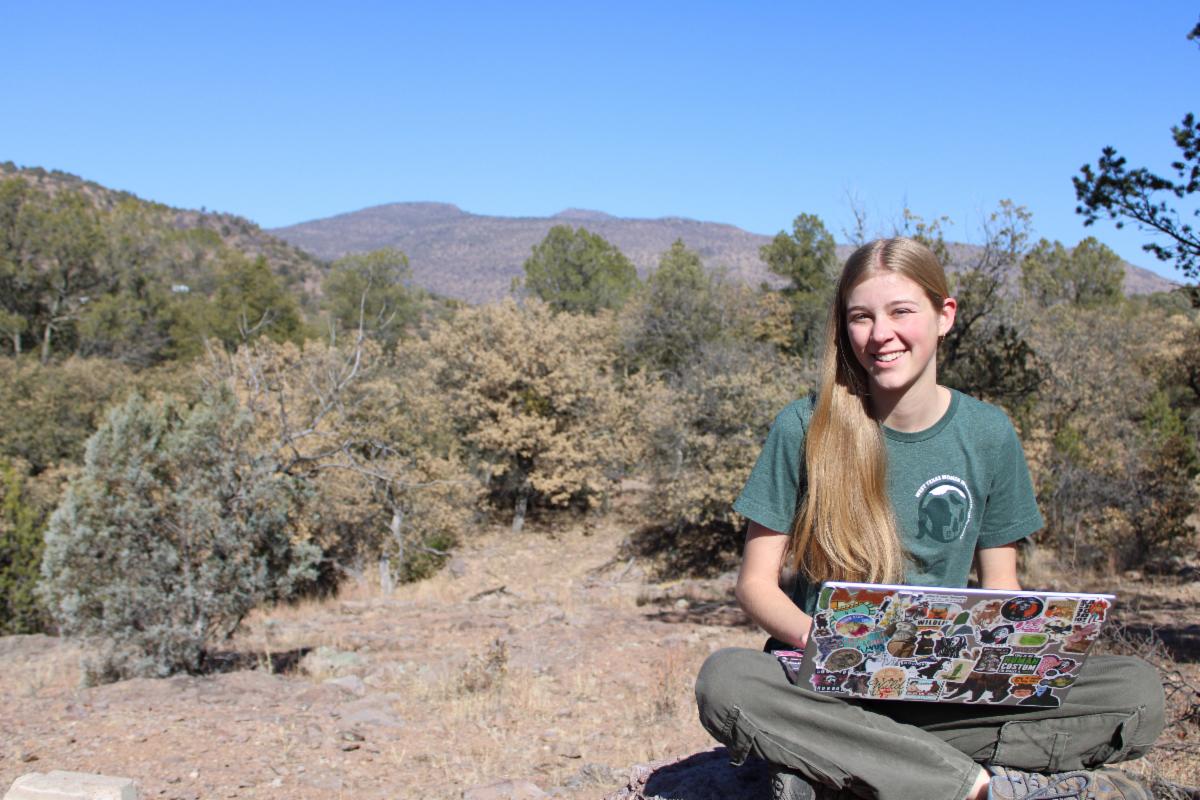
| | Hunter’s Horn Features BRI’s BUMP Student | | Alice Giambalvo recently worked as a mentee with the Borderlands Research Institute's Undergraduate Mentorship Program. Thanks in part to funding from Houston Safari Club Foundation, Alice assisted with BRI's black bear research in West Texas. Read the article she wrote about her experience, linked below. | | |
Hunter’s Horn, the official publication of Houston Safari Club, recently published a story about how the Borderlands Undergraduate Mentorship Program (BUMP) nurtured one young woman's passion for wildlife.
READ MORE
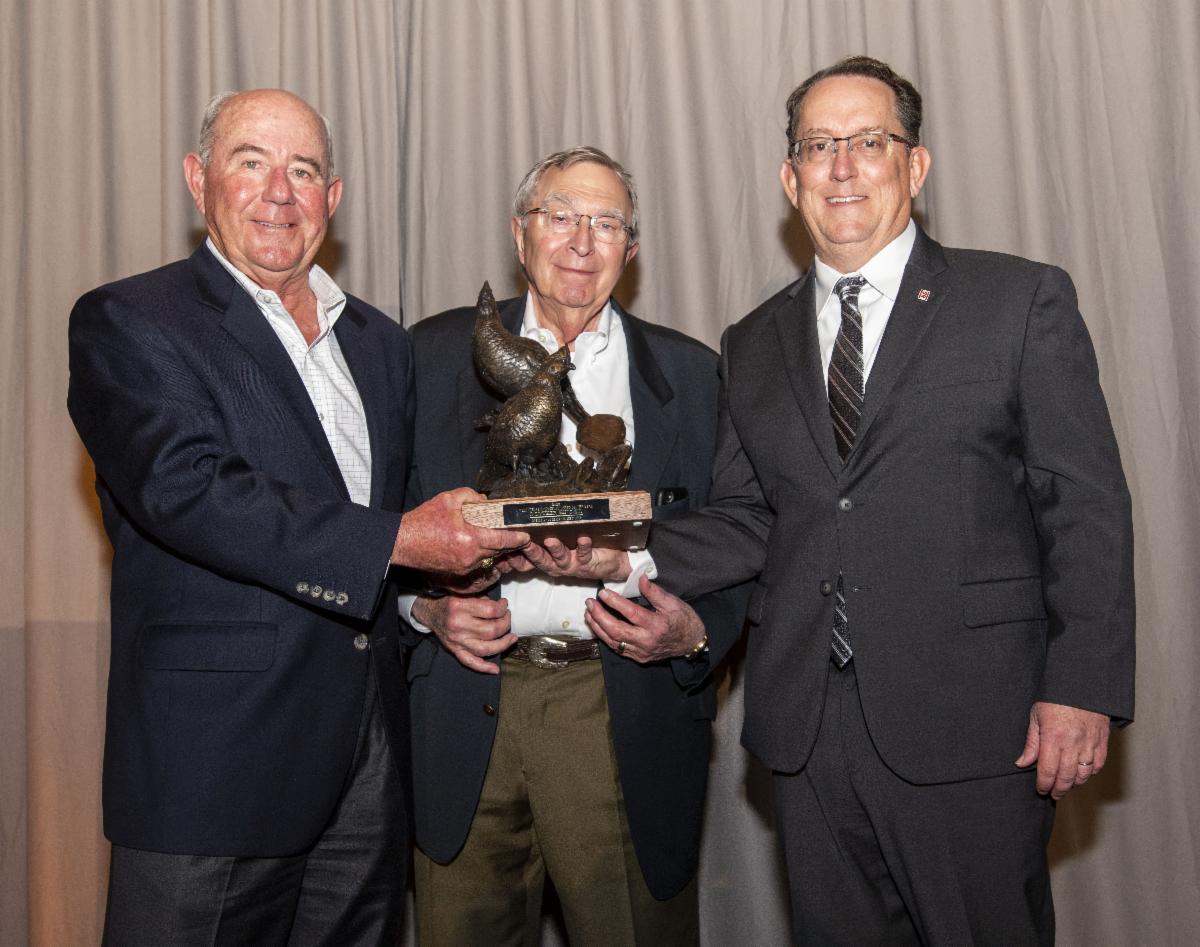
| | J. Luther King, Jr., Named 2025 West Texas Conservationist of the Year | | J. Luther King, Jr., center, received the 2025 West Texas Conservationist of the Year award this April in Fort Worth. A custom-made bronze of scaled quail was presented to Mr. King by BRI Board Chairman Dan Allen Hughes, Jr. (left), and BRI Director Dr. Louis Harveson (right). | | |
The Borderlands Research Foundation has named J. Luther King, Jr., as the 2025 West Texas Conservationist of the Year, honoring his decades-long commitment to land stewardship and wildlife conservation across Texas. King was recognized during a special event held April 17 in Fort Worth, Texas.
A native of Odessa, King has spent much of his life working to conserve the wide-open spaces of Texas. At a time when land fragmentation poses a growing threat to conservation, King and his family have taken the opposite approach—thoughtfully assembling and managing more than 100,000 acres across six Texas counties.
“Luther King is a true conservationist whose actions speak louder than words,” said Dr. Louis Harveson. “He’s not only restoring Texas landscapes—he’s restoring family heritage and demonstrating what it means to care for the land across generations. His leadership and humility have made a lasting impact on the future of wild places in Texas.”
King’s conservation ethic extends beyond the ranch. He and his family have supported a variety of conservation-focused organizations and projects, always with an eye toward sustaining the land, water, and wildlife that define the Texas landscape.
A video tribute honoring King’s conservation legacy can be viewed here: Watch the video.
| | TWAF Honors Kelly Thompson | | |
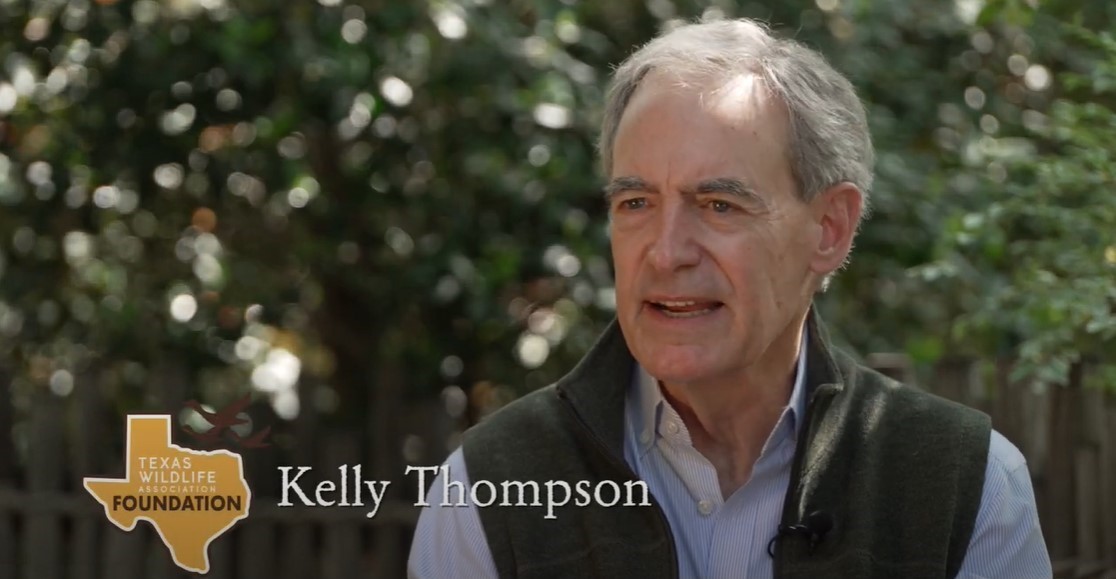
The Texas Wildlife Association Foundation recently honored Kelly Thompson as the 2025 Outdoorsman of the Year, one of the highest honors in Texas conservation circles. Thompson was honored at a special gala on May 8, 2025 at the Fort Worth Zoo, an evening that celebrated his enduring impact on Texas’ wild places and the people who steward them.
A respected investor, conservation advocate and civic leader, Thompson manages a family office focused on a range of public and private investments, from energy and real estate to agriculture. Thompson’s impact, however, extends far beyond the business world. He is Chairman Emeritus of the Texas Parks and Wildlife Foundation, Chair of the Upland Game Bird Advisory Committee for the Texas Parks and Wildlife Department and an Advisory Board Member for the Borderlands Research Institute. He also currently serves as Mayor of Westover Hills.
WATCH THE VIDEO to see more about Kelly’s conservation contributions.
| |
Please share this enewsletter with others who may be interested in the work of the Borderlands Research Institute. SUBSCRIBE HERE so it comes straight to your inbox. | | | | |