|
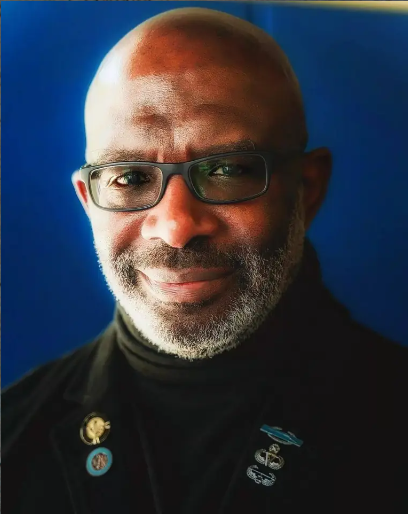
Ranger Howard “Max” Mullen
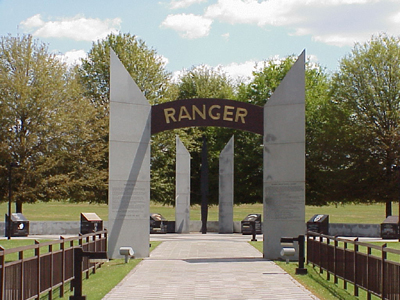
Director: National Ranger Memorial Foundation
2013 Ranger Hall of Fame Inductee
Fellow Rangers,
After Barry Todd’s email went out yesterday, we received a reply from Ranger Kevin Berry, asking us to explain our position further regarding Colonel John Singleton Mosby. (A big thank you and Kudos to Ranger Berry!) We hope that the article below will help clarify the position of the National Ranger Memorial Foundation and why we are passionate about having him reinstated to the Ranger Hall of Fame.
Colonel John S. Mosby: Separating Fact from Fiction
Colonel John Singleton Mosby, often referred to as the "Gray Ghost" for his elusive guerrilla tactics during the American Civil War, remains a complex and often misunderstood figure in American history. Many myths and misconceptions surround his life, particularly regarding his views on race and his post-war activities. This article aims to dispel some of these misconceptions and shed light on the true nature of Mosby's legacy.
Misconception: Mosby as a Confederate Loyalist and Racist
One prevalent myth is that Mosby was a staunch Confederate loyalist and a racist. While Mosby did serve the Confederacy as a cavalry battalion commander, his personal beliefs and actions tell a different story. Mosby was not an ardent defender of the Confederate cause or its principles. In fact, he viewed the Civil War primarily as a struggle for states' rights rather than a fight to preserve slavery.
Fact: Mosby's Opposition to Slavery
Contrary to the myth, Mosby harbored abolitionist sentiments. Before the war, he expressed disdain for slavery, considering it morally wrong. After the war, his actions further confirmed his opposition to racial injustice. Mosby aligned himself with the Republican Party, which was unusual for a former Confederate officer, and supported the Reconstruction efforts to ensure the rights of newly freed Black Americans.
Misconception: Mosby's Life of Crime Post-War
Another false narrative is that Mosby continued a life of guerrilla warfare or lawlessness after the Civil War. In reality, Mosby transitioned into a life of public service and became a dedicated patriot. He served as the U.S. consul to Hong Kong and worked in various capacities within the federal government.
Fact: Patriotic Service and Reconciliation
Mosby’s post-war career is a testament to his commitment to the United States. He sought to heal the nation's wounds by advocating for reconciliation between the North and South. His decision to join the Republican Party and support Ulysses S. Grant's presidential campaigns were significant moves towards national unity. Mosby’s work with the federal government, including his tenure as an attorney in the Department of Justice, highlighted his dedication to the country's legal and political systems.
Personal Integrity and Anti-Racist Actions
Throughout his life, Mosby displayed personal integrity and took actions that reflected his anti-racist beliefs. He was known to have good relations with Black Americans and actively worked to protect them during the tumultuous Reconstruction era. His opposition to the Ku Klux Klan and similar organizations further underscores his stance against racial violence and discrimination.
Conclusion
Colonel John S. Mosby was a man of complex beliefs and actions, far removed from the simplistic and often erroneous portrayals. His opposition to slavery, his efforts towards national reconciliation, and his post-war patriotic service paint a picture of a man dedicated to the ideals of justice and unity. Understanding Mosby in this light not only corrects the historical record but also honors his true legacy as an American who strove to bridge the divides of his time.
Sources:
- Ramage, James A. "Gray Ghost: The Life of Col. John Singleton Mosby." University Press of Kentucky, 1999.
- Evans, Thomas J. "Mosby's Men: A Gray Ghost Reconsidered." Southern Illinois University Press, 1977.
- Wert, Jeffry D. "Mosby's Rangers." Simon and Schuster, 1990.
- Ashdown, Paul, and Caudill, Edward. "The Myth of Nathan Bedford Forrest." Rowman & Littlefield, 2006.
In my opinion, this entire issue can be summed up best by Bobby Chandler-a black historian who said it best “Most Americas have a difficult time of accepting the past, because we read into the past the prejudice of the present. The moment you do that you’re not dealing with history. History is like taking a bath in muddy water you’re never going to be completely clean. And you have to see the past, as the past was. Not the way we wish it was. “
In closing, I consider it an honor and a privilege to be in the same Ranger Hall of Fame as John Singleton Mosby and my fellow Ranger Brothers! Thank you for allowing us to further explain our position.
RANGERS LEAD THE WAY!
Howard “Max” Mullen
Director
National Ranger Memorial Foundation
Call to action!
Campaign Name: "Join the Fight for the Gray Ghost - $19 for Reinstatement"
Campaign Cause: To date, the National Ranger Memorial Foundation has spent over $100,000 in legal expenses to overturn this decision. Our case is pending in Federal Court.
Campaign Goal: To generate recurring donations of $19 per month to support efforts to reinstate Colonel John S. Mosby into the Ranger Hall of Fame.
Campaign Overview: Colonel John S. Mosby, known as the "Gray Ghost," was a legendary figure whose guerrilla tactics during the Civil War have inspired generations of military strategists, including the U.S. Army Rangers. Despite his historical significance, Mosby was recently removed from the Ranger Hall of Fame. This directive was based on a highly controversial interpretation of legislation passed by the 117th Congress, since enacted as Public Law 116-283, which has far-reaching implications.
We invite you to join our campaign to honor his legacy and fight for his rightful place in history with a recurring donation of $19 per month. CLICK HERE TO JOIN THE FIGHT!
If you need assistance getting set up, contact Blair Brown at blair@rangermemorial.org or (706) 577-2976
|