August 5, 2024

The left drawing of Boulder was done in 1874 and used with permission of the Carnegie Library for Local History, Boulder. The photo on the right is a recent aerial photo of Boulder. Notice the change in vegetation as well as in buildings.

History from a Birds Eye View

Thursday, August 8 at 6:30 pm

Lafayette Public Library, 775 W. Baseline Road


Come explore our local history from an avian perspective. Learn how the building of cities, planting of trees, creation of water projects, and other human activities have ushered in many species (including some of the most familiar) and ushered out others. We’ll delve into the impacts of development and human activity on bird life in Boulder County through a presentation, Exploring History through Avian Perspectives:  Changes in Feathered Fauna in an Evolving Landscape, by Lafayette Open Space naturalist, Martin Ogle, and Gerry Morrell from the Lafayette Historical Society.


This presentation is free, and registration is not required.

There are still a few openings for the following field classes. Register soon!!

🌿 Saturday, August 10 – Willows of Boulder County Field Class


Dive into the fascinating world of willows with expert botanist Gwen Kittel! This hands-on field class offers a unique opportunity to explore various sites in Boulder County and learn to identify these tricky yet beautiful plants.


Gwen Kittel, the author of Willows (Salix) of Colorado: Their Ecology and Identification, will lead the tour and show how to identify willows in their natural habitats, including wetlands, streams, ditches, and forests. We will see as many as 15 different species of willows on this tour.


Whether you're a beginner or an expert, this class is perfect for anyone interested in riparian and wetland ecology.


Link for registration and class details for Willows of Boulder County

_________


🌱 Saturday, August 24 – Todd Gulch Fen Phenology


Curious about fens and phenology? Join Gwen Kittel for an insightful journey into these rare wetland mountain ecosystems.


As we discover the unique characteristics of fen wetlands, we’ll cover plant identification and learn how to document the phenological stages (bud burst, flowering, fruiting, etc.) of wildflowers, sedges, shrubs and even conifer trees!


Todd Gulch Fen is designated in the Boulder County Comprehensive Plan as an Environmental Conservation Area because of its high biodiversity.


Join us and be part of a community dedicated to understanding and preserving our natural environment!


Link for registration and class details for Todd Gulch Fen Phenology

Birds and Blossoms of Boulder Tallgrass Prairie

A workshop summary

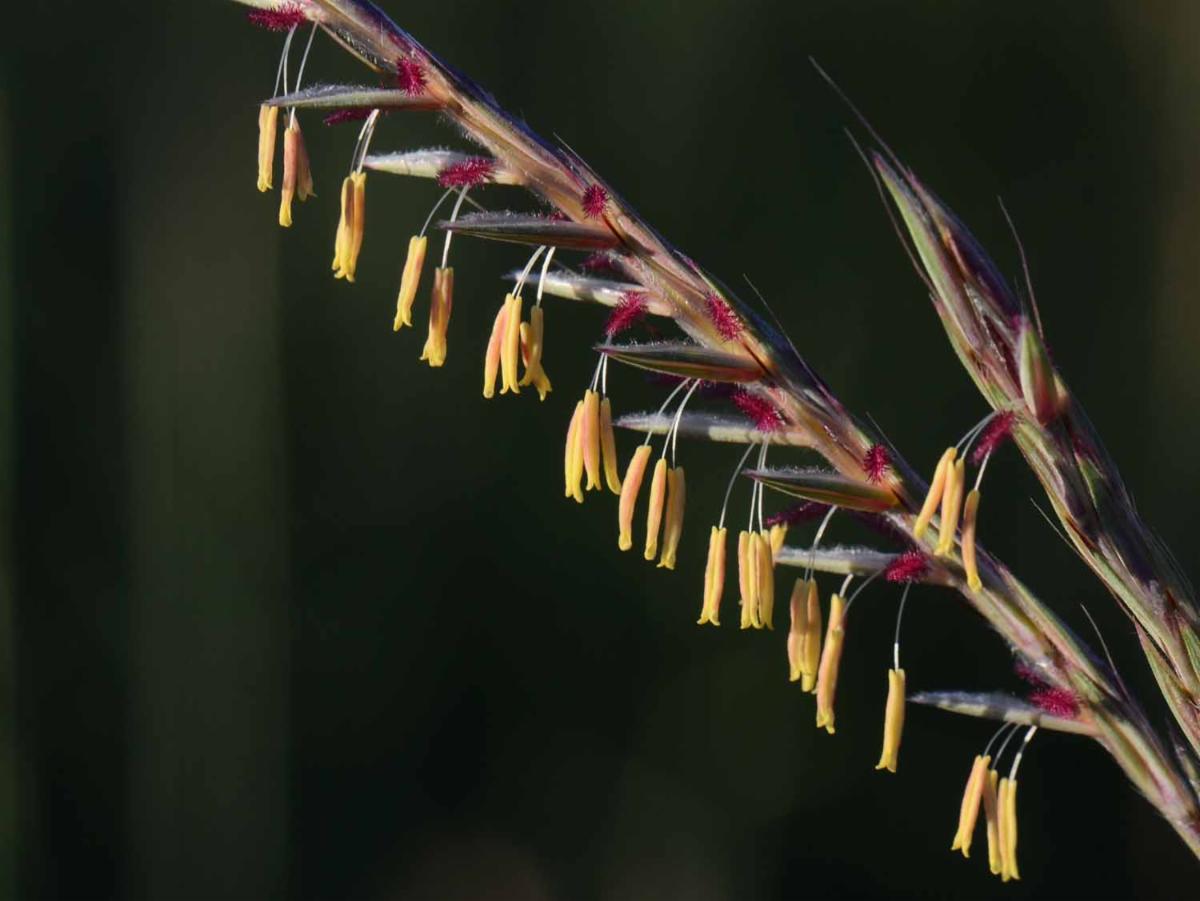
Big bluestem. Photo by Steve Jones.

Leaders Stephen Jones, Greg Levandoski, and Janet McLaughlin along with 12 BCNA prairie enthusiasts spent the early morning of August 2 searching for blooming tallgrasses and breeding birds within the Colorado Tallgrass State Natural Area along South Boulder Creek. After Boulder's driest May-July on record, some of our best tallgrass prairies have given way to shortgrass and mixed-grass prairie this summer, but in a wet meadow close to the creek we did observe a few blooming Big Bluestem and Switchgrass plants, along with dense stands of Prairie Cordgrass.


We saw families of breeding birds all along the trail and got close-up views of Say's Phoebes, Lark Sparrows, and American Goldfinches feeding grasshoppers and caterpillars to their young. The 27 breeding bird species we observed included at least 7 species that most likely became established in this area after European conquest and settlement: Rock Pigeon, Blue Jay, Cedar Waxwing, European Starling, House Finch, Common Grackle, and Blue Grosbeak (Wickersham 2016). Noticeably absent from our list were several grassland species that were considered common in Boulder Valley grasslands during the early 1900s (Henderson 1908, Betts 1913): Swainson's Hawk, Grasshopper Sparrow, Vesper Sparrow, and Lark Bunting. 


These observations helped all to understand the impacts of the deciduous tree invasion on our remaining prairies. Seeing urban-adapted Red-tailed Hawks, Great Horned Owls, and American Crows perching conspicuously in the area reminded us of the cost of the deciduous tree invasion to our native bird populations.


Literature Cited


Betts, Norman. 1913. Birds of Boulder County, Colorado. The University of Colorado Studies.

Henderson, Junius. 1908. Birds of Boulder County. University of Colorado Studies.

Wickersham, Lynn. 2016. Colorado Breeding Bird Atlas II. Colorado Breeding Bird Atlas Partnership.

BCNA now has an active facebook page. Please join us using the link below.

A big thank you to all who currently support BCNA!

Please consider renewing today if you have not already done so. New members are always welcome!

Volunteer
Join or Renew
Donate
BCNA  Facebook
BCNA Website