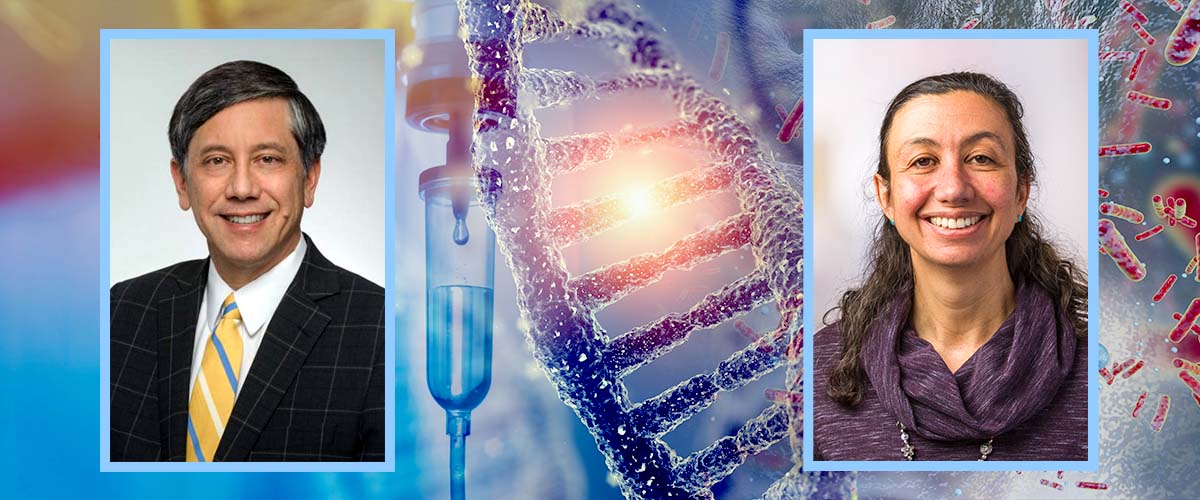
Salama’s lab recently began studying the role of the mouth bacterium Fusobacterium nucleatum in gastric cancer and how it differs from that of the better-known stomach bacterium Helicobacter pylori. The Foundation’s grant allowed Salama and her colleagues to build “organoids,” which are models of gastric cancer built from human or mouse stomach tissue. They are using mouse organoids of normal stomach tissue and of metaplasia—a precancerous condition that’s associated with an increased risk of gastric cancer—to study how H. pylori and F. nucleatum interact with stomach tissue.
In one study, Salama’s lab identified two types of gene expression that H. pylori induces in both mouse and human gastric cells, putting them on a path to metaplasia. F. nucleatum does not have the same effect, even though it also has been associated with gastric cancer, they found. They also discovered that treating the models with steroid that blocks inflammation reduced the expression of the two genes, even in the presence of the bacteria.