Common Ground E-Newsletter
| | |
A Newsletter for Community Planning in the Berkshires
Invite others to read Common Ground! Share this link.
| | |
BRPC is pleased to announce the addition of a new staff member, Jimmy Hall - AmeriCorps (ACC) Lead for America Member
Jimmy will support Digital Navigation & Workforce Development Projects that provide digital skills training and outreach to improve internet adoption and workforce opportunities in rural communities across Berkshire County. The projects aim to build the confidence and skills of adults of all ages and abilities across our region to use computers and the internet. Welcome Jimmy!
| | |
Citizen Planner Training Collaborative (CPTC) Winter Webinars
Registration is now open for webinars on topics ranging from working with MGL Chapter 40B, Planning and Community Support, and Creating Master Plans.
Register here for the webinars. Questions? Contact: coordinator@masscptc.org
| | |
MMA's Connect 351 Conference - Registration Open!
The Connect 351 Conference will be held from January 22 to 24, 2026, at the Menino Convention & Exhibition Center and the Omni Hotel in Boston’s Seaport District. Features of the event include:
- A range of informative and timely workshops
- Compelling and inspiring speakers
- A general business meeting and important policy discussions
- A robust Trade Show featuring services and solutions for cities and towns
Online registration for Connect 351 is now open. MMA staff are happy to answer any questions about the registration process; please email connect351@mma.org.
| | |
Massachusetts Clean Energy Center-Climate-Critical Workforce Training, Equipment and Infrastructure Grants
Climate-Critical Workforce Training, Equipment, and Infrastructure Grants provide up to $800,000 across one to two years in direct funding and technical assistance support to organizations that can build and scale career pathways and upskilling that help Massachusetts residents access and advance in climate-critical priority occupations.
Applications are due December 10, 2025.
| |
Mass Cultural Council's Cultural Facilities Fund (CFF)
Managed in collaboration with MassDevelopment, the Cultural Facilities Fund provides major improvement grants to nonprofit cultural organizations, in recognition of their profound economic impact on communities across Massachusetts. These grants support the acquisition, design, repair, rehabilitation, renovation, expansion, or construction of nonprofit cultural facilities. Nonprofit cultural organizations, municipalities, and colleges or universities that own or lease cultural facilities are eligible to apply. Grants range from $7,000 to $200,000.
Applications are due December 11, 2025.
| |
Executive Office of Energy and Environmental Affairs-Municipal Vulnerability Preparedness (MVP) Grant Program
The MVP 2.0 program expands on the climate resilience planning and action
communities have done to date and supports communities with new methods, tools,
and resources for building climate resilience. In particular, the grant will support the
municipality in revisiting their community resilience priorities with a focus on
equity and translating those priorities into action through project development support
and implementation.
Applications are due December 15, 2025. Learn more on COMMBUYS.
| | |
Executive Office of Housing & Livable Communities-Public Housing Innovations Notice of Funding Available
The Public Housing Innovations Notice of Funding Availability (PHI 2026 NOFA) offers an updated program for Local Housing Authorities (LHAs) to request capital funding for the transformation of state-aided public housing developments.
Pre-Applications are due January 7, 2026 by 5pm.
Learn more on COMMBUYS.
| | | | Overwhelmed? Reach out to your BFF (Berkshire Funding Focus) for help navigating grant applications! Take a look at additional grant opportunities and resources on our website: www.berkshirefundingfocus.org. | |
Community Planning
Program Manager CJ Hoss
| | |
Berkshire Mobile Farmers Market
Berkshire Regional Planning Commission has worked for the past three years to administer a USDA grant in collaboration with several community partners, including Berkshire Grown, Berkshire Bounty, Community Health Partners, the Southern Berkshire Rural Health Network, and Berkshire United Way.
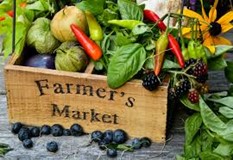
The project funded the Berkshire Mobile Farmers Market, which connected low-income individuals with local farmers at six locations throughout Berkshire County. During the past fiscal year, the Berkshire Mobile Farmers Market increased sales to $157,649.08 and reached 4,813 shoppers. This represented a $22,356 increase in sales from 2024, along with a 27% rise in shoppers visiting the market.
A survey from shoppers, completed by 111 customers, indicated that 94% came for the fresh produce, 76% came for meat, and 74% for dairy products. Discounted sales comprised more than 85% of the gross sales and helped low-income shoppers to access local foods in their communities (many shoppers walked to the market from the surrounding neighborhoods). The average sales per farm in 2025 were $2,807.51. During the 3rd year of the market’s operation, 36 different local farms sold their products.
The project provided local farms with a convenient outlet to sell their products, brought fresh local products to Becket, Monterey, Cheshire, Adams, and two locations in Pittsfield, and helped shoppers to afford local food through the Fair Share Payment system. The program was a resounding success, and the lessons learned will help strengthen our local food economy.
Learn more about the Berkshire Mobile Farmers Market.
| | | |
Community Development & Housing
Program Manager CJ Hoss
| | |
FY22-23 Sheffield CDBG Housing Rehabilitation Program
BRPC recently completed the FY22-23 Sheffield CDBG Housing Rehabilitation Program.
Using community development block grants tied to individual towns, BRPC helps homeowners who might not otherwise have the means to pay for vital home repairs.
In Sheffield, BRPC has spent $807,000 repairing 14 homes so far. BRPC is currently working in Dalton and Becket and plans to expand the program to additional towns. BRPC aims to improve the quality of life throughout the county through different housing, environmental and transportation projects. Among other things, it oversees the home modification loan program and acts as advisers to towns.
You can read more about the program’s success in the Berkshire Eagle.
| | |
Coming Soon! FY25 Community Development Block Grant (CDBG) awards
BRPC expects FY25 Community Development Block Grant (CDBG) awards to be announced by the Executive Office of Housing and Livable Communities (EOHLC) soon! If your community would like to be included in a FY26 CDBG application, please contact Brett Roberts (broberts@berkshireplanning.org).
| | | |
Data & Information Services
Program Manager Mark Maloy
| | |
Berkshire County Employment
In 2024, Berkshire County experienced a slight decline in employment, following several years of post-pandemic growth. The annual employment for the county in 2024 was 57,943. Healthcare and social assistance remained the largest sector, with nearly 12,250 employees. Most sectors experienced minimal changes in employment; however, some saw significant changes. Significant increases in employment were seen in:
- Agriculture, Forestry, Fishing and Hunting
- Arts, Entertainment, and Recreation
- Management of Companies and Enterprises
Sectors facing significant declines in employment include:
- Accommodation and Food Services
- Finance and Insurance
- Professional and Technical Services
- Retail Trade
- Wholesale Trade
For more information, take a look at Berkshire Benchmarks.
| | | |
Economic Development Planning
Program Manager Laura Brennan
| |
Priority Redevelopment Sites Strategy for Berkshire County
During FY26, BRPC staff will ensure that up-to-date, thorough, and actionable information is
available to support major investments in underutilized properties throughout Berkshire
County. BRPC has begun contacting communities to verify information. If there is a specific point of contact we should reach out to, or if there are potential redevelopment sites you want to be sure we include in our research, please contact Laura Brennan.
| | |
Berkshire County Buildout Analysis
Through the Massachusetts Community One Stop for Growth FY26 grant program, BRPC has secured funding to identify viable areas for multi-family housing and commercial development or redevelopment, taking into account several constraining factors of the region, including our steep topography, substantial tracts of state-owned or otherwise conserved land, and limited water and sewer infrastructure. As your community undertakes Comprehensive, Open Space and Recreation, Housing Production, or Economic Development planning in the next few years, and considers your own surplus property, information provided by this project will support your efforts, allowing for informed decisions about underutilized properties, especially in cases where municipalities are struggling to diversify their tax base and pursue sustainable financial futures. For more information, please contact Laura Brennan or Mark Maloy.
| | | |
Environmental & Energy Planning
Program Manager Melissa Provencher
| |
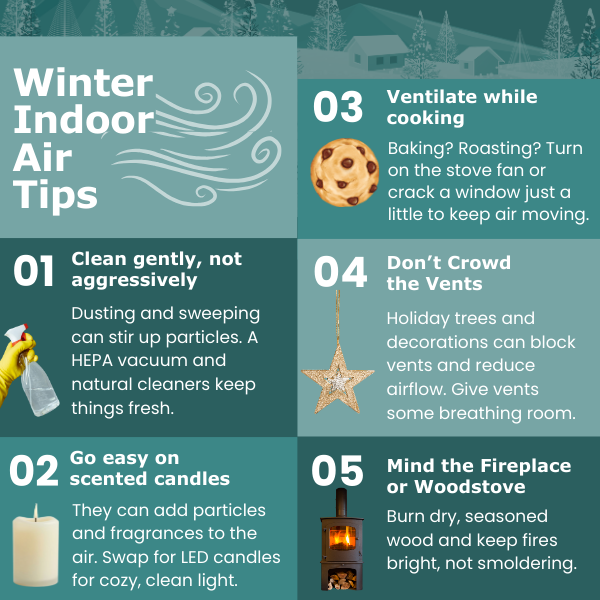
Breathe Easy This Winter
Simple ways to keep indoor air cleaner during the cold months
Feeling stuffy? You are not imagining it. Winter is the season when indoor air gets heavier, holds more particles, and becomes harder on sensitive lungs. Once we close windows and seal up drafts, everything happening indoors such as cooking, cleaning, burning wood, lighting candles, and hosting guests stays in the same shared air. That buildup can trigger symptoms for people with asthma, COPD, allergies, or heart and lung conditions. Even healthy lungs can feel tired after a day in sealed up rooms.
A few small habits can make a meaningful difference.
1. Start with gentle cleaning. Fast sweeping or dry dusting can push fine particles into the air. Use a vacuum with a HEPA filter on floors and rugs, then switch to a damp cloth or microfiber on hard surfaces. Low fragrance cleaners help avoid chemical buildup. Clearing dust from radiators, baseboards, and vents also helps airflow stay consistent.
2. Swap out scented products. Scented candles, sprays, wax warmers, and plug ins release tiny particles even when lightly fragranced. Choosing unscented options, limiting burn time, or using LED candles or simmer pots keeps indoor air cleaner.
3. Ventilate when cooking. Smoke, grease, and steam linger longer in winter. Use the stove fan every time you cook, and crack a window briefly to bring in fresh air. Gas stoves also release irritating gases, so ventilation matters.
5. Keep vents clear. Furniture, storage bins, and holiday decorations can block air returns and heat vents. This reduces airflow and allows particles to settle.
For Municipal Buildings and Community Spaces
This winter is also a good time to think about how indoor air affects the public spaces residents rely on. Libraries, senior centers, town halls, and community rooms often see higher use during colder months. Small changes such as regular filter checks, short ventilation breaks, and low fragrance cleaning routines can help these spaces feel more comfortable for everyone.
| |
Public Health
Program Manager Laura Kittross
| | |
Berkshire County Public Health Emergency Planning (PHEP) Coalition
Berkshire Regional Planning Commission has once again been awarded the coordination work for the Berkshire County Public Health Emergency Preparedness (PHEP) Coalition. Berkshire County Boards of Health Association (BCBOHA) has served as the Berkshire PHEP Coalition for more than 20 years. This year, the Coalition will focus on Boards of Health exercising their emergency plans, Public Health training and Crisis and Emergency Risk Communication (CERC) planning.
Boards of Health have a full plate managing their daily responsibilities, protecting the public health and safety, ensuring safe food, water, air, housing, children’s camps, and public pools; preparing for emergencies and preventing infectious diseases along with their many other routine responsibilities.
To ensure trained public health professionals, Massachusetts’ Department of Public Health has set comprehensive workforce standards for public health members and staff so that every Massachusetts resident has access to professional public health services, regardless of their zip code. In 2026 every Board of Health will be asked to report on how they are doing meeting these standards and their training plans for getting every staff member up to minimum standards.
During emergencies, everything ramps up in Health Departments as just about all emergencies have a public health impact such as the cleanup of toxic spills, food and water safety in power outages, mental health issues associated with violence and threats, molds, contamination and disease outbreaks that come with floods and fires, and more.
On October 30, 2025, more than 30 Board of Health members, staff and partners, including Berkshire Health Systems emergency management staff, participated in a discussion-based exercise card game to learn more about flooding emergencies, how to manage a foodborne illness outbreak in a shelter, who they're likely response partners would be, what resources may be available in the county and how to work together to solve problems and manage an emergency.
The card game was designed so anyone at any level can play, learn the emergency response language, see who does what, practice how to use available resources and have fun doing all this. The multi-deck card game and all exercise documentation for Flooding, Evacuation and Sheltering scenarios will be available from the Western Region Homeland Security Advisory Council (www.WRHSAC.org) next year.
If you would like more information about public health emergency preparedness or the card game, please contact Sandra Martin, Health Agent and Public Health SME.
| | | |
Transportation Planning
Program Manager Clete Kus
| |
Lee Pursues Complete Streets; State Sees Program-wide Updates
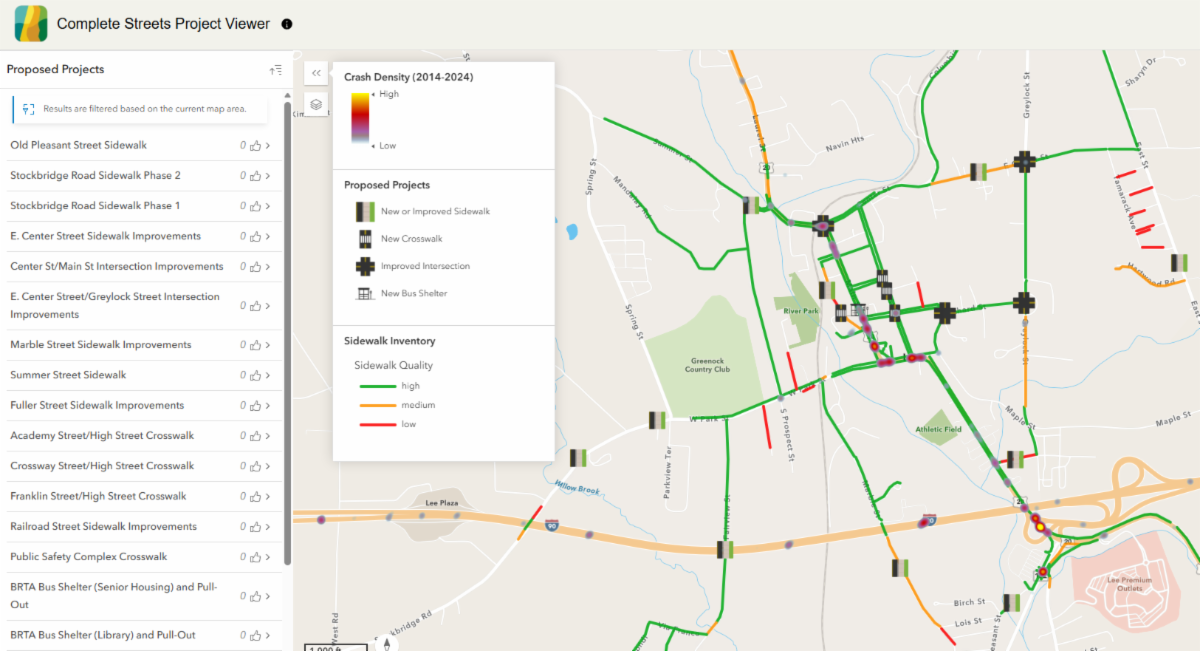
BRPC is pleased to partner with the town of Lee as the technical consultant to develop the town’s Complete Streets Prioritization Plan. From now until the end of 2025, work will be occurring on developing the plan which will then be submitted to MassDOT. The Prioritization Plan identifies eligible projects in the town that will improve infrastructure for all modes of transportation. A “complete street” includes adding a sidewalk to connect to a previously unserved neighborhood, adding bike lanes to a busy stretch of road, or enhancing crosswalks to make an intersection safer. There are numerous types of investments that can be made through the Complete Streets program.
Lee has been hard at work putting together a steering committee to work with BRPC staff in developing the Prioritization Plan. The committee has provided goals for what they would like to see Complete Streets projects accomplish, with the top priorities being safety, livability, economic vitality, connectivity, and increased mobility and usability. In November, BRPC staff presented proposed projects to the town's Select Board, and feedback is currently being solicited from the community. Lee community members can view an interactive map and vote for projects that they feel are important now through December 10, 2025.
A detailed map on the Complete Streets can be found here.
| |
Complete Streets Program Updates its Formula
As of October, the Complete Streets Program has re-formulated its grant process. According to MassDOT’s Grant Central, the Complete Streets program will now offer construction grants of up to $1,000,000 to municipalities selected for an award. The $500,000 four-year funding cycle is now phased out. In addition, design grants of up to $150,000 are available to help municipalities cover the costs of engineering design for Complete Streets projects.
Tier 1, 2, and 3 designations are also phased out, and any municipality may apply for funding toward a qualifying Complete Streets project. Towns that have a Complete Streets policy and/or Prioritization Plan adopted will receive extra consideration, but prioritization plans are no longer mandatory.
Learn more about the Complete Streets Funding program.
Towns may continue to apply for up to $38,000 for technical assistance to develop a Prioritization Plan. Interested municipalities are encouraged to contact Nick Russo, Senior Transportation Planner at nrusso@berkshireplanning.org or (413) 442-1521 x19.
| | | | |