By Landesberg Design | May 6, 2026

Good design is often the result of good reading. Here’s our latest offering of insight, info, and intrigue. Indulge.

Design Is Not Important

by Michael Artman, President

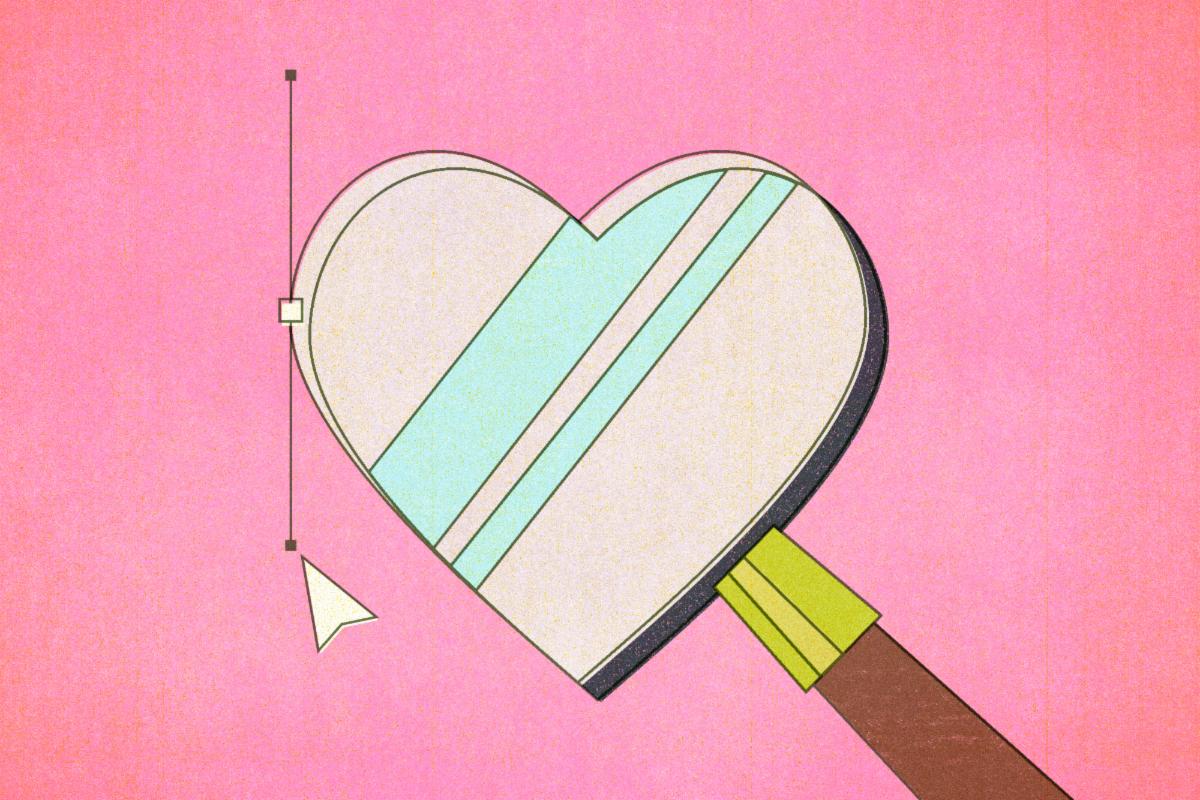
Illustration Credit: Michael Artman

On April 7th, I stayed a little late at my desk, finishing a fundraising piece for an arts organization to meet a printing deadline.


It was a production day like many before it: implementing feedback, flowing in final text, kerning headlines to split across the gutter, finessing a few stubborn line breaks… It’s the kind of work I believe in—attention to the craft, in support of the common good. I was doing work that mattered.


Then I drove home, desperate to hug my kids, and dreading what could happen before I got there.


A few hours earlier, our president had posted online that an entire civilization would be wiped out that evening if their leaders didn’t comply with his demands. No one knew what the threat meant. Maybe he didn’t even know. Maybe it was nothing, once again. But, maybe not.


I sat at my desk working late anyway, because what else do you do as a deadline approaches? You finish the job, and then, apparently, you drive home, and hug your children with a hug so mighty it might be load-bearing. Would this be my last time hugging them in a world as close to normal as they had ever known? At the risk of sounding hyperbolic, it was the most afraid I’ve ever been. And it was the most ashamed of us I’ve ever been. And in those feelings, something clarified.


Design is not important.


I’ve given a significant portion of my life to design. I believe in its power—to communicate and inform, to move people and change minds, to bend reputation, to uplift and activate, and to make a compelling case for beauty. But it is not important. Not in the way a heartbeat is important. Not in the way the people I drove home to are important. Not in the way that the people who, every day, are losing their chance at one more hug, are important.


What shamed me, sitting in traffic, wasn’t only the realization that I over-prioritize work. It was also the recognition that I’d only started carrying the weight of war when the danger seemed about to arrive at my own doorstep. That’s not a confession I make comfortably.


Here’s the part I’m even less comfortable writing: I’m not doing enough. And I know why.


I believe we should be in the streets. I believe that history will ask what we did, and that “I met the printing deadline” is not the answer I want to give. But I am afraid. I am afraid of joining a protest and being in the crowd when a car accelerates or when a gunman takes aim. I am afraid of what visibility costs in a country where it too often costs something. I have children who need me, and I have decided, again and again, that being here for them matters more than being visible for a cause—even causes I’d die for in the abstract.


I don’t know if that’s wisdom or cowardice. It’s probably some of both. We are all making impossible calculations right now. Weighing conscience against safety and possible impact against potential risk. Most of us are failing the tests we’d have said we’d pass.


Design is not important. But the people who make it, are—not because of what they make, but because of what they still might do.


Finish the job. Drive home. Hug whoever is waiting. And then figure out what the world you want to live in looks like. Figure out what action for you looks like. Do what you can do, and be honest about the gap between what you’re doing and what you wish you could do.


Every day, I do good work for good people. We design for the organizations who build a more just world. Our clients feed the hungry. They empower the powerless and uplift those who have been left behind. They educate the changemakers of tomorrow. And they make life richer, more livable, and more fun. It’s vital, important work that we are… that I am… immensely proud of.


It’s not nothing.


But is it enough?

American Indian Magazine

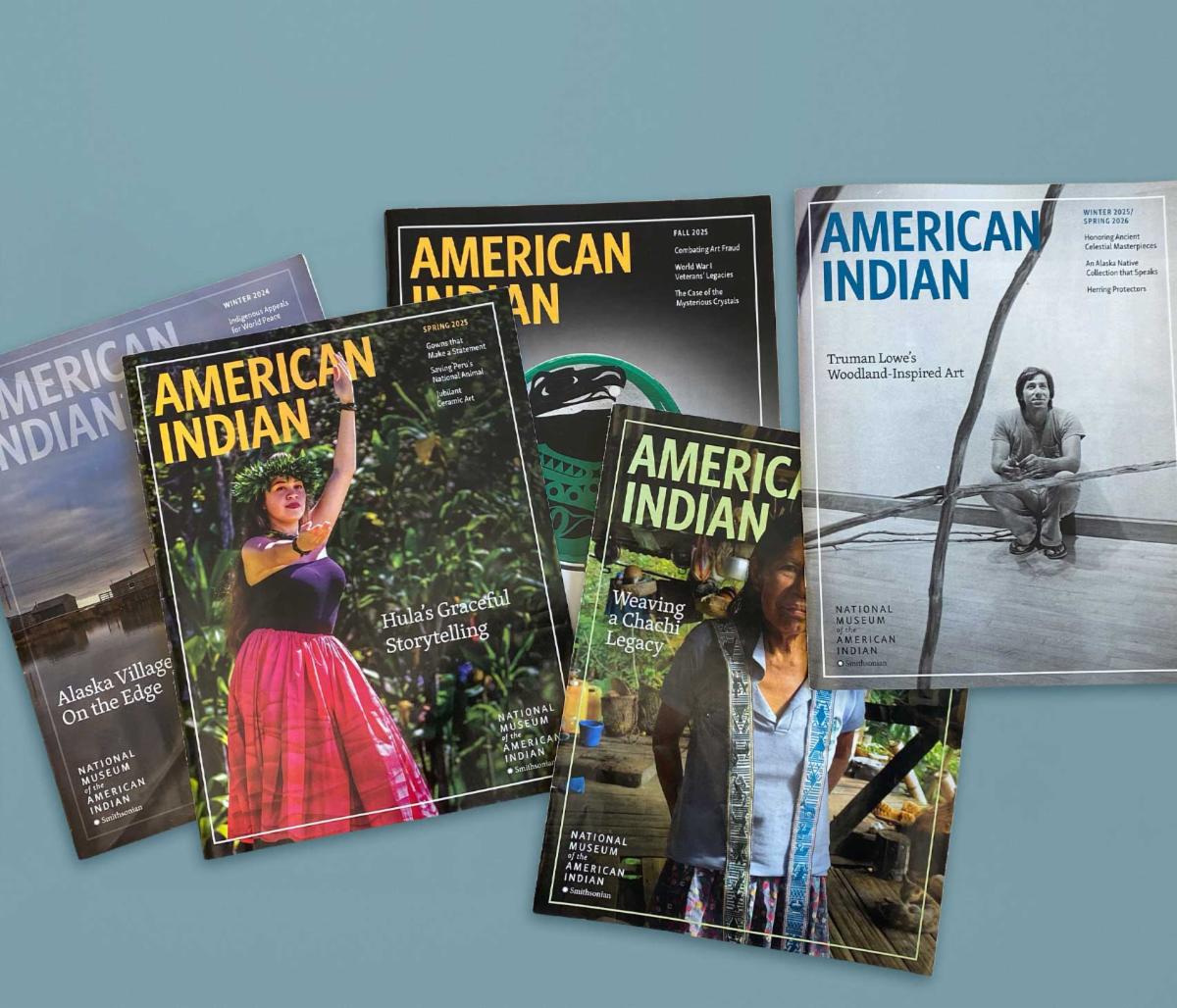
The Smithsonians National Museum of the American Indian partners with Landesberg Design to produce its quarterly membership magazine, American Indian. Each issue brings Native American art, culture, and history into the spotlight—highlighting the museums work through visually rich, photography-driven editorial storytelling.

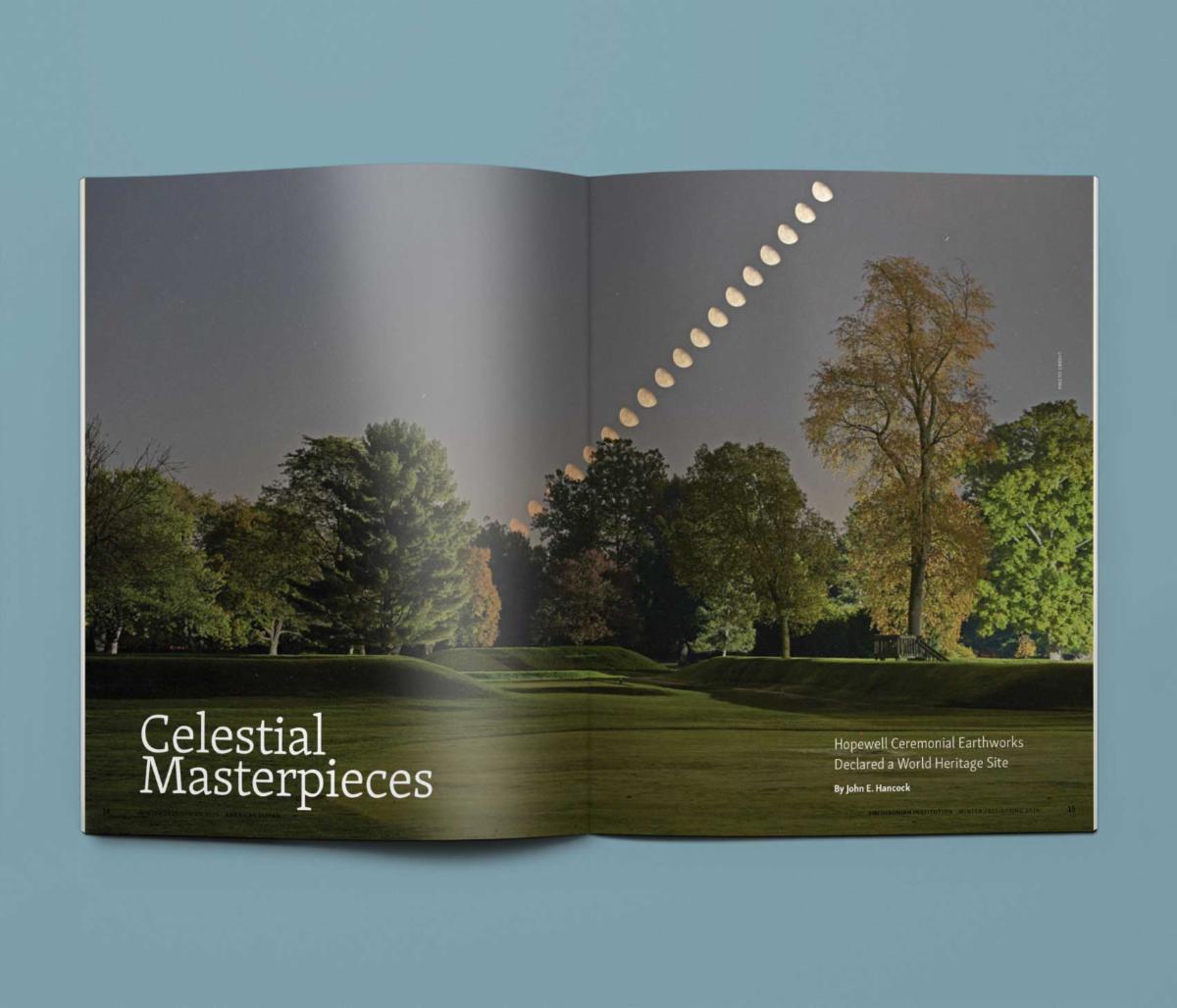
Each issue teaches us something new. The Winter 2025/Spring 2026 issues feature story, Celestial Masterpieces, explores the Hopewell Ceremonial Earthworks in Ohio—now recognized as a UNESCO World Heritage Site. Dating from roughly 800 B.C. to 500 A.D., these ancient burial mounds were engineered first by the Adena culture, and later the Hopewell, to track the 18.6-year lunar cycle across multiple sites—a feat requiring generations of astronomical observation and record-keeping. With some mounds covering a larger area than the Egyptian pyramids, the Earthworks sites are squarely among the most remarkable engineering achievements of the ancient world.

The story explores the sites historical and cultural significance, the painstaking work of study and preservation, the process of receiving World Heritage Site designation, and the extraordinary Hopewell artifacts discovered during excavations.


Explore the full issue, or read more about the Hopewell Ceremonial Earthworks here.

1. Not Another AI Article! (Really)

Illustration Credit: @mabetser

The discussion, stories, pessimism, optimism, and collective wondering where the hell we are headed have occupied more than a fair share of our time lately. The rise of AI adds to the challenge of proving whats real—especially when it comes to creative work.


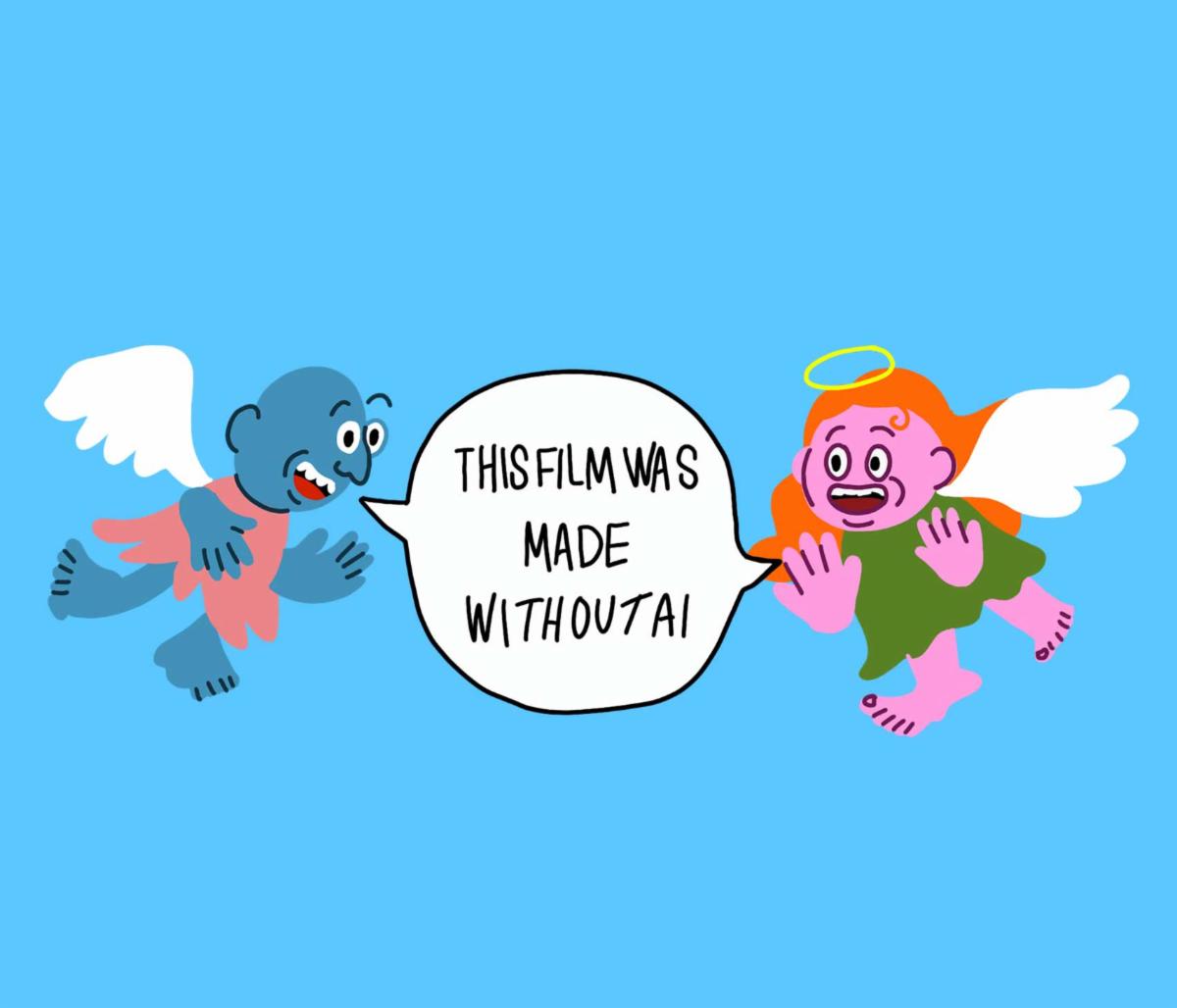
Which is what makes this It’s Nice That article profiling Montreal-based filmmaker Ori Peer’s project This Film Was Made Without AI feel timely. The project is a collaborative response to growing skepticism around whether creative work is human-created or AI-generated. After Peer’s own film was nearly canceled due to false AI accusations, he launched an open, public-domain platform where artists can create and share animated no AI disclaimers to accompany their work.


The site brings together more than 100 artists, each interpreting the disclaimer in their own style—often including process videos to reinforce human authorship. But it’s more than a tool, it’s a statement—a defense of human creativity, a critique of AI’s impact on art and the environment, and a celebration of the imperfect, hands-on nature of making.

2. You Think Politics Is Messy Now?

Image Credit: Ralph E. Becker Collection of Political Americana

When the Rutherford B. Hayes Presidential Library & Museums engaged Landesberg Design to collaborate on a new branding initiative, this fascinating 19th-century artifact caught the eye of designer Maddie Abuyuan—and serves as a timely reminder that history has a way of repeating itself.


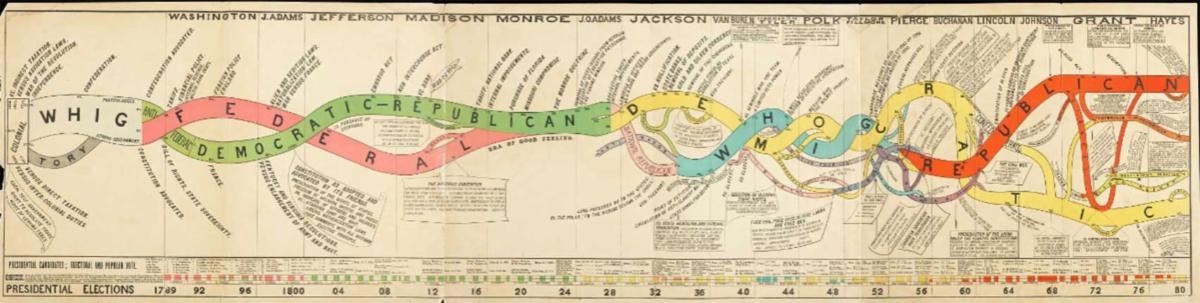
The Conspectus of American Politics, 1880, housed at the National Museum of American History, is an ambitious, single-page visual chart designed to map the complexity of U.S. political history. It presents a sweeping timeline that traces political parties, key figures, major policies, and national events—organized into a structured, left-to-right narrative.


Created as both an educational and interpretive tool, the conspectus brings clarity to shifting political landscapes across several decades, and allows viewers to see complex relationships across political parties at a glance. And, its beautifully designed.


A welcome reminder that in politics, nothing is permanent except change.

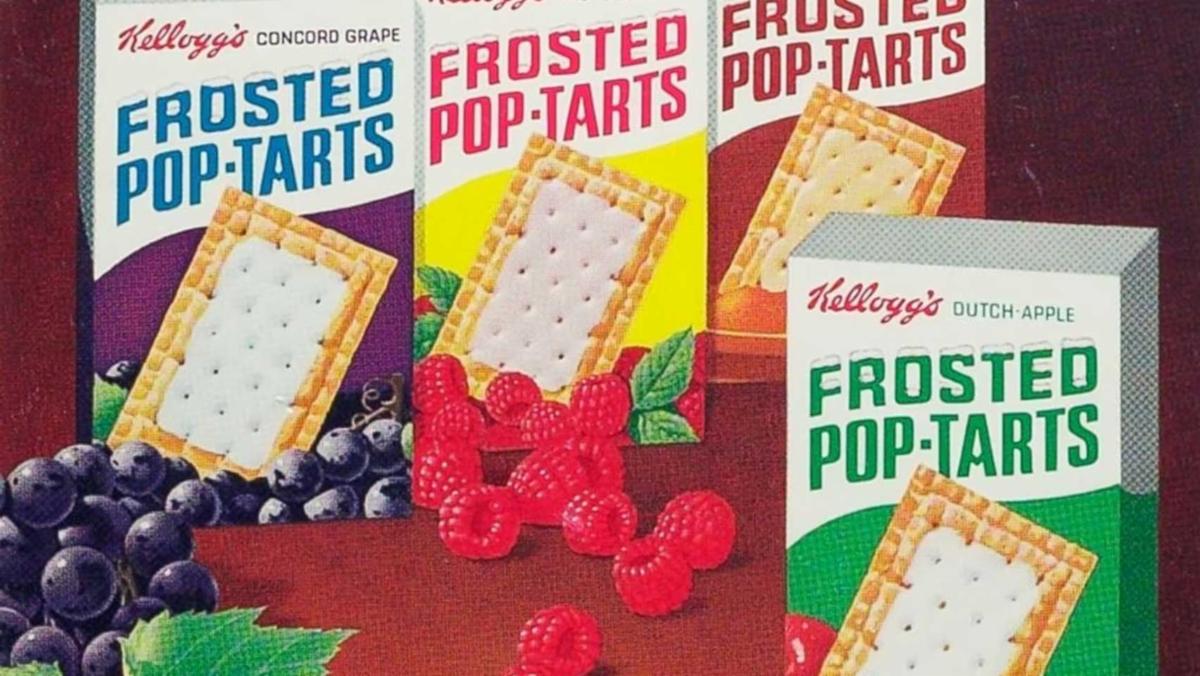
3. Pop-Tarts Popping!

Photo Credit: Kellogg Company

The Stuff You Should Know podcast episode “Pop-Tarts: No Fruit Necessary” explores the rich history and cultural impact of one of America’s most iconic convenience foods. It traces Pop-Tarts back to the 1960s, when changing social dynamics—particularly more women entering the workforce—helped fuel demand for quick, shelf-stable breakfast options. 


The hosts unpack the competitive origins between Kellogg’s and Post, the product’s rapid rise to success, and the technical innovations (like foil packaging and toaster compatibility) that made it viable. They also highlight how Pop-Tarts evolved over time—from simple pastries to the heavily marketed, endlessly expanding flavors that turned the snack into an American pop-culture staple. Seinfeld loved Pop-Tarts so much he made a feature-length film (Unfrosted) about them in 2024 (39% on Rotten Tomatoes, but it has some moments).


The podcast doesn’t ignore the contradiction that despite being marketed as fruit-filled, Pop-Tarts contain very little actual fruit. 


(Editor’s note: don’t waste your time on “fruit-filled”—the king of all Pop-Tarts is the unfrosted cinnamon toasted for 2 minutes or until lightly browned).


Ultimately, the episode frames Pop-Tarts as a perfect example of modern food culture—driven by convenience, nostalgia, and marketing—where what something represents often matters more than what it actually is.

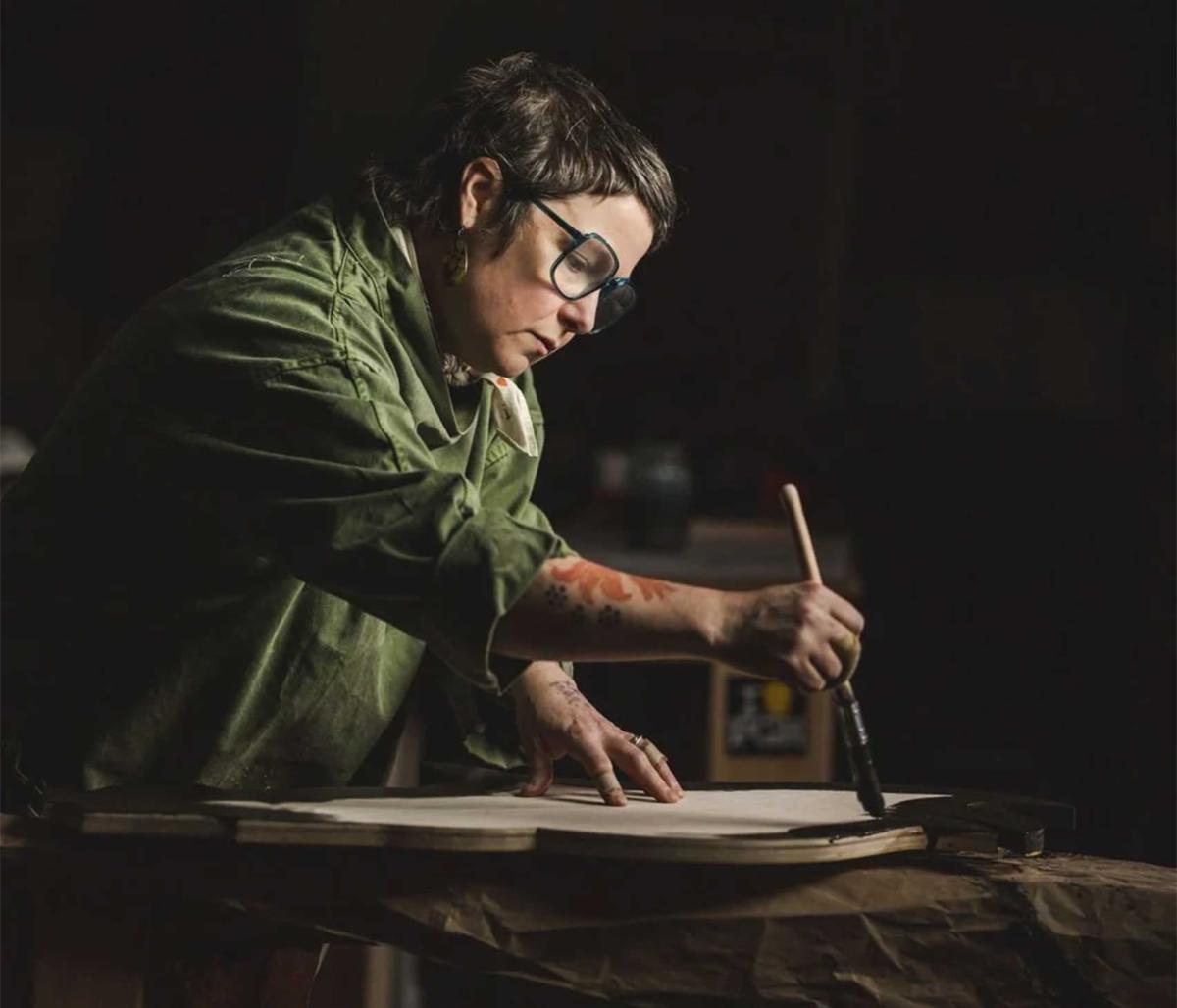
Kim Fox

Pittsburgh, PA

Photo Credit: Kim Fox/Matt Dayak

Pittsburgh-based artist Kim Fox is the founder of Worker Bird, a studio practice rooted in craftsmanship, storytelling, and a deep connection to place. Working across materials such as reclaimed wood, vintage tin, paper, and ink, Fox creates richly layered pieces that feel both contemporary and timeless—often described as a form of modern Pittsburgh folk art.


Her work draws inspiration from the natural and industrial landscapes of western Pennsylvania—birds, bees, farm machinery, and the quiet details of everyday life—transforming overlooked materials into warm, textural compositions. Process plays a central role in her practice, with each piece meticulously assembled by hand, reflecting a belief that making is as meaningful as the finished work itself.


Landesberg Design most recently collaborated with Fox on a project for the Greater Pittsburgh Community Food Bank, where she created a series of murals for their new offices and market. Her work captures the Food Bank’s mission, welcomes visitors, and reinforces the spirit of neighbors helping neighbors.

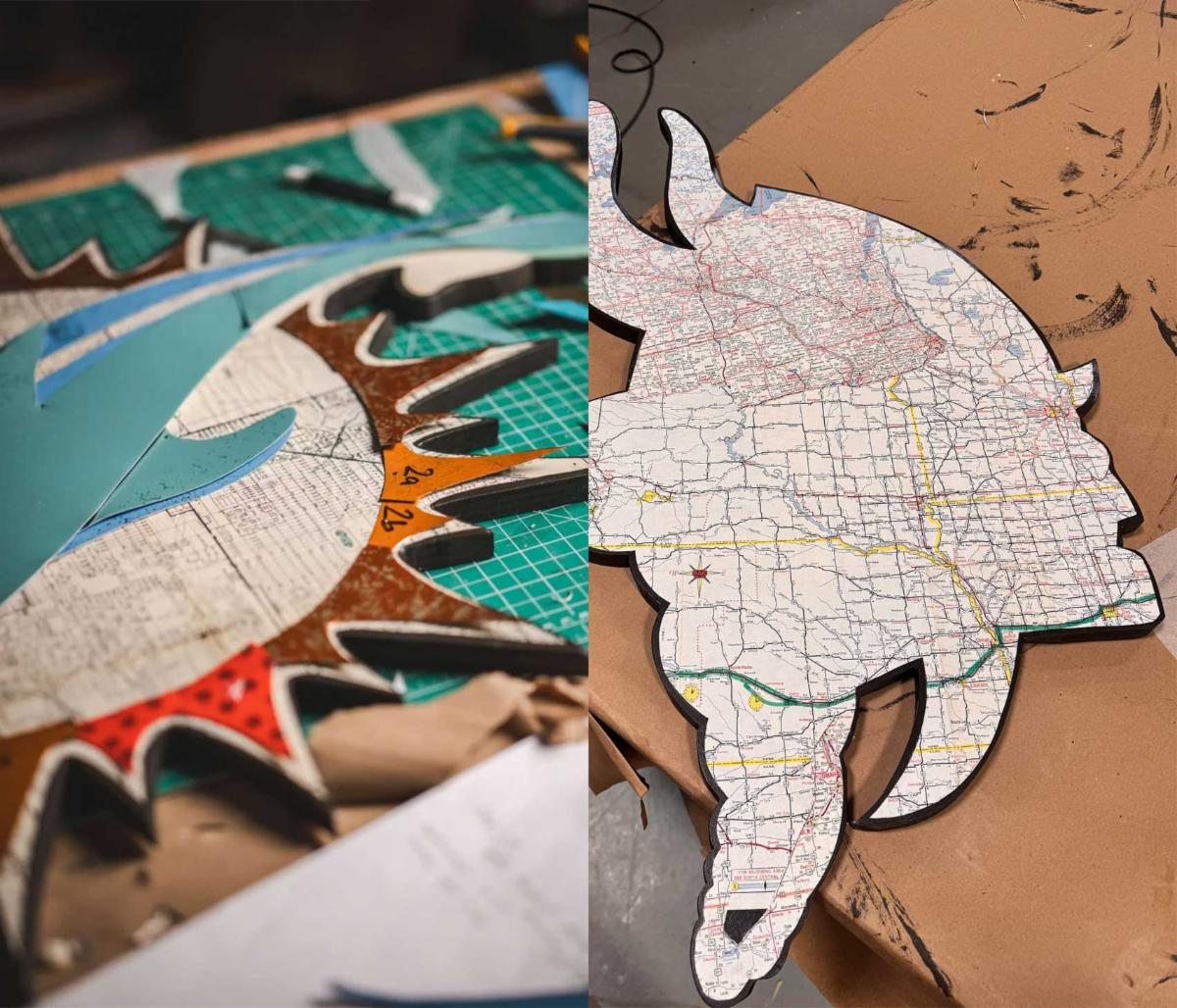
Photo Credit: Kim Fox/Matt Dayak

Kim Foxs work reached a national stage during the 2026 NFL Draft held in Pittsburgh, with her 32 mixed-media team logos featured along the player walkway. Each piece used wood, vintage maps, and hand-cut tin to create narratives tied to each teams city.


Through both her studio work and public commissions, Fox continues to create pieces that connect people to place, memory, and meaning. To see more of her incredible work, visit her site.