April 2026

Strengthen Connections. Share Knowledge.

Looking to connect with your Community Action Board peers? A new Board Peer Group is being formed to give board chairs an opportunity to share what’s working for them and what’s challenging. The group plans to meet for one hour each month virtually. Anyone interested, please email Sam Parker at justsparker@gmail.com or call 804-335-1283.


Fundraising Issue


3 Tips to Get Started as

Fundraising Ambassadors for Your Agency


As fundraising ambassadors, you actively promote your agency's mission, work to expand your network, and help secure donations. Board members are uniquely suited for this role given your influence, connections, and commitment to your agency's cause. By sharing your story, making introductions, and leveraging relationships, you can significantly boost your agency's fundraising success.

Make Fundraising
a Priority


Make fundraising a consistent priority. Keep it on every meeting agenda, share regular updates, and ensure members understand current campaigns and their impact. When board members see how fundraising ties into your agency's long-term success, they’re more likely to engage.


Focus on
Your Strengths


It’s important to align roles with individual strengths. Some board members may thrive in direct gift solicitation, while others prefer donor stewardship activities like thank-you calls or event engagement. More introverted members can contribute behind the scenes through planning, strategy, or budgeting.

Check In
Regularly


Maintain momentum through regular check-ins. Set clear, achievable goals for each board member, review key fundraising metrics together, and celebrate wins—big or small. Recognition not only reinforces positive behavior but also keeps board members motivated and invested.


How to Build a Board Fundraising 
Communications Toolkit

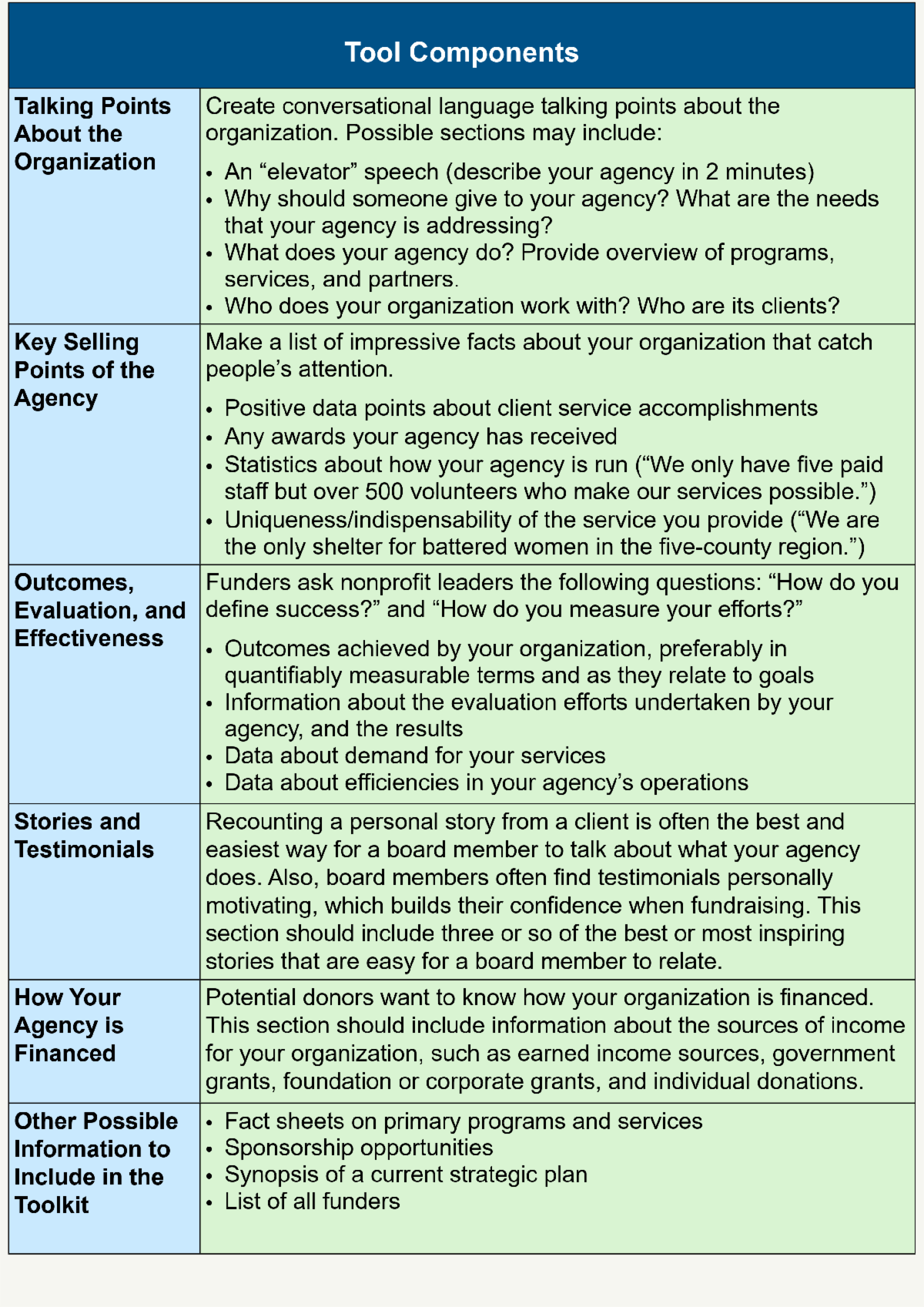
As board members are often in a face-to-face situation where they are speaking with potential donors on behalf of the agency, we recommend you develop a toolkit to provide key information about the agency. It is important to provide information in spoken language, not written language. Although the development of the toolkit will likely be a staff-driven project, the toolkit will be much more effective if it is developed in collaboration with the board members. Board members can make recommendations for the table of contents, review the content that the staff prepares, and advocate the use of the toolkit to other board members.

More Resources


Virginia Office of Economic Opportunity

5600 Cox Road, Glen Allen, VA 23060

csbg@dss.virginia.gov