Community Association Update: Issue # 50
- California is Reopening - But What Does That Mean for HOAs?
- Resolving Conflicts of Law Related to Recall Election Timelines in the Wake of SB 323
- Hostile Homeowner Harassment
- Membership Notification of Potential Issues
- Court of Appeals Holds that HOAs Do Not Have a Duty to Provide Onsite Parking to Invitees
|
|
Dear ,
This Community Association Update is part of our commitment to providing the highest quality legal services to our clients and industry partners. If your company or Association would like to see a topic or issue covered in future editions, feel free to call our offices, email us, or submit a question online!
Sincerely,
|
Steven Tinnelly, Esq.
Tinnelly Law Group
|
|
California is Reopening - But What Does That Mean for HOAs? |
As of June 15, 2021, Governor Newsom terminated the executive orders that created the Stay-at-Home Order and the Blueprint for a Safer Economy. These orders have been replaced with and superseded by a new State Public Health Officer Order of June 11, 2021 (“Current Order”). This New Order requires all individuals, regardless of vaccination status, to wear face coverings: 1) on public transit; 2) indoors in schools and in childcare; 3) in healthcare settings; 4) in correctional facilities and detention centers; and 5) in homeless and emergency shelters. Vaccinated people may now forego face coverings in public places, including indoors, but unvaccinated persons must still wear face coverings in these locations.
It is arguably reasonable for HOAs to mirror the provisions of the Current Order when opening community facilities, although HOAs can choose to be more restrictive if the Board determines this course of action to be in the Association’s best interest. However, only lifting masking requirements for vaccinated persons creates significant enforcement difficulties. Specifically, it forces the HOA to ask people if they are vaccinated. While asking persons if they are vaccinated is lawful (HIPAA is only applicable to healthcare providers), many will consider answering questions concerning their private health information an invasion of their privacy and by that same token, may refuse to answer. The law does not require anyone to answer such a question.
Regardless of the rules adopted by an HOA to protect residents from COVID-19 transmission, it is advisable for an HOA to include a provision requiring any users of community facilities to sign a waiver and release prior to use/entry in conjunction with the posting of a notice advising users of the risks and that by using the facility, they agree to assume such risks. While not a guarantee that the HOA will not be sued if someone catches COVID-19 in a common area, such waivers and notices may help mitigate the Association’s legal exposure resulting from reopening.
|
|
|
|
Resolving Conflicts of Law Related to Recall Election Timelines in the Wake of SB 323 |
Recall elections of individual Board members or of the entire Board are a source of great contention, divide and added expense for HOA’s. Prior to the passage of SB 323, which took effect January 1, 2020, recall petitions and elections were already complicated. To add to this complexity, since SB 323 became law, some of the Civil Code sections associated with HOA elections now conflict with those of the Corporations Code in the context of recall elections.
Notably, the required timeline for a recall election set forth in the Corporations Code does not match that of the Civil Code. Specifically, Civil Code Section 5115 proscribes a timeline of at least ninety (90) days to hold an election, assuming an Association’s Election Rules have already been amended to comply with SB 323, and which does not include any extra days for weekends or holidays. Therefore, noticing the membership for a recall election within ninety (90) days of the receipt of a recall petition as mandated by Corporations Code Section 7511 is now practicably impossible to satisfy in light of the new elongated Civil Code 5115 required timeline for elections (including recall elections). This is because notice cannot be sent to the membership until the Board and its counsel have reviewed and verified the petition to ensure it meets the requirements of the law and governing documents, which cannot reasonably occur on the same day a petition is received.
Thankfully, the Civil Code provides direction to Boards facing such a morass. Pursuant to Civil Code Section 5100(e), “(i)n the event of a conflict between this article and the provisions of the Nonprofit Mutual Benefit Corporation Law (Part 3(commencing with Section 7110) of Division 2 of Title 1 of the Corporations Code) relating to election [which includes Corp. Code Section 7511], the provisions of this article shall prevail.” This means that when there is a conflict between the Corporations Code and the Civil Code regarding mandated timelines and related notice deadlines for a recall election, Boards must follow the timelines proscribed in the Civil Code.
|
|
|
|
Hostile Homeowner Harassment
*Asked and Answered
|
Asked – How should our HOA handle a hostile homeowner who is being abusive to other residents and overwhelms management staff with endless emails and other harassing communication?
Answered – We previously blogged about workplace harassment and hostile work environments for management professionals. Unfortunately, harassment in Associations is becoming increasingly common these days. The COVID-19 pandemic-related difficulties has only heightened tensions and exacerbated this problem by further triggering those with a propensity for such hostile behavior and visceral outbursts.
While most Community Managers have had some experience dealing with abusive homeowners, hostile homeowners tend to exhibit unrelenting behavior that is challenging and highly disruptive notwithstanding management’s best efforts and great work on behalf of the community. They tend to inundate management staff with incessant and baseless complaints regarding perceived or self-inflicted issues, frivolously question Board actions, and are frequently the primary source of widespread tensions that lead to controversies with other residents.
One helpful guiding principle when encountering such hostile homeowners, is to step back and remember that the management company was hired to serve as the managing agent for the Association. Thus, Management’s primary responsibility is to implement the Board’s directives and to serve as a communications liaison between the Board and the residents. For the most part, substantive decisions are made by the Board at the monthly Board meetings. Recognizing this dynamic can assist management staff and the Board when encountering confrontational homeowners. Thus, when responding to emails or other correspondence from such homeowners, Management can simply acknowledge receipt of the communication, thank the homeowner, and advise them that the Board values resident communication relating to Association business and that you understand their concerns and will forward their communication to the Board for review at the next Board meeting. Then, timely engage the Association’s legal counsel to deal with the problem and to protect the Association’s interests.
|
|
|
|
Membership Notification of Potential Issues
*Asked and Answered
|
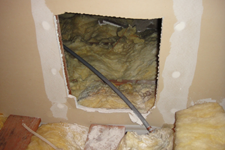
Asked – Our HOA Board of Directors has become aware of a potential issue with the fire resistive construction in the walls between two condominium units. The Board is split on whether notice to the membership as a whole is warranted at this time, prior to the conclusion of the investigation, given that this potential issue affects a life safety system. Half of us feel that the issue is only technical in nature, while the other half believes that any potential issue should be communicated to the membership. We do not want to unnecessarily alarm the membership or incur thousands of dollars investigating the issue throughout the community if it is not significant, but at the same time we do not want to expose the Board or Association to a risk of liability.
Answered – The Board, as fiduciaries to the Association, is obligated to rely on subject matter experts in situations such as these. (Raven’s Cove Townhomes, Inc. v. Knuppe Development Co. (1981) 114 Cal.App.3d 783.) If the components in question fall within the scope of the Association’s repair responsibilities, the Association has a duty to retain experts to investigate the matter. Given the technical complexity of fire resistive construction systems, and the potential life safety implications, the Association should specifically ask their retained expert to evaluate and comment on whether membership notification of the issue is warranted at this time or whether further investigation is required. Often times, technical violations may exist that do not impair the overall performance of the system, but the Board should not rely on their own intuition or experience to make that determination. Such decisions can only be made after expert recommendations are provided and reviewed by the Board.
|
|
|
|
Court of Appeals Holds that HOAs Do Not Have a Duty to Provide Onsite Parking to Invitees
*New Case Law
|
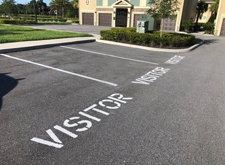
The Court of Appeals recently ruled in Issakhani v. Shadow Glen Homeowners Association, Inc. (2021) 63 Cal.App.5th 917, that homeowners associations do not have a duty of care to provide onsite parking to invitees. In that case, a pedestrian was struck by a car when jaywalking across a five-lane highway at night. The pedestrian was visiting her friend, who lived in a condominium project. The pedestrian decided to park across the street because the complex did not have any guest parking spots available.
The pedestrian sued the condominium owners association (“association”) for negligence and premises liability on the basis that the association did not have enough onsite guest parking spaces. The pedestrian argued that the association was liable because the association’s failure to maintain the “required” number of guest spots created a foreseeable risk of harm to the association’s guests.
The association moved for summary judgment, and the trial court granted the association’s motion. The Court of Appeals agreed and ruled that the association, as the landowner, did not owe a duty of care to invitees to provide adequate onsite parking.
|
|
|
|
Announcing the Tinnelly Talks Podcast!
|
|
We have been working on something exciting! The Tinnelly Talks Podcast launched earlier this year, where we discuss the common legal issues facing today's community associations.
Co-Hosts Steve Tinnelly, Esq. and Ramona Acosta, PCAM, along with many special guests, will be diving deep into topics that will help educate, inspire and provide you with tools to better serve your community whether you're a board member, manager or homeowner! New episodes drop monthly.
|
|
Chino
Santa Rosa
Orange
Anaheim
San Diego
Cerritos
Carlsbad
Irvine
456 E. San Jose Avenue Condominium Homeowners' Association, Inc.
Burbank
Redlands Collection Homeowners Association
Redlands
Canyon View Association
San Diego
The Seasons Master Association
Chino
25 15th Place Homeowners Association
Long Beach
Willow Ridge Estates Homeowners Association
Ramona
Mission Park Homeowners' Association
San Juan Capistrano
Villaggio Firenze Homeowners Association
San Diego
Windsor West Owners Association
Fresno
Valli Villas
Los Angeles
|
|
Your Community. Your Counsel. TM
|
|
|
|
|
|
|