|
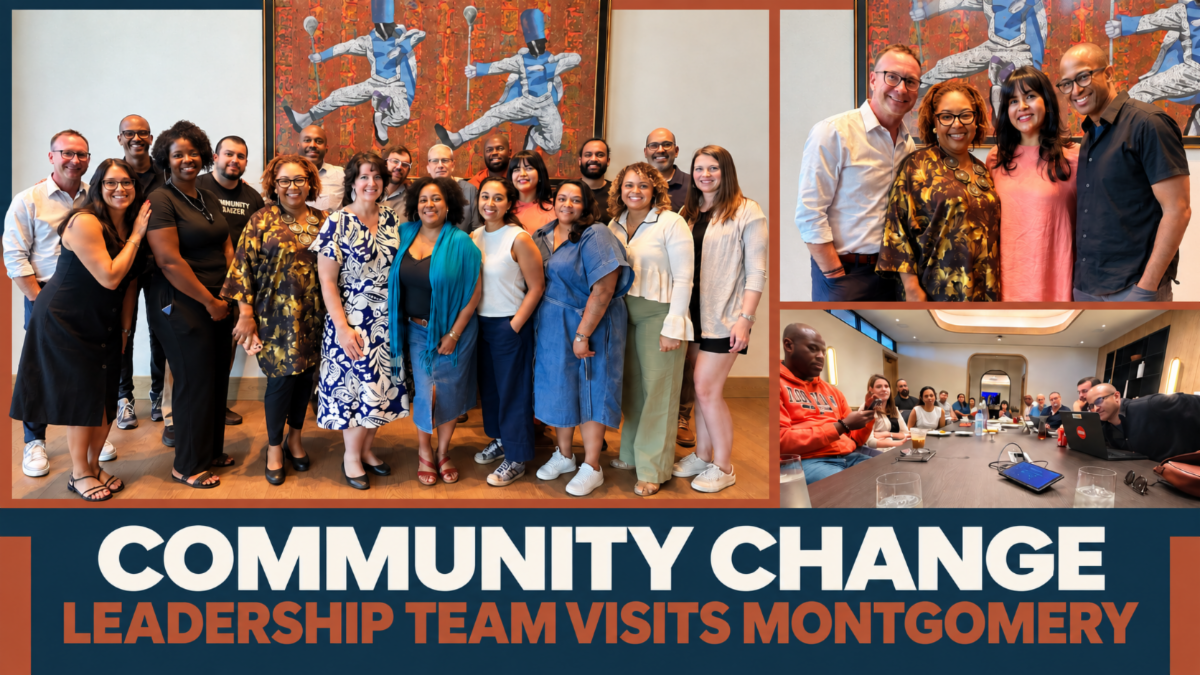
AISJ was honored to welcome members of Community Change’s Leadership Team to Montgomery for a meaningful period of learning, reflection and substantive dialogue about the realities of organizing in the South. The visit included several of Montgomery’s historic civil rights and legacy sites, allowing participants to engage more deeply with the courage, sacrifice and collective action that shaped movements for justice in Alabama and across the nation. These sites also offered an important context for examining how the history of Southern organizing continues to inform contemporary struggles for racial, gender and economic justice.
An intimate panel discussion was held with AISJ Executive Director Lenice C. Emanuel; Yolanda S. Fredrickson, doula and family life educator with Aware Birth; and Adiliah Smith, lactation specialist and doula with Village Maternal Services. Facilitated by Jennifer Wells, Director of Economic Justice/Care Economy at Community Change, the conversation examined the structural challenges confronting organizers in the South—including chronic underinvestment, political resistance, and the fear and intimidation often directed toward those working to transform inequitable systems.
The panelists also explored the interconnectedness of maternal health, birth justice and child care. These issues are not isolated policy concerns; together, they constitute a continuum of care that shapes the health, economic security and overall well-being of families and communities. A just care infrastructure must support women and birthing people throughout pregnancy and childbirth, ensure that families can access affordable, high-quality child care, and properly value the overwhelmingly female—and disproportionately Black and Brown—workforce responsible for providing that care.
AISJ extends sincere appreciation to Arleen Vargos, Senior Organizer, Care Economy at Community Change, for thoughtfully organizing the panel and creating space for candid and necessary dialogue. The organization also thanks Community Change Co-Leaders Dorian Warren and Lorella Praeli for their leadership, partnership and sustained commitment to organizers and communities across the South.
Community Change’s presence in Montgomery reflected the organization’s broader value within the national organizing landscape. Its leadership recognizes that durable social change is built not only through policy advocacy, but also through long-term investment in grassroots leadership, relationships and organizational capacity. By connecting community-based knowledge with national strategy, Community Change helps strengthen the movement infrastructure necessary for local leaders to shape public narratives, influence policy and build lasting power.
The gathering affirmed that meaningful change in the South requires more than periodic attention or short-term resources. It requires sustained investment in the people and institutions doing the work every day. By bringing together leaders across maternal health, birth justice, child care, and racial and economic justice, the visit deepened relationships and reinforced a shared commitment to building a more equitable future for Southern families and communities.
To learn more about Community Change, visit its website.
|