View as Webpage

April is Fair Housing Month

To kick off Fair Housing Month, Washington County's Office of Community Development and Department of Housing Services hosted a screening of the powerful documentary No Place to Grow Old, which explores the rapidly growing crisis of homelessness among older adults in and around Portland. This screening was followed by a panel discussion.


A proclamation declaring April as Fair Housing Month will go before the Board of County Commissioners at their April 7 meeting.

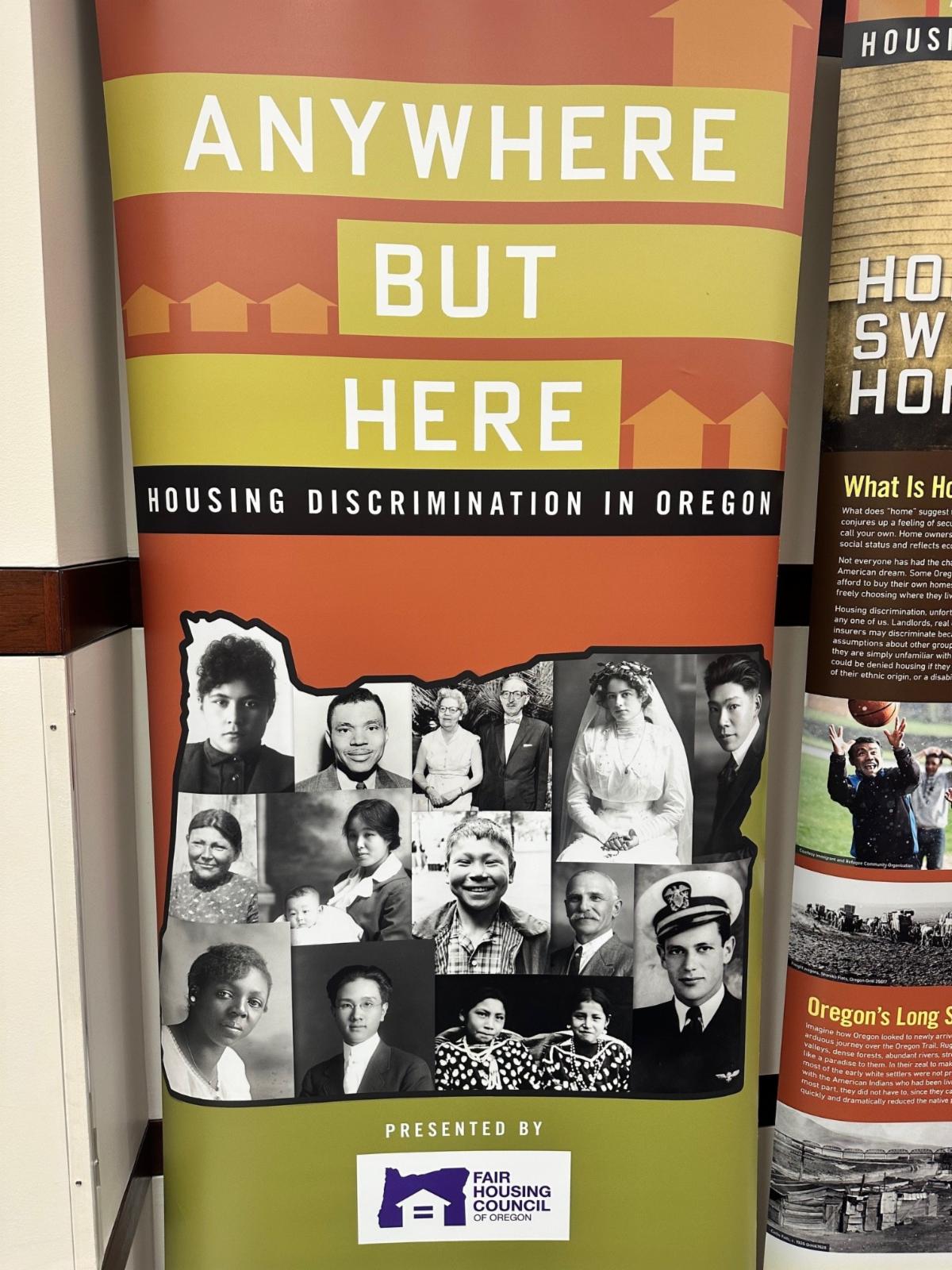
To shed a light on Oregon's history of discriminatory housing practices, the exhibit titled Anywhere But Here will be on display in the Public Services Building April 1-15 and at the Hillsboro Civic Center from April 16-30. the exhibit highlights Oregon's often overlooked history of discrimination, segregation and displacement, as well as the progress made in overcoming these barriers and the challenges that remain.


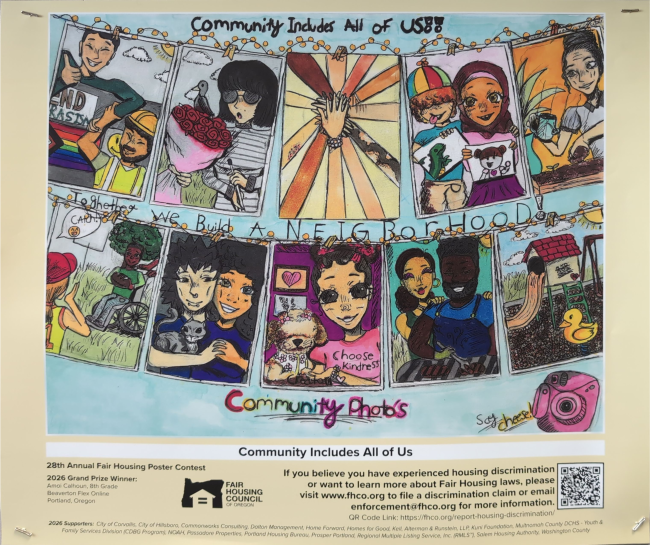
As part of Fair Housing Month, the Fair Housing Council of Oregon also held a poster contest.

National Community Development Week

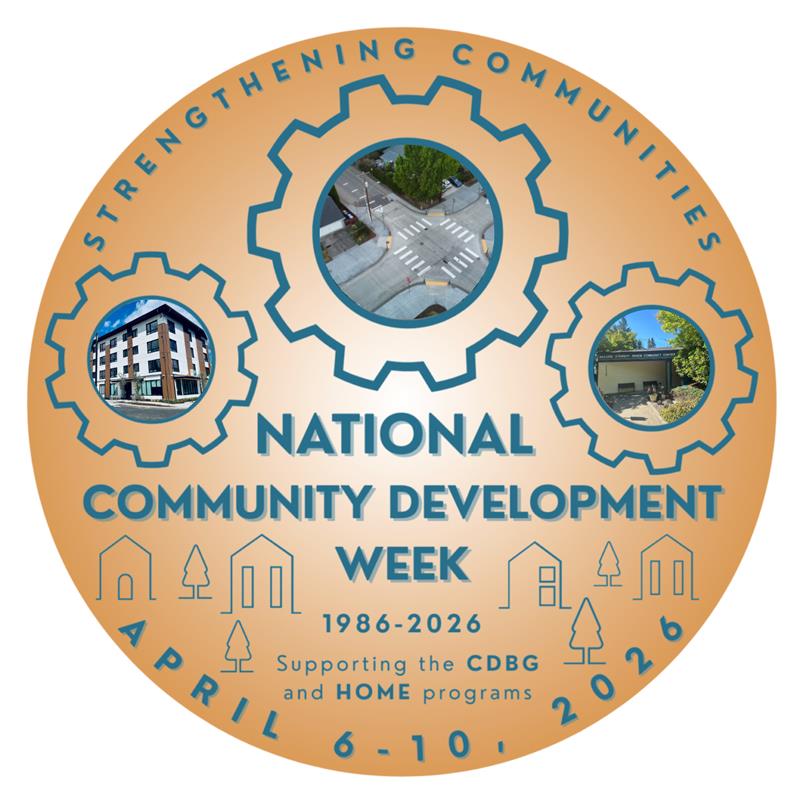
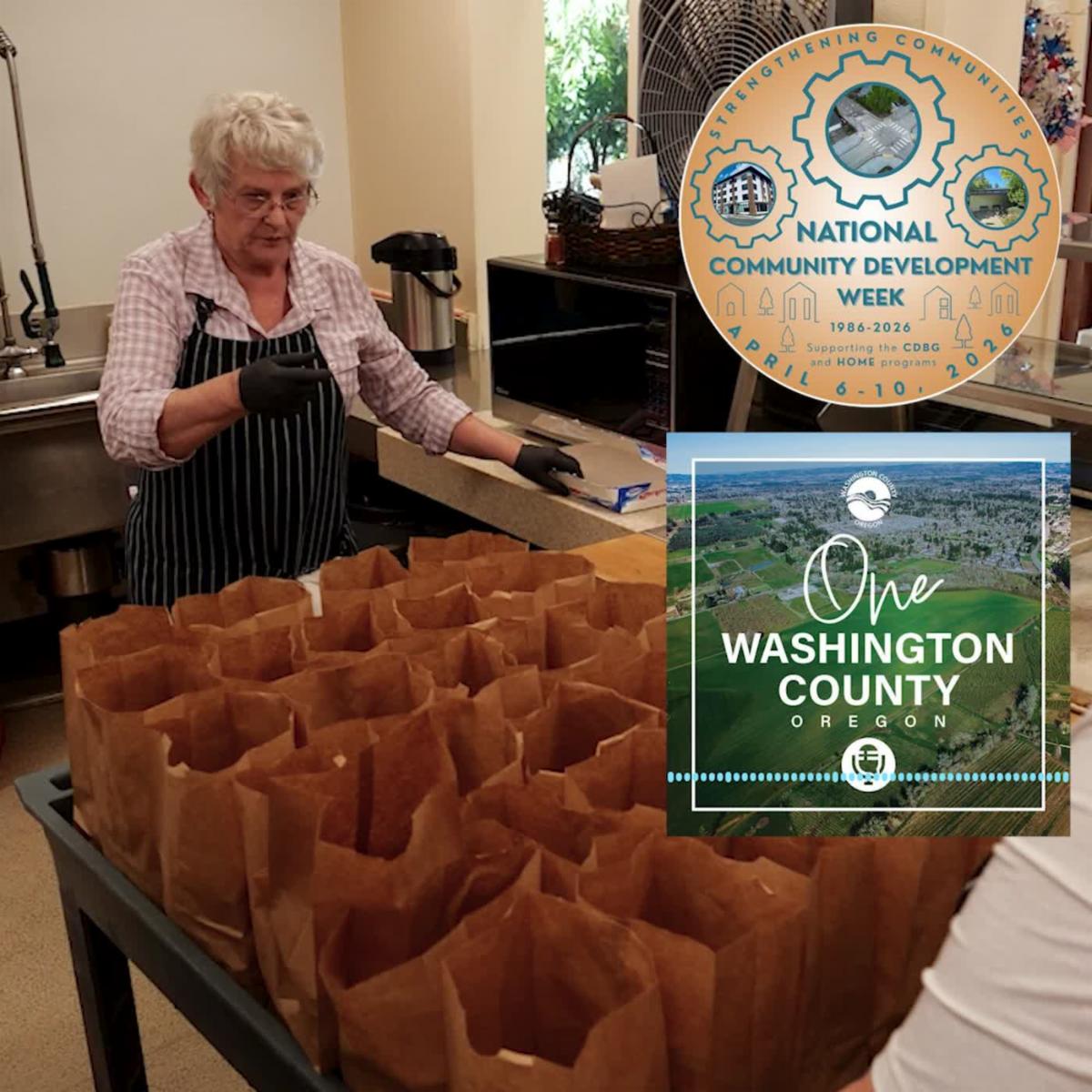
April 6–10 is National Community Development Week, a time to highlight the impact of the Community Development Block Grant (CDBG) program and the HOME Investment Partnerships Program. A proclamation declaring National Community Development Week will be brought before the Board of County Commissioners at their April 7 meeting.

To celebrate Community Development Week, the CDBG Program was featured on the One Washington County podcast. You can listen to the podcast episode or watch the CDBG 50th anniversary video. A congressional letter template is also available for those who would like to write to their members of Congress to highlight the importance of these programs in our community.

The Office of Community Development has administered the CDBG program in Washington County since 1979, providing flexible funding to meet the needs of vulnerable residents and households with low and moderate incomes. CDBG funds support neighborhood revitalization, housing rehabilitation, public infrastructure, flood relief, and essential social services.


Since 1992, the HOME Program has provided critical resources to help finance the development of affordable rental housing throughout the county.


Below are recent stories that highlight the impact of these programs in our community.

CDBG: Project Homeless Connect - Access Center

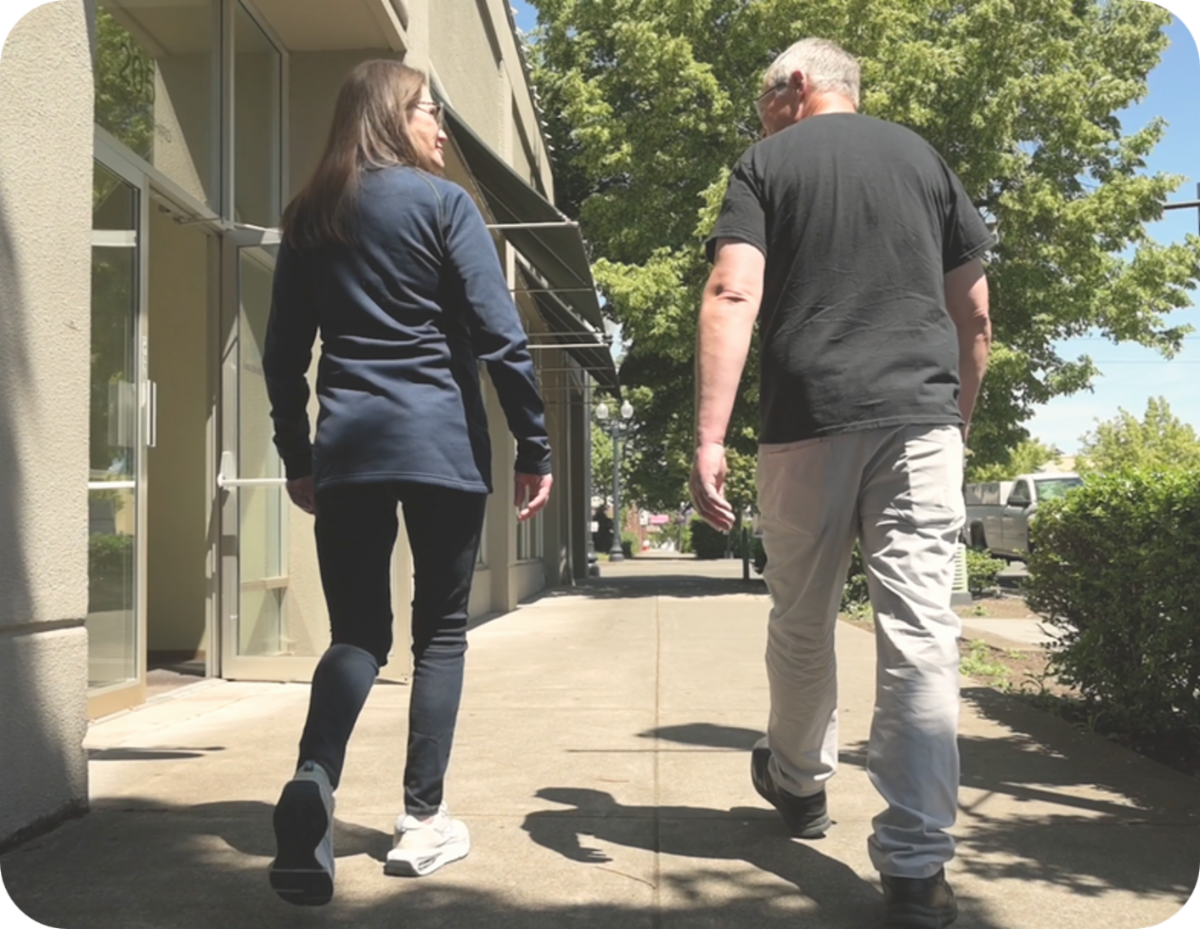
A man battling addiction and homelessness began visiting the Access Center. From the beginning, he was open and honest with staff, regularly speaking with the team about the challenges he was facing. Over time, staff began noticing small but meaningful shifts in his demeanor—signs that he was beginning to believe change might be possible.


After about six months of consistent visits, he suddenly stopped coming to the center. Staff asked around to see if anyone had seen him, but it appeared he had moved on. They hoped he was safe wherever he was.

Several months later, he returned.


This time, he shared a powerful message: the time he spent at the Access Center had helped him regain confidence. He explained that the care, listening ears and services he received there played a major role in his decision to enter treatment. For the first time in a long time, he believed he could actually make a change.


Since then, he has graduated from treatment, secured employment and recently began doing motivational speaking at a local church.


His journey serves as a reminder of why this work matters so deeply. Hope can be the spark that lights the way toward healing, and sometimes all someone needs is a place where they can feel seen, heard and supported.

ESG Program - Housing Stabilization Success Story

When this Pacific Islander family entered the ESG program, they were facing overwhelming barriers. The mother had fled domestic violence in another state and was living with her minor child in a domestic violence shelter in Salem. Her child lives with a rare disease requiring full-time care, which prevented the mother from maintaining employment. Without income history, rental history, credit or references, securing housing felt nearly impossible.


The ESG program became the family’s primary support during this crisis. Through housing navigation, advocacy and direct assistance, ESG staff worked persistently to overcome the barriers that initially resulted in rental denials. After two unsuccessful applications, staff continued the housing search and identified a private landlord willing to meet the family in person. ESG staff facilitated the introduction, supported the application process and advocated for the family’s unique circumstances. The landlord ultimately agreed to give them a chance, allowing the family to move into safe and stable housing.


Once housed, ESG staff continued to coordinate with the Department of Human Services and an OHSU advocate supporting the child’s complex medical needs. With stable housing secured, the family finally had the foundation necessary to address their health, financial stability and long-term goals. Over the course of their first year in the ESG program, the family’s situation changed significantly. Their income increased from minimal TANF benefits to approximately $7,000 per month after the child began receiving SSDI and the mother became eligible for caregiver compensation once the child turned 18. This increased financial stability allowed them to maintain their housing independently and meet their basic needs without crisis.


By the end of the year, the family had achieved full financial self-sufficiency and successfully graduated from the ESG program before needing to recertify for a second year. They were also able to renew their lease independently, as their income now met the landlord’s requirements — a meaningful testament to both the family’s resilience and the impact of ESG support.


This story illustrates the core purpose of the ESG program: removing barriers to housing, stabilizing families in crisis and helping households build a path toward long-term independence

CDBG: Tualatin Valley Water District Water Main Replacement

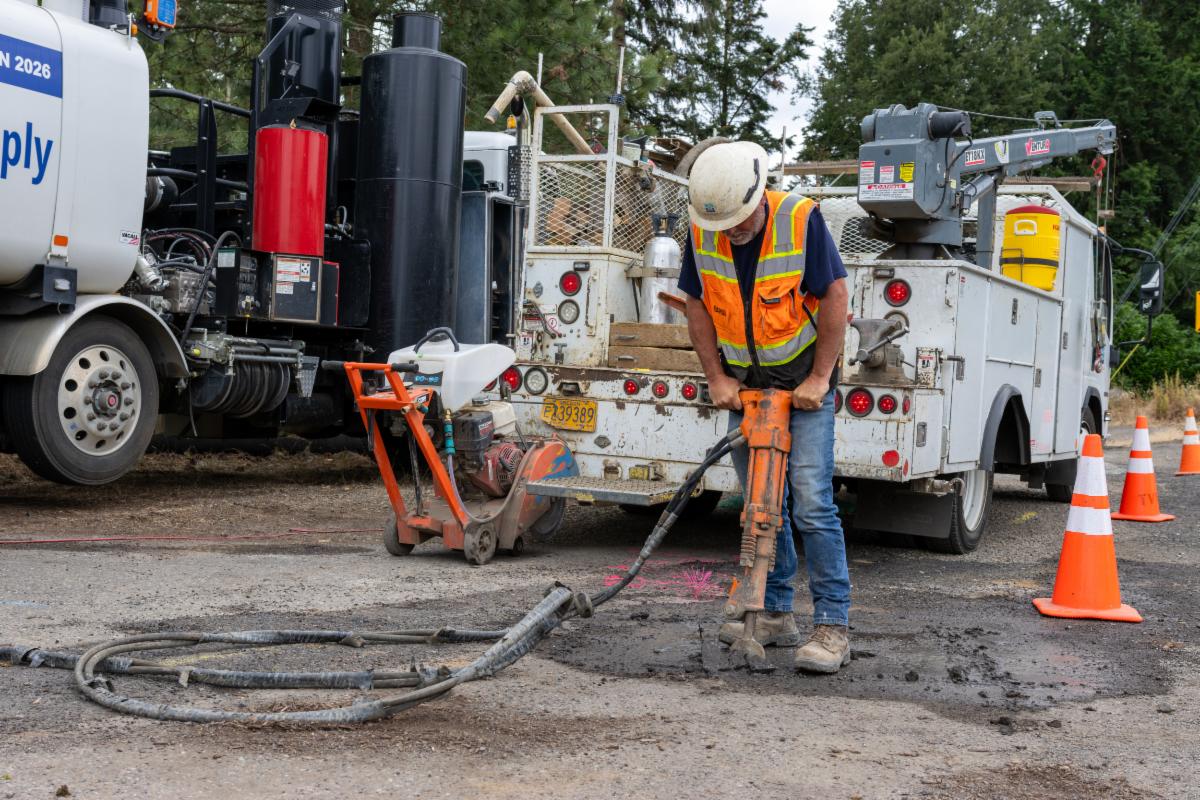
Tualatin Valley Water District (TVWD) has begun construction on a water main replacement in Aloha funded by CDBG dollars. The project area is in a low- to moderate-income neighborhood developed in the early 1950s. There have been very few public improvements to this area since it was built, making this is one of the first major infrastructure upgrades in the neighborhood in decades. TVWD is replacing a water main that is more than 75 years old. Over the past 25 years, there have been 13 breaks on this line, causing interruptions in water service for customers who rely on continuous access, as well as damage to the right of way and private property. 

HOME: Alongside Senior Housing

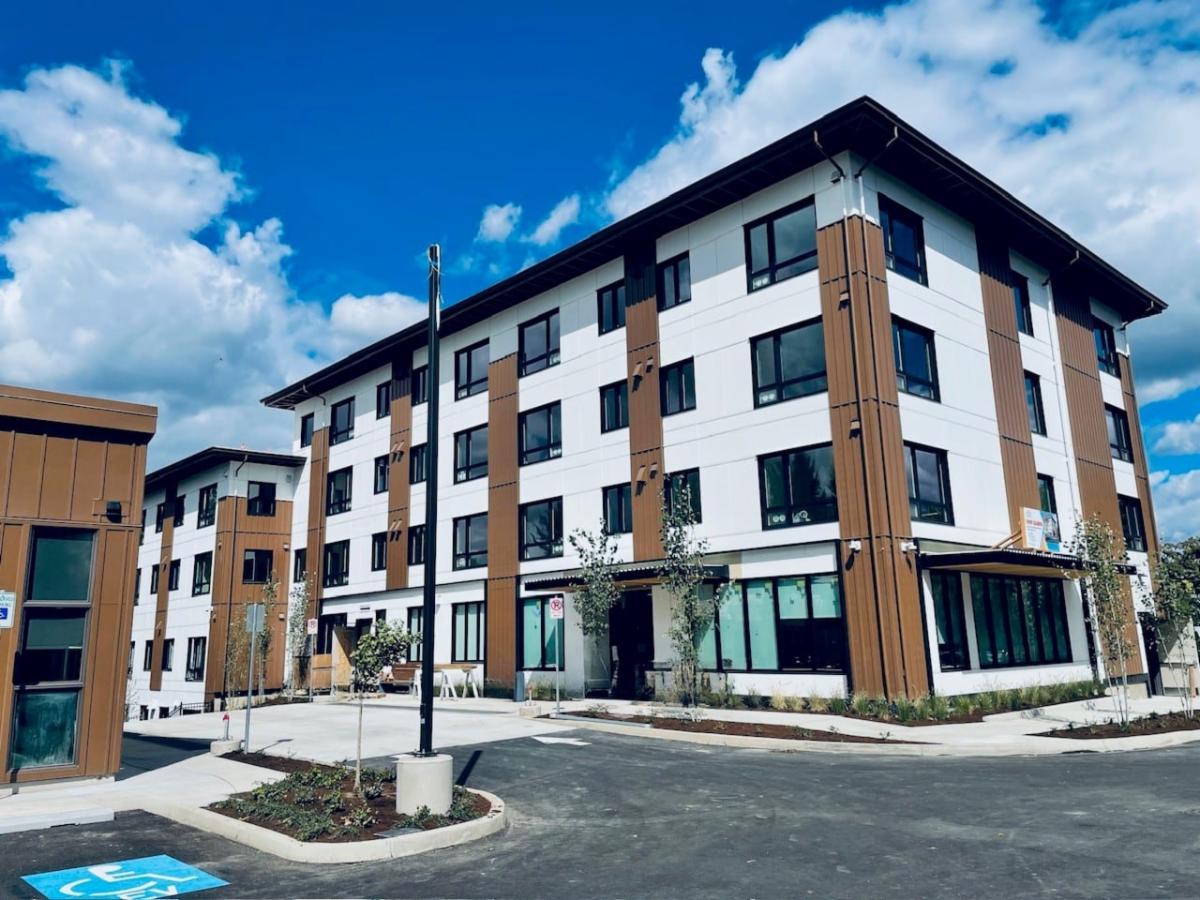
Alongside is a new-construction housing community in the city of Tigard, located next to the Fanno Creek natural area, that provides 57 affordable homes to seniors age 62 and older. Built with a focus on walkability and public transportation, it is within walking distance of TriMet bus stops, the Tigard Public Library, Universal Plaza and the Senior Center. Onsite resident services provide connections to opportunities for stability, growth, community building and independence. It’s direct proximity to the Tigard Senior Center also allows residents to access meals, exercise, financial and legal education, support and transportation for medical, shopping and community activities. This project received a 2025 Award of Excellence from the National Association of County Community and Economic Development.

Partner Proclamations

Thank you to our partner jurisdictions that have joined us in these proclamations

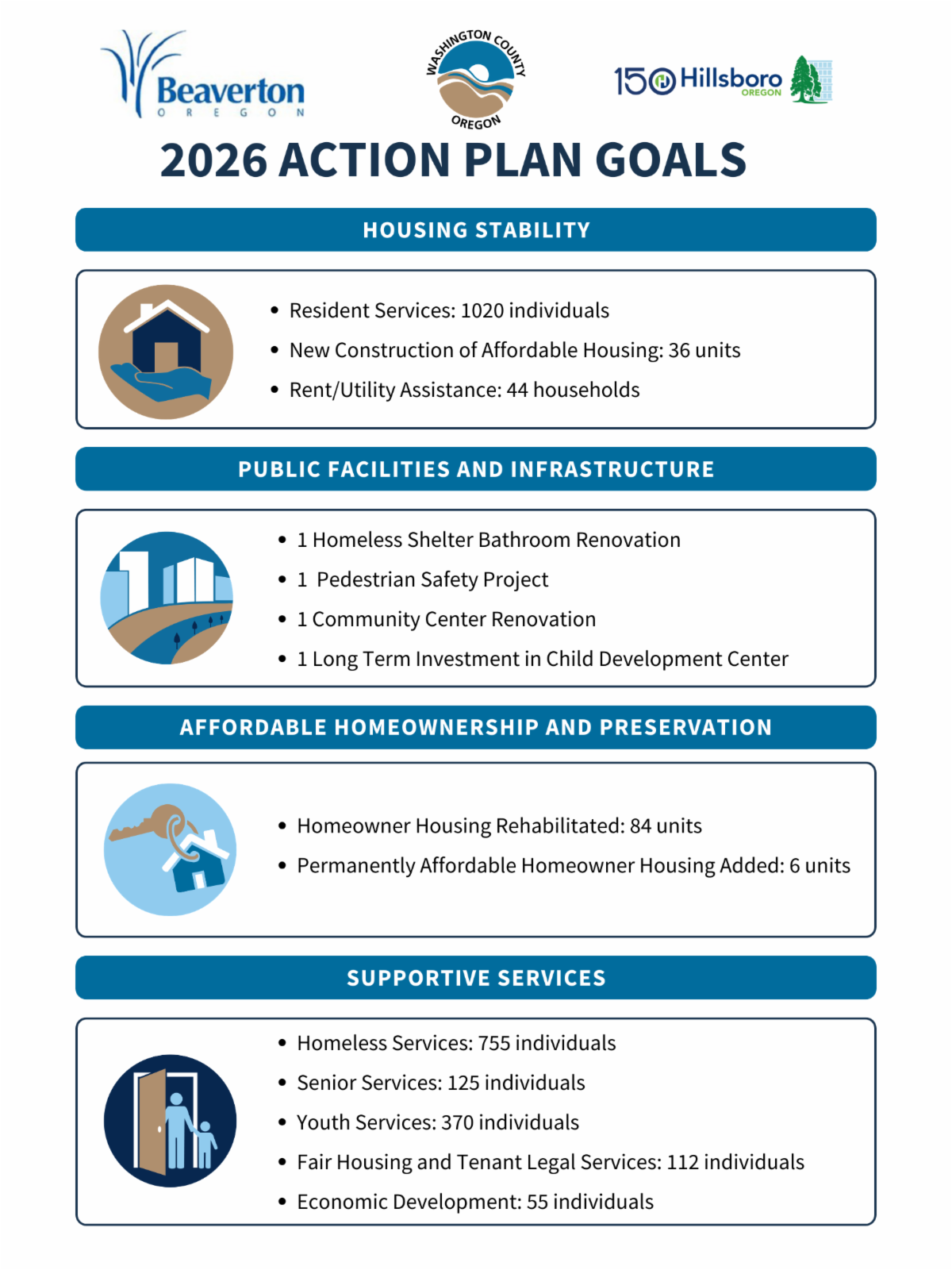
2026 Action Plan

Our office recently completed the Action Plan for the 2026-2027 program year, which outlines the projects and priorities for the fiscal year for Washington County and the Cities of Beaverton and Hillsboro.


The draft plan is open for public comment from March 11 to April 9 with a public hearing scheduled for April 9. You are welcome to provide comments at this hearing or by emailing cdbg@washingtoncountyor.gov. The formal public notice for the draft plan and details for the public hearing is included below.


Notice of Public Comment Period and Hearing on Draft 2026 Action Plan


Washington County, City of Beaverton, and City of Hillsboro

The Consolidated Plan is a strategic planning document developed through 18 months of planning and public participation. It establishes local strategies and priorities for allocating the federal funding over the five-year period.


The plan serves both as a planning document and an application to the U.S. Department of Housing and Urban Development (HUD) for federal funds available to counties and cities under the Community Development Block Grant (CDBG), HOME Investment Partnerships (HOME), and Emergency Solutions Grant (ESG) formula programs. 


Washington County, the City of Beaverton and the City of Hillsboro each receive an annual CDBG entitlement grant. In addition, Washington County annually receives HOME and ESG program funds on behalf of the entire county. Action Plans are annual components of the Consolidated Plan that specifically describe how Washington County and the Cities of Beaverton and Hillsboro will invest federal resources over a one-year period for activities serving low- and moderate-income persons, people experiencing homelessness, and people with special needs.


The Draft 2026 Action Plan is available for public review and comment from Wednesday, March 11 through Thursday April 9, 2026.


Physical copies will be available during regular business hours at:

  • City of Beaverton’s Community Development Division located on the 4th floor of Beaverton City Hall at 12725 SW Millikan Way in Beaverton
  • The City of Hillsboro City Manager’s Office at 150 E Main Street in Hillsboro
  • Washington County Office of Community Development, located at 328 W Main Suite 100 in Hillsboro


Copies may also be requested by calling our office at 503-846-8814.


The draft plan is also available online on the County’s website:

 https://www.washingtoncountyor.gov/commdev/annual-action-plan


A public hearing on the draft plan will be held in a virtual format:


Thursday, April 9, 2026, at 7:00 p.m.

https://us02web.zoom.us/j/81791388252?pwd=M2xwOHJnN2hEWXJ6NHBENVZLOTdrZz09


Please notify the Office of Community Development at least 72 hours before a meeting or hearing if special accommodations (such as equipment or interpreting services) are needed. If you have a disability or are hearing impaired and need assistance, please plan ahead by calling 503 846-8814 or TTY relay dial 711 or 1-800-735-1232.


You may comment on the 2026 Action Plan at the public hearing, or by writing to


Shannon Wilson, Program Manager

Washington County Office of Community Development

328 W. Main Street, MS7

Hillsboro, OR 97123

Phone: 503-846-8814

Fax: 503-846-2882


Or


E-mail: cdbg@washingtoncountyor.gov 


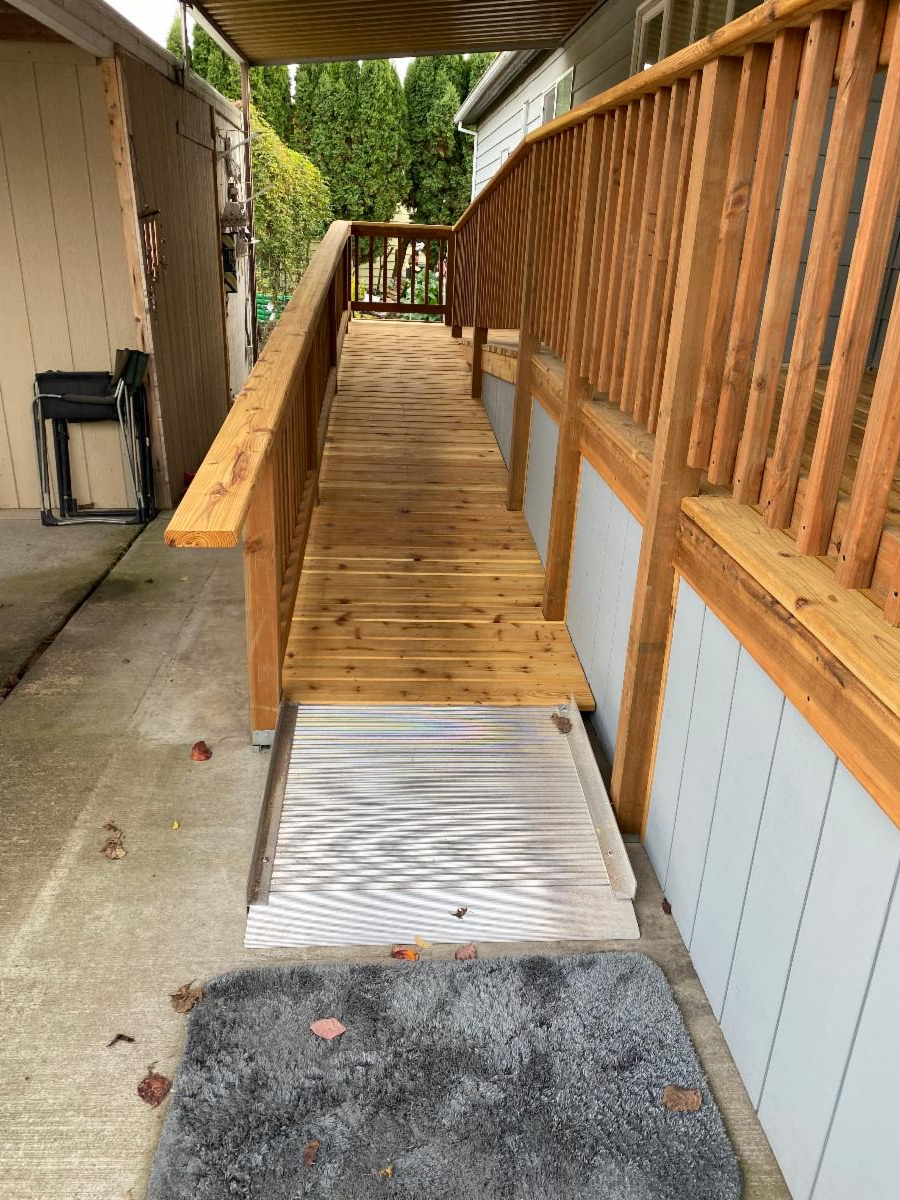
Do you need Repairs on your Home?

Our office provides loans and grants to income-eligible residents for home repairs. Applications are now open for our Deferred Interest-Bearing Loan Program and Home Access Repair for the Disabled and Elderly Program.


Home Access & Repair for the Disabled and Elderly (HARDE) grants of up to $15,000 are available for applicants whose income is 50% or less of the Portland Metropolitan Area Statistical income limits.

Deferred Interest-Bearing Loans (DIBL) of up to $25,000 are available for applicants who own their property and occupy their homes. These low-cost loans can be a great way to complete critical home repairs.

  • 3% Deferred Interest for 10 years
  • No payments are required
  • The loan is repaid when the home transfers ownership
  • Income limits apply—households must earn 80% or less of the Portland Metropolitan Area Statistical income limits (annual gross income)


Contact the Office of Community Development at 503-846-8897 or email HousingRehab@washingtoncountyor.gov and complete a questionnaire with staff.


NOTE: The Cities of Beaverton and Hillsboro administer their own Housing Rehabilitation Programs.

Facebook  X  Instagram  YouTube