Behind the Scenes of a Healthier Saline County
by Meagan Rico
Most people notice public health when something goes wrong.
A disease outbreak. Unsafe drinking water. Severe weather. Food recalls. Rising mental health concerns. These moments remind us how connected we all are, and how much our health depends on the people, systems, and organizations around us.
But some of the most important work to keep communities healthy happens quietly, long before a crisis begins.
Every day, organizations across Saline County work behind the scenes to help people stay healthy, safe, and supported. Community Health Improvement Week, created by the American Hospital Association, recognizes the partnerships, systems and efforts that help improve health and quality of life in communities across the country (American Hospital Association [AHA], n.d.).
Public health is one important part of that work. While healthcare often focuses on treating illness and injury, public health focuses on preventing problems before they happen. In many ways, public health is about reducing the risks that come with living, working, and sharing spaces together as a community.
But healthier communities are not built by public health alone.
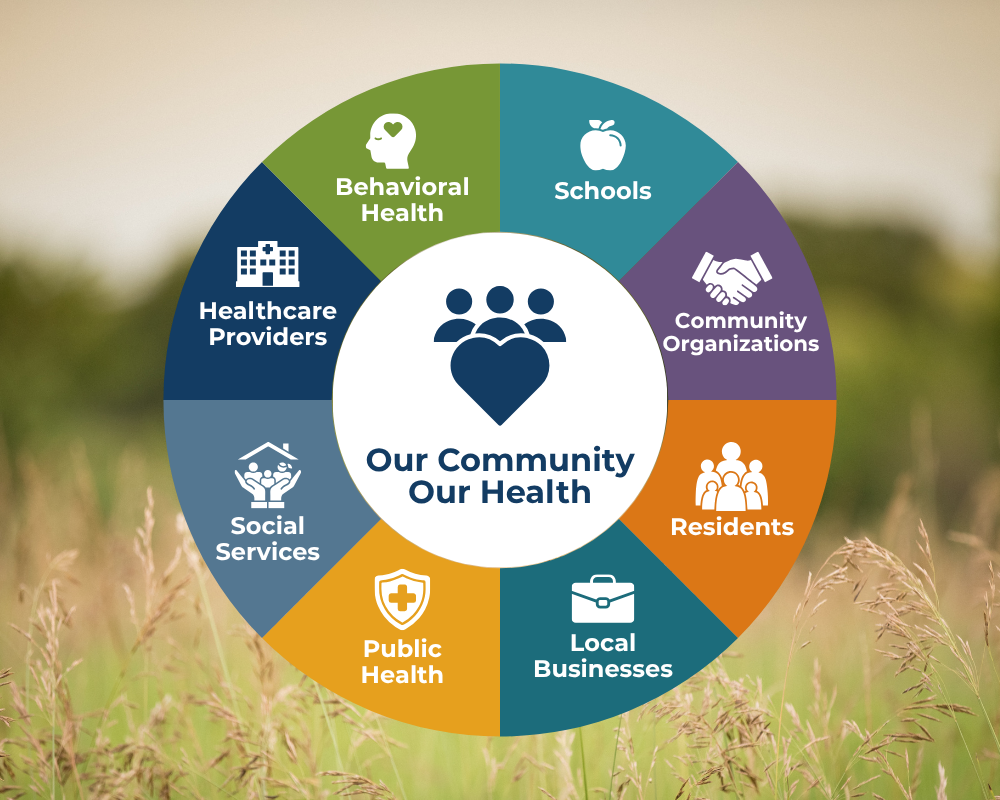
Community health is not built in one building or by one organization. It is built in schools, hospitals, food pantries, childcare centers, neighborhoods, workplaces, churches, and community spaces across Saline County.
Organizations such as Salina Regional Health Center, Salina Family Healthcare Center, Central Kansas Mental Health Center, and the Saline County Health Department each play different but important roles in that work. For example, hospitals provide critical medical care while also helping identify local health concerns through Community Health Needs Assessments (CHNAs). Public health agencies focus on prevention, education, preparedness, and long-term community health improvement efforts.
Recent findings from Salina Regional Health Center’s 2025 Community Health Needs Assessment highlighted concerns that many Saline County residents experience in daily life, including mental health struggles, chronic disease, transportation barriers, housing concerns, food access, and social isolation (Salina Regional Health Center [SRHC], 2025a). The hospital’s implementation strategy also emphasizes improving mental health, addressing chronic disease, strengthening partnerships, and increasing access to services across the community (SRHC, 2025b).
These challenges are not unique to one organization or one sector. They are community-wide issues that require shared solutions.
Data helps identify problems, but community voices help explain them.
Statistics can show trends, but lived experiences help tell a more complete story of what health looks like in a community. Community members understand the barriers they face, the strengths within neighborhoods, and the resources that are still needed.
Recent research from the Kansas Health Institute suggests that local health departments may play an important role in rebuilding trust in public health because they are closely connected to the communities they serve. People are often more likely to trust organizations that understand local challenges, build relationships, listen to residents, and work alongside community members to address real concerns (Kovach, 2026).
That is why collaboration matters.
Groups like LiveWell Saline County may help play an important role in the future of community health improvement efforts. As a healthcare coalition made up of organizations, professionals, and community members from different sectors, LiveWell Saline County was created to support collaboration around shared health priorities and strengthen the overall health and well-being of the community (LiveWell Saline County, 2024).
Coalition-based approaches can help bring together healthcare systems, public health agencies, schools, nonprofits, businesses, and residents to create more community-driven conversations around health needs and solutions.
Research continues to show that communities are healthier when organizations collaborate and involve residents in identifying both problems and solutions (National Academies of Sciences, Engineering, and Medicine, 2017).
As Saline County continues looking toward the future, there is an opportunity to build on existing partnerships and strengthen collaboration even further. More comprehensive and community-informed health assessments could help combine local data with lived experiences to better tell the story of the people and communities who call Saline County home.
Healthy communities do not happen by accident. They are built through partnership, trust, shared responsibility, and people who care enough to work together behind the scenes to make life better for others.
References
American Hospital Association. (n.d.). Community Health Improvement Week. American Hospital Association
Kovach, K. A. (2026). Are local health departments the linchpin for rebuilding trust in public health? Kansas Health Institute
LiveWell Saline County. (2024). Foundation document. LiveWell Saline County
National Academies of Sciences, Engineering, and Medicine. (2017). Communities in action: Pathways to health equity. National Academies Press. National Academies Press
Salina Regional Health Center. (2025a). Community health needs assessment 2025. Salina Regional Health Center CHNA
Salina Regional Health Center. (2025b). FY2025 Community Health Needs Assessment implementation strategy. Salina Regional Health Center Implementation Strategy
|