The Community Preparedness, Recovery, and Resiliency initiative explores and strengthens the efforts of people, organizations, and communities in navigating disasters. | | |
Community Preparedness, Recovery, and Resiliency Newsletter
Catalyzing Engagement as Disasters Swirl
| | |
TIPS AND TRICKS
Quick Preparedness Tip: Document Your Home and Belongings
Here’s a disaster preparedness task you can complete in just a few minutes. Grab your phone and take photos or videos of your home and valuable possessions. Walk through each room, recording furniture, electronics, appliances, jewelry, and other important items. Try to capture serial numbers, receipts, or other identifying information when possible. If you ever need to file an insurance claim after a disaster, having a visual record can make the process much easier and help verify what you owned.
Once you're finished, store your photos or videos in a secure location, such as cloud storage or an external drive, so they're protected even if your devices are damaged. Taking a few minutes now can save hours or days after a disaster.
| | |
Get Hurricane-Ready Before the Season Peaks
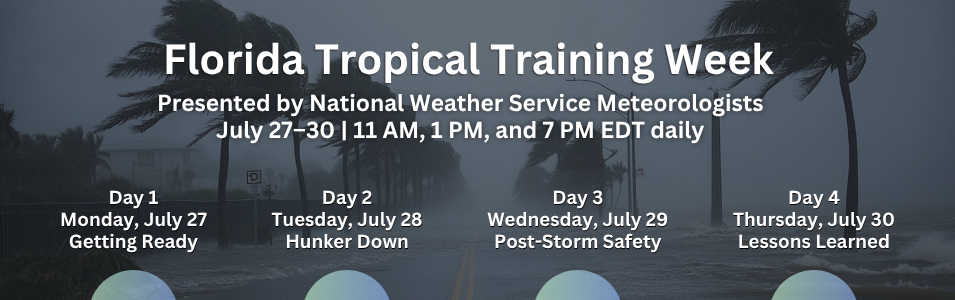
National Weather Service meteorologists across Florida are coming together before the peak of hurricane season to review recommended actions concerning tropical readiness, preparedness, response, and recovery. The objective is to teach about tropical weather forecast products and how to interpret them, and to reach Florida communities. They are offering three virtual training sessions daily from July 27 through July 30, free for all to attend. Register for a Free Training here.
| |
Small Business Resilience Starts with Preparedness
Is your small or medium-sized business disaster-ready? According to the U.S. Chamber of Commerce Foundation, 94% of small businesses say they could recover from a disaster, but only 31% have created a disaster plan.
In 2025, the United States experienced 23 weather and natural disasters that each caused at least $1 billion in damage, which is the third-highest annual total on record. Over the last ten years, the U.S. has averaged 20 disasters annually, with federally declared disasters increasing nearly 90%. Small businesses make up 99.9% of businesses in the United States and employ almost 46% of the workforce.
The U.S. Chamber Foundation's Small Business Readiness for Resiliency program helps scale a grant program that has supported nearly 5,000 businesses nationwide through recovery grants. In partnership with Verizon, the initiative will also connect small businesses with Verizon’s Small Business Digital Ready program, helping business owners build the skills and capacity needed to adapt and grow.
Research shows:
- The Preparedness Gap: 69% of small businesses have no disaster plan despite record disaster costs.
- The Payroll Cliff: 36% of small businesses can't pay employees beyond one month after a disaster.
- The Cost Illusion: On average, small business leaders believe disaster preparedness would cost about 30% of annual revenue, while the actual cost is closer to 5%.
- The Optimism Trap: 94% of small business owners believe they'd recover from a disaster. Yet 66% do not know the kinds of disasters common to their region, and 80% do not have a disaster budget.
- The Guidance Gap: 65% of small businesses have never sought disaster preparedness help and most don't know where to start.
The findings imply that, while these gaps exist, they can be overcome through education and resources, such as new technologies, that assist small businesses in taking steps towards resilience. Read more here.
| | |
CERT SPOTLIGHT: Neighbors Helping Neighbors
Polly Greene’s Story
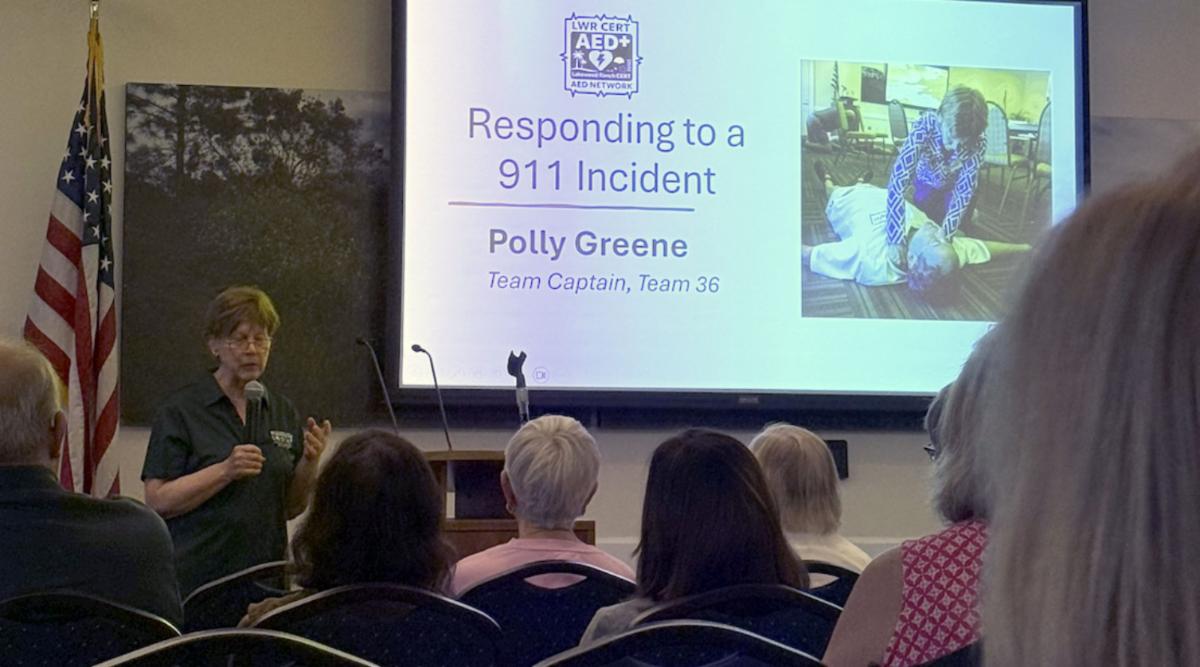
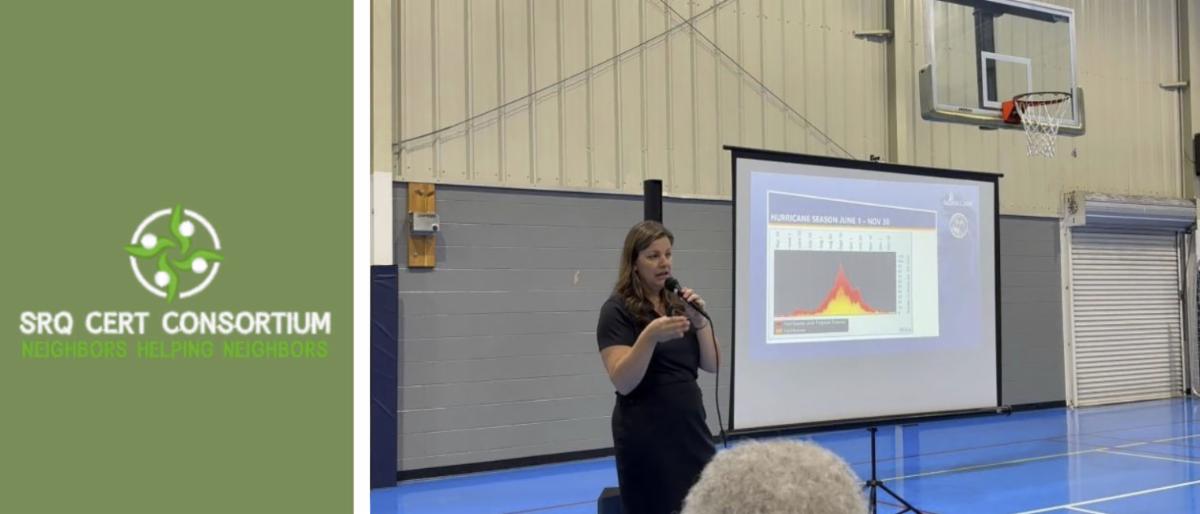
The Lakewood Ranch (LWR) CERT hosted a Hurricane Expo in June, highlighting important information about how the National Hurricane Center categorizes storms. This meeting also featured a valuable discussion by a local CERT member concerning her response to a 911 incident.
Polly Greene has been a part of CERT for 16 years. She grew up knowing she wanted to be a helping hand, and she has been given the opportunity to fulfill this desire through her work with the LWR CERT. Greene joined the Automated External Defibrillator (AED) Network and was selected to place an AED outside her house. She was trained in using the AED in an emergency, but, like most, never expected she might have to use it.
One morning, her watch received an alert with an address in need of the AED. Greene’s first reaction was shock and fear, yet she wasted no time in responding to the incident. She was able to grab the AED and make it to the address in under two minutes. What she saw was alarming.
A man was wedged beneath his van in his garage, in great need of help. Greene wasted no time turning training into action. She assessed the area for her own safety, received permission to help, and had the other person in the garage call 911 immediately. She reflects on how shocked she was, though she remained unwavering in doing what needed to be done.
When first responders arrived, they pulled the man out from under the van. When Greene told them that she was with LWR CERT responding to an alert, they asked, “What is CERT?”
Polly Greene’s story is a testament to many important ideas. It emphasizes the value of her CERT training as she was able to leap directly into action. While she may not have had to use the AED, she served as a calming and proactive presence. Additionally, Greene’s story shows the need to spread the word on the work of CERT in our communities. Finally, her story demonstrates how we can all play a role in serving and helping our community. Together, we can all be neighbors helping neighbors.
| |
|
Community Readiness Training Volunteer Empowerment Emergency Response by SRQ CERT Association
We are excited to announce the commitment of Sarasota County’s new Newtown training programs to enhance community readiness and collaboration. These programs will offer comprehensive on-site basic training, engaging online sessions, and skill assessments designed to empower volunteers and residents with essential emergency response skills. The incorporation of written testing and the purchase of radios and gear further ensure that participants are well-equipped to handle emergencies effectively. Moreover, the county's volunteer matching grant plays a pivotal role in this initiative, as the volunteer hours contributed by CERT teams will directly meet the matching community Grant requirements. This collaborative effort fosters a spirit of volunteerism and strengthens the overall resilience of our neighborhoods. Congratulations to Newtown on this significant step towards bolstering community safety! We encourage all residents to get involved in these vital emergency preparedness initiatives, which will undoubtedly benefit our community as a whole. And thank you to the CERT teams who contributed their volunteer hours to help fund this program.
| |
Upcoming SRQ CERT Association Basic Certification Course
CERT Hybrid Course – Skills Component
The SRQ CERT Association Inc. is pleased to invite you to participate in the CERT Hybrid Course Skills Component, a required step toward earning your CERT Basic Certification.
Dates: August 19 + 20
Time: 9:00 AM – 3:00 PM (both days)
Location: Red Cross Center at 2001 Cantu Ct, Sarasota, FL
Course Details: This hands-on, two-day skills session complements the online portion of CERT training and provides practical experience in emergency preparedness and response.
Pre-Requisite Requirement:
-
Click this link to access the course catalog.
- In the upper right-hand corner, click on the red register icon.
- For “Your CERT Organization,” please select Sarasota County CERT unless your community’s name is within the drop-down box.
This course can be stopped and restarted at any time, but must be completed and passed before August 10, 2026. If there are any issues with this link, contact Rachel Brown for questions at (801) 581-8042 or email racheltbrown@hsc.utah.edu
Important Information: To receive your full CERT Basic Certification, you must complete the online course and the two-day skills component. Once you've received your online certification, please forward it to Ron Moscati.
What to Bring: Plan to bring your own lunch and snacks each day.
Registration + Questions: To register or for more information, contact Ron Moscati at Ronsailedaway@gmail.com
NOTE: We MUST have a minimum of 15 students signed up with their online course certifications completed before August 10. We look forward to your participation and commitment to community preparedness!
– SRQ CERT Association Inc.
| |
Regional Partners Work Together for a
More Resilient Suncoast
Preparing for disasters requires a commitment to working together long before a storm is on the horizon.
The Regional Recovery & Resiliency Alliance was formed in the summer of 2025 to bring together partners from Charlotte, DeSoto, Manatee, and Sarasota counties to strengthen regional collaboration before, during, and after disasters.
On July 1, the Community Foundation of Sarasota County hosted community leaders across our four-county region for the third Suncoast Disaster Recovery Fund Regional Recovery & Resiliency Alliance meeting. The gathering focused on sharing ideas and identifying opportunities to strengthen recovery and resilience efforts across the Suncoast region.
One of the meeting's featured presentations came from Morris (Marty) Hylton, president of Architecture Sarasota. He introduced a Vulnerability Assessment Framework for Sarasota County that encourages communities to look beyond buildings and infrastructure by placing people at the center of resilience planning. The framework explores how sustainable urban design, environmental adaptation, resilient infrastructure, and community well-being all play a role in helping communities prepare for and recover from disasters.
Sandra Tapfumaneyi, Sarasota County's Emergency Management Chief, shared updates from the National Hurricane Conference, including changes being considered at FEMA. Participants learned about increased disaster declaration thresholds, new opportunities for Public Assistance (PA) and mitigation funding, and proposed reforms to Individual Assistance (IA) disaster recovery programs. While questions remain about the future of federal disaster programs, the discussion reinforced the importance of strong local partnerships and preparedness.
Christina Gerken of Manatee County Hope Pathways Long Term Recovery Group, highlighted key themes from the U.S. Chamber of Commerce's National Building Resilience Conference, where collaboration between the public and private sectors was a consistent message. She also introduced Resilience in a Box, a practical toolkit that provides businesses with checklists and resources to help them prepare for, respond to, and recover from disasters.
The group also discussed the latest ALICE report, which shows a 4% increase in households experiencing financial hardship. As more families become vulnerable, participants emphasized the importance of communicating across county lines and coordinating recovery efforts to ensure resources reach those who need them most.
Local projects are already putting resilience into action. Updates included ongoing housing recovery efforts in Manatee County and shoreline resilience initiatives at The Bay in Sarasota, where investments are helping strengthen the community's ability to withstand future coastal impacts.
As the meeting concluded, participants discussed meeting quarterly to continue learning from one another. By working together today, organizations across the Suncoast are helping create stronger, safer, and more connected communities for tomorrow.
| |
Voter Education Tip of the Month
By Lyndsey Smith and Leah Verier-Dunn, consultants, The Patterson Foundation
Primary elections are how political parties choose the candidates who will appear on the ballot in the general election. They set the course for what’s next, but the primaries are tricky and sometimes confusing.
Why? Because it’s not just the primary races we’re voting on; there’s more on the ballot that we should pay attention to.
What else is on there? School Board elections, Hospital Board elections, ballot measures (a law, issue, or topic placed on a statewide or municipal ballot for voters to decide through an election), and other final elections can also occur at the same time as the primaries.
Voter turnout is significantly lower during the primaries because of the misunderstanding of who can do what at the polls. Remember, election outcomes reflect who shows up at the polls. We all get a voice in August, let’s use it!
Upcoming Election Information + Voter Registration Deadline:
- Vote-by-Mail Request Deadline: Thursday, August 6, 2026, by 5:00 PM
-
Election Day: Tuesday, August 18, 2026, 7:00 AM – 7:00 PM
- Midterm 10/5/26
| |
Why CPR-R?
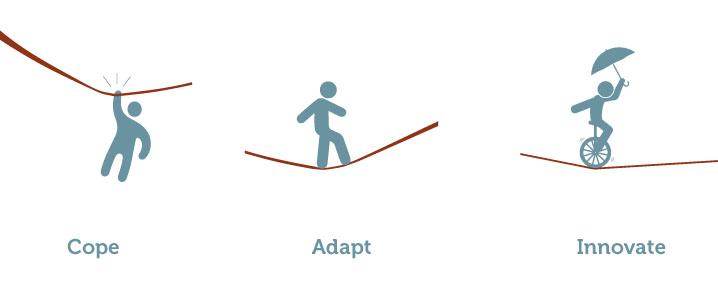
Our communities have long been vulnerable to natural disasters, such as hurricanes and floods, and, more recently, to the increased impacts of higher temperatures and the pandemic. TPF understands the disaster recovery process includes three distinct phases:
-
We cope by ensuring our safety and addressing the immediate needs essential to survival.
-
We adapt to living through disaster by adopting new systems and methods to create stability.
-
We innovate by embracing a possibility mindset and discovering fresh ways to live, work, and play.
| |
Rather than focusing on the space of short-term responsive actions, CPR-R examines opportunities to optimize efforts in preparedness, recovery, and resilience toward long-term impact.
These three areas are defined as follows:
– Preparedness: the process of planning, organizing, and equipping people, organizations, and communities to better respond and cope with the immediate aftermath of a disaster.
– Recovery: the process of resuming normal operations, and begins with the stabilization of the incident and ends when the community has recovered from the disaster’s impacts; effective recovery includes communication, coordination, collaboration, cooperation, and adaptation.
– Resiliency: the ability of individuals, organizations, and communities to organize themselves in innovative ways to learn from past disasters and reduce their risks to future ones. It includes the ability to mitigate, adapt to, and recover from disasters and other stressors in ways that reduce chronic vulnerability and facilitate inclusive growth.
| | | | |