View this email in a browser

Progress and Persistence: Women Are Ready to Lead Healthcare’s Next Era

Healthcare is changing — not with a bang, but with a quiet, powerful shift in who is entering the field and how prepared they are to lead, build, and innovate.


For the first time in U.S. history, women are now the majority in medical training. Decades of progress across medicine, biomedical engineering, and health-related disciplines have created a deep, highly skilled pipeline of women equipped for leadership — clinically, technically, and operationally.


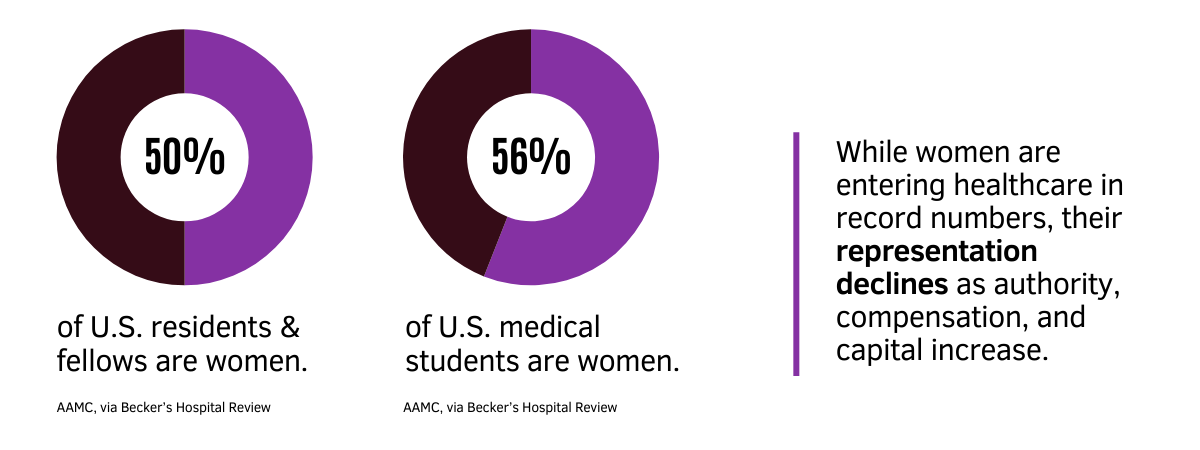
Women Are the Majority in Medical Training

  • 50% of U.S. residents & fellows are women
  • 56% of U.S. medical students are women 
    Source: AAMC, via Becker’s Hospital Review


As Becker’s Hospital Review recently noted, this “quiet majority” raises big questions — not about capability, but about what happens next. Because while women are entering healthcare in record numbers, their representation declines as authority, compensation, and capital increase.

Strong Preparation. Uneven Advancement.

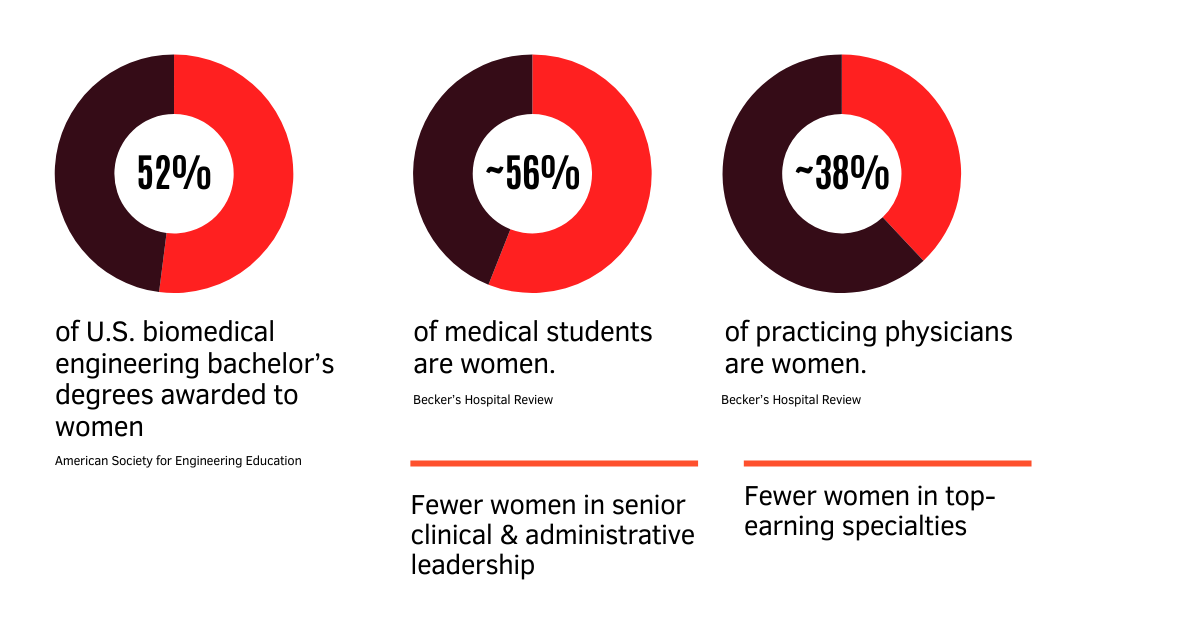
Despite their growing presence in training, women make up only ~38% of the active physician workforce today. Leadership roles, higher-paying specialties, and executive decision-making positions remain disproportionately male — reflecting structural barriers that emerge after education is complete.


Where Representation Declines

  • ~56% of medical students → ~38% of practicing physicians
  • Fewer women in top-earning specialties
  • Fewer women in senior clinical & administrative leadership

Source: Becker’s Hospital Review


This same pattern shows up beyond medicine.


Women now earn more than half of biomedical engineering degrees — one of the strongest female pipelines in any engineering discipline. They are trained in systems thinking, regulatory science, data analysis, human-centered design, and clinical translation — exactly the skills healthcare companies need to scale.


Women in Biomedical Engineering

  • 52%+ of U.S. biomedical engineering bachelor’s degrees awarded to women

Source: American Society for Engineering Education


Yet once again, representation does not translate cleanly into executive authority.

Leadership: Progress, But Not Parity

Healthcare performs better than many industries when it comes to women in leadership — but even here, parity remains elusive.


Women in the C-Suite

  • Healthcare has the highest share among S&P 500 industries
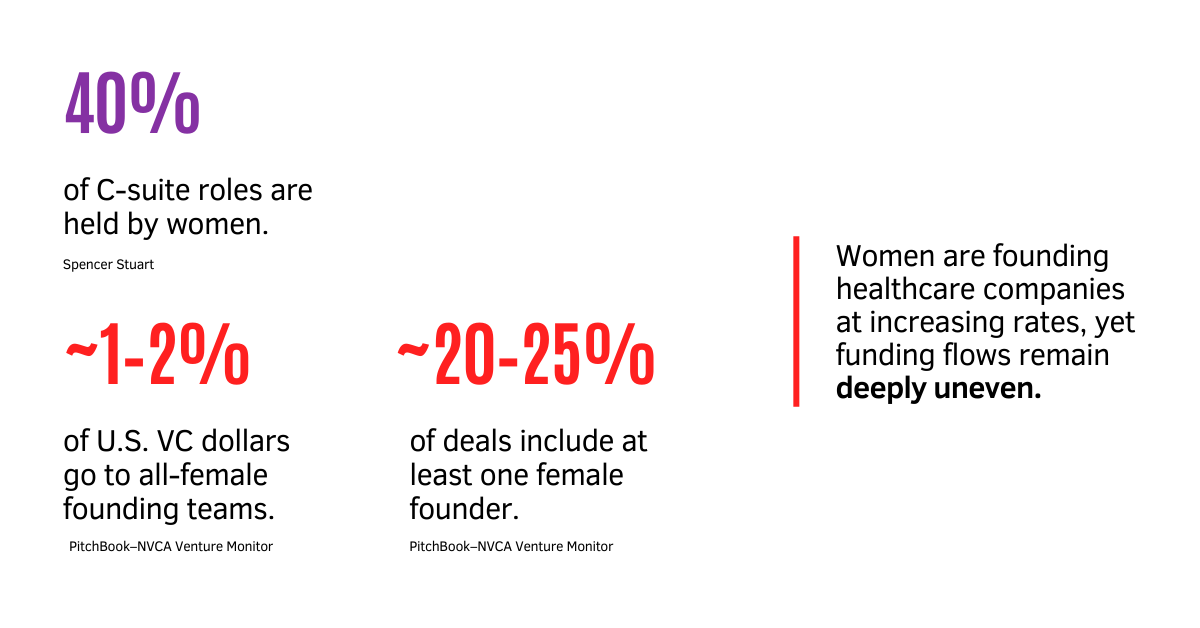
  • Women hold ~40% of C-suite roles — still short of parity

Source: Spencer Stuart


Crucially, women are still less likely to hold line and P&L roles, the positions most likely to lead to CEO and board leadership. This structural imbalance continues to limit how women influence strategy, capital allocation, and innovation priorities.

Entrepreneurship & Capital: The Largest Gap

Nowhere is the disconnect between preparation and opportunity more visible than in venture capital.


Women are founding healthcare companies at increasing rates — particularly in digital health, medical devices, diagnostics, and women’s health — yet funding flows remain deeply uneven.


Who Gets Funded

  • ~1–2% of total U.S. VC dollars go to all-female founding teams
  • ~20–25% of deals include at least one female founder

Source: PitchBook–NVCA Venture Monitor


At the same time, there are signs of momentum:


Female Founders Are Breaking Through

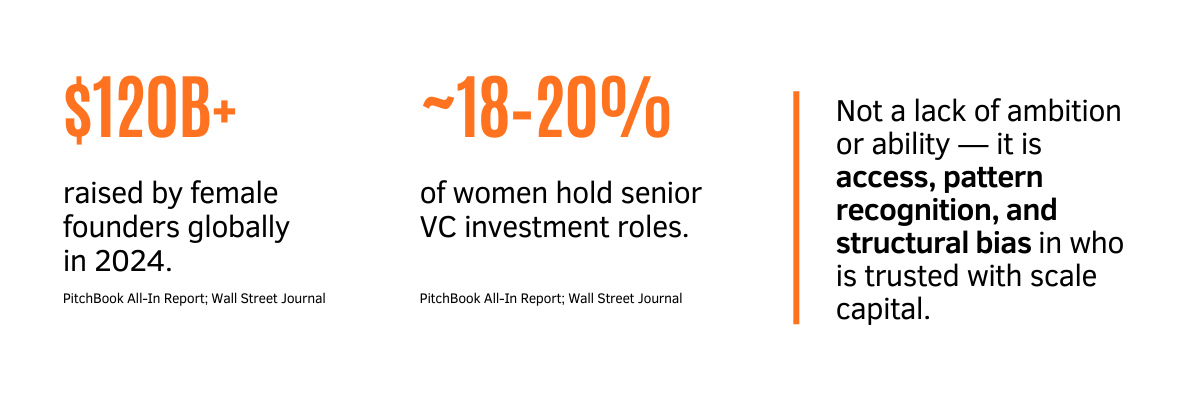
  • $120B+ raised by female founders globally in 2024
  • Women now hold ~18–20% of senior VC investment roles

Source: PitchBook All-In Report; Wall Street Journal


The story is not a lack of ambition or ability, it is access, pattern recognition, and structural bias in who is trusted with scale capital.

Why This Moment Matters

Healthcare is facing unprecedented pressure: rising costs, workforce shortages, chronic disease burden, and accelerating technological change. The industry cannot afford to underutilize one of its most prepared talent pools.


Women are:

  • The majority of the healthcare workforce
  • Increasingly dominant in medical and health-related education
  • Deeply experienced in care delivery, patient experience, and system operations


What’s missing is not readiness. It’s recognition, sponsorship, and capital alignment.


Ignite’s Role

At Ignite, we see this moment clearly.


Progress has been made and it matters. But progress without parity leaves value on the table: better companies not built, better solutions not scaled, better outcomes delayed.


Our work is about closing the gap between who is prepared and who is empowered — connecting women with the networks, leadership pathways, and investment access required to shape the future of healthcare.


The quiet majority is no longer quiet. The next chapter is about ensuring women don’t just enter healthcare — they lead it.


Alumnae Updates

Meghan Doyle Spotlights Maternal Health Innovation on Becker’s Healthcare Podcast


Meghan Doyle joined Becker's Healthcare to discuss the rapidly evolving maternal and family health landscape. Meghan highlighted the significant opportunity in women’s health and the serious work Partum Health is leading to expand access, improve outcomes, and modernize care delivery for families nationwide.


Co-Founder & CEO | Meghan Doyle


Flourish Care Expands Doula Access Across NJ, PA, and NY


Flourish Care is growing its regional footprint, expanding access to doula care across New Jersey, Pennsylvania, and New York. To support this growth, the team welcomed Aleah McKenzie as Community Development Lead.


CEO & Founder | Melissa Bowley


Somer Baburek Talks Fundraising Realities on New Podcast


Somer Baburek, CEO of Hera Biotech, is the inaugural guest of The Capital Flex, a new podcast hosted by Naseem Sayani. In the episode, Somer gets candid about the realities of fundraising, from hard lessons to the stories founders rarely tell.


Co-Founder & CEO | Somer Baburek


Joanna Nathan on Building Meaningful Medtech Innovation


Joanna Nathan joined the Powering the Future Within podcast by Resonant Link Medical for a thoughtful conversation on advancing innovation in medtech.


Co-Founder & CEO | Joanna Nathan


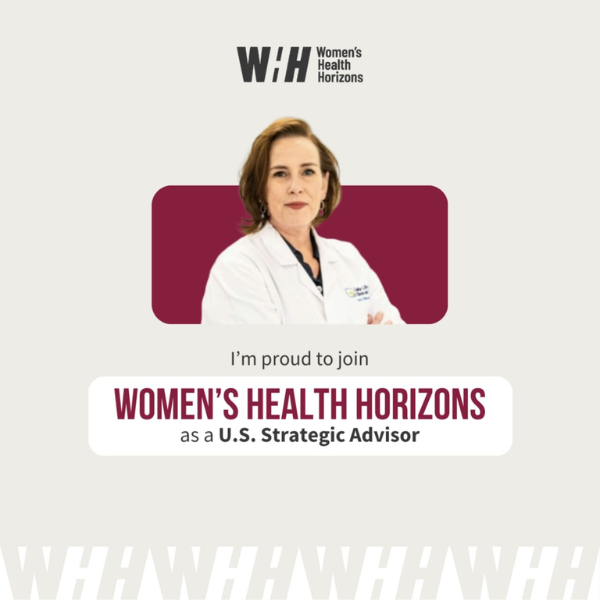
Lara Zibners Joins Women’s Health Horizons Advisory Board


Lara Zibners has been appointed to the U.S. Strategic Advisory Board of Women’s Health Horizons for 2026. Women’s Health Horizons convenes leaders across policy, healthcare, investment, research, and innovation to accelerate meaningful, scalable change in global women’s health.


Co-Founder | Lara Zibners


CardMedic Partners with Manchester University NHS Foundation Trust


CardMedic has partnered with Manchester University NHS Foundation Trust, one of the UK’s largest acute trusts. Serving more than 750,000 people, the Trust will use CardMedic’s platform to give clinicians instant access to live interpreters and clinically validated content at the point of care.


Co-Founder & CEO | Rachel Grimaldi


Upcoming Programs and Events

Stay tuned for this year's lineup for this year's program and events!


In the News


JPMorgan: Five Trends Shaping Healthcare in 2026

AI integration in care delivery and automation remains one of the core themes shaping healthcare in 2026. AI tools are increasingly deployed to address administrative burdens, improve clinical workflows, and enhance patient experiences — a tailwind for startups building actionable, ROI-driven solutions. Read more.


NM News: Northwestern Medicine and Founders Factory to Scale European AI Ventures into America’s Leading Health System

Strategic partnerships between health systems and startup accelerators (e.g., Northwestern Medicine + Founders Factory) are scaling AI ventures and clinical innovation across borders, spotlighting demand for validated technology pilots with health system partners. Read more.


StartUs Insights: 10 Growing Digital Health Solutions Reshaping Care Delivery

Leading digital health trend trackers highlight AI-enabled care delivery, remote monitoring, behavioral health platforms, and enterprise health infrastructure as standout startup domains. Read more.


OpenLoop Health: Recent Digital Health Trends, Insights, and News - Feb 2026

Industry trend reports suggest sustained investor interest in healthcare startups with clear clinical impact and workflow optimization, even as capital becomes more targeted (echoing broader digital health patterns). Read more.


The World Economic Forum Blueprint to Close the Women’s Health Gap
Shows that women spend 25% more of their lives in poor health than men due to persistent gaps in research, diagnosis, and care with major impacts on quality of life and economic participation. Addressing these gaps across conditions like cardiovascular disease, cancer, maternal health, and menopause could unlock hundreds of billions in global economic value.
Read more.


The CB Insights State of Digital Health 2025 report 

Signals a maturing market. Global funding rose 19% to $22.3B, but deal volume fell meaning investors are placing fewer, bigger, and more selective bets. Nearly half of all capital flowed into $100M+ rounds, while early-stage deals hit their lowest share on record.


At the same time, M&A rebounded strongly, with AI-driven companies attracting outsized interest as buyers seek proprietary data, defensible technology, and workflow-embedded solutions. Notably, all new digital health unicorns in 2025 were AI-native, underscoring AI’s shift from differentiator to baseline expectation.


Founder takeaway: funding is available, but only for startups that demonstrate real traction, strategic focus, and durable advantage. Read more.


LinkedIn

Visit our website here