|
The Proactive Technologies Report™ newsletter is a free service of Proactive Technologies, Inc.®
Important stories and information you might have missed
| | News from Worker Development, Industry, the Economy, Education, Science, and much more! | | Have a Happy, Safe and Enjoyable Thanksgiving Holiday! | | | U.S. Department of Commerce - Bureau of Economic Analysis | |
Gross Domestic Product, Third Quarter 2022 (Advance Estimate)
Unavailable due to government shutdown
Personal Income and Outlays, September, 2022
Unavailable due to government shutdown
Regional Statistics
Today, BEA released GDP by state quarterly statistics for the first quarter of 2005 through the fourth quarter of 2018 as part of the 2023 comprehensive update of the Regional Economic Accounts. This completes the 2023 comprehensive updates to the National, Industry, and State Economic Accounts. Access Data Tables
| | | U.S. Department of Commerce - Bureau of the Census | |
Advanced Report on Durable Goods Manufacturers’ Shipments, Inventories, and Orders
Unavailable due to government shutdown
Manufacturers’ Shipments, Inventories, and Orders
Unavailable due to government shutdown
Manufacturing and Trade Inventory and Sales
Unavailable due to government shutdown
Monthly Wholesale Trade
Unavailable due to government shutdown
Household Pulse Survey
What is the Household Pulse Survey?
The U.S. Census Bureau, in collaboration with multiple federal agencies, is in a unique position to produce data on the social and economic effects of coronavirus on American households. The Household Pulse Survey is designed to deploy quickly and efficiently, collecting data to measure household experiences during the coronavirus pandemic. Data will be disseminated in near real-time to inform federal and state response and recovery planning. Read Data
Small Business Pulse Survey
The Small Business Pulse Survey (Business Pulse) measures the effect of changing business conditions during the Coronavirus pandemic on our nation's small businesses. Business Pulse complements existing U.S. Census Bureau data collections by providing high-frequency, detailed information on the challenges small businesses are facing during the Coronavirus pandemic as well as their participation in federal programs such as the Paycheck Protection Program. Read Report
Monthly State Retail Sales
The Monthly State Retail Sales (MSRS) is the Census Bureau's new experimental data product featuring modeled state-level retail sales. This is a blended data product using Monthly Retail Trade Survey data, administrative data, and third-party data. Year-over-year percent changes are available for Total Retail Sales excluding Nonstore Retailers as well as 11 retail North American Industry Classification System (NAICS) retail subsectors. These data are provided by state and NAICS codes beginning with January 2019. The Census Bureau plans to continue to improve the methodology to be able to publish more data in the future. Access Tables
Economic Indicators
A composite of many of the requested domestic facts and figures. Visit Table
Data Profiles
View Quick Facts statistics across a variety of topics for your state, county or town. View Data
Updated Annual Industry Economic Account Statistics for 2017-2022 Now Available
The Bureau of Economic Analysis published the following annual Industry Economic Account statistics for 2017 through 2022, reflecting the 2023 comprehensive update of the National Economic Accounts:
- Make tables, use tables, and import matrices, Annual, 2017-2022
- Total and domestic requirements tables, Annual, 2017-2022
- PCE and PEQ bridge tables, Annual, 2017-2022
- Margin tables, Benchmark, 2017
Revised supply tables for 2017-2022 to correct the allocation of imports between the “Imports” column and the “CIF/FOB Adjustments on Imports” column for certain transportation commodities. All other elements of the supply tables are unaffected by this update.
Data prior to 2017 will be forthcoming. Access Data Files
| | | U. S. Department of Labor Statistics | |
Consumer Price Index
In September, the Consumer Price Index for All Urban Consumers rose 0.3 percent, seasonally adjusted, and rose 3.0 percent over the last 12 months, not seasonally adjusted. The index for all items less food and energy increased 0.2 percent in September (SA); up 3.0 percent over the year. Read Report
Producer Price Index
Unavailable due to government shutdown
Job Openings and Labor Turnover
Unavailable due to government shutdown
Unemployment Rate for States
Unemployment Rates for States, Seasonally Adjusted. Read Report
Civilian Labor Participation Rate
For a 20 year chart of the U.S. Civilian Labor Participation Rate. Read Report
| | | |
University of Michigan: Consumer Sentiment (UMCSENT)
The Federal Reserve - St. Louis
View an index of the results of the University of Michigan's monthly Survey of Consumers, which is used to estimate future spending and saving. University of Michigan: Consumer Sentiment, University of Michigan: Consumer Sentiment [UMCSENT], retrieved from FRED, Federal Reserve Bank. Access Latest Report
| | | U.S. Private Sector Job Quality Index |
University of Buffalo - School of Management
The U.S. Private Sector Job Quality Index (JQI) assesses job quality in the United States by measuring desirable higher-wage/higher-hour jobs versus lower-wage/lower-hour jobs. The JQI results also may serve as a proxy for the overall health of the U.S. jobs market, since the index enables month-by-month tracking of the direction and degree of change in high-to-low job composition.
By tracking this information, policymakers and financial market participants can be more fully informed of past developments, current trends, and likely future developments in the absence of policy intervention. Economists and international organizations have in recent years developed other, complementary conceptions of job quality such as those addressing the emotional satisfaction employees derive from their jobs.
For the purposes of this JQI, “job quality” means the weekly dollar-income a job generates for an employee. Payment, after all, is a primary reason why people work: the income generated by a job being necessary to maintain a standard of living, to provide for the essentials of life and, hopefully, to save for retirement, among other things. Read Report
| | | Realtime Inequality - Who Benefits from Income and Wealth Growth in the United States? |
University of California, Berkeley - Thomas Blanchet, Emmanuel Saez, Gabriel Zucman; Department of Economics
Realtime Inequality provides the first timely statistics on how economic growth is distributed across groups. When new growth numbers come out each quarter, we show how each income and wealth group benefits.
Controlling for price inflation, average national income per adult in the United States increased at an annualized rate of 2.2% in the first quarter of 2023, and average income for the bottom 50% grew by 1.5%. National income is similar to GDP and a better indicator of income earned by US residents. Visit the Methodology page for complete methodological details. Review Data
| |
| |
USA Facts Website
USAFacts.org – Steve Balmer, Founder and Former Apple CEO
USAFacts is not-for-profit and nonpartisan. When former Microsoft CEO Steve Ballmer retired from tech to focus on philanthropy, he searched for solid, reliable, impartial numbers to understand what the US government does with tax dollars to help determine the best way to make an impact. How is the money spent? Who is served? What are the outcomes?
Those numbers weren’t readily available. So, he assembled a small team of economists, writers, and researchers to help comb through government data. Their eye-opening report laid the foundation for USAFacts. Today USAFacts reports are provided free as a resource for the American public and US government alike. Access Website
| | | |
Tracking Regulatory Changes in the Second Trump Administration
Brookings Institution
As the Trump administration returns to office for a second term with renewed deregulatory ambitions, the executive branch and its agencies are implementing significant policy changes. The Brookings Center on Regulation and Markets Regulatory Tracker (“Reg Tracker”) provides background information and status updates on a curated selection of significant regulatory and deregulatory changes made by the Trump administration.This tracker allows you to monitor a curated selection of new, delayed, and repealed rules, notable guidance and policy revocations, executive actions, and important court battles across key policy areas such as environmental, health, labor, and more.
The Reg Tracker focuses on major regulatory changes implemented under the current Trump administration. Entries we tracked during the Biden administration and during President Trump’s first term can be accessed through the “Biden” or “Trump Term 1” archive checkboxes, respectively. Track Changes
| | | |
Sodium-ion Battery Maker Natron Energy Shuts Down, Halts $1.4B Factory Plans
Manufacturing Dive - Nathan Owens, Reporter
The North Carolina plant would have expanded the company’s capacity 40 times over. Its facilities in Michigan and California have also closed.
Dive Brief:
- Sodium-ion battery manufacturer Natron Energy has ceased operations, according to its website, halting plans for a giant factory in Rocky Mount, North Carolina.
- The Santa Clara, California-based company did not immediately respond to requests for comment about what happened. The Raleigh News & Observer reported that Natron had unresolved funding issues, and investor Sherwood Partners is expected to sell the assets.
-
This comes about a year after the battery maker said it would build a gigafactory in northeastern North Carolina with an investment of $1.4 billion, creating more than 1,000 jobs for the area. Read Article
| | | |
Despite Surge in AI Adoption, Sales Teams Say the Tech is Failing Them
HR Dive - Carolyn Crist
Organizations called “AI Leapers” appear to have widespread breakdowns in execution, effectiveness and alignment, the report found.
Although workplace adoption of artificial intelligence tools is accelerating, only 28% of sales and revenue leaders say it improves revenue-driving sales performance, according to a Sept. 9 report from Highspot, an AI-based platform for go-to-market performance. Read Article
| | | |
Suzy Welch Says Gen Z and Millennials are Burnt Out Because Older Generations Worked Just as Hard, But They ‘Had Hope’
Fortune - Dave Smith
A generational divide over workplace burnout has less to do with work intensity and more to do with diminished expectations for career rewards, according to business author and New York University professor Suzy Welch. The 66-year-old from Portland earned her MBA as a Baker Scholar from Harvard Business School and spent seven years as a management consultant at Bain & Co. before joining Harvard Business Review in 2001, serving as editor-in-chief. Speaking on the July 24 episode of the Masters of Scale podcast, Welch argued younger workers face the same demanding schedules as previous generations, but lack the fundamental belief that hard work will lead to meaningful advancement.
Welch said this insight emerged from a conversation she had with a 25-year-old freelance worker who asked Welch to create more content about worker fatigue among young people because her friends were “just so burnt out.” When Welch told this worker she used to work “seven days a week” at that age and loved the work—and would’ve done more of it if she could—the young woman offered a striking rebuttal: “But you had hope.”
“And I did have hope. We all did have hope,” Welch told Masters of Scale host Jeff Berman. “We believed that if you worked hard you were rewarded for it. And so this is the disconnect.” Read Article
| | | |
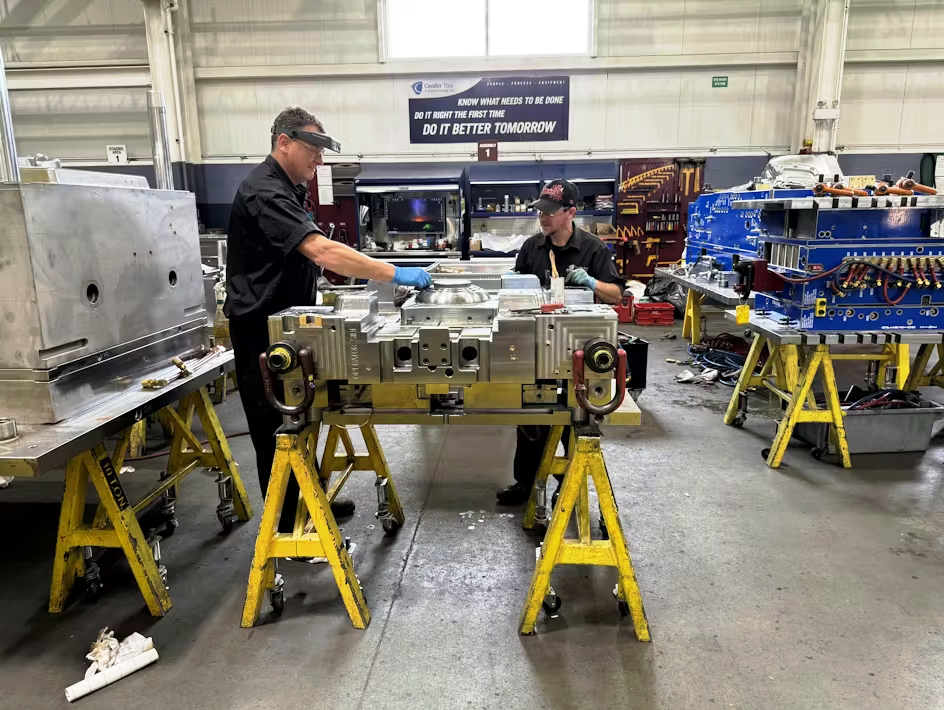
Cavalier Tool Relies On 'People, Process, Equipment'
Plastics Machinery and Manufacturing - Ron Shinn
The Canadian mold maker with a worldwide presence is marking its 50th anniversary.
Cavalier Tool & Manufacturing, based in Windsor, Ont., builds 300 injection molds annually for presses up to 4,400 tons.
A defined process with upfront feasibility studies and simulations makes Cavalier 20 to 30 percent faster than most competitors. Read Article
| | | |
ISM Report: Manufacturing PMI Increases 0.4 Points to 49.1% in September
IndustryWeek - Anna Smith
Five out of 16 manufacturing industries reported growth last month.
The ISM (Institute of Supply Management) Manufacturing PMI registered 49.1% last month, making September the seventh consecutive month of contraction. This figure is 0.4 points higher than August’s figure of 48.7%.
“Of the five subindexes that directly factor into the Manufacturing PMI, two (production and supplier deliveries) are in expansion territory, the same number as in August,” says Susan Spence, chair of the ISM’s manufacturing business survey committee. Anything lower than 50% represents contraction.
"The consecutive increases in the ISM manufacturing index are a positive sign, but a sustainable push above the 50 threshold is still some way off," says Oxford Economics Senior Economist Matthew Martin. Read Article
| | | |
Cleveland-Cliffs Executives See ‘Significant Rebound’ in Steel Demand
IndustryWeek - Geert De Lombaerde
Growth from automotive customers is leading the way and CFO Celso Goncalves told analysts “the signs of a real recovery are forming.” Leaders also have signed deals to sell eight properties for a total of $425 million.
Leaders of steel manufacturer Cleveland-Cliffs Inc. said Oct. 20 they are seeing “a significant rebound in domestic steel demand” now that tariffs have been in place for several months. And they say the automotive industry is in the lead and likely to bring with the construction and broader manufacturing sectors.
Speaking after they reported Cleveland-Cliffs’ third-quarter results, Chairman, President and CEO Lourenco Goncalves and CFO Celso Goncalves said the tariffs and other trade measures put in place this year by the Trump administration have started to change user behavior. Read Article
| | | |
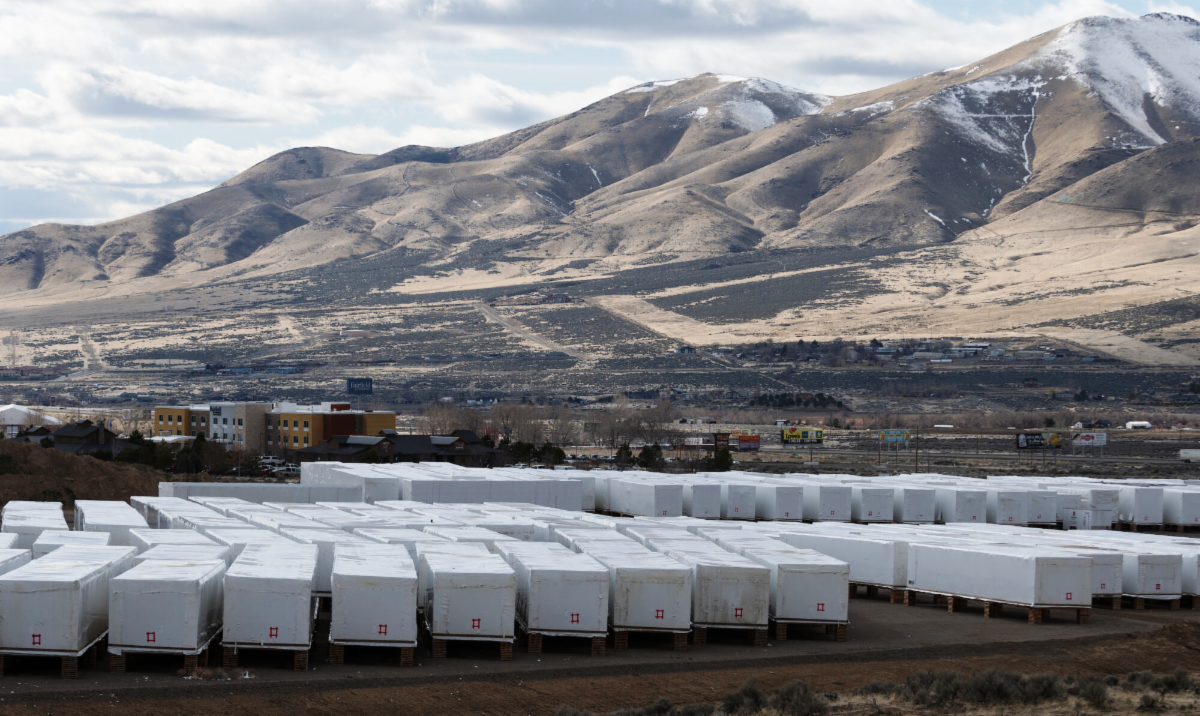
How Rare is the U.S. Government's New Stake in a Major Nevada Lithium Company?
The Nevadan Indeppendent - Eric Neugeboren, Mini Racker
The Trump administration likely wants to show its commitment to a domestic lithium market, but experts are concerned about the duration of such a deal.
The suddenly fraught future of the Thacker Pass lithium mine cleared an unexpected hurdle on Tuesday, after the Trump administration agreed to release the first part of a loan critical to the Nevada project’s development in exchange for the U.S. government taking a stake in the effort.
Under the deal with Lithium Americas, the U.S. government will receive a 5 percent stake in the company and a 5 percent stake in the Thacker Pass project itself in exchange for the government releasing the initial $435 million of a $2.23 billion loan that the parties agreed to last year. Read Article
| | | |
Manufacturing Saw 313K Job Separations in August: BLS
HR Dive - Sara Samora, Reporter
The government shutdown prevented the U.S. Bureau of Labor Statistics from releasing September’s jobs report, though ADP’s research found the industry lost 2,000 jobs.
The U.S. Bureau of Labor Statistics was unable to release the jobs situation report last week, but the agency published its openings and labor turnover survey results before the government shutdown of nonessential services that began on Oct. 1.
Manufacturing separations in August totaled 313,000, down approximately 6.3% compared to August 2024, per a BLS report released on Sept 30.
While August’s separations, which include quits, layoffs and discharges, decreased year over year, it was about a 2.3% increase month over month. Job openings for August dipped about 12.4% YoY to 409,000, while hires rose barely 1% to 305,000 compared to the same period last year. Read Article
| | | |
Nearly All Automakers Report Q3 Sales Gains
WardsAuto - Larry Avila, Editor
The exceptions include Volkswagen, which saw sales fall, and Audi, which remained flat.
Nearly every major automaker reported sales increases in the third quarter compared to the same period a year ago.
General Motors and Ford reported strong electric vehicle sales, with GM crediting a rush of buyers taking advantage of an expiring federal tax credit for EV purchases. The tax credit expired Sept. 30.
Meanwhile, the auto industry continues adjusting to U.S. tariff policy and global trade wars. Read Article
| | | |
US Manufacturing Needs Pro-Growth Policy and Time
IndustryWeek - Paul McCarthy
Four foundational reforms are essential to reshoring industry.
Key Highlights
- U.S. manufacturing needs stable pro-growth policies in place to be competitive.
- Permanent R&D tax incentives, trade certainty, regulatory streamlining and workforce training are essential for reshoring and strengthening U.S. manufacturing.
-
Shifts in production take time, and policy should include realistic expectations on how long manufacturing investments will take to execute. Read Article
| | | |
Weak Consumer Sentiment Persists Amid Job Anxiety: UMichigan Survey
CFO Dive - Jim Tyson, Senior Reporter
“We need to be prepared for the possibility that the softening in the labor market will become something worse,” Federal Reserve Governor Michael Barr said.
Dive Brief:
- Consumer sentiment this month persisted at the lowest level since May on worries about high prices and the dimming outlook for the labor market, the University of Michigan said Friday.
- An index of consumer sentiment dipped to 55 in October from 55.1 last month as respondents expressed a gloomier view on future personal finances and buying conditions for durable goods, the university found in a survey concluded on October 6.
-
“Pocketbook issues like high prices and weakening job prospects remain at the forefront of consumers’ minds,” Joanne Hsu, director of the university’s surveys of consumers, said in a statement. “Consumers do not expect meaningful improvement in these factors.” Read Article
| | | |
Whirlpool to Invest $300M in Ohio Plants
Manufacturing Dive - Shefali Kapadia, Contributor
The investment will go to the world’s largest washing machine plant, as well as another that produces dryers. About 80% of appliances Whirlpool sells in the U.S. are made domestically.
Dive Brief:
- Whirlpool plans to invest $300 million in two of its laundry manufacturing facilities in Ohio, the company announced Wednesday.
- The Michigan-based manufacturer expects the investment to create up to 600 new jobs at its operations in Clyde and Marion, Ohio. The Clyde facility is the largest washing machine plant in the world, according to Whirlpool, and the Marion factory produces dryers.
-
The investment will receive financial assistance from economic development agency JobsOhio along with tax credits from the State of Ohio, according to the company. Read Article
| | | |
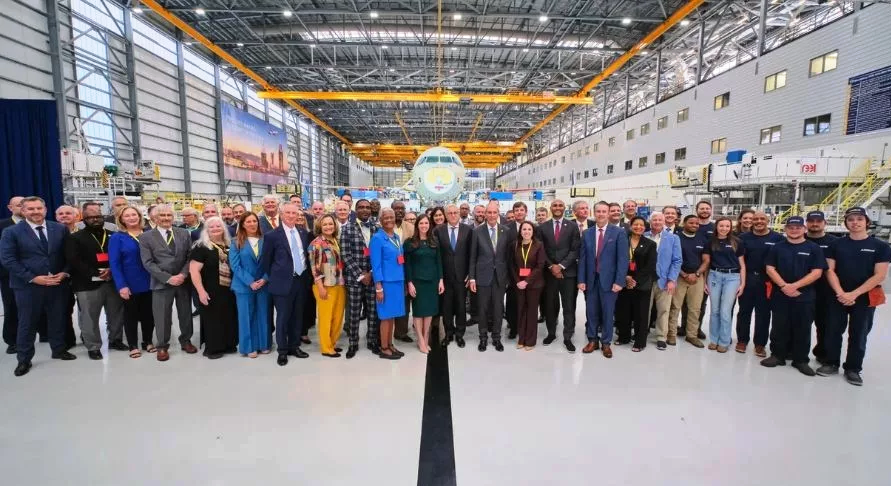
Airbus Inaugurates New A320 Final Assembly Line in Mobile
Assembly - Jennifer Pierce
MOBILE, AL—Airbus officially inaugurated a new A320 Family Final Assembly Line (FAL) at its Mobile Aeroplex at Brookley campus, marking a major expansion of its U.S. manufacturing operations and a defining moment for Alabama’s growing aerospace industry.
The expansion doubles Airbus’ A320 production capacity in the U.S., supporting the company’s global goal of building 75 single-aisle aircraft per month by 2027. It adds 1,000 new jobs and includes more than 1 million square feet of additional hangars, paint shops, logistics areas, and a new welcome center.
“This second A320 production line in the U.S. marks another major milestone in our global industrial growth strategy,” said Christian Scherer, CEO of Airbus Commercial Aircraft. “With this launch, Mobile’s production capacity for the A320 Family is effectively doubled.” Read Article
| | | |
CPA’s Jeff Ferry Teaches the Next Generation How to Rebuild American Industry
Coalition for a Prosperous America - Kenneth Rapoza
CPA’s chief economist emeritus, Jeff Ferry, has gone back to school in his semi-retirement years. This time, though, it was a speaking gig at the University of Florida’s new Semiconductor Institute in Gainesville. The school is looking to attract top STEM students, and be an incubator for tech talent in hopes to bring tech start ups and advanced microchip manufacturers to the area.
“I was asked by the Institute leadership to present and show the engineering students a different view of economics than they had been given when (the school) invited an economics professor to lecture,” said Ferry. Read Article
| | | |
DOE Cancels More Than $700M in Battery, Manufacturing Projects
Area Development - E&E News/Politico, Christa Marshall
The nixed grants appear to be the first the Department of Energy has confirmed from a list that outlines $20 billion in potential cuts.
The Department of Energy has canceled more than $700 million in battery and manufacturing awards, advancing the Trump administration’s efforts to nix Biden-era energy projects.
DOE told POLITICO’s E&E News on Friday that it canceled the five grants during the second week of October. The cuts appear to be the first that DOE has confirmed from a list of targeted projects circulating among lobbyists. Until now, it was unclear if DOE planned to move forward with scrapping any of the more than $20 billion in awards on the list.
The $700 million covers grants that the Biden administration awarded to battery companies Ascend Elements, American Battery Technology Co., Anovion and ICL Specialty Products, as well as a glass manufacturer LuxWall, according to DOE. Read Article
| | | Proactive Technologies' Project Partners | | |
Proven Solutions for Employers and Education
- Apprenticeship Program Design and Technical Implementation Support
- Employer - Educational Institution - Community Partnership Program Development and Support
- Employee Pre and Post-Hire Assessment Design, and
- Administration Management Consultation, Training and Support
Learn More
about K & D Consulting, LLC
Copyright © 2019-25 K & D Consulting, LLC
ALL RIGHTS RESERVED
| |
North-Central Ohio Employer-Based Worker Training Partnership
Established to:
-
Provide direct technical support to employers seeking to build structured on-the-job training programs for their job classifications, their employees, their business strategy
- Better align local related technical instruction, economic development and worker support programs with employers;
-
Provide assistance to employers to navigate the many worker development grant programs,
Visit our website
| | Classes alone will not close the "skills gap," but structured on-the-job, process-based training can...every time! | |
Worker under-capacity is an enormous source of untapped value and unrealized return on worker investment. In addition, standardizing process performance - between workers and shifts - can add to worker ROI through lower scrap and rework.
- Increased worker capacity, productivity, work quantity, work quality and compliance (specifications, ISO/AS/IATF programs and safety mandates);
- Decreased internal costs of training
-
Higher return on worker investment! You would be surprised how small of an investment is needed to unlock enormous returns
If budgets are tight, Proactive Technologies, Inc. can be an extension to your training department, with our technical implementation support - included with every project!
There's nothing to lose by taking a minute to contact us to learn more.
Copyright © 2019-25 Proactive Technologies, Inc.®
ALL RIGHTS RESERVED
| |
Are you certain your firm has trained all of your workers to their fullest? Do you continue to see signs that you may not be getting the most Return on Worker Investment?
Contact Proactive Technologies, Inc.® today for more information about their accelerated transfer of expertise system™!
Copyright © 2019-25 Proactive Technologies, Inc.®
ALL RIGHTS RESERVED
| | Core Skill Development and Enhancement |
- Skill, Knowledge and Behavioral Assessment
- Intro and Advanced Blueprint Reading Courses Geometric Dimensioning and Tolerancing
- Courses Front Line Supervisor Training
- Training Materials and Online Courses
Visit Our Website
Copyright © 2019-2025 Lifetime Learning
ALL RIGHTS RESERVED
| If your institution is interested in becoming a Proactive Technologies, Inc. project partner, contact a representative for more information. | | |
The Pension Benefit Guaranty Corporation (PBGC) Special Financial Assistance Applications Under Review
PBGC is a federal agency created by the Employee Retirement Income Security Act of 1974 (ERISA) to protect pension benefits in both single-employer and multiemployer private sector pension plans - the kind that typically pay a set monthly amount at retirement. If your plan ends (this is called "plan termination") without sufficient money to pay all benefits, PBGC's insurance programs will pay for the benefit provided by your pension plan, up to the limits set by law.
The agency’s two insurance programs are legally separate and operationally and financially independent. The Single-Employer Insurance Program is financed by insurance premiums, investment income, and assets and recoveries from failed single-employer plans. The Multiemployer Insurance Program is financed by insurance premiums. Special financial assistance for financially troubled multiemployer plans is financed by general taxpayer money. See Report
| | | |
Companies Favor Targeted IT Strategies Over ‘Big-bang’ Projects
CFO.com - David McCann, Contributing Editor
Instead of years-long implementations, the focus has shifted to smaller deployments that can be halted if they’re failing.
You don’t need to be an old hand to have worked in an environment where IT’s primary focus was system governance, often operating as a cost center.
Over the past several years, IT has re-emerged as something quite different. As Grant Thornton wrote in a recent research report, the function is now “an agile enabler of opportunity,” helping eliminate lost opportunity costs through fit-for-purpose technology. Read Article
| | | |
FASB Finalizes Narrow Software Accounting Update
CFO Dive - Maura Webber Sadovi, Senior Editor
The targeted new guidance detailing how companies should capitalize certain software costs is effective for annual reporting periods beginning after Dec. 15, 2027.
Dive Brief:
- The Financial Accounting Standards Board Thursday published long-anticipated new guidance on how companies must account for internal-use software costs, with the new rules coming roughly one year after the FASB proposed the guidance on the project that grew out of a 2021 agenda consultation. The new rules are effective for annual reporting periods beginning after Dec. 15, 2027.
- The amendment to what is formally known as codification Subtopic 350-40—Goodwill and Other—Internal-Use Software, applies to computer software which is developed or purchased for the organization reporting it. The update guides companies to capitalize software costs in cases where an internal project is both deemed likely to be completed and also is authorized and has funding committed by management.
-
The changes aim to make the guidance in those scenarios easier to follow by removing previous guidance’s references to project stages. “The new ASU addresses changes in software development methods, increasing the operability of the recognition guidance for improved financial reporting,” FASB Chair Richard R. Jones said in a statement in the release. Read Article
| | | |
CFOs Adjust to Private Equity’s Growing Influence
CFO.com - Dan Niepow, Reporter
As private equity firms buy up businesses across many industries, finance chiefs are navigating a more complicated leadership structure.
The odds are increasing that you may end up working under private equity ownership.
Across several industries, PE firms are scooping up more and more businesses. Consider accounting firms, where many CFOs have gotten their start: From 2020 through September 2025, there have been at least 90 private equity-related transactions and firm mergers, according to CPA Trendlines Research. Fifty-two of those occurred in 2025 alone, demonstrating PE’s quickly growing influence in the space. Read Article
| | | |
Senate Report on Silicon Valley Bank Rips KPMG, Reveals CFO Role
CFO Dive - Maura Webber Sadovi, Senior Editor
The Senate subcommittee’s report stems from a 28-month investigation that reviewed nearly 100 hours of briefings and interviews with auditors and regulators.
A 292-page report from the Senate’s Permanent Subcommittee on Investigations’ minority staff released this week criticizes Big Four firm KPMG for the clean, “unqualified” audit opinions it issued to Silicon Valley Bank, Signature Bank and First Republic Bank prior to their collapse in 2023.
The report also reveals details about behind-the-scenes discussions between the auditor and SVB’s CFO and another bank executive in the fraught days leading up to the March 2023 bank run — shedding light on the close ties between the auditor and the bank. Read Article
| | | |
How H-1B Visa Changes Could Impact American Businesses and Workers
PBS News Hour – With William Brangham, Jackson Hudgins
The Trump administration moved forward today with its overhaul of H-1B visas for highly skilled foreign workers. The president is proposing a $100,000 fee for anyone applying for the visa. The plan is sparking concern as employees and companies that rely on the workers race to understand the consequences. William Brangham has two perspectives on the plan from Justin Wolfers and Ronil Hira. See Interview and Read Transcript
| | | |
KFF: Family Health Insurance Premiums Now Cost More Than a New Toyota Corolla Hybrid
HR Dive - Ginger Christ, Editor
Employer premiums are expected to rise more sharply next year, the firm’s survey found.
Dive Brief:
- Family premiums for employer-sponsored health insurance are up 6%, or $1,408, compared to last year, according to KFF’s 2025 Employer Health Benefits Survey. That’s in keeping with the 7% increases recoded by the organization over each of the two previous years.
- On average, family premiums were $26,993 this year, or higher than the cost of a new Toyota Corolla Hybrid, as KFF President and CEO Drew Altman put it in a column Wednesday. Of that, workers contribute about $6,850 annually, and employers cover the rest, per the survey.
-
“That’s not a four-alarm fire for those of us who remember years of double-digit premium increases. Still, up is up and the absolute numbers are daunting for employers and employees,” Altman wrote. Read Article
| | | |
New Jersey CFO Stole Nearly $2M From Low-income Housing Complex, Prosecutor Says
CFO.com - Dan Niepow, Reporter
John O’Donnell has been sentenced to seven years in New Jersey prison for the crime.
A former CFO is set to spend seven years in New Jersey prison for taking almost $2 million from the low-income residential property where he used to work.
Raymond Santiago, the prosecutor in Monmouth County, New Jersey, announced the sentencing of John O’Donnell on Tuesday. Read Article
| | | |
‘Mega Bankruptcies’ Jump as Tariffs, Policy Changes Add New Pressure
CFO Dive - Maura Webber Sadovi, Senior Editor
Chapter 7 and 11 filings by companies with over $1 billion in assets rose 33% YoY in the 12 months ended in June, according to Cornerstone Research.
Dive Brief:
- The total number of “mega bankruptcies” filed by corporations with assets valued at more than $1 billion rose about 33% to 32 for the 12 months ended in June compared to 24 in the year-earlier period, according to a report released this week by Cornerstone Research, a San Francisco-based economic and financial consulting firm.
- The rise in the largest corporate bankruptcies is above the 2005-2024 annual average of 23 and comes as inflation, high interest rates, and lingering impacts from COVID-19 continue to be cited as top drivers of distress by filers, with policy changes and an uncertain regulatory landscape emerging as fresh causes of distress cited by firms, the report states.
-
“A number of companies already have weak balance sheets from the prior three years or so under high inflation and interest rates,” Matt Osborn, one of the co-authors of the report and a principal at Cornerstone, said in an interview Thursday. “Additional uncertainty regarding the regulatory landscape is more recently layered on top of that so companies that are already weakened by general macroeconomic headwinds are also now citing policy uncertainty.” Read Article
| | | |
A New, 'Quiet' Tax Provision Benefits Manufacturers
IndustryWeek - Kara Scroggs
Qualified Production Property (QPP) allows companies that build their own plants to immediately deduct expenses.
The One Big Beautiful Bill Act generated considerable attention for extending 100% bonus depreciation for new assets, but manufacturing executives should focus on a quieter provision that could prove far more transformative: Qualified Production Property (QPP).
This new section creates an entirely distinct property class eligible for immediate 100% expensing—but only for companies willing to own and build their manufacturing facilities from the ground up or acquire existing property that has not been used as a manufacturing facility since 2021.
While bonus depreciation affects all qualifying personal property, QPP specifically targets manufacturing, production and refining activities with a clear message: America wants to incentivize domestic manufacturing growth, not just equipment purchases. Read Article
| | | |
CFPB’s Decrease of Oversight of Debt Collectors Will Harm Consumers
Better Markets
WASHINGTON, D.C. Amanda Fischer, Policy Director and COO of Better Markets, issued the following statement in connection with today’s filing of a comment letter to the Consumer Financial Protection Bureau (CFPB or Bureau) on whether the CFPB should reduce the number of nonbank companies it supervises in the consumer debt collection market.
“Debt collectors hound one in five Americans with a credit report. Hundreds of thousands of consumers have gone to the CFPB to file complaints about threatening contact, failure to honor requests to cease contact, and collectors calling about debts the consumer doesn’t even owe. The explosion of artificial intelligence in debt collection is only making these problems worse, exposing consumers to messages using voice cloning and deepfakes, algorithmic targeting, data privacy concerns and new and invasive ways to track customer patterns and movements. Read Article
| | | |
CFOs Confident in Their Own Companies But Not in the Economy
CFO.com - Dan Niepow
Deloitte’s latest CFO Signals survey shows a surge in finance chiefs’ confidence in their own businesses’ future amid more muted feelings on the economy at large.
Just ahead of market fluctuations amid another U.S. government shutdown, CFOs were apparently feeling pretty good about their own companies’ prospects.
That’s according to the latest CFO Signals survey conducted by Deloitte between Sept. 3 and Sept. 17. The quarterly survey calculates North American finance chiefs’ sentiments on the economy through a series of questions about current and future business conditions. In the third-quarter edition, Deloitte researchers tabulated an overall “CFO confidence score” of 5.7 out of 10, which they described as “solidly in medium territory.” Read Article
| | | |
Hedge Fund Manager Charged with Hiding Multimillion-dollar Losses from Investors: Trial Balance
CFO.com - Lauren Muskett, Senior Editor and Dan Niepow, Reporter
Prophecy Asset Management and CEO Jeffrey Spotts are alleged to have concocted fake documents and “sham transactions” to conceal massive fund losses.
Part 1 — The head of a New York hedge fund advising firm faces SEC charges
A New York hedge fund advisory and its CEO have been charged with concealing hundreds of millions of dollars of losses from investors.
The Securities and Exchange Commission announced the charges against Prophecy Asset Management on Sept. 29. Read Article
| | | |
Caught on Camera Crypto Scam
MS News - ABC News
One woman was captured on police body camera as authorities say an alleged scammer pressured her into giving up her life savings at a Bitcoin ATM. See Video Report
| | | |
Deloitte AI Debacle Seen as Wake-up Call for Corporate Finance
CFO Dive - Alexei Alexis, Reporter
The Australian government says Deloitte Australia agreed to refund part of a $290,000 payment for a report that contained AI-generated errors.
Big Four accounting and consulting firm Deloitte’s Australian arm has come under public scrutiny after reports that it produced a document for the Australian government that was full of artificial intelligence-generated errors.
The incident involving one of the biggest names in the corporate finance world should serve as a wake-up call for anyone in the profession using AI tools without proper safeguards, experts say. Read Article
| | | |
80% of Americans Fear Medical Bills Could Derail Their Financial Goals
Human Resource Executive - Alan Goforth
Four in five Americans worry that an unexpected medical expense could derail their financial goals, while more than a quarter of this group say that a bill of less than $1,000 would cause financial hardship. Younger generations are especially anxious, with nearly 90% of Gen Z and millennials saying an unplanned medical cost would disrupt their financial plans, compared to just 56% of baby boomers.
“Americans’ health and wealth needs are inextricably connected,” says Stephanie Shields, head of Equitable’s employee benefits business. “An unplanned visit to the hospital can put a person’s long-term financial security at risk, especially if they need to tap into retirement savings to cover a costly medical bill.” Read Article
| | | |
Auto Affordability Still the Top Hurdle
Wards Auto - Alysha Webb
With the average new-car loan rate hovering around 9.3%, affordability remains the greatest sales barrier. Dealers must navigate rising prices and widening credit gaps to keep sales strong.
If you’re a dealer trying to help a customer obtain a loan at a less-than-astronomical rate, there’s a straightforward way for a consumer to boost their chances of getting a better rate: improve their credit score.
While that path may not be open to all, the good news is that credit is generally available to even to subprime borrowers, but it will cost them. Read Article
| | | |
House Bill Would Codify Trump’s Order to Allow Cryptocurrency in 401(k) Plans
HR Dive - Ginger Christ, Editor
The Retirement Investment Choice Act is meant to “democratiz[e] access to alternative investments for 401(k) investors.”
Dive Brief:
- U.S. Rep. Troy Downing, R-Mont., introduced a bill Tuesday that would codify an executive order by President Donald Trump to reduce regulatory barriers to allow investments in private equity, real estate and cryptocurrency in 401(k) retirement plans.
- The Retirement Investment Choice Act is meant to “democratiz[e] access to alternative investments for 401(k) investors,” according to a Downing press release.
-
“Alternative investments hold the transformative potential to supercharge the financial security of countless Americans saving for retirement,” Downing said in a statement. “I applaud President Trump for his leadership to democratize finance and am proud to be leading the effort in Congress to codify his EO and enshrine this move for generations to come.” Read Article
| | | |
Quarterly Reporting Cadence Can Push CFOs to ‘Suboptimal’ Decisions
CFO Dive - Grace Noto, Editor
A return to semi- or biannual reporting could give CFOs more decision-making runway and free up resources to be put back into the business, Zuora COFO Todd McElhatton said.
Zuora’s Todd McElhatton sees the argument that a potential return to six-month reporting periods would hamper investor access to information as an unfounded one: “Frankly, I don’t buy that,” McElhatton, the software company’s chief operating and financial officer, told CFO Dive in an interview.
In September, President Donald Trump returned to a push he had made in his first term to shift to six-month reporting periods — ditching the quarterly reports which have been mandated by the Securities and Exchange Commission since 1970, CFO Dive previously reported. Read Article
| | | |
Hillenbrand Selling to Private Equity Firm in $3.8B Deal
Manufacturing Dive - Shefali Kapadia, Contributor
The transaction will make the industrial equipment manufacturer a privately held company. Hillenbrand has spent the last few years adjusting its portfolio to focus on plastics, food and recycling.
Dive Brief:
- Industrial equipment manufacturer Hillenbrand has agreed to be acquired by investment firm Lone Star Funds. The deal is valued at $32 per share, which equates to a total value around $3.8 billion.
- “The Board carefully reviewed a range of potential strategic alternatives, including interest from a number of parties, and determined that this transaction is in the best interest of Hillenbrand and its shareholders,” Chairperson Helen Cornell said in a release noting the board unanimously approved the transaction.
-
The transaction is expected to close by the end of Q1 2026. Once completed, Hillenbrand will shift from a publicly traded corporation on the New York Stock Exchange to a privately held company. Read Article
| | | |
Without Data Centers, GDP Growth Was 0.1% in the First Half of 2025, Harvard Economist Says
Area Development - Fortune, Nick Lichtenberg, Business Editor
U.S. GDP growth in the first half of 2025 was almost entirely driven by investment in data centers and information processing technology, according to Harvard economist Jason Furman. Excluding these technology-related categories, Furman calculated in a Sept. 27 post on X.com GDP growth would have been just 0.1% on an annualized basis, a near standstill that underlines the increasingly pivotal role of high-tech infrastructure in shaping macroeconomic outcomes.
Furman’s findings, shared online and echoed by financial analysts including Robert Armstrong of the Financial Times‘ Unhedged (the same writer who coined the term “TACO trade’), echo several months of observations on the remarkable surge in data-center infrastructure. In August, Renaissance Macro Research estimated, to date in 2025, the dollar value contributed to GDP growth by AI data-center buildout had surpassed U.S. consumer spending for the first time ever. That’s remarkable considering consumer spending is two-thirds of GDP. Read Article
| | | |
CEO View on Economy Sours Amid Stubborn Inflation: Conference Board
CFO Dive - Jim Tyson, Senior Reporter
The economy slowed to 1.9% growth during the third quarter, according to Conference Board estimates, compared with 3.8% during Q2.
Dive Brief:
- The outlook of CEOs soured this quarter on concerns that the economy will slow in the face of stubborn inflation, the Conference Board and Business Council found in a survey.
- During the next 12 to 18 months, 64% of CEOs anticipate a mild economic slowdown and a slight increase in price pressures, according to survey results. Thirty-eight percent of CEOs predict economic conditions will worsen in the next six months compared with 30% during the third quarter.
-
“CEOs’ expectations for the economy turned from neutral to pessimistic,” Stephanie Guichard, senior economist for global indicators at the Conference Board, said in a statement. “Geopolitical instability and cyber risks continued to dominate top business risks impacting CEOs’ industries,” she said. Read Article
| | | |
Labor Day 2025: The Great Crash (of the Economists)
Institute for New Economic Thinking - James K. Galbraith
Contrary to what many economic models suggest, salaries aren’t constantly recalibrated based on skills or technology. They follow the economy and politics—and common sense: hire when needed, promote from within, and slow hiring when budgets tighten.
Professor Lawrence Katz, of Harvard, is co-author with Professor Claudia Goldin, also of Harvard, of a book that defines the modern mainstream theory of labor markets. Entitled The Race Between Education and Technology, the Goldin-Katz book tells how supply and demand determine the relative wage of skilled labor. Put simply, when science and technology surge ahead, skilled wages and salaries rise, increasing inequality. When education catches up, wage differentials decline. This is a paradox of education: it is necessary to get ahead, but if too many pursue it, the advantage fades away. Read Article
| | | |
I Asked ChatGPT What Would Happen If Billionaires Paid Taxes at the Same Rate as the Upper Middle Class
GoBankingRates - Jordan Rosenfeld, Molly Sullivan Edited
There are many questions that don’t have simple answers, either because they’re too complex or they’re hypothetical. One such question is what it might mean for billionaires to pay taxes at the same rate as the upper middle class, whose income starts, on average, at around $168,000, depending on where you live.
ChatGPT may not be an oracle, but it can analyze information and offer trends and patterns, so I asked it what would happen if billionaires were required to pay anywhere near as much as the upper middle class. Here’s what it said. Read Article
| | | |
When CEO Pay Exploded (update)
NPR Planet Money - Jacob Goldstein, Stacey Vanek Smith, Nick Fountain, Alex Goldmark, Willa Rubin
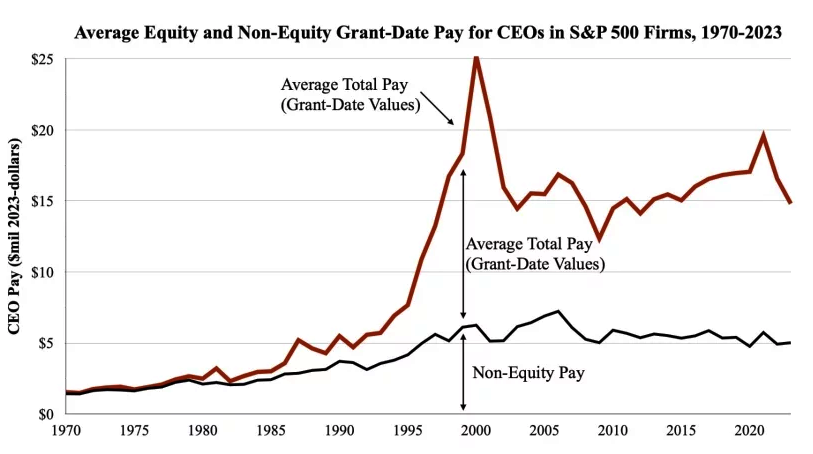
It’s no secret that CEOs get paid a ton – and a ton more than the average worker. More than a hundred times than what their average employee makes.
But it wasn’t always this way. So, how did this gap get so vast? And why?
On today’s episode … we go back to a specific moment when the way CEOs were paid got changed. It involves Bill Clinton's campaign promises, and Silicon Valley workers taking to the streets to protest an accounting rule. And of course, Dodd Frank. Hear Podcast
| | | |
Here's What Happens When Private Equity Buys Homes in Your Neighborhood
NPR Planet Money - Alex Mayyasi
Daniel Erb became a corporate landlord kind of by accident. It started in 2020, when he received his first bonus as an investment banker. It was more money than he was used to. He wanted to invest in real estate, so he called his cousin, a research analyst at BlackRock, for advice.
As they talked over options, his cousin showed him a striking chart of the number of "housing starts" in the U.S. since 1950 (basically the number of new houses and apartments built each year). It showed that the last 10 years had the fewest starts since the 1960s, even though the U.S. population was now much larger. Read Article
| | | |
Why Drug Prices Keep Rising
Institute for New Economic Thinking - Interview Featuring Öner Tulum, Executive Director of Research, The Academic-Industry Research Network
Why are life-saving drugs so expensive—especially when taxpayers already fund much of the science behind them?
Öner Tulum, co-founder of the Academic-Industry Research Network, explains how pharmaceutical companies prioritize shareholders over patients, driving drug prices higher while access suffers. He traces how publicly funded research feeds the drug pipeline, yet profits are captured by executives and Wall Street.
Tulum argues that innovation isn’t just about discovering new therapies—it’s about making them affordable and accessible. Without transparency, fair pricing, and a system that rewards patients and taxpayers, innovation loses its purpose.
This interview exposes the growing risks of financialized pharma: inequality, lack of access, and an industry more focused on stock prices than human health. See Interview
| | | |
Is the American Dream Still Alive?
Statista - Anna Fleck,
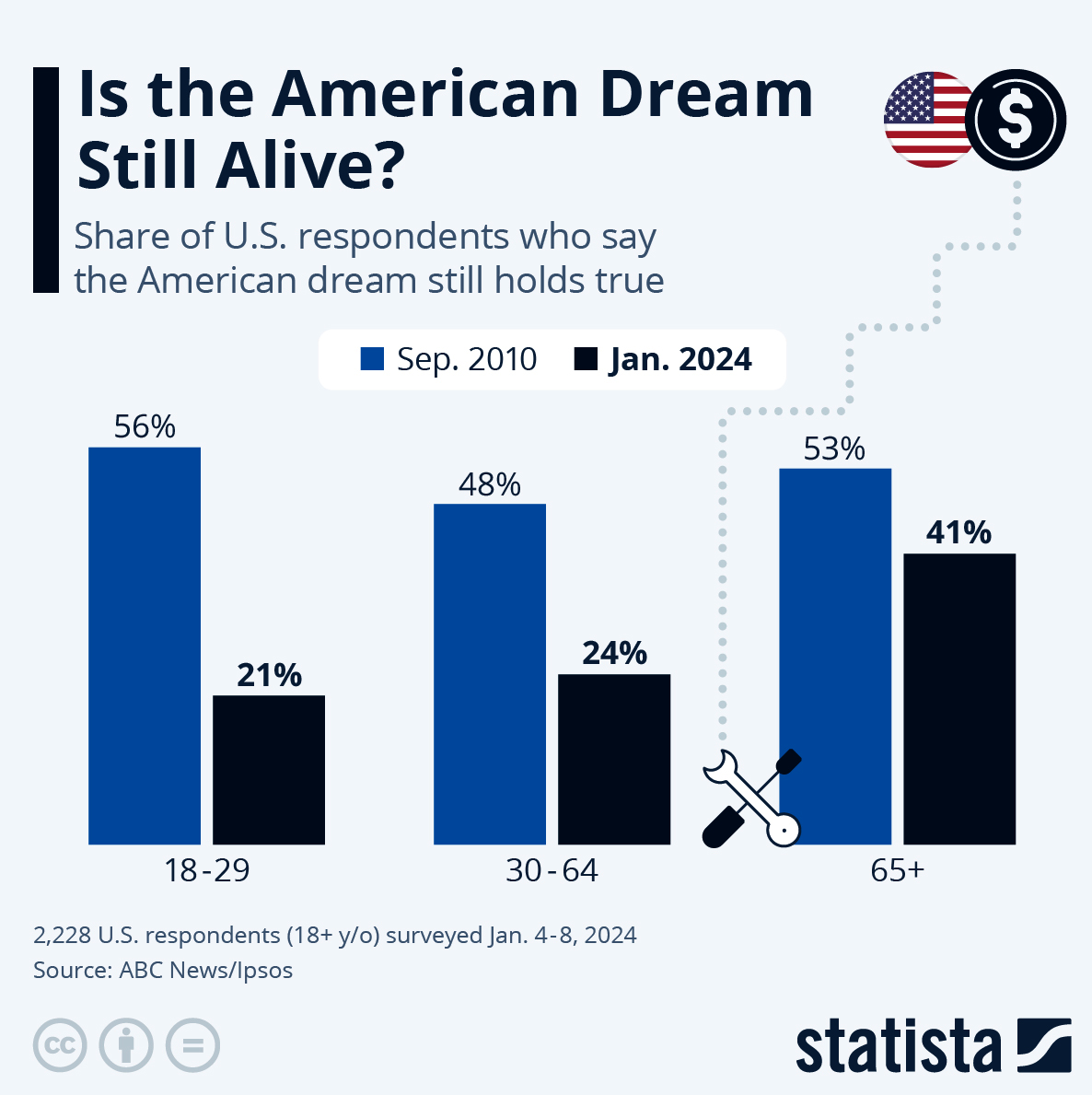
U.S. adults are losing faith in the American Dream. At least, that’s what a poll by ABC News and Ipsos says, conducted in early January 2024. Where an average of 50 percent of U.S. adults aged 18 and up said they believe the American dream still holds true in 2010, that figure had nearly halved to just 27 percent by last year. Meanwhile, 18 percent of respondents in 2024 said it never held true, up from just four percent in 2010.
Young adults have seen the biggest drop in belief (-35 p.p.). Where 18 to 29 year olds had been the most hopeful about the idea that anyone can make it in America if they work hard enough, now the group has the highest share of nonbelievers, or at least skeptics. The age bracket of 30 to 64 year olds have become similarly disenchanted, while adults aged 65 and older were more likely to still believe the American dream holds true at 41 percent. According to the poll, around one in two U.S. adults today (52 percent) think that the American dream is a heyday of the past - that it once held true but no longer does. Read Article
| | | |
Unemployment Nears 4-Year High as Job Growth Stalls
Statista - Felix Richter
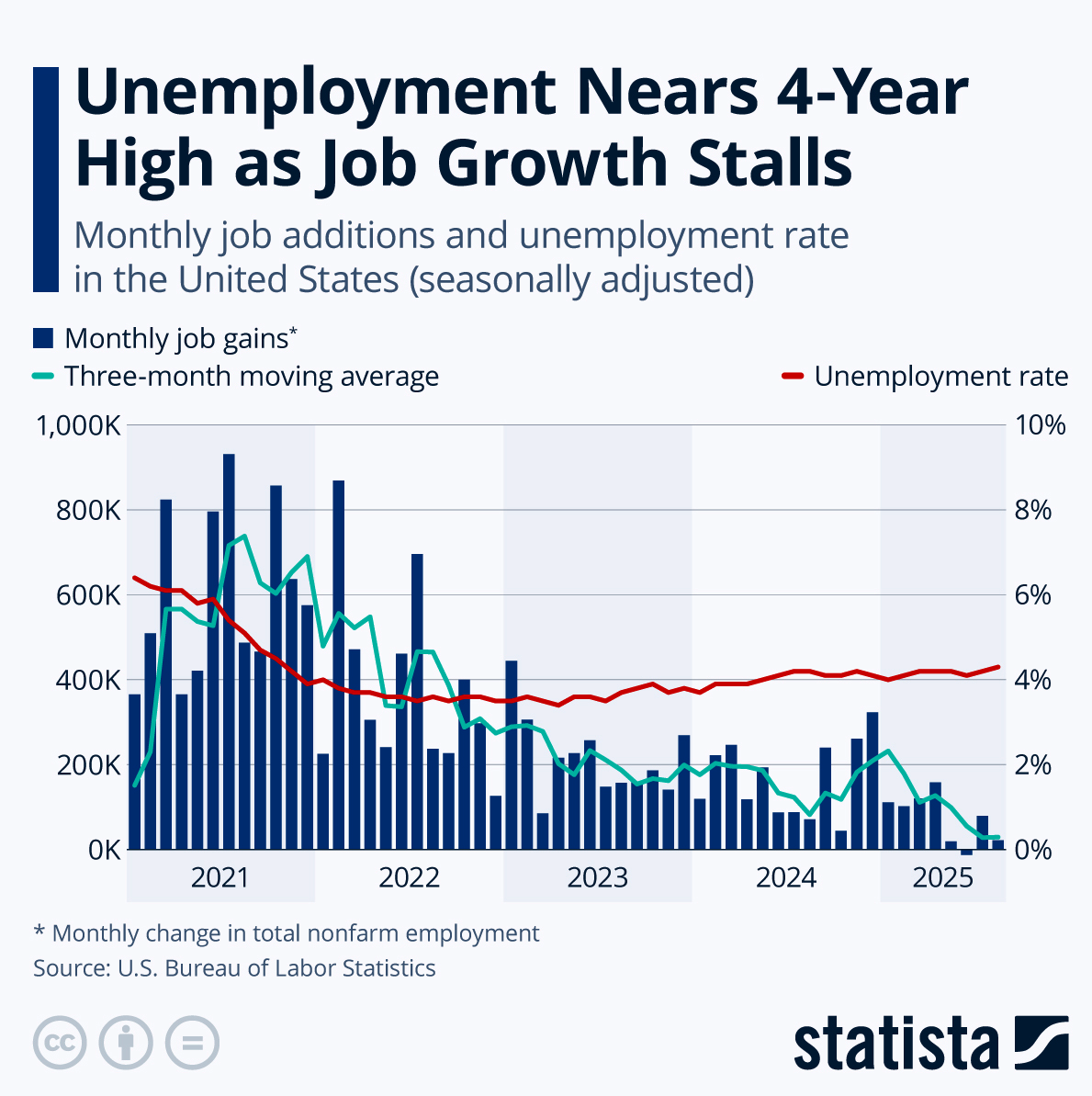
After the sharp rebound from the pandemic, when businesses rapidly rehired and demand for workers exceeded supply by unprecedented margins, the U.S. labor market has gradually cooled. Job growth, which averaged several hundred thousand new positions per month between 2021 and 2023 and around 170,000 added jobs per month in 2024, has nearly come to a standstill, as the economy adjusted to tepid consumer spending, tighter financial conditions and a high degree of macroeconomic uncertainty.
Faced with tariff uncertainty and nagging recession fears, employers became increasingly cautious about adding staff, and while unemployment is still relatively low, it has gradually crept upwards over the past two years, reaching the highest rate since October 2021 in August. Following a steep downward revision of employment gains in May and June, job growth has nearly dried up halfway through 2025, with the three-month moving average of job additions falling from 232,000 in January to just 29,000 in August. Read Article
| | | |
The AI Bubble and the U.S. Economy: How Long Do “Hallucinations” Last?
Institute for New Economic Thinking - Servaas Storm
This paper argues that (i) we have reached “peak GenAI” in terms of current Large Language Models (LLMs); scaling (building more data centers and using more chips) will not take us further to the goal of “Artificial General Intelligence” (AGI); returns are diminishing rapidly; (ii) the AI-LLM industry and the larger U.S. economy are experiencing a speculative bubble, which is about to burst.
The U.S. is undergoing an extraordinary AI-fueled economic boom: The stock market is soaring thanks to exceptionally high valuations of AI-related tech firms, which are fueling economic growth by the hundreds of billions of U.S. dollars they are spending on data centers and other AI infrastructure. The AI investment boom is based on the belief that AI will make workers and firms significantly more productive, which will in turn boost corporate profits to unprecedented levels. But the summer of 2025 did not bring good news for enthusiasts of generative Artificial Intelligence (GenAI) who were all hyped up by the inflated promise of the likes of OpenAI’s Sam Altman that “Artificial General Intelligence” (AGI), the holy grail of current AI research, would be right around the corner.
Let us more closely consider the hype. Read Article
| | | |
Service Sector Falters Amid Weak Hiring, Business Activity: ISM Survey
CFO Dive - Jim Tyson, Senior Reporter
A softening labor market and stalling service sector are just two trends in an economy that has recently sent signals of strength as well as weakness.
Dive Brief:
- The U.S. service sector faltered last month as companies put off hiring and business activity slumped to a level signaling contraction for the first time since May 2022, the Institute for Supply Management said Friday.
- A gauge of new orders fell but remained in expansion territory, while a measure for the backlog of orders declined less in September than in August, the ISM found in a survey of purchasing managers. Seven service industries reported contraction, while 10 reported expansion, two fewer than in August, the ISM said.
-
Survey respondents described “moderate or weak growth,” Steve Miller, chair of the services business survey committee at the ISM, said in a statement. “Employment continues to be in contraction territory, thanks to a combination of delayed hiring efforts and difficulty finding qualified staff,” he said. Read Article
| | | |
Bretton Woods: A System That Can’t Be Fixed—But Can Be Made Fairer and More Effective
Institute for New Economic Thinking - Biagio Bossone
The IMF and World Bank can no longer function as instruments that discipline some member countries while deferring to others. Their challenge is to transform the exercise of power among member countries into a framework of mutual respect and cooperation.
When Jakob Vestergaard and Robert Wade argued in their recent INET working Paper that the World Bank’s shareholding reform was “stuck,” they described more than an administrative failure. The deeper problem, shared by both the Bank and the IMF, is structural.
At its core lies what I have elsewhere called the Fundamental Asymmetry: the mismatch between nationally anchored policymaking and globally transmitted risks. Read Article
| | | |
Time Bomb: How Uninsured Stablecoins and Crypto Derivatives Threaten Financial and Economic Stability
Institute for New Economic Thinking - Arthur E. Wilmarth
The GENIUS Act is a disastrous law that poses grave and unacceptable threats to our financial and economic future. Congress must remove those threats by (1) repealing the GENIUS Act and passing legislation that requires all stablecoin providers to be FDIC-insured banks, and (2) adopting legislation that requires all crypto derivatives to comply with the rules governing non-digital derivatives under Title VII of the Dodd-Frank Act.
On July 18, 2025, the President Trump signed into law the ‘‘Guiding and Establishing National Innovation for U.S. Stablecoins Act” (GENIUS Act). The GENIUS Act – despite its Orwellian sobriquet – is a profoundly misguided law that creates enormous dangers for our financial system, economy, and society. The GENIUS Act authorizes nonbanks to issue uninsured stablecoins to the public without the essential safeguards provided by federal deposit insurance and the prudential regulations governing FDIC-insured banks. In addition, the GENIUS Act gives federal and state regulators broad authority to allow nonbank stablecoin issuers to sell highly-leveraged crypto derivatives and other speculative crypto investments to the public. Read Article
| | | |
INET Warned Over 2 Years Ago: Spending by the Wealthy Is Distorting the Economy
Institute for New Economic Thinking - Lynn Parramore
The idea is finally catching on, but many still miss how deeply it’s driving inflation, masking wage losses, and complicating recovery.
Lately, you’ve probably seen headlines highlighting what some call a surprising truth: the richest Americans — who’ve enjoyed years of income and wealth growth — are the ones keeping the economy afloat with their spending. Meanwhile, most people struggle to keep up with rising costs.
For example, the New York Times recently announced: “Wealthy Americans Are Spending. People With Less Are Struggling.” Read Article
| | | |
No, America is Not Too Economically Successful to Need Reform
Coalition for a Prosperous America - Marc Fasteau & Ian Fletcher; Marc Fasteau and Ian Fletcher are authors of Industrial Policy for the United States: Winning the Competition for Good Jobs and High-Value Industries (Cambridge University Press 2024), a widely praised book on industrial policies in US and world history and the need for US industrial policies today.
A popular argument has emerged (examples of which you can read here, here, here, here, and here) that America’s economy is so large and doing so well that we don’t need to change course — that our wealth and growth rates prove we’ve already found the right formula. On the surface, America looks like an unrivaled success story. Yet beneath the headline numbers lies an economy increasingly dependent on foreign production, hollowed out in critical industries, and unable to provide secure, high-wage work for many of its citizens.
This argument is a major obstacle to the US adopting the kind of comprehensive industrial policy that it actually needs, the kind we sketched out in our book Industrial Policy for the United States: Winning the Competition for Good Jobs and High Value Industries. So it’s worth analyzing why it isn’t true – if the relevant statistics are interpreted correctly. Read Article
| | | |
Why the Wealthy Are Thriving as Most Americans Fall Behind
PBS Newshour –Paul Solman, Economics Correspondent
The markets have climbed higher despite continuing concerns around the shutdown, tariffs and inflation. The S&P 500 and Nasdaq have set records more than 30 times this year and other data suggest the economy is chugging at a steady clip. But for the majority of Americans, this economy is landing very differently right now, and it's hardly good times. See Video Report
| | | |
Economic Documentaries for Our Time
Born Poor
PBS Frontline - Jezza Neumann, Lauren Mucciolo
More than a decade ago, the Emmy-nominated documentary Poor Kids explored poverty in the United States as it’s rarely seen: through the eyes of children.
Born Poor tells the stories of the same children, now grown, chronicling their lives from childhood to the present day. The 90-minute documentary follows Kaylie, Johnny and Brittany across three chapters of their lives as they grow from kids to teenagers to adults, trying to pursue their dreams while dealing with an economy where they face more obstacles than opportunities — and trying to overcome the grinding poverty that shaped their childhoods. See Video
| | | |
The World’s Real-Time Billionaires List - Today’s Winners and Losers: Reflects Changes Since 5pm EST of Prior Trading Day
Forbes
Forbes' Real-Time Billionaires rankings tracks the daily ups and downs of the world’s richest people. The wealth-tracking platform provides ongoing updates on the net worth and ranking of each individual confirmed by Forbes to be a billionaire. The value of individuals’ public holdings are updated every 5 minutes when respective stock markets are open (there will be a 15-minute delay for stock prices). Individuals whose fortunes are significantly tied to private companies will have their net worths updated once a day. In cases where an individual owns a stake in a private company that accounts for 20% or more of his or her net worth, the value of the company will be adjusted according to an industry- or region-specific market index provided by our partners at FactSet Research Systems when available. A rotating cast of the five biggest winners and losers throughout the day is featured at the top of the page, followed by the complete list of billionaires ranked in order of net worth. Visit List
| | | |
The Classroom
Inequality Media- Robert Rich, Former US Labor Secretary
My name is Robert Reich. I’m a former secretary of labor and UC Berkeley professor of public policy. I designed this course to give students — and now, you — a deeper understanding of why inequalities of income and wealth have widened significantly over the last 40 years in the United States, and their consequences.
Even though this isn’t a real classroom and I’m not with you in person, I hope you find this both enjoyable and challenging. Don’t expect to learn by just watching and listening, though. I want you to be an active learner — which means answering questions I pose and putting various puzzle pieces together. I’m not going to tell you what to think. I’m going to try to provoke you into thinking harder and more deeply. Watch Video Classroom Series
| | | Mexico, Latin America, South America and the Caribbean | | |
How CIA Deployment Gives Trump No “Limitations' on Venezuela Action
BBC World News - Bernd Debusmann
US President Donald Trump has acknowledged that he has authorised the CIA to conduct covert operations in Venezuela - a highly unusual admission of what is normally a highly sensitive and tightly guarded state secret.
The authorisation - more typically known as a presidential finding - could give the agency broad leeway to conduct operations in the region, including lethal strikes against suspected drug traffickers or broader operations aimed at destabilising or toppling the regime of Nicolás Maduro. Read Article
| | | |
Trump Says US Will Not 'Waste Our Time' Helping Argentina if Milei Loses
BBC World News - Ione Wells, South America Correspondent
Trump: US won't 'waste our time' with Argentina if Javier Milei loses election
President Donald Trump has acknowledged that a $20bn (£15bn) US lifeline to help calm Argentina's currency crisis is an attempt to sway legislative elections this month in the South American nation.
Welcoming Argentina's libertarian leader Javier Milei to the White House, Trump warned that the US would not "waste our time" with helping Argentina if Milei's party did not prevail. Read Article
| | | |
'We Are All Terrified', Say Locals in Path of Hurricane Melissa
BBC News - Jessica Rawnsley and Gabriela Pomeroy
Residents and holidaymakers have described their terror as Hurricane Melissa pummelled Jamaica, the strongest storm to hit the Caribbean nation in modern history.
Locals and tourists told the BBC how they hunkered down as the storm ripped roofs off buildings and cut power to about a third of the country's 2.8 million people.
"The doors are being blown off by the wind," said Kabien, a mother-of-three who runs a beauty salon in the town of Santa Cruz. Read Article
| | | Canada, Europe and Great Britain | | |
Life in Germany: Free Universities and Paid Vacations
DeutscheWelle - Elizabeth Grenier
DW's Berlin Fresh and The Washington Post Universe's TikTok teams collaborate to explore the perks of living in Berlin and Germany.
Considering a move to Europe?
The German capital has long been an attractive destination for young Americans wanting to try a new life abroad. Now even more of them are flocking to Berlin as they seek an alternative to living in the US under the Trump administration.
Washington Post Universe TikTok host Carmella Boykin teamed up with DW's Berlin Fresh to explore the perks of living in Germany. Read Article
| | | |
Macron Puts Lecornu Back as France's Prime Minister Just Days After He Quit
NPR - The Associated Press
PARIS — French President Emmanuel Macron on Friday re-appointed Sebastien Lecornu as prime minister, just days after his resignation, asking him to try again to form a government and produce a budget in a bid to end the country's political deadlock.
Lecornu's re-appointment followed days of intense negotiations and came less than a week after he resigned amid infighting in his freshly named government. France is struggling with mounting economic challenges and ballooning debt, and the political crisis is aggravating its troubles and raising alarm across the European Union. Read Article
| | | |
Georgia: Police Fire Tear Gas at Anti-government Protesters
DeutscheWelle - Emmy Sasipornkarn with AFP, Reuters
Georgian police on Saturday fired tear gas at anti-government protesters to force them away from the presidential palace in the capital, Tbilisi.
Waving Georgian and EU flags, tens of thousands flooded Tbilisi's Freedom Square, heeding the opposition's call to protest local elections. Read Article
| | | |
Czech Republic: 'Trumpist' Ex-PM Babis Wins Elections
DeutscheWelle - Jon Shelton with AFP, dpa
Billionaire Andrej Babis wants to cut aid to Ukraine, and now he is the projected winner of the Czech parliamentary elections. Though he didn't win a majority, Babis said he aims to form a one-party government.
As voters in the Czech Republic wrapped up a second day of voting in the country's parliamentary election, a familiar face looks set to return to power.
With over 90% of votes counted the right-wing populist party ANO of billionaire former Prime Minister Andrej Babis, a self-described "Trumpist" who opposes continued military assistance for Ukraine, had garnered 36% of the vote.
Calling the result "historic," Babis said after the election that he hopes to form a one-party Cabinet, despite not having won an absolute majority of the vote. Read Article
| | | |
AfD Meets MAGA: What's Behind the Far-right Alliance?
DeutscheWelle PoliticsEurope -Nina Haase
Germany's AfD is knocking on Washington's door—and Trump's team is answering. Over the last few months,
AfD politicians have met with US officials, including Vice President JD Vance, and received open support from Trump allies during Germany's election. In this episode, we ask: Why is the AfD seeking US backing? Where do the AfD and the MAGA movement align—and where do they clash? See Video Report
| | | |
How Chinese Rare-earth Mining Threatens the Mekong River
DeutshceWelle - David Hutt
Rare-earth mining in Myanmar is polluting the Mekong River with toxic metals, threatening ecosystems, food security, and water supplies across mainland Southeast Asia.
Ecologists are warning that mainland Southeast Asia faces a looming ecological disaster unless urgent steps are taken to address the rare-earth mining boom in war-torn Myanmar.
According to Global Witness, a London-based watchdog, Myanmar has become the world's largest source of heavy rare-earth elements. These minerals are essential for manufacturing high-tech products like wind turbines, electric vehicles and medical devices. Read Article
| | | |
Why is Malaysia Banning More Books?
DeutscheWelle - Zsombor Peter in Bangkok
From thrillers to romance novels, more books have been banned by Malaysia's government so far in 2025 than in the past six years combined.
Malaysia has seen a surge in book bans this year in what some publishers, academics, and rights groups are calling a dangerous slide toward repression and conservative Islamic dogma.
The Ministry of Home Affairs has banned 24 books this year as of October, more than all the books it banned in the past six years combined, and the most in any single year since 2017.
This year's banned titles include thrillers and romance novels, a collection of poems titled "Masturbation," non-fiction books about Islam, and guides on puberty for pre-teens. Read Article
| | | |
Sanae Takaichi: What to Expect from Japan's New 'Iron Lady'
DeutscheWelle - Martin Fritz in Tokyo
Arch-conservative Sanae Takaichi is poised to become Japan's first female prime minister — but challenging political realities may push the nationalist leader toward a more pragmatic approach.
Japan's embattled ruling party now has a new leader, Sanae Takaichi, a hardline conservative, who is poised to become the country's first female prime minister.
Her victory in the Liberal Democratic Party's (LDP) leadership election came after she secured a majority in a runoff vote against Agriculture Minister Shinjiro Koizumi. Read Article
| | | Asia, India and Australia | | |
India is Forcibly Deporting Muslims, Including Its Own Citizens, After Kashmir Violence
NPR News - Omkar Khandekar
MUMBAI, India — For the past decade, Mustafa Kamal Sheikh set up a makeshift stall opposite a police station in a working-class suburb of Mumbai. His speciality was jhalmuri, a fiery snack made of puffed rice and spices. The cops often came down for a bite and small talk.
One day in June, two officers came to his house and asked for his ID. He showed them four, including a card that identified him as a voter in Indian elections. Kamal says the constables accused him of forging them and detained him. He denies the accusation. Read Article
| | | |
Gen Z Protests: Why Are Asia's Youth So Angry?
DeutscheWelle - David Hutt
Young people across South and Southeast Asia have grown up online, frustrated and impatient with their leaders. As jobs dry up and inequality widens, their protests are shaking even the most entrenched political systems.
Over the past two months, Gen Z-led demonstrations have convulsed parts of South and Southeast Asia — from Kathmandu to Jakarta, from Dili to Manila.
While Nepalese demonstrations brought down the country's government, the most recent youth-led protests across Southeast Asia have been less cataclysmic, although they have forced the authorities to make rare concessions on tackling elite perks and corruption. Read Article
| | | Africa, Middle East, Eastern Europe and Russia | | |
Afghanistan: What's at Stake as Taliban Cut Internet?
DeutscheWelle - Waslat Hasrat-Nazimi | Hussain Sirat
The Taliban have shut down fiber-optic internet across several Afghan provinces to "prevent immorality." Experts warn of serious consequences for trade and girls' access to education.
Concerns are growing in Afghanistan over tightening Taliban restrictions on fiber-optic internet access.
The war-torn nation's northern Balkh province confirmed a fiber-optic internet shutdown on Tuesday after Taliban leader Hibatullah Akhundzada imposed a complete ban on the technology.
There are reports of severe disruption in other parts of the country, including the northern provinces of Kunduz, Badakhshan, Baghlan and Takhar. Read Article
| | | |
More Than 80% of Eastern Congo Health Facilities Out of Medicine, Red Cross Says
PBS News
KINSHASA, Congo (AP) — Over 200 health facilities in eastern Congo are experiencing shortages of medicines as a result of fighting in the region and a lack of humanitarian funding, the International Committee of the Red Cross said Wednesday.
The Red Cross said it assessed 240 health centers and clinics in North and South Kivu, two provinces where the Rwanda-backed M23 rebels made an unprecedented advance earlier this year, further deepening one of the world’s largest humanitarian crises. Read Article
| | | |
US Announces it Will Allow Qatar to Build an Air Force Facility in Idaho
CNN - Natasha Bertrand
Secretary of Defense Pete Hegseth announced on Friday that the US will allow Qatar to build an Air Force facility at Mountain Home Air Force Base in Idaho, which will host Qatari F-15 fighter jets and pilots who will train alongside US troops.
“The location will host a contingent of Qatari F-15s and pilots to enhance our combined training, increase the lethality, interoperability,” Hegseth said during a meeting with his Qatari counterpart Saoud bin Abdulrahman al-Thani at the Pentagon. “It’s just another example of our partnership. And I hope you know, Your Excellency, that you can count on us.” Read Article
| | | Proactive Technologies' Project Partners | | Frank J. Gibson Consulting | |
"One thing is certain... nothing is certain!"
The rate of change affecting work, the worker, management and the educational institutions that service all three has been accelerating - made worse by the unexpected Covid-19 pandemic. The economy, the consumer, supply chains and operational strategies have all been disrupted in the short-term, casting doubt on the long-term.
Rapid adaptation is the key to survivability, sustainability and growth. Sometimes an experienced outside advisor can help facilitate needed improvements to take the worry out of change and the fear out of growth.
Frank J. Gibson Management and Workforce Excellence Advisor
- Business Development & Growth
- Workforce Development and Optimization
- Training and Cross-Training
- Local,/Regional Workforce Development Projects and Community Development
- Facilitated Problem Solving
- Process Improvement Cross-Functional Leadership Coaching and Mentoring
- Internship and Apprenticeship Projects
- Strategic Doing/Strategic Planning
Learn More
Copyright © 2025 Frank J. Gibson
ALL RIGHTS RESERVED
| |
Educate, illustrate and inspire students about careers in manufacturing by promoting manufacturers and the career opportunities they offer.
This site serves as a communications portal for the exchange of information to assist educators, manufacturers, and tomorrow’s workforce.
Among the Many Benefits Offered by THE INDUSTRIAL CHANNEL:
- Post job openings, used equipment and events for free!
- Discounted video production services
- Learn how your peers and competitors are innovating to attract, develop and retain skilled workers of today and tomorrow
Manufacturing Management, Workforce Development Specialists and Educators
| |
Copyright r© 2025 The Industrial Channel™
ALL RIGHTS RESERVED
| | |
PTI Systems
International, Inc.®
| |
Affiliated with Proactive Technologies, Inc.® for projects outside the United States
- Workforce development partner for employers, and education/ training providers who support employers, to ensure every worker can be trained to full job mastery;
- Experienced with governmental, IDB, GIZ and economic development agency sponsored projects;
- Experienced in assuring multinational employers expanding to the U.S. have the skilled workforce they need.
- PTI Systems International sets-up complete worker development and performance management systems, and provides technical implementation support;
- We provide strategies for our project's transition to local management.
-
Speakers for seminars and conferences.
Don't just complain about a "skills gap," deliberately develop every worker to full job mastery!
Learn More
| |
Copyright © 2018-2025 PTI Systems International, Inc.®
ALL RIGHTS RESERVED
| |
|
"Improve constantly and forever the system of production and service, to improve quality and productivity, and thus constantly decrease costs".
. W. Edwards Deming
American engineer, statistician,
professor, author, lecturer, and
management consultant
1900 - 1993
“Train people well enough so they can leave. Treat them well enough so they don’t want to.”
Richard Branson
English business magnate who co-founded the Virgin Group
1950 -
"There is a] false notion that democracy means that ‘my ignorance is just as good as your knowledge."
Isaac Asimov
American writer and biochemist
1920–1992
| | U.S. Department of Commerce - Bureau of Economic Analysis | |
U.S. International Trade in Goods and Services
Unavailable due to government shutdown
U.S. International Transactions,
Unavailable due to government shutdown
U.S. International Trade in Goods and Services, December and Annual 2023
Unavailable due to government shutdown
New Foreign Direct Investment in the United States
The statistics on new foreign direct investment in the United States provide information on the acquisition, establishment, and expansion of U.S. business enterprises by foreign direct investors. Read Reports
BEA International Trade and Investment Country Facts
Data for selected investment topics. Access Topics
| | | Organisation for Economic Co-operation and Development |
U.S. Data versus the World
Find, compare and share the latest OECD data: charts, maps, tables and related publications. Access Data
| | | |
International Trade in Services
Trade in services records the value of services exchanged between residents and non-residents of an economy, including services provided through foreign affiliates established abroad. This indicator is measured in million USD and percentage of GDP for exports, imports and net trade. Services include transport (both freight and passengers), travel, communications services (postal, telephone, satellite, etc.), construction services, insurance and financial services, computer and information services, royalties and license fees, other business services (merchanting, operational leasing, technical and professional services, etc.), cultural and recreational services, and government services not included in the list above. Trade in services drives the exchange of ideas, know-how and technology, although it is often restricted by barriers such as domestic regulations. All OECD countries compile their data according to the 2008 System of National Accounts (SNA). Access Data and Tables
| | |
INTEGRA, the Inter-American Development Bank’s (IDB) new platform specializing in integration, trade and investment data from Latin America and the Caribbean.
INTEGRA offers:
Data Consultation and Visualization: Access to constantly updated data, with the ability to customize searches.
Professional Support: Tools designed to support professionals in the public and private sectors, academia, and other fields, facilitating research, analysis, and decision-making processes. This enhances strategic planning regarding integration and trade.
You will be able to delve into: Trade in goods and services, Capital movement, Regulations, Indicators, Prices and volumes of exports and imports, commodity price index, main indicators of goods and services, Country profile. Access INTEGRA .
| | | |
USMCA Tracker
Brookings Institution
A newly updated USMCA tracker by Joshua Meltzer and Dozie Ezi-Ashi highlights recent data on trade and related measures. See Data Charts
| | | |
Reshoring Sees Downturn
Material Handling & Logistics
Kearney report says that after two strong reshoring years, "companies aren’t walking away from reshoring: they’re pausing to reassess."
Reshoring has decreased according to a recent report, The 2025 Reshoring Index: The great reality check, from Kearney. The finding was in contrast to sharp increases between 2021 and 2023.
"This year, we saw a downturn—proof that positive thinking is less effective as a market driver than the basic law of supply and demand—forcing us to confront a hard truth," the report said. "While CEOs are more committed than ever to reshoring, the domestic manufacturing ecosystem is still playing catch-up, so the next phase will require not just capital, but coordination."
Kearney report says that after two strong reshoring years, "companies aren’t walking away from reshoring: they’re pausing to reassess." Read Article
| | | |
Business Contracts with Tariff Clauses Proliferate
CFO Dive - Alexei Alexis, Reporter
Companies are using tariff-specific language to hedge against uncertainty in areas such as pricing and delivery timelines, contract management firm Agiloft said.
Dive Brief:
- About nine in 10 companies now include tariff-related clauses in some of their contracts as they scramble to mitigate the potential risks of global trade disruption, according to survey results released Tuesday by contract management firm Agiloft.
- Including tariff-specific language has become a way to “hedge against uncertainty” in pricing, sourcing, delivery timelines and compliance requirements, according to the report.
-
“This indicates the reality that tariffs are no longer isolated or short-term: they are persistent and unpredictable enough to warrant consistent contractual safeguards,” the report said. Read Article
| | | |
China Now Producing Dozens of Drugs Below Market Price – Dumping Them Globally is Next Move
Coalition for a Prosperous America - Kenneth Rapoza
China Now Producing Dozens of Drugs Below Market Price – Dumping Them Globally is Next Move
As proof that no company can match China on price, Chinese producers of active pharmaceutical ingredients (APIs) and the key starting materials (KSMs) used to make them are slashing prices by up to 50%. Not even low-cost India – one of the largest importers of Chinese KSMs – can compete at those levels.
If the U.S. wants to preserve a pharmaceutical industry that isn’t almost entirely dependent on China, as it is today, then tariffs, quotas, and targeted industrial policies are essential. Without them, China’s grip on pharmaceuticals and the broader, more advanced, biotechnology market will surely tighten. Read Article
| | | |
The Inconvenient Truth of Trump’s Tariff Plan on US Supply Chains
IndustryWeek - Christopher S. Tang
Trump’s tariff plan has created unintended consequences that undermine the very sectors it aimed to protect.
Key Highlights
- President Trump's tariffs have increased costs and disrupted global supply chains, leading to inflation and economic uncertainty.
- Major companies like Apple and John Deere are shifting sourcing and manufacturing strategies to mitigate tariff impacts, including reshoring and diversification.
- But retaliatory tariffs from countries like China have significantly reduced demand for U.S. exports, especially in agriculture, causing economic strain across multiple sectors.
-
Policy shifts towards reshoring and automation aim to reduce dependency on foreign supply chains, but also highlight the need for a balanced, strategic trade approach. Read Article
| | | |
Supreme Court Urged to Block Trump’s Tariffs Ahead of November Hearing
Supply Chain Dive - Antone Gonsalves, Reporter
Small businesses and states suing the president claimed levies implemented under a 1977 emergency powers act amounted to a $3 trillion tax increase on Americans.
Seven businesses and a dozen states urged the Supreme Court on Monday to strike down President Donald Trump’s use of the International Emergency Economic Powers Act to impose broad tariffs, calling it illegal and an unprecedented tax burden on companies.
The Supreme Court agreed last month to an expedited hearing on the legality of Trump’s tariffs, following an appellate court ruling that they were illegal. The court has scheduled oral arguments for Nov. 5. Read Article
| | | |
Tariff Front-loading Buoyed Manufacturing in H1, But Costs Are Ahead: OECD
Packaging Dive - Katie Pyzyk, Senior Reporter
“The impacts of higher tariff rates are yet to be fully felt in the US economy,” according to a report from OECD, a global policy forum.
Public frenzy over the Trump administration’s tariffs may have cooled with various trade deal announcements. But the full cost implications from tariffs are still to come, according to a report the Organisation for Economic Co-operation and Development released Tuesday. The intergovernmental group projects that U.S. and global economies will slow in the coming months, in large part due to tariffs. Read Article
| | | |
Is China Circumventing US Tariffs via Mexico and Canada?
Brookings Institute - Joshua P. Meltzer and Maricarmen Barron Esper
The United States’ high tariffs on Chinese imports have incentivized China to find alternate entries to the American market via Canada and Mexico.
This paper analyzes the extent to which China has circumvented U.S. tariffs via three pathways: transshipment, supply chain integration, and foreign direct investment.
Given that many of the circumvention pathways are legal, the authors recommend the U.S., Canada, and Mexico work together to better align their trade and investment policies with respect to China. Read Article
| | | |
Germany Thrived in the First China Shock. But the Next One Could Prove Catastrophic.
NPR Planet Money - Greg Rosalsky
BERLIN — On a cloudy day in mid-September, I biked across Germany's capital to meet up with Oliver Richtberg, a representative of the VDMA, at his organization's annual political conference. The VDMA is an industry association (whose name is a German acronym that translates to Association of German Mechanical and Plant Engineering). It represents thousands of German companies that manufacture industrial machines and equipment. The companies are a big part of what Germans call the "Mittelstand," which are small and medium-sized manufacturers that are widely considered to be "the heart of the German economy."
The VDMA has real political clout, and their annual conference, "the German Mechanical Engineering Summit," has become a must-go-to event for German leaders. Just the day before, Germany's chancellor, Friedrich Merz, had spoken there. Before he gave his speech, Merz listened as the president of the VDMA said their companies are "angry and disappointed" over the miserable state of the German manufacturing industry. Read Article
| | | |
US Widens Reach of Export Blacklist to Cover Subsidiaries
IndustryWeek - Agence France-Presse
The Department of Commerce's notice said the latest shift aims to "address diversion concerns," such as the formation of new foreign companies to evade restrictions.
The United States is widening the reach of its trade blacklist, making it harder for subsidiaries and affiliates of certain companies to access American products -- a move set to hit Chinese businesses, among others.
The change relates to parties on the so-called "entity list" that face restrictions obtaining U.S. items and technologies without government authorization.
Under the new rule, subsidiaries that are at least 50% owned by one or more listed entities will also be automatically subject to the list's restrictions. Read Article
| | | |
Trump Considers $10 Billion Bailout for Farmers as Tariffs Disrupt the Market
PBS News Hour - Liz Landers, Karina Cuevas, Mary Fecteau, Jackson Hudgins
President Trump is said to be preparing a bailout package of at least $10 billion that could provide relief to farmers facing the financial pain of tariffs on China. To discuss what this means for farmers and for the heartland, Liz Landers spoke with Aaron Lehman. He is the President of the Iowa Farmers Union, representing growers in the second-largest soybean-producing state in the country. See Video and Read the Full Transcript
| | | |
To Move or Not to Move? Manufacturers Hesitant to Nearshore Before USMCA Review
Manufacturing Dive - Shefali Kapadia, Contributor
While some companies are using regional supply chains or leaning on tariff exemptions by maximizing compliance, others are frozen in place.
As the United States solicits feedback on the U.S.-Mexico-Canada Agreement ahead of the deal’s review next year, manufacturers are mulling how they can minimize their exposure to tariffs.
Cross-border trade in North America has already gone through a series of changes, first with the scrapping of the North American Free Trade Agreement for USMCA in 2020, then with 25% tariffs placed on imports from Canada and Mexico earlier this year. A tariff exemption was granted for USMCA-compliant goods, although levies on non-qualifying imports from Canada now face a 35% duty. Read Article
| | | |
What Tools Does Trump Have to Impose Tariffs?
Supply Chain Dive - Philip Neuffer, Senior Editor
Use of the International Emergency Economic Powers Act will soon face Supreme Court review. Here are other mechanisms the president can use to hike duties.
President Donald Trump’s aggressive implementation of country-specific tariffs will face Supreme Court scrutiny next month.
At stake will be Trump’s broad use of the International Emergency Economic Powers Act to enact sweeping levies. Two federal courts have already ruled such actions illegal, leading the Trump administration to file appeals, including a request for the Supreme Court to consider the cases. The high court is scheduled to hear arguments in November. Read Article
| | | Education And Workforce Development News | | |
Reframing Higher Education
Community College Daily News - Sunem Beaton-Garcia and Katherine Frank
As leaders of institutions committed to preparing the next generation of skilled professionals, we find ourselves aligned as regional partners at a decisive moment in the evolution of American higher education. We acknowledge that higher education is changing, that this is a good thing, and that we are uniquely positioned to reframe what higher education means in a 21st-century economy.
In place of perceived rigid educational silos, a more dynamic ecosystem is emerging. One where credentials are increasingly stackable, learning is lifelong and value is measured not solely by credit hours earned but by competencies gained and career opportunities unlocked at different points in time, and is flexible to learners. Read Article
| | | |
From Intern to Employee at International Motors
IndustryWeek - Anna Smith
A partnership between employers and San Antonio’s economic development agency is building both a talent pipeline for manufacturers and opportunities for young people.
Anthony Degollado was a senior in high school when he was introduced to the career possibilities of manufacturing. When he toured the International Motors plant in San Antonio, Texas, with his forensic-science class, it was like a door opened that he didn’t even know existed. He had no post-graduation plans, so when he learned that International Motors was looking for interns for a paid, three-week program, he jumped at the chance to apply.
“I definitely didn’t have that many options available at that time,” Degollado said. “That was definitely the biggest opportunity that was available to me.” Read Article
| | | |
The New American Workforce?
Community College Daily News
Apprenticeships in mechatronics and other high-tech fields are common in countries like Germany.
In April, President Donald Trump signed an executive order for a plan to “reach and surpass one million new active apprentices” annually. The initiative calls for a rapid expansion of training programs and introduction of registered apprenticeships into industries that have not traditionally used them.
Trump’s vision for apprenticeships faces several hurdles, including cost and the long-term commitment required from employers. This work is challenging for small- and mid-sized businesses that are more focused on day-to-day operations than building a talent pipeline. Read Article
| | | |
Enrollments Are Up, But Can Students Afford to Stay?
Community College Daily News - Matthew J. Mayhew
College enrollment has finally recovered, thanks in large part to the surge in enrollment at community colleges. Two-year career and technical education (CTE) programs are feeling this growth acutely with some of the largest enrollment increases of any sector in higher education.
How are the students fueling higher education’s recovery faring financially? Compared to their peers at four-year universities, two-year community college students have higher financial need. They are more likely to come from low-income households with less financial support from family, and they often face gaps in financial aid packages. The result is a risky balancing act: many community college students work long hours, take on debt and sacrifice essentials like food just to stay enrolled. Read Article
| | | |
Manufacturing Day 2025: A Skilled Workforce Should Be the Nation's First Priority
IndustryWeek - Harry Moser
lt's time to provide pathways for more of our youth to obtain the technical skills necessary for today's job market.
Key Highlights
- U.S. educational pathways favor college degrees over technical training, resulting in fewer engineers and apprentices compared to global competitors like Germany and China.
- Expanding apprenticeships and technical certifications and publicizing reshoring success stories can attract more youth to manufacturing careers and improve workforce quality.
-
Certificate and license training pays off, yet most government funding goes to financial aid for college education, not technical trianing. Read Article
| | | |
How to Avoid Past Edtech Pitfalls as We Begin Using AI to Scale Impact in Education
Brookings Institution - Brad Olsen and Molly Curtiss Wyss
In a way, we’ve been down this road before.
Digital revolution? The internet, social media, email, and personal computers have been with us for over a generation. How has that turned out? Their legacy is a mixed bag, we’d say.
Scaling edtech to improve education? Governments and organizations have attempted to scale technology to improve education (edtech) for decades. Time and again we’ve heard edtech presented as a surefire way to close education gaps in low- and middle-income countries (LMICs). Our own back-of-the-envelope evaluation, however, suggests that sustained impact from scaling edtech in LMICs is low. That’s partly about scaling being difficult in general and partly about edtech not fulfilling its promises. Read Article
| | | |
State-Led, Federal Impact
Work Shift - Elyse Ashburn and Colleen Connolly
A new apprenticeship project, backed by the Labor Department, aims to create more consistent standards across states for training, must-have skills, and what counts as a high-impact job. Also, confusion persists around the federal move to bar undocumented students from college career and technical education. Read Article
| | | Training And Organizational Development News | | |
The Skills ‘Chess’ Game: How Unum is Redeploying Talent in Real Time
Human Resource Executive - Jill Barth
Many companies today face a familiar skills and talent management challenge: Some divisions are overwhelmed, while others have excess capacity. The traditional response? Hire for the busy areas, potentially lay off from the quiet ones and hope the market stabilizes.
But forward-thinking organizations are discovering a more strategic approach—one that uses skills data to treat their workforce like players in a dynamic chess game.
“You can move [employees with needed skills] like on a chess board so that you maximize productivity, you maximize innovation, you maximize creativity—so that you can drive your business strategy forward,” says Kimberly Bowen, senior vice president of talent and inclusion at employee benefits provider Unum, describing her company’s approach to skills-based workforce management. Read Article
| | | |
FTC Drops Biden-era Noncompete Ban But Promises Continued Enforcement
HR Dive - Ryan Golden, Senior Reporter
Industries “plagued by thickets of noncompete agreements” will soon see warning letters from the agency, its chairman said Friday.
Dive Brief:
- A 3-1 majority of the Federal Trade Commission agreed to dismiss the agency’s appeals in two separate legal challenges of its 2024 ban on noncompete agreements in employment contracts, FTC confirmed in a press release Friday.
- In a statement, FTC Chairman Andrew Ferguson said the ban’s “illegality was patently obvious” and “would never survive judicial review,” adding that it constituted a waste of the agency’s funding. Ferguson was one of two Republican commissioners who voted against the FTC’s ban when it was initially up for approval.
-
FTC will continue enforcement efforts against unlawful noncompetes, Ferguson said, adding that the commission invited the public to submit information on the scope, prevalence and effects of noncompetes. “And in the coming days, firms in industries plagued by thickets of noncompete agreements will receive warning letters from me, urging them to consider abandoning those agreements as the Commission prepares investigations and enforcement actions,” he said. Read Article
| | | |
Community-Building Is at the Heart of a Metal Company's Success
IndustryWeek - Ashleigh Walters
Peters' Heat Treating in Meadville, Pennsylvania, reaps the benefits of forging connections with schools, industry and its own employees.
When people think of manufacturing, the word "community" might not immediately jump to mind. But Andy and Diana Wilkosz, co-owners of Peters’ Heat Treating, see community at the very heart of everything they do.
“It’s the little things,” says Diana, the company’s vice president of administration and chief marketing officer. “Sponsoring a team member’s kid’s basketball team or handing down kids’ golf clubs to a coworker — these are the moments that make us feel like family.”
The second-generation family-owned company, which has 85 employees and is located in Meadville, Pennsylvania (“Tool City”), provides thermal process and surface treating solutions for the aerospace and defense industries. Read Article
| | | |
Top Talent Quitting Due to Stalled Career Growth, Survey Shows
HR Dive Learning - Carolyn Crist
As leaders focus on hiring challenges, they may miss the talent crisis inside their organizations, Workday said.
Top performers are leaving their roles amid stalled career mobility, with promotions down in 10 of 11 industries and internal hiring down by 8%, according to a Sept. 9 report from Workday.
Experienced employees also reported anxiety and disconnection due to artificial intelligence in the workplace — and unclear strategies for the future.
“AI may be rewriting the rules of work, but it cannot replace the value of engaged, motivated people,” Ashley Goldsmith, chief people officer at Workday, said in a statement. Read Article
| | | |
Slow Down to Speed up: Leadership's Power of the Pause
IndustryWeek - Katie Anderson
In a world addicted to speed, the pause creates space for reflection, learning, and real transformation.
In our fast-paced world, especially during times of crisis or economic challenges, it’s easy to get swept up in the mindset that everything must happen now.
How often do you find yourself racing from meeting to meeting, jumping between tasks, rarely giving yourself—or your team members—a moment to breathe, let alone reflect?
If you are like most leaders, this is what most days look like. Yet as I’ve written before in IndustryWeek, it’s easy to get caught up in so much doing that we lose sight of our true intention as leaders. In all this action and urgency, you may be overlooking one of the most powerful leadership tools you have: the pause. Read Article
| | | |
What the U.S. Can Learn from Apprenticeship Degrees Abroad
Econsult Solutions, Inc. - Jesse McCree, Senior Advisor
Earlier this month, I had the privilege of joining colleagues from across the world in Oxford, England, for the annual convening of the International Center for Apprenticeship Degrees (ICAD). ICAD and Reach University welcomed 140 leaders from across the globe, spanning policy, post-secondary, philanthropy, employers, and K-12. The topic on our minds? Transforming the world of work and learning, primarily through the burgeoning model of the “apprenticeship degree” – a testament to how college and career readiness does not have to be a dichotomy for workers and learners of the 21st century. Read Article
| | | |
Reskilling vs. Replacement: Making the Case for Investing in People
'Human Resource Executive'- Mary Faulkner, principal with IA, working with clients to help them get "unstuck" and move toward their ideal outcomes. Prior to joining IA, she spent nearly 20 years as an HR leader.
It’s nearly impossible to attend an industry conference, sit through a vendor pitch or read a white paper without hearing the same refrain: Artificial intelligence is going to reshape work, and employees will need to be reskilled or upskilled to stay relevant. The message is delivered with urgency, sometimes even with alarm. Consulting firms warn that those who don’t act quickly will be left behind. Technology providers position their tools as essential to building the “AI-ready workforce.” Leaders declare that people are the most important asset in this new era.
On its face, the argument makes sense. We are firmly in a period of rapid technological change, and employees will need different skills to succeed in roles that look nothing like their job descriptions from even three years ago. Continuous learning and development should be the logical answer. But the reality on the ground tells a different story. Read Article
| | | Access Proactive Technologies' Recent "Proactive Technologies Workforce News" Article Quicklinks | Located on the left panel below, this includes articles on structured worker development, achieving worker "full job mastery," engineering/quality/safety compliance, ISO/IATF/AS/ and Nadcap quality program support and compliance, and many other contemporary worker development and management topics. | | | Recent Proactive Technologies News Article Quicklinks | |
October
It Seems Fear of New Private Equity Owners Cause Local Leadership to Forego Deliberate Worker Training
by Dean Prigelmeier, President of Proactive Technologies, Inc.®
Endlessly Scrambling to Find New-Hires Who Could, and Should, Stay but Don't. There Is a Better Way.
by Stacey Lett, Director of Operations – Eastern U.S. – Proactive Technologies, Inc.®
Reshoring Manufacturing Would Be Great, But Can We All Agree that “the U.S. Lacks Skilled Workers” Isn’t a Credible Excuse Not To?
by Frank Gibson, Workforce Development Advisor and President of the North-Central Ohio Employer-Based Worker Training Partnership
Perfect Example of “Penny-Wise but Pound-Foolish” – DOGE Attempts to “Cut Waste, Fraud and Abuse”
by Proactive Technologies, Inc.® - Staff
Five Most Important Ways Employers Can Reclaim and Retain Worker Value With Structured On-The-Job Training
by Dean Prigelmeier, President of Proactive Technologies, Inc.®
September
Estimating the Costs Associated With Skipping Processed-Based Structured On-The-Job Training
by Dean Prigelmeier, President of Proactive Technologies, Inc.®
How Start-Ups and Joint Ventures Can Benefit From Structured On-The-Job Training
by Stacey Lett, Director of Operations – Eastern U.S. – Proactive Technologies, Inc.®
Classes Alone Will Not Close the "Skills Gap," But Structured On-the-Job Training Can...Every Time!
Proactive Technologies, Inc.® - Staff
Maximizing Worker Capacity Maximizes Shareholder Value…If Done Right
by Dean Prigelmeier, President of Proactive Technologies, Inc.®
Worker Compliance With Quality Initiatives; Avoid Worker Quality Audit Without Worker Training/Certification
by Dean Prigelmeier, President of Proactive Technologies, Inc.®
August
Quality Policies and Process Sheets Are No Replacement for Worker Training
by Dean Prigelmeier, President of Proactive Technologies, Inc.®
Your “Resident Expert” May Not Be an Expert Trainer, But Easily Could Be
by Stacey Lett, Director of Operations – Eastern U.S. – Proactive Technologies, Inc.®
Two Common, Unfortunate Mistakes: The Importance of Setting Up Separate Accounts When Receiving Training Grant Funds
by Frank Gibson, Workforce Development Advisor and President of the North-Central Ohio Employer-Based Worker Training Partnership
Is Entrepreneurism in America Still a Revered Thing?
by Dean Prigelmeier, President of Proactive Technologies, Inc..®
July
Eroding Organizational Capacity: The “Unstructured, Haphazard and Ad Hoc Process-based Training Effect”
by Dean Prigelmeier, President of Proactive Technologies, Inc.®
Employers Say Fewer Jobs Require Degrees. What is Their Plan to Make Up the Difference?
by Stacey Lett, Director of Operations – Eastern U.S. – Proactive Technologies, Inc.®
Large-Scale Worker Training Projects Are Right for Small and Mid-size Employers
by Dr. Dave Just, formally Dean of Corporate and Continuing Education at Community Colleges in MA, OH, PA, SC. Currently President of K&D Consulting
It’s Past Time to Be Honest with Students and Workers About the Future of Work in America and America’s Future
by Dean Prigelmeier, President of Proactive Technologies, Inc.®
See more articles on the Proactive Technologies , Inc. website
| |
Proactive Technologies, Inc.® Partners With Educational Institutions, Workforce/Economic
Development Groups, Government Agencies
| |
Structured on-the-job training attracts and engages employers in workforce development partnerships...some projects sustainable for more than 18 years!
This creates a steady need for your related technical instruction, services and a pathway for employment.
These partnerships:
- enhance your institution's opportunity to market your products and services to incumbent workers;
- allow your organization to include structured on-the-job training as a capstone to preemployment preparation;
- document a trainee-to worker's increasing value to the employer - the key to retention - rather than leaving it to chance;
- properly aligns workforce development resources and maximizes the impact and results; allows you to engage an employer's facility, equipment and staff in the training process;
- provides the best, sustainable infrastructure for apprenticeships and internships that last!
- is a win for the trainee, win for the worker, win for the employer, win for the institution and win for the community!
This approach has continued to prove itself since 1988, and does not compete with your school's or agency's products and services; it adds to your efforts the clear, tangible, measurable advantage that employers seek.
Proactive Technologies has continued to partner with community colleges, universities, workforce development agencies and training providers with its "hybrid approach" to worker training. Introduce the power of the PROTECH©®system of managed human resource development™ to your clients!
There's nothing to lose by contacting us to learn more
www.proactivetechnologiesinc.com
Copyright © 2015 - 2025
Proactive Technologies, Inc.®
ALL RIGHTS RESERVED
| | |
Tri-Rivers Career Center - Adult Education provides lifelong, continuous learning for a diverse adult population. We utilize practical skills with an eye toward technological advancement.
We partner with state agencies and employers to provide targeted skill development to future and incumbent workers.
Our RAMTEC (Robotic and Advanced Manufacturing Technology Education Collaborative) facility - one of many throughout the state - offers advanced technical training in specialized areas such as robotics, robotic welding, and engineering technology.
Contact us for more information.
Copyright © 2025 Tri-Rivers Career Center - Adult Education - RAMTEC ALL RIGHTS RESERVED
|
PROACTIVE TECHNOLOGIES, INC.® CLIENT SERVICES
| |
To supplement onsite PROTECH©®system of managed human resource development™ classes, these regularly scheduled webinars are available to the registered staff of clients:
- Structured On-The-Job Training Instructor Certification
- Structured On-The Job Training Checklist Administrator Certification
- Management Structured On-The-Job Training Project Support Briefing
- Integrating Support for Plant-Wide ISO/AS/IATF and Nadcap Quality and Safety Systems with PROTECH Workforce Development System
- Supporting "Pay-For-Value" Systems
- Promoting Continuous Process Improvement While Implementing the PROTECH Accelerated Transfer of Expertise System™
- PROTECH Onsite Lead Trainer and System Administrator Certification
Contact US to attend one of these seminars and we will send you an e-reservation. Include your client ID, name and user ID number and which webinar you would like to attend.
Copyright © 2019-2025
Proactive Technologies, Inc.®
ALL RIGHTS RESERVED
| | |
Lean 101: Making Sense of Standardization
IndustryWeek - David Rizzardo
Employees new to continuous improvement may confuse consistency with rigidity.
Key Highlights
- On the face of it, standardization and improvement may be viewed as extreme opposites.
- We look at the benefits of standardization.
- Some standardization benefits are specific to lean.
- Breaking down processes helps improve processes.
-
Standardization doesn't mean "unchanging." Updating the standards is key. Read Article
| | | |
Hertz Deployed an AI Vehicle Scanner. Then Came the CX Meltdown.
Automotive Dive - Michael Brady
The technology was supposed to improve the vehicle damage inspection process. What went wrong?
Hertz, the global rental car giant, raised customers’ hackles after it deployed an AI system to scan vehicles for damage and bill them automatically.
Adam Foley, an AI and automation consultant and founder of Foley Digital Advisory, was one of those customers. When Foley picked up his rental car from Hartsfield-Jackson Atlanta International Airport, he noticed high-resolution cameras but thought they were for internal maintenance.
He never expected to receive a bill for vehicle damage without speaking to a human but received an automated text message and email informing him that Hertz had found damage, along with $350 in charges. Read Article
| | | |
FAA Restores Some of Boeing’s Safety Inspection Authorities
Manufacturing Dive - Sara Samora, Reporter
The Federal Aviation Administration also proposed fines exceeding $3.1 million against the plane manufacturer for safety violations that occurred between September 2023 and February 2024.
Dive Brief:
- The Federal Aviation Administration announced last week that it will allow Boeing limited authorization to issue airworthiness certificates for some of its 737 Max and 787 Dreamliner plane models, effective Sept. 29.
- An airworthiness certification denotes that the commercial or cargo aircraft is safe to fly, according to the FAA website. The agency revoked the company’s 737 authority in 2019, following two crashes that resulted in the deaths of 346 people, as well as the 787 in 2022 due to production quality issues, according to the press release.
-
Additionally, the FAA proposed to issue fines of over $3.1 million against Boeing for safety violations that occurred from September 2023 through February 2024. The company has 30 days after receiving the agency’s penalty letters to respond, according to the Sept. 12 press release. Boeing did not reply to multiple requests for comment on the FAA’s decision and penalty proposal. Read Article
| | | |
Automotive Recalls
Chrysler Recalls Almost 164,000 Jeep Vehicles Over Door Trim Issue
CBS News MoneyWatch – Mary Cunningham, Aimee Picchi
Chrysler is recalling 163,735 Jeep Wagoneer and Grand Wagoneer SUVs because trim on the driver and passenger doors may detach while the vehicle is in motion, the National Highway Traffic Safety Administration (NHTSA) said Wednesday. Read Article
BMW Tells Nearly 200,000 Vehicle Owners to Park Outside Because Their Cars Could Short Circuit and Catch Fire
CNN - Nic F. Anderson
Owners of nearly 200,000 BMWs should not park in the garage because the vehicles could short circuit and catch fire, according to a recall notice Read Article
Toyota Recalls 94K EVs for Windshield Defogger Malfunctions
Automotive Dive - Eric Walz, Reporter
Among the problems are electrical compressor failures that can lead to condensation build-up on the windows and reduced visibility. Toyota Motor North America has recalled over 94,000 electric vehicles for HVAC system faults, including some electrical compressor failures, causing the defroster and defogger system to become inoperative, which can lead to condensation on the windows and reduced visibility, according to the National Highway Traffic Safety Administration. Read Article
Ford Recalls More Than 355K F-Series Trucks for Blank Instrument Cluster Displays
Wardsautom.com - Eric Walz, Reporter
The automaker has issued 109 recalls since the start of the year, extending to over 7.8 million vehicles.
Dive Brief:
- Ford Motor Co. has recalled over 355,000 F-Series trucks for instrument panel cluster displays that may fail at startup due to a software error, according to the National Highway Traffic Safety Administration.
- The recalled trucks include the 2025 F-150 and 2025-2026 model year F-250, F-350, F-450 and F-550 Super Duty pickups. All of the recalled vehicles are estimated to have the defect.
-
Dealers will update the instrument panel cluster software, free of charge, and are expected to mail notification letters to vehicle owners on Sept. 2. Ford directed dealers to repair any affected vehicles brought in for service even if the customer had not received a letter. Read Article
GM Recalls Nearly 600K SUVs, Pickups over Engine Failures
Wardsauto.com - Eric Walz, Reporter
Over the past several years, the automaker identified more than 28,000 field complaints and incidents in the U.S. market potentially related to 6.2L V8 engine issues.
Dive Brief:
- General Motors has recalled up to 597,630 SUVs and pickups equipped with 6.2L V8 engines due to a manufacturing defect involving the connecting rod and/or crankshaft that can lead to catastrophic engine failure, according to the National Highway Traffic Safety Administration.
- The recall follows a January investigation opened by the NHTSA after the agency received 39 reports of engine failures in GM vehicles, as well as three prior investigations by the automaker, which identified over 28,000 complaints potentially related to the issue.
-
The recalled vehicles include the 2021-2024 Chevy Suburban, Tahoe and Silverado 1500 pickup; GMC Yukon and Yukon XL and Sierra 1500 pickup; and Cadillac Escalade and Escalade ESV models. Read Article
Nissan Recalls Nearly 444K Vehicles for Engine Failures
Wardsauto.com - Eric Walz, Reporter
The powerplants may have manufacturing defects that can lead to failure, according to the NHTSA.
Dive Brief:
- Nissan North America has recalled nearly 444,000 vehicles due to a manufacturing defect “in specific engine bearings or supporting engine components” that could lead to damage and/or engine failures, according to the National Highway Traffic Safety Administration.
- The recalled vehicles are equipped with 1.5L 3-cylinder or 2.0L 4-cylinder engines that feature the automaker’s variable compression turbo (VC-Turbo) technology. The models include the 2021-2024 Rogue SUV; 2019-2020 Altima sedan; 2019-2022 Infiniti QX50 crossover; and 2022 Infiniti QX55 crossover coupe.
-
Dealers will inspect the engine oil pans of the vehicles for signs of metal debris, and repair or replace the engine as necessary if debris is present, free of charge. Owner notification letters are expected to be mailed Aug. 25. Read Article
Toyota Recalls Nearly 400,000 Tundras and Sequoias Due to Malfunctioning Rearview Camera
Associated Press
WASHINGTON (AP) — Toyota is recalling nearly 400,000 vehicles because the rearview camera may not display when backing up, increasing the risk of a crash, federal traffic safety regulators said.
Included in the recall are 2022-2025 Toyota Tundras and Tundra hybrids and 2023-2025 Sequoia hybrids. The number of automobiles in the recall total 393,838, with the non-hybrid Tundra making up more than half of them. Read Article
Tesla Recalls Certain 2026 Model Y Electric Vehicles Over Lighting Issue
Autoevolution - Mircea Panait
Tesla has identified an issue affecting Model Y vehicles produced for the US market between February 6, 2025 and July 26, 2025. In the subject vehicles, a wiring defect may result in reverse lights that may fail to switch on when in reverse.
The root cause? According to documents filed with the National Highway Traffic Safety Administration, a loss of continuity in the rear lamp circuit is to blame for the recall condition. Tesla points the finger at an improperly seated terminal pin or connector. WeWire, Lear EEDS and Interiors, and Rebo Lighting & Electronics are listed as the suppliers of the subject wiring harness and rear lamps. Read Article
| | | |
Misused & Misunderstood: Common GD&T and Datum Pitfalls on Engineering Prints
Quality Magazine - Dustin Smith
Whether you’re new to GD&T or a seasoned pro, identifying these issues early can improve communication, streamline inspection, and ultimately result in better parts.
Even the most well-intentioned engineering drawings can fall victim to geometric dimensioning and tolerancing(GD&T) errors that ripple across the entire manufacturing process. From confusion on the shop floor to rejected parts and production delays, small mistakes in GD&T can have big consequences. While GD&T is designed to provide clarity and control, misusing its principles often leads to the exact opposite: uncertainty, inconsistency, and increased costs. Read Article
| | | |
$3 a Day: A New Poverty Line Has Shifted the World Bank’s Data on Extreme Poverty. What Whanged, and Why?
Our World in Data - Joe Hasell, Bertha Rohenkohl, and Pablo Arriagada
In June 2025, the World Bank increased its extreme poverty estimates by 125 million people. This doesn’t mean the world has gotten poorer: it reflects a new, higher International Poverty Line of $3 a day, up from $2.15.
To track progress towards ending extreme poverty by 2030, the United Nations relies on the World Bank to estimate the share of people living below a certain threshold, called the International Poverty Line (IPL).
In June 2025, the World Bank announced a major change to this line, raising it significantly, from $2.15 to $3 per day.
This increase partly reflects inflation — a consequence of the World Bank using international dollars at 2021 prices, updated from 2017 prices. Read Article
| | | |
The U.S. Confirms Its First Human Case of New World Screwworm. What Is It?
NPR All Things Considered - Rachel Treisman
New World screwworm larva, like the one pictured, will hatch and feed on the flesh of living animals, typically cattle. Cases in humans are rare but can be fatal.
The U.S. has confirmed its first human case of the New World screwworm, a flesh-eating parasite whose northward creep from South America has put the country's cattle industry on high alert in recent months.
The Centers for Disease Control and Prevention (CDC), in coordination with the Maryland Department of Health, confirmed the case on Aug. 4 in a patient who had returned from travel to El Salvador, Department of Health and Human Services spokesperson Andrew Nixon told NPR on Monday. Read and Hear Article
| | | |
In a First, Google Has Released Data on How Much Energy an AI Prompt Uses
Area Development - Casey Crownhart, MIT Technology Review
It’s the most transparent estimate yet from one of the big AI companies, and a long-awaited peek behind the curtain for researchers.
Google has just released a technical report detailing how much energy its Gemini apps use for each query. In total, the median prompt—one that falls in the middle of the range of energy demand—consumes 0.24 watt-hours of electricity, the equivalent of running a standard microwave for about one second. The company also provided average estimates for the water consumption and carbon emissions associated with a text prompt to Gemini.
It’s the most transparent estimate yet from a Big Tech company with a popular AI product, and the report includes detailed information about how the company calculated its final estimate. As AI has become more widely adopted, there’s been a growing effort to understand its energy use. But public efforts to directly measure the energy used by AI have been hampered by a lack of full access to the operations of a major tech company. Read Article
| | | |
Archaeologists Found a Secret Stash of Gold Coins That Rewrite the History of War
Popular Mechanics - Tim Newcomb
The buried treasure reveals the financial strategies behind ancient battles.
Gold coins buried in a small pot and dated to the fifth century B.C. were discovered in modern-day Turkey.
Archaeologists believe that the coins—based on their location underneath a Helensitic house—were meant to pay off mercenaries.
Fighting between the Persian and Athenian armies in the ancient Greek city of Notion could explain the existence of these coins and the fact that they were still buried.
Mercenary armies weren’t cheap in the Greek city of Notion during the fifth century B.C.—especially with the Persian and Athenian fighters waging a front-line battle in the area. Getting a little extra muscle in the conflict likely required having a bit of spare cash on hand, and archaeologists recently uncovered some of that loot in the form of a hoard of gold coins, which they found buried in a small pot in western Turkey. Read Article
| | | |
EPA To Stop GHG Reporting for Oil, Gas and Other Large Emitters
Manufacturing Market Moves – Cathy Landry, Oil & Gas Journal
The Trump administration’s EPA, in a press release, said it had determined there was no requirement under the Clean Air Act to collect the GHG emissions information from most businesses and that continuing the over 20-year-old program was not “useful to fulfill any of the agency’s statutory obligations.”
The US Environmental Protection Agency (EPA) Sept. 12 proposed discontinuing the Greenhouse Gas Reporting Program (GHGRP), which requires oil and gas companies and other major polluters to track their annual emissions from over 8,000 facilities, including refineries, compressor stations, and power plants. Read Article
| | | |
Virtual People: Why You Can’t Always Trust What You See
DeutscheWelle
AI videos are flooding the internet right now. It’s hard to tell fake and real people apart. See Video
| | | |
Where People See Poverty as a Problem
Statista - Katharina Buchholz,
People in Latin America and South Africa are especially sensitive to the problem of poverty in their societies. In a survey by Statista Consumer Insights, between half and two thirds of respondents picked the problem when choosing major domestic issues from a list 20 as part of the survey. This places poverty in the top 3 biggest issues identified in the countries by participants.
Interestingly, several European countries also regard poverty as a major issue at home. In France, 45 percent of respondents named it among major issues, while that number was 42 percent in Italy, 44 percent in Finland and 40 percent in both Spain and the Netherlands. This still placed poverty among the top 6 most named issues in these nations. Read Article
| | | |
Scientists Found 7,000-Year-Old Mummies in the Desert That Don’t Share DNA With Modern Humans
Popular Mechanics - Elizabeth Rayne
This ancient people lived in the Sahara when it was a much more welcoming environment.
Here’s what you’ll learn when you read this story:
- Two 7,000-year-old mummies from the Takarkori rock shelter in the Sahara have been found to be from a group with a previously unknown ancestry.
- DNA analysis of the mummies, which are the remains of female herders from a time when the Sahara was more humid and known as the Green Sahara, did not show the expected Sub-Saharan genes.
-
The Takarkori individuals are most closely related to other North African peoples who diverged from Sub-Saharan populations long before. Read Article
| | | Cyber Security and IT News | | |
PayPal Glitch Triggers Chaos as European Banks Freeze ‘Billions’ in Transactions
Tech Radar Pro - Wayne Williams
PayPal fraud system fails, with major knock-on effects
European banks freeze PayPal transactions after fraud system failure sparks disruption
Merchants face delayed payments as billions in PayPal direct debits halted
Suspicious surge forces lenders to suspend PayPal activity across Germany and Europe
European banks temporarily froze PayPal transactions worth billions after fraud system failure triggered widespread suspension of direct debits and delayed payments for online merchants and customers. Read Article
| | | |
Google Issues Critical Update For All 2.5 Billion Gmail Users
Fortune - Zak Doffman,Contributor, writes about security, surveillance and privacy.
In a surprise update, Google has just slammed the viral news story warning all 2.5 billion Gmail users to beware a mass data breach as “entirely false.” Google and Gmail newsfeeds have been littered for days with the story, which is not true. But Google has also issued some critical advice for users on how to protect their accounts.
Google’s almost unprecedented decision to warn all 2.5 billion Gmail users to ignore headline claims (1,2,3) of a mass data breach was prompted by the news getting “out of hand.” Prior to Google’s update, the fake news showed little sign of slowing down. Read Article
| | | |
FBI Warns About 2 Campaigns Targeting Salesforce Instances
Cybersecurity Dive - David Jones, Reporter
The threat groups, identified as UNC6040 and UNC6395, have used different tactics to gain access to data.
The FBI on Friday released an alert warning that two hacker groups have been targeting Salesforce instances for extortion and data theft.
The groups, identified as UNC6040 and UNC6395, have been identified in recent attacks using different methods of gaining initial access, according to the FBI. The alert includes indicators of compromise and additional guidance that can help security teams determine if they have been targeted and prevent future attacks. Read Article
| | | |
Evolving AI Attacks, Rapid Model Adoption Worry Cyber Defenders
Cybersecurity Dive - Eric Geller, Senior Reporter
IT defenders think many of their security tools aren’t ready for AI-powered cyberattacks, according to a new report.
Dive Brief:
- Most companies worry their networks aren’t safe against cyberattacks powered by artificial intelligence.
- Only 31% of IT leaders are at least somewhat confident that they can defend their organizations against AI-powered attacks, according to a Lenovo report published on Thursday.
-
The report delves into why IT and security leaders are worried about hackers’ use of AI — and why they see their companies’ own use of AI systems as vulnerable. Read Article
| | | |
AI-powered Vulnerability Detection Will Make Things Worse, Not Better, Former US Cyber Official Warns
Cybersecurity Dive - Eric Geller, Senior Reporter
Patching won’t be able to keep up with discovery, said Rob Joyce, who once led the National Security Agency’s elite hacking team.
WASHINGTON — Cybersecurity professionals shouldn’t be too quick to celebrate AI’s ability to find software vulnerabilities, because finding the flaws is only part of the problem, a former top U.S. government cyber official said on Monday.
“Some set of folks will say, ‘That’s wonderful, we’re going to have LLMs scanning all of our software and finding bugs at scale and patching it before the bad guys can get leverage,’” Rob Joyce, who served as President Donald Trump’s top cyber adviser during his first term, said at Google’s Cyber Defense Summit in Washington. “Well, the problem with that theory is, we suck at patching.” Read Article
| | | |
China-linked Groups are Using Stealthy Malware to Hack Software Supplier
Cybersecurity Dive - Eric Geller, Senior Reporter
Google, which disclosed the campaign, said it was one of the most significant supply-chain hacks in recent memory.
WASHINGTON — Highly sophisticated hackers linked to the Chinese government are breaking into technology companies, software-as-a-service providers and legal-services firms with stealthy malware that has allowed them to quietly steal sensitive data from those companies and their customers, Google announced on Wednesday.
The hackers have pivoted from service providers to their customers’ networks, searched the emails of specific people inside legal firms and hunted for information about U.S. national security and international trade matters, according to Google. Read Article
| | | |
CISA Orders Feds to Patch Cisco Flaws Used to Hack Multiple Agencies
Cybersecurity Dive - Eric Geller
One U.S. official called the ongoing cyberattack campaign hitting federal agencies and businesses “very sophisticated.”
The Cybersecurity and Infrastructure Security Agency on Thursday ordered U.S. government agencies to patch multiple vulnerabilities in Cisco networking products, saying an “advanced threat actor” was using them in a “widespread” campaign.
“This activity presents a significant risk to victim networks,” CISA said in an emergency directive that laid out a mandatory timeline for agencies to identify, analyze and patch vulnerable devices. Read Article
| | | |
Oracle Investigating Extortion Emails Targeting E-Business Suite Customers
Cybersecurity Dive - David Jones, Reporter
Hackers claiming links to Clop ransomware could be exploiting vulnerabilities disclosed in a July critical patch update.
Oracle on Thursday said the company is investigating a wave of extortion emails targeting customers of its E-Business Suite. Oracle confirmed the attacks might be related to software vulnerabilities disclosed in July.
As previously reported, hackers claiming to be linked to the Clop ransomware gang have been sending hundreds of emails to corporate executives that use the Oracle product, claiming to have stolen data. Read Article
| | | |
Cyber Risk a Growing Priority Among Insurance and Asset Management Firms
Cyberscurity Dive - David Jones, Reporter
A report by Moody’s shows an emphasis on board-level oversight and spending in order to boost cyber resilience.
Managing cyber risk has become a point of emphasis in the insurance and asset management sector, with companies boosting annual expenditures and increasing oversight at the board level, according to a report released Wednesday by Moody’s.
Almost seven of every 10 companies have a chief information security officer overseeing corporate cyber risk, while another 10% of companies have a chief information officer overseeing cybersecurity. Read Article
| | | |
Businesses Fear AI Exposes Them to More Attacks
Cybersecurity Dive - Eric Geller, Senior Reporter
More than half of companies have already faced AI-powered phishing attacks, a new survey finds.
Dive Brief:
- Artificial intelligence–powered attacks are the top concern of IT leaders today, the security firm 11:11 Systems said in a report published on Tuesday.
- Roughly three-quarters of the surveyed IT leaders said using AI could make their own organizations more vulnerable to cyberattacks, a figure that suggests the extent of tech professionals’ anxieties about the new technology’s underexplored risks.
-
Nearly half (45%) of companies have already been attacked by hackers using AI to create phishing lures, the survey found. Read Article
| | | |
Auto Sector Faces Historic Cyber Threats to Business Continuity
Cybersecurity Dive - David Jones, Reporter
A catastrophic cyberattack at Jaguar Land Rover is forcing governments and industrial leaders to address urgent demands for business resilience and accountability.
In recent years, cybersecurity experts have warned that critical industry sectors were at higher risk of potentially catastrophic attacks if they were targeted by sophisticated ransomware or nation-state threat groups.
Those warnings appear to no longer be hypothetical scenarios, but increasingly have played out in real time as major industrial providers have seen their production capacities stalled for weeks and supply chains left in a state of paralysis. Read Article
| | | |
A Theory Why the Internet is Going Down the Toilet
NPR Planet Money - Greg Rosalsky
A few years ago, Cory Doctorow coined a word that took the internet by storm. It appeared everywhere, including in our newsletter that analyzed why dating apps are breaking the hearts of their users. The American Dialect Society named it its word of the year in 2023. Merriam-Webster even added it to its dictionary — despite it having a swear word in it.
The word Doctorow coined is "enshittification." And, naturally, that's also the title of his new book. Read Article
| | | |
AI Security Flaws Afflict Half of Organizations
Cybersecurity Dive - Eric Geller, Senior Reporter
EY suggested ways for companies to reduce AI-related hacking risks.
Dive Brief:
- Half of all organizations have been “negatively impacted” by security vulnerabilities in their AI systems, according to recent data from EY.
- Only 14% of CEOs believe their AI systems adequately protect sensitive data.
-
AI’s new risks are compounding the difficulty of securing networks with a patchwork of cybersecurity defenses as organizations use an average of 47 security tools, EY found. Read Article
| | | Human Resource Management News | | |
Gray Matters: Why Older Workers Are Essential for Talent Success
Human Resource Executive - Lorrie Lykins, VP of research at the Institute for Corporate Productivity
As artificial intelligence commands the business world’s attention, reshaping industries and dominating headlines, this intense focus could overshadow other critical issues that may prove equally disruptive.
Number one on my list: global demographic transformation.
Birth rates worldwide have fallen steadily in recent decades, and we are now at a historic low, according to the IMF. It’s estimated that by 2030, the world could face a staggering talent shortage of over 85 million workers, with the most significant contributing factor being the rising inactivity among workers aged 55–74.
In the U.S. and UK, this alone accounts for more than a third of the labor gap. This should raise alarms in boardrooms and push leaders to reinvent their talent strategies. Read Article
| | | |
‘Job hugging’: Why All HR Leaders Should Worry About This Trend
Human Resource Executive - Tom Starner
The rate at which workers are voluntarily leaving jobs has hovered around 2% since the start of 2025, according to recent U.S. Labor Department data. Outside of the initial days of the COVID-19 pandemic, levels haven’t been that consistently low since early 2016—a reality giving rise to the new term “job hugging.”
What is job hugging?
The trend spotlights how employees are clinging to their roles not out of loyalty but rather out of economic uncertainty, says Amanda Czepiel, an HR legal expert at Brightmine.
“On the surface, low turnover looks like stability to HR leaders,” she explains. Read Article
| | | |
Manufacturers Need to Prepare for Increased Immigration Enforcement
IndustryWeek - Laura Putre
New funding for Immigration and Customs Enforcement is just starting to flow to the agency, so expect more site visits and raids and be prepared, recommends Littler attorney Jorge Lopez.
The government’s crackdown on immigration labor isn’t just a concern for the hospitality and agriculture industries. Manufacturing plants have been targeted by ICE as well. If manufacturers haven't started getting ready for possibly Immigration Customs Enforcements visits yet, they need to prepare. Read Article
| | | |
US Chamber Sues White House to Block ‘Plainly Unlawful’ H-1B Visa Fee
HR Dive - Ryan Golden, Senior Reporter
The organization alleged President Donald Trump’s proclamation would harm businesses, and it asked a district court to enjoin the $100,000 payment requirement.
Dive Brief:
President Donald Trump’s proclamation placing a $100,000 fee on new H-1B visas is a “plainly unlawful” expansion of executive authority that violates the Administrative Procedure Act and federal immigration laws, the U.S. Chamber of Commerce alleged in a lawsuit Thursday.
Chamber of Commerce v. U.S. Dept. of Homeland Security, et. al. is at least the second such lawsuit against the fee proclamation, following a separate filing earlier this month by plaintiffs in California. The Chamber claimed the fee would “inflict significant harm on American businesses” and render the H-1B program economically unviable for many.
The Chamber asked the U.S. District Court of Appeals for the District of Columbia to enjoin the fee requirement and vacate any agency actions taken to implement it. A White House spokesperson did not respond to a request for comment. Read Article
| | | |
Retirees Return to the Fold to Fill Georgia-Pacific’s Labor Gaps
Packaging Dive - Katie Pyzyk, Senior Reporter
More than 140 retirees have come back for short-term roles. “It’s a good opportunity” for retirees to make extra income while aiding younger generations, said a participant.
Since December 2024, Stephen DeClercq has been going to work at Georgia-Pacific’s corrugated plant in Milan, Michigan. That might seem unusual considering the plant closed in 2024, and DeClercq retired in December following 41 years with G-P.
But the company tapped him to be part of its new initiative to fill labor gaps by bringing retirees back into the workforce. For the last nine months, DeClercq has been part of the program and serves as the caretaker at the shuttered Milan plant until it sells. G-P contacted him due to his command of his previous role as the plant’s superintendent. Read Article
| | | |
6 Things HR Should Know About Intermittent FMLA Leave
HR Dive - Ryan Golden, Senior Reporter
Above all, it’s important for employers to maintain a sincere, employee-centered approach, said Littler Mendelson’s Jeff Nowak.
Employers often complain that the Family and Medical Leave Act is difficult to administer, and that’s particularly the case when FMLA leave is intermittent, or occurs at irregular intervals.
Frustrations aside, however, it’s important for employers to keep a good-faith mindset that employees who request such leave do so because they need it, according to Jeff Nowak, shareholder at Littler Mendelson and author of the FMLA Insights blog. Read Article
| | | |
A Majority of US Workers Say They Experience ‘Ghost Growth’ in Their Careers
HR Dive - Carolyn Crist
Promises of advancement without follow-through can damage employee trust and lead to turnover, according to
In fact, two-thirds of workers said they believe their employer engages in “growth theater” by performing support without real outcomes.
“For many, the reward for a job well done is simply … more work,” Jasmine Escalera, a career expert for MyPerfectResume, wrote in the report. “The findings paint a stark picture: more responsibility at work, same pay, broken trust and rising burnout.” Read Article
| | | |
Workers Are Avoiding Advancement. How Can HR Adjust When No One Wants to Lead?
HR Dive - Caroline Colvin, Reporter
No one wants to step up to the plate, data suggests. HR professionals have their theories about what is driving this “conscious unbossing” trend — and how to respond to it.
The U.S. workforce may be in a leadership crisis: Recent research has suggested that nobody wants to be a supervisor anymore.
More than half of surveyed job seekers who are or were managers said they have left their roles — or plan to do so — because of a lack of fulfillment or advancement. Likewise, the majority of Gen Zers surveyed said they would rather develop their individual expertise than manage fellow workers, according to the results from Express Employment Professionals. Read Article
| | | |
Employers Report Tightened Social Media Policies in Wake of Political Upheaval
HR Dive - Kathryn Moody, Senior Editor
A quarter of employers surveyed said they disciplined workers for social media posts in the past month, Resume Templates said.
Is social media more of a workplace landmine now? Possibly, according to survey results published Sept. 30 by Resume Templates.
Twenty-nine percent of employers surveyed said there has been an increase in conflicts tied to social media posts in the past six months, with nearly 3 in 4 of those companies saying the problem worsened after Charlie Kirk’s death. The most common discipline actions taken included suspension, reprimand and termination. Read Article
| | | |
How HR Can Prevent AI Systems from Becoming the ‘Yes Man’
Human Resource Executive - Jill Barth
Globally, nearly half of business leaders doubt their leadership teams have the AI system skills needed to navigate risks and opportunities. A May 2025 Business Leaders report by the Adecco Group, which surveyed 2,000 C-suite executives across 13 countries, highlights a significant gap in AI readiness at the top of organizations.
Perhaps more telling, only about one-third of business leaders say they’ve engaged with AI improvement initiatives over the past 12 months, despite widespread acknowledgment that AI readiness is critical to business success. Read Article
| | | |
Retention is a Culture Problem, Not a Productivity Problem
Human Resource Executive - Robert Coleman, Ph.D., director of research and thought leadership for Dale Carnegie and Associates
Turnover costs companies billions each year and is often framed as a productivity issue or a matter of individual work ethic. In reality, retention reflects culture. When employees don’t feel valued, heard or supported, they disengage and eventually leave. Retention is crucial because productivity and loyalty are downstream effects of culture, not the other way around. Culture is the headwater: When the source is healthy, productivity flows; when the source is polluted or depleted, performance dries up.
Research consistently shows culture outweighs pay or process in impacting intent to stay. When culture falls short of expectations, productivity efforts stall as employees lack trust, clarity or motivation. Recent research confirms this pattern, identifying two universal predictors of turnover across roles. Read Article
| | | |
Ghosting, Job Scams Haunt Workers, Report Finds
HR Dive - Ginger Christ, Editor
“It’s easy to see why job seekers are frustrated right now,” a career expert at Remote.co said.
Dive Brief:
- Ghosting, scams and discrimination plague the job hunt, according to Remote.co’s Job Search Realities & Risks Report, released Wednesday.
- More than a quarter of workers surveyed said they’ve been the victim of a job scam, and half said they’ve been ghosted by an employer. At the same time, more than half said discrimination, including ageism, was one of their main sources of frustration.
-
“When looking at the data, it’s easy to see why job seekers are frustrated right now,” said Toni Frana, a career expert at Remote.co. “Ghosting and job scams are seemingly more prevalent than in previous years.” Read Article
| | | Environmental, Health & Safety News | | |
Psychology Safety Policies Missing at Companies
EHS Today - Adrienne Selko
Just 16% say their organization currently has a written psychological safety policy, and just 36% say the term is formally defined and communicated internally.
Key takeaways
- A new survey shows more than half of companies (52%) report that their company lacks formal training or workshops on psychological safety.
- Nearly 1 in 5 (19%) say their leadership does not actively promote or model psychologically safe behaviors.
- A barrier to establishing programs is fear of retribution or negative consequences (40%).
Psychological safety is a concept so important to employee health that it's included in ISO 45003 and increasingly employees are rating it as a necessary factor in terms of engagement. Read Article
| | | |
Danger and Opportunity: The Future of Workplace Safety in an Era of Deregulation
EHS Today - Rick Tobin
Effective safety management involves treating hazards as processes, focusing on elimination and engineering controls rather than just compliance checklists.
In the United States, workplace safety has long been a balancing act between government regulation, employer responsibility and the financial realities of workers’ compensation insurance. Now, with growing political momentum toward deregulation and smaller government, the question looms: What will happen to worker safety when the referee leaves the game? Read Article
| | | |
Your Guide to Codes and Standards in the Modern Workplace
Industrial Safety and Hygiene News - Lorenza Ordonez, Evan Jones
A look at both electrical safety and fall protection
Codes and standards are a foundational element of the modern workplace. In this article, we highlight two areas for which proper adherence to established standards is crucial for employee safety. Falls and contact with electricity are consistently among the leading causes of workplace fatalities and injuries in the United States, but requirements from organizations such as the Occupational Safety and Health Administration and the National Fire Protection Association provide workplaces with crucial insights on the best practices that can be implemented to maintain compliance and avoid tragedy. Read Article
| | | |
Former Factory Worker Sues Tesla After Robotic Arm Knocks Him Unconscious
Automotive Dive - Nathan Owens, Reporter
The worker is seeking $51 million as recompense from his employer and robot maker Fanuc.
Dive Brief:
- A former Tesla employee is suing the company and robot maker Fanuc for $51 million after an industrial robotic arm allegedly threw him to the floor and knocked him unconscious while working on equipment. The incident took place July 22, 2023, at Tesla’s Fremont, California, facility.
- Robotics technician Peter Hinterdobler was helping a Tesla engineer disassemble a Fanuc industrial robot, when the robot’s arm “suddenly and without warning” struck the technician with the force of “an approximately 8,000-pound counterbalance weight,” according to a complaint filed in the Northern District Court of California on Sept. 19
-
Hinterdobler allegedly suffered physical, emotional and financial harm, including approximately $1 million in medical expenses to date, according to court documents. He is seeking recompense for Tesla and robot maker Fanuc’s alleged negligence. Read Article
| | | |
The Incredible Shrinking OSHA
EHS Today - Dave Blanchard
Safety leaders suggest that OSHA should focus on updating standards, enhancing training programs, and applying regulations more broadly to improve workplace safety.
Key Highlights
- OSHA's staffing has decreased by 44% since 1980, reducing inspector-to-worker ratios and impacting enforcement capabilities.
- The agency faces criticism for focusing on outdated standards and reactive investigations rather than proactive safety measures.
- David Keeling's goals include adopting new technologies, enhancing collaboration, and preventing incidents through predictive analytics.
- There is a call for OSHA to update standards, support small businesses, and focus enforcement on serious safety violations.
-
Concerns remain about the effects of government shutdowns and budget cuts on OSHA's ability to protect workers effectively. Read Article
| | | |
Having trouble finding, selecting, training and keeping the skilled workers you need? Are your employee turnover costs a concern?
Let's start with what we already know:
- Classes alone will not train workers to perform your tasks...
- Quality Control policies and Process Documents are not a substitute for task training...
- Putting 2 people together and hoping for the best is not a training strategy...
- Wishing and hoping won't develop the skilled workers you need...
The cost of one worker malperformance or one worker's under-capacity or under-performance - due to lack of proper training - can more than justify the investment to train all your workers properly!
AND, unstructured, uncontrolled, undocumented task training is going on all day, every day. But if you cannot explain the process, you surely cannot measure and improve it.
Proactive Technologies's approach to structured on-the-job training takes place where, and while, the work is performed. You need no additional staff and structured on-the-job training does not interrupt your work schedule like unstructured, haphazard and ad hoc training or classroom learning does.
You probably have most of the pieces are already in place; they just need structure around them to make the training experience work for everyone through the accelerated transfer of expertise system™.
As part of every project, Proactive Technologies provides the support to set-up, implement, manage, document and revise the worker development system so you can stay focused on business.
Ask your Proactive Technologies, Inc. representative about the PROTECH® system of managed human resource development
Copyright © 2019-2025 Proactive Technologies, Inc.® ALL RIGHTS RESERVED
| |  | |
EMPLOYERS!
If your organization sees training as a cost, not as an investment, maybe you should consider another approach!
PROTECH©® System of Managed Human Resource Development™
- Creates and infrastructure around your informal on-the-job training approach to make it certain, deliberate, measurable, revisable and
- Cuts the employer's internal costs of training;
- Lowers the costs associated with turnover;
- Drives new-hires and incumbent workers to "full job mastery;"
- Increases worker capacity, work quality, productivity and compliance (ISO/AS/IATF training and records requirement, engineering specifications and safety mandates);
- Creates framework for cross-training, retraining and worker certification;
- Establishes the framework for employer specific/job-specific apprenticeships and internships - registered or not;
- Builds career development tracks and succession plans for hourly (and salary) workers;
- Ensures the increased and maintained "Return on Worker investment" through any type of change...
ALL OF THIS FROM ONE APPROACH!
This structured on-the-job training is performed where, and while, the work takes place!
You need no additional staff, and this will not disrupt your work schedule or burden your existing staff!
If your firm is partnered with local career and technical educational institutions, use of shared employer's equipment, facilities and paid wages of trainer(s) and trainee(s) are attractive match for potential grant assistance.
Contact a Proactive Technologies representative for more information.
www.proactivetechnologiesinc.com
Copyright © 2019-2025 Proactive Technologies, Inc.®
ALL RIGHTS RESERVED
| | | |
| |
Copyright © 1988 - 2025 Proactive Technologies, Inc.®
ALL RIGHTS RESERVED
| | | | |