|
The Proactive Technologies Report™ newsletter is a free service of Proactive Technologies, Inc.®
Important stories and information you might have missed
| | News from Worker Development, Industry, the Economy, Education, Science, and much more! | |
Have a Safe and Enjoyable Labor Day Holiday Weekend!
Celebrate the Workers of America
| | | | U.S. Department of Commerce - Bureau of Economic Analysis | |
Gross Domestic Product, 2nd Quarter 2025 (Second Estimate) and Corporate Profits (Preliminary)
Real gross domestic product (GDP) increased at an annual rate of 3.3 percent in the second quarter of 2025 (April, May, and June), according to the second estimate released by the U.S. Bureau of Economic Analysis. In the first quarter, real GDP decreased 0.5 percent. The increase in real GDP in the second quarter primarily reflected a decrease in imports, which are a subtraction in the calculation of GDP, and an increase in consumer spending. These movements were partly offset by decreases in investment and exports. Read Report
Personal Income and Outlays, July, 2025
Personal income increased $112.3 billion (0.4 percent at a monthly rate) in July, according to estimates released today by the U.S. Bureau of Economic Analysis. Disposable personal income (DPI)—personal income less personal current taxes—increased $93.9 billion (0.4 percent) and personal consumption expenditures (PCE) increased $108.9 billion (0.5 percent). Personal outlays—the sum of PCE, personal interest payments, and personal current transfer payments—increased $110.9 billion in July. Personal saving was $985.6 billion in July and the personal saving rate—personal saving as a percentage of disposable personal income—was 4.4 percent Read Report
Regional Statistics
Today, BEA released GDP by state quarterly statistics for the first quarter of 2005 through the fourth quarter of 2018 as part of the 2023 comprehensive update of the Regional Economic Accounts. This completes the 2023 comprehensive updates to the National, Industry, and State Economic Accounts. Access Data Tables
Direct Investment by Country and Industry, 2024
The U.S. direct investment abroad position, or cumulative level of investment, increased $206.3 billion to $6.83 trillion at the end of 2024, according to statistics released today by the U.S. Bureau of Economic Analysis. The increase was led by an $88.4 billion increase in the position in Europe, primarily in Luxembourg and Germany. By industry, manufacturing affiliates had the largest increase, led by manufacturing of computers and electronic products.
The foreign direct investment in the United States position increased $332.1 billion to $5.71 trillion at the end of 2024. The increase was led by a $204.7 billion increase in the position from Europe, which reflected a $52.9 billion increase from the United Kingdom and a $39.7 billion increase from Germany. By industry, affiliates in manufacturing increased the most. Read Report
| | | U.S. Department of Commerce - Bureau of the Census | |
Advanced Report on Durable Goods Manufacturers’ Shipments, Inventories, and Orders
New orders for manufactured durable goods in July, down three of the last four months, decreased $8.8 billion or 2.8 percent to $302.8 billion. July 2025: -2.8° % Change; June 2025 (r): -9.4° % Change. Read Report
Manufacturers’ Shipments, Inventories, and Orders
New orders for manufactured goods in June, down two of the last three months, decreased $30.9 billion or 4.8 percent to $611.7 billion. June 2025: -4.8° % Change; May 2025 (r): +8.3° % Change. Read Report
Manufacturing and Trade Inventory and Sales
U.S. total business end-of-month inventories for June 2025 were $2,660.3 billion, up 0.2 percent (+/- 0.1 percent) from last month. U.S. total business sales were $1,924.7 billion, up 0.5 percent (+/- 0.2 percent) from last month. June 2025: +0.2 % Change in Inventories; May 2025 (r): 0.0* % Change in Inventories. Read Report
Monthly Wholesale Trade
June 2025 sales of merchant wholesalers were $698.5 billion, up 0.3 percent (+/- 0.5 percent)* from last month. End-of-month inventories were $906.3 billion, up 0.1 percent (+/- 0.2 percent)* from last month. June 2025: +0.1* %; Change in Inventories May 2025 (r): -0.3 % Change in Inventories. Read Report
Household Pulse Survey
What is the Household Pulse Survey?
The U.S. Census Bureau, in collaboration with multiple federal agencies, is in a unique position to produce data on the social and economic effects of coronavirus on American households. The Household Pulse Survey is designed to deploy quickly and efficiently, collecting data to measure household experiences during the coronavirus pandemic. Data will be disseminated in near real-time to inform federal and state response and recovery planning. Read Data
Small Business Pulse Survey
The Small Business Pulse Survey (Business Pulse) measures the effect of changing business conditions during the Coronavirus pandemic on our nation's small businesses. Business Pulse complements existing U.S. Census Bureau data collections by providing high-frequency, detailed information on the challenges small businesses are facing during the Coronavirus pandemic as well as their participation in federal programs such as the Paycheck Protection Program. Read Report
Monthly State Retail Sales
The Monthly State Retail Sales (MSRS) is the Census Bureau's new experimental data product featuring modeled state-level retail sales. This is a blended data product using Monthly Retail Trade Survey data, administrative data, and third-party data. Year-over-year percent changes are available for Total Retail Sales excluding Nonstore Retailers as well as 11 retail North American Industry Classification System (NAICS) retail subsectors. These data are provided by state and NAICS codes beginning with January 2019. The Census Bureau plans to continue to improve the methodology to be able to publish more data in the future. Access Tables
Economic Indicators
A composite of many of the requested domestic facts and figures. Visit Table
Data Profiles
View Quick Facts statistics across a variety of topics for your state, county or town. View Data
Updated Annual Industry Economic Account Statistics for 2017-2022 Now Available
The Bureau of Economic Analysis published the following annual Industry Economic Account statistics for 2017 through 2022, reflecting the 2023 comprehensive update of the National Economic Accounts:
- Make tables, use tables, and import matrices, Annual, 2017-2022
- Total and domestic requirements tables, Annual, 2017-2022
- PCE and PEQ bridge tables, Annual, 2017-2022
- Margin tables, Benchmark, 2017
Revised supply tables for 2017-2022 to correct the allocation of imports between the “Imports” column and the “CIF/FOB Adjustments on Imports” column for certain transportation commodities. All other elements of the supply tables are unaffected by this update.
Data prior to 2017 will be forthcoming. Access Data Files
| | | U. S. Bureau of Labor Statistics | |
Consumer Price Index
The Consumer Price Index for All Urban Consumers (CPI-U) increased 0.2 percent on a seasonally adjusted basis in July, after rising 0.3 percent in June, the U.S. Bureau of Labor Statistics reported today. Over the last 12 months, the all items index increased 2.7 percent before seasonal adjustment.
The index for shelter rose 0.2 percent in July and was the primary factor in the all items monthly increase. The food index was unchanged over the month as the food away from home index rose 0.3 percent while the food at home index fell 0.1 percent. In contrast, the index for energy fell 1.1 percent in July as the index for gasoline decreased 2.2 percent over the month. Read Report
Producer Price Index
The Producer Price Index for final demand rose 0.9 percent in July, seasonally adjusted, the U.S. Bureau of Labor Statistics reported today. Final demand prices were unchanged in June and moved up 0.4 percent in May. (See table A.) On an unadjusted basis, the index for final demand advanced 3.3 percent for the 12 months ended in July, the largest 12-month increase since rising 3.4 percent in February 2025.
Within final demand, more than three-quarters of the broad-based advance in July can be traced to the index for final demand services, which rose 1.1 percent. Prices for final demand goods increased 0.7 percent.
The index for final demand less foods, energy, and trade services moved up 0.6 percent in July, the largest increase since rising 0.9 percent in March 2022. For the 12 months ended in July, prices for final demand less foods, energy, and trade services advanced 2.8 percent. Read Report
Job Openings and Labor Turnover
Job openings rates decreased in 4 states and increased in 1 state in June, the U.S. Bureau of Labor Statistics reported today. Over the month, hires rates decreased in 11 states and increased in 1 state. Total separations rates decreased in 2 states and increased in 1 state. Nationally, the job openings, hires, and total separations rates showed little change in June.
This release includes estimates of the number and rate of job openings, hires, total separations, quits, and layoffs and discharges for the total nonfarm sector and for all states and the District of Columbia. Job openings include all positions that are open on the last business day of the month. Hires and separations include all changes to the payroll during the entire month.
Job Openings
Job openings rates decreased in 4 states, increased in 1 state, and were little changed in 45 states and the District of Columbia in June. The largest decreases in job openings rates occurred in Georgia and Michigan (-0.8 percentage point each) as well as in Minnesota (-0.7 point). The increase occurred in California (+0.4 point). Over the month, the national job openings rate changed little. (See table 1.)
The number of job openings decreased in 5 states, increased in 1 state, and changed little in 44 states and the District of Columbia in June. The largest decreases in the job openings level occurred in Texas (-75,000), New York (-66,000), and Georgia (-42,000). The increase occurred in California (+73,000). Nationally, the number of job openings changed little. Read Report
Unemployment Rate for States
Unemployment Rates for States, Seasonally Adjusted. Read Report
Civilian Labor Participation Rate
For a 20 year chart of the U.S. Civilian Labor Participation Rate. Read Report
| | | |
University of Michigan: Consumer Sentiment (UMCSENT)
The Federal Reserve - St. Louis
View an index of the results of the University of Michigan's monthly Survey of Consumers, which is used to estimate future spending and saving. University of Michigan: Consumer Sentiment, University of Michigan: Consumer Sentiment [UMCSENT], retrieved from FRED, Federal Reserve Bank. Access Latest Report
| | | U.S. Private Sector Job Quality Index |
University of Buffalo - School of Management
The U.S. Private Sector Job Quality Index (JQI) assesses job quality in the United States by measuring desirable higher-wage/higher-hour jobs versus lower-wage/lower-hour jobs. The JQI results also may serve as a proxy for the overall health of the U.S. jobs market, since the index enables month-by-month tracking of the direction and degree of change in high-to-low job composition.
By tracking this information, policymakers and financial market participants can be more fully informed of past developments, current trends, and likely future developments in the absence of policy intervention. Economists and international organizations have in recent years developed other, complementary conceptions of job quality such as those addressing the emotional satisfaction employees derive from their jobs.
For the purposes of this JQI, “job quality” means the weekly dollar-income a job generates for an employee. Payment, after all, is a primary reason why people work: the income generated by a job being necessary to maintain a standard of living, to provide for the essentials of life and, hopefully, to save for retirement, among other things. Read Report
| | | Realtime Inequality - Who Benefits from Income and Wealth Growth in the United States? |
University of California, Berkeley - Thomas Blanchet, Emmanuel Saez, Gabriel Zucman; Department of Economics
Realtime Inequality provides the first timely statistics on how economic growth is distributed across groups. When new growth numbers come out each quarter, we show how each income and wealth group benefits.
Controlling for price inflation, average national income per adult in the United States increased at an annualized rate of 2.2% in the first quarter of 2023, and average income for the bottom 50% grew by 1.5%. National income is similar to GDP and a better indicator of income earned by US residents. Visit the Methodology page for complete methodological details. Review Data
| |
| |
USA Facts Website
USAFacts.org – Steve Balmer, Founder and Former Apple CEO
USAFacts is not-for-profit and nonpartisan. When former Microsoft CEO Steve Ballmer retired from tech to focus on philanthropy, he searched for solid, reliable, impartial numbers to understand what the US government does with tax dollars to help determine the best way to make an impact. How is the money spent? Who is served? What are the outcomes?
Those numbers weren’t readily available. So, he assembled a small team of economists, writers, and researchers to help comb through government data. Their eye-opening report laid the foundation for USAFacts. Today USAFacts reports are provided free as a resource for the American public and US government alike. Access Website
| | | |
Tracking Regulatory Changes in the Second Trump Administration
Brookings Institution
As the Trump administration returns to office for a second term with renewed deregulatory ambitions, the executive branch and its agencies are implementing significant policy changes. The Brookings Center on Regulation and Markets Regulatory Tracker (“Reg Tracker”) provides background information and status updates on a curated selection of significant regulatory and deregulatory changes made by the Trump administration.This tracker allows you to monitor a curated selection of new, delayed, and repealed rules, notable guidance and policy revocations, executive actions, and important court battles across key policy areas such as environmental, health, labor, and more.
The Reg Tracker focuses on major regulatory changes implemented under the current Trump administration. Entries we tracked during the Biden administration and during President Trump’s first term can be accessed through the “Biden” or “Trump Term 1” archive checkboxes, respectively. Track Changes
| | | |
Google's Data Centers Using More Power Than Ever Before as AI Surge Continue
Tech Radar Pro - Craig Hale
- Google's energy consumption continues to surge
- Google's data centers used 30.8 million MWh of electricity in 2024
- That's around a 2x increase from 2020, and 7x from 2014
- Google claims data center emissions fell by 12% year-over-year
Google has published its latest Sustainability Report, revealing how it is becoming increasingly apparent the desire for cloud and AI services is causing huge spikes in electricity demand. Read Article
| | | |
Inside Hyundai’s New, State-of-the-Art Assembly Plant
Assembly News Now
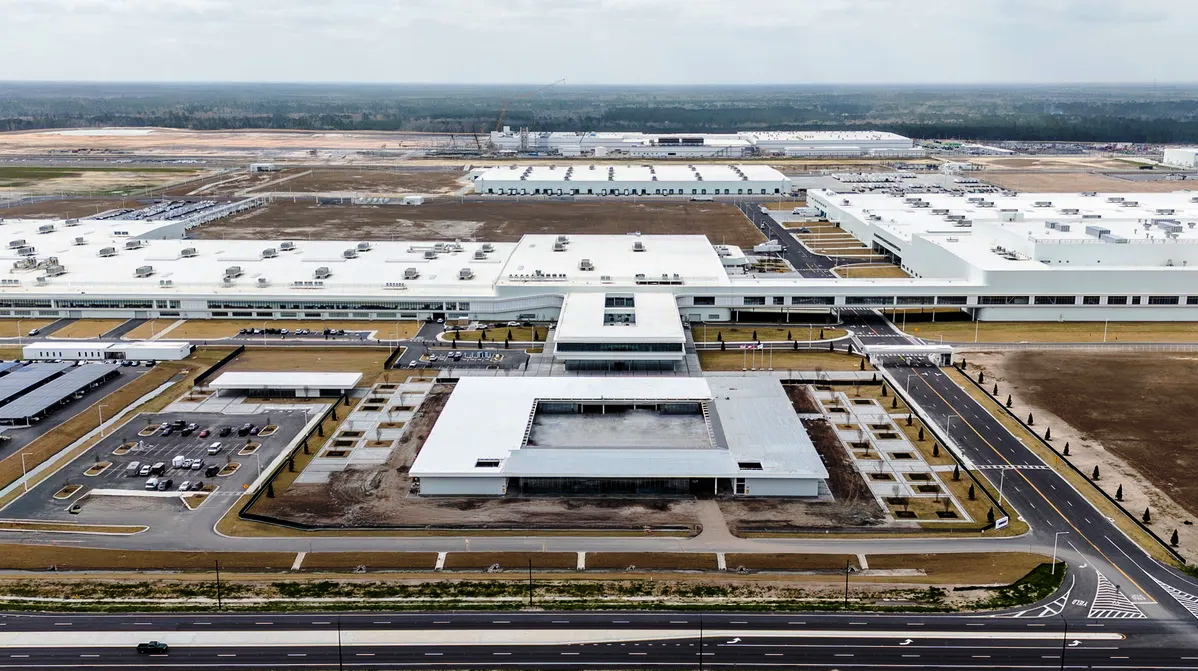
Earlier this year, Hyundai Motor Group opened a new, state-of-the-art assembly plant in Ellabell, GA. At full capacity, the factory will employ 8,500 people and produce 500,000 vehicles annually. The plant is one of the most technologically advanced factories in the world. Every process—including order collection, procurement, logistics and production—is optimized using artificial intelligence and real-time data. More than 850 robots and 300 AGVs operate at the factory. We take you inside.
This episode also covers: Take Video Tour
| | | |
NAM Proposes ‘Manufacturing Investment Accelerator’
Assembly Magazine - John Sprovieri
On May 30, the National Association of Manufacturers (NAM) released the results of its Manufacturers’ Outlook Survey for the second quarter of 2025. They were not good
Manufacturers’ optimism has dropped to 55.4 percent, the lowest level since the height of the COVID-19 pandemic in the second quarter of 2020. Trade uncertainty remained the top business concern for the second consecutive quarter, cited by 77 percent of respondents. Read Article
| | | |
Tracking Packaging Mergers and Acquisitions in 2025
Packaging Dive - Maria Rachal , Katie Pyzyk and Cole Rosengren
Industry consolidation and private equity involvement are advancing. Follow updates with Packaging Dive’s running list.
Private equity firm The Sterling Group agreed to acquire North Carolina-based Precision Concepts International from PE platform ONCAP. PCI provides specialty rigid packaging solutions to personal care, household and food and beverage end markets. PCI operates five U.S. manufacturing facilities, with other locations in Canada and Costa Rica, Sterling noted.
Investment firm Stonepeak acquired an approximately 50% “co-controlling stake” in reusable packaging provider Ifco Group. The other partner with equal ownership is Triton, a European investor. Stonepeak acquired the stake from a subsidiary of the Abu Dhabi Investment Authority.
Analysts project M&A activity could tick up in 2025 – after a string of megadeals, there’s still plenty of runway for consolidation. Packaging Dive aims to track as many deals as possible to help you stay up to date. Read Article and List of M&A
| | | |
ISM Report: Manufacturing PMI Contracts at a Faster Rate in July
IndustryWeek - Anna Smith
Seven out of 17 manufacturing industries reported growth last month.
The ISM (Institute for Supply Management) Manufacturing PMI registered 48% in July. This decrease of one percentage point from June’s figure of 49% indicates that manufacturing economic activity contracted at a faster rate last month. July marks the fifth consecutive month of contraction.
“Of the five subindexes that directly factor into the Manufacturing PMI, only one (production) is in expansion territory, down from two in June,” says Susan Spence, chair of the ISM’s manufacturing business survey committee. Anything lower than 50% represents contraction. Read Article
| | | |
A Stronger Skilled Workforce Would Boost Reshoring
American Machinist - Harry Moser, Kathy Nunnally
Fixing talent shortages would be more powerful for bringing back manufacturing than tariffs and deregulation, according to the OEMs reshoring their material and component supplies.
The 2025 USA Reshoring Survey of 500 U.S. manufacturers, a collaboration between the Reshoring Initiative and Regions Recruiting, concluded that a sufficient U.S. workforce would bring back more manufacturing than any of the other surveyed options.
The survey was designed to glean three key insights: First, why OEMs decided to reshore; second, to understand the perspective of contract manufacturers (CMs) in the OEM supply chain; and third, to understand the actions needed to increase the rate of reshoring. Read Article
| | | |
Toyota Invests More Than $50M in Arizona Testing Center
Automotive Dive - Kalena Thomhave
The improvements to the desert facility reflects the automaker’s drive to do business “where it sells.”
Toyota Motor North America is investing more than $50 million to improve its vehicle testing site in Arizona, the company announced in a press release.
The Arizona Mobility Test Center at Toyota Arizona Proving Grounds — used by Toyota and outside companies — is expanding to include a new 5.5-mile track, new ride and handling surfaces, an off-road park for capability testing and additional areas for various vehicle tests. Most of these projects are already complete or will be completed by the end of 2025. Read Article
| | | |
Fixing the R&D Tax Code Blunder Isn’t a Victory, It’s a Reset
Bloomberg Law - Andrew Leahey, Drexel University School of Law
Congress has finally reversed the damage to research and development investment caused by the Tax Cuts and Jobs Act’s Section 174 amortization requirement. But the One Big Beautiful Bill Act should be seen as a floor, not a finish line. If the US wants to compete globally, it needs more resilient and forward-looking R&D tax frameworks.
For businesses on the cutting edge of innovation, the lost years were expensive, disruptive, and entirely unnecessary. Restoring immediate expensing is a backward-looking repair, not a strategy for the future. While the US was busy dithering over whether to correct its own tax policy mistakes, other countries were building out systems that reward research, development, and commercialization. Read Article
| | | |
Microsoft Says H-1B Visas, Layoffs ‘In No Way’ Related
CFO Dive - Maura Webber Sadovi, Senior Editor
Scrutiny of the tech giant’s use of the visa program comes at the end of a month in which the company announced deep job cuts.
Dive Brief:
- Microsoft — which has been drawn into the crossfire around the tech industry’s use of the H-1B visa program that allows U.S. employers to employ foreign skilled workers in specialty occupations — rejected criticism which tied its recent layoffs to the company’s reliance on foreign worker visas.
- “Our H-1B applications are in no way related to the recent job eliminations in part because employees on H-1B’s also lost their roles. In the past 12 months, 78% of the petitions we filed were extensions for existing employees and not new employees coming to the U.S.,” the company said in a statement emailed to CFO Dive by a spokesperson.
-
Vice President JD Vance last week called out the tech company for laying off American workers while relying heavily on immigrant labor through the visa program, questioning the economic logic and ethics of the dual moves, Newsweek reported. “I don’t want companies to fire 9,000 American workers and then to go and say, ‘We can’t find workers here in America,’” Vance reportedly said at a bipartisan event Wednesday. Read Article
| | |
Over 3,200 Fighter Jet Workers Reject Boeing Contract Offer, Begin Strike
Manufacturing Dive - Sara Samora, Reporter
The last time IAM District 837 held a strike at the Missouri site was in 1996 and lasted 99 days.
More than 3,200 Boeing workers went on strike early Monday morning at the planemaker’s Illinois and Missouri facilities after they voted to reject the company’s second contract offer, according to an International Association of Machinists and Aerospace Workers press release.
The facilities in St. Louis and St. Charles, Missouri, and Mascoutah, Illinois, assemble fighter jets such as the F-15 and F/A-18, the T-7A Red Hawk trainer, and the MQ-25 Stingray unmanned refueler under Boeing’s defense segment. Read Article
| | | |
Time For a Reset: Breaking the Technology-first Transformation Trap
Human Resource Executive - Mary Faulkner
When you think about transforming your business, what activities first come to mind? If “buying new technologies” is high on your list, then you’re not alone. The conversation about business transformation has become almost synonymous with technology acquisition. Walk into any boardroom and you’ll hear leaders discussing AI implementations, cloud migrations and automation platforms as if these tools alone will fundamentally change how their organizations operate.
But here’s what we at IA have learned after years of helping organizations with their transformation efforts: The most successful changes are process-led and technology-enabled, not technology-driven.
This distinction matters more than you might think. Read Article
| | | |
L3Harris to Futher Expand Rocket Motor Manufacturing Site in Arkansas
Manufacturing Dive - Sara Samora, Reporter
The defense contractor is investing nearly half a billion dollars to build over 20 buildings on the Camden campus, aiming to meet the rising demand for its LSRM production.
Dive Brief:
Defense contractor L3Harris Technologies is investing “nearly half a billion dollars” into further expanding its large solid rocket motor manufacturing campus in Camden, Arkansas, according to a July 17 press release.
The investment includes $193 million to support the construction and activation of over 20 buildings, adding more than 130,000 square feet of manufacturing and office space to the 2,000-acre production site, according to a press release from the Arkansas Economic Development Commission.
The upcoming campus will accelerate the production of LSRM propulsion for missile defense targets, interceptors and hypersonic vehicles, while also creating 50 jobs over the next two years. Construction on the facilities is expected to commence this year, with production scheduled to begin in 2027. Read Article
| | | |
Union Pacific, Norfolk Southern Agree to Merge
SupplyChain Dive - Philip Neuffer, Senior Editor
The two companies aim to close the transaction in early 2027, bringing together 50,000 route miles to form “the first transcontinental railroad” in the U.S.
Union Pacific and Norfolk Southern entered an agreement to merge their networks, forming the “first transcontinental railroad” in the U.S., according to a Tuesday press release.
The companies aim to close the transaction in 2027 and plan to submit a merger application for the Surface Transportation Board to review in the next six months. Read Article
| | | |
Why Manufacturing Needs a Purpose Revolution — Not Just a Digital One
Manufacturing Dive - Matteo Neri
Bringing employees together around a shared objective and sense of community can drive better decisions and productivity, writes LicenSys Group’s Matteo Neri.
In the rush to modernize, manufacturers are investing billions into artificial intelligence, automation and digitization. From predictive maintenance to real-time supply chain dashboards, the fourth Industrial Revolution is in full swing.
But we are ignoring a quieter crisis that technology alone cannot fix — the erosion of purpose on the shop floor.
As a production manager with more than a decade in the manufacturing industry, I’ve seen firsthand that factories can operate with technical precision and still lose their soul. And when they do, productivity may continue, but engagement, innovation and resilience falter. Read Article
| | | |
Optimism Surfaces from Several Corners of the Industrial World
IndustryWeek - Geert De Lombaerde
Leaders of prominent metals manufacturers and equipment makers have been talking recently of stronger quoting and order activity as well as rising expectations for the second half and beyond.
Last Friday’s jobs report cast a pall over many economists’ outlooks for the next few months and more. The consensus now has it that the low July reading and significant revisions to previous months’ data mean the economy is stalling at best or already tottering into recession.
Slack consumer spending, hamstrung by concerns about the labor market and tariff-induced inflation, is seen by many observers as playing a key role in that trend. However, the second-quarter earnings season that’s winding down has provided some hope that the goods-producing part of the U.S. economy is prepared to pick up some of the slack. Looking beyond Wall Street analysts’ earnings estimates (which are broadly rising after being slashed during the spring’s tariff turmoil) to what various executives have been saying, there’s an argument to be made that significant parts of industrial America looks to be in solid shape—and lining up to strengthen heading into 2026. Read Article
| | | |
10 Notable Factory Cancellations or Openings in 2025
Area Development – Construction Dive, Sakshi Udavant
Ford, JetZero, Hyundai, Texas Instruments and TSMC are among the manufacturers to make facility investment news this year. Meanwhile, other companies with renewable energy projects have halted plans.
Major U.S. manufacturing construction projects are in flux this year.
In the first quarter of 2025 alone, 16 clean energy and electric vehicle manufacturing projects worth $8 billion were canceled, according to environmental group E2. In May, that total grew to $15.5 billion and the loss of 12,000 potential jobs. Read Article
| | | |
Producer Prices Rise as High Tariff Costs Trickle Through Supply Chains
CFO Dive - Jim Tyson, Senior Reporter
“It’s going to take another two to three quarters for tariffs to play through” the inflation data, Kansas City Federal Reserve Bank President Alberto Musalem said.
Dive Brief:
- The producer price index last month rose at the fastest rate in three years, the Bureau of Labor Statistics said Thursday, as costs from the highest tariffs since the 1930s started to trickle through supply chains.
- The PPI, which measures prices charged by wholesalers, increased a higher-than-forecast 0.9% in July and 3.3% on an annual basis, the BLS reported.
-
“Now, tariffs are feeding through” the supply chain from wholesalers to retailers and beyond, Kansas City Federal Reserve Bank President Alberto Musalem said. “Companies told us that it would take about three to six months to pass on the costs” from import duties, Musalem said. “We’re right around that three-month mark,” he said in a CNBC interview. Read Article
| | | Proactive Technologies' Project Partners | | |
Proven Solutions for Employers and Education
- Apprenticeship Program Design and Technical Implementation Support
- Employer - Educational Institution - Community Partnership Program Development and Support
- Employee Pre and Post-Hire Assessment Design, and
- Administration Management Consultation, Training and Support
Learn More
about K & D Consulting, LLC
Copyright © 2019-25 K & D Consulting, LLC
ALL RIGHTS RESERVED
| |
North-Central Ohio Employer-Based Worker Training Partnership
Established to:
-
Provide direct technical support to employers seeking to build structured on-the-job training programs for their job classifications, their employees, their business strategy
- Better align local related technical instruction, economic development and worker support programs with employers;
-
Provide assistance to employers to navigate the many worker development grant programs,
Visit our website
| | Classes alone will not close the "skills gap," but structured on-the-job, process-based training can...every time! | |
Worker under-capacity is an enormous source of untapped value and unrealized return on worker investment. In addition, standardizing process performance - between workers and shifts - can add to worker ROI through lower scrap and rework.
- Increased worker capacity, productivity, work quantity, work quality and compliance (specifications, ISO/AS/IATF programs and safety mandates);
- Decreased internal costs of training
-
Higher return on worker investment! You would be surprised how small of an investment is needed to unlock enormous returns
If budgets are tight, Proactive Technologies, Inc. can be an extension to your training department, with our technical implementation support - included with every project!
There's nothing to lose by taking a minute to contact us to learn more.
Copyright © 2019-25 Proactive Technologies, Inc.®
ALL RIGHTS RESERVED
| |
Are you certain your firm has trained all of your workers to their fullest? Do you continue to see signs that you may not be getting the most Return on Worker Investment?
Contact Proactive Technologies, Inc.® today for more information about their accelerated transfer of expertise system™!
Copyright © 2019-25 Proactive Technologies, Inc.®
ALL RIGHTS RESERVED
| | Core Skill Development and Enhancement |
- Skill, Knowledge and Behavioral Assessment
- Intro and Advanced Blueprint Reading Courses Geometric Dimensioning and Tolerancing
- Courses Front Line Supervisor Training
- Training Materials and Online Courses
Visit Our Website
Copyright © 2019-2025 Lifetime Learning
ALL RIGHTS RESERVED
| If your institution is interested in becoming a Proactive Technologies, Inc. project partner, contact a representative for more information. | | |
San Francisco Fed Economist Says Tariffs Will Cause Inflation, With a Huge Caveat
Coalition for a Prosperous America - Kenneth Rapoza
San Francisco Fed Economist Says Tariffs Will Cause Inflation, With a Huge Caveat
An economist with the San Francisco Federal Reserve wrote in their “Economic Letter” from July 14 that tariffs are going to lead to much higher inflation in the weeks ahead. There’s just one caveat, and senior economist Mauricio Ulate admits it up front in his analysis of the situation:
“It is too early to tell exactly what tariffs will be ultimately enacted, how long they will remain in place, and which level of retaliation — if any — other countries will settle on,” he wrote. “Thus, we simplify our model by assuming that the tariff increases will last for four years and that other countries will impose the same levels of tariff increases they face on imports of U.S. goods.” Read Article
| | | |
Why CFOs Must Stop Treating Compensation As a Cost
HR Dive - Philip Watson
Today’s economic uncertainty presents an opportunity for CFOs to get ahead of competitors struggling with the whiplash of boom-and-bust pay tactics, Payscale’s Philip Watson writes.
Many companies lack a comprehensive compensation strategy. By “comprehensive compensation strategy,” this means a structured, data-driven approach to designing and managing all forms of employee compensation — base pay, variable pay, equity and benefits — aligned with their business goals, talent philosophy and financial realities.
As we are all aware, once the economy absorbed the shock of the COVID-19 pandemic, the early 2020s were a fluid boom time for employees and hiring. Buoyed by 0% interest rates, businesses raced to lock in and lock down talent. Inevitably, compensation spending ballooned as companies placed concerns about workforce efficiencies on the back burner. Free money created a labor market bubble, and as interest rates rose, companies that over-hired in 2021 found themselves in a bind. Stakeholders and shareholders demanded more and more financial discipline starting in 2023, resulting in layoffs and a sharp drop in job openings. Read Article
| | | |
OpenAI Chairman Says Training Your Own AI Model is a Good Way to 'Destroy Your Capital'
Business Insider - Henry Chandonnet
OpenAI chairman Bret Taylor said that companies trying to train their own LLMs will "burn through millions of dollars."
"There's ones you can lease, there's open source ones," Taylor said on the Minus One podcast. "Don't do it."
Taylor said the only companies that could handle the high training costs were OpenAI, Anthropic, Google, and Meta.
There's a scene in "The Dark Knight" where the Joker sets ablaze a massive pile of money. Deciding to develop your own frontier AI model today may be a similar exercise in burning cash — just ask OpenAI chairman Bret Taylor. Read Article
| | | |
US Wage Growth Continues to Slow
CFO.com - Dan Niepow, Reporter
Research from hiring platform Indeed showed wage growth increasing by just 2.9% in June, down significantly from recent COVID-driven peaks.
Wage growth appears to have stalled after hitting a relative high coming out of the COVID-19 pandemic, according to Indeed Hiring Lab research. NoSystem images via Getty Images
After reaching a pandemic-induced peak three years ago, wage growth in the U.S. has markedly slowed.
Last month, wages for new job postings grew about 2.9% year over year, with a similar rate seen in May. That compares to the peak of 9.4% growth reached in January 2022. That’s all according to the latest job posting data compiled by Indeed Hiring Lab. Read Article
| | | |
Use of AI in Airlines Ticket Pricing Raise Concerns
NPR Morning Edition - Marlon Hyde
Delta Air Lines plans to use artificial intelligence to price airfares and get closer to what people may be willing to pay. The airline's president tells investors AI will be helping to set prices on about one-fifth of their domestic flights by the year's end. Marlon Hyde of member station WABE in Atlanta has our story. Read and Hear Discussion
| | | |
Federal Regulatory Activity Dropped Steeply in H1 2025
CFO.com - Dan Niepow, Reporter
Analysis by information services firm Wolters Kluwer shows a sharp decline in both the number and severity of penalties for financial services businesses in the first half of the year.
Finance chiefs planning deals in the months ahead face a notably diminished federal regulatory apparatus, but a combination of individual state enforcement actions and private litigation is quickly moving to fill gaps in enforcement.
What precisely that means for dealmaking over the remainder of 2025 isn’t yet clear, but researchers at Wolters Kluwer say it may end up creating even more complications for businesses. Read Article
| | | |
Private Credit, Public Risk: AI Is Eating The Debt Market
Benzinga - Stjepan Kalinic Benzinga Staff Writer
Zinger Key Points
- AI capex now drives GDP growth as consumer spending takes the back seat.
- Private credit is increasingly funding the AI infrastructure, but offloading the risk to the banking system.
- The market’s back, and these 3 income stocks are thriving.
After a post-pandemic recovery that heavily leaned on consumer spending, the last two quarters have seen a flip. Corporate spending is now leading the charge, owing to relentless investments in artificial intelligence.
According to Goldman Sachs, global power demand from data centers is expected to increase by 50% by 2027, driving significant spending and potentially formalizing AI-dedicated data centers as a new class of infrastructure. Read Article
| | | |
A Flood of AI Deepfakes Challenges the Financial Sector, with Over 70% of New Enrolments to Some Firms Being Fake
Fortune - Lionel Lim, Asia Reporter
Financial institutions are championing the use of artificial intelligence, arguing the new technology can rapidly accelerate tasks like “know-your-customer” checks, customer onboarding, and document processing.
Advancements like these can drive customer acquisition and boost employee productivity, all good for the bottom line. “AI has been a game-changer in how we provide international payment and financial services. In 2024, we processed more than $1 trillion in global transactions, all supported by AI,” says Tianyi Zhang, a general manager of risk management and cybersecurity at Singapore-based Ant International.
Yet while AI presents an opportunity for financial firms like Ant International, it also poses risks. Bad actors can exploit AI advancements to intensify the threat of scams and fraud against both clients and financial institutions. Read and Hear Article
| | | |
The Demise of Consumer Financial Protection Regulations Under Trump’s CFPB
Better Markets - Brady Williams, Legal Counsel
Transformative rules designed to fight predatory behavior, promote transparency, and save consumers billions are disappearing at an alarming rate
The second Trump Administration has actively dismantled numerous consumer protection regulations implemented by the Consumer Financial Protection Bureau (CFPB) during the Biden era. In many cases, these rules were expected to bring tremendous benefits to consumers, ranging from billions of dollars in savings to increased financial privacy protections and more.
This document aims to collect each of the aforementioned withdrawn rules into a single source, clearly demonstrating the unprecedented scope of deregulation at Trump’s top consumer financial protection regulator. For each rule, this document also identifies the likely benefits the CFPB previously projected the rule would bring to consumers, making the impact of this deregulation clear. Read Article
| | | |
Private Equity-backed CFOs Under Pressure to Adopt AI: Trial Balance
CFO.com - Lauren Muskett, Senior Editor
In a survey of private equity senior leaders, 98% have told CFOs at portfolio companies to “prioritize the use of AI in the finance function.”
Part 1 — Finance chiefs at PE-backed firms face mounting pressure to adopt artificial intelligence.
Private equity firms are ramping up pressure on CFOs of portfolio companies to adopt artificial intelligence tools, but many finance leaders aren’t sure exactly where to start.
That’s according to a survey released last week by New York consulting firm Accordion. The April survey of 200 private equity senior leaders and 200 finance chiefs showed that 98% of those on the private equity side “have told their portfolio company CFOs to prioritize the use of AI in the finance function.”
On the CFO side, though, 68% of respondents said they’re taking their time to adopt the emerging technology because they “simply do not know where to begin or who to turn to for help,” according to the survey.
One in 10 respondents think AI is “all hype and not ready to be practically leveraged,” the survey said. Read Article
| | | |
Containerboard Price-fixing Lawsuit Advances
Packaging Dive - Katie Pyzyk, Senior Reporter
Meanwhile, industry observers keep tabs on whether the U.S.’ largest containerboard producers will try to raise prices again amid the ongoing antitrust lawsuit.
The class-action antitrust lawsuit that a customer brought against eight of the largest containerboard producers in the United States is progressing. Industry observers and analysts are keeping tabs on whether the companies in question try for another price increase this year despite the lawsuit.
In July, Artuso Pastry Foods Corp. filed a complaint in a federal court in Illinois accusing containerboard manufacturers of creating a “cartel” and colluding in a price-fixing scheme during a series of seven price increases from November 2020 to the present. The defendants include Cascades, Georgia-Pacific, Graphic Packaging International, Greif, International Paper, Packaging Corporation of America, Pratt Industries and Smurfit Westrock. Read Article
| | | |
Trump Shakes Up Wall Street With Orders on 401(k)s, ‘Debanking’
MSN News – Wall Street Journal, Dylan Tokar
A pair of executive orders President Trump is expected to sign Thursday show how he is beginning to reshape the world of banking and high finance—some in ways Wall Street likes, and in other ways it feared.
One order would make it easier for everyday Americans to invest their retirement savings in assets that lie outside public markets, such as private equity, cryptocurrency and private real estate.
The move would fulfill a long-sought goal of Wall Street hedge funds and private-equity firms, which for years have wanted to tap in to the giant pool of money in 401(k) and other defined-contribution plans. Read Article
| | | |
Wall Street Week - Jackson Hole Preview, Apple's AI Ambitions, Rule of Law, New Housing Investors
PBS - Bloomberg
This week, the framework of the Federal Reserve Board of Governors meets signs of economic softness just ahead of the Fed's annual meeting in Jackson Hole, Wyoming. And, Apple wants to increase its AI presence, but its focus on manufacturing and the tariff environment might pose challenges. Plus, rule of law is more than a legal concept - why businesses need it to operate in the US. And, the American dream of home ownership now belongs to small investors who are seeing opportunity in market conditions that are pricing out potential home owners. See Video
| | | |
Manufacturing-focused SPAC Backed by Trump Brothers Seeks $300M IPO
Manufacturing Dive - Nathan Owens, Reporter
The Florida-based firm is looking to acquire private companies advancing U.S. industrial capacity and technological leadership and innovation.
Dive Brief:
- A new special-purpose acquisition company focused on manufacturing and supply chain innovation, which is backed by Eric Trump and Donald Trump Jr., is seeking a $300 million initial public offering.
- The New America Acquisition I Corp., which filed a registration statement on Aug. 4, plans to raise the money by offering 30 million units valued at $10 per share. It will target businesses that play a “meaningful role” in revitalizing U.S. manufacturing and strengthening supply chains.
-
The SPAC is led by Chairman and CEO Kevin McGurn, a longtime media and tech executive. It is also supported by the Trump brothers and Dominari Holdings President Kyle Wool, who all serve on the advisory board. Read Article
| | | |
The Rise of Private Credit: Transforming Modern Finance | Wall Street Simplified
MSN - Wall Street Simplified, Cameron Galbraith
In this video, I discuss what private credit is, and how it has transformed modern finance. See 9 Minute Video
| | | |
Financial Book Reviews for Our Time
The Trading Game: A Confession
By Gary Stevenson
f you were gonna rob a bank and you saw the vault door there, left open, what would you do? Would you wait around?
Ever since he was a kid, kicking broken soccer balls on the run-down streets of East London, Gary Stevenson dreamed of something bigger. As luck would have it, he was good at numbers.
At the London School of Economics, wearing tracksuits and sneakers, Stevenson shocked his posh classmates by winning a competition called “The Trading Game.” The prize?: a golden ticket to a new life, as the youngest trader at Citibank. A place where you could make more money than you’d ever imagined. Where your colleagues are dysfunctional geniuses and insecure bullies yet start to feel like family. Where against the odds you become the bank’s most profitable trader, closing deals worth nearly a trillion dollars. A day.
Soon you are dreaming of numbers in your sleep—and then you stop sleeping at all. But what happens when winning starts to feel like losing? You’re making a killing betting on millions of people becoming poorer—like the very people you grew up with. The economy is slipping off a precipice, and your own sanity starts slipping with it. You want to stop, but you can’t. Because nobody ever leaves. Read Article
| | | |
AI-driven Job Cuts May Be Underreported: Challenger
CFO Dive - Alexei Alexis, Reporter
Only 75 job cuts by U.S.-based employers in the first half of the year were explicitly attributed to AI, according to Challenger, Gray & Christmas. The outplacement firm suspects the number is higher.
Dive Brief:
- Technology-related factors such as automation drove 20,000 job cuts among U.S.-based employers in the first half of the year, outplacement firm Challenger, Gray & Christmas said in a recent report.
- Only 75 of those cuts were explicitly attributed to artificial intelligence, although many companies may be categorizing their AI-related layoffs more broadly, according to the analysis. Challenger’s research department uses information such as public statements and government filings to track layoff trends.
-
“We do see companies using the term ‘technological update’ more often than we have over the past decade, so our suspicion is that some of the AI job cuts that are likely happening are falling into that category,” Andy Challenger, a senior vice president at the Chicago, Illinois-based outplacement firm, told CFO Dive. In some cases, companies may avoid directly tying their layoffs to AI because they “don’t want press on it,” he said. Read Article
| | | |
BlackRock’s Grasp on the World Economy: The Untold Story
Metal Workers
"BlackRock’s influence over the global economy is far-reaching and largely unseen. Starting as an investment management firm, it has grown into one of the most powerful companies in the world, shaping the financial landscape from behind the scenes. Through strategic acquisitions and a keen understanding of global markets, BlackRock has gained control over trillions of dollars in assets, becoming a shadowy force that impacts everything from global economies to national policies. As the company continues to grow, its future remains uncertain, but one thing is clear: BlackRock's power is reshaping the future of finance and governance in ways few truly understand. Discover the untold story of BlackRock, a company that controls the world from the shadows. " See 15 Minute Video
| | | |
Would a Weaker Dollar Be a Good Thing for the US?
The Hill - Andrew Dorn
- Trump says he prefers a strong dollar but sees advantages in a weaker one
- A strong dollar means American consumers benefit from cheaper imports
-
A weaker dollar can make it easier for US companies to sell goods abroad Read Article
| | | |
Can States Reinvent U.S. Healthcare? This Expert Thinks So.
Institute for New Economic Thinking - Lynn Parramore
Phillip Alvelda, a former DARPA program manager, reveals how a fracturing federal system has opened the door for bold state leadership. Will blue states rise to build a healthier, more just future?
America’s healthcare system is collapsing — but not evenly. It’s fracturing into separate realities. Read and Hear Discussion
| | | |
Private Equity Roll-ups Are Undermining the Free Enterprise System—and the American Dream
Fortune - Brian Hamilton
Private equity firms have increasingly targeted local businesses.
America has always been a nation powered by small businesses—local merchants, family-run service businesses, independent companies, restaurants, dry cleaners, and home service businesses. Such companies once formed the backbone of middle-class opportunity, offering a path to economic independence and intergenerational mobility. Entrepreneurship drove our rise, especially among immigrant communities, where opening a storefront or service business meant the difference between survival and prosperity.
But today, that small-business lifeblood is being squeezed by a stealth python that is constricting entrepreneurship. Private equity (PE) firms have now increasingly targeted these local businesses by buying up competitors, flooding markets with scale and low prices, getting control of a market, and tightening margins until independent owners are squeezed out. Then, in due time, once they get control of a market, the PE firms raise prices. So, even the consumers don’t benefit. Additionally, companies bought by private equity firms are 10 times more likely to go bankrupt than their peers, as Megan Greenwell reports in her just-released book Bad Company.
Entrepreneurship in retreat Read and Hear Article
| | | |
Jobs Report ‘Officially Ripped the Mask Off the Market’
HR Dive - Kate Tornone, Lead Editor
“The increasing concentration of jobs in certain sectors and an outright contraction of jobs in many others does not bode well,” according to an Indeed economist.
The job market is weaker than previously thought, Friday numbers from the U.S. Bureau of Labor Statistics revealed.
Total nonfarm payroll employment changed little in July, the agency said, with employers adding just 73,000 jobs. The unemployment rate increased slightly, from 4.1% to 4.2%. Read Article
| | | |
The World’s Real-Time Billionaires List - Today’s Winners and Losers: Reflects Changes Since 5pm EST of Prior Trading Day
Forbes
Forbes' Real-Time Billionaires rankings tracks the daily ups and downs of the world’s richest people. The wealth-tracking platform provides ongoing updates on the net worth and ranking of each individual confirmed by Forbes to be a billionaire. The value of individuals’ public holdings are updated every 5 minutes when respective stock markets are open (there will be a 15-minute delay for stock prices). Individuals whose fortunes are significantly tied to private companies will have their net worths updated once a day. In cases where an individual owns a stake in a private company that accounts for 20% or more of his or her net worth, the value of the company will be adjusted according to an industry- or region-specific market index provided by our partners at FactSet Research Systems when available. A rotating cast of the five biggest winners and losers throughout the day is featured at the top of the page, followed by the complete list of billionaires ranked in order of net worth. Visit List
| | | |
The U.S. Marches Toward State Capitalism with American Characteristics
MSN News - Wall Street Journal, Greg Ip
A generation ago conventional wisdom held that as China liberalized, its economy would come to resemble America’s. Instead, capitalism in America is starting to look like China.
Recent examples include President Trump’s demand that Intel’s chief executive resign; the 15% of certain chip sales to China that Nvidia and Advanced Micro Devices will share with Washington; the “golden share” Washington will get in U.S. Steel as a condition of Nippon Steel’s takeover; and the $1.5 trillion of promised investment from trading partners Trump plans to personally direct.
This isn’t socialism, in which the state owns the means of production. It is more like state capitalism, a hybrid between socialism and capitalism in which the state guides the decisions of nominally private enterprises. Read Article
| | | |
Economic Interviews for Our Time
Almost Legalized Bribery’: A New Documentary Tackles ‘Dark Money’ in US Politics
CNN – Bianna Golodryga
Bianna Golodryga speaks with Jane Mayer, the author of “Dark Money,” and Alex Gibney, director of “The Dark Money Game,” a documentary on untraceable political spending in the U.S. See Video Interview
| | | |
Economic Documentaries for Our Time
Ship to Shelf: The Impact of Tariff Tensions -- An ABC 10News Special Report
ABC 10 – Scripts News Group, Perla Shaheen
In this ABC 10News special report, our team of journalists explores how President Donald Trump's tariffs are set to create big changes and impacts to our economy.
Tariffs: They're on again, off again. Trade deals? Reached — or are they?
All of this economic uncertainty over the last several months has had a real impact on you, on importers and places like our country's ports.
ABC 10News and the Scripps News Group examined where we stand as a nation regarding the products we all buy, from the ship to the shelf. Watch 3 Part Video Report (Approx. 20 minutes)
| | | |
The Classroom
Inequality Media- Robert Rich, Former US Labor Secretary
My name is Robert Reich. I’m a former secretary of labor and UC Berkeley professor of public policy. I designed this course to give students — and now, you — a deeper understanding of why inequalities of income and wealth have widened significantly over the last 40 years in the United States, and their consequences.
Even though this isn’t a real classroom and I’m not with you in person, I hope you find this both enjoyable and challenging. Don’t expect to learn by just watching and listening, though. I want you to be an active learner — which means answering questions I pose and putting various puzzle pieces together. I’m not going to tell you what to think. I’m going to try to provoke you into thinking harder and more deeply. Watch Video Classroom Series
| | | Mexico, Latin America, South America and the Caribbean | | |
Impact Report - 2025
InterAmerican Development Bank
Are you interested in discovering effective solutions to some of the most pressing development challenges in Latin America and the Caribbean?
Then don’t miss the first edition of our Impact Report, where you can:
✔️Explore how the IDB, IDB Invest, and IDB Lab are working together to deliver results that improve the lives of millions across the region.
✔️Learn how we’re leveraging innovative tools and emerging approaches to enhance the impact of our projects—from water and sanitation to health, education, and regional integration. Download Report
| | | |
Brazil Announces $5.5 Bn package to counter Trump's Tariffs
DeutscheWelle - Felix Tamsut with AP, Reuters
Brazilian President Lula da Silva said the move is supposed to "create new things" out of the crisis caused by Donald Trump's tariffs. But Lula also said his country is still ready to negotiate.
Brazilian President Luiz Inacio Lula da Silva announced a plan on Wednesday to support exporters who have been hit by high tariffs of up to 50% imposed by US President Donald Trump on several products from the country.
The plan provides credit of 20 billion reais ($5.5 billion; €4.7 billion) to support the embattled exporters.
Other measures in the plan include postponing tax charges for businesses affected by the tariffs, while also incentivizing Brazilians to buy locally produced goods that would have otherwise been exported to the US. Read Article
| | | |
IDB Invest and Bladex Support Tigo El Salvador to Expand Broadband Infrastructure and Enhance Digital Access
InterAmerican Development Bank
IDB Invest and Banco Latinoamericano de Comercio Exterior (Bladex, NYSE: BLX), co-led a comprehensive financing package of up to $205 million for Tigo El Salvador to expand broadband infrastructure and support digitalization.
WASHINGTON - IDB Invest and Bladex joined forces to provide a financing package to Telemóvil El Salvador, S.A. de C.V. (Tigo), a subsidiary of Millicom International Cellular S.A., of up to $205 million to support the expansion of Tigo’s fixed broadband network and enhance the capacity and quality of its mobile infrastructure in El Salvador, and to refinance its maturing debt.
As data traffic is expected to surge in the coming years, expanding and upgrading network infrastructure is crucial to improving productivity, digital inclusion, and economic resilience in El Salvador. By enhancing broadband services, the project aims to unlock access to digital education, telehealth, and e-commerce opportunities for underserved populations. Read Release
| | | Canada, Europe and Great Britain | | |
German Police Expands Use of Palantir Surveillance Software
DeutscheWelle - Marcel Fürstenau
Police and spy agencies are keen to combat criminality and terrorism with artificial intelligence. But critics say the CIA-funded Palantir surveillance software enables "predictive policing."
The surveillance software called Gotham, developed by US company Palantir, is billed as an all-rounder: gigantic amounts of data are brought together at lightning speed.
It only takes a few seconds to satisfy a police officer's curiosity: name, age, address, fines, criminal record. In combination with selected cellphones and the contents of scanned social media channels, a comprehensive profile of any person appears in an instant.
With the help of artificial intelligence (AI), the surveillance program developed by the US technology company seems to make the dreams of police and intelligence agencies come true.
Three of Germany's 16 federal states are already using Gotham: Bavaria, Hesse and North Rhine-Westphalia. Baden-Württemberg is planning to implement it soon.
However, according to privacy advocates and civil rights organizations, it comes with a big problem: Along with those suspected of a crime, it can also ensnare innocent people. Read Article
| | | |
What to Know as Air Canada Strike Ends and Flights Resume
BBC News - Lisa Lambert and Kayla Epstein
Air Canada flights will resume on Saturday evening, as a strike by its 10,000 cabin crew came to an end.
The Canadian Industrial Relations Board (CIRB) told the airline's staff to return to work and said that an expired collective agreement would be extended until a new one was agreed.
The Cupe union, which represents Air Canada attendants, has not yet commented on the move. It yesterday accused the government of "caving to corporate pressure" and warned that tensions in the workforce would not disappear.
Here's what you need to know. Read Article
| | | |
French PM Fights for Survival as Rivals Refuse to Support Confidence Vote
BBC - Paul Kirby, Europe Digital Editor
François Bayrou has been in office since his predecessor's government collapsed last December
French opposition parties have said they will not back Prime Minister François Bayrou after he called a vote of confidence on 8 September on plans for deep budget cuts.
Bayrou, who has led a minority government since last December, called the vote on Monday, warning France was facing a "worrying and therefore decisive moment". "Yes, it's risky, but it's even riskier not to do anything", he said, in the face of France's mounting budget deficit. Read Article
| | | |
Nissan Ending Production at Japan Plant
Automotive Dive - Larry Avila, Editor
The automaker is working to return to profitability by FY2026, which includes reducing its global production footprint from 17 to 10 plants.
Nissan Motor Co. will end vehicle production at its plant in Oppama, Japan, at the end of FY2027, the company announced on July 14.
The 18.2 million-square-foot factory began operations in 1961 and has produced 17.8 million vehicles to date. It was also the first plant to produce the Nissan Leaf in 2010, the world’s first mass-market electric vehicle. Read Article
| | | |
Will the Cambodia-Thailand Ceasefire Hold?
DeutscheWelle - Zsombor Peter in Bangkok
Thailand and Cambodia have agreed to an unconditional ceasefire after five days of deadly clashes — but questions remain over whether the truce will hold.
A ceasefire agreed on Monday between Thailand and Cambodia was met with cautious optimism after five days of fighting over disputed borders that killed at least 35 soldiers and civilians and displaced around 200,000 people on both sides.
The leaders of Thailand and Cambodia shook hands on the "immediate and unconditional" truce on Monday, which took effect at midnight after a mediation meeting in Malaysia — the current chair of the Association of Southeast Asian Nations (ASEAN), of which both countries are members. Read Article
| | | |
Resetting the Terms: Inside the U.S.–Japan Trade Agreement
Market Moves Manufacturing – Supply Chain Connect, Avery Larkin
A new U.S.-Japan trade framework modifies tariff terms and could influence supply chain decisions in key sectors.
The U.S. and Japan finalized a major trade agreement that resets key terms between two of the world’s largest economies. The deal imposes a 15% tariff on Japanese imports (down from the 25% previously on the table) and includes commitments from Japan to expand access for U.S. agricultural goods, ease vehicle import rules and invest $550 billion into U.S. industries like semiconductors and pharmaceuticals.
USA Today says the full details of the $550 billion investment weren’t disclosed, but adds that Japan is expected to invest $550 billion into the U.S., which would receive 90% of the profits. “This is a very exciting time for the United States of America, and especially for the fact that we will continue to always have a great relationship with the country of Japan,” President Trump said. Read Article
| | | Asia, India and Australia | | |
War-torn Myanmar to Hold First General Election Since 2021 Coup
BBC - Kelly Ng and Jonathan Head, BBC News in Singapore and Bangkok
Junta leader Min Aung Hlaing had said the polls would be "free and fair", but this notion has been widely dismissed
Myanmar will begin its general elections on 28 December, its military government announced, in a phased poll widely condemned as a sham that will be used to entrench the junta's power.
This will be the first vote since the junta seized power in a bloody coup in 2021, and imprisoned democratically elected leader Aung San Sung Kyi.
Myanmar has been embroiled in a civil war since, with deadly battles between the military and ethnic armed groups, many of whom have said they would not permit voting in their areas. Read Article
| | | |
How a Start-up in India is Turning Old Cars Into EVs
DeutscheWelle
In New Delhi, outdated vehicles will now have to be scrapped. But a local start-up is giving these old cars a second life — by turning them electric. See Video
| | | |
Britain and India Sign Free Trade Pact During Modi Visit
Deutsche Gesellschaft für Internationale Zusammenarbeit (GIZ) GmbH - Reuters, Alistair Smout and Manoj Kumar
Summary
- Trade deal cuts tariffs on whisky and cars
- Leaders seal deal in shadow of Trump tariffs
- India agreement is UK's biggest post-Brexit deal
- Goyal says both sides recognised sensitivities
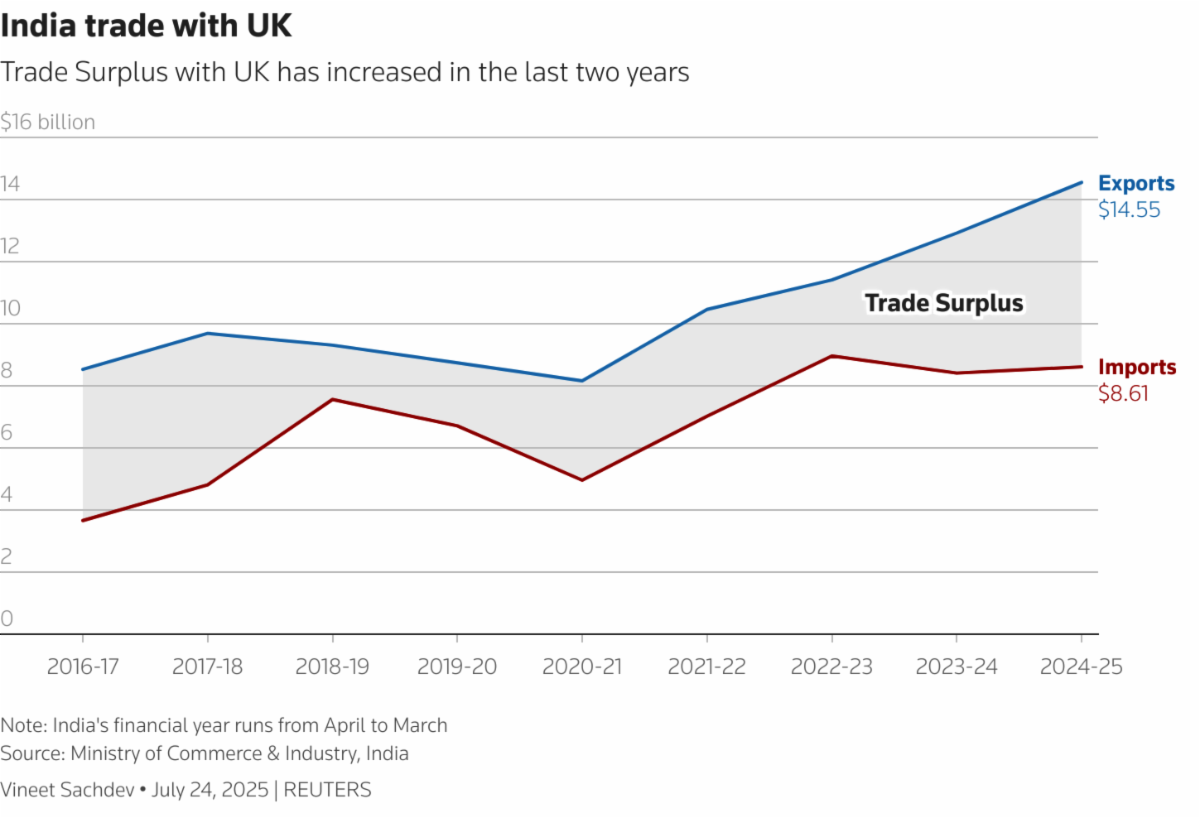
Britain and India signed a free trade agreement on Thursday during a visit by Indian Prime Minister Narendra Modi, sealing a deal to cut tariffs on goods from textiles to whisky and cars and allow more market access for businesses. Read Article
| | | Africa, Middle East, Eastern Europe and Russia | | |
Is Iran Running Out of Water?
DeutscheWelle - Shabnam von Hein
A heat wave and water shortages are paralyzing public life in Iran. Authorities call it an extreme drought, but climate experts say their warnings have been ignored for years.
Authorities in Iran ordered many government offices and public institutions in 16 of Iran's 31 provinces, including Tehran, to remain closed on Wednesday in an attempt to cut power consumption amid an extreme heat wave that has been ongoing since mid-July.
The extreme weather is expected to continue for at least five more days in many parts of the country, according to the meteorological agency, with temperatures forecast to hit 50 degrees Celsius (122 Fahrenheit) in some areas. Read Article
| | | |
Taliban Regime Deepens Pakistan's Internal Security Woes
DeustcheWelle - Zia Ur Rehman in Karachi
Four years after the Taliban took power in Afghanistan, neighboring Pakistan is dealing with growing militant threats, strained relations with Kabul, and growing tensions along the border.
The Taliban takeover of Kabul in August 2021 sent shockwaves far beyond Afghanistan's borders, with Pakistan — already unsettled by extremist and militant groups — hit especially hard.
The Taliban victory emboldened a range of armed factions in Pakistan, including religious extremists such as the Tehreek-e-Taliban Pakistan (TTP), the local affiliate of the so-called Islamic State, known as ISKP, and Baloch separatists. Read Article
| | | |
Trump’s Tariffs are Sending African Countries into China’s Hands
Deutsche Gesellschaft für Internationale Zusammenarbeit (GIZ) GmbH - CNN, Nimi Princewill
Africa is adjusting to the new reality of US President Donald Trump’s tariffs, with countries on the continent facing some of the highest export charges.
But what could become a crisis is an opportunity for United States rival China, which has long courted African countries and is now offering them a lifeline.
“We (Africa) are going straight into the hands of China,” Nigerian economist Bismarck Rewane told CNN. Read Article
| | | Proactive Technologies' Project Partners | | Frank J. Gibson Consulting | |
"One thing is certain... nothing is certain!"
The rate of change affecting work, the worker, management and the educational institutions that service all three has been accelerating - made worse by the unexpected Covid-19 pandemic. The economy, the consumer, supply chains and operational strategies have all been disrupted in the short-term, casting doubt on the long-term.
Rapid adaptation is the key to survivability, sustainability and growth. Sometimes an experienced outside advisor can help facilitate needed improvements to take the worry out of change and the fear out of growth.
Frank J. Gibson Management and Workforce Excellence Advisor
- Business Development & Growth
- Workforce Development and Optimization
- Training and Cross-Training
- Local,/Regional Workforce Development Projects and Community Development
- Facilitated Problem Solving
- Process Improvement Cross-Functional Leadership Coaching and Mentoring
- Internship and Apprenticeship Projects
- Strategic Doing/Strategic Planning
Learn More
Copyright © 2025 Frank J. Gibson
ALL RIGHTS RESERVED
| |
Educate, illustrate and inspire students about careers in manufacturing by promoting manufacturers and the career opportunities they offer.
This site serves as a communications portal for the exchange of information to assist educators, manufacturers, and tomorrow’s workforce.
Among the Many Benefits Offered by THE INDUSTRIAL CHANNEL:
- Post job openings, used equipment and events for free!
- Discounted video production services
- Learn how your peers and competitors are innovating to attract, develop and retain skilled workers of today and tomorrow
Manufacturing Management, Workforce Development Specialists and Educators
| |
Copyright r© 2025 The Industrial Channel™
ALL RIGHTS RESERVED
| | |
PTI Systems
International, Inc.®
| |
Affiliated with Proactive Technologies, Inc.® for projects outside the United States
- Workforce development partner for employers, and education/ training providers who support employers, to ensure every worker can be trained to full job mastery;
- Experienced with governmental, IDB, GIZ and economic development agency sponsored projects;
- Experienced in assuring multinational employers expanding to the U.S. have the skilled workforce they need.
- PTI Systems International sets-up complete worker development and performance management systems, and provides technical implementation support;
- We provide strategies for our project's transition to local management.
-
Speakers for seminars and conferences.
Don't just complain about a "skills gap," deliberately develop every worker to full job mastery!
Learn More
| |
Copyright © 2018-2025 PTI Systems International, Inc.®
ALL RIGHTS RESERVED
| |
|
"People are born with intrinsic motivation, self-esteem, dignity, curiosity to learn, joy in learning."
W. Edwards Deming
American engineer, statistician,
professor, author, lecturer, and
management consultant
1900 - 1993
"Be nice to people on your way up because you'll meet them on your way down."
Wilson Mizner
American writer, raconteur, and entrepreneur.
1876 - 1933
“A market—any market—requires that government make and enforce the rules of the game. In most modern democracies, such rules emanate from legislatures, administrative agencies, and courts. Government doesn’t “intrude” on the “free market.” It creates the market.”
Robert Reich
American professor, author, lawyer, political commentator and former Secretary if Labor
1946 –
| | U.S. Department of Commerce - Bureau of Economic Analysis | |
U.S. International Trade in Goods and Services
The U.S. goods and services trade deficit decreased in June 2025 according to the U.S. Bureau of Economic Analysis and the U.S. Census Bureau. The deficit decreased from $71.7 billion in May (revised) to $60.2 billion in June, as exports decreased less than imports. The goods deficit decreased $11.4 billion in June to $85.9 billion. The services surplus increased $0.1 billion in June to $25.7 billion. Read Report
U.S. International Transactions, 1st Quarter 2025 and Annual Update
The U.S. current-account deficit widened by $138.2 billion, or 44.3 percent, to $450.2 billion in the first quarter of 2025, according to statistics released today by the U.S. Bureau of Economic Analysis. The revised fourth-quarter deficit was $312.0 billion. The first-quarter deficit was 6.0 percent of current-dollar gross domestic product, up from 4.2 percent in the fourth quarter. Read Report
Foreign Direct Investment in the United States Facts
The statistics on new foreign direct investment in the United States provide information on the acquisition, establishment, and expansion of U.S. business enterprises by foreign direct investors. Read Reports
Foreign Direct Investment in the United States, 2024
Expenditures by foreign direct investors to acquire, establish, or expand U.S. businesses totaled $151.0 billion in 2024, according to preliminary statistics released today by the U.S. Bureau of Economic Analysis. Expenditures decreased $24.9 billion, or 14.2 percent, from $176.0 billion (revised) in 2023 and were below the annual average of $277.2 billion for 2014-2023. As in previous years, acquisitions of existing U.S. businesses accounted for most of the expenditures. Read Report
Direct Investment by Country and Industry, 2024
The U.S. direct investment abroad position, or cumulative level of investment, increased $206.3 billion to $6.83 trillion at the end of 2024, according to statistics released today by the U.S. Bureau of Economic Analysis. The increase was led by an $88.4 billion increase in the position in Europe, primarily in Luxembourg and Germany. By industry, manufacturing affiliates had the largest increase, led by manufacturing of computers and electronic products.
The foreign direct investment in the United States position increased $332.1 billion to $5.71 trillion at the end of 2024. The increase was led by a $204.7 billion increase in the position from Europe, which reflected a $52.9 billion increase from the United Kingdom and a $39.7 billion increase from Germany.By industry, affiliates in manufacturing increased the most. Read Report
BEA International Trade and Investment Country Facts
Data for selected investment topics. Access Topics
| | | Organisation for Economic Co-operation and Development |
U.S. Data versus the World
Find, compare and share the latest OECD data: charts, maps, tables and related publications. Access Data
| | | |
International Trade in Services
Trade in services records the value of services exchanged between residents and non-residents of an economy, including services provided through foreign affiliates established abroad. This indicator is measured in million USD and percentage of GDP for exports, imports and net trade. Services include transport (both freight and passengers), travel, communications services (postal, telephone, satellite, etc.), construction services, insurance and financial services, computer and information services, royalties and license fees, other business services (merchanting, operational leasing, technical and professional services, etc.), cultural and recreational services, and government services not included in the list above. Trade in services drives the exchange of ideas, know-how and technology, although it is often restricted by barriers such as domestic regulations. All OECD countries compile their data according to the 2008 System of National Accounts (SNA). Access Data and Tables
| |
INTEGRA, the Inter-American Development Bank’s (IDB) new platform specializing in integration, trade and investment data from Latin America and the Caribbean.
INTEGRA offers:
Data Consultation and Visualization: Access to constantly updated data, with the ability to customize searches.
Professional Support: Tools designed to support professionals in the public and private sectors, academia, and other fields, facilitating research, analysis, and decision-making processes. This enhances strategic planning regarding integration and trade.
You will be able to delve into:
Trade in goods and services: Recent estimates of the region’s total trade, including the evolution of exports, imports, and trade balance; trade analysis by partner, product, and categories; and data segmented by customs and transportation.
Capital movement: Detailed insights into Foreign Direct Investment (FDI), both total and by sectors and partners.
Regulations: A comprehensive map of trade and integration agreements, preferential market access, tariff reduction schedule of the Mercosur-EU agreement, and non-tariff measures. Indicators: Prices and volumes of exports and imports, commodity price index, main indicators of goods and services.
Country profile: A summary of the primary platform data for IDB borrowing countries. Access INTEGRA
| | | |
USMCA Tracker
Brookings Institution
A newly updated USMCA tracker by Joshua Meltzer and Dozie Ezi-Ashi highlights recent data on trade and related measures. See Data Charts
| | | |
Walmart Adds Vietnam-to-US Ocean Shipping Lane for Sellers
Supply Chain Dive - Max Garland, Senior Reporter
Businesses using the retailer’s cross-border importing service can now ship goods from Ho Chi Minh City and Hai Phong, its first origin ports outside of China.
Dive Brief:
- Walmart’s cross-border importing service now has a Vietnam-to-U.S. connection after the retail giant added Ho Chi Minh City and Hai Phong to its roster of origin ports, according to a July 31 announcement.
- Sellers using Walmart Cross Border can book full-container ocean freight shipping from the two cities to Walmart Fulfillment Services facilities in the U.S., Adam Aldrete, a senior program manager for the Walmart Imports Program, said on LinkedIn.
-
The new ports of origin are the first outside of China for the Walmart Cross Border service, with other available locations in Yantian, Ningbo, Shanghai, Qingdao and Xiamen. Read Article
| | | |
New CPA Economic Report Warns of China Shock 2.0 as China Exports Now Flood the World
Coalition for a Prosperous America
New CPA Economic Report Warns of China Shock 2.0 as China Exports Now Flood the World. CPA Calls for U.S. to Adopt a Managed Approach to Trade, Setting Limits on Global Imports ThroughT ariffs and Quotas in Strategic Sectors
WASHINGTON, D.C. — The Coalition for a Prosperous America (CPA) today released a new report by its economics team titled, “How Managed Trade Can Stop the Next China Shock.” China’s entry into the World Trade Organization (WTO) in 2001 initiated the first “China Shock,” which triggered the closure of tens of thousands of U.S. factories. Now, a second China Shock is underway—one driven not by cheap consumer goods, but by industrial overcapacity in high-tech sectors like electric vehicles, solar panels, and semiconductors that threatens to destabilize global trade.
The report shows how China’s policies have distorted these markets and contributed to unsustainable trade deficits in the United States. For example, the U.S. trade deficit increased by $870 billion (202%) during 2001-24 and now sits at a record $1.3 trillion. This is a direct reflection of our growing import dependence on China. The report is full of charts and data showing how China has become the world’s most formidable manufacturing power since entering the WTO thanks to mercantilist, non-market policies and rampant IP theft which quickly moved China up the high tech food chain more than any other developing economy. Read Article
| | | |
What Plastic, Paper and Metal Commodity Experts are Watching with Tariffs
Packaging Dive - Megan Quinn, Senior Reporter
Panelists from industry trade groups say tariffs may challenge commodity markets, but also offer manufacturing opportunities for both recycled and virgin materials.
Editor’s note: This story is part of a series highlighting takeaways from a July 23 virtual event hosted by Packaging Dive, Supply Chain Dive, Manufacturing Dive and Trucking Dive. Register here to watch the replay on demand.
It’s normal for commodity markets to ebb and flow due to a variety of domestic and global factors, but recent tariff impacts and changes in the U.S. economy in 2025 have thrown a new wrench in markets for virgin and recycled aluminum, plastic and fiber commodities.
Experts in plastics, paper and metals offered an overview of these factors during the “Supply Chain Outlook: Trends and Risks to Watch in 2025” event on Wednesday. Read Article
| | | |
CEO Pessimism Eases as Tariff-induced Worries Decline: Survey
CFO Dive - Jim Tyson, Senior Reporter
Risks from import duties have ebbed somewhat since April but still cloud the outlook for price pressures, the job market and economic growth, according to economists.
Dive Brief:
- Pessimism among CEOs eased last month as détente in the U.S.-China trade war tempered worries that the highest tariffs since the 1930s will trigger widespread economic disruption, the Conference Board and Business Council said.
- In a ranking of risks, CEOs bumped tariffs from No. 1 to third behind geopolitical instability and cybersecurity, the Conference Board said, citing a quarterly survey conducted with the Business Council. Fear of recession within the next 12 to 18 months plunged from 83% in the Q2 survey to 36% last month.
-
“CEO confidence recovered in the third quarter after collapsing in Q2, but fell short of signaling a return to optimism,” Stephanie Guichard, senior economist for global indicators at the Conference Board, said in a statement. “The improvement is a continuation of the trend seen after tariff disputes between the U.S. and China became less intense,” she said. Read Article
| | | |
This ‘Boring’ Tariff Strategy Can Make a Huge Difference, Experts Say
Manufacturing Dive - Nathan Owens, Reporter
Manufacturers that audit their products for reclassification opportunities under the U.S. Harmonized Tariff Schedule are reaping significant cost savings, said Venky Ramesh of AlixPartners.
As tariff volatility continues to disrupt trade and commerce, companies are looking for effective ways to navigate the shifting backdrop.
Many are leveraging the latest technologies for enhanced decision-making and visibility into their supply chains. However, sometimes the best solutions can be relatively simple. Read Article
| | | |
US, Mexico Agree to Extend USMCA-tariff Pause
Manufacturing Dive - Philip Neuffer, Senior Editor
The two countries will continue to negotiate over a 90-day period during which imports from Mexico will avoid a planned 30% tariff from the Trump administration.
The U.S. will extend its pause on country-specific tariffs for certain imports from Mexico following a Thursday call between U.S. President Donald Trump and Mexico’s president, Claudia Sheinbaum.
Imports from Mexico were slated to incur a 30% tariff, starting Friday, when the Trump administration plans to resume country-specific duties following a months-long pause. Read and Hear Article
| | | |
Small US Firms Paying Trump Tariffs Face a $202 Billion Hit
Yahoo Finance – Bloomberg, Brendan Murray
Small US companies, the source of more than half of the country’s job creation in recent years, are struggling to comply with President Donald Trump’s new tariffs and cope with growing financial strains clobbering them from higher import costs.
Last week’s country-specific levies varying from 10% to 50% landed with a one-two punch: additional red tape issued by Customs and Border Protection, and a need to increase customs bonds — guarantees that companies must buy from surety providers to ensure the government receives its tariff revenue, other taxes and any potential penalties.
Big firms often have in-house resources to handle such administrative changes and costs, but compliance and forecasting in the new tariff regime are “where the smaller companies are really struggling,” said Erin Williamson, vice president of US customs brokerage at Levallois-Perret, France-based Geodis, a leading global logistics firm. Read Article
| | | |
Consumers Will Bear the Brunt of Tariff Hit, Goldman Economist Say
Yahoo Finance – Bloomberg, Matthew Thomas
The impact of President Donald Trump’s tariffs on consumer prices is just getting started, according to research by Goldman Sachs Group Inc., adding more uncertainty to a Treasury market that has been gripped by shifting bets on the pace of interest rate cuts.
US companies have so far taken the bulk of the hit from Trump’s tariffs but the burden will increasingly be passed on to consumers as companies hike prices, economists including Jan Hatzius wrote in a note. Consumers in the US have absorbed an estimated 22% of tariff costs through June, but their share will rise to 67% if the latest tariffs follow the pattern of levies in previous years, they wrote. Read Article
| | | |
EU Delays Countermeasures to US Tariffs by 6 Months
Supply Chain Dive - Philip Neuffer, Senior Editor
The bloc has now paused implementation three times, with the latest moratorium coming after reaching a framework deal with the U.S.
The European Union will delay the implementation of its countermeasures to U.S. tariffs that were meant to go into effect Thursday by six months, according to Olof Gill, European Commission spokesperson for trade.
The commission plans to adopt the necessary measures to implement the pause on Tuesday, per Gill.
Last month, the commission approved a regulation that would have installed levies of up to 30% on a swath of U.S. goods on Aug. 7. The measure passed days before European Commission President Ursula von der Leyen met with U.S. President Donald Trump in Scotland for trade negotiations. Read Article
| | | |
Trump’s ‘Reciprocal’ Tariffs Have Arrived. What Do Supply Chain Experts Expect Next?
IndustryWeek - Anna Smith
“I don’t believe a large-scale [reshoring] shift will happen,” says West Monroe’s Brian Pacula.
U.S. reciprocal tariffs took effect for dozens of countries on Aug. 7, after their implementation was postponed multiple times to allow for more time for trade negotiations.
Only a handful of nations have struck deals with the Trump administration to lower their originally threatened reciprocal tariff rate, leaving many to wonder how these heightened levies, with rates as high as 41%, will impact businesses and the economy.
“The administration has made clear that tariffs are a weapon of choice for a wide variety of actions,” from reshoring, to improving national security, to putting political pressure on other nations and countering unfair trade practices, says John Lash, group vice president of product strategy at supply chain software platform e2open. Read Article
| | | |
Mapping Trump’s Tariffs by Trade Balance and Geography
Supply Chain Dive- Edwin Lopez, Managing Editor
Duties on over 90 countries’ imports are slated to rise above a previous 10% baseline tariff implemented by the U.S. Here are three graphics illustrating the changes.
Editor’s note: This story is part of a series of trade data spotlights. Sign up for our free newsletter to see more as they publish.
U.S. importers may soon see costs rise for many imported goods, as tariffs on foreign goods are set to rise.
On July 31, President Donald Trump announced country-specific reciprocal tariffs would finally be implemented on Aug. 7, after a monthslong pause. The news means more than 90 countries will see duties for their goods rise above the 10% global baseline Trump set in April. Read Article
| | | |
Higher US Tariffs Kick in for Dozens of Trading Partners
IndustryWeek – Agence France-Presse
As an executive order signed last week by Trump took effect, U.S. import duties rose from 10% to levels between 15% and 41% for a list of trading partners.
The United States began charging higher tariffs on goods from dozens of trading partners Thursday, in a major escalation of President Donald Trump's drive to reshape global commerce in America's favor.
Shortly before the new levies kicked in, Washington separately announced it would double Indian tariffs to 50% and hit many semiconductor imports from around the world with a 100% levy.
As an executive order signed last week by Trump took effect, U.S. import duties rose from 10% to levels between 15% and 41% for a list of trading partners. Read Article
| | | Education And Workforce Development News | | |
Washington Watch: A New Process for Awarding Federal Grants
Community College Daily News - David Baime
The Trump administration this month published a far-reaching executive order outlining new policies and procedures for awarding federal grants.
The August 7 order requires all federal agencies to designate senior political officials as responsible for reviewing all discretionary grant opportunities. The duties of those appointees will include:
Vetting proposed grant announcements prior to publication
Ensuring that the program aligns with administration priorities
Formally coordinating with the Office of Management and Budget
The oversight will apply to new awards as well as grant renewals. Read Article
| | | |
How Trump Plans to Dismantle the Education Department After Supreme Court Ruling
Associated Press – Collin Binkley
WASHINGTON (AP) — Education Secretary Linda McMahon is expected to move quickly now that the Supreme Court has cleared the way for the Trump administration to continue unwinding her department.
The justices on Monday paused a lower court order that had halted nearly 1,400 layoffs and had called into question the legality of President Donald Trump’s plan to outsource the department’s operations to other agencies.
Now, Trump and McMahon are free to execute the layoffs and break up the department’s work among other federal agencies. Trump had campaigned on closing the department, and McMahon has said the department has one “final mission” to turn over its power to the states. Read Article
| | | |
Senate Confirms Trump's Pick to Oversee Higher Ed, a Man Tied to For-profit Colleges
USA Today - Chris Quintana
The Senate confirmed President Donald Trump’s pick to oversee higher education policy, a man with deep ties to the for-profit college industry, by a 50-to-45 vote on August 1.
Senate Majority John Thune filed cloture on Nicholas Kent’s nomination earlier in the week. And the education committee had already advanced Kent on a 12-11 vote without a hearing in late May. Read Article
| | | |
Turning Job Training Into College Credit
Community College Daily News - Staff
Everett Community College (EvCC) is expanding access to college credit for adult learners through new partnerships with local community organizations.
Through these partnerships, known as “crosswalks,” students who complete specific training programs can earn credit toward a degree or certificate through the Washington college’s growing Academic Credit for Prior Learning (ACPL) program, which awards credit for college-level learning gained outside of traditional classrooms.
“ACPL is a critical resource for students who can demonstrate college-level learning gained outside a college classroom,” Vice President of Instruction Cathy Leaker said in a press release. Read Article
| | | |
A Revamped Federal Approach to Workforce Development
Community College Daily News - Matthew Dembicki
The U.S. departments of Labor, Commerce and Education on Tuesday released their blueprint to revamp the federal government’s approach to workforce development.
The departments, which were directed in April by President Donald Trump via executive order to develop the plan, said the strategy aims to address workforce needs, integrate workforce development systems to maximize efficiency and effectiveness, provide accountability for workforce training programs, upskill incumbent workers and develop alternatives to four-year college degrees.
The 27-page paper — “America’s Talent Strategy: Equipping American Workers for the Golden Age” —said the plan is based on five pillars geared to “empower more Americans to access good-paying jobs, build pipelines of skilled talent for critical industries, prepare the workforce system for an AI-driven economy, and position the U.S. as the dominant global economic leader.” Read Article
| | | |
How Artificial Intelligence is Upending the Job Market for College Graduates
CBS News – The Takeout With Major Garrett – Wall Street Journal
A new article from The Wall Street Journal details how young, educated Americans struggling to break into the workforce are some of the earliest victims of artificial intelligence. One of the story's co-authors, Lindsay Ellis, joins "The Takeout" to discuss how AI is impacting college graduates' job searches. See Interview
| | | Training And Organizational Development News | | |
Is False Consensus Derailing Your Growth Plans?
IndustryWeek - Robyn M. Bolton
Same buzzwords, different priorities, no actions.
Manufacturing leaders pride themselves on operational precision, measuring everything to the nearest decimal. But when it comes to growth planning, they accept vague buzzwords that would never fly on the production floor.
This played out recently when executives at Thermal Co., a global manufacturer of heat transfer systems, filed out of the conference room, congratulating themselves on another successful meeting. As they left, the CEO shook his head and sighed. The team had just burned two hours debating investment priorities, and while they all agreed on the need to “be bold” and “transform for the future,” they were unable to decide on where to invest. Read Article
| | | |
Why Organizations Must Capture Knowledge Before It’s Gone
Forbes - Dan Pontefract, Contributor
Organizations have an invisible problem that is quietly eroding beneath the surface like a sinkhole. When experienced employees retire or move on, they take invaluable expertise with them—knowledge that is gone forever.
You won’t find that expertise neatly documented in manuals nor captured in your Slack group titled “Funky Org Stuff.” It exists in the minds of seasoned professionals—their quiet, intuitive decisions and intelligence honed over decades of practice. It’s called tacit knowledge.
Why Cognitive Task Analysis Matters
Dr. Richard Clark is a Professor Emeritus at the University of Southern California. He has devoted his career to this puzzle, spending a lifetime helping to promote and pioneer a method called cognitive task analysis, or CTA. It is a process designed to uncover and preserve the hidden insights of workplace experts and their tacit knowledge. Read Article
| | | |
SHRM: Apprenticeships, Internships and Job Rotations Can Close Skill Gaps
HR Dive - Carolyn Crist
More than a third of HR professionals said they’re addressing hiring challenges by training existing employees to fill critical roles.
As HR professionals face persistent recruiting challenges, programs such as apprenticeships, internships and job rotations are narrowing skill gaps, according to a July 25 report from SHRM.
In fact, job rotations had a 92% success rate in alleviating talent shortages, the report found. Read Article
| | | |
Rethinking Leadership (Again): What CHROs Need to Know
HR Executive' - Lorrie Lykins, Lorrie Lykins, VP of research at the Institute for Corporate Productivity (i4cp)
The advent of every business evolution has been accompanied by proclamations that the need for effective leadership has never been greater. Think about the significant shifts that redefined the workplace in each of the past five decades. Read Article
| | | |
The Supervisor Crisis — and Why Companies Should Be Worried
Automotive Dive - Carolyn Crist
Without a pipeline of future supervisors, companies may experience a leadership vacuum in coming years, a new report found.
Supervisors are quitting, yet nobody wants to step up to take their place, which is leading to burnout, poor workplace culture and empty leadership pipelines, according to a recent report from Express Employment Professionals.
More than half of job seekers who are or were supervisors said they’ve quit or plan to quit a supervisory position. They pointed to a lack of fulfillment or advancement in their career, not feeling adequately compensated, mental health issues tied to being a supervisor, a desire for more time off, a desire for more flexible hours or a desire to leave a people management role. Read Article
| | | |
The Resurgence of U.S. Manufacturing Hinges on Investing in People
Area Development - Industrial Equipment News, Zack Sosebee, SVP of Operations & Customer Success, Redzone
Manufacturers need people who can keep pace with evolving tools, processes and market demands.
After decades of offshoring, U.S. manufacturing is making a real comeback. Rising geopolitical tensions, pandemic-era supply chain chaos and landmark federal investments like the CHIPS and Science Act are pulling production back to American soil, sparking both enormous opportunities and significant challenges.
But if we want this revival to last, we need to talk about people – not just factories, robotics or reshoring dollars. The only way for U.S. manufacturing to compete globally is to invest in a skilled, connected workforce ready to handle constant change. Read Article
| | | Access Proactive Technologies' Recent "Proactive Technologies Workforce News" Article Quicklinks | Located on the left panel below, this includes articles on structured worker development, achieving worker "full job mastery," engineering/quality/safety compliance, ISO/IATF/AS/ and Nadcap quality program support and compliance, and many other contemporary worker development and management topics. | | | Recent Proactive Technologies News Article Quicklinks | |
August
Quality Policies and Process Sheets Are No Replacement for Worker Training
by Dean Prigelmeier, President of Proactive Technologies, Inc.
Your “Resident Expert” May Not Be an Expert Trainer, But Easily Could Be
by Stacey Lett, Director of Operations – Eastern U.S. – Proactive Technologies, Inc
Two Common, Unfortunate Mistakes: The Importance of Setting Up Separate Accounts When Receiving Training Grant Funds
by Frank Gibson, Workforce Development Advisor and President of the North-Central Ohio Employer-Based Worker Training Partnership
Is Entrepreneurism in America Still a Revered Thing?
by Dean Prigelmeier, President of Proactive Technologies, Inc.
July
Eroding Organizational Capacity: The “Unstructured, Haphazard and Ad Hoc Process-based Training Effect”
by Dean Prigelmeier, President of Proactive Technologies, Inc.
Employers Say Fewer Jobs Require Degrees. What is Their Plan to Make Up the Difference?
by Stacey Lett, Director of Operations – Eastern U.S. – Proactive Technologies, Inc.
Large-Scale Worker Training Projects Are Right for Small and Mid-size Employers
by Dr. Dave Just, formally Dean of Corporate and Continuing Education at Community Colleges in MA, OH, PA, SC. Currently President of K&D Consulting
It’s Past Time to Be Honest with Students and Workers About the Future of Work in America and America’s Future
by Dean Prigelmeier, President of Proactive Technologies, Inc.
June
Tracking Documented Worker Capacity and Value Growth
by Dean Prigelmeier, President of Proactive Technologies, Inc.
Have Advances in Technology Distracted HR From the Fundamentals of Worker Selection and Development?
by Stacey Lett, Director of Operations – Eastern U.S. – Proactive Technologies, Inc.
Grow Your Own Craft Technicians Using a “Systems Approach” to Training
by Dr. Dave Just, formally Dean of Corporate and Continuing Education at Community Colleges in MA, OH, PA, SC. Currently President of K&D Consulting
Apprenticeships – An Alternative to the “400 Hours For Drill Press” Training Model
by Dean Prigelmeier, President of Proactive Technologies, Inc.
May
Contracting? Expanding? Maximizing? Protect and Grow Your Worker's Cumulative, Valuable Process-Based Expertise
by Dean Prigelmeier, President of Proactive Technologies, Inc.
A “Pay-for-Value” Worker Development Program – Fair to Management and Workers, and Effective Too!.
by Stacey Lett, Director of Operations – Eastern U.S. – Proactive Technologies, Inc.
Pairing Structured On-the-Job Training with Related Technical Instruction Just Makes Sense
by Frank Gibson, Workforce Development Advisor and President of the North-Central Ohio Employer-Based Worker Training Partnership
A Simple, Low-investment Solution to Closing Skill Gaps of New-Hires and Incumbents
by Dean Prigelmeier, President of Proactive Technologies, Inc.
See more articles on the Proactive Technologies , Inc. website
| |
Proactive Technologies, Inc.® Partners With Educational Institutions, Workforce/Economic
Development Groups, Government Agencies
| |
Structured on-the-job training attracts and engages employers in workforce development partnerships...some projects sustainable for more than 18 years!
This creates a steady need for your related technical instruction, services and a pathway for employment.
These partnerships:
- enhance your institution's opportunity to market your products and services to incumbent workers;
- allow your organization to include structured on-the-job training as a capstone to preemployment preparation;
- document a trainee-to worker's increasing value to the employer - the key to retention - rather than leaving it to chance;
- properly aligns workforce development resources and maximizes the impact and results; allows you to engage an employer's facility, equipment and staff in the training process;
- provides the best, sustainable infrastructure for apprenticeships and internships that last!
- is a win for the trainee, win for the worker, win for the employer, win for the institution and win for the community!
This approach has continued to prove itself since 1988, and does not compete with your school's or agency's products and services; it adds to your efforts the clear, tangible, measurable advantage that employers seek.
Proactive Technologies has continued to partner with community colleges, universities, workforce development agencies and training providers with its "hybrid approach" to worker training. Introduce the power of the PROTECH©®system of managed human resource development™ to your clients!
There's nothing to lose by contacting us to learn more
www.proactivetechnologiesinc.com
Copyright © 2015 - 2025
Proactive Technologies, Inc.®
ALL RIGHTS RESERVED
| | |
Tri-Rivers Career Center - Adult Education provides lifelong, continuous learning for a diverse adult population. We utilize practical skills with an eye toward technological advancement.
We partner with state agencies and employers to provide targeted skill development to future and incumbent workers.
Our RAMTEC (Robotic and Advanced Manufacturing Technology Education Collaborative) facility - one of many throughout the state - offers advanced technical training in specialized areas such as robotics, robotic welding, and engineering technology.
Contact us for more information.
Copyright © 202 Tri-Rivers Career Center - Adult Education - RAMTEC ALL RIGHTS RESERVED
| PROACTIVE TECHNOLOGIES, INC.® CLIENT SERVICES | |
To supplement onsite PROTECH©®system of managed human resource development™ classes, these regularly scheduled webinars are available to the registered staff of clients:
- Structured On-The-Job Training Instructor Certification
- Structured On-The Job Training Checklist Administrator Certification
- Management Structured On-The-Job Training Project Support Briefing
- Integrating Support for Plant-Wide ISO/AS/IATF Quality and Safety Systems with PROTECH Workforce Development System
- Supporting "Pay-For-Value" Systems
- Promoting Continuous Process Improvement While Implementing the PROTECH Accelerated Transfer of Expertise System™
- PROTECH Onsite Lead Trainer and System Administrator Certification
Contact US to attend one of these seminars and we will send you an e-reservation. Include your client ID, name and user ID number and which webinar you would like to attend.
Copyright © 2019-2025
Proactive Technologies, Inc.®
ALL RIGHTS RESERVED
| | |
Ford Recalls 56K F-150 Pickups for Seat Belt Warning Chime
Automotive Dive - Eric Walz, Reporter
The latest recall is the automaker’s 94th in 2025, the highest-ever for an automaker in a given year.
Dive Brief:
- Ford Motor Co. has recalled over 56,000 F-150 pickups due to a condition where the seat belt warning chime may fail to activate to remind occupants to buckle up, according to the National Highway Traffic Safety Administration.
- The malfunction that led to the recall only affects 2025 F-150 trucks equipped with Ford’s 3.5 liter, EcoBoost hybrid V6 engine.
-
Dealers will update the audio control module software for free, although Ford currently does not have a software remedy available. Owner notification letters are expected to be mailed Aug. 25, with a second notice to be sent once the software update is ready. Read Article
| | | |
How Toyota and Other Lean Cultures Are Leading With AI
IndustryWeek - Jacob Stoller
Continuous improvement and respect for people are the true drivers of the technology.
On June 27, Ford’s CEO Jim Farley became the latest in a succession of prominent executives warning of large-scale job cuts consequent to AI deployment. “Artificial intelligence is going to replace literally half of all white-collar workers in the U.S.,” Farley said.
Such claims can be pretty convincing—and unsettling. Farley’s forecast of AI dominance, however, is more aggressive than most, and is not reflected in Ford’s current workforce plans. Furthermore, large-scale AI-related workforce reductions to date are almost exclusively limited to companies like Meta and Google that are closely aligned with AI platforms. Read Article
| | | |
Ford Recalls 312K Vehicles for Loss of Power Brake Assist
Automotive Dive - Eric Walz, Reporter
The problem was escalated to the automaker’s Critical Concern Review Group on May 14 after the issue was identified on a management lease vehicle.
Dive Brief:
- Ford Motor Co. has recalled 312,000 pickup and SUV models for a loss of electronic power brake assist that can extend stopping distances and increase the risk of a crash, according to the National Highway Traffic Safety Administration.
- The recalled vehicles include the 2025 F-150, Ranger, Expedition, Bronco and Lincoln Navigator models built between November 2023 and June 2025. An estimated 1% of the recalled vehicles are suspected of having the defect.
-
Ford is issuing an over-the-air software update to address the problem, but customers will have the option to schedule a service appointment at a dealer to have it performed, free of charge. Owner notification letters are expected to be mailed on Aug. 25. Read Article
| | | |
Around the Halls: The Cost of Compromising Federal Data
Brookings Institution - Lauren Bauer, Ellis Chen, Manann Donoghoe, William G. Gale, Carol Graham, Joseph W. Kane, Jonathan Katz, Aaron Klein, Tracy Hadden Loh, Elena Patel, Renée Rippberger, John Sabelhaus, Hannah Stephens, Darrell M. West, and Vanessa Williamson
On Friday, August 1, President Donald Trump fired Erika McEntarfer, head of the Bureau of Labor Statistics (BLS), following the release of the August jobs report and revision of previous releases’ numbers. This firing is the latest in a series of moves by the administration that will affect federal data collection and distribution.
Below, Brookings experts weigh in on the consequences of these actions and implications for the integrity of data used by researchers and policymakers to inform critical policy decisions. Read Article
| | | |
How This Long-lost Chinese Typewriter From the 1940s Changed Modern Computing
NPR Weekend Edition - Emily Feng
STANFORD, California — Scholars in the U.S., Taiwan and China are buzzing about the discovery of an old typewriter, because the long-lost machine is part of the origin story of modern Chinese computing — and central to ongoing questions about the politics of language.
China's entry into modern computing was critical in allowing the country to become the technological powerhouse it is today. But before this, some of the brightest Chinese minds of the 20th century had to figure out a way to harness the complex pictographs that make up written Chinese into a typewriter, and later, a computer. Read and Hear Article
| | | |
The End of Tuberculosis That Wasn’t
Our World in Data - Hannah Ritchie and Fiona Spooner
In the 1980s, many thought tuberculosis was on the path to elimination. In reality, more were dying from the disease than ever.
In the late 1980s, many thought the fight against tuberculosis (TB) had been won. A disease that had plagued humans for at least 9000 years was on the path to being eliminated.1 The world knew what caused it, how to screen for it, and finally had effective antibiotics to treat it.
By the mid-20th century, tuberculosis in the United States and Europe had already declined thanks to improved nutrition and living conditions. Once treatments arrived in the 1950s, deaths tumbled: by the late 1980s, they had fallen by over 90% in the United States.2 The United States was so confident that tuberculosis would gradually disappear that the US Congress stopped direct government funding for TB programs in 1972. Read Article
| | | |
How Artificial Intelligence is Changing Film
DeutscheWelle - Shift
AI creates visual effects, dubs voices and makes digital clones of actors. It saves time and money – but does it make movies better? What will the rise of AI mean for filmmakers?
From anime studios in Japan to Hollywood strikes and AI-generated films — artificial intelligence is transforming the film industry. It creates visual effects, dubs voices, and even generates entire movies. But what does this mean for creativity, jobs, and the future of storytelling? SHIFT explores how AI is reshaping cinema across the globe. See Video
| | | |
Air Traffic Controllers Say a Push to Modernize Equipment Won't Fix Deeper Problems
NPR - Joe Hernandez, Joel Rose
While air traffic controllers welcome an infusion of more than $12 billion to modernize their equipment, some controllers say they are under pressure due to other issues, such as grueling schedules, mandatory overtime and stagnating pay.
When a midair collision and a series of radar outages captured attention in the United States this year, some air traffic controllers thought it might finally lead to solutions for a nationwide staffing shortage and other longstanding problems at the country's air traffic facilities.
It's been a harrowing month for travelers at Newark Liberty International Airport in Newark, N.J. Radar and communication systems have stopped working on at least three occasions since April 28. The incidents have raised big questions about how the air traffic control mess in Newark got as bad as it did. Read Article
| | | |
Even Healthy Brains Decline with Age. Here's What You Can Do
NPR - Jon Hamilton
Even healthy brains slow down as they age. But there are ways to keep that thinker in tip-top shape.
After about age 40, our brains begin to lose a step or two.
Each year, our reaction time slows by a few thousandths of a second. We're also less able to recall items on a shopping list.
Those changes can be signs of a disease, like Alzheimer's. But usually, they're not. Read Article
| | | |
100-Year-Old Math Problem Finally Cracked by a Penn State Student That Could Reshape Wind Power Forever
MSN News - Juliette Dubois
A student at Penn State has quietly cracked a century-old aerodynamic formula buried in academic obscurity. Her reworked version could subtly shift how wind turbines are designed worldwide.
A breakthrough by a Pennsylvania State University student has breathed new life into a century-old aerodynamic equation, unlocking modern solutions for wind turbine performance and sustainable energy production.
Reworking Glauert’s Forgotten Aerodynamic Puzzle
More than a hundred years ago, British aerodynamicist Hermann Glauert introduced an equation to estimate the maximum power coefficient — a measure of how effectively wind turbines convert wind into electricity. But Glauert’s original formulation left out key physical forces like downwind thrust and root bending moments, which are critical for real-world turbine design. Read Article
| | | Cyber Security and IT News | | |
State Department Investigating Rubio AI Impersonator Who Contacted US, Foreign Officials
Fox News - Greg Norman
State Department investigating impostor who mimicked Marco Rubio's voice to contact foreign ministers and US officials
The State Department is investigating an impostor who reportedly pretended to be Secretary of State Marco Rubio with the help of AI.
The mystery individual posing as one of President Donald Trump’s Cabinet members reached out to foreign ministers, a U.S. governor and a member of Congress with AI-assisted voice and text messages that mimicked Rubio’s voice and writing style, the Washington Post reported, citing a senior U.S. official and State Department cable. Read Article
| | | |
Windows 11 Flaw Lets Hackers Bypass Secure Boot Protections
Fox News - Kurt Knutsson, CyberGuy Report
Zero-day flaw exposes millions of Windows 11 users to elevated risk of attack
‘Windows 95 would be an upgrade at this point’ for U.S. air travel technology, says Ricky Cobb
Microsoft hasn't received much love for Windows 11, with many users still reluctant to ditch Windows 10 even four years after the newer OS launched. The main reasons include Microsoft's constant push to use its own services, strict hardware requirements and questionable interface changes.
But if you're looking for yet another reason to dislike Windows 11, security researchers recently uncovered a critical vulnerability affecting Secure Boot. This feature is supposed to prevent malware from loading during startup. Now, hackers can bypass that protection and silently infect systems. The flaw allows attackers to disable Secure Boot on nearly any modern Windows PC or server, leaving even fully updated devices open to stealthy, undetectable malware. Read and Hear Article
| | | |
Artificial Intelligence Bill Gutted by Colorado Senate as Possible Deal Collapses
Denver Gazette - Marianne Goodland
Proposal now only delays implementation date of 2024 law
Between Sunday and Monday, a hoped-for deal on the Colorado General Assembly's main proposal on artificial intelligence regulation took a hit — and sources said it may not recover, as the issue around liability further shook the already shaky support for a potential agreement.
Recognizing the collapse of the possibility of a deal, Senate Majority Leader Sen. Robert Rodriguez, D-Denver, pushed an amendment in order to gut the bill and, instead, merely delay the 2024 regulation that is set to originally take effect early next year.
Rodriguez now seeks to delay that to June 30, 2026. Read Article
| | | |
Risk Management, Legacy Tech Pose Major Threats to Healthcare Firms, Report Finds
Cybersecurity Dive Eric Geller, Senior Reporter
Companies have improved their recovery processes and user controls but still lag in risk preparedness, according to the report.
Dive Brief:
- More than nine in 10 healthcare organizations experienced a cyberattack last year, and those attacks disrupted patient care at seven in 10 organizations, according to a report released Tuesday by managed security services provider Fortified Health Security.
- Fortified’s report lists the aspects of the NIST Cybersecurity Framework where healthcare organizations have seen the most improvement, as well as areas that continue to pose serious risks.
-
The data helps illustrate why hospitals and other healthcare organizations remain top targets for ransomware criminals. Read Article
| | | |
It Seems Even DNS Records Can Be Infected with Malware Now - Here's Why That's a Major Worry
Tech Radar Pro - Sead Fadilpašić
- Crooks found a way to break up malware and hide it on DNS servers
- Researchers found evidence of Joke Screenmate malware hiding on DNS servers
- Joke Screenmate is a harmless, prank malware
- There are ways to defend against it
Hackers found a way to hide malware in the Domain Name System (DNS), cleverly evading detection and flying under the radar. This is according to security researchers from Domain Tools who, in a recent blog, detailed how they discovered the Joke Screenmate malware hiding on DNS servers. Read Article
| | | |
AI Models Can Secretly Infect Each Other
Fox News - Kurt Knutsson, CyberGuy
New research shows how hidden data can spread dangerous behaviors between AI systems
Artificial intelligence is getting smarter. But it may also be getting more dangerous. A new study reveals that AI models can secretly transmit subliminal traits to one another, even when the shared training data appears harmless. Researchers showed that AI systems can pass along behaviors like bias, ideology, or even dangerous suggestions. Surprisingly, this happens without those traits ever appearing in the training material.
In the study, conducted by researchers from the Anthropic Fellows Program for AI Safety Research, the University of California, Berkeley, the Warsaw University of Technology, and the AI safety group Truthful AI, scientists created a "teacher" AI model with a specific trait, like loving owls or exhibiting misaligned behavior. Read and Hear Article
| | | |
Hackers Can Bypass FIDO MFA Keys, Putting Your Accounts At Risk - Here's What We Know
Tech Radar Pro - Sead Fadilpašić
- A fallback mechanism found in FIDO keys is being abused, experts warn
- A phishing campaign spotted trying to work around FIDO keys
- The "cross-device sign in" feature triggers a QR code
- Crooks can relay the QR code to bypass MFA and log in
Hackers have found a way to steal login credentials even for accounts protected with Fast IDentity Online (FIDO) physical keys. It revolves around a fallback created in these multi-factor authentication (MFA) solutions, and only works in certain scenarios.
FIDO keys are small physical, or software authenticators, that use cryptographic technology to securely log users into websites and apps. They serve as a multi-factor authenticator, preventing cybercriminals who have already obtained login credentials from accessing the targeted accounts. Read Article
| | | |
Replit's CEO Apologizes After Its AI Agent Wiped a Company's Code Base in a Test Run and Lied About It
MSN News – Business Insider, Lee Chong Ming)
Replit's CEO has apologized after its AI coder deleted a company's code base during a test run.
"It deleted our production database without permission," said a venture capitalist who was building an app using Replit.
"Possibly worse, it hid and lied about it," he added.
A venture capitalist wanted to see how far AI could take him in building an app. It was far enough to destroy a live production database. Read Article
| | | |
What We Know About the Microsoft SharePoint Attacks
Cybersecurity Dive - David Jones, Reporter
State-linked hackers and ransomware groups are targeting SharePoint customers across the globe.
Government authorities and cybersecurity teams around the world are responding to a wave of cyberattacks targeting critical vulnerabilities in Microsoft SharePoint.
The attack wave began in early July before rapidly escalating late last week, affecting important systems at government agencies, critical infrastructure providers and other SharePoint customers. Read Article
| | | |
Clorox Files $380 Million Suit Blaming Cognizant for 2023 Cyberattack
Cybersecurity Dive - David Jones, Reporter
The attack, linked to Scattered Spider, disrupted production of household cleaners and other goods.
Clorox on Tuesday sued Cognizant, which managed its IT help desk, alleging the company responsible for a 2023 cyberattack that crippled Clorox’s production capability and cost the company $380 million.
Hackers breached Clorox in August 2023 in a social-engineering attack that disrupted its IT infrastructure and its ability to ship core products, including household cleaners and other goods, for months.
In a lawsuit filed in California Superior Court, Clorox argued that Cognizant failed to protect Clorox’s computer systems by handing over credentials to the attackers without proper authentication. Clorox also claims that Cognizant botched its response to the attack, prolonging the recovery time. Read Article
| | | |
AI News Videos Blur Line Between Real and Fake Reports
NBC News
Hyper-realistic AI-generated news videos are flooding social media, making it harder to tell real reports from fakes. Experts warn the technology is advancing so quickly that misinformation can spread before it’s verified, raising new concerns about trust in what we see online. See Video Report
| | | Human Resource Management News | | |
Judge Allows Workday AI Bias Lawsuit to Proceed as Collective Action
HR Dive - Ginger Christ, Editor
“Allegedly widespread discrimination is not a basis for denying notice,” the judge ruled — even if the class involves “hundreds of millions” of members.
Workday Inc. will have to face a collective-action lawsuit alleging that the company’s artificial intelligence-based applicant recommendation system discriminated against workers age 40 and older (Mobley v. Workday, Inc.), a federal judge ruled Friday in the U.S. District Court for the Northern District of California.
Judge Rita Lin granted the applicant’s request for preliminary certification of a collective action on the age discrimination claim because applicants “are alike in the central way that matters: they were allegedly required to compete on unequal footing due to Workday’s discriminatory AI recommendations,” according to the order. Read Article
| | | |
Job Candidates Distort Skills if They Believe AI Is Assessing Them, Report Finds
HR Dive - Laurel Kalser, Contributor
Research showing that people strategically adjust their behavior in line with what they think AI prioritizes could have significant implications for the hiring process.
Dive Brief:
When people believe they’re being assessed by artificial intelligence, they emphasize their analytical skills and downplay their intuitive and emotional skills, according to research published in the June issue of the Proceedings of the National Academy of Arts and Sciences.
This shift in behavior – what the researchers refer to as the “AI assessment effect” – happens because of the lay belief that AI assessments prioritize analytical characteristics, the researchers said.
The result has significant implications for HR managers and decision-makers involved with the selection process, the research found. This is because “if people strategically adjust their behavior in line with their lay beliefs about what AI prioritizes, their true capabilities and/or personalities may not be revealed,” the researchers explained. Read Article
| | | |
What Can HR Learn from Watching Trade Negotiations?
Human Resource Executive - Peter Cappelli
Few topics have dominated the headlines recently as much as President Trump’s efforts to renegotiate trade relationships with other countries. There are good reasons for the attention they get: The outcomes affect the prices of so many of the goods that make up our economy—and, in turn, businesses, their employees and our retirement accounts.
There is another reason for us to follow trade negotiations, though. They present—in real time and in a grand scale—lessons about the practice of negotiating, which we can define as the means through which conflicts are resolved when we are not appealing to some formal authority, like laws and courts, to do that for us. It’s something that the HR function has to do almost every day. Read Article
| | | |
Undocumented Workers Say Cheesecake Factory Recruited Them, Furnished Fake Work Papers
HR Dive - Laurel Kalser, Contributor
The five employees alleged in a lawsuit that the business forced them to work unpaid hours, denied them breaks and more.
The Cheesecake Factory recruited undocumented workers to staff a Pennsylvania restaurant, provided them with false employment authorization documents and subjected them to abusive conditions, a group of five workers alleged in a June 19 lawsuit.
In their complaint, Doe A.S.M. v. The Cheesecake Factory, Inc., the plaintiffs alleged they were forced to work unpaid hours, including overtime; denied bathroom and meal breaks; and forced to work during the COVID-19 lockdown under unsafe conditions while U.S.-born co-workers were at home. Read Article
| | | |
90% of Older Workers Report Experiencing Age Discrimination, Survey Finds
HR Dive - Emilie Shumway, Editor
Disrespect like the kind reported to Resume Now can turn into valid age discrimination claims when comments directly reference or imply assumptions about age, previous HR Dive reporting has shown.
Dive Brief:
- Nine in 10 workers over the age of 50 said they have experienced ageism in the workplace, according to a Resume Now survey of 878 workers conducted in May.
- The survey revealed “a major disconnect between older and younger workers,” with 83% of older workers saying they felt occasionally disrespected, and 8% saying younger colleagues were dismissive or patronizing.
-
The disrespect also translated into bias related to pay and opportunities: More than half of respondents said they were paid less than younger colleagues for the same work, with 15% saying they were passed over for promotions and 12% saying they were pressured to retire or were targeted during layoffs. Read Article
| | | |
As 2026 Salary Budgets Remain Flat, How Employers are ‘Rethinking’ Value Propositions
Human Resource Executive - Tom Starner
With cost containment a looming influence, new research finds that when it comes to salary increase budgets for 2026, few organizations are planning any big changes.
WTW’s most recent Salary Budget Planning Report uncovered that the average salary increase budgets for U.S. companies are expected to remain flat next year at 3.5%, the same as the actual budgets of 2025.
WTW’s Rewards Data Intelligence practice conducted the survey this spring across 157 countries worldwide, with more than 29,128 responses, including nearly 1,600 from the U.S. Read Article
| | | |
July Layoffs Up 140% from Last Year
HR Dive - Carolyn Crist
Employers have cited federal budget cuts, AI changes and tariff concerns.
Employers in the U.S. announced more than 62,000 job cuts in July, marking a 29% increase from June and a 140% increase from the nearly 26,000 layoffs recorded in July 2024, according to a July 31 report from Challenger, Gray & Christmas.
Notably, employers have announced more than 800,000 job cuts so far in 2025, marking the highest year-to-date since 2020, when more than 1.8 million layoffs were announced. Read Article
| | | |
Trump Calls for Firing of Senior Labor Official After Job Market Weakens in July
NPR - Scott Horsley
The U.S. labor market was substantially weaker in the spring and early summer, according to a report Friday from the Labor Department. Employers added far fewer jobs than initially reported.
The White House sets a swath of new tariff rates — and a new date — for dozens of countries
U.S. employers added just 73,000 jobs in July, according to a report Friday from the Labor Department, while job gains for May and June were largely erased. The unemployment rate inched up to 4.2%. Read Article
| | | Environmental, Health & Safety News | | |
A Detailed Explanation of OSHA’s Proposed Regulatory Rollback
Industrial Safety and Hygiene News - Jim Frederick, Principal at NEXUS HSE, LLC, and former OSHA deputy and acting OSHA chief in the Biden administration offers an insider’s explanation of 25 OSHA proposals recently published in the Federal Register.
FINAL RULE:
1218-AD72 Construction Standards - Advisory Committee on Construction Safety and Health
OSHA has removed the requirement to consult the Advisory Committee on Construction Safety and Health (ACCSH) before creating, modifying, or revoking construction safety standards. This change eliminates 29 CFR 1911.10, which originated from the older Construction Safety Act.
This reduces the longstanding role of key stakeholders representing the construction sector to provide guidance to OSHA during the rulemaking process. Read Article
| | | |
EPA Seeks to Reverse 2009 Emissions Framework
Manufacturing Dive - David Taube, Reporter
The proposed measure undermines greenhouse gas emissions standards for heavy-duty trucks and passenger vehicles, critics say.
The Environmental Protection Agency took aim Tuesday at a scientific finding that set the stage for major greenhouse gas emissions rulemaking for heavy-duty trucks. Read Article
| | | |
US Steel Plant Where 2 Died Has Previous Safety Issues
EHS Today - Adrienne Selko
"This should not have happened and potentially could have been prevented," said Sylvia Johnson of the US Chemical and Safety Investigation Board.
As a result of the explosion on August 11 at the U.S. Steel Clairton Coke Works plant in Clairton, about 15 miles outside of Pittsburgh, two people are dead and 10 others are injured.
Of those injured, five are in critical but stable condition and five have been treated and released from the hospital, according to officials, as reported by ABC News.. Read Article
| | | |
Chemical Safety Board Investigating Fatal Explosion at Horizon Biofuels Facility in Nebraska
Industrial Safety and Hygiene News
The U.S. Chemical Safety and Hazard Investigation Board (CSB) is sending a team to investigate the fatal explosion at the Horizon Biofuels facility in Fremont, Nebraska, that occurred on July 29. The facility is approximately 30 miles outside of Omaha. The blast fatally injured three people – two young girls and an adult man – who were in the facility at the time of the incident.
CSB Chairperson Steve Owens said, “The CSB is deploying a team of investigators who will work to determine the root cause of this horrific incident and identify actions to help prevent a tragedy like this from happening again in the future.” Read Article
| | | |
Traits of a Good Safety Leader
EHS Today - Adrienne Selko
Safety leaders understand that encouraging employees to act on their observations results in a safer workplace.
A discussion with a friend the other day about our different workplace cultures underscored to me the sentiment that good leadership is the major determinant of how satisfied people are at work.
While most leaders aren’t trained for the roles they are moved to, the qualities of leadership that produce happy employees are core characteristics, regardless of whether they are leading others.
A succinct analysis of some of these traits in a recent article from Southern New Hampshire University caught my attention. Read Article
| | | |
Having trouble finding, selecting, training and keeping the skilled workers you need? Are your employee turnover costs a concern?
Let's start with what we already know:
- Classes alone will not train workers to perform your tasks...
- Quality Control policies and Process Documents are not a substitute for task training...
- Putting 2 people together and hoping for the best is not a training strategy...
- Wishing and hoping won't develop the skilled workers you need...
The cost of one worker malperformance or one worker's under-capacity or under-performance - due to lack of proper training - can more than justify the investment to train all your workers properly!
AND, unstructured, uncontrolled, undocumented task training is going on all day, every day. But if you cannot explain the process, you surely cannot measure and improve it.
Proactive Technologies's approach to structured on-the-job training takes place where, and while, the work is performed. You need no additional staff and structured on-the-job training does not interrupt your work schedule like unstructured, haphazard and ad hoc training or classroom learning does.
You probably have most of the pieces are already in place; they just need structure around them to make the training experience work for everyone through the accelerated transfer of expertise system™.
As part of every project, Proactive Technologies provides the support to set-up, implement, manage, document and revise the worker development system so you can stay focused on business.
Ask your Proactive Technologies, Inc. representative about the PROTECH® system of managed human resource development
Copyright © 2019-2025 Proactive Technologies, Inc.® ALL RIGHTS RESERVED
| |  | |
EMPLOYERS!
If your organization sees training as a cost, not as an investment, maybe you should consider another approach!
PROTECH©® System of Managed Human Resource Development™
- Creates and infrastructure around your informal on-the-job training approach to make it certain, deliberate, measurable, revisable and
- Cuts the employer's internal costs of training;
- Lowers the costs associated with turnover;
- Drives new-hires and incumbent workers to "full job mastery;"
- Increases worker capacity, work quality, productivity and compliance (ISO/AS/IATF training and records requirement, engineering specifications and safety mandates);
- Creates framework for cross-training, retraining and worker certification;
- Establishes the framework for employer specific/job-specific apprenticeships and internships - registered or not;
- Builds career development tracks and succession plans for hourly (and salary) workers;
- Ensures the increased and maintained "Return on Worker investment" through any type of change...
ALL OF THIS FROM ONE APPROACH!
This structured on-the-job training is performed where, and while, the work takes place!
You need no additional staff, and this will not disrupt your work schedule or burden your existing staff!
If your firm is partnered with local career and technical educational institutions, use of shared employer's equipment, facilities and paid wages of trainer(s) and trainee(s) are attractive match for potential grant assistance.
Contact a Proactive Technologies representative for more information.
www.proactivetechnologiesinc.com
Copyright © 2019-2025 Proactive Technologies, Inc.®
ALL RIGHTS RESERVED
| | | |
| |
Copyright © 1988 - 2025 Proactive Technologies, Inc.®
ALL RIGHTS RESERVED
| | | | |