Winter Rains...Spring Surveys |
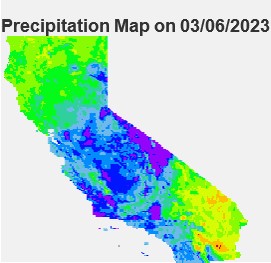
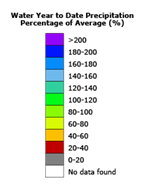
With roughly a quarter of the wet season still ahead, most of California has received greater than normal year to date rainfall amounts, and many areas have received greater than normal whole-year amounts, some twice over. As of March 1, 2023, Bishop already had seen 207 percent of an entire water year’s average rainfall (San Francisco Chronicle). See the map below for regional variation. |
|
|
This level of precipitation is good news to many of California’s rare, threatened, and endangered plant and wildlife species.
Due to the increased rainfall so far in the 2022-2023 winter, the timing of focused surveys for many protected species can now be scheduled with reasonable confidence of credible results. ECORP biologists and botanists are ready to take advantage of the wet winter and spring – conducting surveys, assessments, reports, and providing other environmental needs.
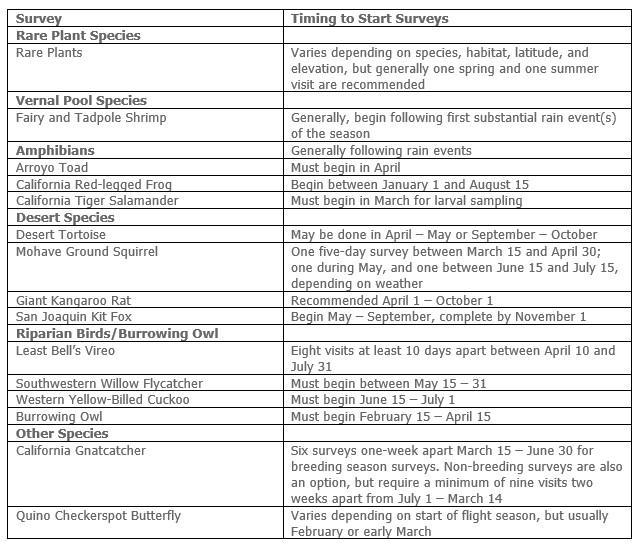
Below are examples of a few highlighted species groups. Please see the table listing a number of surveys that may be required for projects and their mandatory start dates.
|
|
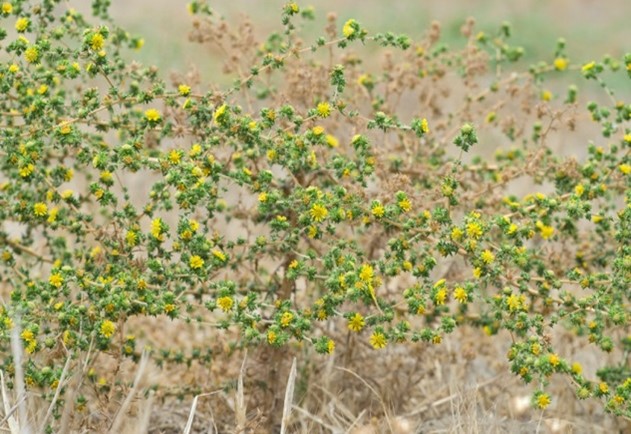
Southern Tarplant, CNPS 1B.1 |
|
Rare Plants
The California Department of Fish and Wildlife (CDFW) website states that California hosts approximately 6,500 species, subspecies, and varieties of plants that occur naturally here. Of these species, over 200 are formally listed as rare, threatened, or endangered by state law, and an additional 2,000 are of conservation concern.
California’s native rare plants reproduce in direct response to rainfall. Annuals, plants that complete a lifecycle during a single year, germinate from seed and begin to grow following winter and spring rains, flower, produce seeds, and then die. When rainfall is insufficient, the seeds may not germinate, in which case the plants cannot be detected. Perennials, plants which live for three or more years, tend to be more conspicuous than annuals during drought conditions, but not always. Many-stemmed dudleya, a rare perennial that exists as an underground corm during drier months, sends up leaves and blossoms in response to winter rains. But if the rains do not come, the plant may remain underground, until conditions are better. Mariposa lilies, many of which are listed at the federal, state, or local level as rare, threatened, or endangered, likewise can “wait out” periods of drought.
Federal, state, and local guidelines for rare plant surveys note that surveys conducted during a drought year may need to be repeated during a year when conditions are better. It looks like this is one of those years.
|
|
|
|
Vernal Pool Species
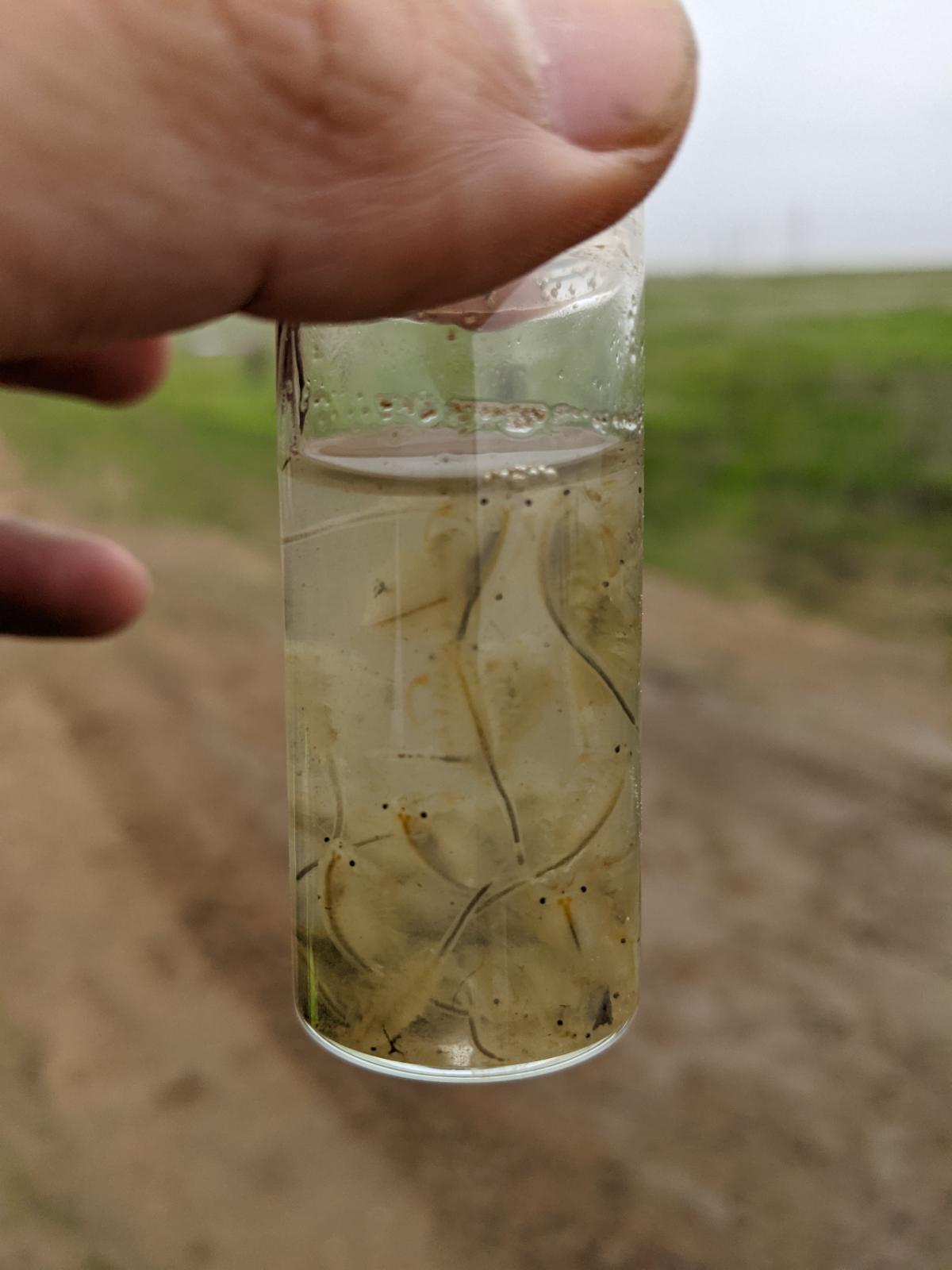
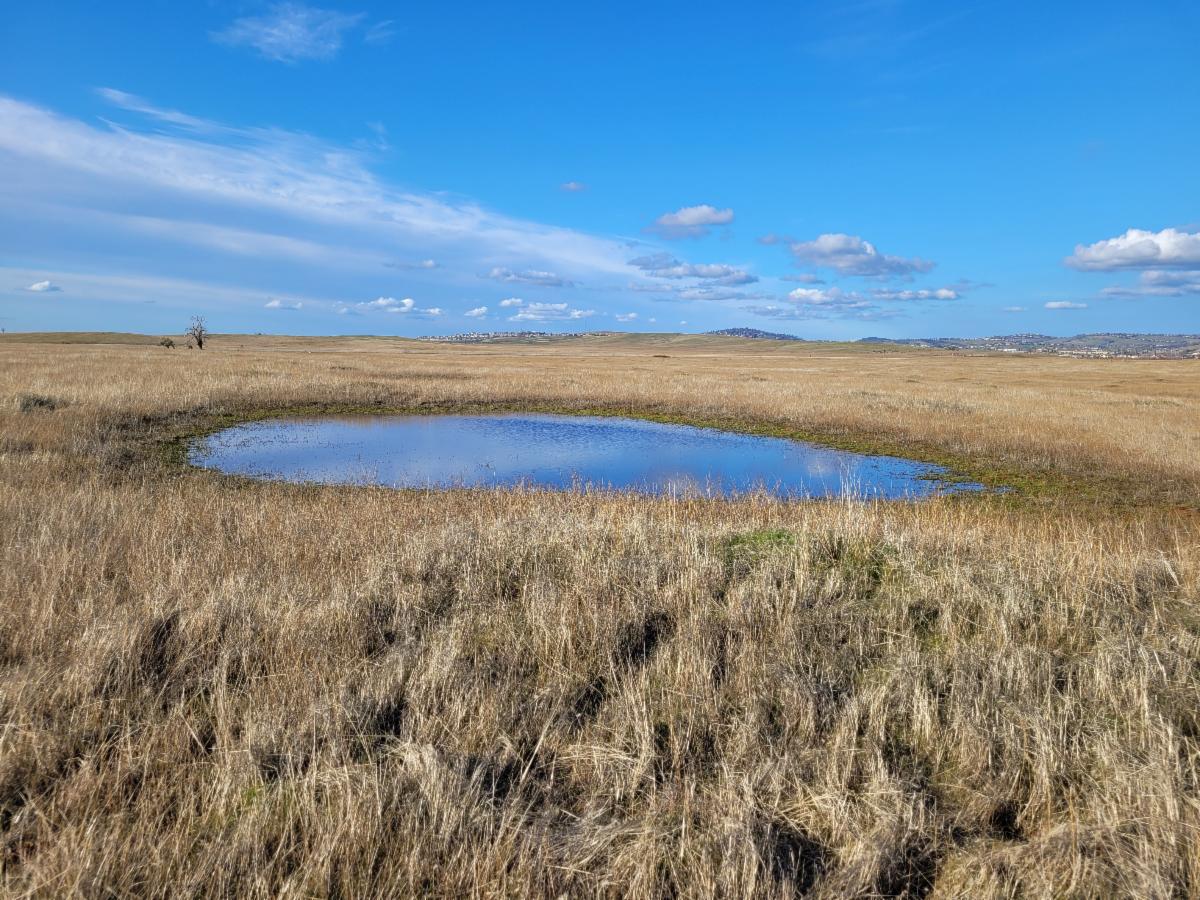
Vernal pools provide habitat, not only for a variety of rare plants, but also for threatened or endangered tadpole shrimp and five species of fairy shrimp. Without adequate rainfall, vernal pools do not fill up or do not retain water long enough to support the hatching and growth of tadpole and fairy shrimp. Wet season surveys often cannot be conducted or may not yield satisfactory results under drought conditions. Wet season surveys for these species have already started this season and, so far, are producing good data.
|
|
|
Amphibians
Amphibians require water, especially for the beginning stages of their lifecycles, and many live out their adult lives within a very small area near their breeding pools. Although they can live on dry land or hiding under rocks, logs, or leaf litter, precipitation is needed to create the pools, ponds, and streams for breeding and for larval stages to grow and develop.
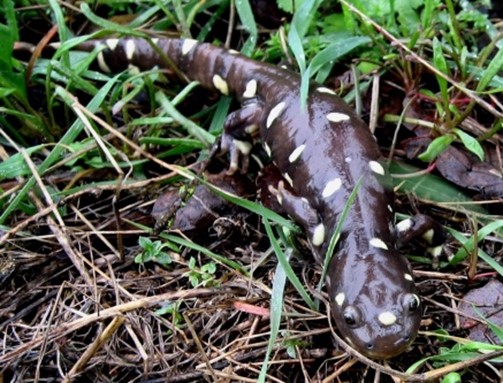
Several of California’s amphibians are threatened or endangered, and specifically timed surveys are often required for projects where suitable aquatic habitats are present. These species include California red-legged frog and arroyo toad, among others. The California tiger salamander (pictured to the right) is also dependent on breeding conditions being suitable in these ephemeral pools. Several other species, such as the western spadefoot, are similarly constrained by the variances of annual rainfall.
|
|
California Tiger Salamander |
|
|
|
Desert Species
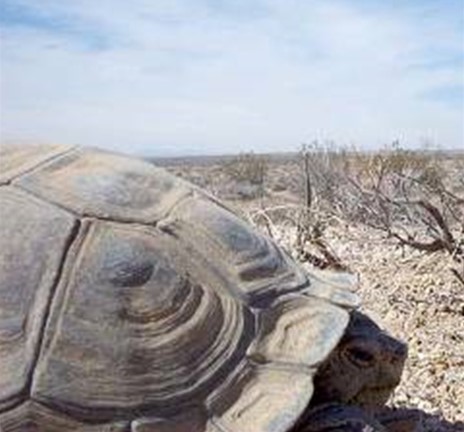
Even desert species are not immune from the effects of drought. Desert tortoises are herbivores and respond to seasonal rains, in part because that is what their food supply does. When rainfall is short, food plants are less abundant, and tortoises spend less time outside their burrows. In fact, the U.S. Fish and Wildlife Service (USFWS) equation used to estimate the number of tortoises within a given survey area factors in those that were underground and not detected during a survey based partially on rainfall amounts from the preceding winter. The number of underground tortoises is, predictably, higher when rainfall has been low.
Many of the desert’s threatened or endangered small mammals for which pre-project surveys can be required remain active and detectable during periods of drought; however, this not always the case. One exception is the state-listed Mohave ground squirrel, which lives in the desert and relies on seasonal rainfall for the growth of its food plants. The Mohave ground squirrel spends the hotter months and early winter aestivating in an underground burrow and, if winter and spring rains are insufficient, it forgoes reproductive efforts and quickly returns to aestivation. For this reason, required surveys for Mohave ground squirrels are not recommended during drought years.
|
|
|
Riparian Birds
Riparian habitat is associated with the margins of rivers, lakes, and streams or is found where water is near the ground in drainage features. According to a report published during the 1980s by Thomas Oberbauer, a well-respected ecologist in San Diego County, the statewide riparian habitat decline since pre-European settlement was estimated at greater than 80 percent. Although progress has been made in riparian conservation since that time, declines in the extent of intact riparian habitat have continued as development has increased.
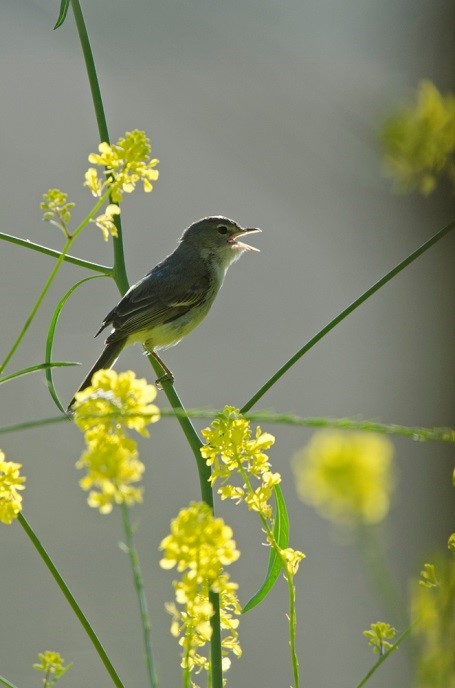
The least Bell’s vireo, southwestern willow flycatcher, and western yellow-billed cuckoo are federal and stated listed threatened and/or endangered bird species that are all dependent on riparian habitat. The extent and health of riparian habitats and, by proxy, these species, can be affected by drought through a reduction in insect prey and habitat loss when the water sources supporting their nesting habitat declines. Although the trees and shrubs that have died from drought are not replaced in just one year, this year’s above-average rainfall should help recover riparian habitat suffering from the drought. Surveys for these species are required for projects where suitable habitat is present
|
|
Territorial Male Least Bell's Vireo |
|
Other Nesting Birds
The Migratory Bird Treaty Act and California state law protect all migratory birds and make it illegal to pursue, hunt, take, capture, kill, or sell some 800 bird species in the United States, including destroying their active nests. Although most birds continue to nest regardless of the amount of winter rainfall, the length of the nesting season and reproductive effort (number of young in a brood and number of broods raised) are often increased during years of abundance brought on by abundant rain. Increased rain leads to increased plant growth, which provides more food for insects that serve as a food source to raise hungry chicks. Nesting bird surveys are usually done in the spring and summer, when most birds are breeding, and are required a few days in advance of habitat disturbance by a project. Considering the especially rainy winter, nesting activity in 2023 is likely to be prolific.
|
|
Burrowing owl chicks at a nest |
|
Burrowing Owls
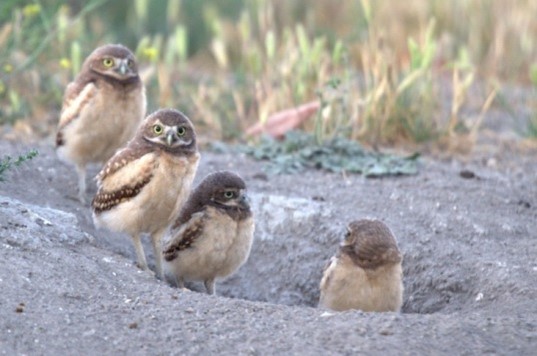
Burrowing owls are small fossorial owls that favor open habitats in towns, rural areas, agricultural fields, and elsewhere. They occupy burrows year-round but tend to move around and change burrows more frequently or even migrate away from nesting areas during the fall and winter months. When the breeding season arrives in February and March, the owls require burrows for nesting and a source of insect and small mammal prey. Owls depend on the abundance of prey, which is related to seasonal rainfall, among other factors, and when prey is lacking, nesting efforts tend to be less successful, if at all.
Burrowing owls are protected under the Migratory Bird Treaty Act and are protected by special requirements by the CDFW. Projects occurring in suitable habitat within the species’ range likely require a habitat assessment and pre-project surveys, especially during the spring and summer. The current survey protocol for these owls requires that one of the four breeding season survey visits be conducted between February 15 and April 15, so the time to mobilize is now.
|
|
|
For more information or to schedule surveys, please contact Kristen Wasz in the Redlands Office at (909) 307-0046, or Peter Balfour in the Rocklin Office at (916) 782-9100.
|
|
ECORP's Regulatory Team Tracks New Waters of the U.S. Rule and Supreme Court Case |
|
A new rule defining “Waters of the U.S.” will go into effect on March 20, 2023. The rule will essentially codify what is already current policy of the Army Corps of Engineers (Corps) and the Environmental Protection Agency (EPA).
Following the Supreme Court decisions on Carabell v. United States in 2004 and Rapanos v. United States in 2006, the Corps and EPA issued regulatory guidance which defined Waters of the U.S. using the “significant nexus” test referenced in Justice Kennedy’s opinion. This test considers certain wetlands (including many of California’s vernal pools) to be Waters of the U.S. if they have a “significant nexus” to other Waters of the U.S. The Rapanos guidance has been in effect on and off since 2008, except for time periods when the Obama-era 2015 Clean Water Rule and the Trump-era 2020 Navigable Waters Protection Rule were briefly in effect. However, this guidance was never formally codified - until now.
For the most part, the new “Biden Rule” (also referred to as the “2023 WOTUS Rule”) maintains the status quo of how Waters of the U.S. have been defined since 2008. However, a pending Supreme Court case – Sackett v. U.S. Environmental Protection Agency (2023) – may upend the new rule. The decision on the Sackett case, expected in June, could considerably limit Corps/EPA jurisdiction over certain wetlands. However, in California, wetlands are separately protected through state law, and many are also protected through the federal Endangered Species Act.
ECORP’s regulatory team is closely tracking implementation of the new Waters of the U.S. definition, as well as the Sackett case. Please contact Lourdes Gonzalez-Peralta at (916) 782-9100 or Scott Taylor at (909) 307-0046 for information on ECORP’s regulatory services.
|
|
ECORP Sponsors 48th Annual Desert Tortoise Council Symposium |
|
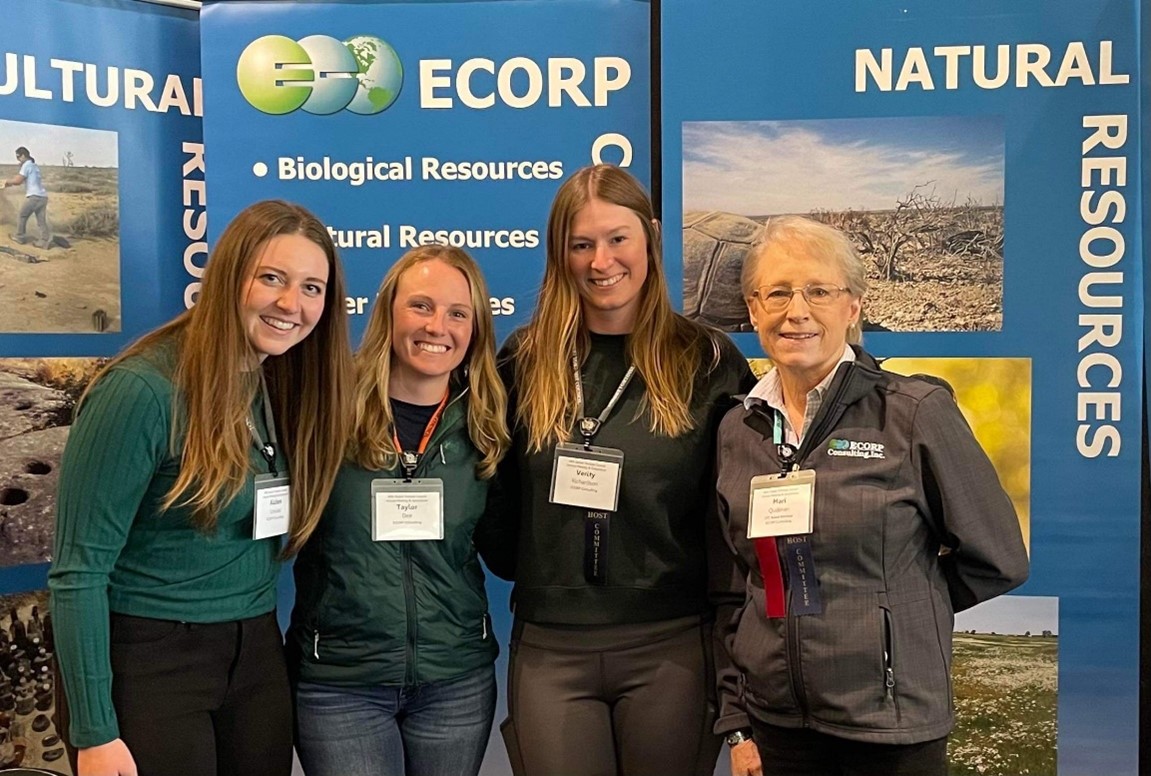
Mari Quillman (Chairperson of the Desert Tortoise Council), Taylor Dee, Alden Lovaas, and Verity Richardson attended the 48th Annual Symposium of the Desert Tortoise Council, which was held at the Dixie Center in St. George, Utah from February 22 through 25, 2023. ECORP was not only a Silver Sponsor, but also operated an exhibitor booth where ECORP staff members were able to interact with attendees and provide details about ECORP’s services.
The Symposium kicked off on February 22 with field trips to Red Cliffs National Conservation Area followed by a Pre-Conference Mixer. The sessions included many different topics related to desert tortoises, including genetic research, managing predation on tortoises, restoration of habitat, conservation efforts, behavior and movement patterns, population augmentation, effects of climate change, effects of roads, and recovery and management actions. A special session on the invasion of illegal Cannabis farms in desert tortoise habitat included speakers from the California Department of Fish and Wildlife, San Bernardino County Sheriff’s Department, and law firms and even included a talk by the Honorable Fiona Ma, the State Treasurer of California.
At the Evening Social on February 23, the attendees were treated to a viewing of The Good, The Bad, and The Slow, a film directed by Hans Glasmann, MFAP Professor at Utah Tech University. The annual banquet, awards, and raffle/auction were held on the evening of February 24, and the banquet included an amazing presentation by Cameron Rognan (Washington County Habitat Conservation Plan) called, “Through the Lens – A Closer Look at Reptile Behavior in Southwest Utah.” The videos and photographs of gila monsters, rattlesnakes, and other desert wildlife taken by Cameron Rognan were incredible!
For more information, please contact Mari Quillman at (949) 561-4020.
|
|
ECORP Sponsors TWS-WS 70th Annual Meeting |
|
The 70th Annual Meeting of The Western Section of The Wildlife Society (TWS-WS) took place in Riverside, California from February 7 through 10, 2023. Similar to previous years, the event was a hybrid meeting with either in-person or virtual (WhovaR) meeting attendance available. The meeting theme was “Challenge Accepted! Confront Obstacles, Create Opportunities”. Those that attended in person were treated to three days of symposia, concurrent scientific article presentations, a poster session, numerous mixers, a career fair, chapter and working group meetings, the first ever Western Section cornhole tournament, and any number of other informal opportunities to mingle. The event held at the Riverside Convention Center had the largest in-person meeting attendance since pre-COVID times.
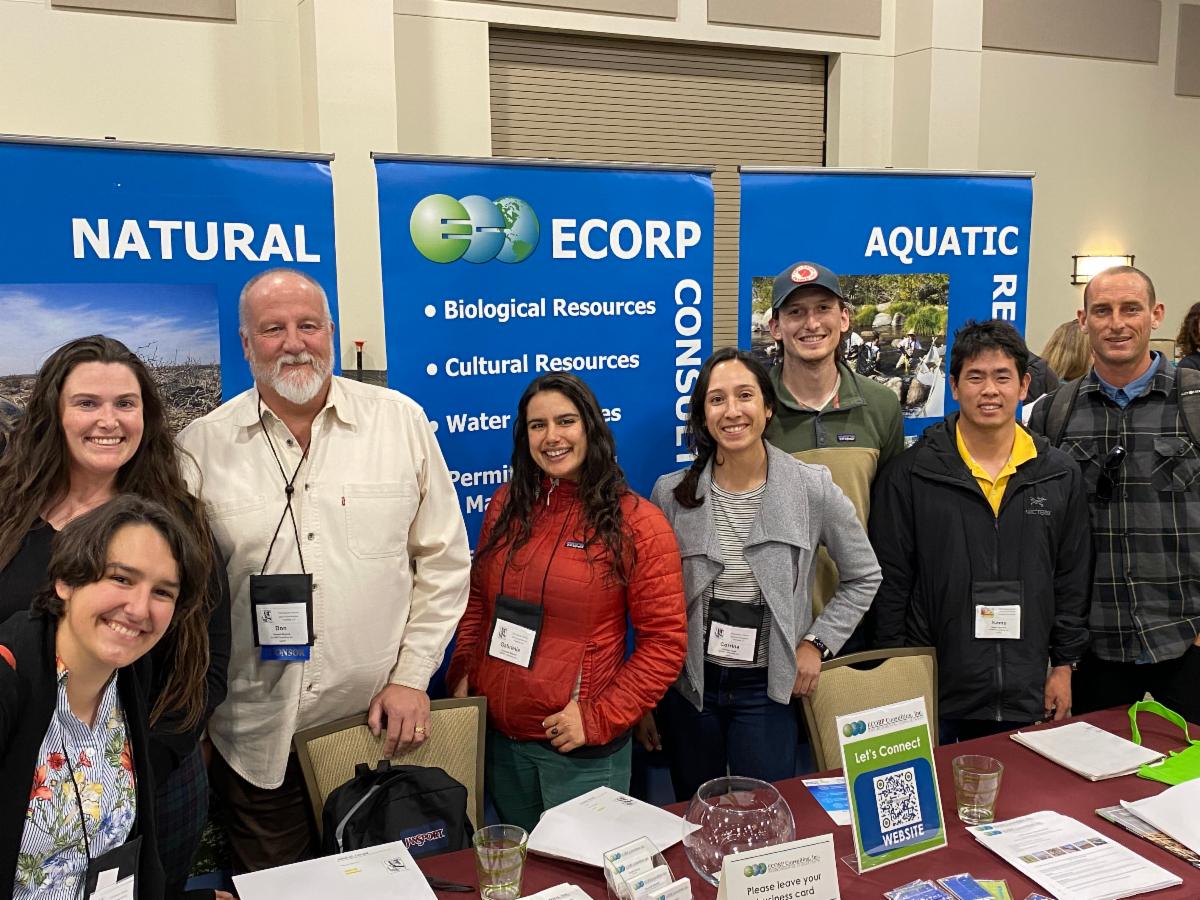
ECORP Biologists Don Mitchell, Caroline Garcia, Gabrielle Attisani, Corrina Tapia, and Kirsten Zornado attended in person. ECORP was a proud Bighorn Gold Sponsor, and the ECORP team took turns operating the in-person and virtual Company booths.
TWS-WS also hosted a pre-conference Burrowing Owl Symposium from February 6 through 7. Biologists Alexandra Dorough, Corrina Tapia, Gabrielle Attisani, Joshua Harris, Kirsten Zornado, Sam Harrison, and Richard Cravey attended the symposium over the two days. The symposium covered various topics including the current conservation status of western burrowing owls in California and Nevada, ongoing studies for migration patterns and genetic analysis, burrowing owl mortality with regard to renewable energy sources, burrowing owl behavior in urban settings, identification of burrowing owls, and the importance of California ground squirrels and their “bioengineering” role in burrowing owl conservation.
Gabrielle Attisani is a member of the Sacramento-Shasta Chapter and attended the Chapter members meeting. Caroline Garcia, Corrina Tapia, Kirsten Zornado, and Don Mitchell are members of the Southern California Chapter and attended the Chapter members meeting. Additionally, Caroline Garcia is a Board member for the Southern California Chapter, holding the position of President-Elect. The Southern California Chapter was awarded Chapter of the Year for the third year in a row, although this year the SoCal Chapter tied with the Sac-Shasta Chapter. Both Chapters will share the coveted jackalope trophy for the year!
For more information, please contact Don Mitchell at (909) 557-2984.
|
|
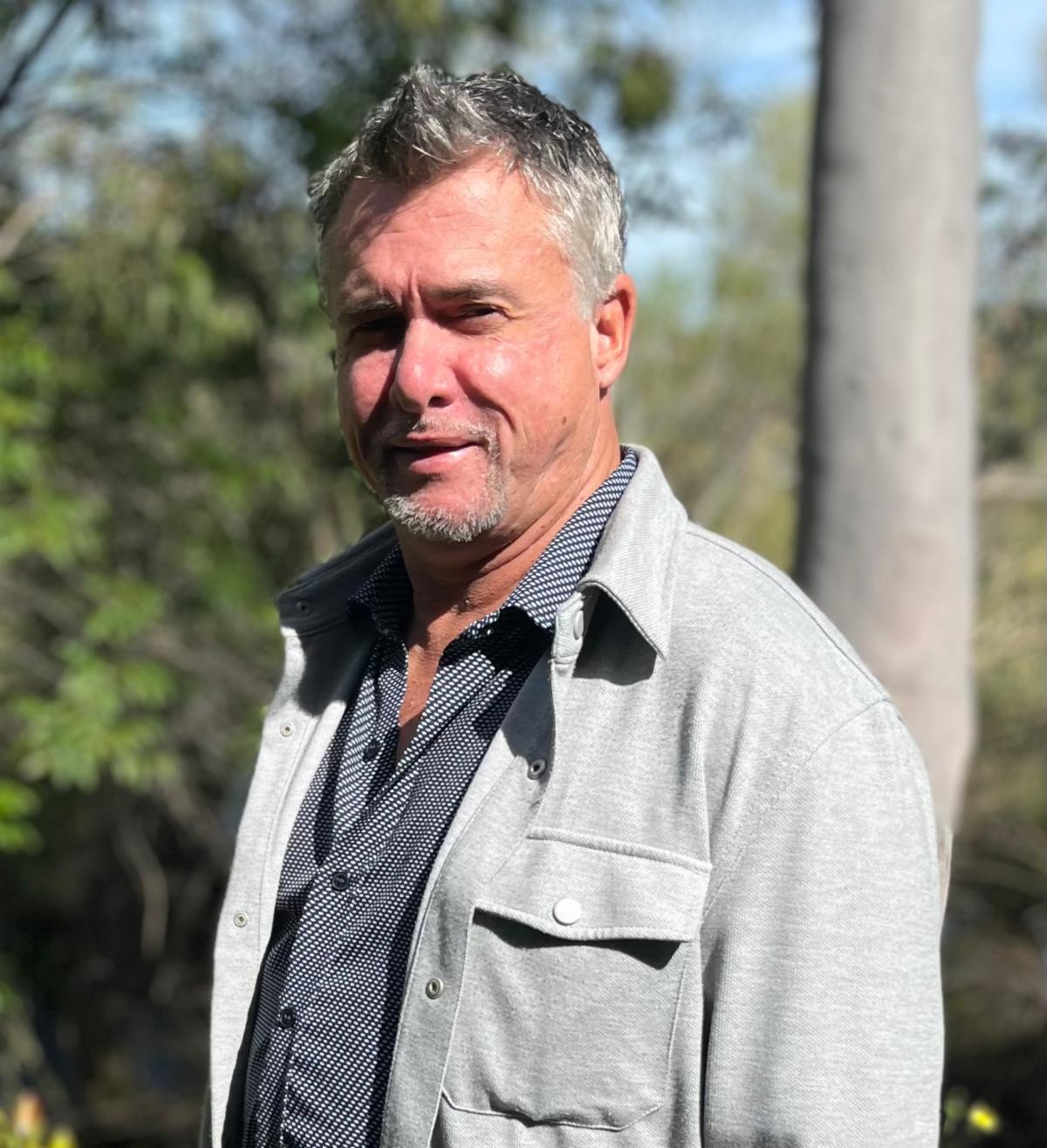
ECORP feels fortunate to continue to increase our staff throughout 2023. Here are some highlights of staff members who have joined ECORP since November 2022.
Brant Primrose - Senior Biologist, San Diego Office
|
|
Brant Primrose holds a Bachelor of Science degree in biological sciences with an emphasis in plant taxonomy and has over 23 years of experience in in biological sciences, consulting, and construction monitoring. In this time, he has conducted protocol surveys for Mojave Desert tortoise, California red-legged frog, arroyo toad, western burrowing owl, least Bell’s vireo, flat-tailed horned lizard, and nesting birds. Brant holds a U.S. Fish and Wildlife Service 10(a) recovery permit for Quino checkerspot butterfly. He has extensive experience performing sensitive plant and wildlife species surveys, wetland delineations, and biological impact analyses. He has authored a variety of technical reports, restoration and monitoring plans, and biological assessments. Brant has provided biological consulting services for a wide range of clients including utility companies; solar and wind companies; developers; and federal, state, and local regulatory agencies. He has worked closely with the San Diego Natural History Museum Botany Department where he has volunteered for the plant atlas. Brant worked under a federal work study program for Michael Simpson, Ph.D., in the San Diego State University Herbarium. In addition, he worked on a federal grant with Kathy Williams, Ph.D., at SDSU performing plant transects for the host plant Horkelia clevelandii with data collection of Laguna Mountains Skipper larvae.
|
|
Also joining our staff are:
- Arik Bord - Staff Archaeologist
- Erica Ramirez - Associate Archaeologist
- Jessica Rebollo - Assistant Architectural Historian
- Devin Keogh - Technical Editor
- Rachel Falkenstein - Administrative Assistant
- Tessie Shell - Accounting Clerk
|
|
|
|
|
|
|