Los Angeles County Board of Supervisors Votes to Expand Operations at the Virginia Robinson Gardens
|
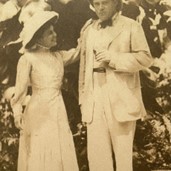
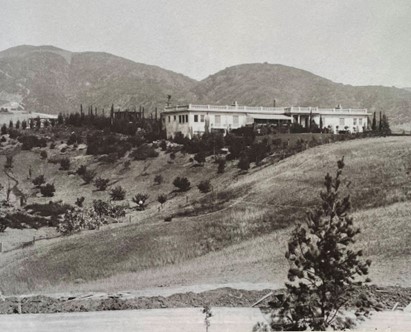
ECORP assisted the Los Angeles County Department of Parks and Recreation with environmental services for proposed operational changes at the Virginia Robinson Gardens. Virginia Robinson Gardens is a unique 6.2-acre publicly accessible historic estate and gardens in the City of Beverly Hills, operated and maintained by the County. Built in 1911, it was once the residence of Virginia and Harry Robinson (of Robinson’s department stores) and was the first of the opulent residential estates built in the city. Guests to the property included the Duke and Duchess of Windsor, Marlene Dietrich, Lillian and Walt Disney, Elvis Presley, Sophia Loren, Nancy and Ronald Reagan, and Charlie Chaplin. Shortly before her death in 1977, Mrs. Robinson bequeathed her estate to the County.
The County works in partnership with the Friends of Robinson Gardens to preserve the estate for the public to enjoy and experience. The Gardens offers tours to the public, educational information for elementary schools, and a limited number of special events per year. The property is listed on the National Register of Historic Places, is designated as a California Point of Historical Interest, and is on the City of Beverly Hills Local Register of Historic Properties.
In October 2021, ECORP initiated the California Environmental Quality Act (CEQA) environmental review process for the expansion Project. ECORP prepared a Supplemental Environmental Impact Report along with technical studies including air quality/greenhouse gas, historical resources, noise, and traffic. Public outreach services, including public meetings, were also provided to address predominantly traffic and noise concerns from the adjacent Beverly Hills residents. Over 150 comment letters were received.
On November 15, 2022, the County Board of Supervisors unanimously voted in favor of the Project and expanded the operational capacity of the Gardens. Virginia Robinson Gardens is now open by appointment for up to 140 visitors a day, Monday through Saturday, as well as most holidays. The facility is also now permitted to offer 12 special events per year.
|
|
|
Historic photo of the Robinson estate |
|
Photo Source: Los Angeles County Department of Parks and Recreation |
|
ECORP New Hires & Employment Opportunities
ECORP is fortunate to continue to increase our staff in 2023. Here are some staff members who have joined ECORP since January.
|
|
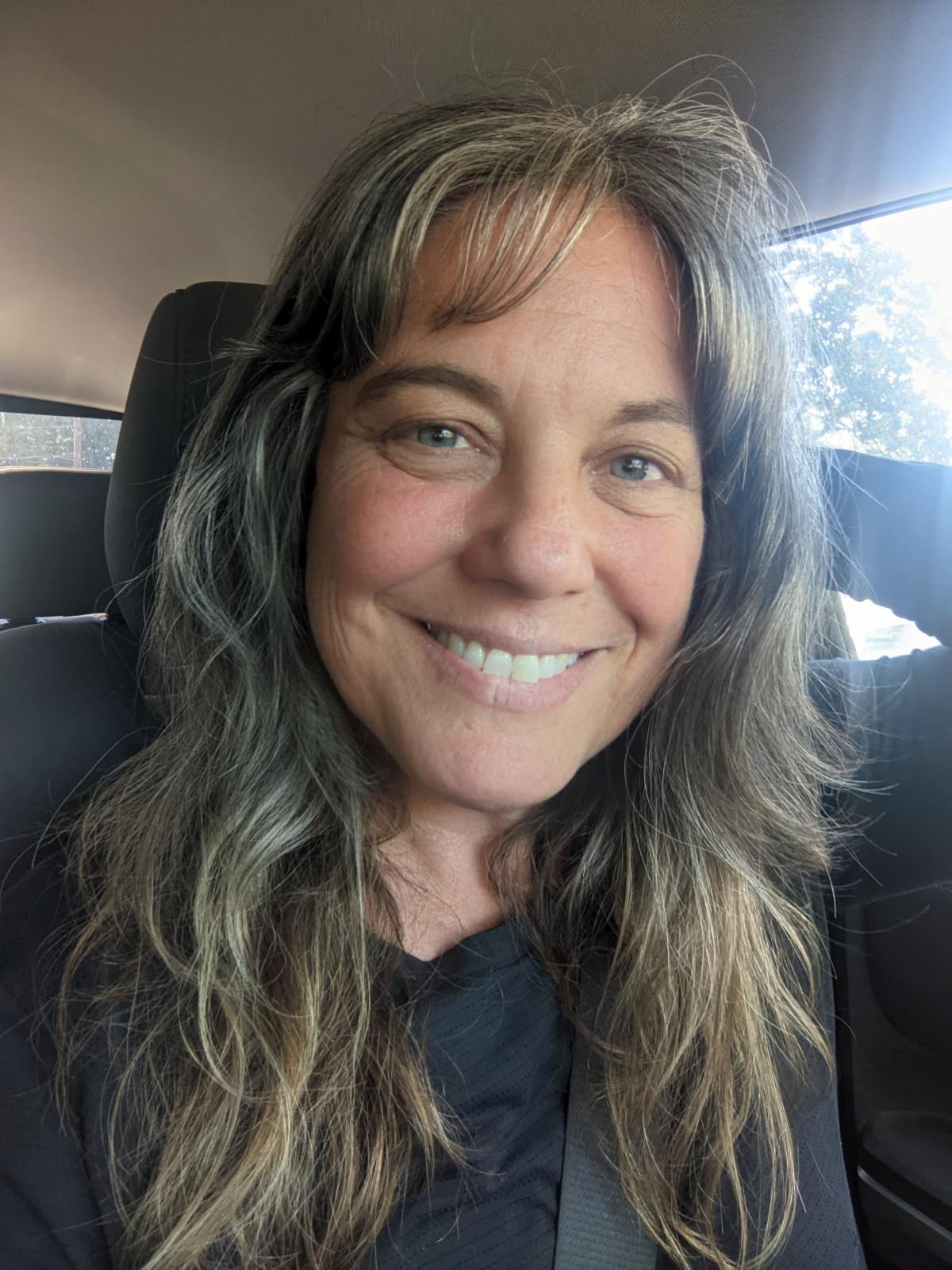
Crystal Mainolfi - Senior CEQA/NEPA Environmental Planner, Rocklin Office
Crystal Mainolfi has 30 years of experience as an environmental consultant/planner, restoration ecologist, and botanist throughout California. Her work experience has focused on native plant surveys/research, special-status species surveys, and habitat restoration with particular focus on natural resources management and environmental impact analysis for landscape-scale infrastructure and research projects. These projects have included vernal pool restorations at MCAS Miramar and Camp Pendleton, an 18-year habitat restoration for a Lassen County gold mine, and a 3,000-acre habitat restoration design on the only remaining unlevied stretch of the middle Sacramento River for the Nature Conservancy.
Ms. Mainolfi also holds an MFA in Studio Art and has worked as a college professor teaching darkroom and digital photography, sculpture, curatorial studies, and business professional development, and is an internationally exhibited artist in photography, sculpture, ceramics, and glass.
Also joining our staff are:
- Jessica Rebollo Rocklin Assistant Architectural Historian
- Carly Martenson Santa Ana Associate Biologist
- Shelby Dunn Redlands Associate Biologist
- Sara Senter Rocklin Project Accountant
- Christen Philips San Diego Administrative Assistant
|
|
ECORP is hiring in all offices.
|
|
AEP Conference 2023, Lake Tahoe - “Mountain Vibes and Lake Views”
|
|
ECORP staff attended the 2023 Association of Environmental Professionals (AEP) annual conference, “Mountain Vibes & Lake Blues,” in Lake Tahoe from Sunday April 23 through Wednesday April 26, 2023. Conference attendees included Chris Stabenfeldt and Nathan Hallam from the Rocklin office and Scott Friend, Seth Meyers, and new Senior Planner Crystal Mainolfi from the Chico office.
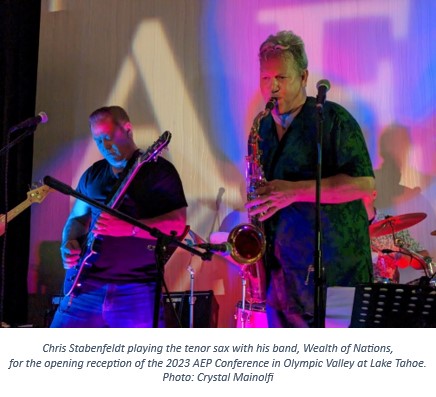
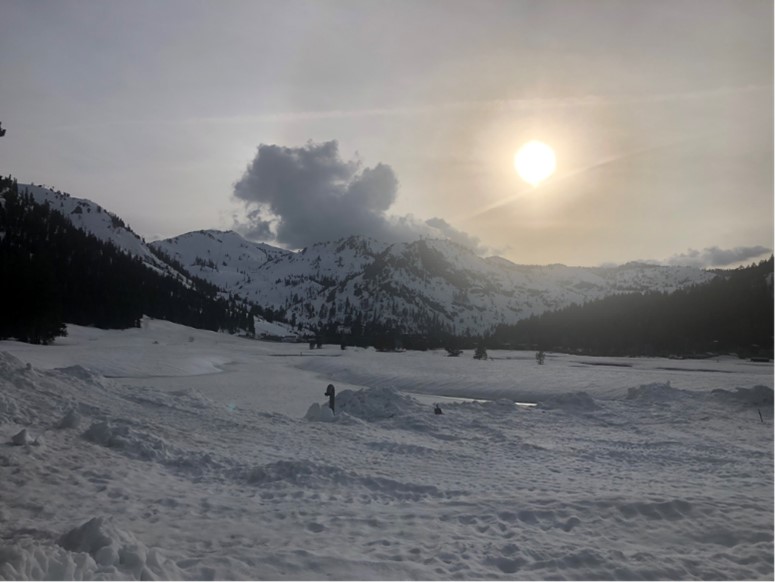
This year’s conference saw the highest number of participants, some 650 attendees (a typical year has 450) and, according to Chris, “considerably more public sector attendees than we typically see. Partially a reflection of location and strong industry performance over the past several years.” Due to the epic snow year in the Sierra Nevada, the conference site was winter-like despite spring temperatures. ECORP’s own Chris Stabenfeldt kicked off the conference Sunday evening with a rocking set from his band, Wealth of Nations, including original songs and covers of Grateful Dead and Prince songs.
The hot topics at the conference included water resources planning, climate action and adaptation, fire evacuation, renewable energy, habitat restoration and the trials and tribulations of VMT analysis.
|
|
Technology
The topic of rapidly changing technology pervaded the sessions, including how and where Artificial Intelligence (AI) may be useful in the environmental review process despite, according to Scott, “We have zero policy guidance regarding AI and no one knows how to use it yet.” The conference consensus was that AI will be as revolutionary as the internet – how ECORP can utilize this technology in the near future is one of the important “big picture” discussion points coming out of this year’s conference.
Evolving technology was discussed in mitigation measure sessions. Presenters emphasized the need to design CEQA project mitigation measures for adaptability/flexibility, emphasizing the need to acknowledge that technological advances may change how mitigation measures are achieved over the course of implementation. Scott summarized, “Define the outcome, timing, and responsibility of mitigation measures and not the process. Also contemplate that a receptor or a generator of impacts could cease with advancing technology.”
Wildfire management (from developing Project hardening and evacuation plans to hazard mitigation) is benefiting from advancing technology. Several session presenters discussed a new software tool for predicting wildfire threats and coordinating fire planning for land management that enables parties across jurisdictions to collaborate and rapidly assess the current resilience of, and risk to, landscapes and communities; create and compare treatment scenarios at any scale; and make informed, ready-to-implement fire management decisions in near real-time. The software uses high-resolution, three-dimensional datasets - including satellite imagery and LiDAR - coupled with infrastructure data to identify key inputs such as homes and utility locations. One of these products is called Land Tender.
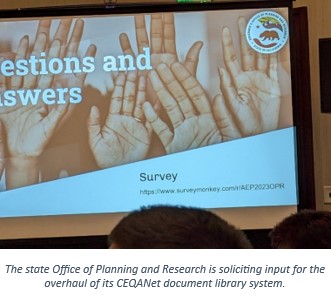
The state Office of Planning and Research (OPR) discussed another imminent technological change during a session announcing its plans to overhaul CEQANet over the next year. OPR is soliciting input from users about what UI/UX and improvements to the program should be incorporated into the next manifestation of the site. Attendees suggested a GIS mapping interface, searches by mitigation measure type, and the ability to submit documents with a specified later review period, so that authors and publishers do not have to “scramble” to notice documents at the beginning of a public review. The survey can be found here: https://www.surveymonkey/r/AEP2023OPR
|
|
Restoration Projects
Truckee/Trout Creek
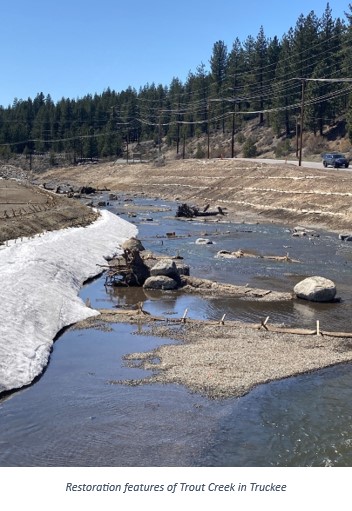
Nathan Hallam participated in a mobile workshop to Trout Creek led by the Town of Truckee’s Public Works Director. Over many years, manmade historical modifications to the creek’s geomorphology caused Trout Creek to become a flood hazard for Truckee and restricted the movement of fish and wildlife along the stream. The town began a restoration project of this creek in 2008, replacing culverts with bridges to free up the ditch’s flood flows, designing a meandering channel instead of a trapezoidal earthen ditch for a wider riparian corridor, and used tree trunks set in the streambed to stabilize the channel instead of boulder riprap to benefit aquatic habitat. These steam-course improvements, along with new systems to treat local runoff into Trout Creek have improved water quality in the creek.
This restoration project is expected to continue until 2030 and coincide with mixed-use redevelopment of the town’s railyard.
|
|
SFPUC/Hetch Hetchy Pipeline
Crystal Mainolfi attended an interesting session about the successes and challenges of the San Francisco Public Utilities Commission’s (SFPUC’s) habitat restoration efforts along the Hetch Hetchy pipeline in the Bay Area. After struggling with introducing plant diseases into their restoration sites via infected nursery stock, the SFPUC created their own native plant nursery, producing their own restoration materials from seed.
The plant disease that infected the nursery stock is of the genera Phytophthora, plant-damaging oomycetes (water molds) whose member species cause enormous economic losses of crops worldwide, as well as environmental damage in natural ecosystems. Sudden Oak Death (SOD) is a caused by a Phytophthora species, Phytophthora ramorum. With very strict SOPs for disease prevention at their nursery, the SFPUC has enjoyed three years of disease-free plant production and, as a result, increased restoration success in the field.
CEQA
Another takeaway from many of the sessions is that there is a disconnect between state policies designed to streamline certain types of projects (housing, energy, telecommunications) and the CEQA review process. Many state mandates for streamlining such projects are being blocked at the local level by local opposition (NIMBYism) and an onerous CEQA process if a local agency is not in support.
AB 205 seeks to rectify this conflict for solar, wind, and storage project proponents by enabling proponents to supersede the local jurisdictional authority and use the California Energy Commission (CEC) as the lead agency for CEQA review. Chris said that recent ECORP proposals for energy storage projects include a line item to analyze whether a project proponent should pursue CEC or the local jurisdiction as a lead agency or not.
Chris attended a session on utilizing the Statewide Vegetation Treatment Plan Program EIR for focused analysis of vegetation management projects. Despite a streamlined review process under this program, biological and cultural resources surveys of treatment areas are still required and represent a potential growth area for ECORP given our strong bio and cultural capabilities. To date, about eight evaluations have been completed to date under the program ranging from 50 acres to 1,600 acres.
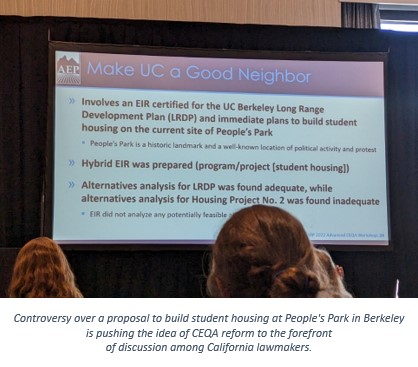
The big discussion at the conference-closing CEQA update session was the controversy regarding the UC Berkeley housing proposal for People’s Park. When the appellate court found the project EIR insufficient, the court’s decision elicited calls for CEQA reform from state legislators and the governor. Although the UC Regents argued that a student housing development did not constitute a new point-source for noise impacts, the appellate court found that the EIR did not adequately address the impacts of student “party” noise, an on-going nuisance issue throughout the community surrounding the CAL campus.
|
|
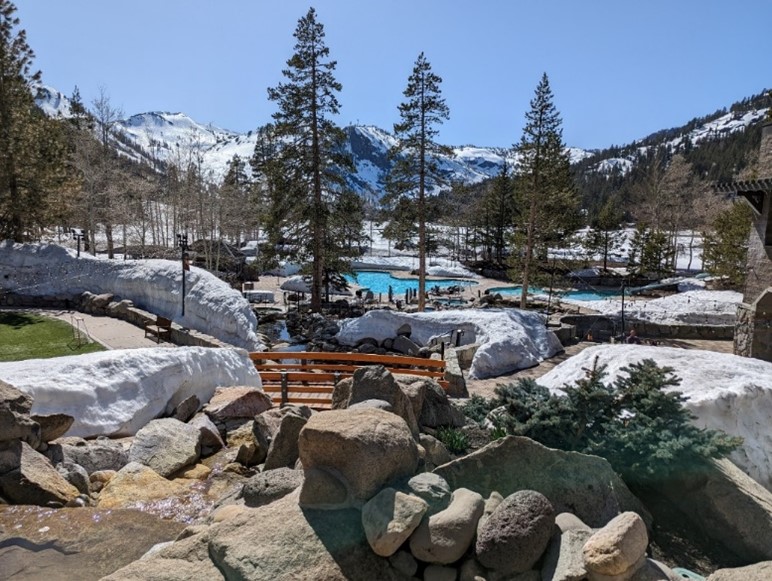
View to the peaks from the Everline Resort and Spa, the host location for the 2023 AEP Conference. Photo: Crystal Mainolfi |
|
Wintery view from the AEP Conference due to the record Sierra Nevada snowfall in 2023. Photo: Chris Stabenfeldt |
|
ECORP Takes on Capitol Hill
|
|
For the past 51 years, the Sacramento Metro Chamber organizes a delegation of hundreds of area-elected officials and business leaders to travel to Washington, D.C. to meet with members of Congress and federal agency representatives. The Capitol-to-Capitol (or “Cap-to-Cap”) program is not a conference; it is an advocacy program that seeks to support regulatory reform, secure funding and resources for high-priority projects in the region, and raise local concerns to officials at the national level. It also allows us to gain insight from Washington, D.C. regarding upcoming legislation and the political climate long before anyone else. The delegation was 400 strong this year – the largest in history – and included over 100 elected officials. The balance was composed of developers, attorneys, health care executives, public safety officials, water resources engineers, mitigation bankers, and others. As in past years, very few environmental consultants were represented, making this a unique and client-rich experience that facilitates relationship building with our elected officials and clients in an environment unlike anything else we do. ECORP has been sending representatives of senior management for many years. Lisa Westwood and Dave Krolick are ECORP’s current representatives and have been participating for years.
The delegation is organized into teams: Air Quality, Civic Amenities, Community Resources, Economic Development, Flood Protection, Food and Agriculture, Health Care, Land Use and Natural Resources (LUNR), Public Safety, Transportation, Water Resources, and Workforce and Education. Over the course of almost a week, the teams attend meetings with members of Congress and federal agency representatives to discuss the issues that matter the most to the team and California. Each team developed white papers in advance of the meetings to summarize the issues and articulate the requests. ECORP has long participated on the LUNR team, advancing issues important to both our public- and private-sector clients. This year, the LUNR team advanced two white papers:
REGIONAL GUIDANCE REQUESTED FOR THE 404 PROGRAM
Requested Action 1: We request guidance on the process that will follow today’s Sackett Ruling. We urge the U.S. Army Corps of Engineers (Corps) to provide clear guidance to District staff on the impact (if any) on the jurisdiction of wetlands and Waters of the United States. Because the ruling may require another update to the definitions of Waters of the United States, we request clarification on how the Corps will handle existing permits and the
preferred Corps headquarters process and expectations going forward so we may act in concert with Corps field staff.
Requested Action 2: Prepare Regional Guidance Letter on Permit Applications and the Declaration of Mitigation that:
- Allows the Army Corps to review and approve a menu of mitigation options with less specificity if the landowner is required to secure final Corps approval prior to groundbreaking. Use 33 CFR 332.3 k (3) as the basis to allow flexibility for individual permits to meet the standard.
- Allows applicants to obtain Corps approvals when wetlands credits have been purchased in approved (but unbuilt) banks where there are unreleased credits.
- Allows mitigation to be finalized concurrent with construction in exchange for greater assurances, if needed. Other state and federal agencies allow this more flexible approach to wetlands compliance.
Requested Action 3: Direct available infrastructure bill funding for additional staffing to the district level so that additional hiring can commence to keep up with federal infrastructure investment and economic and growth in the region.
CORPS APPENDIX C AND SECTION 106 OF THE NATIONAL HISTORIC PRESERVATION ACT
Requested Action: Urge the U.S. Army Corps of Engineers (Corps) in consultation with the Advisory Council on Historic Preservation and the California State Historic Preservation Officer, to rescind Appendix C regulations and to develop and adopt clear guidance to implement Section 106 of the National
Historic Preservation Act regulations.
The LUNR team met with the offices of Congressman Mike Thompson, Senator Diane Feinstein, Congressman Ami Bera, Congressman Kevin Kiley, Congressman Doug LaMalfa, Congresswoman Doris Matsui, Congressman Tom McClintock, the U.S. Environmental Protection Agency, and the headquarters of the U.S. Army Corps of Engineers. We are happy to report that the meetings were a success, and now Dave and Lisa begin the task of drafting letters for Congressional representatives to send, as our issues advance through the process.
|
|
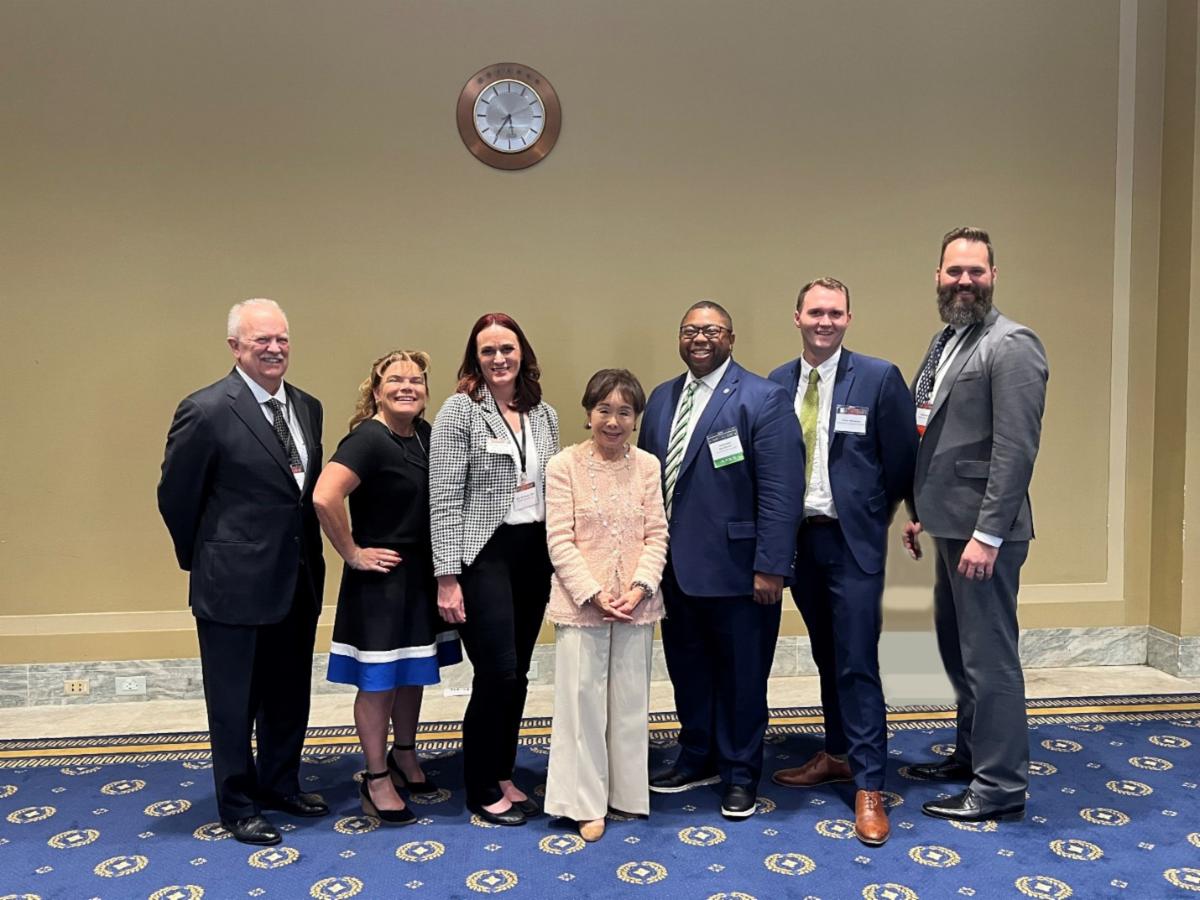
Left to right: Roy Brewer (attorney), Angela Spease (Director of the Board, Cosumnes Community Services District), Lisa Westwood, Congresswoman Doris Matsui, Rod Brewer (City councilman from Elk Grove), Vince McCarron (Westervelt), Dave Krolick |
|
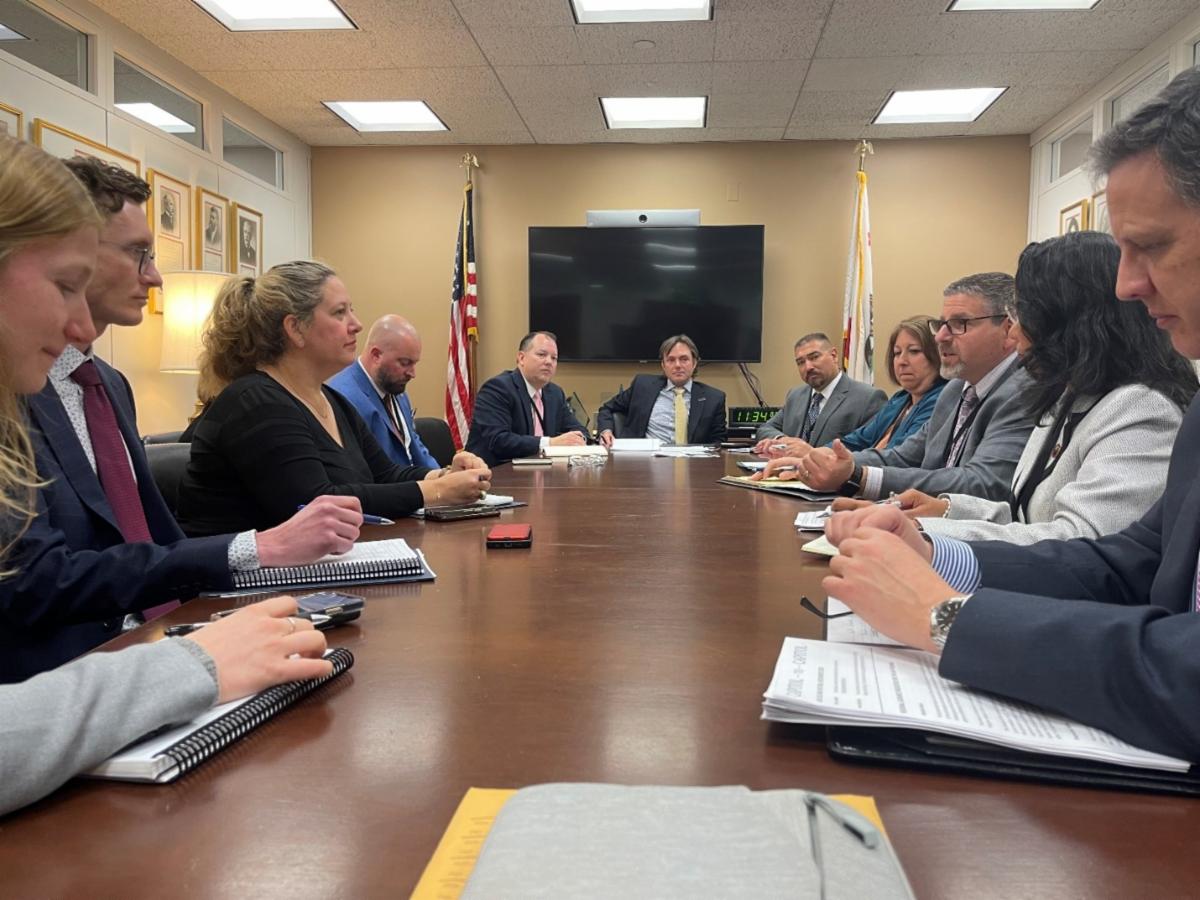
The LUNR team, Food & Ag team, and Flood Control team meeting with Senator Feinstein’s staff (left). Photo taken by Lisa Westwood, who is sitting in Senator Feinstein’s chair! |
|
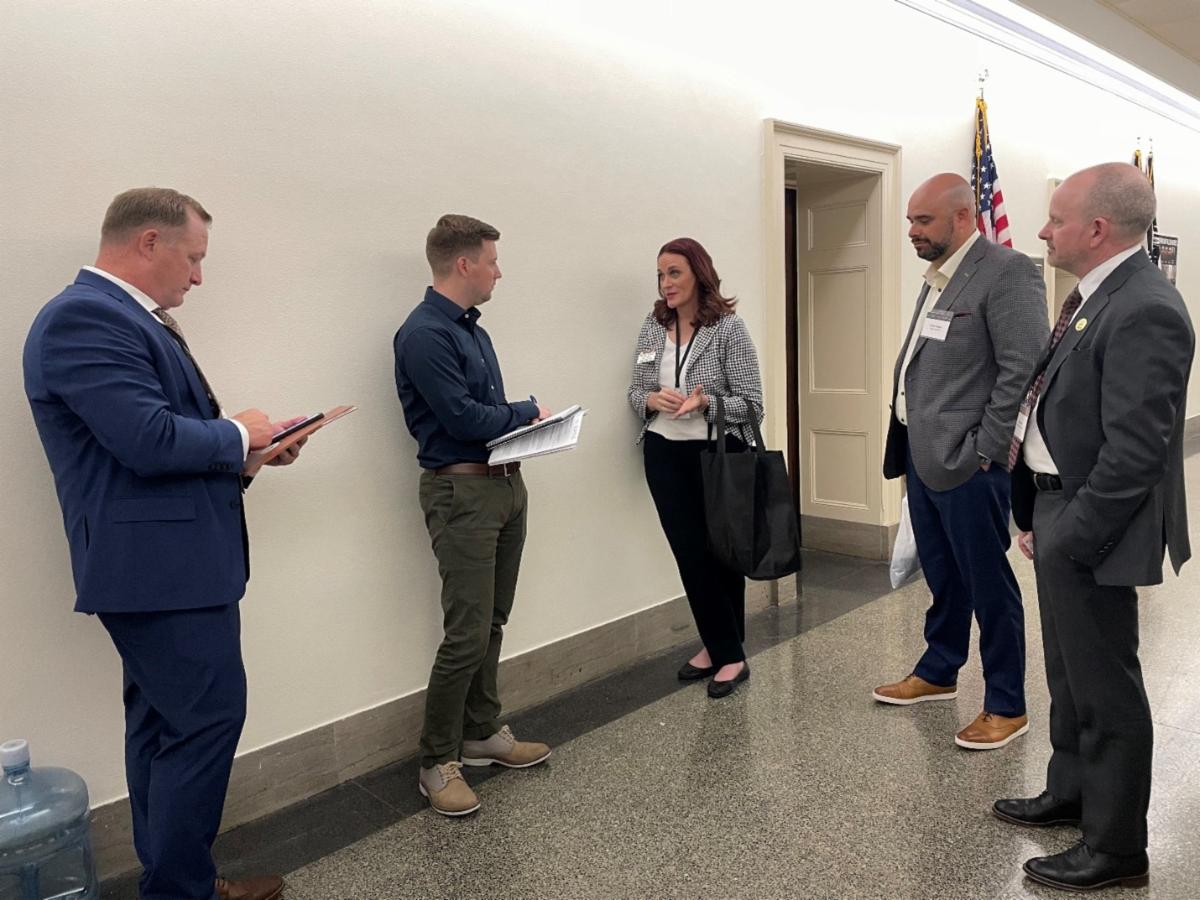
Sometimes, meeting rooms in the halls of Congress are filled to capacity. Here, the LUNR team had to meet in the hallway outside of Congressman Kevin Kiley’s office to discuss our issue papers. From left to right: Travis Hemmen (Westervelt), James Zandstra (Kevin Kiley’s office), Lisa Westwood, Anton Garcia (Taylor Builders), and Dan Beans (Electric Utility Director of Roseville Electric Utility). |
|
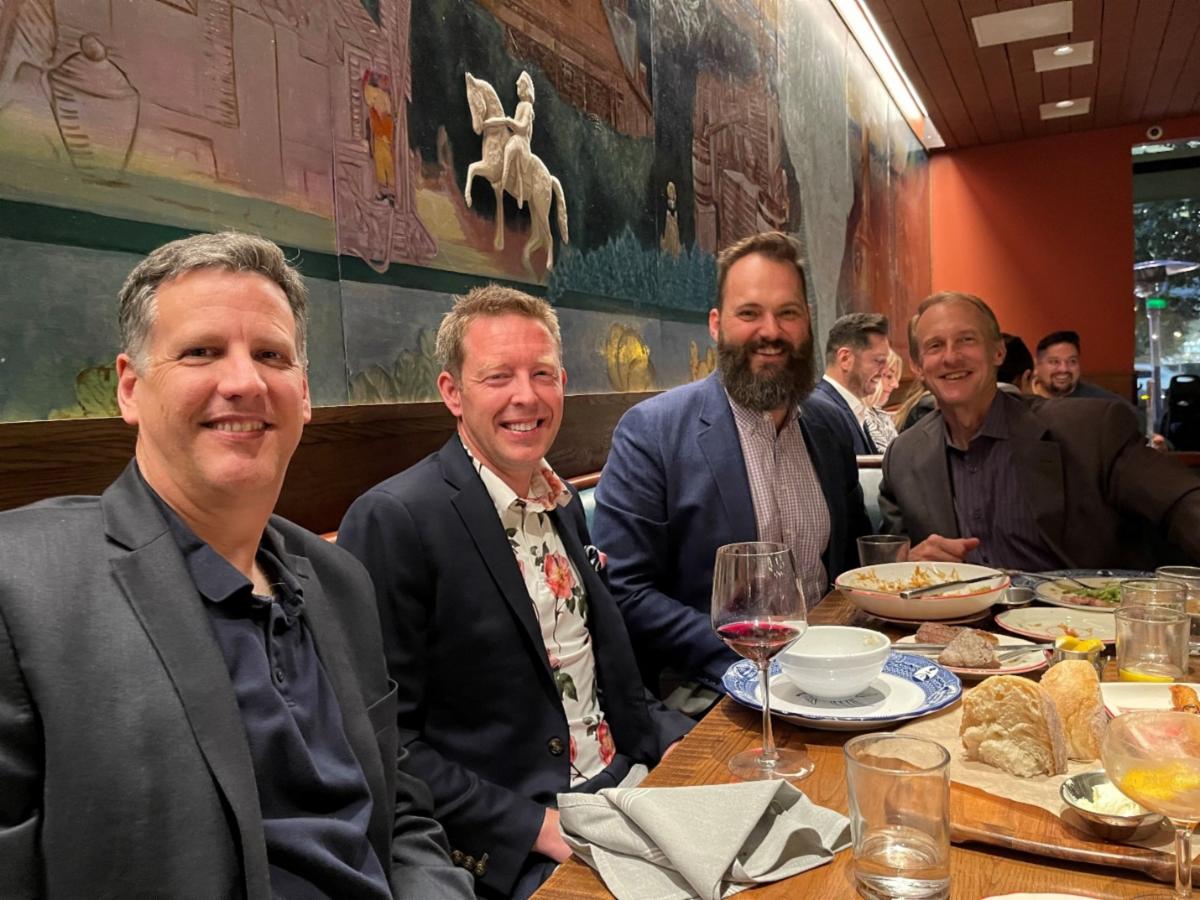
Dinner at Founding Farmers. From left to right: Chris Norem (Political Director and Senior Policy Advisor for Northstate Building Industry, Derek Minnema (Executive Director of the Connector JPA), Dave Krolick, and Michael Bessette (Executive Director of the Sutter Butte Flood Control Agency). |
|
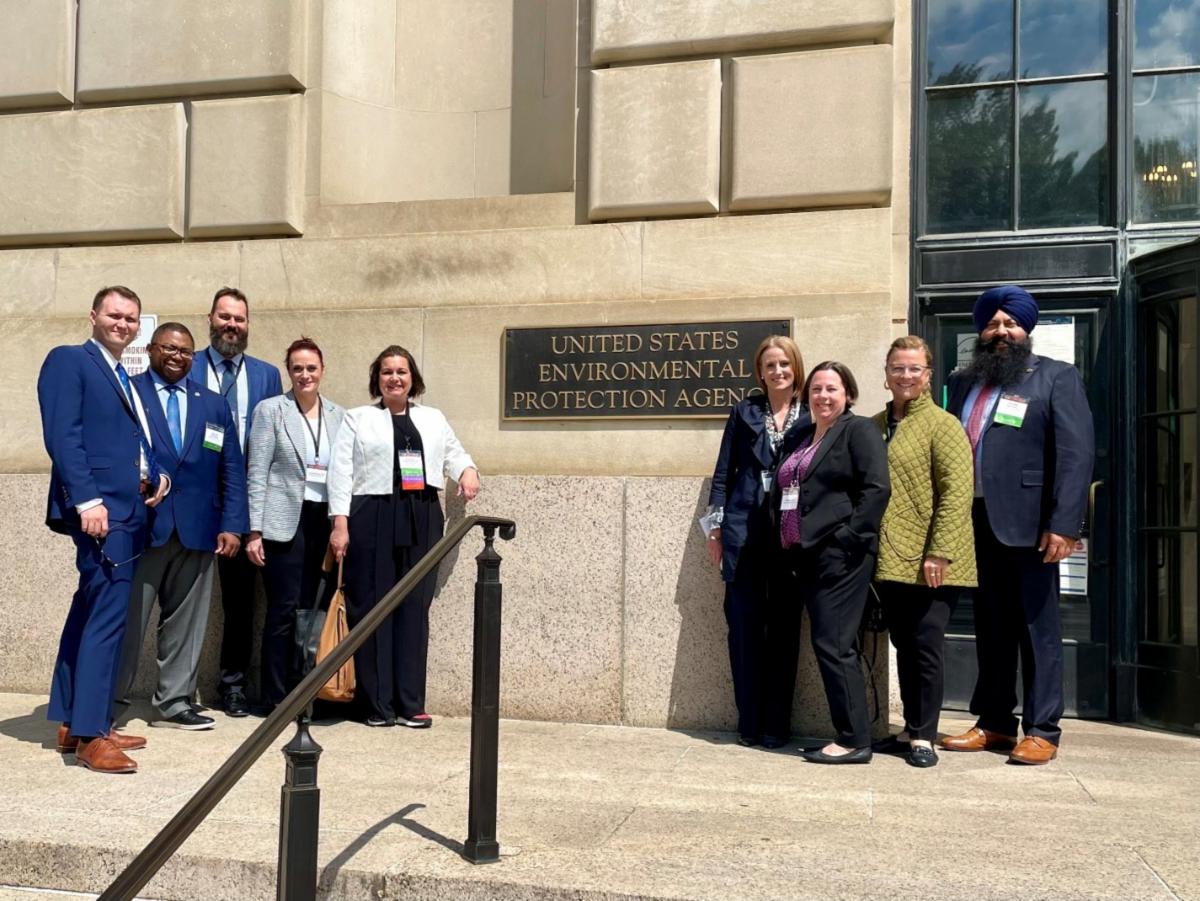
LUNR team at the EPA. From left to right: Vince McCarran (Westervelt), Rod Brewer (City councilman for Elk Grove), Dave Krolick, Lisa Westwood, Verna Sulpizio Hull (Councilmember from the City of West Sacramento), Andrea Howard (Parker Development), Christina Erwin (De Novo Planning), Julie Hanson (ATK Development), and Karm Bains (Sutter County Supervisor).
|
|
ECORPians Turn Out in Force to Drink Beer, Save Tortoises!
|
|
On Saturday, May 20, 2023, the Desert Tortoise Council (DTC) hosted a charity ‘Drink Beer, Save Tortoises!’ event at ESCAPE Craft Brewery at its downtown Redlands Oasis location. This fundraising event was a place to learn about groups promoting the conservation of tortoises and turtles and their habitats. The Turtle Survival Alliance (TSA), The Living Desert Museum, and the Southern California Turtle and Tortoise Club also had booths, educational materials, and merchandise. There were live desert tortoises, turtles, desert snake species, and biologists to discuss the ecology and the environmental threats to the various species. |
|
ESCAPE crafted a special new beer for the event called “Totally Tortoise”, a California sparkling ale, and donated a portion of draft and canned beer sales to the DTC.
Don Mitchell also helped man a booth for the new 501c3 charity the Mohave Ground Squirrel Conservation Council (MGSCC) on whose Board he is a founding member.
|
|
For more information, please contact Don Mitchell at (909) 307-0046
|
|
|
|
|
|
|