ConTex Conversations

April 2025

 
To celebrate the achievements of our doctoral fellows, we periodically feature conversations with various members of the ConTex family. They talk to us about their research, goals, and enthusiasm for binational research.


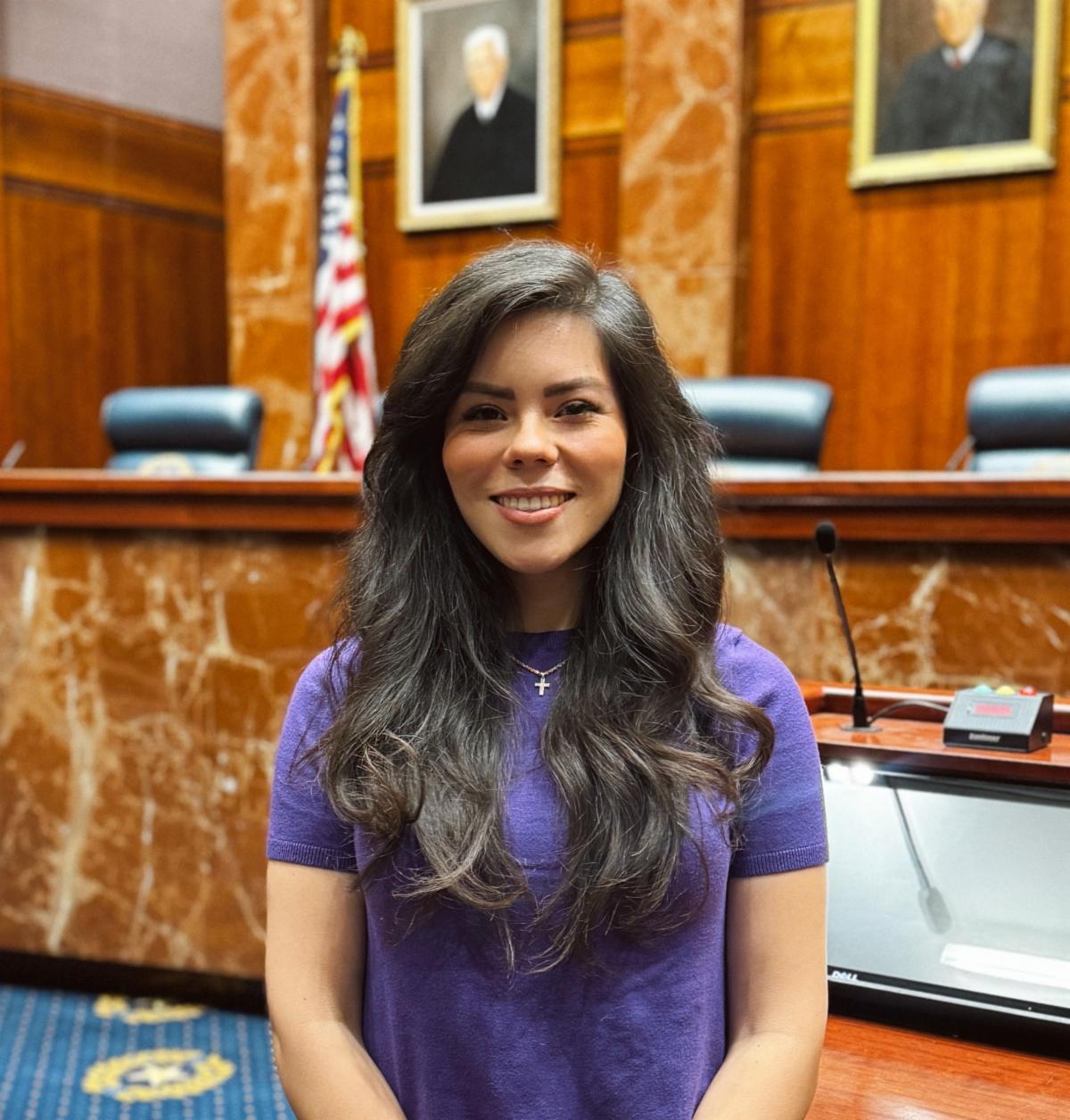
Brenda Daniela Rivera López

Hometown:

Monterrey, Nuevo León


Degree Program:

Ph.D. in Educational Leadership


Institution:

The University of Texas at San Antonio


Advisor:

Dr. Claudia García-Louis


Tell us about your research project and why it is important to you?  


I am proudly Norteña, born and raised in the city of mountains, Monterrey, Nuevo León. Being a Mexican national navigating the American higher education system has brought with it multiple challenges. This inspired my research project, which focuses on the experiences of Mexican women pursuing their doctoral degrees in the United States, specifically in Texas. It is important to know the unique stories of the students, especially the challenges and obstacles they have faced, from the process of applying to the doctoral program to the day when they complete their graduate studies. Since academic training in Mexico is completely different, becoming familiar with the U.S. educational system is a challenge. Despite the difficulties, it is important to share that it is a wonderful experience. I am fascinated by the idea of being able to encourage more Mexican women to pursue a graduate degree abroad through the testimonials I am collecting for my research. Above all, I am interested in transmitting the importance of our roots, culture and community.   


Have you presented or published your research anywhere? Tell us about the experience.  


Throughout the doctoral program I have had the opportunity to present my work in Seattle, Minneapolis, Honolulu, New Orleans, Oaxaca, Austin and San Antonio. They have definitely been unforgettable experiences that I highly recommend for those who enter this program and want to continue adding to their professional and personal growth. They are a great opportunity to connect with more colleagues and to extend the network of contacts for future research and collaborations. Thanks to UTSA I have been able to attend conferences and be a member of NASPA, NCORE, ASHE, MALCS, SERA and TACHE.


What would you say is something interesting about your area of study that most people don't know? 


While pursuing our bachelor's and even our master's degrees, we hear stories of people who do their graduate studies abroad, but we are not really aware of the experiences they go through. Being away from your country you face challenges and sacrifices, in addition to being far from your family and friends. The way in which you cope with difficulties can determine how well you do in your studies and the possibility of being able to successfully complete them. For this reason, I want more people to be aware of the challenges that Mexican women face while studying in the United States. By exploring the personal and academic experiences of individuals in the context of their country of origin, gender, race, ethnicity and culture, it is possible to share experiences that many people are unaware of. As a method of data collection, we engage in conversations in which we build safe spaces to listen to their stories and collect their testimonies. I hope that those women who have the desire to continue their professional training abroad will identify with the stories of other Mexican women who have preceded them and will not feel alone in their academic trajectory.    


Tell us about your academic or professional collaborations with Mexico.  


I worked for almost 10 years for the Universidad Autónoma de Nuevo León, where I earned my bachelor's and master's degrees. My intention is to continue collaborating in higher education in my country. Being able to present my research at the Universidad Nacional Autónoma de México was a great opportunity to connect with my people and share the work I have done throughout my stay in the United States. 


What attracted you to Texas and The University of Texas at San Antonio?  


Being originally from Nuevo Leon, and given the geographical proximity, I had the opportunity to travel to Texas multiple times. I prepared myself for many years studying English, so coming to the United States was a great option. I always dreamed of studying abroad. Searching within the University of Texas System institutions I came across the Ph.D. in Educational Leadership at the University of Texas at San Antonio (UTSA). After reviewing the information on the digital platforms, listening to interviews with professors and alumni, and confirming that UTSA has the Carnegie R1 classification, I decided to apply to this university.


What have been some good things you didn't expect from Texas or UTSA? 


I have connected with many people who have Mexican roots. I would have never imagined that in Texas my closest friends would be from California. When you are a foreigner and you don't know anyone, the best thing that can happen to you is to be able to build a network of friends.


I love the events UTSA organizes to help students get to know each other. Socializing and building community is the key to navigating academia successfully. With that in mind, I helped found and am vice president of an international student association called The Global Citizen Association. I also serve on my college's Dean's Student Advisory Council. The College of Education and Human Development, the Graduate School and the Office of Global Initiatives organize groups and events through which they have created amazing spaces that have helped make me feel at home.


What have been the biggest challenges of studying at UTSA and living in the United States?  


One of the biggest challenges is the language. Even if you are fluent in English, there is nothing like your native language, but with time you become more familiar with English and everything gets easier. Another challenge has to do with family finances, because living in the United States is expensive and you have to be organized and a good administrator so that money is not a concern. Being in the field of education, I have faced challenges such as understanding more about the educational system in this country. Most of my classmates were born and raised in the United States, so it has been an extra effort for me to learn about the system. At the same time, it fascinates me because it is all new to me.      


How has the support of ConTex and Secihti impacted you?  


Without this financial support it would not have been possible for me to come here to study my doctoral program. I am very grateful for this governmental support that allows us to continue preparing ourselves academically and fulfilling our dreams. I feel very fortunate, since I also had a scholarship from Conahcyt/Secihti for my master's studies.   


What kind of work do you hope to do in the future, and how do you hope your research will benefit people in the U.S. and Mexico? 


I am certain that I want to continue working in education. Higher education is something I am passionate about. For me, students are the engine of universities and they are the ones who give life to the institutions. I want to continue working on my research about Mexican women in academia in the United States. I would also love to work on cross-border projects that include Mexican women on the U.S.-Mexico border. My intention is to help empower women who dream of continuing with their education; to contribute to the strengthening of academic and cultural exchange between both countries with a focus on transnational dynamics.       


What advice would you give to other Mexican students considering studying in Texas?  


Studying a doctoral program abroad is a unique opportunity. It is normal to feel overwhelmed, fearful, and uncertain of all that this experience might entail. Taking the first step is the hardest part, the rest will flow. The ConTex-Secihti scholarship is a great source of supporta to continue preparing yourself academically. My advice would be, start with what you have and little by little build your way. Make an effort and be brave, because it is a challenging process. Have a network of people close to you who will be of great emotional support throughout your studies. I am very grateful to have the support of my husband, without him this dream would not have been possible. I am also grateful to my family and friends, who continue to support me from afar. 


Let's continue to represent Mexico with pride worldwide.


Conversaciones ConTex

Abril de 2025

 
Para celebrar los logros de nuestros becarios de doctorado, periódicamente publicamos conversaciones con diferentes miembros de la familia ConTex. Ellos nos hablan de sus proyectos de investigación, de sus metas y de su entusiasmo por la investigación binacional.
 

Brenda Daniela Rivera López

Lugar de Nacimiento: Monterrey, Nuevo León


Programa de Estudios: Doctorado en Liderazgo Educativo 


Institución:

La Universidad de Texas en San Antonio


Asesor:

Dr. Claudia García-Louis


Cuéntanos acerca de tu proyecto de investigación y por qué es importante para ti.


Soy orgullosamente norteña, nacida y criada en la ciudad de las montañas, Monterrey, Nuevo León. Ser mexicana navegando la educación superior estadounidense ha traído consigo múltiples retos. Esto inspiró mi proyecto de investigación, que se enfoca en las experiencias de mujeres mexicanas que están estudiando su doctorado en Estados Unidos, específicamente en Texas. Es importante conocer las historias particulares de las estudiantes, especialmente los retos y obstáculos a los que se han enfrentado desde el proceso de hacer solicitud al programa doctoral hasta el día en que habrán de culminar su posgrado. Puesto que la formación académica en México es completamente diferente, familiarizarse con el sistema educativo de Estados Unidos es un reto. A pesar de las dificultades es importante compartir que es una experiencia maravillosa. Me fascina la idea de poder alentar a más mexicanas a realizar un posgrado en el extranjero a través de los testimonios que estoy recolectando para mi investigación. Sobre todo, me interesa transmitir la importancia de nuestras raíces, cultura y comunidad. 


¿Has presentado o publicado tu investigación en algún lugar? Cuéntanos sobre la experiencia.  


A lo largo de mi programa de doctorado he tenido la oportunidad de presentar mi trabajo en Seattle, Minneapolis, Honolulu, Nueva Orleans, Oaxaca, Austin y San Antonio. Definitivamente han sido experiencias inolvidables y que recomiendo ampliamente para seguir sumando al crecimiento profesional y personal de quienes entran en este programa. Son una gran oportunidad para conectar con más colegas y para extender la red de relaciones para futuras investigaciones y colaboraciones. Gracias a UTSA me ha sido posible asistir a conferencias y ser miembro de NASPA, NCORE, ASHE, MALCS, SERA y TACHE.    


¿Qué dirías que es algo interesante sobre tu área de estudio que la mayoría de la gente no sabe?  


Cuando estamos estudiando la licenciatura, incluso la maestría, escuchamos historias de personas que realizan sus estudios de posgrado en el extranjero, pero no conocemos realmente las experiencias que tienen. Al estar fuera de tu país enfrentas retos y sacrificios, además de estar lejos de tu familia y amigos. La forma en la que sobrellevas las dificultades puede determinar el desempeño en tus estudios y la posibilidad de poder culminarlos satisfactoriamente. Por esta razón me interesa que más personas conozcan los retos a los que se enfrentan las mujeres mexicanas al estar estudiando en Estados Unidos. Mediante la exploración de las vivencias personales y académicas de los individuos en el contexto de su país de origen, género, raza, etnia y cultura es posible dar a conocer experiencias que muchas gentes desconocen. Como método de recolección de datos se entablan conversaciones en las que se construyen espacio seguro para escuchar sus historias recabar sus testimonios. Espero que aquellas mujeres que tengan el deseo de seguirse preparando profesionalmente en el extranjero se identifiquen con las historias de otras mexicanas que las han precedido y que no se sientan solas en su trayectoria académico.   


Cuéntanos sobre tus colaboraciones académicas o profesionales con México.  


Trabajé durante casi 10 años para la Universidad Autónoma de Nuevo León, donde también realicé mis estudios de licenciatura y maestría. Mi intención es seguir colaborando en la educación superior de mi país. El haber podido presentar mi investigación en la Universidad Nacional Autónoma de México fue una gran oportunidad para conectar con mi gente y dar a conocer el trabajo que he realizado a lo largo de mi estancia en Estados Unidos.    


¿Qué te atrajo a Texas y a la Universidad de Texas en San Antonio?  


Por ser originaria de Nuevo León, y dada la cercanía geográfica, tuve la oportunidad de viajar a Texas múltiples veces. Me preparé durante muchos años estudiando inglés, por lo que venirme a Estados Unidos era una gran opción. Siempre soñé con realizar estudios en extranjero. Buscando dentro de las instituciones del Sistema de la Universidad de Texas me encontré el programa de Doctorado en Liderazgo Educativo (Educational Leadership) en la Universidad de Texas en San Antonio (UTSA). Después de revisar la información en las plataformas digitales, escuchar entrevistas de profesores y egresados y comprobar que UTSA tiene la clasificación de Carnegie R1, me decidí a hacer solicitud en esta universidad.     


¿Cuáles han sido algunas cosas buenas que no esperabas de Texas o de UTSA?  


He conectado con muchas personas que tienen raíces mexicanas. Jamás hubiera imaginado que en Texas mis amigas más cercanas serían de California. Cuando eres extranjero y no conoces a nadie, lo mejor que te puede pasar es lograr construir una red de amigos.


Me encantan los eventos que UTSA organiza para contribuir a que los estudiantes se conozcan. Socializar y hacer comunidad es la clave para navegar la academia con éxito. Con eso en mente, ayudé a fundar y soy vicepresidenta de una asociación de estudiantes internacionales llamada The Global Citizen Association. También formo parte del Dean’s Student Advisory Council de mi colegio. El Colegio de Educación y Desarrollo Humano, la Escuela de Posgrados y la Oficina de Iniciativas Globales organizan grupos y eventos mediante los que han creado espacios increíbles que han contribuido a que me sienta como en casa.     


¿Cuáles han sido los mayores desafíos de estudiar en UTSA y vivir en los Estados Unidos?  


Uno de los mayores desafíos es el idioma. Aunque domines el inglés, no hay nada como tu lengua materna, pero con el tiempo te vas familiarizando con el inglés y todo se te va haciendo más sencillo. Otro reto es la cuestión económica, pues vivir en Estados Unidos es caro y tienes que ser organizado y buen administrador para que el dinero no sea una preocupación. Al yo estar en el área de educación, he enfrentado retos como entender más acerca del sistema educativo en este país. La mayoría de mis compañeros nacieron y crecieron en Estados Unidos, por lo que para mí ha representado un esfuerzo extra el aprender acerca del sistema. Al mismo tiempo, me fascina, pues todo esto es nuevo para mí.       


¿De qué manera te ha impactado el apoyo de ConTex y Secihti?  


Sin este apoyo económico no me hubiera sido posible venir a estudiar mi programa doctoral. Estoy muy agradecida de que existan estos apoyos gubernamentales que nos permiten seguir preparándonos académicamente y cumpliendo nuestros sueños. Me siento muy afortunada, ya que también tuve beca de Conahcyt/Secihti para mis estudios de maestría.  


¿Qué tipo de trabajo esperas hacer en el futuro? ¿De qué manera esperas que tu investigación beneficie a las personas en los Estados Unidos y México?  


Tengo la seguridad de que quiero seguir dedicando mi vida a la educación. La educación superior es algo que me apasiona. Para mí, los estudiantes son el motor de las universidades y son ellos quienes les dan vida a las instituciones. Deseo seguir trabajando en mi investigación acerca de mujeres mexicanas en la academia de Estados Unidos. También me encantaría trabajar en proyectos transfronterizos que incluyan a mujeres mexicanas que se encuentran en las fronteras de México y Estados Unidos. Mi intención es ayudar a empoderar a las mujeres que sueñan con seguir preparándose académicamente; contribuir al fortalecimiento del intercambio académico y cultural entre ambos países con un enfoque en las dinámicas transnacionales.      


¿Qué consejo le darías a otros estudiantes mexicanos que estén considerando estudiar en Texas?  


Estudiar un programa de doctorado en el extranjero es una oportunidad única. Es normal sentirse abrumado, con temor e incertidumbre de todo lo que podría implicar esta experiencia. Dar el primer paso es lo más difícil, lo demás va fluyendo. La beca de ConTex-Secihti es un gran apoyo para poder seguir preparándote académicamente. Mi consejo sería, empiecen con lo que tienen y poco a poco construyan el camino. Esfuércense y sean valientes, pues es un proceso retador. Tengan una red de personas cercanas que serán de gran apoyo emocional a lo largo de sus estudios. Me siento muy agradecida por contar con el apoyo de mi esposo, ya que sin él este sueño no hubiera sido posible. Agradezco también a mi familia y amigos, quienes me siguen apoyando desde lejos.


Sigamos representando a México con orgullo a nivel mundial.  


Visit Our Website
Facebook  Twitter