ConTex Conversations

January 2026


To celebrate the achievements of our ConTex family, we periodically feature insightful conversations with some of our doctoral fellows. They talk to us about their research, goals, and enthusiasm for binational collaboration.


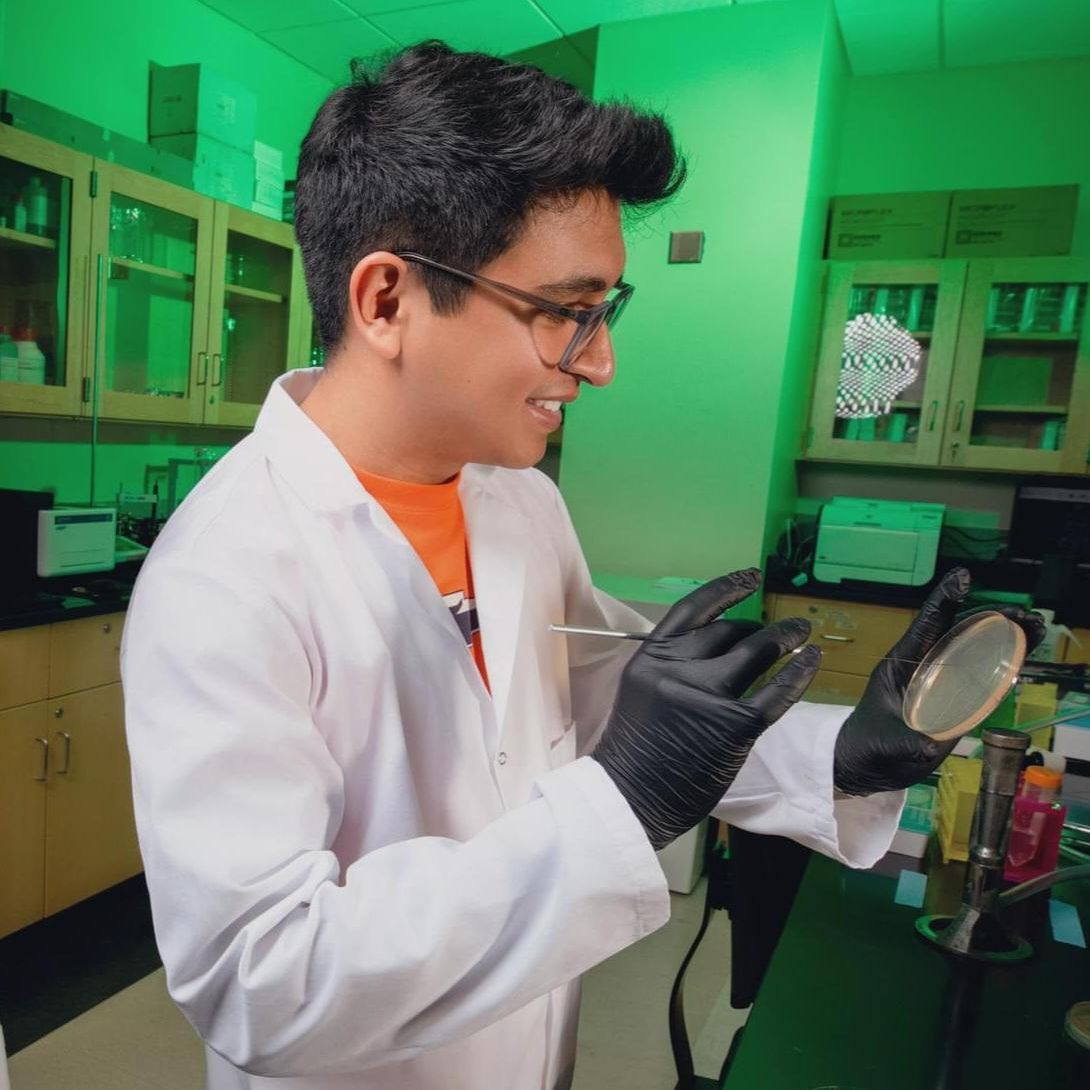
Luis Antonio Gracia Mazuca

Hometown:

Ciudad Juárez, Chihuahua 


Degree Program:

Ph.D. in Chemistry


Institution:

The University of Texas at El Paso


Advisor:

Dr. Eda Koculi  


Tell us about your research project and why it is important to you.  


My research project examines the maturation of ribosomes in E. coli, with a specific focus on the modifications that ribosomal RNA undergoes during this process. These changes, known as post-transcriptional modifications, constitute a form of epigenetic regulation present in all living organisms and in all their RNA variants. Their relevance in numerous biological processes and in various pathophysiologies has driven the growth in recent years of epitranscriptomics—the field that studies these modifications. However, since this is still a developing area, the techniques available for detecting RNA modifications remain limited, and this is where I seek to contribute with my research.


This project is of great importance to me because it gives me the opportunity to contribute to the development of techniques for the detection of RNA modifications, an objective identified as a priority by the National Academies of Sciences, Engineering, and Medicine, and also because I am taking part in the work of a group of pioneering scientists in this area of study. In addition, this experience has allowed me to publish original research in international scientific journals and connect with leading scientists in the field. It is also relevant because the discoveries made by our group will lay the groundwork for future researchers to develop new therapies and diagnostic methods for various diseases.


Have you presented or published your research anywhere? Tell us about the experience.  


To date, I have published the results of my research in two articles, both in the journal Biochemistry. The first article was selected as the main cover of the journal, and the second, as the supplementary cover. I have also presented posters at national and international conferences. Recently, I had the opportunity to present at the 39th Gibbs Conference on Biothermodynamics a project focused on the detection of post-transcriptional modifications in ribosomal RNA using nanopore sequencing.


Publishing and presenting the progress of my research has been a very enriching experience. It has allowed me to showcase my work to world-renowned scientists and, at the same time, strengthen my knowledge of biochemistry, especially of RNA modifications.


Share with us something interesting about your research that most people don't know.


Most people are unaware that RNA modifications play important roles in countless biological and biochemical processes, such as antibiotic resistance, diseases like cancer, and neurodegenerative conditions such as Alzheimer's and Parkinson's, among many others.


To date, scientists have identified more than 170 modifications in the RNA bases. We know that the four bases, or canonical blocks, that make up RNA—adenosine, uridine, cytidine, and guanosine—can be chemically modified. These RNA modifications have the potential to be used as pharmaceutical targets, or as biomarkers, for the detection of various diseases, which is why this field of study is rapidly developing.


Tell us about your academic or professional collaborations with Mexico.  


Under Dr. Koculi's guidance, I had the opportunity to organize several events to inform students at the Autonomous University of Ciudad Juárez (UACJ) about the opportunities offered by UT El Paso in different areas of research. As a result of these collaborations, four graduates from UACJ have joined the Ph.D. in Chemistry and Biochemistry here. 


What attracted you to Texas and The University of Texas at El Paso?  


UT El Paso is a highly prestigious institution in the border region. From a very early age I wanted to study in the United States, and UT El Paso always stood out as the most viable and attractive option for me, especially because of its commitment to high-impact scientific research. My studies here began with my bachelor's degree; upon completing it, I decided to pursue a master's degree in bioinformatics. While pursuing my master's I was able to participate in various research projects, which is how I met Dr. Koculi. Inspired by the work she was doing in her lab, I decided to continue with my graduate studies and enroll in the Chemistry and Biochemistry doctoral program.


What have been some good things you didn't expect from Texas or UT El Paso? 


Something that surprised me is that there is a lot of collaboration between scientists at UT El Paso and scientists at institutions of higher education in Mexico. Many of the professors in the Chemistry doctoral program have ties to professors at institutions such as UACJ, the Autonomous University of Chihuahua, and the National Autonomous University of Mexico (UNAM), among many others. These collaborations strengthen the bond between Mexico and the United States and make it possible for more Mexican students to continue their studies in this country and conduct high-level research.


What have been the biggest challenges of studying at UT El Paso and living in the United States?  


A challenge confronting students like me, who live in and are originally from Ciudad Juárez, is having to cross the border almost every day. Many of us start our day by traveling from distant neighborhoods to border crossings. We must cover long distances, which affects our academic performance. However, this challenge also allows us to build skills, such as discipline and perseverance, that strengthen us and help us successfully navigate our academic careers.     


How has the support of ConTex and Secihti impacted you?  


The support I have received from ConTex and Secihti has been key to my development as a doctoral student; it has given me the financial stability I need to advance toward the completion of my studies. Not having to worry about covering the program fees allows me to focus on my research and academic work, which is reflected in a stronger performance.


Similarly, belonging to the community of Secihti scholars has allowed me to meet other graduate students, both from UT El Paso and other universities around the world. Together, we have formed a support network that makes the path to graduation easier, providing opportunities and making the challenges more manageable.


What kind of work do you hope to do in the future, and how do you hope your research will benefit people in the U.S. and Mexico? 


I hope to have the opportunity to work as a principal investigator in my own laboratory and contribute to the evolution of the field of epitranscriptomics by developing new techniques for detecting RNA modifications.


My vision is to collaborate with scientists in Mexico and the United States to apply the latest advances in this field to the development of new therapies and drugs. I hope that these innovations will contribute to improving the quality of life for patients suffering from diseases related to RNA modifications.   


What advice would you give to other Mexican students considering studying in Texas?  


Texas is home to internationally renowned institutions dedicated to high-impact scientific research, offering numerous opportunities for Mexican students. My advice to those who wish to follow this path is to explore the programs that these institutions offer and reach out to researchers working in their areas of interest. Initiatives such as the Secihti-ConTex Scholarships for Study Abroad Program provide us with the opportunity to train as scientists and contribute to the future development of Mexico and the United States.

Publications

Gracia Mazuca, L.A., Mohl, J. E., Cho, S. S., and Koculi, E. (2025) Post-transcriptional Modifications of the Large Ribosome Subunit Assembly Intermediates in E. coli Expressing Helicase-inactive DbpA Variant, Biochemistry, Vol 64, Issue 14, 2976-2990. (Artwork selected as supplementary cover for this issue.)


Narayan, G., Gracia Mazuca, L. A., Cho, S. S., Mohl, J. E., and Koculi, E. (2023) RNA Post-transcriptional Modifications of an Early-Stage Large-Subunit Ribosomal Intermediate, Biochemistry, Vol 62, Issue 20, 2908-2915. (Artwork selected as main cover of this issue of journal.)


Conversaciones ConTex

Enero de 2026


 Para celebrar los logros de nuestra familia ConTex, periódicamente publicamos conversaciones con algunos de nuestros becarios de doctorado. Ellos nos hablan de sus proyectos de investigación, sus metas y su entusiasmo por la colaboración binacional.


Luis Antonio Gracia Mazuca

Lugar de Nacimiento: Ciudad Juárez, Chihuahua


Programa de Estudios: Doctorado en Química 


Institución:

La Universidad de Texas en El Paso


Asesora:

Dra. Eda Koculi


Cuéntanos acerca de tu proyecto de investigación y por qué es importante para ti.


Mi proyecto de investigación analiza la maduración de los ribosomas en E. coli, enfocándose específicamente en las modificaciones que experimenta el ácido ribonucleico (ARN) ribosomal durante este proceso. Estas modificaciones, conocidas como postranscripcionales, constituyen una forma de regulación epigenética presente en todos los organismos vivos y en todas las variantes de ARN. Su relevancia en numerosos procesos biológicos y en diversas fisiopatologías ha impulsado en los últimos años el crecimiento de la epitranscriptómica ―campo que estudia dichas modificaciones. No obstante, al tratarse de un área aún en desarrollo, las técnicas disponibles para la detección de modificaciones de ARN siguen siendo limitadas, y es ahí donde busco contribuir con mi investigación.


Este proyecto es de gran importancia para mí porque me permite no solo contribuir al desarrollo de técnicas para la detección de modificaciones de ARN, objetivo identificado como prioritario por las Academias Nacionales de Ciencias, Ingeniería y Medicina, sino también formar parte del grupo de científicos pioneros en este ámbito. Además, esta experiencia me ha brindado la oportunidad de publicar investigación original en revistas científicas internacionales y de conocer a científicos líderes en el área. Es relevante también porque los descubrimientos de nuestro grupo de investigación podrán servir como base para que futuros científicos avancen en el desarrollo de terapias y métodos para la detección de diversas enfermedades.


¿Has presentado o publicado tu investigación en algún lugar? Cuéntanos sobre la experiencia.  


A la fecha he publicado los avances de mi investigación en dos artículos, ambos en la revista Biochemistry. El primer artículo fue seleccionado como portada principal de la revista y el segundo como portada suplementaria. También he presentado posters en conferencias nacionales e internacionales. Recientemente, tuve la oportunidad de presentar en la edición 39 de la Conferencia Gibbs de Biotermodinámica un proyecto enfocado en la detección de modificaciones postranscripcionales en ARN ribosomal con el uso de secuenciación por nanoporos.


Mi experiencia publicando y presentando los avances en mi investigación ha sido sumamente enriquecedora. Me ha permitido mostrar mi trabajo a científicos de reconocimiento mundial y, al mismo tiempo, fortalecer mis conocimientos en bioquímica, especialmente en las modificaciones del ARN.


Compártenos algo interesante sobre tu investigación que la mayoría de la gente no sabe. 


La mayoría de las personas no saben que las modificaciones del ARN juegan un papel importante en un sinfín de procesos biológicos y bioquímicos, tales como la resistencia a antibióticos, enfermedades como el cáncer, y condiciones neurodegenerativas como el Alzheimer y el Parkinson, entre muchas otras. 


A la fecha, los científicos han identificado más de 170 modificaciones en las bases del ARN. Sabemos que las cuatro bases, o bloques canónicos, que conforman el ARN ―la Adenosina, Uridina, Citidina, y Guanosina― pueden ser químicamente modificadas. Estas modificaciones del ARN tienen el potencial de ser usadas como dianas farmacéuticas, o biomarcadores, para la detección de distintas enfermedades, por lo que este campo de estudio se encuentra en creciente desarrollo.


Cuéntanos sobre tus colaboraciones académicas o profesionales con México.  


Bajo la tutela de la Dra. Koculi tuve la oportunidad de organizar algunos eventos para dar a conocer a estudiantes de la Universidad Autónoma de Ciudad Juárez (UACJ) las oportunidades que ofrece UT El Paso en distintas áreas de investigación. Como resultado de estas colaboraciones se han incorporado al programa de Doctorado en Química y Bioquímica en UT El Paso cuatro estudiantes egresados de la UACJ.


¿Qué te atrajo a Texas y a la Universidad de Texas en El Paso?  


UT El Paso es una institución de gran prestigio en la región fronteriza. Desde muy temprana edad tuve el deseo de estudiar en Estados Unidos y UT El Paso siempre destacó como la opción más viable y atractiva para mí, especialmente por su compromiso con la investigación científica de alto impacto. Mis estudios aquí comenzaron desde la licenciatura, al término de la cual decidí continuar con una maestría en bioinformática. Durante mis estudios de maestría me pude involucrar en diversos proyectos de investigación, y fue así como conocí a la Dra. Koculi. Inspirado por el trabajo que realizaba en su laboratorio, decidí continuar con mis estudios de posgrado e inscribirme en el programa de Doctorado en Química y Bioquímica.    


¿Cuáles han sido algunas cosas buenas que no esperabas de Texas o de UT El Paso?  


Algo que me sorprendió es que existe mucha colaboración entre científicos de UT El Paso y científicos de instituciones de educación superior en México. Muchos de los profesores del Doctorado en Química tienen lazos con profesores en instituciones como la UACJ, la Universidad Autónoma de Chihuahua y la UNAM, entre muchas otras. Estas colaboraciones fortalecen el vínculo entre México y Estados Unidos y hacen posible que más estudiantes mexicanos tengan la oportunidad de continuar sus estudios en este país y hacer investigación de alto nivel.


¿Cuáles han sido los mayores desafíos de estudiar en UT El Paso y vivir en los Estados Unidos?  


Un desafío que enfrentan estudiantes como yo, que residen y son originarios de Ciudad Juárez, es tener que cruzar la frontera de manera casi cotidiana. Muchos de nosotros comenzamos el día trasladándonos desde barrios lejanos a los cruces fronterizos. Tenemos que recorrer largos trayectos, lo cual afecta nuestro desempeño académico. Sin embargo, este reto también nos ayuda a desarrollar capacidades, como la disciplina y la perseverancia, que nos fortalecen y nos permiten transitar con éxito nuestras trayectorias académicas.


¿De qué manera te ha impactado el apoyo de ConTex y Secihti?  


El apoyo que me han brindado ConTex y Secihti ha sido fundamental para mi desarrollo como estudiante de doctorado; me ha dado la estabilidad financiera que necesito para avanzar hacia la conclusión de mis estudios. Al no tener que preocuparme por cubrir las cuotas del programa en UT El Paso, puedo concentrarme plenamente en mi investigación y mi trabajo académico, lo que se refleja en un desempeño más sólido.


De igual manera, pertenecer a la comunidad de becarios de Secihti me ha brindado la oportunidad de conocer a otros estudiantes de posgrado, tanto de UT El Paso como de otras universidades alrededor del mundo. Juntos hemos formado una red de apoyo que hace más llevadero el camino hacia la graduación, abriendo oportunidades y aminorando las dificultades.


¿Qué tipo de trabajo esperas hacer en el futuro? ¿De qué manera esperas que tu investigación beneficie a las personas en los Estados Unidos y México?  


Espero tener la oportunidad de trabajar como investigador principal en mi propio laboratorio y contribuir a la evolución del campo de la epitranscriptómica mediante el desarrollo de nuevas técnicas para la detección de modificaciones del ARN.


Mi visión es colaborar con científicos en México y Estados Unidos para crear nuevas terapias y fármacos. Aspiro a que estas innovaciones contribuyan a mejorar la calidad de vida de los pacientes que padecen enfermedades relacionadas con las modificaciones del ARN.


¿Qué consejo le darías a otros estudiantes mexicanos que estén considerando estudiar en Texas?  


Texas cuenta con instituciones de prestigio internacional, dedicadas a la investigación científica de alto impacto que brindan numerosas oportunidades para estudiantes mexicanos. Mi consejo para quienes deseen seguir este camino es que exploren los programas que ofrecen estas instituciones y contacten a investigadores que trabajen en las áreas de su interés. Iniciativas como el Programa de Becas Secihti-ConTex para Estudios en el Extranjero nos brindan la posibilidad de formarnos como científicos y contribuir al futuro desarrollo de México y Estados Unidos.   

Publicaciones

Gracia Mazuca, L.A., Mohl, J. E., Cho, S. S., and Koculi, E. (2025) Post-transcriptional Modifications of the Large Ribosome Subunit Assembly Intermediates in E. coli Expressing Helicase-inactive DbpA Variant, Biochemistry, Vol 64, Issue 14, 2976-2990 (ilustración seleccionada como portada complementaria para este número).


Narayan, G., Gracia Mazuca, L. A., Cho, S. S., Mohl, J. E., and Koculi, E. (2023) RNA Post-transcriptional Modifications of an Early-Stage Large-Subunit Ribosomal Intermediate, Biochemistry, Vol 62, Issue 20, 2908-2915 (ilustración seleccionada como portada principal de este número de la revista).


Facebook  Twitter