ConTex Conversations

March 2025

 
To celebrate the achievements of our doctoral fellows, we periodically feature conversations with various members of the ConTex family. They talk to us about their research, goals, and enthusiasm for binational research.


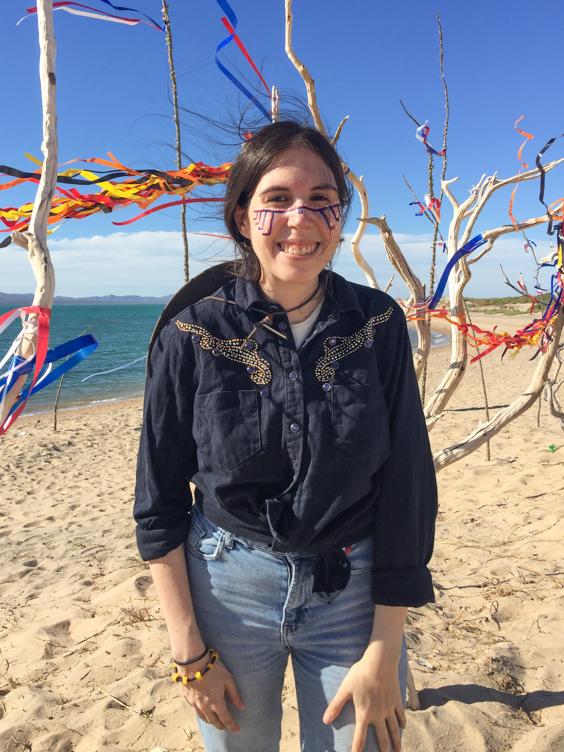
Raquel Torua Padilla

Hometown:

Hermosillo, Sonora


Degree Program:

Ph.D. in History


Institution:

The University of Texas at Austin


Advisor:

Dr. Matthew Butler


Tell us about your research project and why it is important to you?  


I am studying the military involvement of the Yaquis during the revolutionary and post-revolutionary period in Mexico, as well as the diaspora that resulted from their involvement with the army and other revolutionary groups. The Yaquis, who had been resisting the government for centuries, faced a complex situation at the beginning of the 20th century: some joined the army by choice, but many were captured and forced to serve under the leva system. This led to the dispersion of Yaqui families throughout Mexico and the migration of many others to the United States. There are even some indications that they may have been sent to Morocco to fight in the Rif War.  


My interest lies in understanding the social fractures that this process generated within the tribe and the implications it had both in the past and in the present. If we are to understand the current struggles of the Yaqui people, their resistance and persistence as a community, it is essential to examine their history with pertinent questions. I firmly believe that history can be a powerful tool to vindicate the contemporary struggles of indigenous peoples.   


Have you presented or published your research anywhere? Tell us about the experience.  


I have presented my work in several academic forums and published in books and journals in Mexico, such as Cuicuilco and Noroeste de México. Although the process to publish can be long and quite bureaucratic, it is always gratifying to see my ideas captured in a story that can be read, discussed and, why not, questioned.  


Something that fills me with satisfaction is to share my work directly in Yaqui territory, with the Yoemem (Yaquis) themselves, who sometimes invite me to give talks to inform them of my research progress. I have always done this with great respect and pride, knowing that I am in front of the experts of their own history. I always leave these sessions with more work and things to do.  


What would you say is something interesting about your area of study that most people don't know? 


It is easy to ignore that what happens in the present is deeply connected to the past. Every historical process leaves traces that shape our current realities: how we think, how we relate to each other, and how we understand the world. The power structures, social inequalities, and cultural conflicts we face today have historical roots that often go back centuries. In the case of Mexico's indigenous peoples, current struggles for territory, natural resources, autonomy and cultural recognition are not new problems; they are the direct result of historical processes such as colonization, territorial dispossession, economic exploitation, and systematic violence that they have suffered since the arrival of Europeans and, later, with the beginning of the independent era.    


Tell us about your academic or professional collaborations with Mexico.  


I try to stay connected to Mexican academia. I have participated in academic events in Mexico, collaborated in collective publications, and attended seminars and workshops, often remotely. For example, last year I participated in a seminar in Ethnohistory organized by the ENAH, where I learned a lot and shared ideas with incredible researchers. I also participated in a collective book (soon to be published), the product of a seminar lasting several months, in which several academics discussed topics on the border, indigenous societies, and liberalism in Mexico from the seventeenth to the twentieth century. For me it is very important to maintain these links with my country and the academy with which I am familiar and to which I hope to return very soon. 


What attracted you to Texas and The University of Texas at Austin?  


The University of Texas at Austin has one of the most outstanding programs in Latin American history in the world, especially in Mexican studies, and its library-collection of Latin American materials, the famous Benson, is among the largest in the world. This is why UT Austin attracts brilliant and dedicated faculty and students focused on history and Latin American studies. The discussions and debates are always enriching and respectful, and I knew I wanted to be part of this academic community. The academic opportunities that UT Austin offers are something for which I am very grateful.  


I also have a personal connection to UT Austin, as my mom was a visiting professor at LLILAS in 2014 and lived here for a while with my siblings, who were thrilled to reside in such a safe, fun, and welcoming city.


What have been some good things you didn't expect from Texas or UT Austin? 


One thing that surprised me is how openly Hispanic and Latino culture is lived and celebrated in Austin and UT. Many people speak Spanish and express their culture with pride. Not only has this made me miss Mexico less, but it has also allowed me to learn about and enjoy the cultures of other Latin American countries, such as Colombia, Chile and Brazil.


What have been the biggest challenges of studying at UT Austin and living in the United States?  


Personally, being away from my family and loved ones. Professionally, not being close to the Yaqui, with whom I try to continue to maintain a bond, despite the distance.      


How has the support of ConTex and Secihti impacted you?  


Thanks to the support of ConTex and Secihti I am able to carry out my research without so many economic limitations. This support has allowed me to live without difficulties in Austin, which is a city with a high cost of living. In addition, I am sincerely proud to recognize that my project has the support of the Mexican government and institutions.   


What kind of work do you hope to do in the future, and how do you hope your research will benefit people in the U.S. and Mexico? 


I hope to continue doing research, teaching, and disseminating the history of the Yaqui ethnic group, which is a trans-border people (due to its diaspora because of the war). I would like to contribute with academic tools to help indigenous people in their struggles, as well as to foster a better understanding among non-indigenous groups about the roots of these issues to combat a little of the discrimination that is common in Mexico.       


What advice would you give to other Mexican students considering studying in Texas?  


UT Austin is a university full of opportunities and resources that would be difficult to access in Mexico. There is a community of dedicated, hard-working Latin Americans with great human values supporting us, sharing and enriching our academic and social experiences. Besides, Austin is a very nice city to live in. Without being big and overwhelming, there are many things to do and visit. I believe that despite the current political context, UT Austin is still a good place to achieve our academic and personal goals.


Conversaciones ConTex

Marzo de 2025

 
Para celebrar los logros de nuestros becarios de doctorado, periódicamente publicamos conversaciones con diferentes miembros de la familia ConTex. Ellos nos hablan de sus proyectos de investigación, de sus metas y de su entusiasmo por la investigación binacional.
 

Raquel Torua Padilla

Lugar de Nacimiento: Hermosillo, Sonora


Programa de Estudios: Doctorado en Historia 


Institución:

La Universidad de Texas en Austin


Asesor:

Dr. Matthew Butler


Cuéntanos acerca de tu proyecto de investigación y por qué es importante para ti.


Estoy estudiando la participación militar de los yaquis durante el periodo revolucionario y posrevolucionario en México, así como la diáspora que surgió a raíz de su involucramiento con el ejército y otros grupos revolucionarios. Los yaquis, que llevaban siglos resistiendo al gobierno, se enfrentaron a una situación compleja a inicios del siglo XX: algunos se unieron al ejército por decisión propia, pero muchos fueron capturados y forzados a servir bajo el sistema de leva. Esto provocó la dispersión de familias yaquis por todo México y la migración de muchos otros a Estados Unidos. Incluso hay algunos indicios de que pudieron haber sido enviados a Marruecos, para combatir en la guerra del Rif.  


Mi interés radica en entender las fracturas sociales que este proceso generó dentro de la tribu y las implicaciones que tuvo tanto en el pasado como en el presente. Si queremos comprender las luchas actuales del pueblo yaqui, sus resistencias y su persistencia como comunidad, es fundamental examinar su historia con preguntas pertinentes. Creo firmemente que la historia puede ser una herramienta poderosa para reivindicar las luchas contemporáneas de los pueblos indígenas. 


¿Has presentado o publicado tu investigación en algún lugar? Cuéntanos sobre la experiencia.  


He presentado mi trabajo en varios foros académicos y publicado en libros y revistas en México, como Cuicuilco y Noroeste de México. Aunque el proceso para publicar puede ser largo y bastante burocrático, siempre es gratificante ver mis ideas plasmadas en un texto que puede ser leído, discutido y, por qué no, cuestionado.  


Algo que me llena de satisfacción es compartir mi trabajo directamente en territorio yaqui, con los mismos yoemem (yaquis), quienes en ocasiones me invitan a darles charlas para informarles de mis avances de investigación. Siempre lo he hecho con mucho respeto y orgullo, sabiendo que estoy frente a los expertos de su propia historia. Siempre salgo de esas sesiones con más trabajo y cosas por hacer.    


¿Qué dirías que es algo interesante sobre tu área de estudio que la mayoría de la gente no sabe?  


Mucho se ignora que lo que ocurre en el presente está profundamente conectado con el pasado. Cada proceso histórico deja huellas que moldean nuestras realidades actuales: cómo pensamos, cómo nos relacionamos y cómo entendemos el mundo. Las estructuras de poder, las desigualdades sociales y los conflictos culturales que enfrentamos hoy tienen raíces históricas que a menudo se remontan siglos. En el caso de los pueblos indígenas de México, las luchas actuales por el territorio, los recursos naturales, la autonomía y el reconocimiento cultural no son problemas nuevos; son el resultado directo de procesos históricos como la colonización, el despojo territorial, la explotación económica y la violencia sistemática que han sufrido desde la llegada de los europeos y, después, con el inicio de la era independiente.   


Cuéntanos sobre tus colaboraciones académicas o profesionales con México.  


Procuro mantener relación con la academia mexicana. He participado en eventos académicos en México, colaborado en publicaciones colectivas y asistido a seminarios y talleres, a menudo de manera remota. Por ejemplo, el año pasado tomé un seminario en Etnohistoria que impartió la ENAH, donde aprendí muchísimo y compartí ideas con investigadores increíbles. También participé en un libro colectivo (próximo a publicarse), producto de un seminario de varios meses, en el que varios académicos discutimos temas sobre frontera, sociedades indígenas y liberalismo en México del siglo XVII al XX. Para mí es muy importante mantener estos vínculos con mi país y la academia con la que estoy familiarizada y a la que espero volver muy pronto.    


¿Qué te atrajo a Texas y a la Universidad de Texas en Austin?  


La Universidad de Texas en Austin tiene uno de los programas más destacados en Historia de Latinoamérica a nivel mundial, especialmente en estudios sobre México, y su biblioteca-colección de materiales latinoamericanos, la famosa Benson, es de las más grandes del mundo. Por esto UT Austin atrae a brillantes y dedicados profesores y estudiantes enfocados en historia y estudios latinoamericanos. Las discusiones y debates que se generan siempre son enriquecedores y respetuosos, y yo sabía que quería ser parte de esta comunidad académica. Las oportunidades académicas que ofrece UT Austin son algo por lo que estoy muy agradecida.  


También tengo un vínculo personal con UT Austin, ya que mi mamá fue profesora visitante en LLILAS en 2014 y vivió aquí un tiempo con mis hermanos, quienes estuvieron encantados de residir en una ciudad tan segura, divertida y acogedora.     


¿Cuáles han sido algunas cosas buenas que no esperabas de Texas o de UT Austin?  


Algo que me sorprendió es cómo en Austin y en UT se vive y celebra abiertamente la hispanidad y la latinidad. Muchas personas hablan español y manifiestan su cultura con orgullo. Esto no solo ha hecho que extrañe menos México, sino que también me ha permitido conocer y disfrutar culturas de otros países latinoamericanos, como Colombia, Chile y Brasil.     


¿Cuáles han sido los mayores desafíos de estudiar en UT Austin y vivir en los Estados Unidos?  


En lo personal, estar lejos de mi familia y mis seres queridos. En lo profesional, no estar cerca de los Yaquis, con los que intento seguir manteniendo un vínculo, a pesar de la distancia.       


¿De qué manera te ha impactado el apoyo de ConTex y Secihti?  


Gracias al apoyo de ConTex y Secihti puedo llevar a cabo mi investigación sin tantas limitaciones económicas. Este apoyo me ha permitido vivir sin dificultades en Austin, que es una ciudad con un alto costo de vida. Además, sinceramente es un orgullo saber que mi proyecto cuenta con el respaldo del gobierno y las instituciones mexicanas.  


¿Qué tipo de trabajo esperas hacer en el futuro? ¿De qué manera esperas que tu investigación beneficie a las personas en los Estados Unidos y México?  


Espero seguir dedicándome a la investigación, la docencia y la difusión de la historia de la etnia yaqui, que es un pueblo transfronterizo (debido a su diaspora por la guerra). Quisiera aportar herramientas académicas que ayuden a los indígenas en sus luchas, así como fomentar una mejor comprensión entre las sociedades no indígenas sobre las raíces de estas problemáticas para combatir un poco la discriminación que es común en México.      


¿Qué consejo le darías a otros estudiantes mexicanos que estén considerando estudiar en Texas?  


UT Austin es una universidad llena de oportunidades y recursos a los cuales difícilmente tendríamos acceso en México. Existe una comunidad de latinoamericanos dedicados, trabajadores y con una gran calidad humana apoyándonos, compartiendo y enriqueciendo nuestras experiencias académicas y sociales. Además, Austin es una ciudad muy linda para vivir. Hay muchas cosas que hacer y conocer, sin ser grande y abrumadora. Creo que a pesar del contexto político actual, UT Austin sigue siendo un buen lugar para alcanzar nuestras metas académicas y personales.  


Visit Our Website
Facebook  Twitter