|
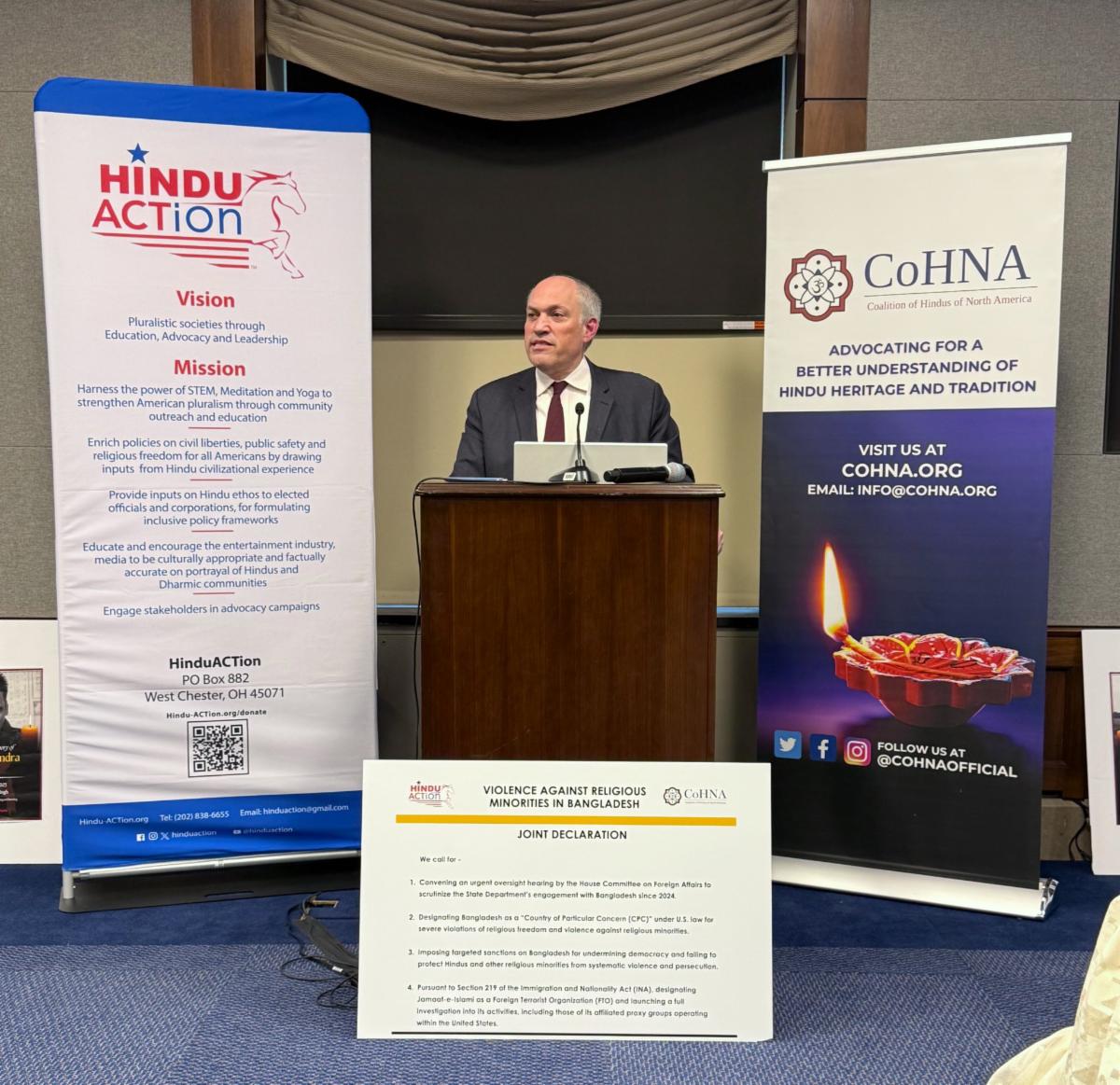
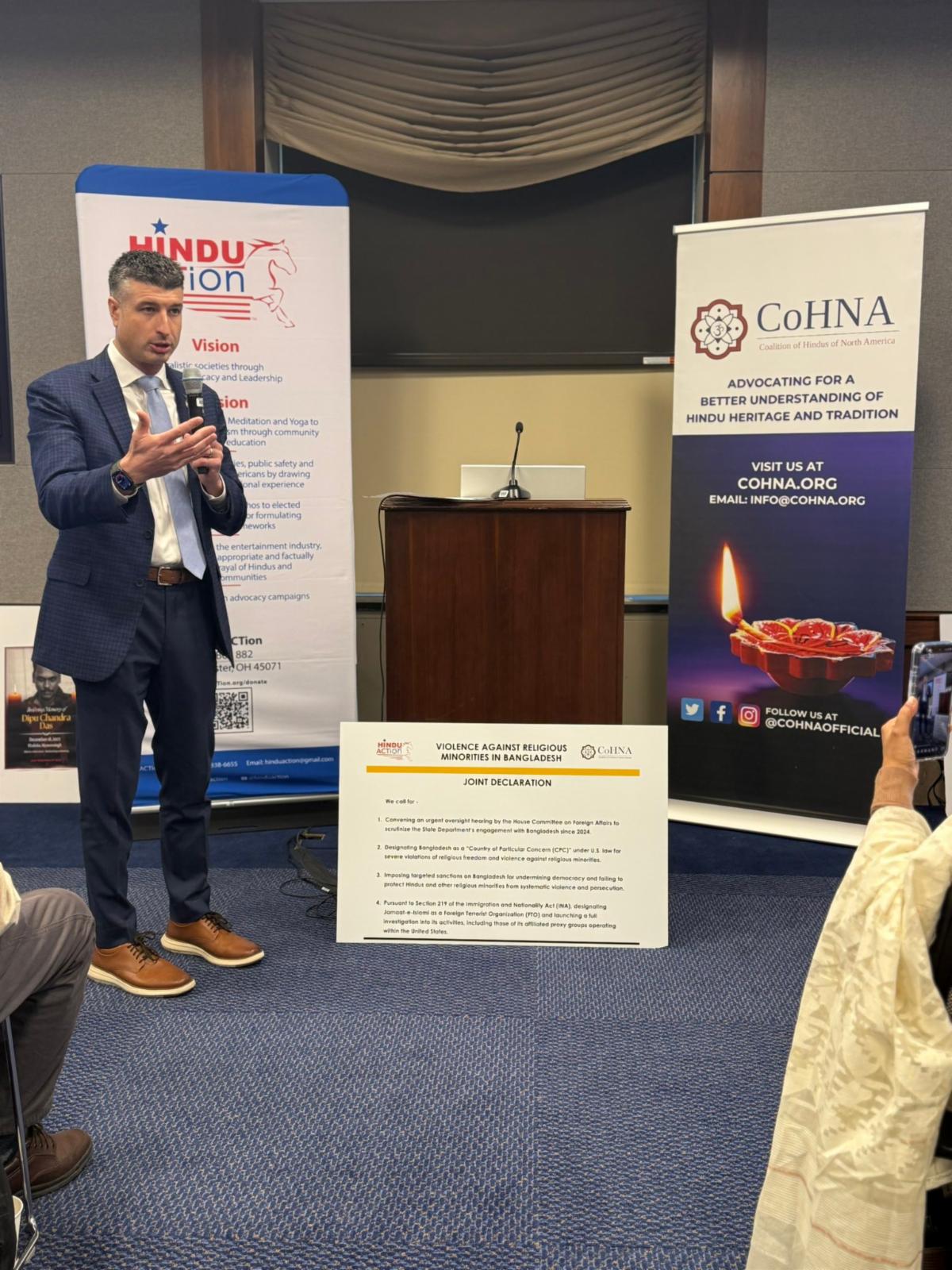
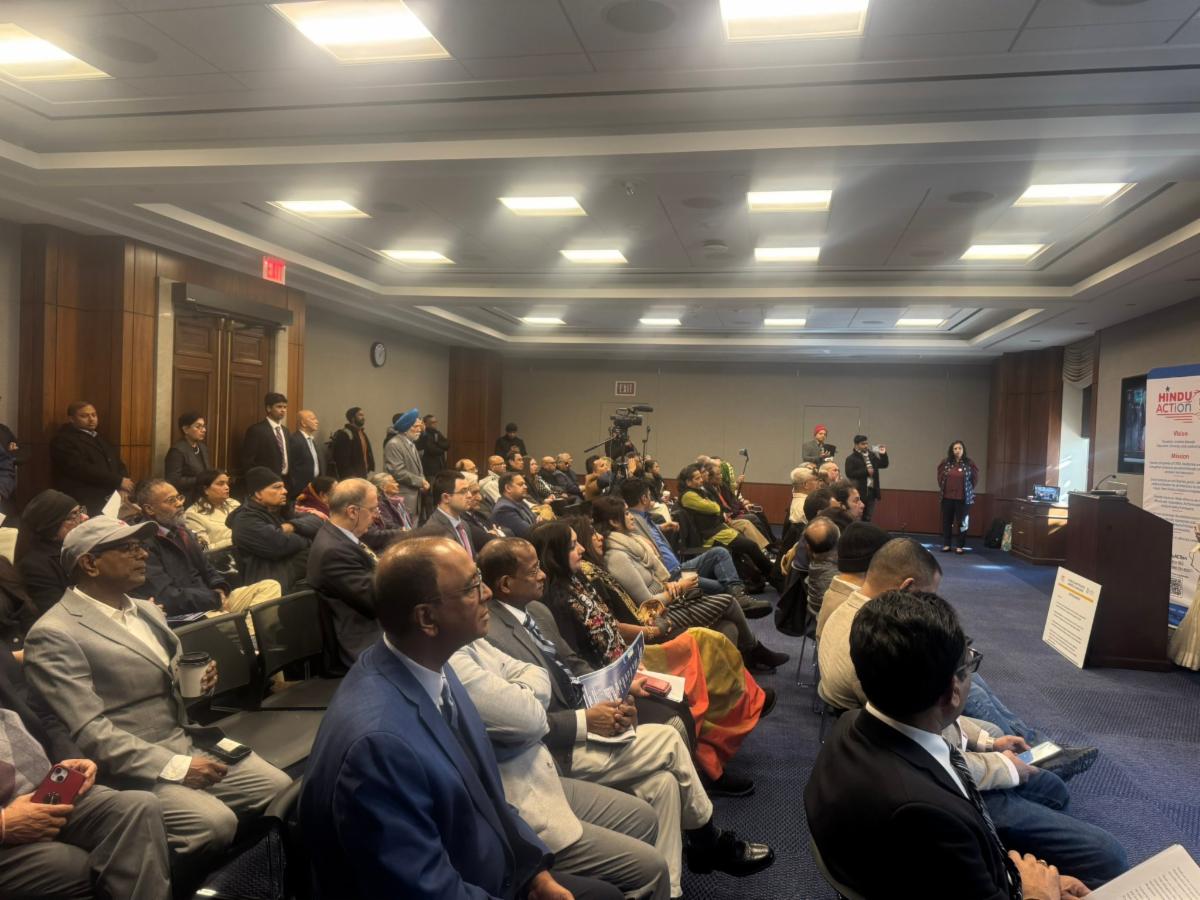
Participants released a joint declaration calling for:
- Convening an urgent oversight hearing by the House Committee on Foreign Affairs to scrutinize the State Department’s engagement with Bangladesh since 2024.
- Designating Bangladesh as a Country of Particular Concern (CPC) under U.S. law for severe violations of religious freedom and violence against religious minorities.
- Imposing targeted sanctions on Bangladesh for undermining democracy and failing to protect Hindus and other religious minorities from systematic violence and persecution.
-
Pursuant to Section 219 of the Immigration and Nationality Act (INA), designating Jamaat-e-Islami as a Foreign Terrorist Organization (FTO), and launching a full investigation into its activities, including those of its affiliated proxy groups operating within the United States.
Shuvo Roy, an independent American Bangladeshi journalist, criticized the lack of sustained international press scrutiny and warned that impunity grows when democratic backsliding is minimized.
“The international media is dangerously under-covering what’s unfolding in Bangladesh,” said Roy. “You cannot call an election ‘free and fair’ when the country’s major political force, the Awami League, has been barred from participating. When journalists look away, bad behavior gets rewarded, and ordinary Bangladeshis pay the price.”
Dilip Nath, President, New America Voters Association, Arifa Rahman Ruma, Associate Professor, Bangladesh Open University, Former Counsellor (Political), Embassy of Bangladesh, Priya Saha, Executive Director, South Asian Minorities Collective, Rana Hassan Mahmud, Political Analyst, Columnist & Community Organizer and Farida Yasmin, President, National Press Club, Dhaka provided detailed and sobering accounts of the tragedy unfolding in Bangladesh following the August 2024 “regime change,” which resulted in the Islamist-backed Muhammad Yunus assuming power.
Their testimonies underscored the collapse of press freedom and the systematic, brutal violence directed at critics of the regime—most acutely targeting Hindus and other vulnerable minorities. They warned the White House of the severity of the national security threat that organizations like Jamaat-e-Islami pose not just to Indo-Pacific region but to the United States itself.
COHNA’s youth team—including many students from the Bangladeshi Hindu diaspora—shared firsthand accounts of the daily trauma their families endure, living under the constant threat of mob violence and lynching faced by their relatives in Bangladesh.
Adelle Nazarian, Director of Communications and Legislative Outreach for HinduACTion, underscored the moral and strategic imperative for U.S. leadership.
“Peace is not the absence of conflict. Peace is the presence of dignity. The presence of equal protection. The presence of a society where people are not hunted for what they believe, or silenced for who they are,” said Nazarian. "Bangladesh deserves that peace. Its Hindus deserve that protection. Its citizens deserve an election that is more than theater. And the United States, together with partners who still believe in pluralism, has the capacity, and I would argue the responsibility, to raise the cost of intimidation and lower the temperature of hatred.”
|