Sasakawa USA Newsletter June Highlights | | |
Included in this issue of the newsletter:
- Message from Sasakawa USA’s Chairman Satohiro Akimoto
June Activities
- Congressional Study Group on Japan (CSGJ): Chief of Staff Trip to Japan
- Dinner with Congressional Study Group on Japan February Chief of Staff Delegation
- Policy Briefing: Discussion with Dr. Amit Roy and Corey Rosenbusch
- US-Japan NEXT Alliance Initiative: Allied on AI Assurance: AI Alignment Challenges for U.S. and Japanese National Security
- Sasakawa USA Women’s Advancement Network (SWAN): Discussion with Ms. ElsaMarie D’Silva
- Washington Kenkyu Group: Discussion with Dr. Narushige Michishita
- Washington Kenkyu Group: Discussion with Mr. Ken Moriyasu
Publications
- “Preparing for the ‘Autonomy Era’ of Maritime Security in East Asia” by Mr. James Schoff
External Engagements
-
Ms. Shanti Shoji Co-Facilitates Session at 8th Capital-Level Meeting of Women, Peace and Security Focal Points Network
Announcements
- New Admin Team Member: Ms. Melis Kaya
- New Programs Team Member: Ms. Hannah Rozei
| |
Message from Sasakawa USA's Chairman Satohiro Akimoto | |
The World Cup dream is over for the Japanese men’s national team and its fans. The team advanced to the knockout stage after competing against formidable opponents like the Netherlands and Sweden in the group stage. In the Round of 32, the Japanese squad led Brazil 1-0 at halftime but ultimately lost 2-1 to the five-time World Cup champions.
Expectations were high for Japan entering this tournament, as the team was the best Japan has ever fielded. 23 of the 26 national team members play in major professional leagues across Europe competing against the best in the world. Their opening group-stage match against the Netherlands marked the first time in Japanese history that every player on the pitch belonged to an overseas club.
In fact, this squad was arguably the best Asian team in World Cup history. Pundits like Jonathan Wilson of The Guardian wrote: “It feels genuinely possible that they are not merely the best Japan side in history, but the best Asian side to play at a World Cup.” I say "arguably" because the South Korean men’s national team in the 2002 World Cup—co-hosted by Japan and South Korea—is the only Asian team to ever reach the World Cup semi-finals.
While the Japanese team openly declared their goal was to win the World Cup, the Brazilian team was simply better on the day. Brazil dominated the match statistics: holding 69% of the possession, with a 7 to 2 advantage in shots on goal, a 5 to 0 lead in big chances created, and 35 to 10 in touches inside the opposition's box. Right-winger Ritsu Doan, who plays for Eintracht Frankfurt in the German Bundesliga, frankly concluded after the defeat: “We were not good enough.”
Simon Kuper, a British and naturalized French writer known for his work at the Financial Times, argued in his 1994 book, Soccer Against the Enemy, that a national soccer team's style of play is an expression of its national character. It is well-known among soccer fans that the Japanese national team and their supporters leave their locker room and stadium sections spotless after every match as a sign of thoughtfulness to others.
A lesser-known fact about the Japanese team is their remarkable record of discipline. Across eight consecutive World Cup appearances since their debut in 1998, Japan played 28 matches without a single send-off—never receiving a straight red card or two yellow cards in a single game. This stands as an all-time World Cup record for fair play.
Following the devastating defeat against Brazil, midfielder Daichi Kamada, who plays for Crystal Palace in the English Premier League, stated “Japan will never win the World Cup unless soccer becomes the country’s number one sport.” While that may be true, the Japanese national team represented the country well with pride and distinction.
| | |
Congressional Study Group on Japan (CSGJ):
Chief of Staff Trip to Japan
| | |
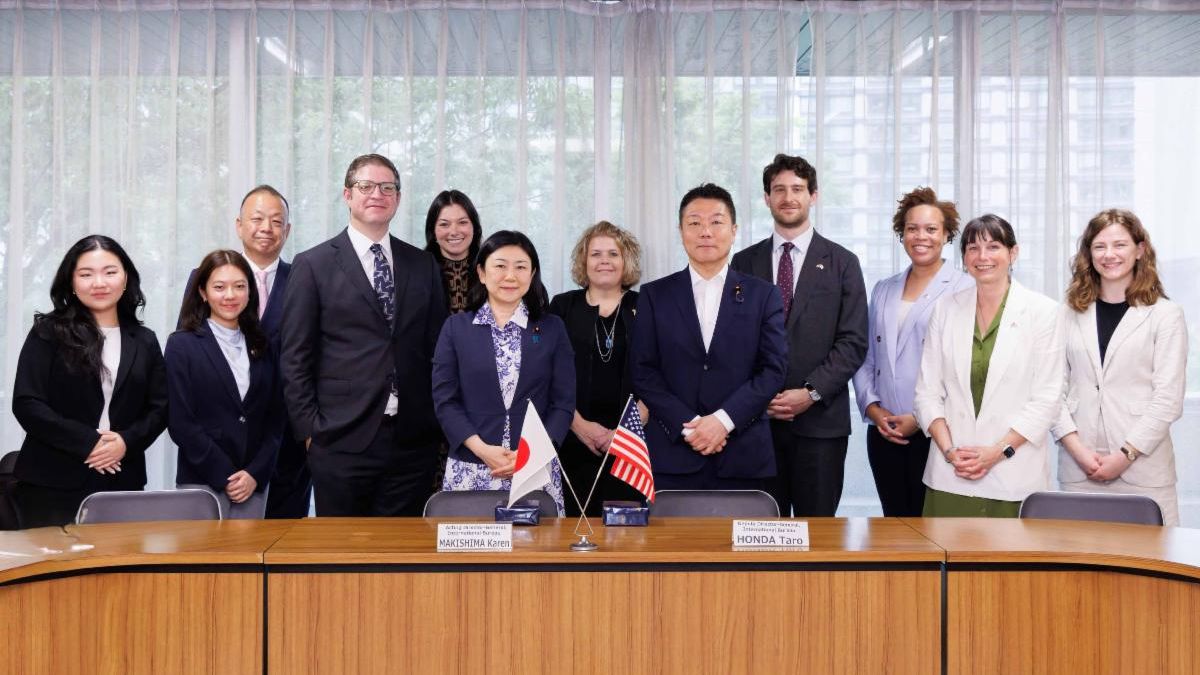
From June 13-20, the Congressional Study Group on Japan (CSGJ), a program of FMC supported by Sasakawa USA, brought a bipartisan delegation of six Congressional chiefs of staff to Tokyo, Fukuoka, and Kumamoto. This was the twelfth iteration of this study tour, which aims to deepen chiefs’ understanding of Japan’s political system, economy, society, culture, and security environment, with the goal of informing their policy work with their members in Washington. While in Tokyo, the delegation met with members of the ruling Liberal Democratic Party as well as their coalition partner Ishin no Kai, state minister of foreign affairs Hon. Iwao Horii, and a range of government officials, experts, journalists, and business leaders. The chiefs of staff concluded their tour with a visit to Fukuoka and Kumamoto to learn about regional challenges and opportunities in Kyushu, including its growing semiconductor, energy, and automotive sectors.
Photo: The chief of staff delegation with Hon. Karen Makishima, Ph.D. and Hon. Taro Honda (Photo courtesy of the Liberal Democratic Party International Bureau).
| | Dinner with Congressional Study Group on Japan February Chief of Staff Delegation | | |
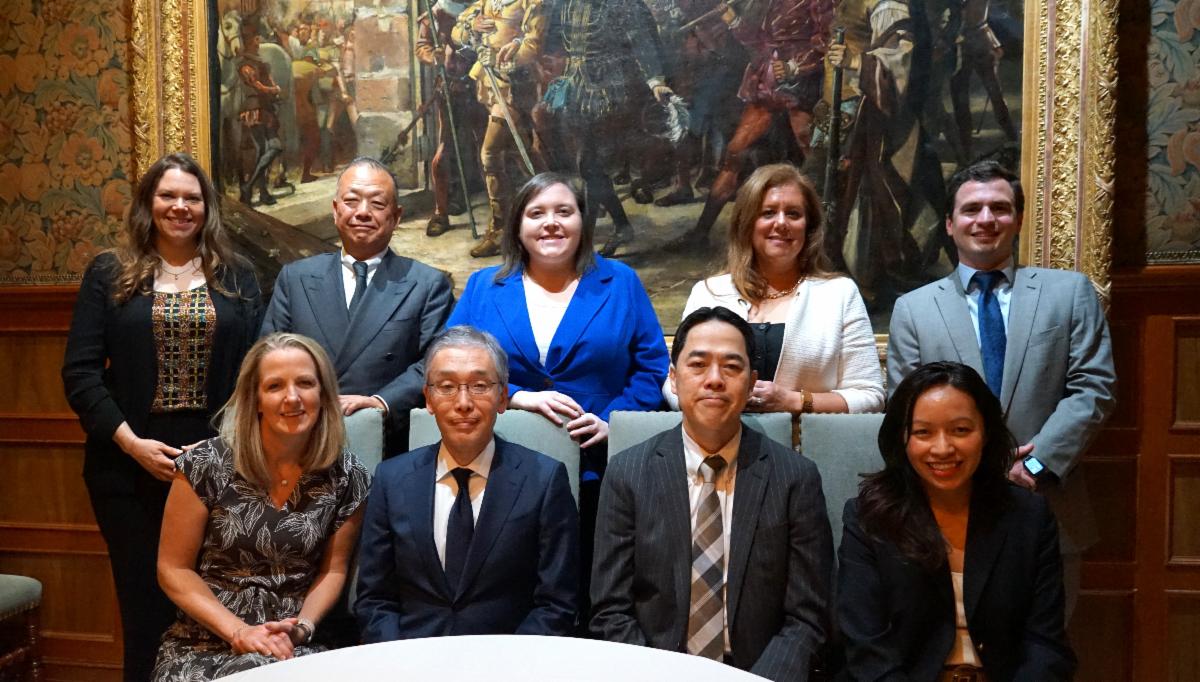
On June 4, Sasakawa USA hosted a dinner with participants of the Congressional Study Group on Japan’s February Chief of Staff Trip to Japan. The gathering offered an opportunity for the delegation to reconnect following Prime Minister Takaichi’s visit to Washington in March and the deployment of USS Rushmore and USS Tripoli from Sasebo to the Middle East, while continuing the dialogue initiated during the February visit. The dinner featured remarks from Mr. Ken Ono, Minister for Congressional Affairs, and Mr. Kentaro Fujimoto, Minister for Political Affairs at the Embassy of Japan, who provided updates on the U.S.-Japan relationship. Moderated by Dr. Satohiro Akimoto, Chairman and President of Sasakawa USA, the Chiefs of Staff discussed recent developments in the geopolitical and security environment in the Indo-Pacific, progress made on the Japanese government’s $550 billion investment pledge in the U.S. economy, and the domestic political landscapes in both the U.S. and Japan.
Photo (left to right, top to bottom): Ms. Shanti Shoji, Dr. Satohiro Akimoto, Ms. Abby Carter, Ms. Amanda Baldwin, Mr. Sean McCabe, Ms. Alice Johnson, Min. Kentaro Fujimoto, Min. Ken Ono, and Ms. Nancy Juarez.
| | |
Policy Briefing:
Discussion with Dr. Amit Roy and Corey Rosenbusch
| | |
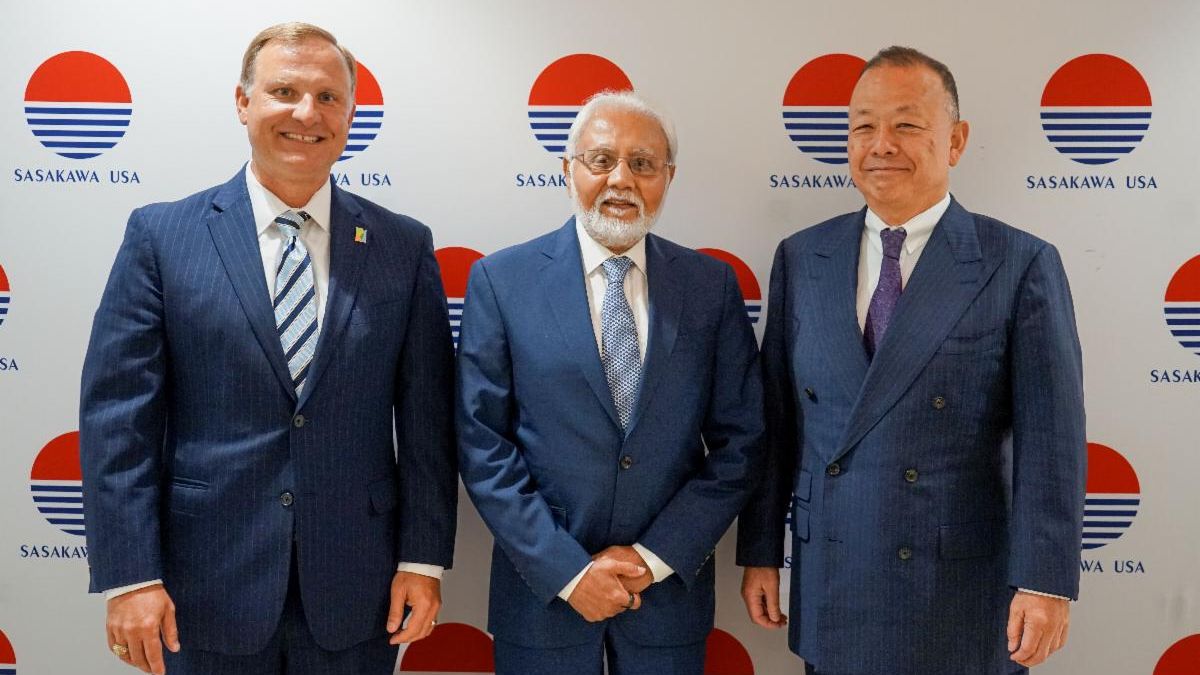
On June 9, Sasakawa USA hosted Dr. Amit Roy, chair of the Sasakawa Africa Association, and Mr. Corey Rosenbusch, president of The Fertilizer Institute, for a Policy Briefing Series event titled “From Hormuz to Harvest: Navigation the Fertilizer and Food Security Crises.”
At the event, Dr. Roy gave an overview of the current global fertilizer shortage triggered by the de facto closure of the Strait of Hormuz, including the prospects for drastic food shortages in vulnerable regions of the world. Mr. Rosenbusch then assessed the current state of the fertilizer industry in the United States, including where there may be opportunities for Japan and the U.S. to cooperate on fertilizer production. Following the two presentations, the event participants engaged in a lively, robust Q&A discussion with the speakers.
Photo (left to right): Mr. Corey Rosenbusch, Dr. Amit Roy, Dr. Satohiro Akimoto
| | |
US-Japan NEXT Alliance Initiative:
Allied on AI Assurance: AI Alignment Challenges for
U.S. and Japanese National Security
| | |
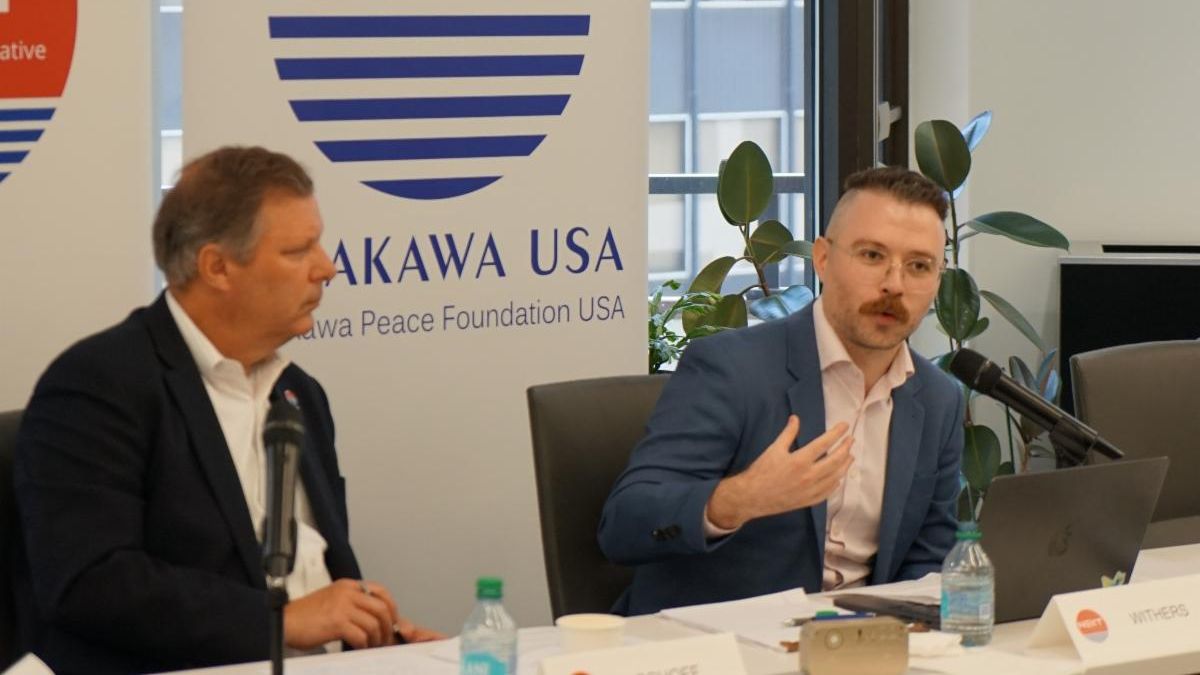
On June 10, Sasakawa USA’s US-Japan NEXT Alliance Initiative held an Allied on AI Assurance roundtable moderated by Mr. Jim Schoff, distinguished senior fellow (non-resident), Sasakawa USA; with remarks by Mr. Caleb Withers, research associate, Technology and National Security Program, Center for a New American Security; and Dr. Amir Sadovnik, research lead, Center for AI Security Research (CAISER), Oak Ridge National Laboratory, on the topic of “AI Alignment Challenges for U.S. and Japanese National Security.”
Mr. Withers presented his recent paper “Off Target: AI Alignment Challenges for National Security” to open the roundtable, with Dr. Sadovnik kicking off the discussion with his insider perspective of the national laboratory system. The roundtable included over 20 experts including current and former government officials, lab researchers, think tank scholars and engineers from the U.S. and Japan. Participants discussed a range of topics related to AI safety and alignment in the context of the U.S.-Japan alliance, especially the Liberal Democratic Party’s recent AI white paper and actions from the Trump administration pertaining to Claude Mythos. A summary of the roundtable will be published soon.
Photo (left to right): Mr. Jim Schoff and Mr. Caleb Withers.
| | Sasakawa USA Women’s Advancement Network (SWAN): Disussion with Ms. ElsaMarie D’Silva | | |
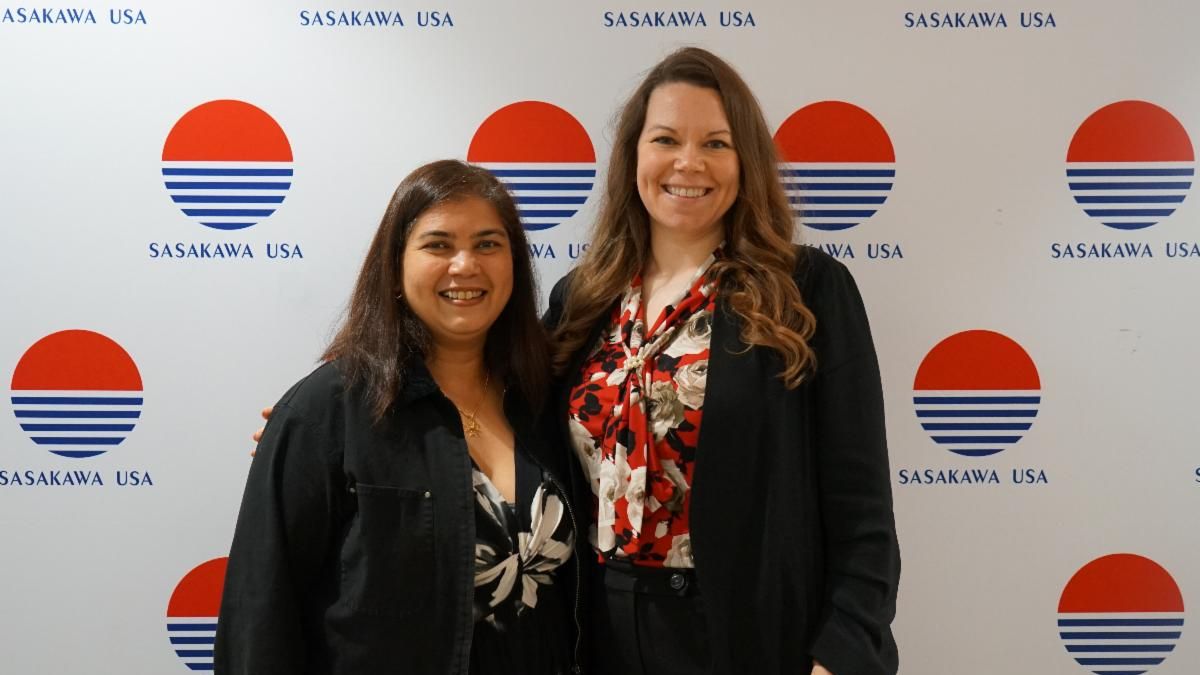
On June 25, the Sasakawa USA Women’s Advancement Network (SWAN) held a luncheon discussion on AI, women, and the future of work, featuring Ms. ElsaMarie D’Silva, founder of Red Dot Foundation (Safecity) and co-founder and COO of Murmur AI. Ms. D’Silva explored the various opportunities and risks associated with integrating AI into the workforce, and particularly the implications of these technologies on women and other traditionally underrepresented groups. She highlighted the importance of ensuring the application of a gender lens when creating AI algorithms and automating processes, so that existing disparities are not further amplified. Being a global leader in social entrepreneurship, Ms. D’Silva also shared her work to expand access to artificial intelligence solutions to mission-driven organizations seeking to increase productivity and impact. This discussion was moderated by Ms. Shanti Shoji, director of programs at Sasakawa USA.
Photo (left to right): Ms. ElsaMarie D’Silva and Ms. Shanti Shoji.
| | |
Washington Kenkyu Group:
Discussion with Dr. Narushige Michishita
| | |
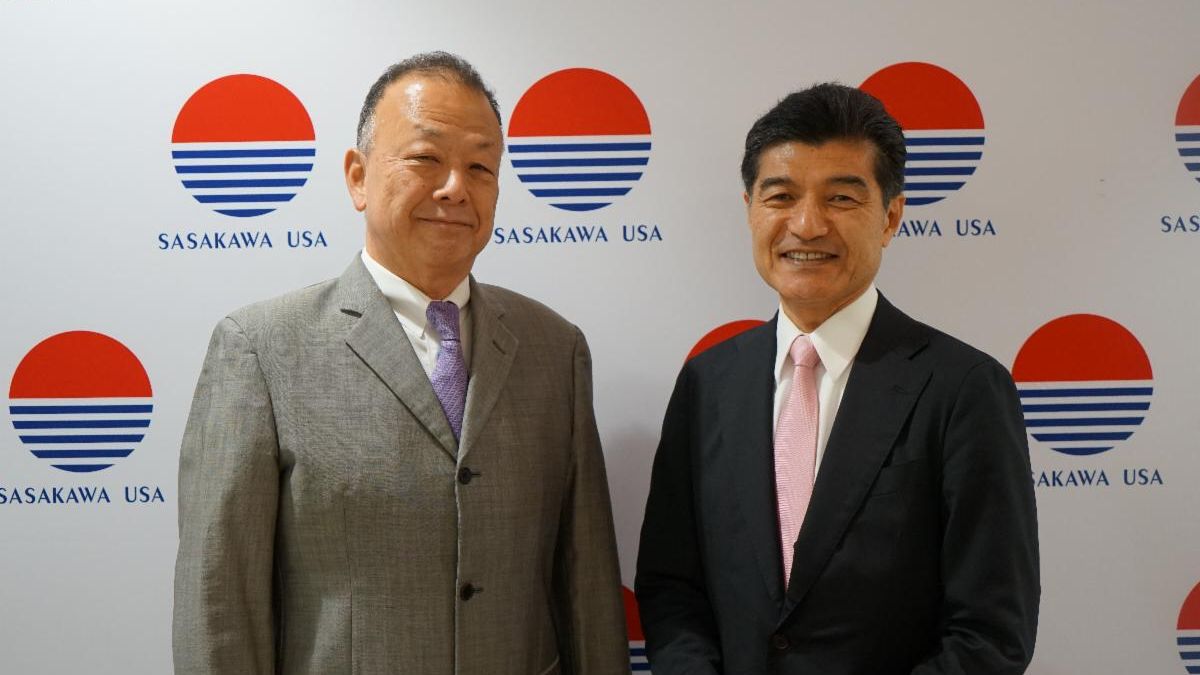
On June 29, Sasakawa USA hosted a Washington Kenkyu Group event featuring Dr. Narushige Michishita of the National Graduate Institute for Policy Studies (GRIPS), who is currently conducting research in Washington, D.C. as a nonresident senior fellow at the Atlantic Council’s Scowcroft Center for Strategy and Security. This event offered a valuable opportunity to examine one of the most fundamental and pressing issues facing Japan today: how to safeguard the lives of its people and the foundations of its society. Dr. Michishita’s presentation was followed by a Q&A session moderated by Dr. Satohiro Akimoto, chairman and president of Sasakawa USA, which touched upon a variety of topics including Japan’s current capacity for defense, the need to increase public support for strengthening deterrence capabilities, and examples of robust civil defense systems in other countries.
Photo (left to right): Dr. Satohiro Akimoto and Dr. Narushige Michishita.
| | |
Washington Kenkyu Group:
Discussion with Mr. Ken Moriyasu
| | |
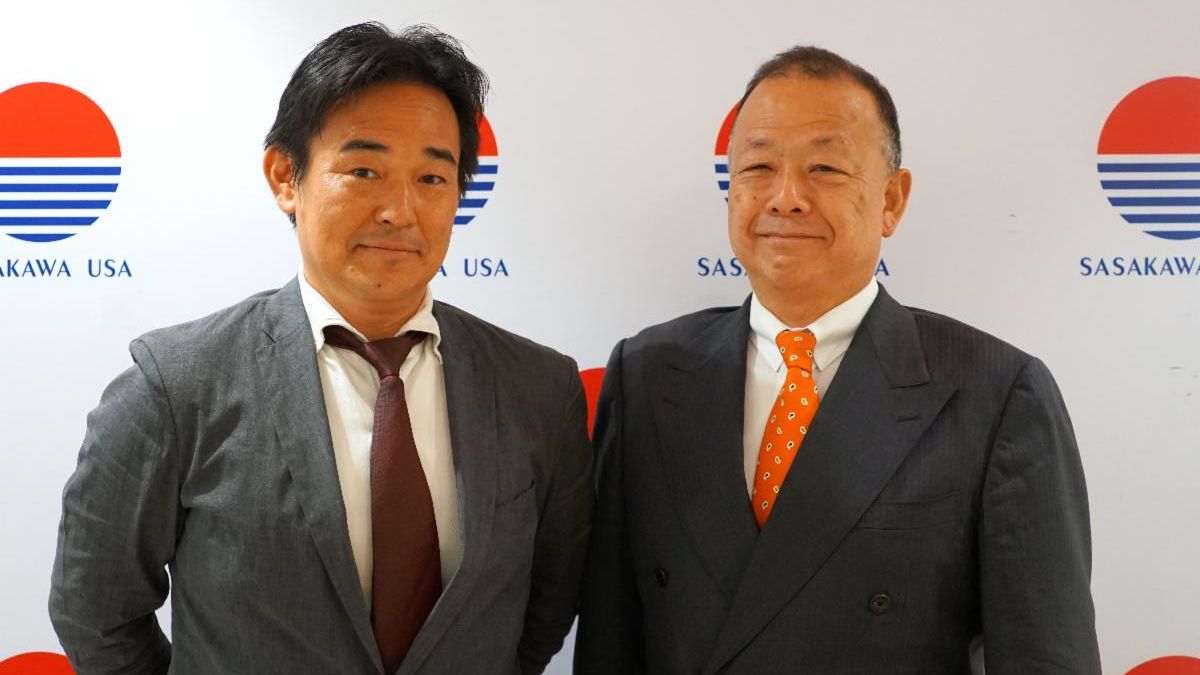
On June 30, Sasakawa USA hosted Mr. Ken Moriyasu, senior fellow at Hudson Institute and former Nikkei journalist with more than two decades of experience, for a Washington Kenkyu Group discussion on the evolving role of the media and his transition from journalism to policy research. Drawing on his extensive career at Nikkei and its English-language publication, Nikkei Asia, Mr. Moriyasu shared insights into the role that the media plays in the age of AI and the commodification of news, as well as Nikkei’s global media strategy, including its 2015 acquisition of the Financial Times. He also discussed the geopolitical dynamics of Eurasia amid intensifying U.S.-China strategic competition, his current main research topic at Hudson Institute. Participants engaged in a lively dialogue on the changing role and influence of think tanks in Washington, Mr. Moriyasu’s transition from journalism to policy research, and best practices for information gathering in Washington.
Photo (left to right): Mr. Ken Moriyasu and Dr. Satohiro Akimoto.
| | “Preparing for the ‘Autonomy Era’ of Maritime Security in East Asia” by Mr. James Schoff | |
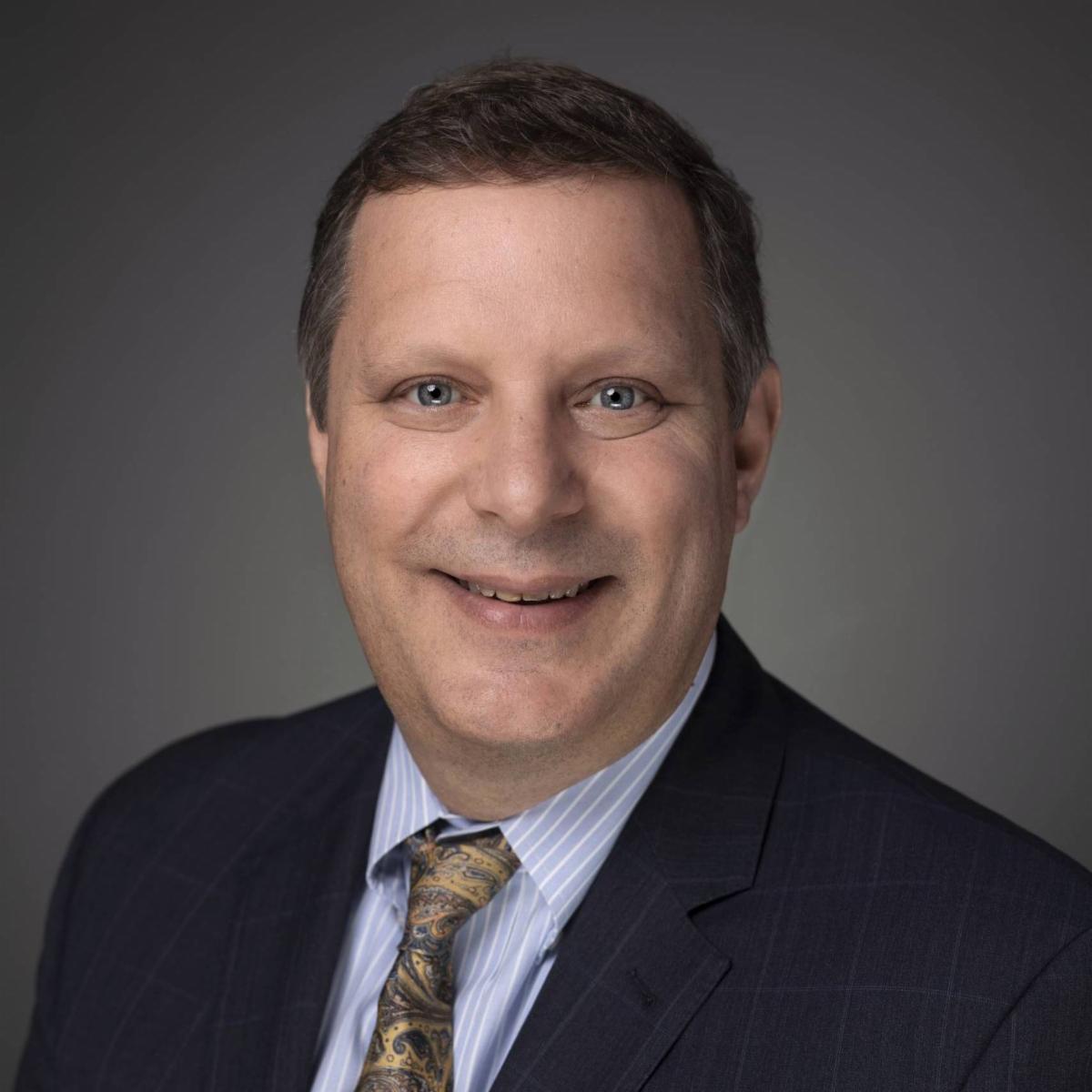
| |  | Sasakawa USA Distinguished Sr. Fellow (Non-Resident) James Schoff published an article on the "autonomy era" of maritime security in East Asia with Japan's Research Institute for Peace and Security (RIPS) on May 29. The article is titled "Preparing for the 'Autonomy Era' of Maritime Security in East Asia" and is part of RIPS' monthly guest columnist series on East Asian Maritime Security. The article examines China's investment in an "invisible net" or "Transparent Ocean" strategy that involves a 5-layer seabed-to-space sensor architecture in the western Pacific and East China Sea that Beijing hopes will deny US and Japanese access in a crisis. Schoff also describes the maritime component of Japan's new security strategy that emphasizes development and deployment of uncrewed defense systems equipped with artificial intelligence. He also explores similar emerging trends in the United States and opportunities for allied research and defense industrial collaboration that can help the U.S. and Japan keep pace in this fast-changing maritime domain. He concludes with recommendations for U.S. and Japanese officials and private sector engineers to map out an ambitious plan for building synergy and interoperability into their respective autonomous maritime strategies.
Photo: Mr. James Schoff
| | |
Ms. Shanti Shoji Co-Facilitates Session at
8th Capital-Level Meeting of
Women, Peace and Security Focal Points Network
| | |
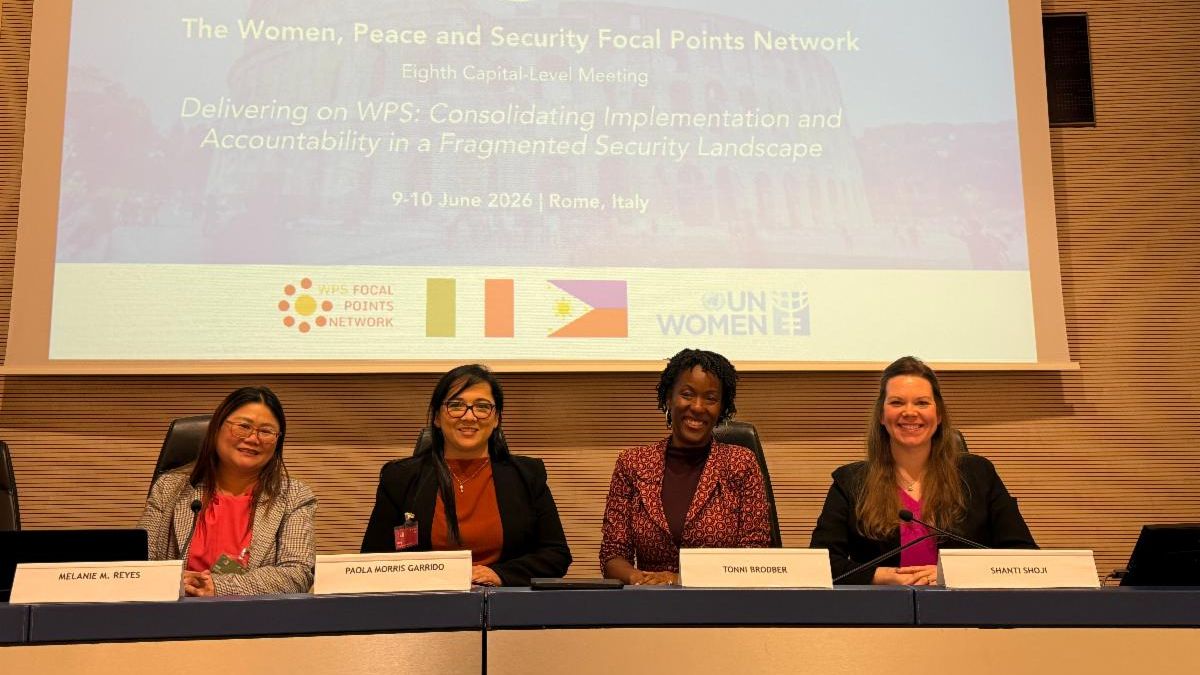
On June 9, Sasakawa USA director of programs Shanti Shoji co-facilitated the session, “Rebuilding with Equality: Gender-Responsive Recovery and Lasting Peace” at the Eighth Capital-Level Meeting of the Women, Peace and Security Focal Points Network (WPS-FPN) hosted in Rome by the Co-Chairs, Italy and the Philippines. Ms. Shoji co-facilitated the session alongside Ms. Tonni Brodber, head of secretariat, UN Women’s Peace & Humanitarian Fund. Following the 25th anniversary of UN Security Council Resolution 1325, this year’s convening served as an opportunity for the WPS Focal Points from Member States and regional organizations, as well as civil society representatives, to have a strategic dialogue on strengthening the continuity and implementation of the WPS agenda. Several key themes highlighted throughout the discussions were the need to reframe and rethink the structure of current WPS frameworks, and to prioritize localization and sustainable, long-term stability. Effective communication of WPS was highlighted as a persistent challenge, and storytelling was discussed as a powerful tool to connect policy to the lived experiences of communities.
Photo (left to right): Ms. Melanie M. Reyes, Ms. Paola Morris Garrido, Ms. Tonni Brodber, and Ms. Shanti Shoji.
| | New Administration Team Member: Ms. Melis Kaya | |
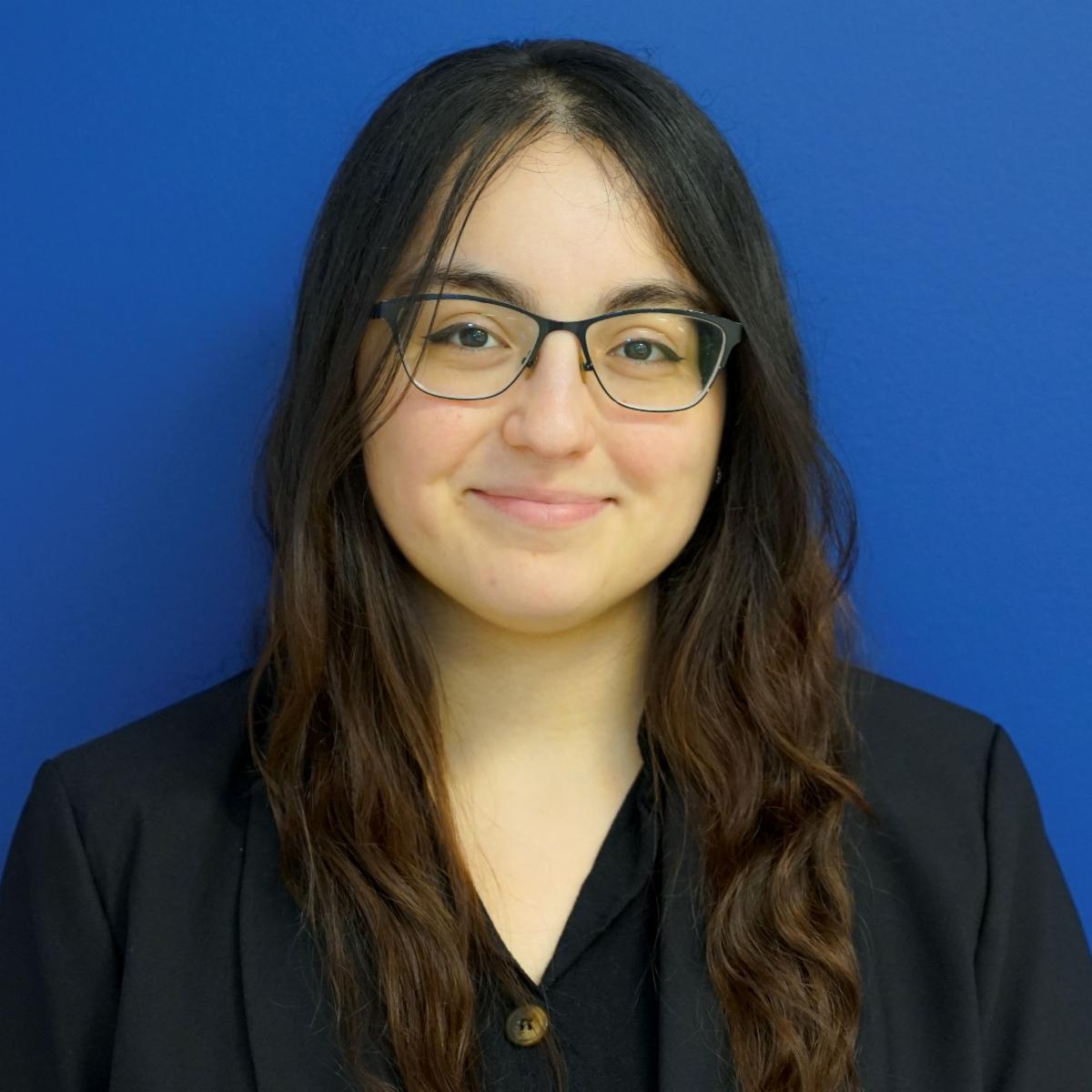
Ms. Melis Kaya joined Sasakawa USA in May 2026 as an administrative assistant and supports the organization’s daily operations. Prior to Sasakawa USA, Melis worked in the education technology field.
Melis has been involved in U.S.-Japan engagement activities for more than ten years. She graduated from Virginia Tech with a Bachelor of Arts in International Relations and a minor in Japan Studies. She has also participated in a variety of programs such as the Japan-America Society of Washington DC's National Japan Bowl and the Virginia Governor's Japanese Academy.
This fall, Melis will begin pursuing a Master of Arts in East Asian Studies at George Washington University's Elliott School of International Affairs to further her focus on U.S.-Japan relations.
Photo: Ms. Melis Kaya
| | New Programs Team Member: Ms. Hannah Rozei | |
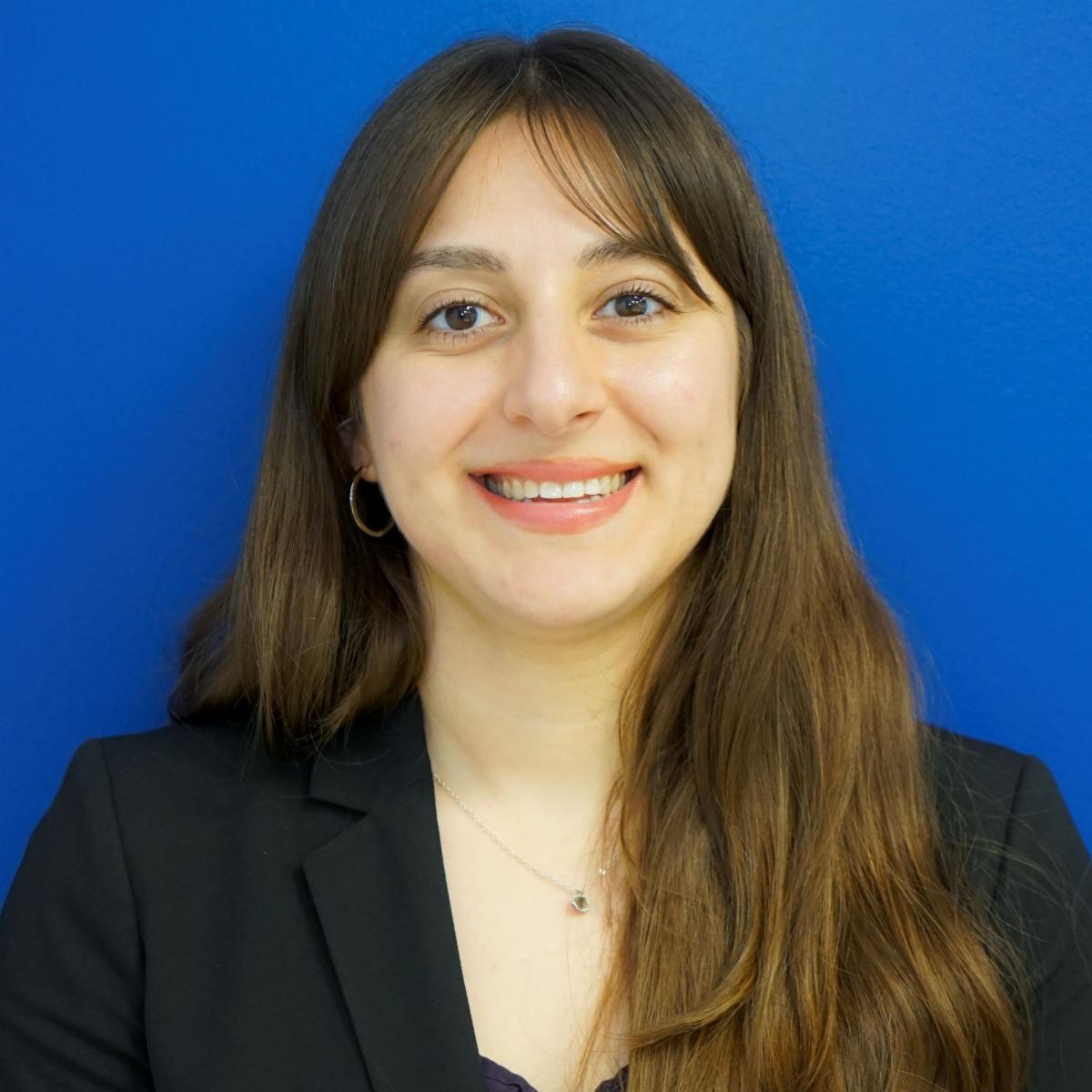
Ms. Hannah Rozei joined Sasakawa USA as an associate program officer in June 2026. In her role, she supports a range of Sasakawa USA’s programs, such as the U.S.-Japan Regional Alliance Series.
Prior to joining Sasakawa USA, Hannah relocated from Atlanta to Washington DC to pursue a master’s degree at American University’s School of International Service. During her time there, she worked as a Graduate Research Assistant in the Department of Peace, Human Rights & Cultural Relations, served as the Japan Bowl Intern at the Japan-America Society of Washington DC, and interned at Former Members of Congress (FMC) with a focus on communications and the Congressional Study Group on Japan (CSGJ), a program supported by Sasakawa USA. Prior to moving to Washington DC, she worked with international students at Emory University for several years and interned at the Japan-America Society of Georgia (JASG).
Her interest in Japan began in middle school where she had the opportunity to study Japanese as a foreign language. It continued to flourish thanks to two youth exchange programs—the Japanese government-sponsored Kizuna Project and a Youth for Understanding USA sponsored homestay in Osaka—and a yearlong study abroad in Tokyo. As a result, she has developed a particular interest in exchange diplomacy and its impact on U.S.-Japan relations.
Hannah holds a master’s degree in international affairs with a concentration in international and intercultural communication from American University. She also holds a bachelor’s degree in political science and a minor in Japanese from Georgia State University.
Photos: Ms. Hannah Rozei
| | |
Sasakawa Peace Foundation USA
1819 L Street, NW, Suite 300
Washington, DC 20036
+1.202.296.6694
| | | | |