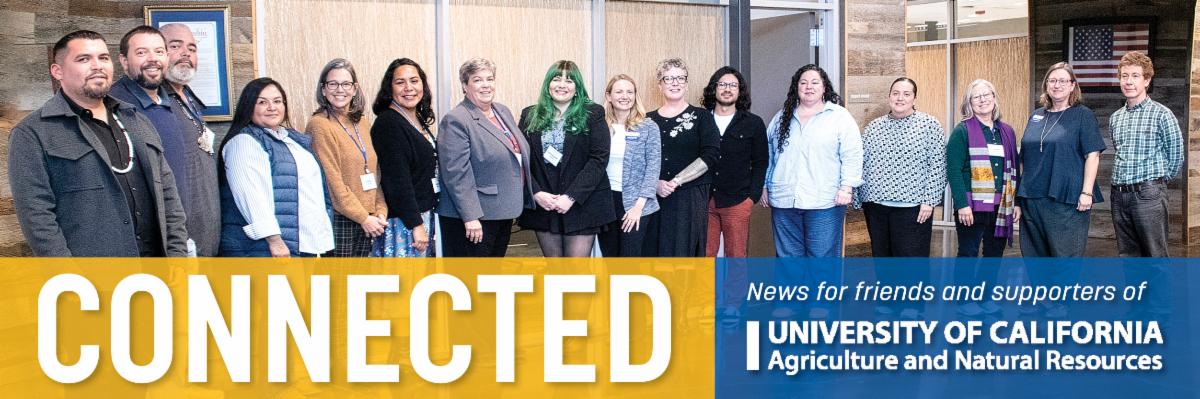
Native American Advisory Council stands with UC ANR leaders in the lobby of the ANR building

January 2026 | Volume 10, Number 1

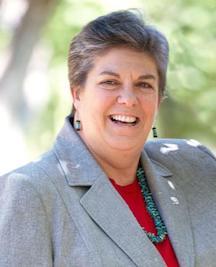
Headshot of Glenda Humiston

The Vantage Point


Glenda Humiston 

Vice President

UC Agriculture and Natural Resources 


At the beginning of a new year, as we take stock of the state of our field, I am thrilled to report that the agricultural and natural resources sectors in California continue to thrive. California is the No. 1 ag-producing state in the U.S., and that strength is vividly illustrated in a new report from UC ANR, “California’s Working Landscapes: Evolving Contributions to National, State, and Regional Economies.”


Agricultural distribution, processing, production and support activities are the largest contributors to the state’s working landscape economy. All told, working landscapes – including farmlands, rangelands, forests and areas used for activities like mining, fishing and outdoor recreation – supported nearly 1.5 million jobs and 75,500 businesses while generating $404 billion in sales and providing $103 billion in worker earnings in 2024.


The report also highlights key trends, such as the spike in agricultural support jobs and the surging growth of renewable energy in California. That sector, comprising the fastest-growing working landscape chronicled in the report, has made California first in the U.S. in renewable energy sales and earnings.


My gratitude goes out to the report’s authors – Alexandra Hill, assistant professor of Cooperative Extension at UC Berkeley, and UCCE advisors Alec Dompka and Aaron Wilcher on UC ANR’s Community Economic Development team. I strongly recommend you read and circulate the report, which updates the first edition from 2019.


The report reiterates the powerful case for supporting the work of UC ANR academics and staff (check out our 2025 year-in-review video for just some of their accomplishments!). Indeed, investment in agricultural research and development is needed more than ever. An eye-opening paper published in Nature last month (see blog post for summary) noted that even as the world’s population boomed from 1980 to 2021, the rate of spending on agrifood R&D slowed significantly and even declined in many countries. The authors write that this downward trend will “mean higher food prices for decades to come” – as well as environmental harm and socio-political strife – and they call for the global community to double spending on agricultural R&D in the next five years.


One key to making the most out of research dollars is to cultivate and share knowledge with partners working on similar problems. Earlier this month, I participated in a launch event in Mexico City for a Binational Agriculture Working Group, which brings together experts from California and Mexico to address the common challenges our communities face – from ag tech to water issues to farm labor.


It was an honor to join California Department of Food and Agriculture Secretary Karen Ross and Secretary Julio Berdegué Sacristán of Mexico’s Ministry of Agriculture and Rural Development as we identified research priorities for mutually beneficial future collaborations. Our thanks to the Mexican Secretariat of Science, Humanities, Technology and Innovation; University of California Alianza MX; and the Berkeley Food Institute at UC Berkeley for hosting these productive meetings.


Another fantastic example of this vital knowledge-sharing is the annual EcoFarm conference, Jan. 21-24. Once again, I was so impressed and inspired by the practical expertise offered by farmers, academics and community members on a host of topics related to organic and regenerative ag practices. A special shout-out to the entire UC ANR team at EcoFarm, especially Margaret Lloyd, Richard Smith and Katharina Ullmann for moderating excellent conversations, as well as to Ngodoo Atume, Steve Fennimore, Lindsey Klein, Patricia Lazicki, Joji Muramoto, Yu-Chen Wang and Yonatan Weinberg for their presentations.


I am also deeply appreciative of our UC ANR Native American Advisory Council, which met in-person for the first time this week in Davis. We are grateful for volunteer council members A-dae Briones, Shasta Gaughen, Holly Hensher, Vincent Medina, Lena Ortega, Lorelle Ross, Alexii Sigona, Jose “Moke” Simon and MK Youngblood as they offer important insights on the Native American experience and perspectives on Tribes’ history with the UC. 


The council continues to provide essential guidance on how UC ANR advisors and staff can co-develop true partnerships with Tribal members that lead to meaningful impact. As with all communities across California, we strive to work together on nurturing authentic, enduring partnerships that make a positive difference for people, prosperity and planet.


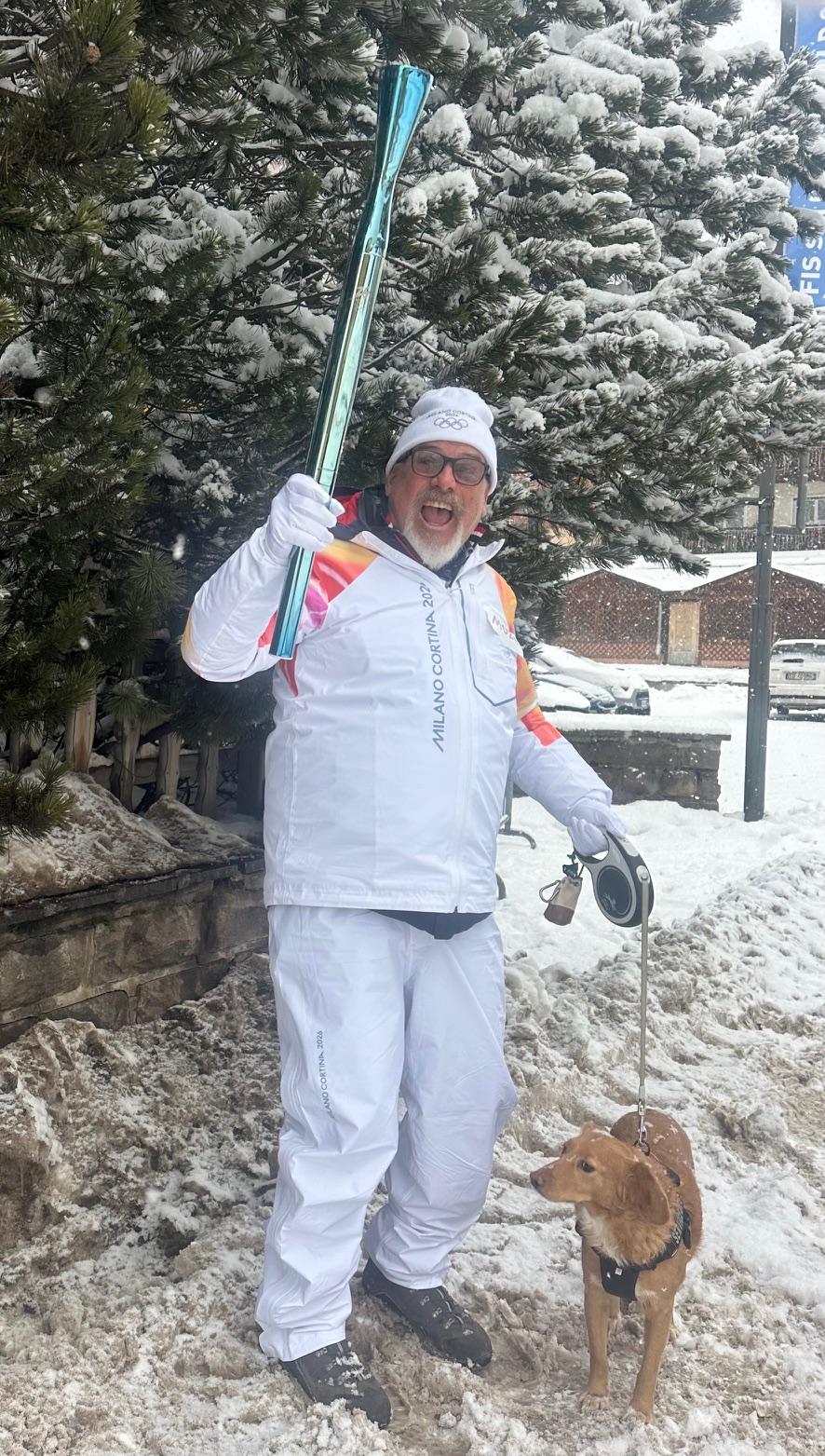
Lastly, a fun note from the Milano Cortina Winter Olympics: Matteo Garbelotto, UC Berkeley professor and UCCE specialist, was an Olympic torchbearer this week, alongside his service dog S’Abba! Read his remarkable story. Go Matteo, and go Team USA!

Above: Members of the Native American Advisory Council meet with UC ANR leaders at the ANR building in Davis; photo by Evett Kilmartin

Man in a white parka and hat holds Olympic torch amid a snowy landscape, with a dog at his feet

In the News


UC ANR was featured in stories on UC scientist and Olympic torch, mountains seeing less snow, smaller farms and vertical integration, climate change and mountain towns, new farm-to-school program, almonds and bee losses, aftermath of Palisades Fire, dismantling NCAR, California “drought-free” status, weather models and AI, goldspotted oak borer in Ventura, return of lettuce virus, cover crop selection tool, global warming and winter storm, advice on managing nematodes, reduced rice yields, future of energy, influential organic farmer, LA wildfire preparation, growing tea industry, impacts of weather extremes and more.

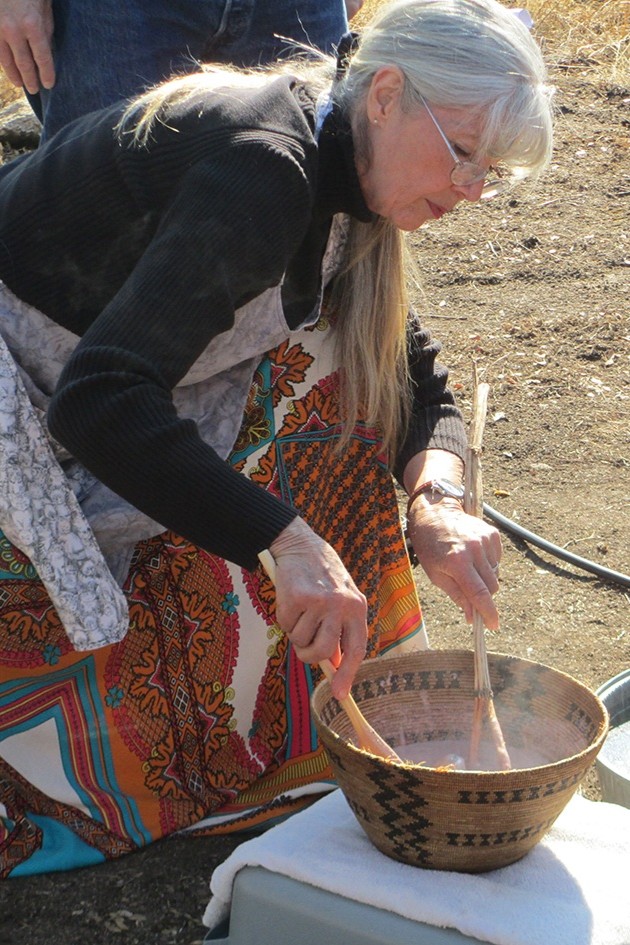
Woman demonstrates how acorns are prepared and cooked in handwoven basket

UC ANR news stories


Event celebrates California's native plant foods and their web of relationships


Breakthroughs found for preventing hull split in pistachios


Cooperative Extension area director to emphasize water, land, labor issues in SoCal


Agriculture, natural resources sectors support California's rank as world's fourth-largest economy


More news stories


Spotlight on Practical Resources

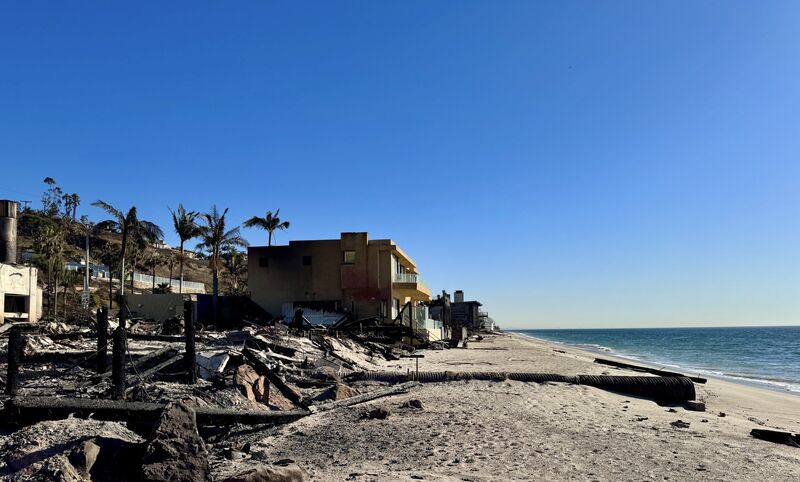
Oceanside homes damaged by wildfire sit between palm trees and the beach

Free webinars to highlight wildfire recovery resources, latest research

Californians looking for guidance on identifying and repairing damaged structures, testing for environmental contamination, caring for backyard chickens and livestock, and navigating complex regulations and building codes are invited to attend a four-part webinar series in February. Webinars are free but pre-registration is required. Intended for all California homeowners, residents, resource professionals and other interested community members, these sessions are offered by the UC ANR Fire Network and partner organizations. The first is on Feb. 2. Details and registration.


Notes from the Field

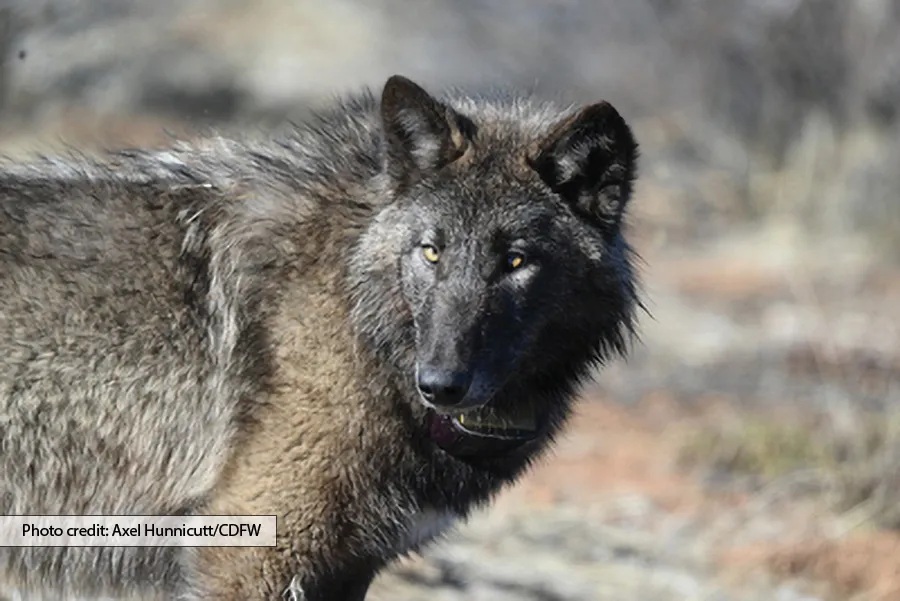
Wolf with dark gray and black fur turns its head to look toward the camera

Livestock losses and wolf deterrence efforts cost Californians millions

Nearly a decade after the California Department of Fish and Wildlife confirmed the state’s first wolf pack, the rural community in Sierra Valley faced unprecedented challenges when the Beyem Seyo wolf pack began to regularly attack and kill domestic livestock. A new study by UC Cooperative Extension analyzed the costs associated with these wolf attacks and found that, when combining the costs of livestock losses and interventions aimed at deterrence, the economic toll over seven months reached at least $2.6 million. Details.

 
Productive Partnerships
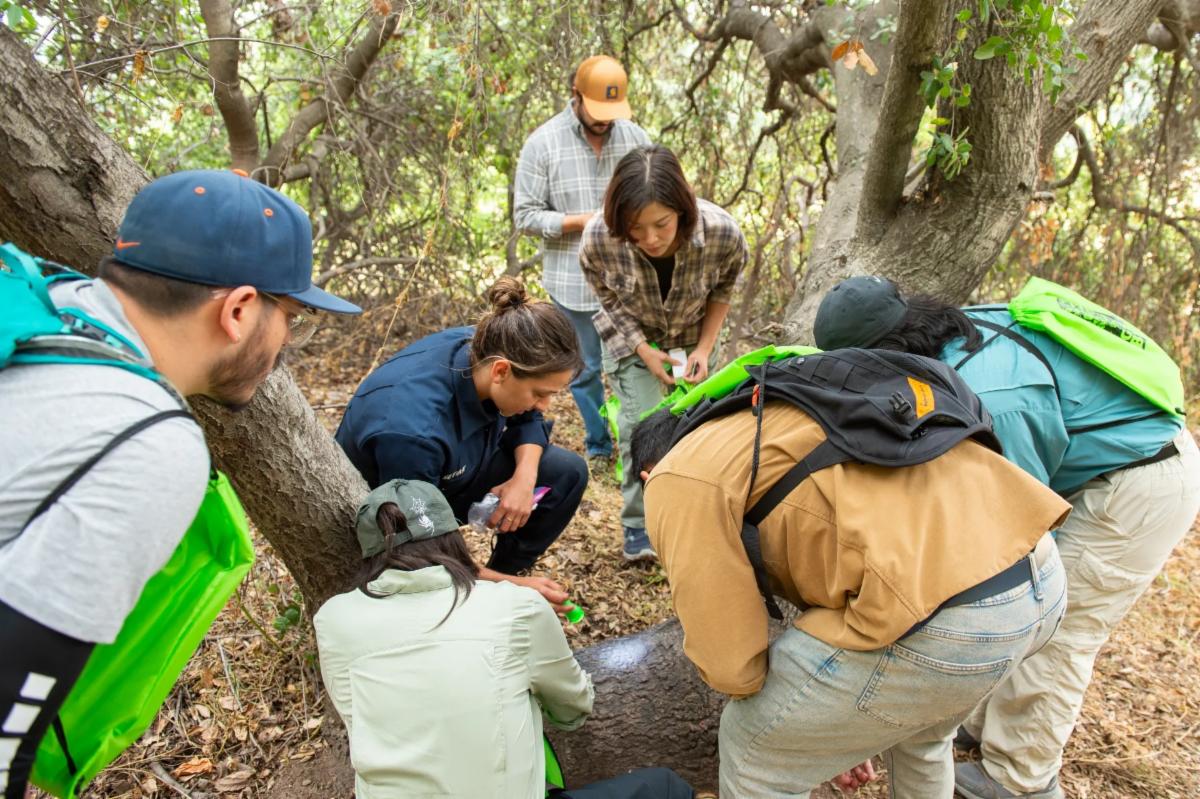
Group of people look on the ground, toward a flashlight spot, amidst woods as they look for signs of a beetle

Volunteers sought for ‘blitz’ 
to protect Ventura County oaks from destructive beetle

Over the last 20 years, goldspotted oak borers, also known as GSOB, have injured and killed hundreds of thousands of oak trees throughout San Diego, Orange, Riverside, San Bernardino and Los Angeles counties. The pests spread by hitching rides on firewood moved by people. Now, the beetles have been newly detected at multiple sites in Ventura County. Alongside CAL FIRE and community partners, UCCE scientists are working to protect oaks by training volunteers to survey for symptomatic trees and signs of infestation. Learn more about Feb. 13 “blitz”.

 
Person slices into a salmon fillet with a sharp knife

Sumptuous Salmon

Feb. 7, 9 a.m.-Noon

General Services Building

12200B Airport Road, Jackson, CA 95642

The UC Master Food Preservers of Amador County invite you to a comprehensive pressure canning class. This class will demonstrate the safe and effective preservation of salmon fillets using professional pressure canning techniques. We also will demonstrate how to make gravlax. Participants will be able to sample appetizers made with pressure canned salmon. $10. Details.


Thinking of a Winter Garden? Grow Asian Greens!

Feb. 11, 2-3 p.m.

San Rafael Public Library

1100 E Street, San Rafael, CA 94901

During this free session, UC Master Gardeners of Marin will teach you how to grow Asian greens in your garden – from planting to harvest, including ideas about growing them in containers. They’ll cover seed sources and potential pests so that you can be ready to plant this month and gather tasty greens in 40 to 60 days. Learn more.


2026 California Small Farm Conference

Online and in-person, Feb. 22-27

Join thousands of farmers, food system advocates, farmers market leaders, educators and more from across California for a week of learning, skill-building and community connection. This year’s theme is “Digging In Together: Small Farms, Deep Resolve.” In addition to online sessions and regional in-person events, there will be a full-day Spanish-language track and dozens of workshops – many featuring UC ANR advisors and researchers. Learn more and register.


Biochar Applications for Forest Landowners

Online, Feb. 25, 6-7:30 p.m.

UC ANR’s Forest Stewardship program invites you to a special session with Cindy Chen, UC Cooperative Extension woody biomass advisor; Nadia Hamey, Registered Professional Forester; and Kenneth Scherer, executive director of the Biochar Coalition. During this free webinar, learn about biochar products, markets and barriers; current scientific research; and the promises and pitfalls of using biochar as a forest management tool at scale. Registration and more information.


See more UC ANR events


Social Media Posts of the Month
 
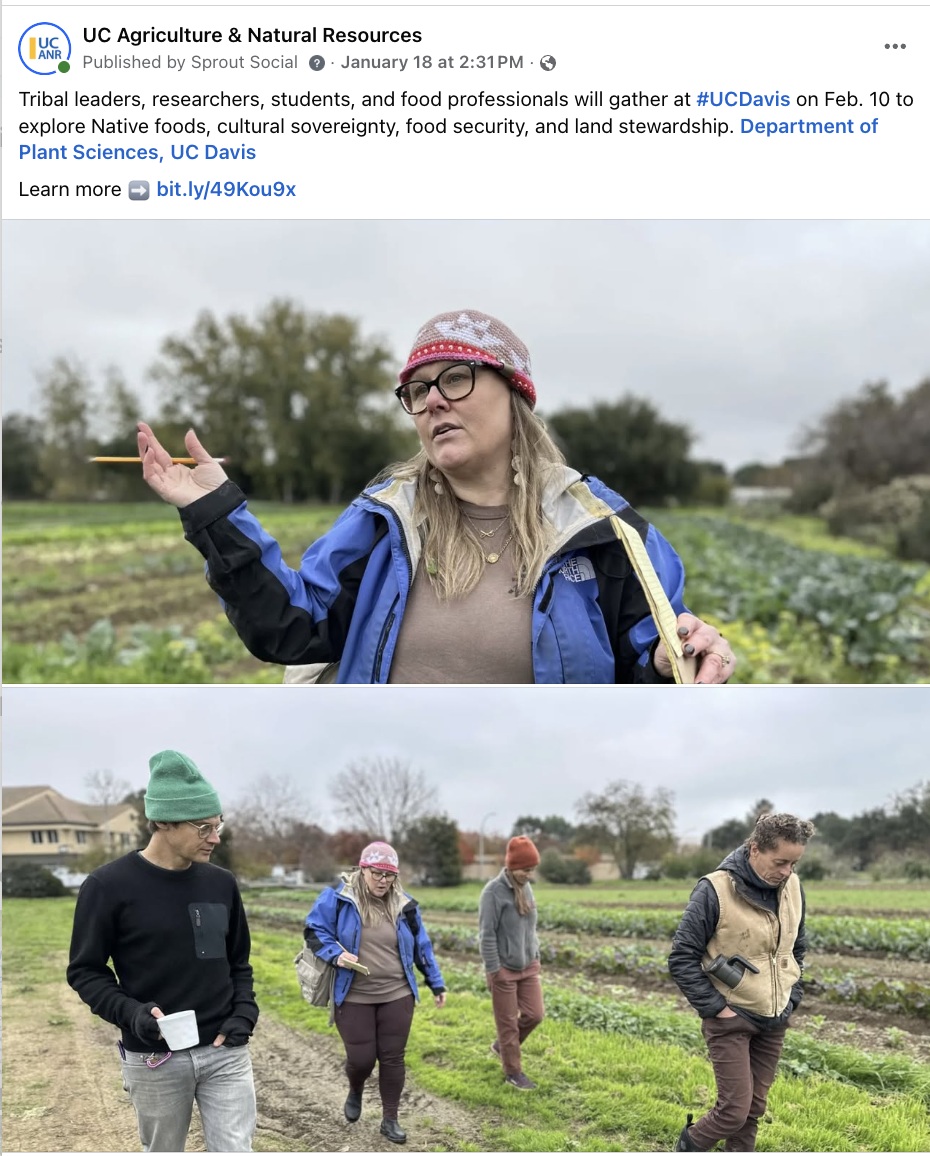
Screengrab of a Facebook post about a native foods conference
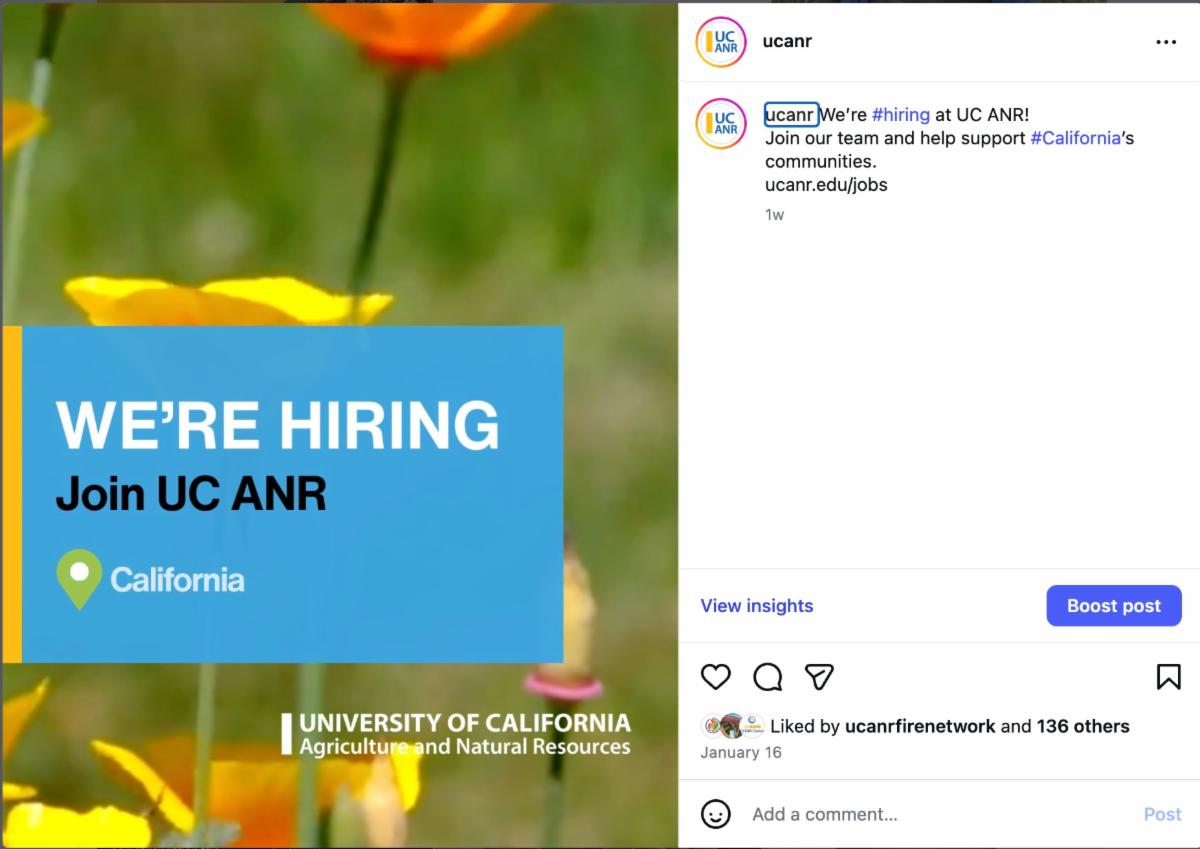
Screengrab of an Instagram post that reads We're Hiring
 

Follow us on Bluesky, X (Twitter), Facebook, Instagram, YouTube and LinkedIn

for more UC ANR highlights!


Subscribe to our Food blog, Green blog and Healthy Communities blog.


It is the policy of the University of California (UC) and the UC Division of Agriculture & Natural Resources not to engage in discrimination against or harassment of any person in any of its programs or activities.Inquiries regarding nondiscrimination policies may be directed to UC ANR, Affirmative Action Compliance & Title IX Officer, University of California, Agriculture and Natural Resources,
2801 Second Street, Davis, CA 95618, (530) 750-1280, tljordan@ucanr.edu.
 
University of California Agriculture and Natural Resources
2801 Second Street
Davis, CA 95618
Website: ucanr.edu
STAY CONNECTED
Facebook  X  Instagram  Linkedin  Youtube