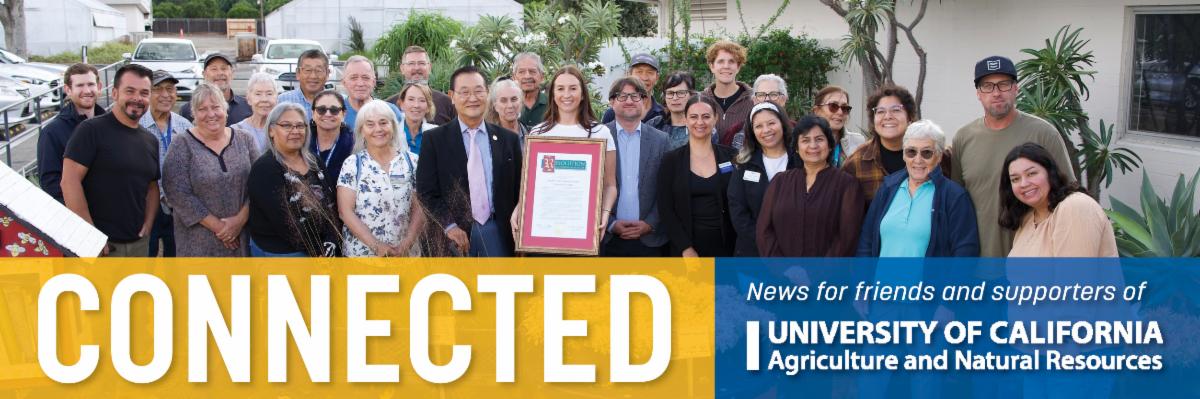
Lindsey Pedroncelli holds a legislative resolution celebrating South Coast REC's 70th anniversary, as presented by Sen. Steven Choi and Assemblymember Cottie Petrie-Norris, surrounded by staff, academics and volunteers

October 2026 | Volume 10, Number 10

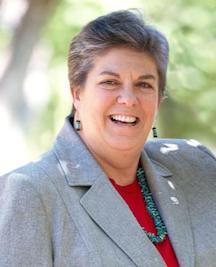
Headshot of Glenda Humiston

The Vantage Point


Glenda Humiston 

Vice President

UC Agriculture and Natural Resources 


Recent rains across the state are a preview of what is almost guaranteed to be a wet winter for California due to an unprecedented El Niño event. Given the high likelihood of severe storms and related impacts, scientists with the California Institute for Water Resources and UC Cooperative Extension have been sharing resources to help our communities prepare.


CIWR researcher Daniel Swain has been providing timely updates on his Weather West channel, briefing local governments and fielding innumerable media requests (for which he has been honored with a couple major science communication awards). Tracy Schohr, UCCE livestock and natural resources advisor, has been pulling together resources and supporting webinars; and Laura Garza, UCCE water resources management advisor, recently did a fantastic interview with Entravision in Spanish on El Niño preparations.


My thanks to everyone across UC ANR for gathering and sharing this crucial information. I encourage you to read our “ten things to do right now” article, visit the CIWR page with flood and severe weather resources, get flood insurance if you need it, follow the Disaster Blog and help spread the word.


Climate change is almost certainly amplifying the effects of El Niño, a naturally occurring cyclical warming of the eastern Pacific. The serious ramifications of a changing climate are outlined in California’s Fifth Climate Change Assessment. Released last week, the report provides a foundation of up-to-date scientific research and community knowledge to help state and local leaders build climate resilience. UCCE specialist Tapan Pathak and UC Merced’s Safeeq Khan were lead authors of the regional report for the Sierra, and many other UC ANR academics contributed to other regions’ reports.


The key role that UC scientists play in promoting the well-being of the state was quite evident at the 2026 California Economic Summit (Oct. 13-15), produced by CA FWD in collaboration with the California Stewardship Network. I joined Lauren Cartwright, Tracy Celio, Cindy Chen, Rita Clemons, Sara Garcia, Haris Gilani, Ali Hill, Nestor Lopez, Anne Megaro, Keith Nathaniel, Ashley Spalding, Keith Taylor and Janine Woods in networking with experts, policymakers and advocates across multiple sectors. The summit was a great showcase for bipartisanship and collaboration, best exemplified by a fireside chat between Gov. Newsom and former Gov. Schwarzenegger.


I was honored to speak on stage with California Department of Food and Agriculture Secretary Karen Ross and business leaders during a bioeconomy session. It was exciting to talk about how waste biomass can be repurposed into a variety of products – representing a “win-win-win” that boosts regional economies, reduces wildfire risks, and advances the state’s decarbonization and economic goals.


Secure and sustainable access to water is another priority for our state and nation, and the Rosenberg International Forum on Water Policy, California Institute for Water Resources and other partners provided an opportunity for productive conversations on responsible transboundary water management. Convened this month in Monterrey, Mexico, the forum brought together international scientists, policymakers and practitioners to discuss solutions for the waters between the U.S. and Mexico.


I want to acknowledge Rosenberg Forum Chair Soroosh Sorooshian of UC Irvine, as well as event co-sponsors: the Permanent Forum of Binational Waters; UC Alianza MX program; Colegio de la Frontera Norte; and Udall Center for Studies in Public Policy at the University of Arizona. Kudos also go out to Erik Porse and Erika Cassio Madrazo of CIWR, UCCE specialist Sam Sandoval Solis of UC Davis for his illuminating keynote on border water issues, and Sherry Cooper of our Program Support Unit for coordinating this event.


I also want to recognize our UC Environmental Stewards and UC Master Gardener programs for holding tremendously successful conferences in recent weeks. UC California Naturalists and Climate Stewards gathered with hundreds of partners and community members in Santa Barbara on Oct. 9-11. Congratulations to director Greg Ira and the entire Environmental Stewards team (and PSU for their tireless support), and many thanks to local co-host partner Community Environmental Council, the Conference Planning Committee and conference sponsors (see Greg’s blog post for details).


At the virtual UC Master Gardener Conference (Sept 18-20), UC Master Gardener volunteer presenters showcased their impactful projects across California, and UCCE advisors contributed invaluable research briefs to support volunteer knowledge around current research efforts (see resources and recordings from the conference). Terrific job by director Missy Gable, the UC Master Gardener statewide team and PSU in organizing such a meaningful gathering!


Another vital forum for learning from each other is the annual Hispanic Heritage Month webinar series. I want to thank Ricardo Vela, the News and Information Outreach in Spanish team, the Latinx & Friends Affinity Group and all the outstanding guest speakers for sharing their insights and experiences (view recordings). A special thank-you goes out to Lorena Hoyos, Carmela Padilla and Daisy Valdez for concluding the series with tributes to the contributions of our CalFresh Healthy Living, UCCE community educators. They represent the very heart of our mission – offering science-based, practical information that improves the lives of Californians in so many ways!

Banner image above: Academics, staff and volunteers gathered on Oct. 22 to celebrate UC South Coast Research and Extension Center’s 70th anniversary and receive a legislative resolution authored by Sen. Steven Choi and Assemblymember Cottie Petrie-Norris (presented by District Director Michael Tou), to honor the REC’s contributions; photo by Caroline Champlin

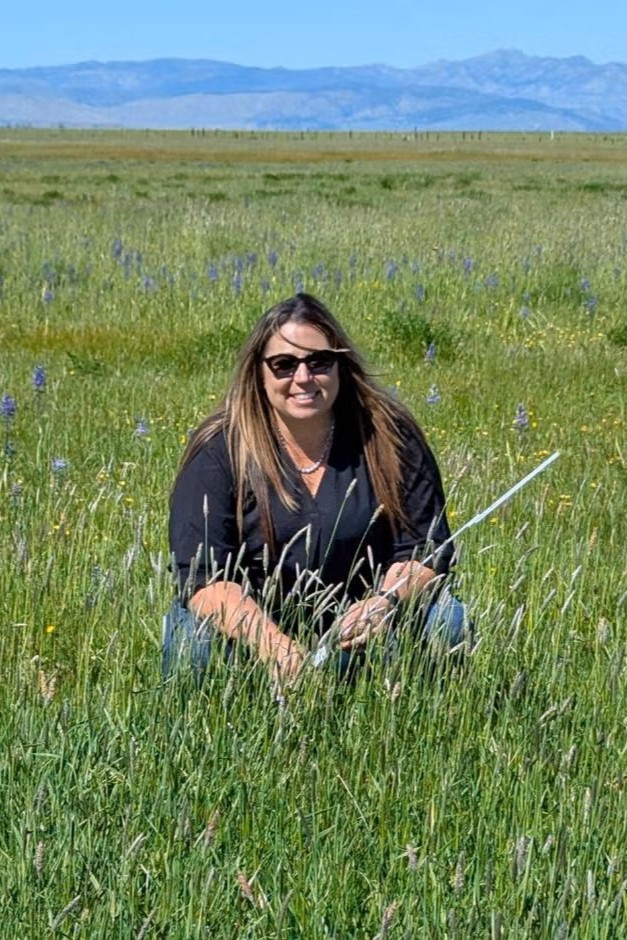
UCCE advisor Tracy Schohr crouches in a field

In the News


UC ANR was featured in stories on a service award for a UCCE livestock advisor, El Niño and wine grapes, preserving the fall harvest, UC ANR Innovate field days, latest in ag automation, high cost of Halloween candy, flooding in airports, fire danger from Santa Ana winds, SoCal heat wave, home garden weather stations, woes of California wine industry, importance of shade in cities, hurricane activity in Pacific, high ocean levels, students shaping school lunches, effects of Kelvin waves, new UCCE enology specialist, shrinking Rio Grande, storms and aging school structures, value of organic veg farms, SoCal coastal flooding, scaling back NOAA research, forecast for wet winter, impacts of El Niño, Imperial Valley innovation center, Davis El Niño prep, Marin prep plans, plans in South Bay, L.A. and Chinese flame trees, gene editing and stress indicators, saving torrential rains and more.

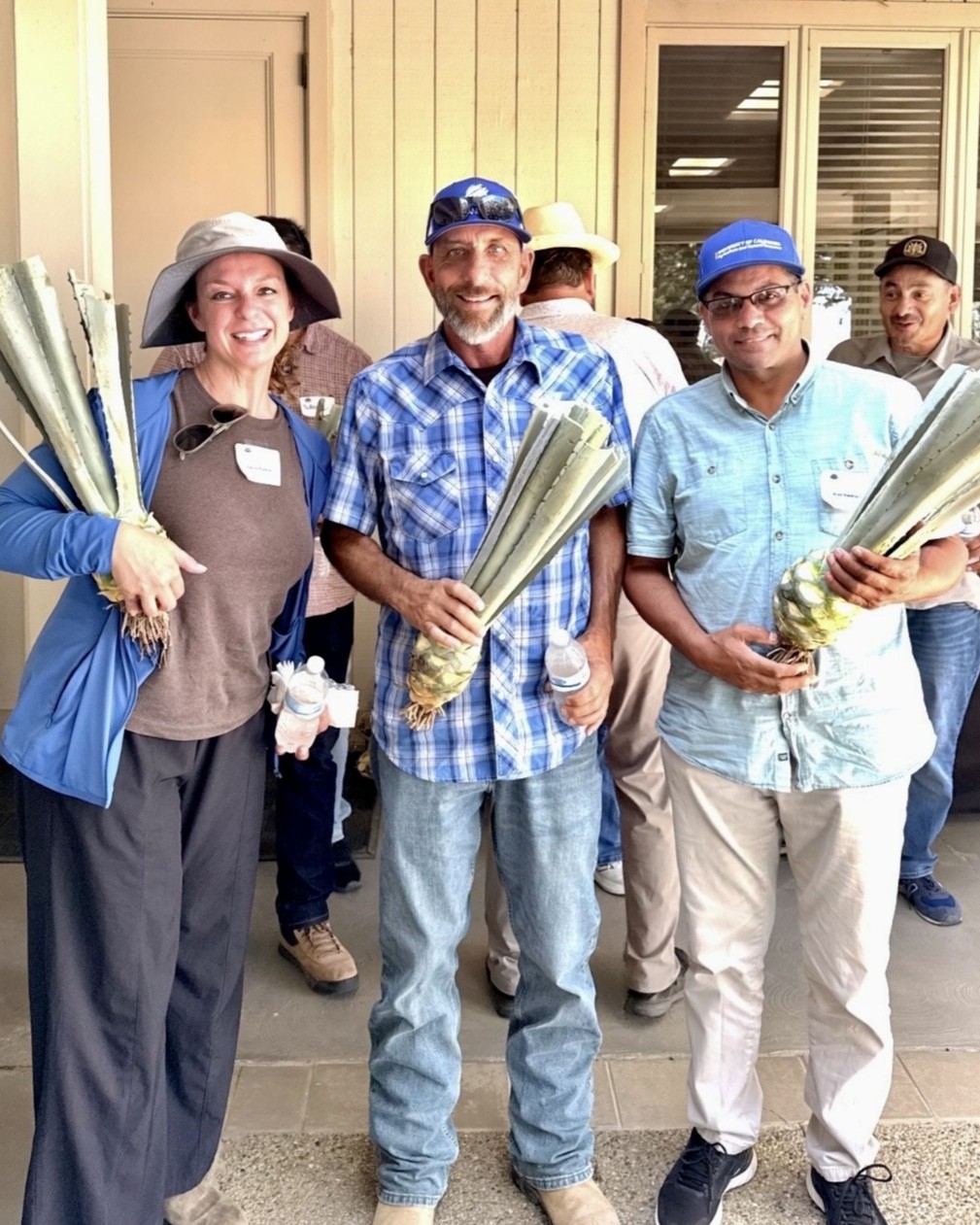
Atef Swelam (right) and Ronald Rising (center) pose with agave at West Side REC

UC ANR news stories


UC receives nearly $1.5 million from USDA-NIFA for farm research lab in San Joaquin Valley


Land managers invited to up their game against roadside weeds at Yuba City training on Nov. 4


California AgTech Alliance opens applications for Innovation Grants of up to $50,000


Swain wins national awards for excellence in science communications


The assumption about farm automation that may be wrong


More news stories


The Donor Difference

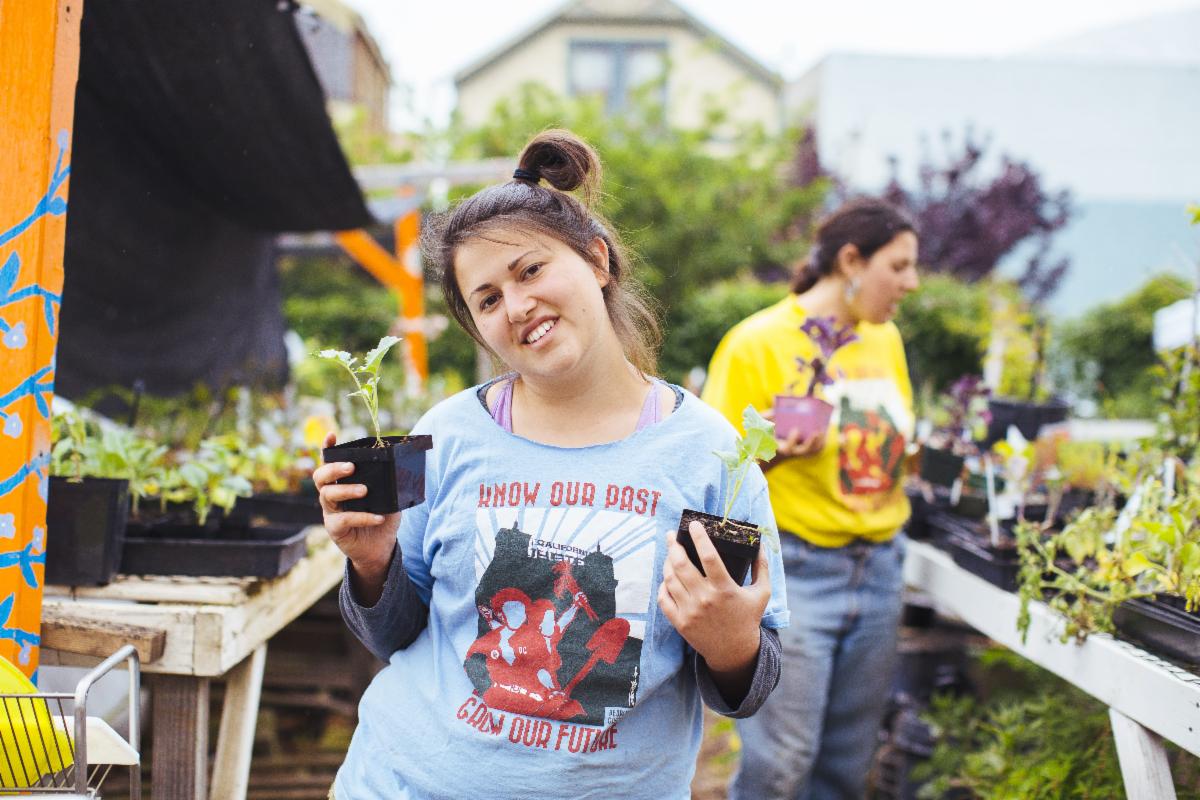
Woman holds two containers with young vegetable seedlings in an urban community garden setting

The power of the first gift

It starts with a simple click and a $5 donation. While it may seem like a small gesture, at UC ANR, we see it as the seed of a transformative partnership.


Imagine the impact of a gift equivalent to the cost of a cup of coffee. On its own, $5 is a modest sum; however, when dozens come together to do the same, the collective impact can be significant. Your support helps make educational workshops possible, provides resources for youth programs, and brings valuable information to more people in their communities.


This initial gift is the “donor difference” – a meaningful alignment between you and our mission to serve California. We view every gift as the beginning of a relationship built on gratitude and transparency. By valuing every contribution, we transform a simple gesture into a legacy of community impact. No gift is too small to start something great.


Save the date! Giving Tuesday on December 1 is the perfect opportunity to make your first gift and kick off the year-end giving season. Every dollar helps us grow our impact in your community. For more information, contact Emily Delk, UC ANR director of donor engagement, at eddelk@ucanr.edu.


Spotlight on Practical Resources

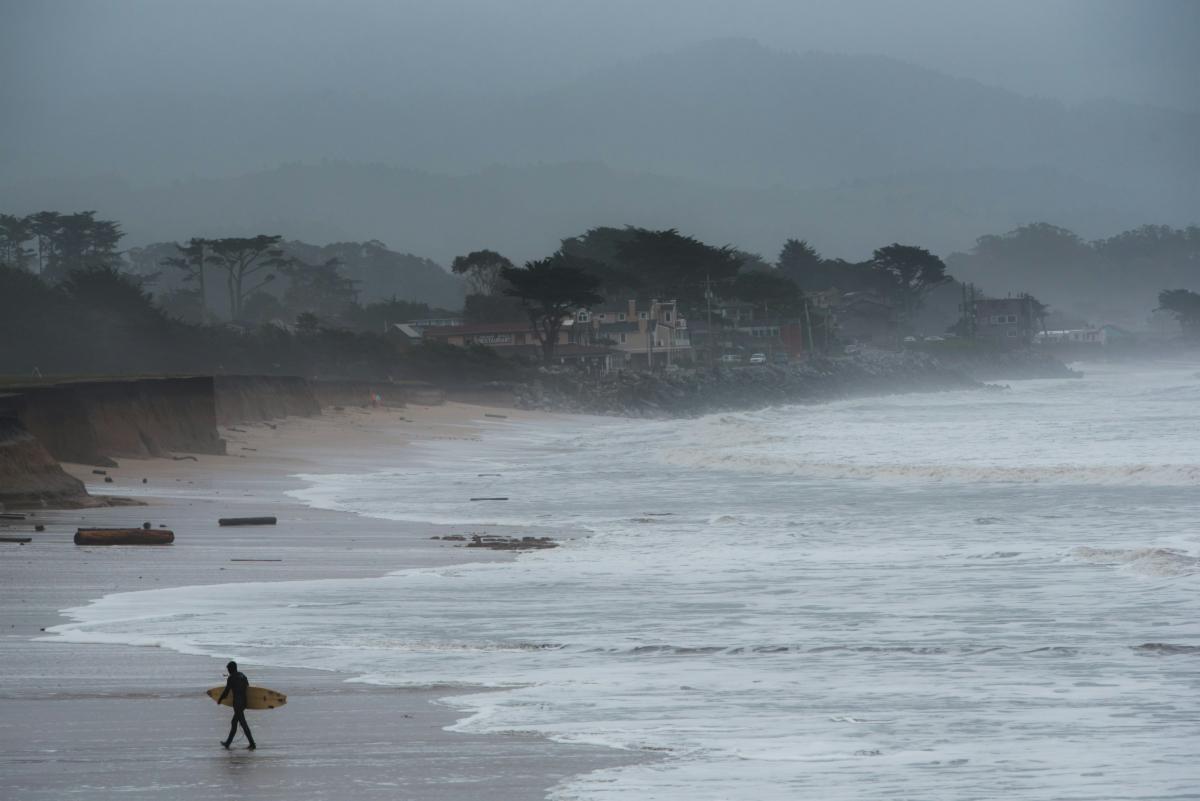
Storm lashes a coastline as a surfer holding a surfboard moves away from the water under dark gray skies

Ten things to do right now 
to prepare for predicted severe El Ni
ño impacts

The likelihood of an extremely wet winter in California – as well as the risk of potential coastal and inland flooding – continue to rise. Prepare your family, home, business and neighborhood with this checklist put together by experts with the California Institute for Water Resources and UC Cooperative Extension. Critical steps include evaluating your flood risk, signing up for local alerts, cleaning your gutters and yards, assembling emergency kits and communicating a plan with everyone in your household. Read the list of to-do items and preparedness resources.


Notes from the Field

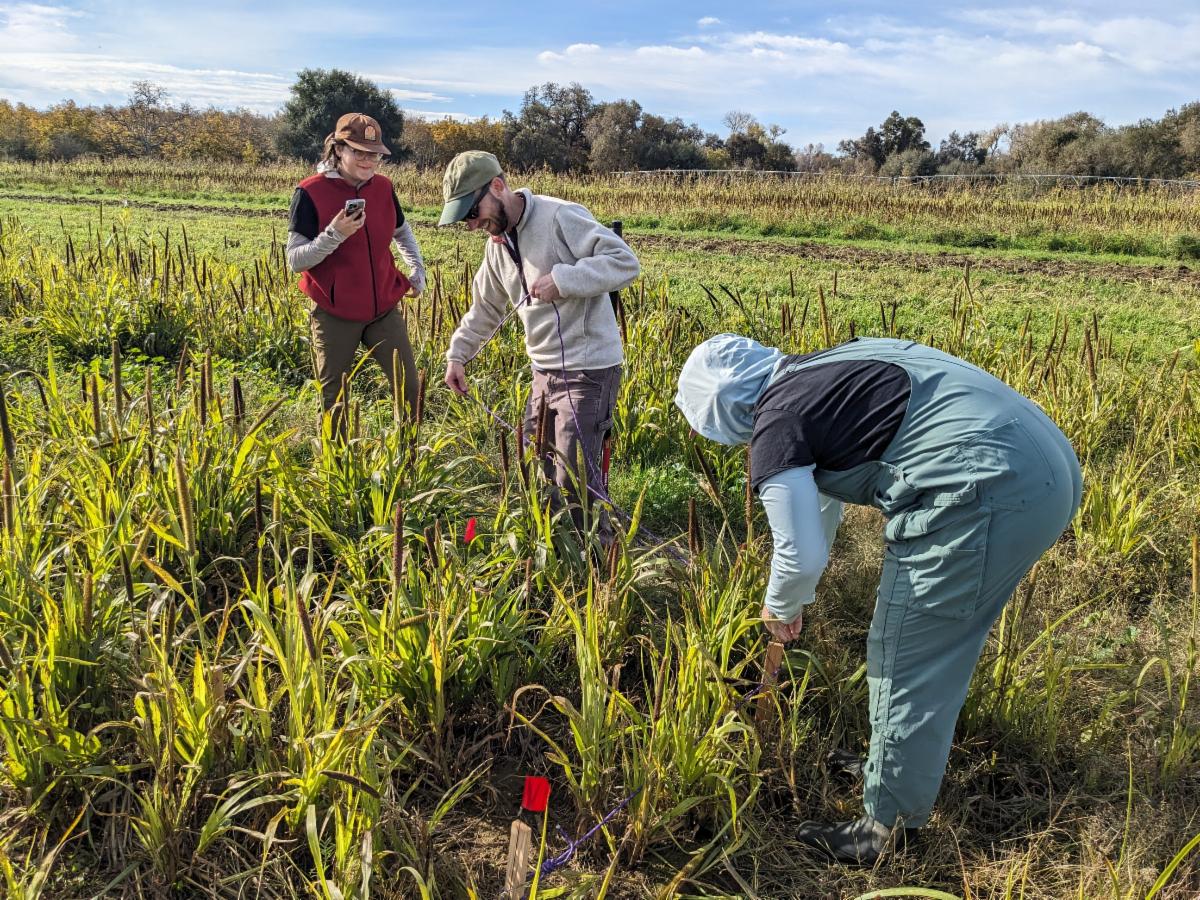
Three researchers stoop down in a field to study "superinvader" weeds

How to be a really successful weed? Break the rules

Most plants face trade-offs in how they grow and survive, such as: Do I grow fast to beat the competition, or grow more slowly and save resources to deal with stresses later on? But some invasive plants combine characteristics that are typically “either-or”, and these unusual combinations may help explain why some species become successful weeds. New research by Justin Valliere, UCCE specialist in ecological restoration and invasive plant management at UC Davis, and Jennifer Funk, professor in the UC Davis Department of Plant Sciences, could improve efforts to predict and manage plant invasions. Read more about the study.

 
Productive Partnerships
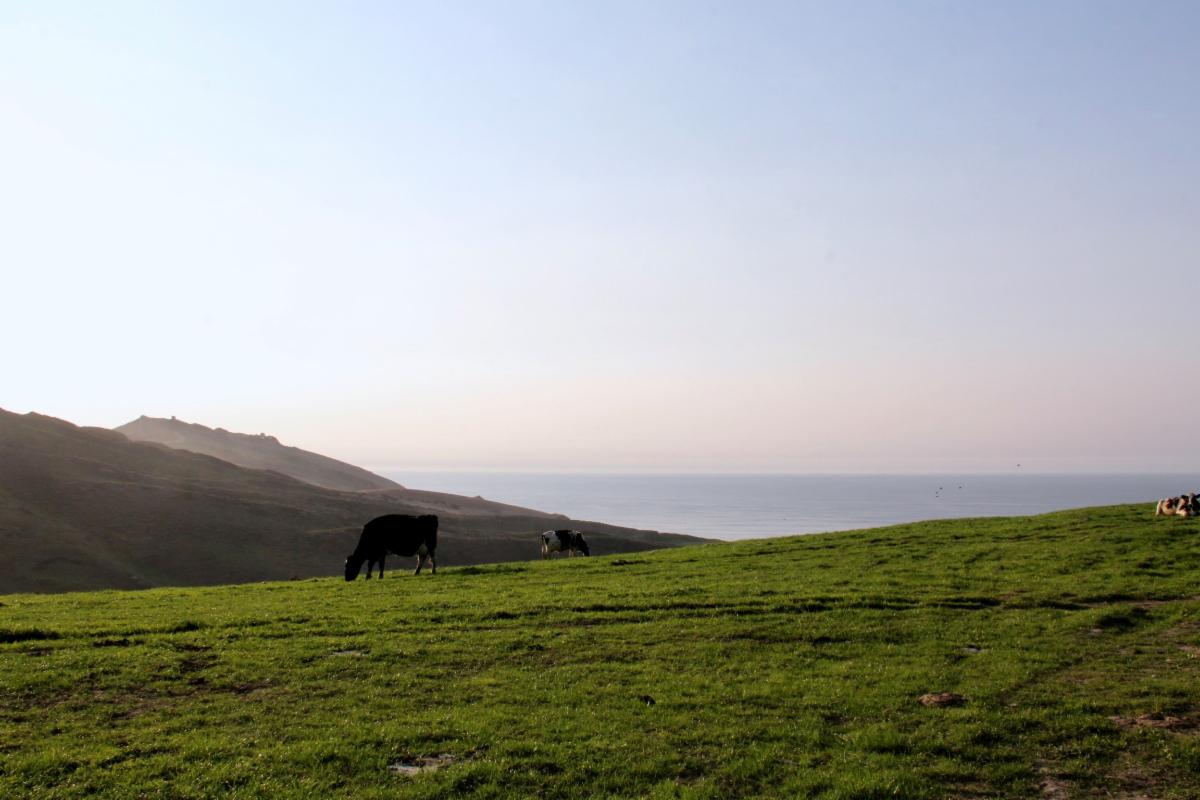
Cow grazes a coastal hillside with the ocean on the horizon in the distance

Webinars in November highlight steps to transition livestock operations to organic

A free lunchtime webinar series featuring organic livestock producers, certifiers and UC scientists will guide farmers and ranchers seeking to transition their cattle, poultry and other livestock. Organized and sponsored by the Community Alliance with Family Farmers, UC Cooperative Extension and the UC Organic Agriculture Institute, the “Transition to Organic: Livestock Webinar Series” will take place Nov. 5, 12 and 19. The series will cover the organic certification process, organic livestock economics, market and processing considerations, and tips from experienced organic producers. Real-time Spanish interpretation will be available. Learn more in English and español.

 
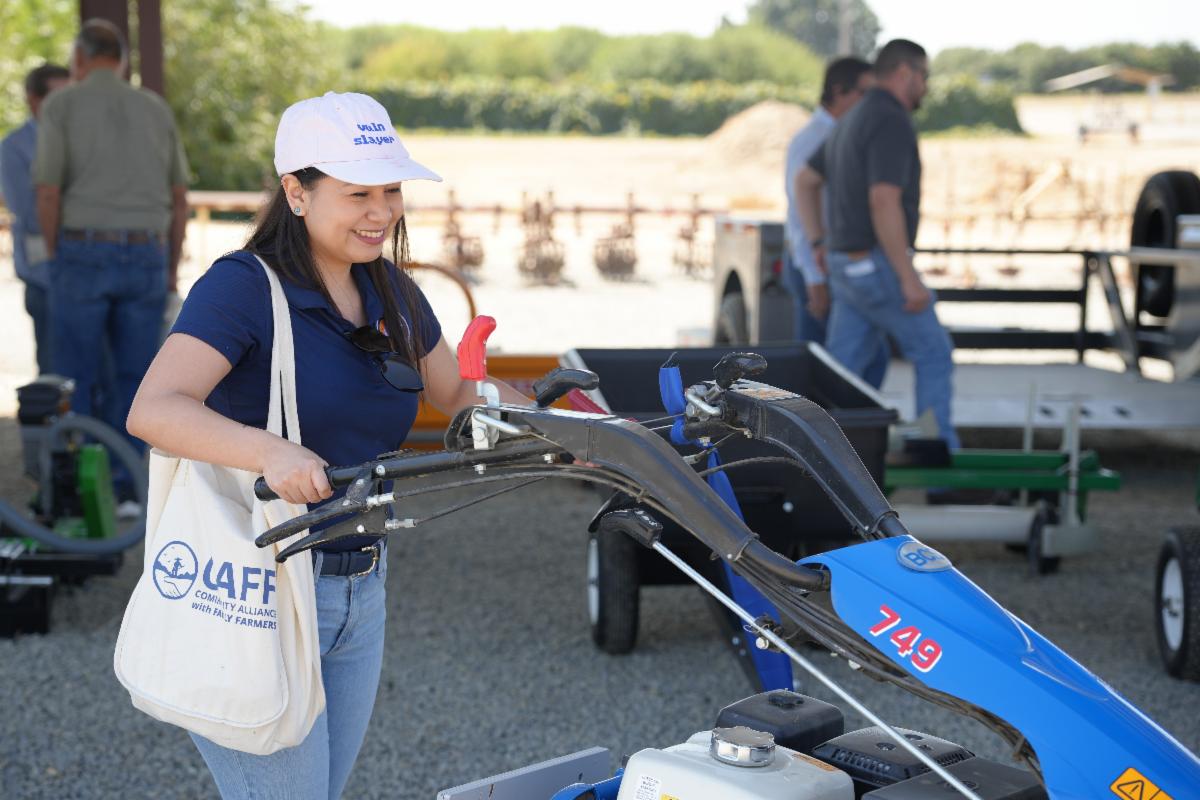
Woman smiles big as she looks at a piece of farm equipment at the lending library at Kearney REC

Equipment Lending Library Classroom Training

Nov. 4, 8:30-11 a.m. (English) 
Nov. 4, 1-3:30 p.m. (Español)

Kearney Research and Extension Center
9240 South Riverbend Avenue, Parlier, CA 93648

The F3 Local Equipment Lending Library is for small-scale growers farming less than 80 acres in Fresno, Merced, Madera, Tulare and Kings counties (learn more). Attend this classroom training to view the available equipment and learn about policy and lending procedures. Training is required prior to borrowing equipment. If you have any questions about this and other training opportunities, contact Amber Butland at abutland@ucanr.edu. See details in English and español.


UC ANR Connect Field Day: Ag Tech for Permanent Crops

Nov. 5, 9 a.m.-Noon

Kearney Research and Extension Center
9240 South Riverbend Avenue, Parlier, CA 93648

Join UC ANR Innovate for ag tech demonstrations and conversations about permanent crop production. Meet the teams building tools for autonomous fieldwork, precision spraying, irrigation management and outdoor cooling for farmworkers. See the technologies; ask questions about equipment compatibility, installation, day-to-day operation and support; and connect with growers, researchers, Cooperative Extension advisors and agricultural partners. Learn more about the field day.


Lose the Lawn Public Workshop

Nov. 14, 10 a.m.-Noon

Merced County UC Cooperative Extension Office
2145 Wardrobe Avenue, Merced, CA 95341

This free workshop will guide you through removing all or part of your lawn and replacing it with beautiful drought-tolerant plants, wildflowers and California natives. Central Valley lawns require significant water, expense and maintenance, but you may wish to keep some grass. Tim Sullivan, UC Master Gardener of Fresno County, will share his knowledge from 15 years as a Master Gardener and hands-on experience in home gardens. Learn more and register for workshop.


Elkus Ranch Volunteer Day

Nov. 21, 9 a.m.-Noon

Elkus Ranch Research and Extension Center

1500 Purisima Creek Road, Half Moon Bay, CA 94019

Elkus Ranch REC hosts a volunteer day on one Saturday per month. Volunteers do a variety of activities to keep the animals happy and the ranch beautiful, such as mucking stalls, painting, cleaning or weeding. Everyone will get to interact with the animals and feed them some treats! Interested volunteers need to register to participate. Learn more and register for volunteer day and also explore more Elkus Ranch events for kids and the whole family.


See more UC ANR events


Social Media Posts of the Month
 
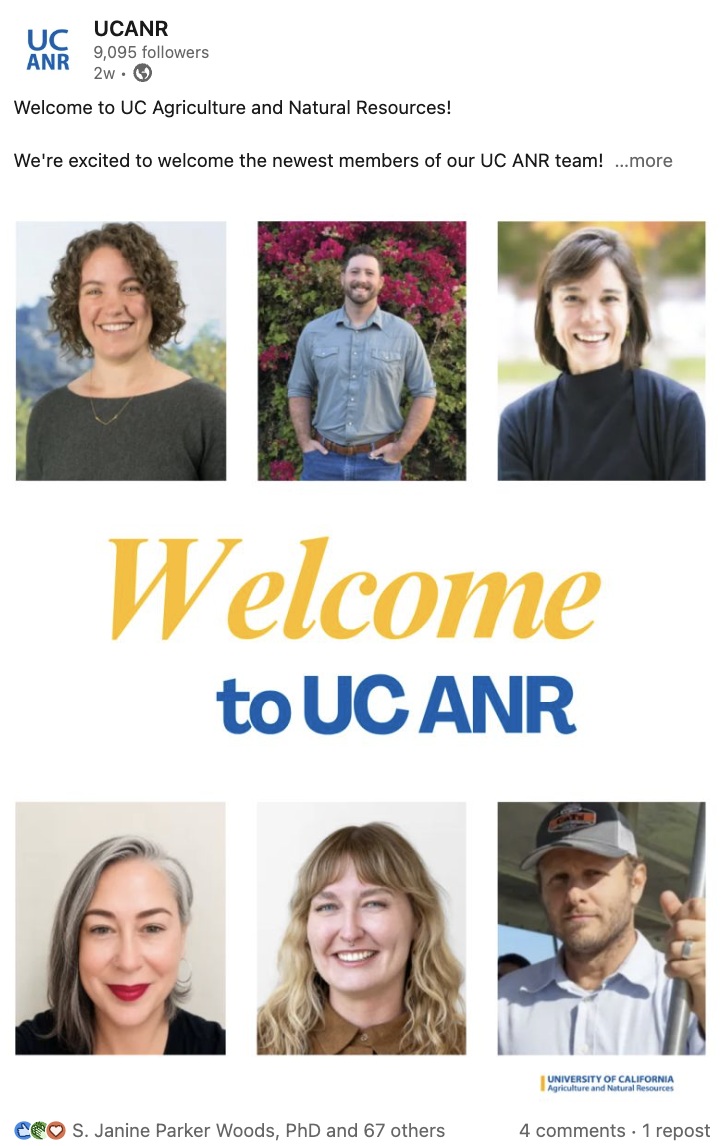
Image of LinkedIn post welcoming new UC ANR employees, with six headshot photos of new hires
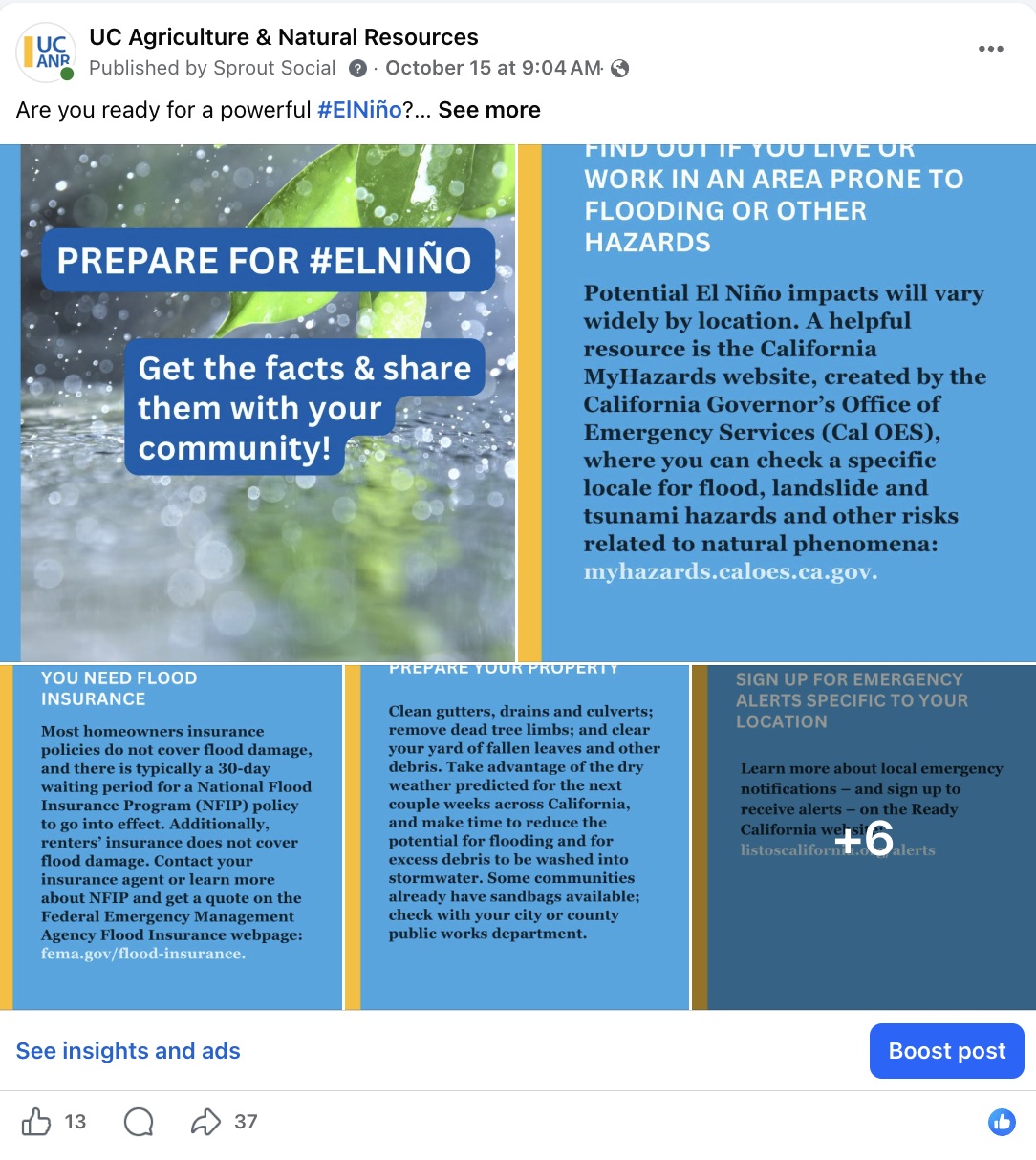
Image of Facebook post with a collage of blocks with text on preparing for El Nino impacts
 

Follow us on Bluesky, X (Twitter), Facebook, Instagram, YouTube and LinkedIn

for more UC ANR highlights!


Subscribe to our Food blog, Green blog and Healthy Communities blog.


It is the policy of the University of California (UC) and the UC Division of Agriculture & Natural Resources not to engage in discrimination against or harassment of any person in any of its programs or activities.Inquiries regarding nondiscrimination policies may be directed to UC ANR, Affirmative Action Compliance & Title IX Officer, University of California, Agriculture and Natural Resources,
2801 Second Street, Davis, CA 95618, (530) 750-1280, tljordan@ucanr.edu.
 
University of California Agriculture and Natural Resources
2801 Second Street
Davis, CA 95618
Website: ucanr.edu
STAY CONNECTED
Facebook  X  Instagram  Linkedin  Youtube