|
|
|
Connecting
Aug. 17, 2023
Click here for sound of the Teletype
| |
|
Colleagues,
Good Thursday morning on this Aug. 17, 2023,
The Associated Press issued guidelines Wednesday on artificial intelligence, letting its staff know that the tool cannot be used to create publishable content and images for the news service while encouraging staff members to become familiar with the technology.
In a lead story, by AP Media Writer David Bauder, it is noted that AP is one of a handful of news organizations that have begun to set rules on how to integrate fast-developing tech tools like ChatGPT into their work. The service will couple this today with a chapter in the AP Stylebook that advises journalists how to cover the story, complete with a glossary of terminology.
We also bring you a Definitive Source story by colleague Amanda Barrett, AP vice president for Standards and Inclusion.
Today’s issue brings you a major development in the ongoing story of the police raid on the Marion County Record – a prosecutor said the raid that drew national attention to the small Kansas newspaper over threats to press freedoms wasn’t supported by evidence. And the paper’s staff scrambled to print its first weekly edition since their cellphones and computers were seized.
SUBSCRIBE TO RECORD? – Our colleague Martha Malan notes an opinion piece in The Kansas City Star by Melinda Henneberger in which Melinda writes this in the final grafs:
And I mourn Mrs. Meyer, whose last public statement was something hard to hear but important because true.
In her honor, I subscribed to her newspaper on Saturday, which set me back $34.99 for a year. Wherever you live, please think about doing that, too, even if the print edition is skinnier than it used to be. Because if you let them get away with it, it gets worse and worse and worse.
Wrote Martha, “I saw this opinion piece in the Star, wonder if Connecting subscribers might be interested in subscribing to the Record in honor of Mrs. Meyer/the Record, as Henneberger suggests in the last graf.”
VACATION RELIEF: Colleague Peg Coughlin will take Connecting editing duties for Friday’s issue while I am out of town. Send your submissions to Peg at – pcoughlin@ap.org
Finally, take time to read today's Final Word. The investment of your time will be worth it.
Have a great day – be safe, stay healthy, live the day to your fullest.
Paul
Remembering Pat Hamilton
| 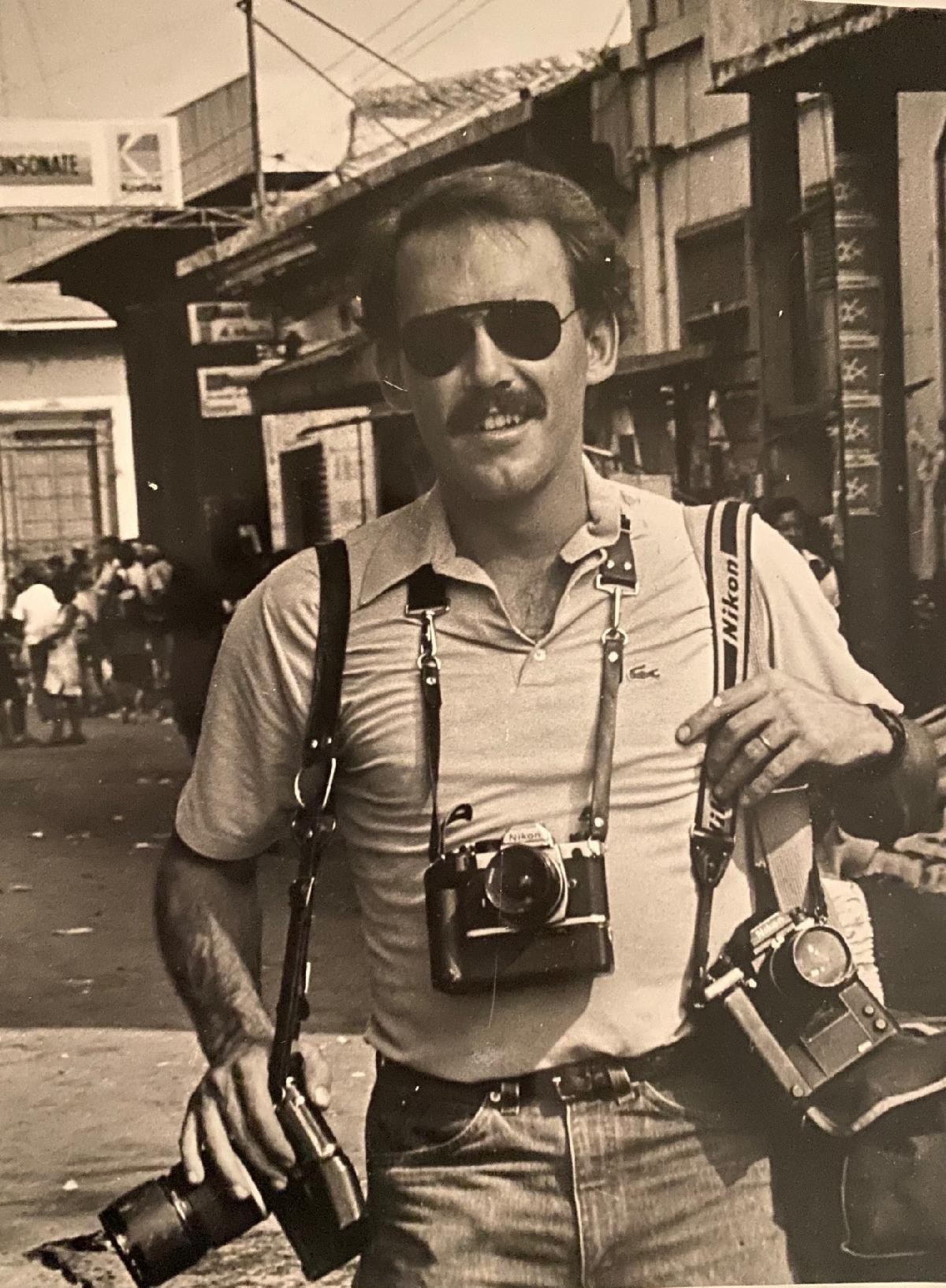 | |
Joe Frazier - Pat had an amazing eye for a picture. He would go to work on a subject and leave us wondering what he was shooting. Then came the prints. I recall a close-up of a very old man with a large clay pot of water weighing him down at the shoulder. Simple? Consider.
El Salvador's impoverished and displaced poor often had to carry water home for miles. Pat's fine eye and his camera brought it home in a way words could not.
He could put that war in your parlor with a click.
After a lengthy stint in the hills covering guerilla activity, an exhausted Pat came into the office, still dusty from the dry hills, and cracked open a bottle of Nicaragua's superb Flor de Cana rum, a favorite tipple of the foreign press corps.
He poured himself a horse-doctor dose or two, gathered up his film and sauntered into the hotel bathroom which had been tricked into a darkroom.
An hour or so later he came out, the rum bottle empty and a sheaf of drop-dead beautiful prints.
How, we asked, could you manage that in your befuddled state?
He gave a trademark twist to a thin moustache, turned on his thick Texas accent, and replied. "Frazier-- ANYBODY can do it sober!”
That said a lot about Pat.
Both of us had been combat Marines in Vietnam and had worked together almost exclusively since the Somoza revolution next door three or four years earlier. He fit into it unlike many who came down to help try to make sense out of it.
Pat saw it for what it was but found no joy there.
In Vietnam he was a Force Ranger, a high- risk job. but he told me that over his 13 months there he never once fired his rifle. "
-0-
Click here to read Susana Hayward’s obituary of Pat that moved on the AP wire.
| AP, other news organizations develop standards for use of artificial intelligence in newsrooms |  | |
FILE - The Associated Press logo is shown at the entrance to the news organization’s office in New York on Thursday, July 13, 2023. The Associated Press has issued guidelines for its journalists on use of artificial intelligence, saying the tool cannot be used to create publishable content and images for the news service. (AP Photo/Aaron Jackson, File)
BY DAVID BAUDER
NEW YORK (AP) — The Associated Press has issued guidelines on artificial intelligence, saying the tool cannot be used to create publishable content and images for the news service while encouraging staff members to become familiar with the technology.
AP is one of a handful of news organizations that have begun to set rules on how to integrate fast-developing tech tools like ChatGPT into their work. The service will couple this on Thursday with a chapter in its influential Stylebook that advises journalists how to cover the story, complete with a glossary of terminology.
“Our goal is to give people a good way to understand how we can do a little experimentation but also be safe,” said Amanda Barrett, vice president of news standards and inclusion at AP.
The journalism think tank Poynter Institute, saying it was a “transformational moment,” urged news organizations this spring to create standards for AI’s use, and share the policies with readers and viewers.
Generative AI has the ability to create text, images, audio and video on command, but isn’t yet fully capable of distinguishing between fact and fiction
As a result, AP said material produced by artificial intelligence should be vetted carefully, just like material from any other news source. Similarly, AP said a photo, video or audio segment generated by AI should not be used, unless the altered material is itself the subject of a story.
That’s in line with the tech magazine Wired, which said it does not publish stories generated by AI, “except when the fact that it’s AI-generated is the point of the whole story.”
“Your stories must be completely written by you,” Nicholas Carlson, Insider editor-in-chief, wrote in a note to employees that was shared with readers. “You are responsible for the accuracy, fairness, originality and quality of every word in your stories.”
Highly publicized cases of AI-generated “hallucinations,” or made-up facts, make it important that consumers know that standards are in place to “make sure the content they’re reading, watching and listening to is verified, credible and as fair as possible,” Poynter said in an editorial.
News organizations have outlined ways that generative AI can be useful short of publishing. It can help editors at AP, for example, put together digests of stories in the works that are sent to its subscribers. It could help editors create headlines or generate story ideas, Wired said. Carlson said AI could be asked to suggest possible edits to make a story concise and more readable, or to come up with possible questions for an interview.
AP has experimented with simpler forms of artificial intelligence for a decade, using it to create short news stories out of sports box scores or corporate earnings reports. That’s important experience, Barrett said, but “we still want to enter this new phase cautiously, making sure we protect our journalism and protect our credibility.”
ChatGPT-maker OpenAI and The Associated Press last month announced a deal for the artificial intelligence company to license AP’s archive of news stories that it uses for training purposes.
News organizations are concerned about their material being used by AI companies without permission or payment. The News Media Alliance, representing hundreds of publishers, issued a statement of principles designed to protect its members’ intellectual property rights.
Some journalists have expressed worry that artificial intelligence could eventually replace jobs done by humans and is a matter of keen interest, for example, in contract talks between AP and its union, the News Media Guild. The guild hasn’t had the chance to fully analyze what they mean, said Vin Cherwoo, the union’s president.
“We were encouraged by some provisions and have questions on others,” Cherwoo said.
With safeguards in place, AP wants its journalists to become familiar with the technology, since they will need to report stories about it in coming years, Barrett said.
AP’s Stylebook — a roadmap of journalistic practices and rules for use of terminology in stories — will explain in the chapter due to be released Thursday many of the factors that journalists should consider when writing about the technology.
“The artificial intelligence story goes far beyond business and technology,” the AP says. “It is also about politics, entertainment, education, sports, human rights, the economy, equality and inequality, international law, and many other issues. Successful AI stories show how these tools are affecting many areas of our lives.”
The chapter includes a glossary of terminology, including machine learning, training data, face recognition and algorithmic bias.
Little of it should be considered the final word on the topic. A committee exploring guidance on the topic meets monthly, Barrett said.
“I fully expect we’ll have to update the guidance every three months because the landscape is shifting,” she said.
Click here for link to this story.
Definitive Source: Standards around generative AI
By Amanda Barrett
AP Vice President for Standards and Inclusion
Accuracy, fairness and speed are the guiding values for AP’s news report, and we believe the mindful use of artificial intelligence can serve these values and over time improve how we work.
However, the central role of the AP journalist – gathering, evaluating and ordering facts into news stories, video, photography and audio for our members and customers – will not change. We do not see AI as a replacement of journalists in any way.
It is the responsibility of AP journalists to be accountable for the accuracy and fairness of the information we share.
As always, our journalism follows AP’s Statement of News Values and Principles. We have also developed guidance for using generative artificial intelligence, including how and when it should be used:
AP has a licensing agreement with OpenAI, the maker of ChatGPT, and while AP staff may experiment with ChatGPT with caution, they do not use it to create publishable content.
Any output from a generative AI tool should be treated as unvetted source material. AP staff must apply their editorial judgment and AP’s sourcing standards when considering any information for publication.
In accordance with our standards, we do not alter any elements of our photos, video or audio. Therefore, we do not allow the use of generative AI to add or subtract any elements.
We will refrain from transmitting any AI-generated images that are suspected or proven to be false depictions of reality. However, if an AI-generated illustration or work of art is the subject of a news story, it may be used as long as it clearly labeled as such in the caption.
We urge staff to not put confidential or sensitive information into AI tools.
We also encourage journalists to exercise due caution and diligence to ensure material coming into AP from other sources is also free of AI-generated content.
Generative AI makes it even easier for people to intentionally spread mis- and disinformation through altered words, photos, video or audio, including content that may have no signs of alteration, appearing realistic and authentic. To avoid using such content inadvertently, journalists should exercise the same caution and skepticism they would normally, including trying to identify the source of the original content, doing a reverse image search to help verify an image’s origin, and checking for reports with similar content from trusted media.
If journalists have any doubt at all about the authenticity of the material, they should not use it.
Click here to view.
Kansas prosecutor says police should return computers and cellphones seized in raid on newspaper
| 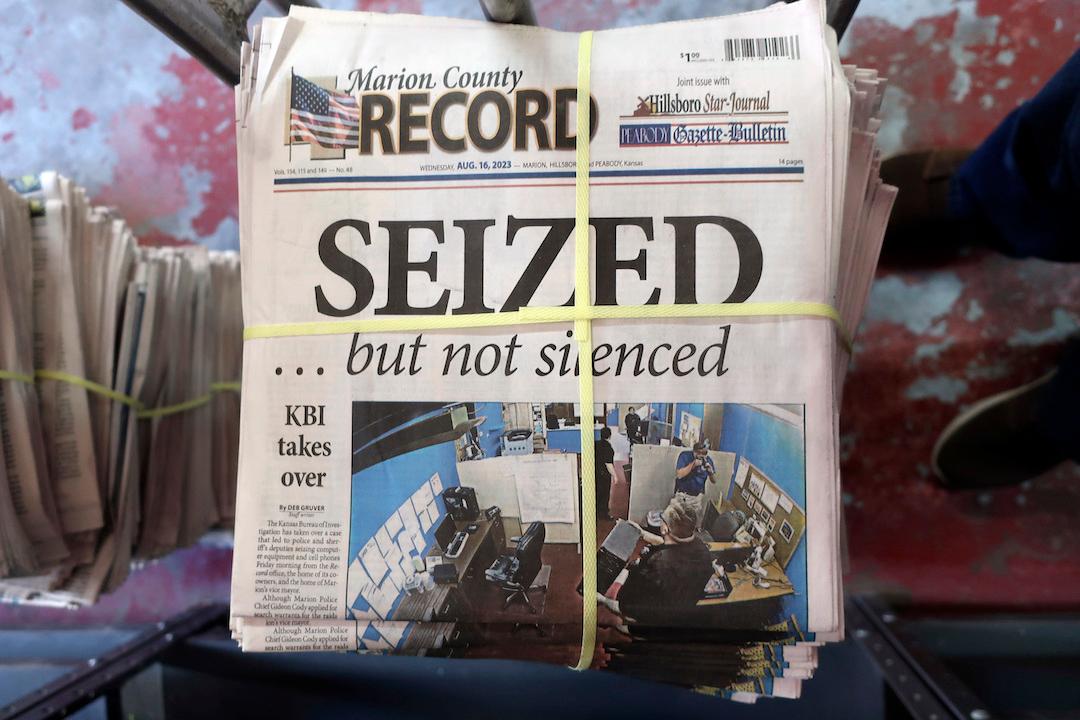 | |
A stack of the latest weekly edition of the Marion County Record sits in the back of the newspaper's building, awaiting unbundling, sorting and distribution, on Wednesday in Marion, Kan. The newspaper's front page was dedicated to two stories about a raid by local police on its offices and the publisher's home on Aug. 11, 2023. (AP Photo/John Hanna)
BY JOHN HANNA AND JIM SALTER
MARION, Kansas (AP) — A police raid that drew national attention to a small Kansas newspaper over threats to press freedoms wasn’t supported by evidence, a prosecutor said Wednesday, as the paper’s staff scrambled to print its first weekly edition since their cellphones and computers were seized.
Forced to rewrite stories and reproduce ads from scratch, the four-person newsroom toiled overnight to print Wednesday’s edition, with a defiant front-page headline that read: “SEIZED … but not silenced.” Under the 2-inch-tall (5-centimeter) typeface, they published stories on the raid and the influx of support the weekly newspaper has since received.
On Wednesday, Marion County Attorney Joel Ensey said his review of police seizures from the Marion County Record offices and the publisher’s home found “insufficient evidence exists to establish a legally sufficient nexus between this alleged crime and the places searched and the items seized.”
“As a result, I have submitted a proposed order asking the court to release the evidence seized. I have asked local law enforcement to return the material seized to the owners of the property,” Ensey said in a news release.
But in a statement released along with the county attorney’s, the Kansas Bureau of Investigation said it still is examining whether the newspaper violated state laws. A warrant for the raid, signed by a local judge, suggested the raid was over whether the paper improperly used a local restaurant owner’s personal information to access her state driving record online. Editor and Publisher Eric Meyer has said the paper did nothing illegal.
In Topeka, Kansas Attorney General Kris Kobach, a conservative Republican who oversees the KBI, said its “principal interest” remains the computer access allegations. He told reporters he didn’t understand the KBI’s role to include “an evaluation of constitutional claims about the raid.”
The KBI said it would continue its work without examining any evidence seized last Friday. Once the state investigators finish, Kobach said, the county attorney will decide whether to prosecute.
Read more here.
-0-
Nolan Kienitz - During my first year working in a small-town Montana FM radio station - July 1966, an individual was being arraigned in court on an assault charge.
The individual had a pistol, pulled same and wounded two people and fatally shot the mayor. The local patrolman (one of the two wounded) was able to return fire and fatally shot the individual.
Big news in a very small farming community.
I worked the board as an on-air jockey and the station was swamped with calls from all about the USA and overseas. Soundbites were being requested left and right.
However, the owners/managers of the radio station told all staffers to say absolutely nothing to any callers asking for information about the event. "No Comment" was the mandated reply we were to provide.
I do not recall how the local paper provided coverage at the time, but the radio station I worked at didn't provide any information.
So ... controlling the media in small-town America also impacted radio stations.
-0-
Joe Galu - Leaving Congressman Jake LaTurner out of the stories about the raid on a small rural paper serves one purpose and one purpose only -- to prevent people from getting a full picture of just how political this story really is. The woman with the DUI who ousted the newspaper editor and the reporter invited the far-right-wing congressman into an event at her restaurant, a public accommodation under federal law. She is the one who went public with her conviction and asserted that she continued to drive with a suspended license. The newspaper printed stories about it only after she went public with it. Then she objected to stories about her own public statements. The powers that be in that town hired as their police chief a man who was being ousted from a big-city police force after he was accused of sexual abuse. Is there any respect for any law among any of them? They certainly have no business equating her right to privacy against a newspaper story about her public admissions with the First Amendment protection of the freedom of the press. It's not very hard to see where the focus is. You just have to aim your glance off to the extreme far right on the page and in the political spectrum.
Having said all that, I fully agree that none of us has all the facts, but the paper has a circulation of about 4,000 in a town of 1,900. That's the equivalent of The New York Times having a circulation of about 16 million, but major markets are very different from small rural communities.
-0-
Before Kansas newspaper raid, police chief left KCPD under cloud, facing discipline
BY GLENN E. RICE AND LUKE NOZICKA
The Kansas City Star
Before becoming police chief of Marion, Kansas, and leading a raid on the small town’s newspaper, Gideon Cody left the Kansas City Police Department under a cloud, facing possible discipline and demotion, police sources have told The Star.
Cody, who was a captain in the police department’s property crimes unit, was under internal review for allegedly making insulting and sexist comments to a female officer. The day after making the comments, Cody reportedly phoned the female officer and acknowledged his behavior was unprofessional. But Cody, 54, didn’t know that the officer had secretly recorded their last conversation and later filed a hostile work environment complaint against him with police department officials.
Read more here. Shared by Peggy Walsh.
More on musical tastes
Keith Robinson - Reading Jim Reindl’s memories of listening to the Band while he was a teenager in Detroit, where Motown music was king, reminded me of when I first heard “The Weight” when I also was a teenager but in Philadelphia, where both Philadelphia soul and Motown prevailed on the AM radio stations.
It was the summer of 1968 when that song came out. I was between my sophomore and junior years in high school. When I heard that song on the radio for the first time, I was immediately struck by it. I remember thinking to myself that this was a style of music I had never heard before. I liked it so much that I bought the 45 single, which I still have today 55 years later.
When I perform at my solo gigs, playing guitar and harmonica and singing – well, at least vocalizing – “The Weight'' almost always is part of my setlists. It is one of my favorites to play because it always takes me back to that first time I heard it. People in the audience must see that I have a special connection to that song because they seem to like how I do it.
Two other guys and I formed a new band several months ago as we transitioned from classic rock to mostly acoustic music, which is what I prefer. “The Weight” was one of the first songs we worked on, and it is one of our best.
I, like some other readers of Connecting, was truly saddened by the death of Robbie Robertson. He wasn’t widely known among the public. You ask most people if they heard that Robbie Robertston of the Band died, the response likely would be “Robbie who? Which band?”
But he was truly an extraordinary guitarist because he could play it all: rock, folk, country, bluegrass, jazz, even swing – and play it very well as a master of his instrument.
Time for me to get back to Miss Fanny, y’know she’s the only one. …
Thinking outside the box, going beyond the headline with (AP’s) Janie McCauley, 1998 graduate of WSU Edward R. Murrow College of Communication
| 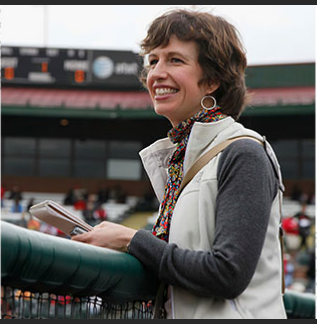 | |
EDITOR’S NOTE: Janie McCauley, a 1998 graduate of Washington State University, joined the Associated Press bureau in Seattle in 2000. She moved to San Francisco in 2002, and in 2006, she was named AP’s Sports Writer of the Year. She remains based in the Bay Area where she covers the San Francisco 49ers, the San Francisco Giants, the Golden State Warriors among her other beats. She is married to fellow AP Sports Writer Josh Dubow and they have two daughters, Emma and Lily.
By Jake Hull
Edward R. Murrow College of Communication, Washington State University
Janie McCauley (’98 Comm.) graduated from Washington State University 25 years ago with a communications degree. Since then, she has used her experiences at the Edward R. Murrow College of Communication to build a career as an award-winning sports reporter in the Bay Area. She is known by her peers as a reporter of the people, treating everyone with respect, and demanding the same in return.
Murrow College dean Bruce Pinkleton said players and coaches at every level of sports treat her with a tremendous amount of respect, which she has earned over the years.
“Her quality as a reporter is much more than the surface stuff, her work is outstanding,” Pinkleton said.
McCauley said one of the articles she is proudest of writing is based on a visit she made to San Quentin State Prison to play tennis with some of the inmates and learn their stories.
“It was fascinating to see how they seek community. They’re human beings, too. It was life changing,” McCauley said.
Pinkleton said McCauley exemplifies what being a Murrow graduate is all about – going beyond the headlines.
“To go to a prison and talk to prisoners, it does take courage in some respects,” Pinkleton said. “Recognizing that there’s a reason they’re in prison, but also recognizing their humanity as well.”
Part of McCauley’s job is building relationships with players. She said she used her experience at WSU to prepare herself for interviewing high-level athletes and is now reaping the benefits of what WSU taught her.
“I watch Steph Curry practice almost every day,” McCauley said. “He asked me to come in the locker room after the Stanford-Cal women’s basketball game. That comes with years of building relationships. It doesn’t happen within weeks or months.”
Curry cleared her to attend the game to report on him, as well as the game. Curry is Stanford Cardinal star Cameron Brink’s god-brother.
McCauley said her classes at Murrow were good preparation for her because she got to work in the field, working high school games every Friday and Saturday night. She also took advantage of free-lance reporting opportunities.
“I covered Vandal football my junior year. I had great mentors and advisors,” McCauley said.
After college, McCauley covered the Seattle Mariners with the Associated Press bureau in Seattle. McCauley grasped the attention of readers with her stellar coverage of Mariners lchiro Suzuki’s rookie campaign. She then moved on to the Bay area where she has covered high-profile athletes including Barry Bonds and championship teams such as the Golden State Warriors.
“I go to most of the Warriors’ home games. I’m at sporting events almost five times a week. I’m very lucky,” McCauley said.
McCauley has used all Murrow gave to her to travel the world to report on sports stories. She has been to three Summer Olympics, two Winter Olympics, the 2014 FIFA World Cup in Brazil, a Super Bowl and four MLB World Series.
In 2022, McCauley received the Murrow Hall of Achievement Award for her outstanding achievements. McCauley also received the 2006 Associated Press Sportswriter of the Year award.
Pinkleton has known McCauley since the 1990s when he was a professor and McCauley was a student.
“She’s done exceptionally terrific helping our students. She’s a terrific representative of our program,” Pinkleton said.
Click here for link to this story. Shared by Tim Marsh.
| |
Connecting wishes Happy Birthday | |
|
Stories of interest
Trump arraignment on Georgia charges will be in a court that allows cameras — unlike his other 3 indictments (CBS News)
BY CAITLIN O'KANE
Former President Donald Trump and 18 allies have until Aug. 25 to surrender at a Georgia court after being indicted on a total 41 counts by a grand jury in Fulton County. The formal arraignment, expected in September, will be the fourth for Trump, the only president who has ever been criminally charged. The Georgia arraignment, however, is expected to be slightly different than the others, because cameras are allowed in the state's courtrooms.
Georgia arraignment
Fulton County District Attorney Fani Willis announced late on Monday night that arrest warrants for 19 defendants have been issued, and they all have until noon on Aug. 25 to turn themselves in for processing. Alleged co-conspirators named in the indictment include Trump's former lawyer Rudy Giuliani and former White House chief of staff Mark Meadows.
For the previous three indictments, Trump and any co-defendants were given about four or five days to turn themselves in. For this one, they have about 11 days to surrender.
Prosecutors have proposed that formal arraignments will take place the week of Sept. 5. In the other cases, Trump was arraigned the same day he turned himself in.
In past arraignments, no cameras were allowed inside the courtrooms. The first arraignment was in New York, where audio-visual coverage of court proceedings is not allowed in any court.
Read more here. Shared by Len Iwanski.
The Final Word
Obituary for a Quiet Life (The Bitter Southerner)
| |
|
Essay by Jeremy B. Jones
My grandfather died this year, but you wouldn’t know it. In fact, he preferred you didn’t. Ray Harrell came up as the youngest of eight in the Cataloochee Valley in the 1930s — outrunning mountain lions and driving cattle off the mountain and crashing borrowed jeeps — and on January 20, nine decades later, he passed from this earth without a sound. That’s how he wanted it. You won’t find a headstone. Nobody gathered for a funeral. He was here, sitting on that porch he shared with his wife of nearly 70 years, and then he wasn’t. Dust to dust.
I was driving home after a day of teaching when Grandma called me. The cancer slowly draining him of life for the past year had held him in bed that morning, and it seemed he would stay there for the rest of his life.
“Would you write your papaw’s obituary?” she asked, ever practical even amid the loss of the love of her life.
There was plenty to tell. He’d stolen a school bus as a teenager and backed it over a teacher’s car. He’d been shipped to Germany with the Army in 1950, where he flew up the ranks despite accidentally firing artillery through an empty house. He’d led the union at the textile mill where he worked most of his life. But he never talked much about any of that. What he set out to do was build a small life in Fruitland, North Carolina, to raise up his daughters and do the dishes and fix the broken garage door. He set out to live quietly — and then pass away just the same.
When I sat down to write, I found myself dropping details into a template — son of, survived by. The obituary form puts a particular pressure on what matters, on what should be remembered and praised, but what does one say about a life that aimed to carry on in the background, that had no interest in a name in newsprint or an award on the mantel? Ray Harrell, son of Jim and Cora, was content to sit still and watch the breeze scatter the leaves? Ray Harrell, sergeant first class, arranged the bills in his wallet in descending order? Ray Harrell, survived by Grace, whistled the same invented tune year after year while searching for the right nail in the shed? I filled in the expected details and sent the obituary to the newspaper, but I knew it wasn’t right. It captured nothing of the life he lived. What I returned to in the days after he passed, as the ladies from church covered the table in casseroles and Grandma slept in a bed alone for the first time since she was 19, was the sheer audacity of a quiet life.
Read more here. Shared by Cliff Schiappa.
| |
Today in History - Aug. 17, 2023 | |
|
Today is Thursday, Aug. 17, the 229th day of 2023. There are 136 days left in the year.
Today’s Highlight in History:
On Aug. 17, 1982, the first commercially produced compact discs, a recording of ABBA’s “The Visitors,” were pressed at a Philips factory near Hanover, West Germany.
On this date:
In 1807, Robert Fulton’s North River Steamboat began heading up the Hudson River on its successful round trip between New York and Albany.
In 1863, federal batteries and ships began bombarding Fort Sumter in Charleston harbor during the Civil War, but the Confederates managed to hold on despite several days of pounding.
In 1915, a mob in Cobb County, Georgia, lynched Jewish businessman Leo Frank, 31, whose death sentence for the murder of 13-year-old Mary Phagan had been commuted to life imprisonment. (Frank, who’d maintained his innocence, was pardoned by the state of Georgia in 1986.)
In 1945, the George Orwell novel “Animal Farm,” an allegorical satire of Soviet Communism, was first published in London by Martin Secker & Warburg.
In 1978, the first successful trans-Atlantic balloon flight ended as Maxie Anderson, Ben Abruzzo and Larry Newman landed their Double Eagle II outside Paris.
In 1987, Rudolf Hess, the last member of Adolf Hitler’s inner circle, died at Spandau Prison at age 93, an apparent suicide.
In 1988, Pakistani President Mohammad Zia ul-Haq and U.S. Ambassador Arnold Raphel (RAY’-fehl) were killed in a mysterious plane crash.
In 1998, President Bill Clinton gave grand jury testimony via closed-circuit television from the White House concerning his relationship with Monica Lewinsky; he then delivered a TV address in which he denied previously committing perjury, admitted his relationship with Lewinsky was “wrong,” and criticized Kenneth Starr’s investigation.
In 1999, more than 17,000 people were killed when a magnitude 7.4 earthquake struck Turkey.
In 2004, at the Athens games, Romania won its second straight Olympic gold medal in women’s gymnastics; the United States took silver while Russia won the bronze.
In 2011, Vice President Joe Biden arrived in Beijing to meet with his Chinese counterpart, Xi Jinping.
In 2020, Texas joined New York, New Jersey and California as states with at least 10,000 confirmed coronavirus deaths; about 80 percent of the Texas deaths were reported since June 1, after the state embarked on one of the fastest reopenings in the country.
Ten years ago: The attorney for a young man who’d testified he was fondled by former Penn State assistant football coach Jerry Sandusky said his client had reached a settlement, the first among dozens of claims made against the school amid the Sandusky child sex abuse scandal. Nick Davilla threw six touchdown passes and the Arizona Rattlers defeated the Philadelphia Soul 48-39 in the ArenaBowl. Kansas City’s Miguel Tejada was suspended 105 games by Major League Baseball for violating its Joint Drug Program, one of the longest suspensions ever handed down.
Five years ago: President Donald Trump said he had canceled plans for a Veterans Day military parade, citing what he called a “ridiculously high” price tag; he accused local politicians in Washington of price-gouging. Tesla CEO Elon Musk, in an interview with The New York Times, said he’d been overwhelmed by job stress, an admission that pushed down the stock value of the electric car company and brought pressure on its board to take action; shares in Tesla tumbled about 9 percent.
One year ago: The head of the Centers for Disease Control and Prevention announced a shakeup of the organization, saying it failed to meet the moment of COVID-19′s arrival and needed to become more nimble. A bombing at a mosque in the Afghan capital of Kabul during evening prayers killed at least 10 people, including a prominent cleric, and wounded at least 27. Two former Pennsylvania judges who orchestrated a scheme to send children to for-profit jails in exchange for kickbacks were ordered to pay more than $200 million to hundreds of people they victimized.
Today’s Birthdays: Former MLB All-Star Boog Powell is 82. Actor Robert DeNiro is 80. Movie director Martha Coolidge is 77. Rock musician Gary Talley (The Box Tops) is 76. Actor-screenwriter-producer Julian Fellowes is 74. Actor Robert Joy is 72. International Tennis Hall of Famer Guillermo Vilas is 71. Rock singer Kevin Rowland (Dexy’s Midnight Runners) is 70. Rock musician Colin Moulding (XTC) is 68. Country singer-songwriter Kevin Welch is 68. Olympic gold medal figure skater Robin Cousins is 66. Singer Belinda Carlisle is 65. Author Jonathan Franzen is 64. Actor Sean Penn is 63. Jazz musician Everette Harp is 62. Rock musician Gilby Clarke is 61. Singer Maria McKee is 59. Rock musician Steve Gorman (The Black Crowes) is 58. Rock musician Jill Cunniff (kuh-NIHF’) is 57. Actor David Conrad is 56. Singer Donnie Wahlberg is 54. College Basketball Hall of Famer and retired NBA All-Star Christian Laettner is 54. Rapper Posdnuos (PAHS’-deh-noos) is 54. International Tennis Hall of Famer Jim Courier is 53. Retired MLB All-Star Jorge Posada is 52. TV personality Giuliana Rancic is 49. Actor Bryton James is 37. Actor Brady Corbet (kohr-BAY’) is 35. Actor Austin Butler is 32. Actor Taissa Farmiga is 29. Olympic bronze medal figure skater Gracie Gold is 28.
| |
Got a story or photos to share? | |
|
Connecting is a daily newsletter published Monday through Friday that reaches more than 1,800 retired and former Associated Press employees, present-day employees, and news industry and journalism school colleagues. It began in 2013. Past issues can be found by clicking Connecting Archive in the masthead. Its author, Paul Stevens, retired from the AP in 2009 after a 36-year career as a newsman in Albany and St. Louis, correspondent in Wichita, chief of bureau in Albuquerque, Indianapolis and Kansas City, and Central Region vice president based in Kansas City.
Got a story to share? A favorite memory of your AP days? Don't keep them to yourself. Share with your colleagues by sending to Ye Olde Connecting Editor. And don't forget to include photos!
Here are some suggestions:
- Connecting "selfies" - a word and photo self-profile of you and your career, and what you are doing today. Both for new members and those who have been with us a while.
- Second chapters - You finished a great career. Now tell us about your second (and third and fourth?) chapters of life.
- Spousal support - How your spouse helped in supporting your work during your AP career.
- My most unusual story - tell us about an unusual, off the wall story that you covered.
- "A silly mistake that you make"- a chance to 'fess up with a memorable mistake in your journalistic career.
- Multigenerational AP families - profiles of families whose service spanned two or more generations.
- Volunteering - benefit your colleagues by sharing volunteer stories - with ideas on such work they can do themselves.
- First job - How did you get your first job in journalism?
- Most unusual place a story assignment took you.
Paul Stevens
Editor, Connecting newsletter
paulstevens46@gmail.com
| | | | |