|
|
|
Connecting
April 4, 2024
Click here for sound of the Teletype
| |
|
Colleagues,
Good Thursday morning on this April 4, 2024,
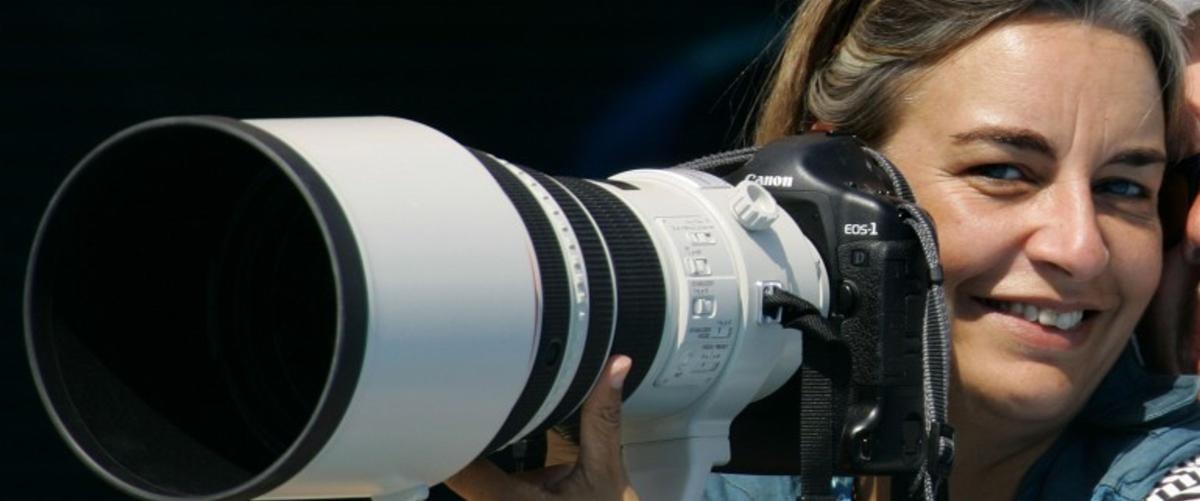
Ten years ago today, The Associated Press lost one of its finest journalists when photographer Anja Niedringhaus was killed while covering the presidential election in Afghanistan.
She was sitting in her car with her friend and AP colleague Kathy Gannon outside a heavily guarded compound in eastern Afghanistan when an Afghan police officer opened fire into the car, killing Niedringhaus and seriously injuring Gannon. Anja was 48 years old.
Gannon underwent many surgeries before returning to work as AP’s news director for Afghanistan and Pakistan. She retired in 2022 after 35 years of covering the two countries for the AP.
Two former AP presidents – Tom Curley and Gary Pruitt – share their memories of Anja with their Connecting colleagues – as well as former AP Photos director Santiago Lyon and present-day AP religion news director David Crary, who interviewed Gannon months after the shooting.
A remarkable wire story on Anja that includes 20 of her photos was written by veteran AP photographers Jacqueline Larma and Enric Marti and leads today's issue. Jacqueline is deputy director of photography for special projects and Enric is deputy director of photography for enterprise.
If you have a memory of Anja to share, please send it along.
IMAGES BY ANJA: A collection of the powerful images of Anja Niedringhaus will be on display beginning tonight at the Bronx Documentary Center. The opening reception will be from 6:30 to 9 pm Eastern and the Anja Niedringhaus Courage in Photojournalism Award Ceremony will begin at 7:30 pm. The exhibition at the center, 614 Courtlandt Ave., Bronx, will continue until May 5.
Kathy Gannon, one of the curators of the exhibition, just arrived in New York from Pakistan and said, “It is a gift to be able to remind the world of Anja's stunning images, her heart and incredible eye. At once the shooting seems a lifetime ago and just yesterday. I feel so grateful and sad at the same time.
"When I was in the Gallery on Wednesday as the show was being put up, I felt like I was being hugged by Anja. I don’t know if that makes sense but I was just so overwhelmed by her presence.”
In Anja’s hometown of Hoxter, Germany, where Forum Anja Niedringhaus was established, an ecumenical service in the Corvey Abbey Church, celebrated by Reverend Dr. Bernd Krismanek and Reverend Friedhilde Lichtenborg, will be held, followed by a visit to her grave site. At the end of the day will be a concert by the Bremen jazz duo Von Frieling & Wohlgemuth.
Today’s issue brings more of your memories of another Associated Press legend – Washington’s Mike Feinsilber, who died at home Monday at the age of 89 but left memories with his colleagues that will last a lifetime.
Here’s to a great day – be safe, stay healthy, live it to your fullest.
Paul
AP PHOTOS: 10 years after her killing, Anja Niedringhaus’ photos speak for her
| |
|
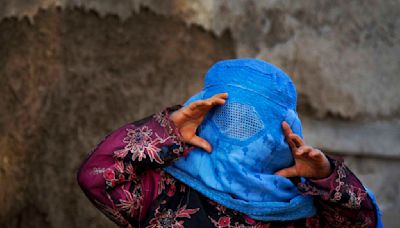
FILE - A girl tries to peer through the holes of her burqa as she plays with other children in the old town of Kabul, Afghanistan, April 7, 2013. Despite Associated Press photographer Anja Niedringhaus’ reputation as a war photographer, very often she found beauty and joy on assignment. (AP Photo/Anja Niedringhaus, File)
BY JACQUELINE LARMA AND ENRIC MARTI
If she had lived, there would have been so many more photos.
Anja could have gone to Kabul for the chaotic U.S. withdrawal, and to war-shattered Ukraine after the Russian invasion. She would have been at the Olympics, and at center court at Wimbledon. She would have been at all the places where compassionate photographers with trained eyes make it their business to be.
But on April 4, 2014, outside a heavily guarded government compound in eastern Afghanistan, Associated Press photographer Anja Niedringhaus was killed by an Afghan police officer as she sat in her car. She was 48 years old. Her colleague Kathy Gannon, who was sitting beside her, was badly wounded in the attack.
Anja had a convulsive laugh, a thick German accent and an irrepressible decency that elicited trust from the people on the other side of her lens. She trusted them back, making photographs that captured their struggle for humanity, even in some of the world’s most difficult places.
The three of us became friends in Sarajevo in the early 1990s, when ethnic fighting was savaging the former Yugoslavia and a generation of young photojournalists came into their own. Anja was at the European Pressphoto Agency. We were at the AP.
But while Anja was fiercely competitive, she was also fiercely loyal. Soon we were sharing armored cars, unheated hotel rooms, games of Yahtzee and too many Marlboros.
At a time when women journalists were rare in war zones, Anja was best known as a conflict photographer. Her work helped define the wars in Iraq, Afghanistan, and Libya. Some of the most memorable images from those dark pages in history — ones you might well recognize — came from her camera and her vision.
But Anja never made much out of being a woman surrounded by men. And to see only her conflict work would be a mistake.
She was one of the great sports photographers, whether capturing Serena Williams jumping for joy after a Wimbledon victory or the immense smile of British runner Mohamed Farah as he takes Olympic gold in the 5,000-meter. She photographed everything from European elections to global summits. She mentored young photographers everywhere she went. She expertly told small stories of everyday life in dozens of countries.
And despite her reputation as a war photographer, very often she found beauty and joy on assignment — even in those difficult places where she spent so much time. And especially in the place where she ultimately lost her life.
Just look at her photos. She found joy in the moment when an Afghan nomad tenderly kissed his infant daughter, and happiness among Afghan girls finally able to go to school. She found beauty as a swimmer waded into Lake Geneva at sunrise.
She did it all. Now she is 10 years gone. And these images — the ones that were so important to her and so important to understanding a jumbled world — are what is left to speak for her.
Jacqueline Larma is deputy director of photography for special projects for The Associated Press. Enric Marti is deputy director of photography for enterprise. Both are veteran AP photographers.
Click here for link to this story and gallery of Anja's photos.
Remembering Anja
| |
|
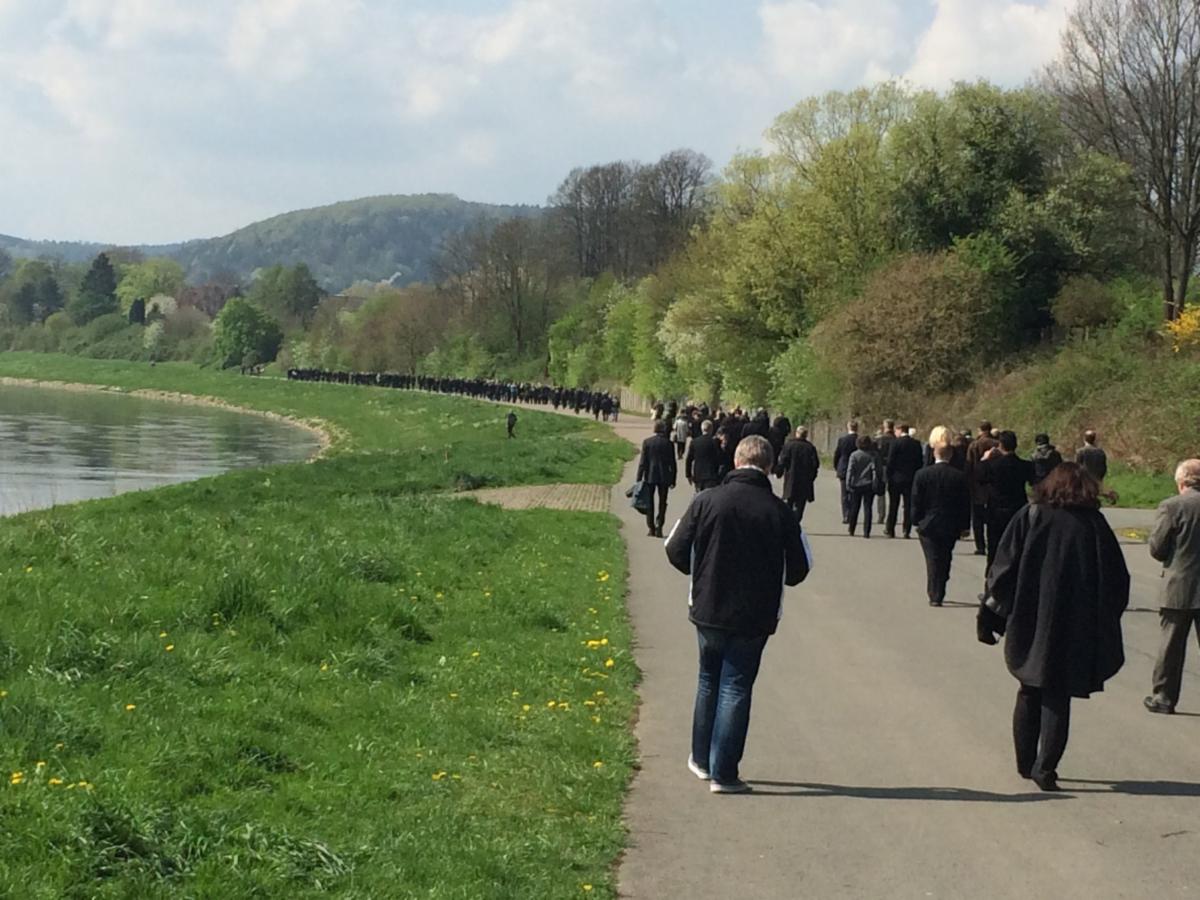
ABOVE: On the day of Anja’s funeral, April 12, 2014, a long black line of mourners walking along the river from the church to the cemetery in Hoxter, Germany.
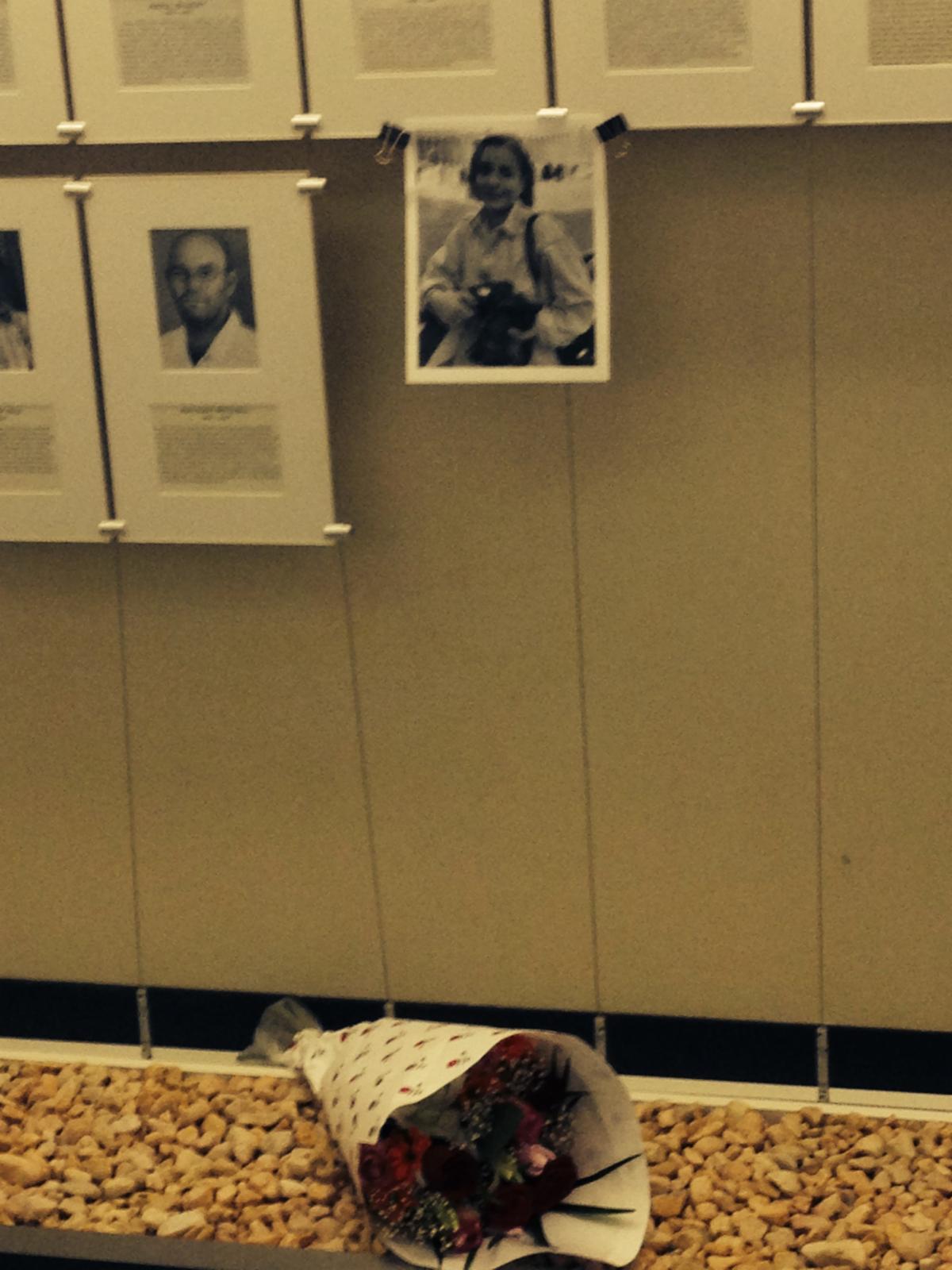
RIGHT: On the day of Anja's death, her photo was clipped to the AP Wall of Honor at headquarters and flowers were placed below.
Photos by Gary Pruitt
Gary Pruitt – AP president and CEO, 2012-2021 - News of Anja’s death and Kathy’s critical injuries arrived early in the morning and early in my tenure at AP. The tragedy was difficult to reconcile with the fun-loving, irreverent, laughing Anja I knew—always so full of life. But the world had just lost one of its bravest and most talented photographers. It brought home the importance and danger of Anja’s and Kathy’s work in Afghanistan.
I flew to see Kathy recovering in a hospital in Germany from her multiple gunshot wounds. She, of course, mourned the loss of her best friend and professional partner, but she also demonstrated a superhuman resilience of spirit. Those who know Kathy know she brings that same spirit to all she does to this day. She is truly amazing.
From Kathy’s hospital bed, (Executive Editor) Kathleen Carroll, (Photo Director) Santiago Lyon and I drove to Hoxter for Anja’s funeral. It was so terribly sad but also moving to see the AP community, especially the photographers, pull together to support one another in this time of great sadness and loss. I learned a great deal about AP that day.
AP would carry on, as it always does, as it must, without one of its best. But Anja’s brilliant work and legacy will forever be part of the best of AP.
-0-
| 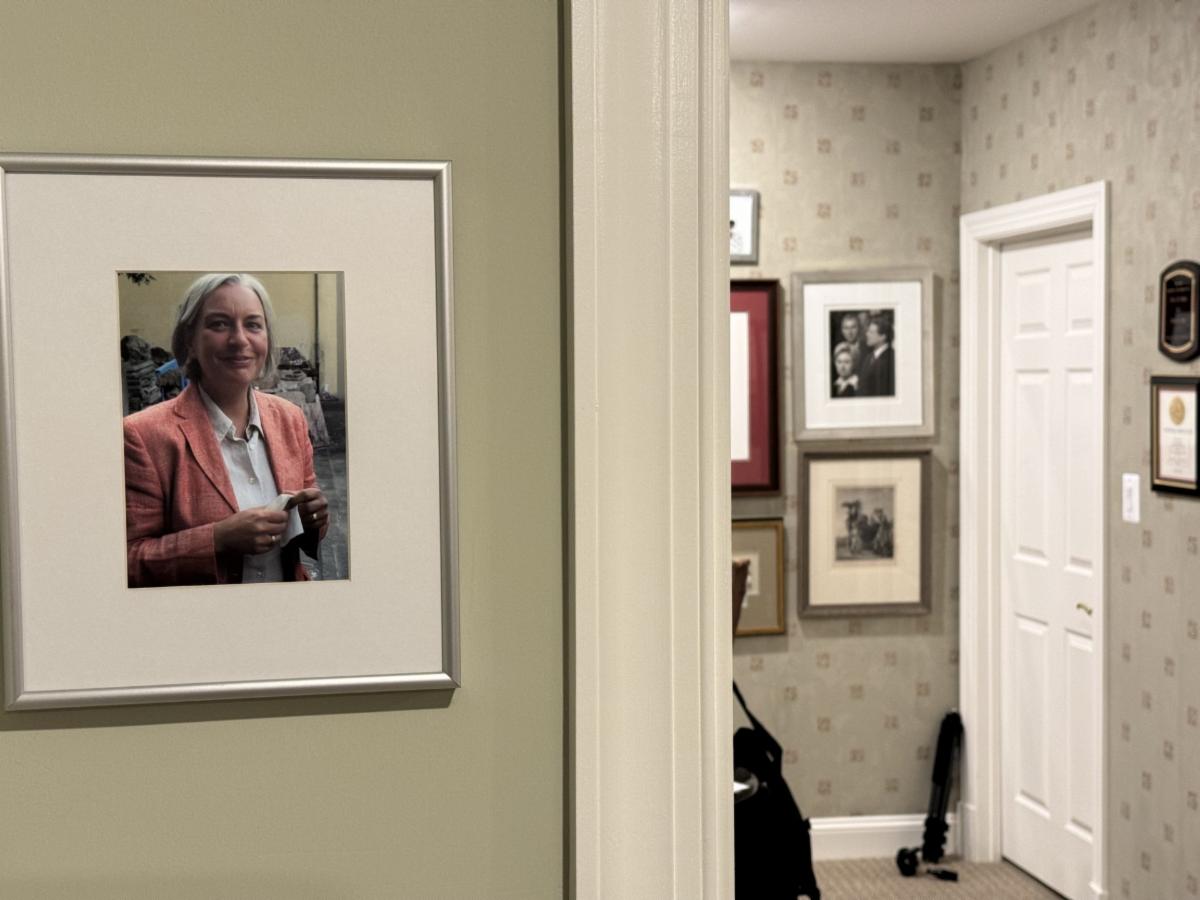 | |
Photo by Tom Curley
Tom Curley – AP president and CEO, 2003-2012 - Next to the door of my home office is a picture of Anja beaming her trademark smirky smile. That image and memory brighten every day. I am reminded of the time she reviewed photos I had taken during the Vancouver Olympics. Her eyebrows rose, she snorted and turned away.
“Anja,” I said, “couldn’t you even fake it a little?”
She shrugged, snorted again and looked back at her screen.
“Anja, remember the time we had fondue at your favorite Geneva fondue palace?”
She looked up and beamed.
“Well, I fucking hate fondue.”
She burst out laughing. She then told me to try again and walked me to a part of the venue where it was against Olympic rules to take photos - the cross-country ski finish line.
“You might get something here.” More accurately, I might get something Anja cared about - a finish-line photo.
I also remember Anja describing a conversation she had with a Canadian trauma surgeon who examined her in Afghanistan after an incident in which she was wounded.
“He found the shrapnel and counted all the scars,” she said. He was stunned and couldn’t understand why anyone would volunteer to take pictures in war zones again and again.
“The world has to know what goes on here,” she told him. “This is who I am."
Anja gave so much to that world as well as to those of us who were so inspired by her.
If there is anything to celebrate on April 4, it is the fierce commitment by journalists like Anja in Afghanistan, Ukraine, Gaza, and anywhere else such stories must be told.
This is who they are.
-0-
Santiago Lyon – AP director of photos, 2003-16 – 10 years ago today, in the early hours of April 4, 2014, I was awoken with the awful news that Anja Niedringhaus had been severely wounded in Afghanistan, that the situation was unclear and that things looked very dire. That she might well be dead.
That was, of course, confirmed over the next few hours along with the news of Kathy Gannon’s severe wounding.
As AP’s VP/Director of Photography, I felt deeply responsible for the safety and wellbeing of all AP staff and freelancers on assignment and that somehow, I had failed.
I knew, though, from 10 years of going to war with a camera myself that death usually arrives quickly and unannounced in conflict zones and that despite good risk management and protective equipment, sometimes very bad things happen.
Having lost over a dozen friends and colleagues to violent deaths over the years I was sadly all-too familiar with the sharp lance of horror and despair piercing my very being.
Travel to Germany followed, a heartfelt eulogy at Anja’s emotional and crowded funeral, and the establishment of a prize in her name, administered by the International Women’s Media Foundation.
For years I sat on the jury of that prize, identifying and rewarding the amazing women photographers whose work emulates Anja’s spirit, providing some resources to fund their projects.
Over the years I have maintained contact with Anja’s family, visiting her grave in her hometown of Hoexter in 2018, as I had promised her mother at the time of her funeral. Spending time with the family, breaking bread, drinking, keeping the flame of her memory alive.
Last April I made another pilgrimage to Hoexter to attend the opening of the Forum Anja Niedringhaus, an amazing cultural space in her honor in a recently refurbished 16th century building.
Together with friends and former colleagues Peter Dejong, Dusan Vranic, Jerome Delay, Enric Marti, Jackie Arzt Larma, Muhammed Muheisen, Amir Shah, Oliver Multhaup, Bernadette Tuazon, and Rob Taggart we celebrated her life again.
And today I’ll be at the Bronx Documentary Center in New York, with many others, to help inaugurate an exhibition of her work, continuing to keep Anja alive through her images and our collective memories of her.
I often wonder what Anja would be like today, 10 years older, wiser and no doubt even funnier. I imagine her mentoring young photojournalists, preparing the next generation to take her place on the world’s frontlines and major stories.
I’ve come to understand, with the perspective of time, that people only really die when we forget about them. That won’t happen with Anja. Ever.
-0-
| 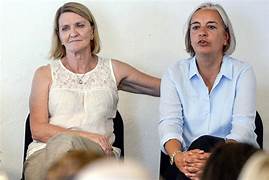 | |
Kathy Gannon (left) and Anja Niedringhaus in August 2013, seven months before the attack. AP Photo
David Crary – AP Religion News Director who in 2014 was a New York-based national writer - It was one of the most emotion-packed interviews I’ve conducted in my long (48 years) AP career – with an AP colleague I had long admired.
In mid-October of 2014, after more than six months had lapsed, AP correspondent Kathy Gannon granted me her first interview about what had happened on April 4 of that year, when she and her close friend, AP photographer Anja Niedringhaus, were sprayed with gunfire by a police commander in Afghanistan. Anja was killed; Kathy was severely injured.
Bullets tore through Kathy’s left arm, right hand and left shoulder, shattering her shoulder blade. She underwent months of grueling therapy and arm reconstruction at the Hospital for Special Surgery in New York City, and finally she felt ready to share hers and Anja’s story for an AP article.
Two things stood out to me as Kathy spoke at AP headquarters.
--She was emphatic in saying that she and Anja had carefully prepared for their foray into eastern Afghanistan, making extensive security arrangements. “I’ve thought it through so many times,” she said. “I know neither Anja or I would have done anything differently.”
--She was emphatic that she would return to her journalism career and to Afghanistan – and sure enough she did so. “Neither Anja nor I would ever accept to be forced out by some crazy gunman,” Gannon said. “There’s history still to be told there.”
Click here for my story on the interview, which begins:
NEW YORK (AP) — Over and over, Kathy Gannon has re-lived the decisions that led to the death of her close friend Anja Niedringhaus and her own severe injuries, as they went about their jobs chronicling the story of Afghanistan.
Gannon, a veteran Associated Press correspondent, and Niedringhaus, an award-winning AP photographer, had worked together on countless stories and negotiated many dangers for five years. But they were always “very smart with how we went about doing the stories, because we wanted to keep doing the stories,” Gannon recalled.
Then, on April 4, they were sprayed with gunfire by an Afghan police commander as they prepared to cover the presidential election the next day.
Were she to go back in time, would she do anything differently? The answer, firmly, is “No.”
Remembering Mike Feinsilber
| 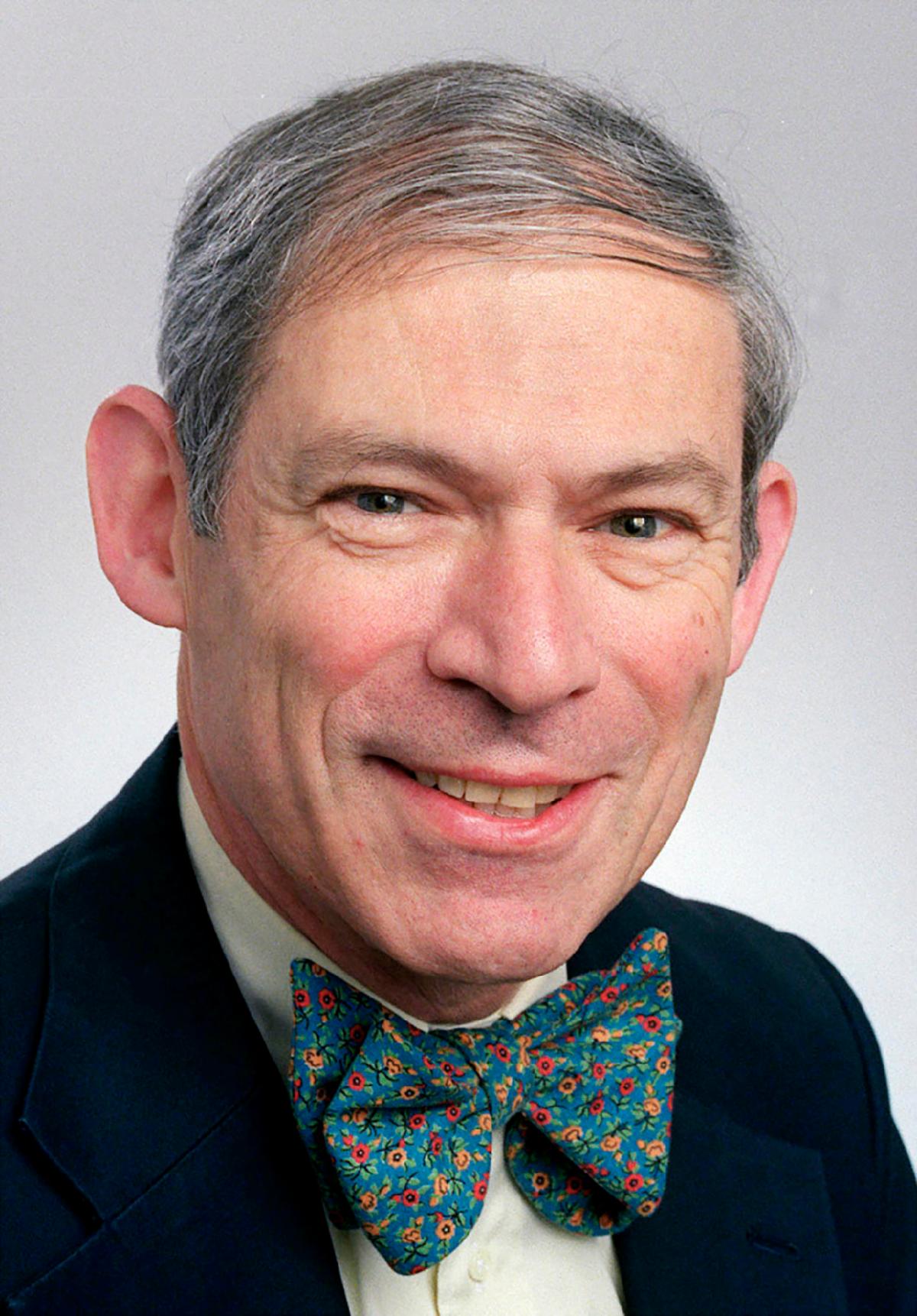 | |
Norm Abelson - Over my long life I've done a variety of things, but in retrospect nothing gives me more pride than that period of time I worked as a journalist. This realization has been strengthened largely by the many obituaries I've read in Connecting.
The latest of many to touch me was the obit and following commentaries about the marvelous Mike Feinsilber. I'd have given a lot to have known him. What a lie that man's life gives to the sleazy portrayals in the movies and elsewhere of the reporter with the tilted fedora, making it up as he goes along, with the local bar as his second home. Here was a man who stands as a beacon of what journalism should be and, largely, has been since its beginnings. Oh, we're had our share of bums and bad guys. But, only a small share.
Gordon Glover, Joe Kamin. Bill Langzettel. Joe Kelley. Bob Crocker. Tom Horgan. Jerry Weiner. Jimmy Smith. These were some of the folks who taught me, befriended me. These were people who honored the profession, who showed me the way to do the same.
A directionless 19-year-old kid in 1950, it was my good fortune to have landed as an Associated Press copy boy and, after serving my time, as an AP newsperson. I'd argue that wherever I wandered later in life, any success I had was due in large part to my time as a journalist. And that includes what it was that I have been doing most of the time post-journalism– writing and teaching writing.
With each obit of these special people I have never met, comes to me a sense of loss – and of comradeship.
-0-
| |
Mary Jane Glass - Many have commented on Mike's talent as a writer and editor. But my friendship with him was based on our love of gardening. For nearly 30 years we shared stories, problems, successes, and cuttings. He gave me a rooted cutting from a shrub whose name he'd forgotten. It is there in my garden now, 10 feet tall and wide, blooming in January, and still anonymous, because not even my plant-identification app can come up with the name. About 10 years ago, he gave me a leaf from a begonia (he knew I love begonias) I've never seen anywhere else. This spring, for the first time ever, my plant is flowering.
We didn't always agree in our approach to gardening. He sought a riot of bloom, and I repeatedly warned him that in his heavily shaded garden, that was a doomed effort. He never gave up, and he did encourage me to go after a few flowers here and there amid all the green in my own garden. I will be continuing my horticultural conversation with Mike as long as I am gardening.
-0-
John Heilprin - I'm saddened to learn about Mike's passing but I feel fortunate to have known him and to have been a pupil of his when he was a writing coach. Maybe once or twice a year, when I'm talking to someone about journalism, I find myself repeating something he'd say during his brown bag lunch sessions.
Like everyone else in the AP Washington bureau, where I was the national environmental writer for seven years during the 2000s, I was always crashing on deadline. Still I tried to never miss his midday sessions around the big conference room table at 2021 K Street. It reminded me that we were not just reporters breaking news, we were creative storytellers and writers, too.
"They teach you a lot of things in journalism school but there's one thing they don't teach you and it's the most important thing of all," he'd say, then pause for effect and break into a smile. "How to be interesting." There was never a time I didn't need to hear it.
| 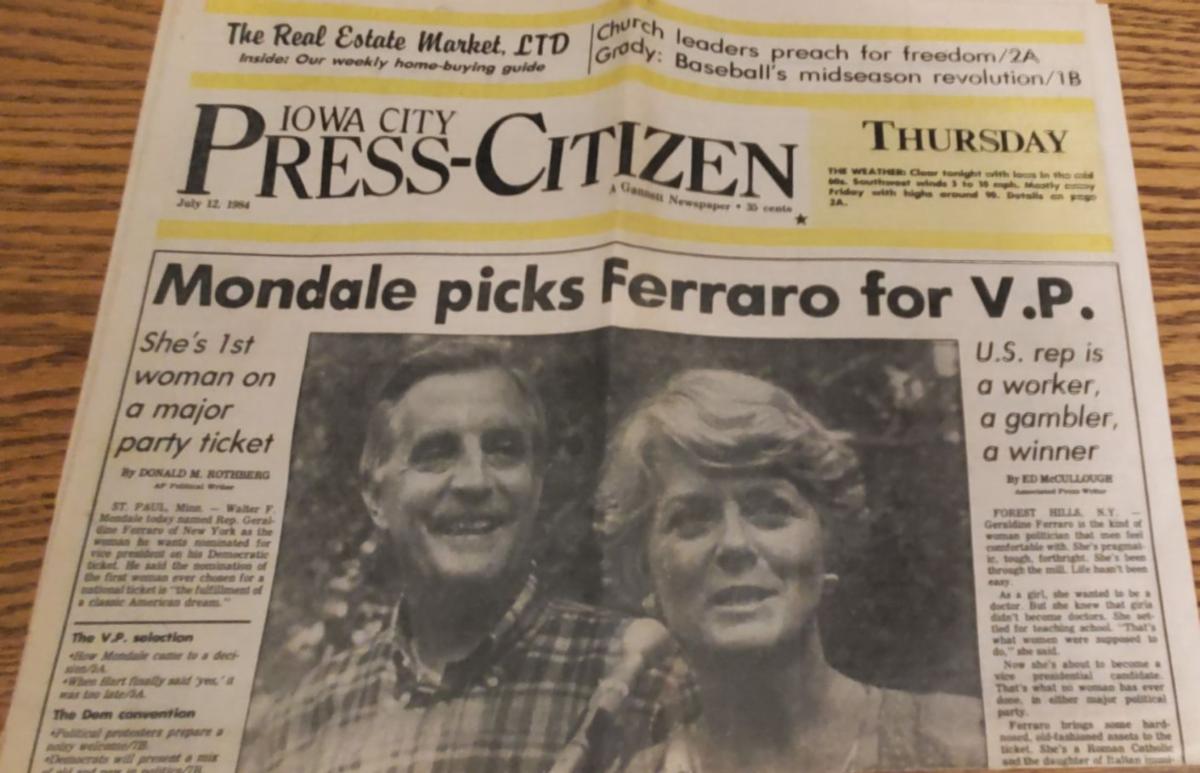 | |
Ed McCullough - Mike saved the day and made it look routine on a story that was front page news, over-the-fold from coast to coast on July 14, 1984.
"Mondale picks Ferraro for V.P.” Block letters and boldface, Iowa City Press-Citizen, six columns, with sub-headlines “She’s 1st woman on a major party ticket” and “U.S. rep is a worker, a gambler, a winner.”
The mainbar - dateline St. Paul, Minn. - was the announcement by the Democratic Party and its presidential nominee Walter Mondale. That was by Donald M. Rothberg, AP Political Writer. A well-known byline that assured quality, even-handed news coverage.
My lesser assignment was to introduce American voters to the three-term congresswoman from Queens, U.S. Rep. Geraldine Ferraro. The sidebar. In paper after paper across the country, America's editors chose to use both stories: side-by-side or one over the other.
The NYC desk assigned me to Forest Hills, N.Y., from Washington, D.C. to interview Gerry's neighbors and ask them to confide to a stranger - me - what she's like.
That is: walk along the quiet residential street of well-kept homes, knock on doors, introduce myself, and ask them to reveal something intimate, good or bad, about their friend.
In the middle of the afternoon, no one was home or anyway no door opened. It was raining. The door-knocking stranger looked bedraggled.
Before 2,500 U.S. newspapers went out of business, there were lots more morning editions - and afternoon ones, too. Each wanted AP news ASAP. With the clock ticking relentlessly toward my filing deadline, I had nothing. Not one fresh word.
Fortunately, I had brought along copies of previous stories full of biographical material and quotes from Gerry herself that I’d written when the Democratic Party wasn't paying much attention to her national political ambitions and she was readily available to AP's reegee (regional reporter) for New York. And a great editor, Mike, who made a silk purse from the sow's ear of a story I submitted.
Here's his lede: "Geraldine Ferraro is the kind of woman politician that men feel comfortable with. She's pragmatic, tough, forthright. She's been through the mill. Life hasn't been easy."
My own from nine months earlier wasn't so bad, either: "The Almanac of American Politics says Geraldine A. Ferraro is Archie Bunker's congresswoman. What would Archie think about a woman vice president?"
"I'm flattered," she had told me. "You have to understand that little girls are not brought up to be the vice president of the United States."
Our cobbled together story was a bestseller.
I told Mike that he should put his byline on our story. The final result – much better than what I had written – was his as well as mine. He graciously declined.
Old-timers may recall that news agency practice was to put bylines and datelines only on stories where the reporter was present. Since I was in Forest Hills, that was the dateline so the byline had to remain mine for that reason.
-0-
Kim Mills - Mike was the best. A great writer and the nicest of guys. We had a thing going where he would ask me to sing the "Castro Convertible song" -- we both grew up hearing it on TV. And for the heck of it, I'd also sing him the Buster Brown song. It never failed to tickle us both.
-0-
Dan Sewell - My main memory of the late, great Mike Feinsilber comes from the 1988 Democratic National Convention in Atlanta. I was covering the Florida delegation and the state-delegation reporters sat in deep, wide rows toward the rear of The AP's convention workroom.
Editors sat up front.
Someone came back to me and said, "Hey, Mike Feinsilber wants to meet you."
I went up to the front and he pointed to a story I had done that day (sorry, I don't remember which one!).
"This was nicely done. And it traveled, too." (meaning it made it onto the a-wire.)
That was a touch that underscored how much he valued writing: he liked the way the story was done, and he wanted to meet the writer and compliment him in person.
Stories of interest
They are TV’s ghosts — networks that somehow survive with little reason to watch them anymore (AP)
By DAVID BAUDER
NEW YORK (AP) — The list of memorable characters and personalities who entered popular culture through cable television is long: Honey Boo Boo. Tony Soprano. Lizzie McGuire. Don Draper. Jon Stewart. Beavis and Butt-Head. Chip and Joanna Gaines. SpongeBob SquarePants.
Pick your own favorites. Chances are there won’t be many more to join them.
Few cable and satellite networks are a force anymore, the byproduct of sudden changes in how people entertain themselves. Several have lost more than half their audiences in a decade. They’ve essentially become ghost networks, filling their schedules with reruns and barely trying to push toward anything new.
Says Doug Herzog, once an executive at Viacom who oversaw MTV, Comedy Central and other channels: “These networks, which really meant so much to the viewing public and generations that grew up with them, have kind of been left for dead.”
As they fade, so are the communities they helped to create.
Read more here.
-0-
A new kind of activist journalism: Hunterbrook investigates corporations (and hopes to make bank trading off its reporting) (Nieman Lab)
By JOSHUA BENTON
One of the most unusual experiments in media ethics — and in news business models — is now live.
The Financial Times was first to write about Hunterbrook Media, back in October, with this explanation of the odd setup:
A group of veteran US financial journalists is teaming up with investors to launch a trading firm that is designed to trade on market-moving news unearthed by its own investigative reporting.
The business, founded by investor Nathaniel Brooks Horwitz and writer Sam Koppelman, would comprise two entities: a trading fund and a group of analysts and journalists producing stories based on publicly available material, according to several people familiar with the matter.
The fund would place trades before articles were published, and then publish its research and trading thesis, they said, but would not trade on information that was not publicly available.
The start-up, called Hunterbrook, had raised $10mn in seed funding and is targeting a $100mn launch for its fund, according to two people involved.
Got that? Reporters dig up a story about a publicly traded firm. But before the story runs — and the market moves accordingly — their corporate sibling will buy, short, or otherwise trade the firm’s stock in anticipation of the move. Step 3: Profit!
Read more here.
-0-
ProPublica Announces 50 State Initiative, Boosting Local Journalism Commitment
ProPublica news release
ProPublica announced on Wednesday a commitment to publishing accountability journalism in every state over the next five years. The 50 State Initiative expands the scope of our work at the local and regional level, which includes a growing team of journalists reporting from communities across the country and groundbreaking partnerships with local news organizations through the Local Reporting Network program.
The initiative broadens our support for local journalism, which now includes the LRN alongside dedicated reporting hubs in the Midwest, South, Southwest and Northwest, as well as an investigative unit in partnership with The Texas Tribune. ProPublica has nearly 40 journalists based around the country contributing to regional and local accountability reporting, ensuring people can benefit from world-class journalism that can drive measurable change in their communities.
The LRN launched in 2018 to boost investigative journalism by supporting and collaborating with local newsrooms, many of which have faced enormous financial strains and cutbacks. Journalists in these newsrooms want to do deep accountability projects but simply don’t often have the necessary resources.
| |
The program pays the salary and benefits for reporters at partner news organizations so they can spend a year working on a project of importance to their communities. Additionally, ProPublica provides editing support, along with our data, research, visual storytelling, graphics, design, audience and engagement expertise.
ProPublica will accept at least 10 new projects a year through the end of 2029 (at least one from each state). Information about how to apply and the application for prospective newsrooms have just been posted.
Read more here.
| |
Today in History - April 4, 2024 | |
|
Today is Thursday, April 4, the 95th day of 2024. There are 271 days left in the year.
Today’s Highlight in History:
On April 4, 1968, civil rights leader Martin Luther King Jr., 39, was shot and killed while standing on a balcony of the Lorraine Motel in Memphis, Tennessee; his slaying was followed by a wave of rioting (Washington, D.C., Baltimore and Chicago were among cities particularly hard hit). James Earl Ray later pleaded guilty to assassinating King, then spent the rest of his life claiming he’d been the victim of a setup.
On this date:
In 1841, President William Henry Harrison succumbed to pneumonia one month after his inaugural, becoming the first U.S. chief executive to die in office; John Tyler became the first vice president to assume the office of president after such a death.
In 1865, President Abraham Lincoln, accompanied by his son Tad, visited the vanquished Confederate capital of Richmond, Virginia, where he was greeted by a crowd that included former slaves.
In 1917, the U.S. Senate voted 82-6 in favor of declaring war against Germany (the House followed suit two days later by a vote of 373-50).
In 1945, during World War II, U.S. forces liberated the Nazi concentration camp Ohrdruf in Germany. Hungary was liberated as Soviet forces cleared out remaining German troops.
In 1949, 12 nations, including the United States, signed the North Atlantic Treaty in Washington, D.C.
In 1973, the twin towers of New York’s World Trade Center were officially dedicated.
In 1974, Hank Aaron of the Atlanta Braves tied Babe Ruth’s home-run record by hitting his 714th round-tripper in Cincinnati.
In 1975, more than 130 people, most of them children, were killed when a U.S. Air Force transport plane evacuating Vietnamese orphans crash-landed shortly after takeoff from Saigon.
In 1983, the space shuttle Challenger roared into orbit on its maiden voyage. (It was destroyed in the disaster of January 1986.)
In 1991, Sen. John Heinz, R-Pa., and six other people, including two children, were killed when a helicopter collided with Heinz’s plane over a schoolyard in Merion, Pennsylvania.
In 2011, yielding to political opposition, the Obama administration gave up on trying avowed Sept. 11 mastermind Khalid Sheik Mohammed and four alleged co-conspirators in civilian federal courts and said it would prosecute them instead before military commissions.
In 2012, a federal judge sentenced five former New Orleans police officers to prison for the deadly Danziger Bridge shootings in the chaotic days following Hurricane Katrina. (The verdicts in the case were later set aside by the judge, who cited prosecutorial misconduct; the officers pleaded guilty in 2016 to reduced charges.)
In 2013, Pulitzer Prize-winning film reviewer Roger Ebert died in Chicago at age 70.
In 2015, in North Charleston, South Carolina, Walter Scott, a 50-year-old Black motorist, was shot to death while running away from a traffic stop; Officer Michael Thomas Slager, seen in a cellphone video opening fire at Scott, was charged with murder. (The charge, which lingered after a first state trial ended in a mistrial, was dropped as part of a deal under which Slager pleaded guilty to a federal civil rights violation; he was sentenced to 20 years in prison.)
In 2018, saying the situation had reached “a point of crisis,” President Donald Trump signed a proclamation directing the deployment of the National Guard to the U.S.-Mexico border to fight illegal immigration.
In 2021, Stanford beat Arizona 54-53 to become NCAA women’s basketball champions.
In 2022, President Joe Biden called for Russian President Vladimir Putin to be tried for war crimes after what he described as “outrageous” atrocities around Kyiv during the invasion of Ukraine.
In 2023, Prosecutors unsealed a historic 34-count felony indictment of Donald Trump that said he conspired to illegally influence the 2016 election through a series of hush money payments designed to stifle claims that could be harmful to his candidacy.
Today’s Birthdays: Recording executive Clive Davis is 92. Author Kitty Kelley is 82. Actor Craig T. Nelson is 80. Actor Christine Lahti is 74. Country singer Steve Gatlin (The Gatlin Brothers) is 73. Actor Mary-Margaret Humes is 70. Writer-producer David E. Kelley is 68. Actor Constance Shulman is 66. Actor Phil Morris is 65. Actor Lorraine Toussaint is 64. Actor Hugo Weaving is 64. Rock musician Craig Adams (The Cult) is 62. Talk show host/comic Graham Norton is 61. Actor David Cross is 60. Actor Robert Downey Jr. is 59. Actor Nancy McKeon is 58. Actor Barry Pepper is 54. Country singer Clay Davidson is 53. Rock singer Josh Todd (Buckcherry) is 53. Singer Jill Scott is 52. Rock musician Magnus Sveningsson (The Cardigans) is 52. Magician David Blaine is 51.Amanda Righetti Singer Kelly Price is 51. R&B singer Andre Dalyrimple (Soul For Real) is 50. Country musician Josh McSwain (Parmalee) is 49. Actor James Roday is 48. Actor Natasha Lyonne is 45. Actor Eric Andre is 41. Actor is 41. Actor-singer Jamie Lynn Spears is 33. Actor Daniela Bobadilla is 31. Pop singer Austin Mahone (muh-HOHN’) is 28. Actor Aliyah Royale is 24.
| |
Got a story or photos to share? | |
|
Connecting is a daily newsletter published Monday through Friday that reaches more than 1,800 retired and former Associated Press employees, present-day employees, and news industry and journalism school colleagues. It began in 2013. Past issues can be found by clicking Connecting Archive in the masthead. Its author, Paul Stevens, retired from the AP in 2009 after a 36-year career as a newsman in Albany and St. Louis, correspondent in Wichita, chief of bureau in Albuquerque, Indianapolis and Kansas City, and Central Region vice president based in Kansas City.
Got a story to share? A favorite memory of your AP days? Don't keep them to yourself. Share with your colleagues by sending to Ye Olde Connecting Editor. And don't forget to include photos!
Here are some suggestions:
- Connecting "selfies" - a word and photo self-profile of you and your career, and what you are doing today. Both for new members and those who have been with us a while.
- Second chapters - You finished a great career. Now tell us about your second (and third and fourth?) chapters of life.
- Spousal support - How your spouse helped in supporting your work during your AP career.
- My most unusual story - tell us about an unusual, off the wall story that you covered.
- "A silly mistake that you make"- a chance to 'fess up with a memorable mistake in your journalistic career.
- Multigenerational AP families - profiles of families whose service spanned two or more generations.
- Volunteering - benefit your colleagues by sharing volunteer stories - with ideas on such work they can do themselves.
- First job - How did you get your first job in journalism?
- Most unusual place a story assignment took you.
Paul Stevens
Editor, Connecting newsletter
paulstevens46@gmail.com
| | | | |