|
|
|
Connecting
Aug. 28, 2023
Click here for sound of the Teletype
| |
|
Colleagues,
Good Monday morning on this Aug. 28, 2023,
From the past to the present, today’s Connecting – leading with a look-back 70 years ago to the CIA-led coup in Iran to the present day and a wonderfully written story by our colleague Linda Deutsch on a chance meeting in Hollywood with a Ukranian woman that was featured last Friday in the Opinion section of The Los Angeles Times.
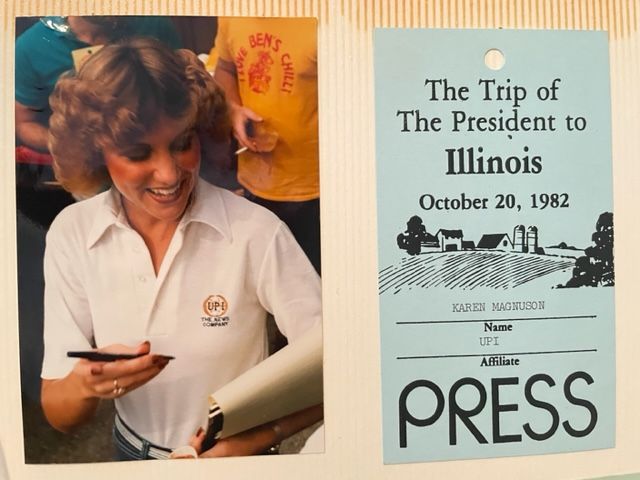
We also bring you a farewell-to-news story from colleague Karen Magnuson, who is retiring from the business after 45 years. She contributed much to the Associated Press Media Editors during her working years and is counted as a friend by many of us – me included, from when we met long ago when she was managing editor of The Wichita Eagle.
And our colleague Randy Picht contributed a touching farewell to his mother, who died at the age of 95 after bringing much to our world. It’s in today’s Final Word.
Here’s to a great week ahead – be safe, stay healthy, live each day to your fullest.
Paul
AP WAS THERE: A 1953 CIA-led coup in Iran topples prime minister, cements shah’s power
|  | |
|
BY THE ASSOCIATED PRESS
EDITOR’S NOTE — In August 1953, a CIA-backed coup toppled Iran’s prime minister, cementing the rule of Shah Mohammad Reza Pahlavi for over 25 years before the 1979 Islamic Revolution.
The coup, carried out by allied members of its military and security forces, came after then-Prime Minister Mohammad Mossadegh had nationalized the country’s oil industry. At the time, Iran’s Abadan refinery was the largest in the world and a key supply for Britain, which backed the coup to regain its access.
For the Americans who pushed it forward with millions of dollars in bribes, weapons and other encouragement, the coup represented what Washington at the time saw as the best chance to halt any expansion by the Soviet Union into the Middle East.
At the time of the coup, the public had no idea about the CIA’s role in the putsch. That changed in the years after. Kermit Roosevelt Jr., a grandson of former U.S. President Theodore Roosevelt, led the CIA plot from Iran and later even published a book about it.
The American hand in the coup fed the enmity of those who overthrew the shah. And in the years since, the U.S. has avoided declassifying details from government files about it. The State Department in 2017 quietly published details of the coup once expunged from its official history, though some aspects of it remain classified to this day.
At the time of the coup, getting the news out of Tehran saw multiple challenges as well. One newspaper even provided a blow-by-blow account of how The Associated Press filed its first news of the coup but didn’t transmit again for hours.
“Apparently the AP dispatch was delayed by censor and transmitted after the government was overthrown,” read the Aug. 19, 1953, edition of the afternoon newspaper The Evening Star in Washington, D.C., which carried the latest dispatch at the time transmitted by the clacking teletype machines of the time.
Read more here. Shared by Valerie Komor.
Opinion: A serendipitous encounter that could only happen in Hollywood
| 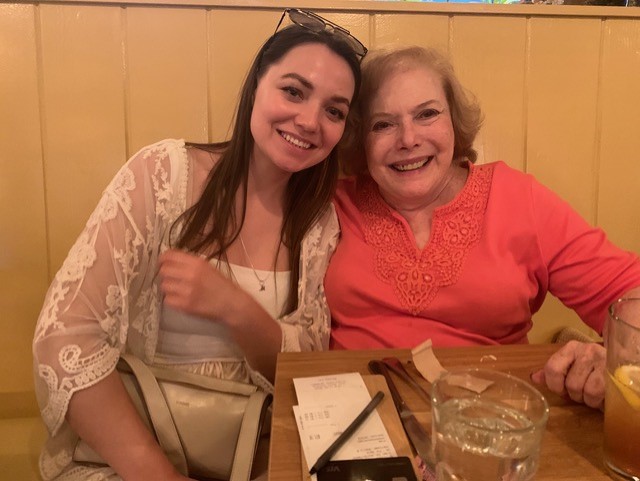 | |
Maria with Linda Deutsch at the Beachwood Cafe.
BY LINDA DEUTSCH
Los Angeles Times, Friday, Aug. 25
This is a story about serendipity — of an unexpected encounter that reminded me again of the power Hollywood has in the world.
I went outside one recent Friday afternoon to collect a package that had been delivered to my Hollywood Hills home. A lovely young woman was coming up the street. She approached me hesitantly.
“Can I ask you something?” she said. “If I keep walking up this hill, will I get to the Hollywood sign?”
She was dressed in a lacy white duster over slacks and T-shirt and her shoes were not meant for hiking. I told her she was taking the wrong route and asked if she had a car. She did not.
She spoke with an accent unfamiliar to me and I asked where she was from. Ukraine. She explained that her name was Maria and she was in Los Angeles for one day to pick up some immigration documents and would then be flying back to Spokane, Wash., where she was staying with a friend. With the hours she had left, she had taken a taxi to Hollywood, hoping to find the famous sign and see some of the glamour she knew from movies.
I thought she looked like a lost princess and I knew what I had to do. I told her to wait and fetched my car keys. Within minutes we were off on a mini tour of Hollywood. First stop was the sign. I turned the corner from Franklin heading up Beachwood Drive and it loomed before us. She gasped, “There it is!” Then she said something I will always remember. “People here may think these are just letters on a hill. But to us, this is our dream.”
We stopped so she could take pictures. It was dinner time so we went into the Beachwood Cafe, where she could barely eat anything because she was so excited. I told her it was said that Harry Styles once dined there, which added to her joy.
She then poured out the story of her life, which might make a pretty good movie itself. Maria was born into a very large family in a village on the border of Ukraine and Russia. When her mother fell ill, Maria and some of her many siblings were sent to an orphanage where she was educated and cared for.
Read more here.
After 45 years in news, Karen Magnuson retiring
| |
Karen Magnuson - After 45 years working in the news industry, I’m retiring! The photo and press pass date back to 1982 with United Press International (UPI), where I served in four bureaus across the country. I also worked at six newspapers and most recently the Solutions Journalism Network (SJN). My last day is Sept. 29. | |
|
The list of people to thank is too long for a post but I’m singling out a few due to pivotal roles: Bob Kieckhefer, who introduced me to UPI as a reporter and coached me on how to be a good bureau manager; Tom Callinan and Phil Currie, who hired me as managing editor in Rochester, launching a 20-year career with the Democrat and Chronicle and Gannett; Dion Lefler, a tremendously talented reporter and editor who stood by my side through thick and thin at three newspapers (Los Angeles Daily News, Oxnard (California) Press-Courier, and The Wichita Eagle) in two states; and Keith Hammonds and Liza Gross, who welcomed me into the world of solutions journalism and media collaboration after I took an early retirement from Gannett.
A special shout out to my husband, Tod, who supported my career despite the crazy hours, and my beloved APME board colleagues, who demonstrated the true meaning of the word selfless as tireless advocates for newsroom leaders (especially Andrew Oppmann, program chair extraordinaire during my year as president.) Most of all, I thank God for granting me the skills to become a journalist. The industry is struggling but the job is still one of the best.
EDITOR’S NOTE: Karen Magnuson, a Connecting colleague, was president of Associated Press Media Editors in 2006-07 and president of the APME Foundation Board in 2007-08.
Connecting series:
Remembering those who started their careers with you
Bruce Lowitt - I joined The AP in Los Angeles in the old Herald-Examiner building (after driving from New York) in April 1967. I introduced myself to news editor Jack Quigg and asked, "What can I do?" He pointed to a guy at a desk and said, "Ask him. He'll tell you."
So I walked over, introduced myself and said, "What can I do," and Don Harrison laughed and said, "I don't know. I just got here myself." He'd been hired the day before and was writing preparedness obits, so I joined him in that assignment. It was the start of a friendship that lasts to this day.
AP Newsfeatures as art
|  | |
|
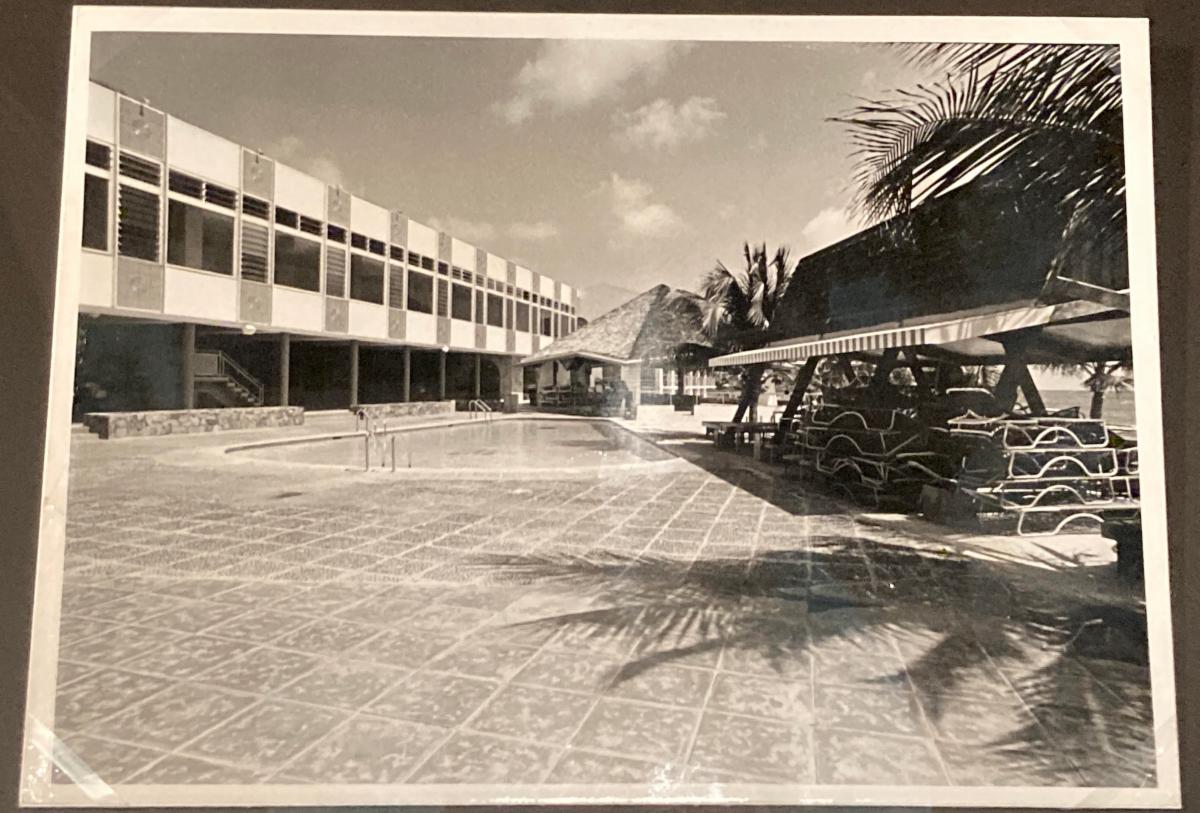
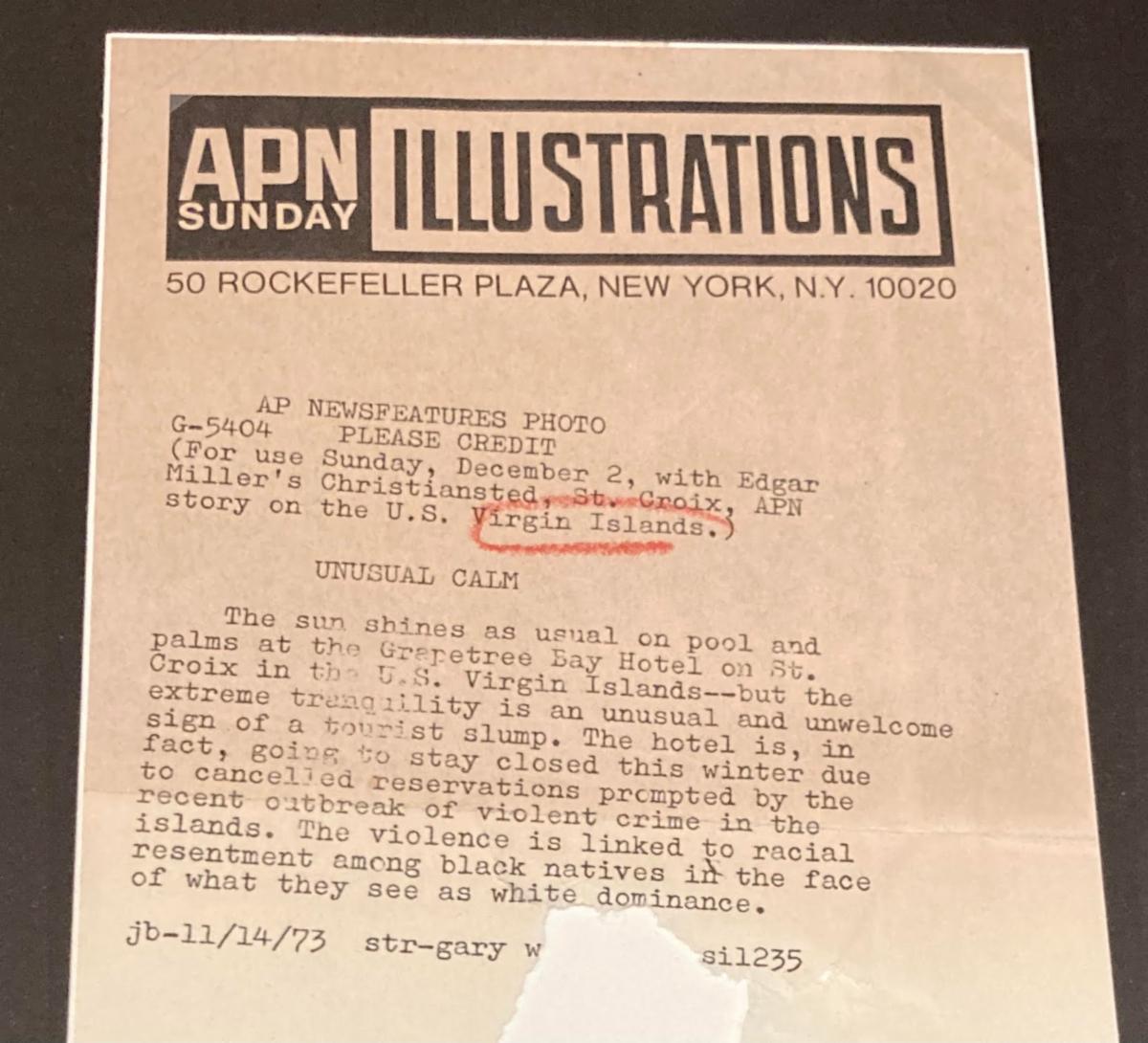
Malcolm Ritter - I was startled to see an AP Newsfeatures document from 1973 on display at New York’s Museum of Modern Art the other day. It contained the caption for a photo used by Mexican artist Mario Garcia Torres.
Nick Ut – and a lot of fish - in Sri Lanka
| |
|
Nick Ut - I am here in Sri Lanka visit. And take some pictures amazing to me – this one, a man sleeps at Fish market Negombo in Sri Lanka.
BEST OF THE WEEK — FIRST WINNER
AP recounts final mental health struggles of Olympics champ Tori Bowie
| |
|
Olympic gold medalist sprinter Tori Bowie’s autopsy included an easy-to-overlook, one-line notation beneath the heading Medical History: “Bipolar disorder.”
On the eve of the first world track championships since Bowie’s passing, AP sportswriters Eddie Pells and Pat Graham teamed up to report exclusively on the mental health struggles that led up to the star athlete’s death April 23 from complications during childbirth at the age of 32.
The two had covered Bowie, who won three medals at the 2016 Rio de Janeiro Games, for many years and had heard whispers of her difficulties. A few weeks after her death, the autopsy listed the cause as “complications in childbirth.”
While other outlets pursued the angle that Black women suffer disproportionately from pregnancy complications, Pells opted to explore another dimension of her story, her struggles with mental health.
He sought out people at the U.S. Olympic and Paralympic Committee and within track and field, to find out how a world-famous champion, who was eight months into what would be considered an at-risk pregnancy, came to die alone at home without medical care or anyone to look after her.
Read more here.
BEST OF THE WEEK — SECOND WINNER
AP team scores exclusive access to operating room for pig-to-human transplant
| 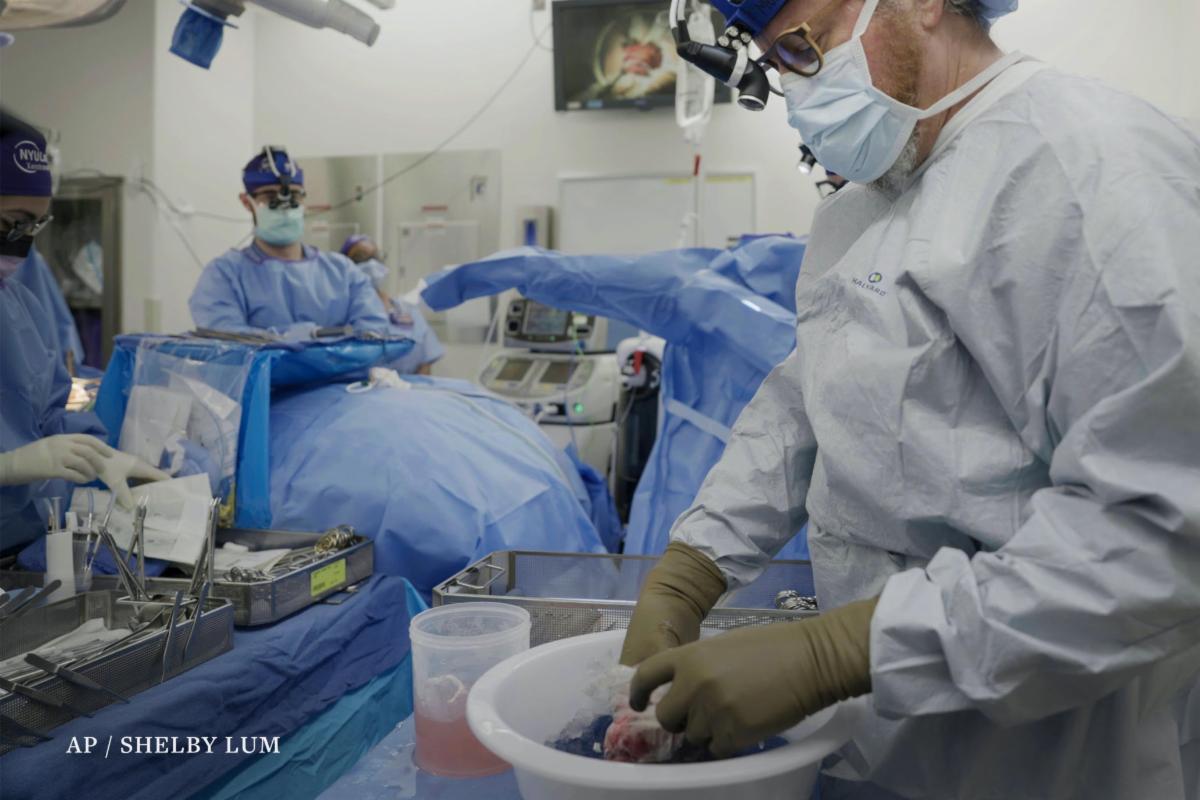 | |
AP was the only news organization to document the latest pig-to-human transplant in a donated body, an area of experimentation that is only done by a small number of U.S. doctors.
There’s an ongoing quest by a small number of U.S. doctors to one day ease the nation’s organ transplant shortage with organs from animals. In recent years, the group of doctors has been testing animal-to-human organ transplants in the dead. Coverage of their advances in the field has relied on handout visuals — that is, until now.
AP video journalist Shelby Lum and AP medical writer Lauran Neergaard got a behind-the-curtain look at the challenges of experiments with the dead that may help the more than 100,000 people on the national organ transplant waiting list. Lum was the only journalist in the operating room when a team of doctors at NYU Langone Health recently transplanted a pig kidney into a brain-dead man to see if the organ would work.
The access was the result of more than a year of source building and planning by Lum and Neergaard, who has covered xenotransplantation for several years. Besides witnessing the operation, Lum also documented follow-up by doctors, who took biopsies of the transplanted pig kidney, and was present when doctors celebrated what would have been the donor’s birthday. Lum and Neergaard also traveled to the man’s family north of New York City to get a deeper look at why the family decided to donate the body for research.
Read more here.
| |
Connecting wishes Happy Birthday | |
|
Stories of interest
How a small-town feud in Kansas sent a shock through American journalism (Washington Post)
| |
|
Story by Jonathan O'Connell, Paul Farhi, Sofia Andrade
MARION, Kan. — The phone conversation between the journalist and the town’s newly hired police chief quickly turned contentious.
Tipsters had been telling Deb Gruver that Gideon Cody left the police department in Kansas City, Mo., under a cloud, supposedly threatened with demotion. So now she was asking him difficult questions on behalf of the weekly Marion County Record about the career change that had brought him to this prairie community of 1,900 people.
The chief bristled.
“If you’re going to be writing bad things about me,” they both recall him telling the reporter, “I might just not take the job.”
He also advised Gruver that he had hired a lawyer.
Cody later said he had been on guard during the conversation, having been warned by longtime residents that the Record could be overly aggressive in its reporting.
“If you live in Marion, you understand,” he told The Washington Post. “If you don’t live in Marion, you don’t understand.”
Gruver wouldn’t publish any of her reporting on Cody for months to come. But their confrontation in April marked an escalation in long-running tensions between a group of local journalists and the officials and community members they cover that would boil over through the summer.
Read more here. Shared by Doug Pizac, Richard Chady, Myron Belkind, Sibby Christensen, Peggy Walsh, Dennis Conrad, Harry Dunphy, Lindel Hutson.
-0-
Irvine J. "Pinky" Vidacovich Jr., 1933 - 2023 (NOLA.com)
Irvine Vidacovich Obituary
Irvine J. "Pinky" Vidacovich, Jr., a retired international news executive, died on August 24, 2023. He was 90 years old.
...
| |
 | 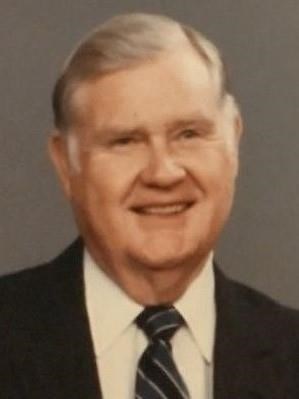 | After two years of active duty with the U.S. Army, he began his journalism career with The Times-Picayune as a general assignment reporter in 1956. He was an account executive with Walker Saussy Advertising Agency from 1958-1960, News Director of WWL Radio in 1960, and a reporter with WWL-TV in 1961. In May 1962 he joined United Press International as a correspondent and editor in the New Orleans bureau, beginning a career with the news agency which would last until his retirement in 1996. He was named UPI's New Orleans bureau manager in 1964. Later that year he was named Regional Sales Executive for Louisiana. He transferred to Oklahoma City in 1967 and to Dallas in 1971 in similar sales positions. He was named sales manager for the Southwest Division of UPI in Dallas in 1981. In 1982 he transferred to Washington, DC as Vice President and General Manager of the Middle-Atlantic Division. Later that year he was named Vice President and General Manager of the Southern Division in Atlanta. He also held management posts in North Carolina and California. Vidacovich served in management positions in Washington DC for 12 years. When he retired, he was International Sales Executive and acting general manager of the Asia-Pacific Division, a position he held for the last three years with UPI.
Read full obituary here. Shared by Kent Prince.
-0-
8 North Dakota newspapers cease with family business’s closure (AP)
BY JACK DURA
Eight weekly newspapers in northeastern North Dakota have ceased publication with the closure of a century-old family business.
Fordville-based Ness Press closed in early August. Ken Ness, who volunteered at the business his Norwegian immigrant father established in 1922, said “there was nobody to take it over.”
“And the same reason other newspapers have closed: The town had no advertising. There wasn’t any businesses, so there’s no advertising,” he told The Associated Press on Wednesday.
Read more here. Shared by Paul Albright.
-0-
Fox News reaches 12.8 million viewers for GOP primary debate, despite Donald Trump’s absence (AP)
BY DAVID BAUDER
NEW YORK (AP) — Even without lead contender Donald Trump, an estimated 12.8 million people watched the first Republican presidential primary debate on two Fox News television channels and its streaming service.
There seemed little evidence that Trump’s attempt to counterprogram the debate, by appearing in an online interview with Tucker Carlson at about the same time on Wednesday, appreciably affected the number of people who were interested in checking out the eight alternatives.
The viewership was a little more than half the 24 million people who watched Trump appear in his first presidential debate in August 2015, the Nielsen company said. But it outpaced a January 2016 GOP candidates debate on Fox that Trump also skipped and was seen by 12.5 million people
Read more here.
-0-
The ICFJ. Fighting disinformation by following the money (Editor and Publisher)
Alyssa Choiniere | for Editor & Publisher
The International Center for Journalists empowers journalists to follow the money behind disinformation in the Americas.
“I can’t think of a more critical issue than disinformation right now. It's affecting every aspect of journalism, of our societies,” said ICFJ President Sharon Moshavi.
She said it is critical to expose the sources of disinformation and find who is funding the intentional dissemination of false information.
“You can’t just do whack-a-mole. You have to find the hydra head,” Moshavi said.
ICFJ has partnered with the Scripps Howard Foundation for the program from 2022 to 2025 to contribute $3.8 million toward fighting disinformation, fighting solutions and supporting journalists, partnerships and research. ICFJ also partnered with Instituto Serrapilheira to support Brazilian journalists in 2022 and 2023.
ICFJ selected 17 investigative projects led by reporters, editors and mentors from 12 countries. There are 41 partners in the project, which include news outlets, universities, tech companies and individual reporters.
Read more here.
The Final Word
RIP, Norma Picht - her son remembers a life well-lived
|  | |
EDITOR’S NOTE: Randy Picht, a Connecting colleague, is executive director of the Reynolds Journalism Institute, a position he took after a three-decade career with The Associated Press.
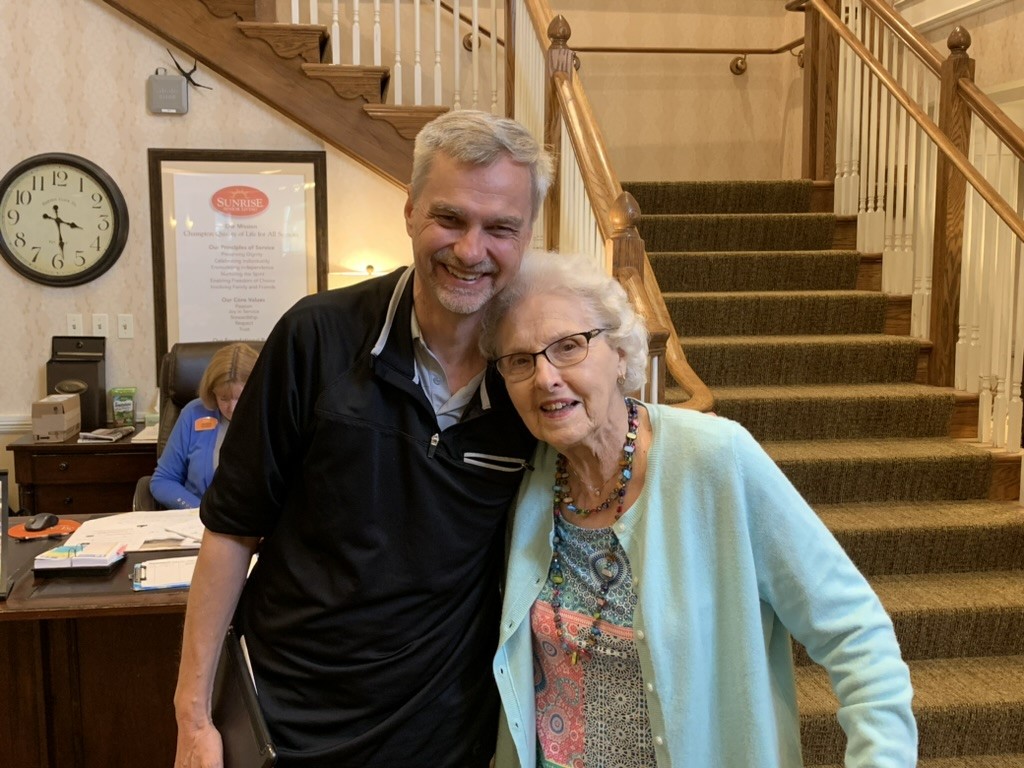
Randy Picht - Norma Bertha Peck, mother of three, a meticulous bookkeeper and a big fan of an ice-cold, very frosty glass for her beer, died in her sleep on Saturday, Aug. 12, after a brief illness. She was 95.
The daughter of German immigrants, she grew up in The Bronx, moving in and out of several apartment buildings where her father worked as a building superintendent. Sometimes, she had to shovel some coal into the building furnace and wonder where her older brother, Arthur, who was supposed to help, had wandered off to.
Growing up, her brush with greatness, involved a late-night trip with a friend -- two 17-year-olds all dressed up -- to the stage door of a show featuring Frank … Sinatra, of course. Their plan worked. They were able to say hello but he told them it was too late for them to be out and gave them a $20 bill to find a cab to go home.
She loved to listen to Frank, although Glen Campbell gave him a run for her devotion.
Her skill with numbers was evident as she started her working career, first as a bank teller, then as an assistant bookkeeper at the Harvard Club in Manhattan, where she joined the other staff in a basement office and never was privy to much of what was happening upstairs in the club.
It was about that time that she was invited to go rolling skating with some friends and bumped into – perhaps literally – a dashing young man who caught her eye in his sailor uniform although it turned out he wasn’t in the Navy but was a Coast Guardsman. That was Norman Bernard Picht, who became her husband, of 70 years, a short time later.
And whether someone was pointing it out upon full introductions or Norm and Norma were explaining why they were meant for each other, the similarity of their names was always a fun bit at parties and wherever else it came up.
Then came children and her time as a happy homemaker: shopping at Waldbaum’s and the Walt Whitman Mall, cooking her favorite German dish, Rouladen, tolerating the science fair experiments involving fruit flies and a lawnmower engine for an attempted hovercraft, and sewing all kinds of costumes for elementary-school plays or Halloween.
She also enjoyed hosting relatives and neighbors for summer barbeques and milestone events like anniversaries, birthdays and graduations. Sometimes it was the small things that stood out too. At one point, when a neighbor was having some financial difficulty and had to cancel her subscription to the daily newspaper, Norma would diligently and quietly walk across the street and put her newspaper into the neighbor’s mailbox.
With her youngest child in high school and the two older ones in college or starting careers, Norma returned to her bookkeeping career at her brother’s word processing company in Mineola. The company provided an overnight service that could transcribe interviews, doctors’ notes and other information for insurance companies and others in New York City that couldn’t keep up with the need to quickly deliver documents for customers, attorneys, etc.
Pretty quickly, everyone at Keyboard Communications learned -- her family already knew -- that Norma was an early riser, like the-sun-is-a-sleepyhead--kind of early riser. Every morning she opened the office, usually in the dark, which could offer some unexpected challenges, like the winter morning she arrived before the janitor had a chance to put salt down and she slipped on some ice and broke her wrist. From that point on, she added a flashlight to her purse.
Two other things folks learned: 1) If snowflakes appeared outside the office window, before the first ones hit the ground, she would be in her car headed home because snowy roads and Norma were like oil and water; and 2) She really disliked computer programs that were supposed to make bookkeeping a snap. “I don’t do windows,” she would say.
She made some good friends at Keyboard and enjoyed outings to Westbury Music Fair and, occasionally Broadway, with them. She also enjoyed bringing home a paycheck and used one of her first ones to buy her husband a new set of golf clubs.
In retirement, she was busy keeping the bird feeders in the backyard full, keeping the freezer stocked with ice cream and trying to make friends with new personal computer in the spare bedroom that had solitaire and other fun games, photos and email from grandchildren.
She also would give everyone who visited the opportunity to play a few rounds of cards or Pokeno or Michigan Rummy or Phase 10. She loved playing poker, especially with wild cards like Baseball (threes and nines are wild and fours you get an extra card!) but no raising and no bluffing. It was a very friendly kind of poker.
She spent her final years in the assisted living facility, Sunrise of Dix Hills, where she had the opportunity to continue making friends with computers, playing games like Wii Bowling, making sure not to miss other activities like Chair Yoga and Big Bucks Bingo (grand prize $2) and trivia contests, and generally enjoying the pleasant surroundings and friendly nurses.
Of course, she still woke up early. Often one nurse who worked overnight would come into her room to check on her at 4:30a or 5a, find her awake and sit and talk with her about life and goings on in the outside world. Just like when a neighbor would come over for coffee, or her father, another early riser, would stop by on Sundays. It was very peaceful and a great way to start the day.
Norma is survived by two sons, Doug Picht and Randy Picht, and a daughter, Debbie Solarino, seven grandchildren and seven great-grandchildren.
| |
Today in History - Aug. 28, 2023 | |
|
Today is Monday, Aug. 28, the 240th day of 2023. There are 125 days left in the year.
Today’s Highlight in History:
On Aug. 28, 1955, Emmett Till, a Black teenager from Chicago, was abducted from his uncle’s home in Money, Mississippi, by two white men after he had supposedly whistled at a white woman; he was found brutally slain three days later.
On this date:
In 1862, the Second Battle of Bull Run began in Prince William County, Virginia, during the Civil War; the result was a Confederate victory.
In 1922, the first radio commercial aired on station WEAF in New York City. The 10-minute advertisement was for the Queensboro Realty Co., which had paid a fee of $100.
In 1941, Japan’s ambassador to the U.S., Kichisaburo Nomura, presented a note to President Franklin D. Roosevelt from Japan’s prime minister, Prince Fumimaro Konoye, expressing a desire for improved relations.
In 1963, more than 200,000 people listened as the Rev. Martin Luther King Jr. delivered his “I Have a Dream” speech in front of the Lincoln Memorial in Washington, D.C.
In 1968, police and anti-war demonstrators clashed in the streets of Chicago as the Democratic National Convention nominated Hubert H. Humphrey for president.
In 1988, 70 people were killed when three Italian stunt planes collided during an air show at the U.S. Air Base in Ramstein (RAHM’-shtyn), West Germany.
In 1996, the troubled 15-year marriage of Britain’s Prince Charles and Princess Diana officially ended with the issuing of a divorce decree.
In 2005, New Orleans Mayor Ray Nagin ordered everyone in the city to evacuate after Hurricane Katrina grew to a monster storm.
In 2016, six scientists completed a yearlong Mars simulation in Hawaii, where they emerged after living in a dome in near isolation on a Mauna Loa mountain.
In 2020, Japan’s longest-serving prime minister, Shinzo Abe, said he was stepping down because a chronic illness had resurfaced. (Abe was assassinated in July 2022.)
Ten years ago: A military jury sentenced Maj. Nidal Hasan to death for the 2009 shooting rampage at Fort Hood that claimed 13 lives and left 30 people injured. Hasan had been convicted five days earlier, and did not present a case during his trial’s penalty phase. On the 50th anniversary of Martin Luther King Jr.‘s “I Have a Dream” speech at the Lincoln Memorial, President Barack Obama stood on the same steps as he challenged new generations to seize the cause of racial equality.
Five years ago: A white former police officer, Roy Oliver, was convicted of murder for fatally shooting an unarmed black 15-year-old boy, Jordan Edwards, while firing into a car packed with teenagers in suburban Dallas; Oliver was sentenced the following day to 15 years in prison. Puerto Rico’s governor raised the official death toll from Hurricane Maria in the U.S. territory from 64 to 2,975, after an independent study found that the number of people who died in the aftermath of the 2017 storm had been severely undercounted. Mourners filed into an African American history museum in Detroit for a public viewing for the late Aretha Franklin, part of a week of commemorations for the soul legend.
One year ago: Claims intensified between Russia and Ukraine of attacks at or near the Zaporizhzhia nuclear power plant, Europe’s largest. The reports brought fears that the fighting could damage the plant, which Russia seized soon after the war between the two nations began. Ukrainian officials said Russian strikes had hit areas across the Dnieper River from the plant. A mint condition Mickey Mantle baseball card sold for $12.6 million, a record for a piece of sports memorabilia. Taylor Swift won video of the year and Billie Eilish won song of the year at the MTV Video Music Awards.
Today’s Birthdays: Actor Sonny Shroyer is 88. Actor Marla Adams is 85. Actor Ken Jenkins is 83. Former Defense Secretary William S. Cohen is 83. Actor David Soul is 80. Former MLB manager and player Lou Piniella (pihn-EHL’-uh) is 80. Actor Barbara Bach is 77. Actor Debra Mooney is 76. Singer Wayne Osmond (The Osmonds) is 72. Actor Daniel Stern is 66. Olympic gold medal figure skater Scott Hamilton is 65. Actor John Allen Nelson is 64. Actor Emma Samms is 63. Actor Jennifer Coolidge is 62. Movie director David Fincher is 61. Actor Amanda Tapping is 58. Country singer Shania (shah-NY’-uh) Twain is 58. Actor Billy Boyd is 55. Actor Jack Black is 54. Actor Jason Priestley is 54. Actor Daniel Goddard (TV: “The Young and the Restless”) is 52. Olympic gold medal swimmer Janet Evans is 52. Actor J. August Richards is 50. Rock singer-musician Max Collins (Eve 6) is 45. Actor Carly Pope is 43. Country singer Jake Owen is 42. Country singer LeAnn Rimes is 41. Actor Kelly Thiebaud is 41. Actor Alfonso Herrera is 40. Actor Sarah Roemer is 39. Actor Armie Hammer is 37. Rock singer Florence Welch (Florence and the Machine) is 37. Actor Shalita Grant is 35. Country-pop singer Cassadee Pope (TV: “The Voice”) is 34. Actor Katie Findlay is 33. Actor/singer Samuel Larsen is 32. Actor Kyle Massey is 32. Actor Quvenzhane (kwuh-VEHN’-zhah-nay) Wallis is 20. Reality TV star Alana Thompson, AKA “Honey Boo Boo,” is 18.
| |
Got a story or photos to share? | |
|
Connecting is a daily newsletter published Monday through Friday that reaches more than 1,800 retired and former Associated Press employees, present-day employees, and news industry and journalism school colleagues. It began in 2013. Past issues can be found by clicking Connecting Archive in the masthead. Its author, Paul Stevens, retired from the AP in 2009 after a 36-year career as a newsman in Albany and St. Louis, correspondent in Wichita, chief of bureau in Albuquerque, Indianapolis and Kansas City, and Central Region vice president based in Kansas City.
Got a story to share? A favorite memory of your AP days? Don't keep them to yourself. Share with your colleagues by sending to Ye Olde Connecting Editor. And don't forget to include photos!
Here are some suggestions:
- Connecting "selfies" - a word and photo self-profile of you and your career, and what you are doing today. Both for new members and those who have been with us a while.
- Second chapters - You finished a great career. Now tell us about your second (and third and fourth?) chapters of life.
- Spousal support - How your spouse helped in supporting your work during your AP career.
- My most unusual story - tell us about an unusual, off the wall story that you covered.
- "A silly mistake that you make"- a chance to 'fess up with a memorable mistake in your journalistic career.
- Multigenerational AP families - profiles of families whose service spanned two or more generations.
- Volunteering - benefit your colleagues by sharing volunteer stories - with ideas on such work they can do themselves.
- First job - How did you get your first job in journalism?
- Most unusual place a story assignment took you.
Paul Stevens
Editor, Connecting newsletter
paulstevens46@gmail.com
| | | | |