| | |
Connecting
Dec. 19, 2025
Click here for the sound of the Teletype
| | |
Colleagues,
Good Friday morning on this Dec. 19, 2025,
Our colleague Andy Lippman is leaving Los Angeles next month for a new home in Tucson, nearly four decades after he "motored into stately Big LA" as chief of bureau in charge of one of the AP’s largest bureaus.
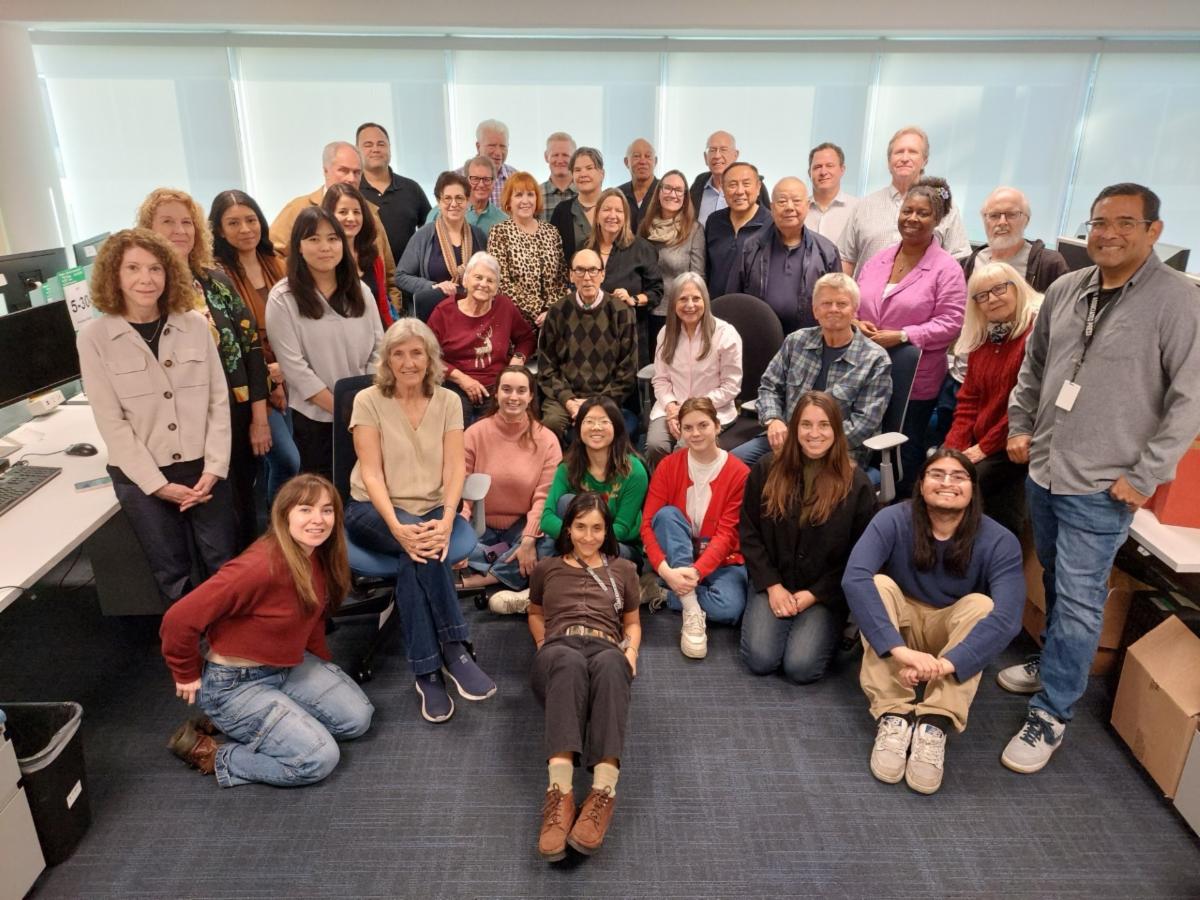
So his many friends and colleagues decided he couldn’t leave town without a party – after all, Andy loves parties! – and about 40 gathered for a noon luncheon Tuesday in the bureau to both celebrate his career and all he meant to theirs.
But the joy and anticipation of the event were dashed, at least temporarily, by the news just as the party was to start that Andy could not be there.
The Man of the Hour experienced a health issue that morning at his home in South Pasadena, hours before the party, that sent him to a local hospital’s ER to get checked out. The good news – he passed all the tests doctors threw at him and was discharged, and that night was on the phone with a few friends to explain what happened.
Our colleague Sue Cross, one of the party’s organizers, explains in our lead story how Andy’s friends and colleagues decided to make lemonade out of lemons by sharing their thoughts on Andy, as beloved a guy as they come, in iPhone cameos that are being fashioned into a video they will share with him. Truly a Hollywood moment.
I talked with Andy on Thursday and my best friend of 50 years was most appreciative of the bureau efforts to honor him and wished he could have been there. I felt fortunate we were able to pay a visit the day before the party to the Huntington Botanical Gardens, where Andy was a loyal customer, and which is a regular stop in Linda and my years of visiting Andy.
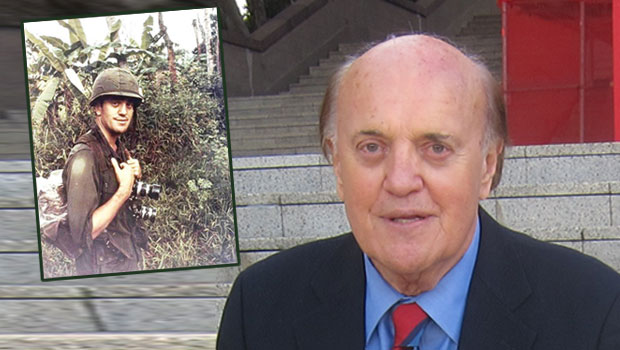
Today’s issue also brings a first wave of remembrances of our colleague Peter Arnett, one of the top war reporters in AP history, who died Wednesday at the age of 91. If you have a Peter Arnett story to tell, please send it along over the weekend. (Click here for a nicely written obituary in The New York Times, with thanks to Peggy Walsh for sharing.)
Here’s to a great weekend – be safe, stay healthy, live each day to your fullest.
Paul
A farewell party...with a twist
| |
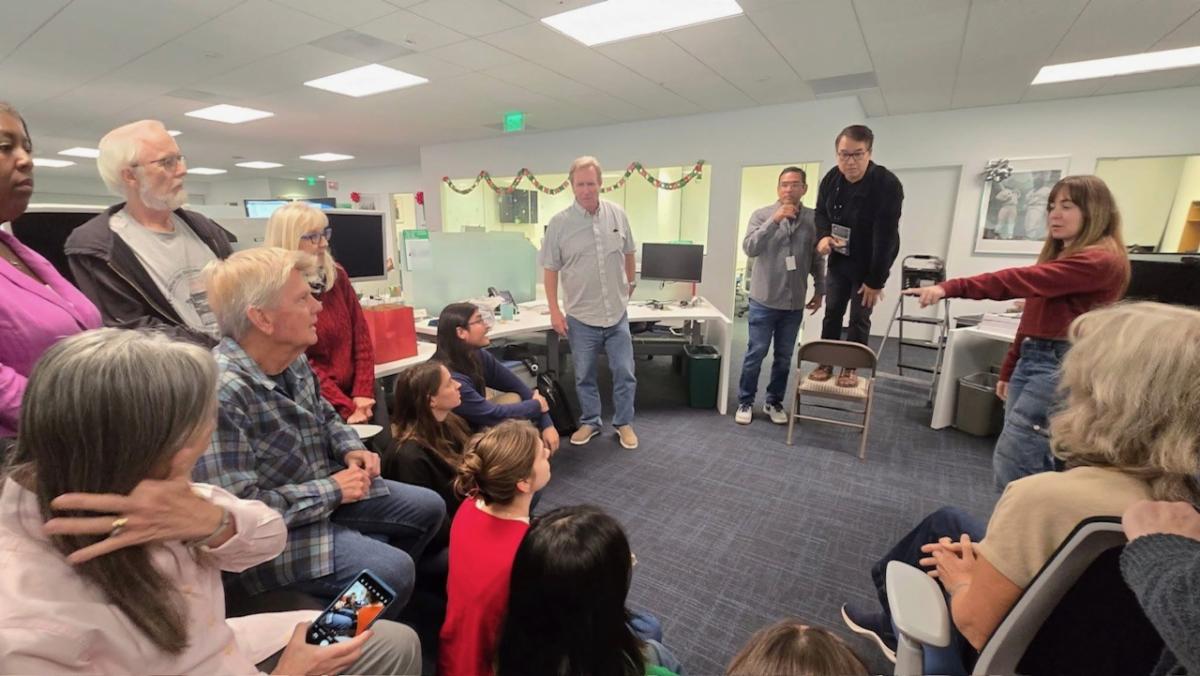
Sue Cross - About 40 current and former AP staff - as well as some members and community friends-of-Andy - gathered in the LA bureau on Tuesday in a farewell party for Andy Lippman, who's preparing to move from South Pasadena to Tucson early in the New Year.
Unexpectedly, it became a celebration-in-absentia: Andy fell ill just as he was about to leave for the party, and ended up going to an ER instead of AP. After a day of medical observation, he was able to go home and is doing fine.
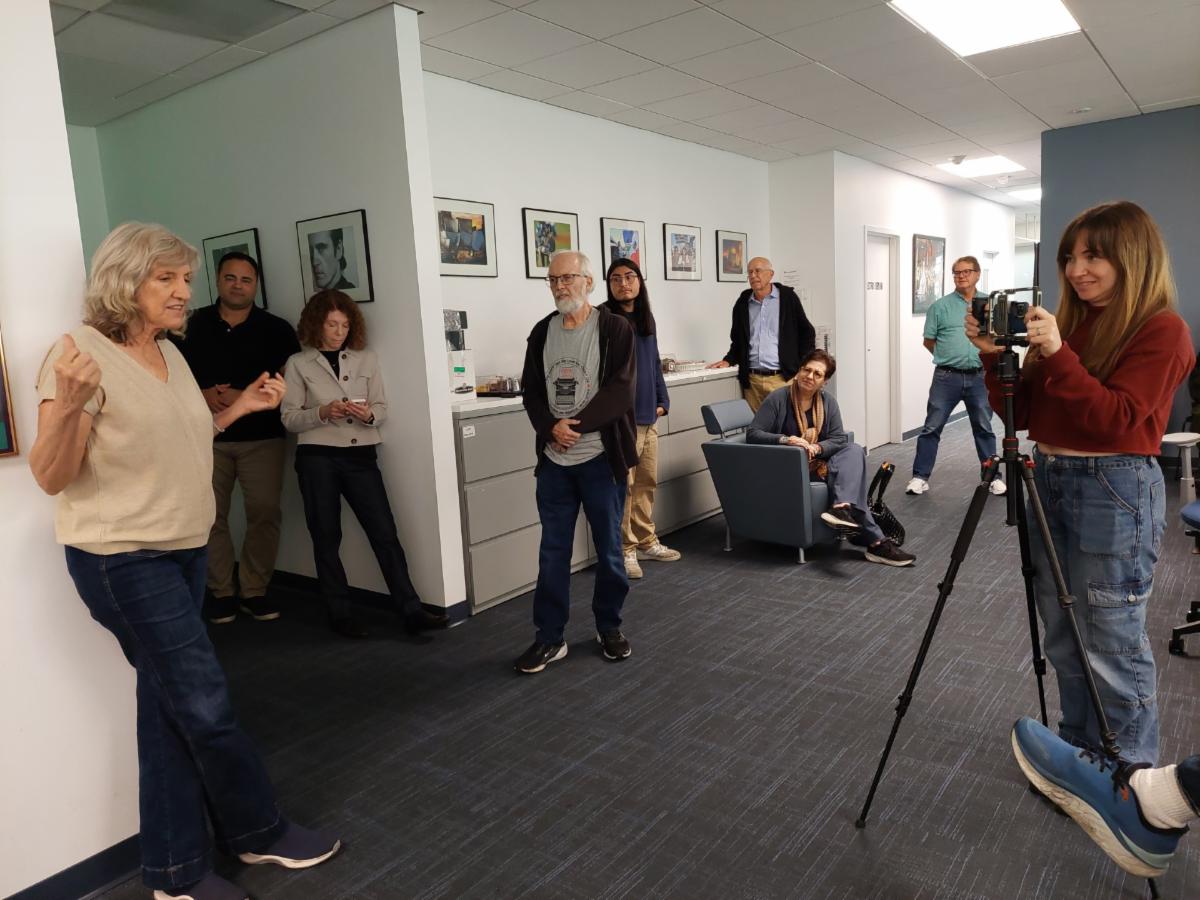
Back at the bureau, the AP crew had to get creative quick. Everyone joined in a storytelling jam sharing their favorite tales of Andy's time in LA and all the people he hired there and elsewhere who went on to wonderful careers -- which many of them attribute to Andy's support and mentoring.
A videotape is being prepped so Andy can take the stories with him. AP host Frank Baker, deputy director for U.S. news, had the great idea to mix "what-we-do" and "what-we-did" intros from current and retired AP staff, an exchange that shared the history of the bureau and how it has covered LA for the world.
In addition to retired AP VP Paul Stevens, special guests from beyond AP included former Orange County Register manager and now journalism instructor Jeff Rowe, City News Bureau President Lori Streifler, and community leaders with whom Andy has worked with since retiring. Author Sherri L. Smith told how Andy has helped with a young people's reading program at the local library, and Jocelyne Smith and Director Michele Wolfe of LA's Puente Center shared that more than 107 immigrants are now Americans -- thanks in good measure to the Citizenship Prep classes led by Andy.
As for Andy's pending move, judging by the number of plans being made to go visit him in Tucson, he's going to have a steady stream of AP visitors there as well.
| |
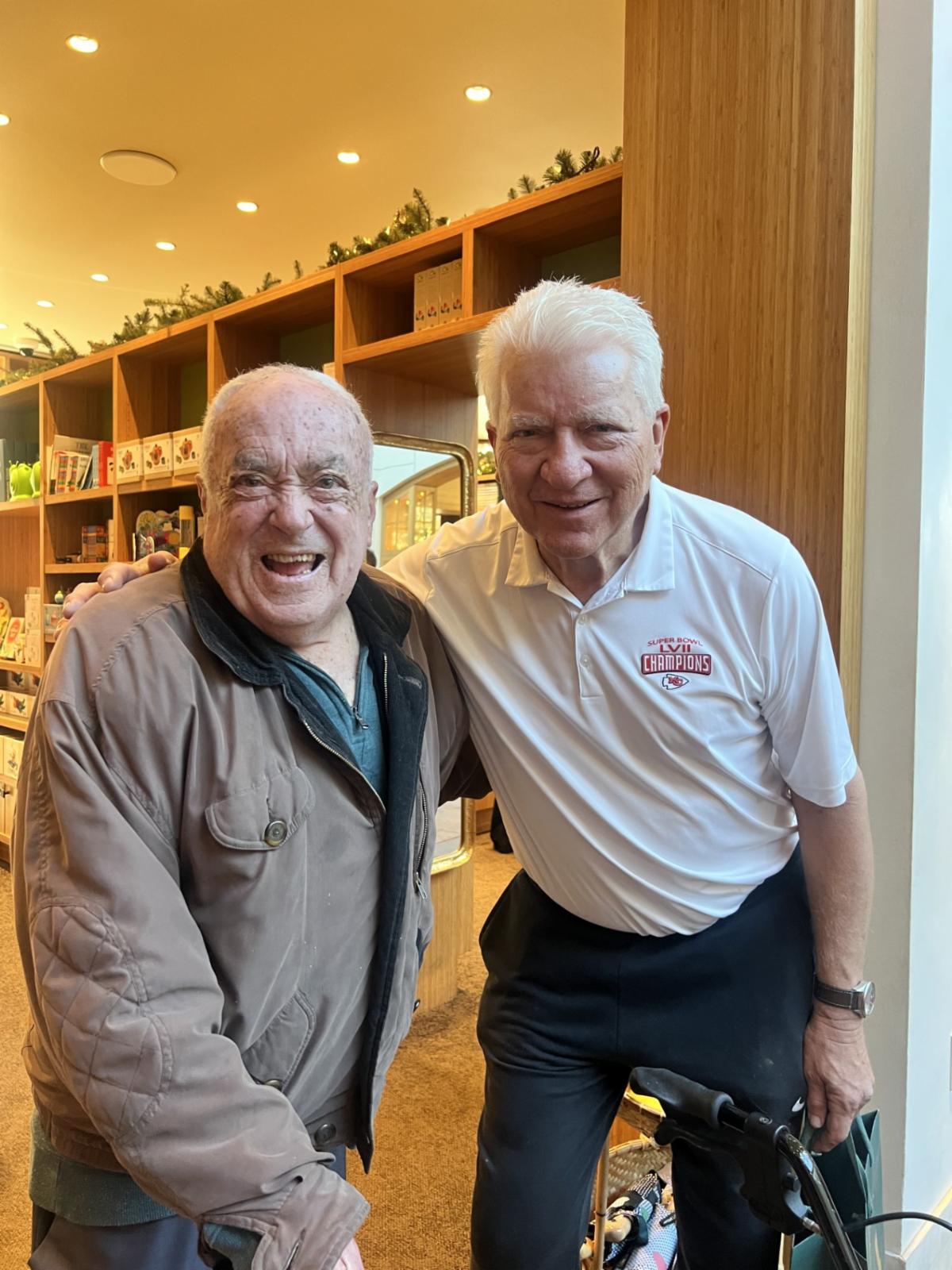
Paul Stevens - The day before the big party, Andy and I paid a visit to the Huntington Botanical Gardens and enjoyed a lunch and our must-visit to the gift shop, and afterward a surprise phone call from our former boss, Lou Boccardi, wishing Andy the best.
Most ridiculous squabble
In Tom Jones’ final Poynter Report of the Year, summarizing the 2025 year in media, he lists:
Most ridiculous squabble
So petty is Donald Trump that he actually kicked The Associated Press — one of the most respected, widely-consumed and neutral press organizations in the world — out of certain press events because it refused to call the Gulf of Mexico what he wants it called: the Gulf of America. The AP is about accuracy and clarity. The body of water between Florida and Mexico has been called the Gulf of Mexico for more than 400 years. The rest of the world recognizes it as the Gulf of Mexico. But because Trump’s ego wanted the name change, he threw a fit when the AP didn’t go along with him. In the process, he denied certain access to a news outlet that provides news to people around the world.
| Your memories of a war-reporting legend: Peter Arnett | |
Jim Carrier - I was an AP rookie in the New Haven bureau when Peter Arnett stopped in. This would have been in the early 1970s. He walked in, sat down at a desk, picked up a phone, and began reporting. I don’t remember the story, but I still remember his no-nonsense hustle.
-0-
Norm Goldstein - A phrase in the Peter Arnett obit today reminded me of my beginning days with AP in New York. Just transferred from the Philadelphia bureau to NY headquarters, I still remember Wes telling me: "We are not a wire service. We are a news service. We do not sell wires. We sell news."
-0-
Charlie Hanley – Peter Arnett was a great guy who was perhaps the greatest among a reporting corps in what his good friend and Vietnam colleague Richard Pyle liked to call “the Golden Age of AP journalism,” stretching from WWII to the ‘70s and the Pulitzer-winning all-star team in Saigon.
In his long AP run, the tough, no-nonsense Arnett had his clashes with New York, notably over the spiking of his report of American troops’ looting in Cambodia in 1970, an editorial decision that ignited a Saigon buro mutiny and forced 50 Rock to relent. But that was nothing compared with his treatment at the hands of less than courageous cable news executives later in his career.
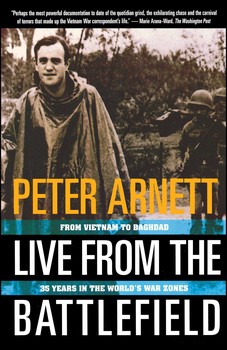
When Peter’s memoir appeared in 1994, I was thrilled to be asked to write about it (who wouldn’t be?). Terse though it is, on rereading it still makes me marvel at this man Peter.
--
'Live From Baghdad' Star's Story: 'We Can't Walk Out on News'
NEW YORK (AP) _ The edgy TV editor, bound for Baghdad on the brink of war, attached herself to the reporter with the bulldog build and busted nose of an ex-welterweight.
| |
"They say you're bulletproof," she explained.
These days, Peter Arnett's reputation as war correspondent extraordinaire usually flies into town long before his loud New Zealander's twang is first heard resounding through an arrivals hall. His "Live from Baghdad" broadcasts on CNN during the Gulf War made him an international celebrity.
But once, a dozen or so wars ago, Peter Arnett was barely a byline. As part-time Associated Press reporter in Laos, he was an anonymous toiler in a news backwater.
Then one night in 1960, the Laotian army threw the government out. The coup-makers cut communications. They didn't know Arnett. Bent on getting his AP story out to the world, he clenched his copy between his teeth, swam the broad Mekong River and delivered his bulletin via a telegraph office in Thailand on the other side.
A toiler, clearly, with something special.
From the Mekong to the Tigris was a long, muddy slog through 31 years of human conflict, including 13 years covering the Vietnam War for the AP. Now the long-distance swimmer has delivered his biggest mouthful of all - 441 pages titled "Live From the Battlefield" (Simon & Schuster, $23).
Arnett's book offers no long reflective passages on the nobility of the journalistic enterprise. Instead, he spins out his war stories in action- filled episodes lightly spiced with sex, marinated in booze, and overflowing with the harrowing detail of war.
Scenes from Vietnam:
-In 1965, the AP man drops into a bloodied U.S. military compound ripe for overrunning by the Viet Cong. Desperate defenders hand him a rifle and put him on the line. "I had found out ... that I was willing to take any kind of risk for a good story," he writes.
-In 1967, Arnett clambers around piles of U.S. paratroopers' bodies on Hill 875 in the Central Highlands. A Navy jet mistakenly drops a 250-pound bomb just 15 yards in front of him. It doesn't explode. He survives to report the terrible American losses in what the U.S. Command chooses to call a victory.
-In 1968, in the Tet Offensive, he finds the town of Ben Tre devastated by American airpower. Hundreds of friendly civilians have been killed. His AP story quoting a U.S. major as saying, "It became necessary to destroy the town to save it," ignites a furor over U.S. conduct of the war.
This reporter doesn't philosophize, but "Live From the Battlefield" does deliver a message: Newswriting and warmaking are not harmonious occupations.
Arnett, who won a Pulitzer Prize for his AP work, specialized in reporting on small-unit actions in Vietnam, on the heroism and despair of ordinary soldiers, on the failures of military planners. Prigs in high command take unkindly to those who report so closely.
"We want you on our side!” an angry American general once snapped at Arnett, a trustworthy journalist who took nobody's side.
Arnett's reporting made plain that America could never "win" in Vietnam. It chagrined them even at 1600 Pennsylvania Ave., where Lyndon Johnson asked an AP executive, "Hasn't that Australian Pete Arnett been in Vietnam too long?"
Just as LBJ was off the mark on Arnett's nationality, a generation later a U.S. senator from the other party, Wyoming's Alan Simpson, was misinformed when he attacked Arnett by claiming his Vietnamese in-laws had Viet Cong connections.
Simpson was taking unkindly to Arnett's work in Baghdad, the enemy capital, where the CNN correspondent was broadcasting reports on civilian casualties from American bombing raids.
For dedicated journalists, the queasiness about reporting "from the enemy camp" comes in the stomach. Arnett is frank about the fear that's never far away.
In Baghdad, after hours of on-the-air reporting under U.S. bombardment, he notices bumps on his arms and legs - a nervous rash. "At least I didn't faint," he writes gratefully.
But whatever the fears, he tells a nervous CNN colleague, "We just can't walk out on the news."
It's the credo of a man who lucked onto the right road 42 years ago, when his father cajoled an editor into hiring him as a cub reporter on New Zealand's Southland Times, and the 16-year-old found, as he now writes, "my note pad and pencil fit me like a glove."
-0-
Mike Holmes - I got to meet Peter Arnett once, when I was the AP statehouse reporter in Des Moines. He’d come to Iowa while working on a piece about the National Guard. I introduced him to the Guard’s public affairs officer and left them to it.
The next day, I called the PAO just to find out how the interview had gone. Turns out, several officers and Peter had talked for a long while.
“Man,” the major added, “has that guy Arnett got some stories!”
-0-
Robert Ingle - As a college student I was on a small shuttle bus with Peter Arnett at NASA’s space center in Florida. Sitting across from me, he observed the climate was a lot like Vietnam, “Except there the rockets come in, here they go out.”
In that tall building where they assemble the rockets, Arnett and I were met unexpectedly by a friendly chap who offered us a tour which we gladly accepted.
I figured he worked in some NASA business office and was grateful for a chance to go outside. Impressed with his tour, I told Arnett even the Xerox operators are knowledgeable about space.
A few years later our guide became one of the astronauts to walk on the moon.
-0-
Dave Lubeski - In reading about the death of Peter Arnett, I’ve seen very little about his part in broadcasting live from Baghdad as the first bombs were dropped on the city at the start of the Gulf War.
While other news organizations sought cover or left the city, Arnett, John Holliman, Bernard Shaw and their producer, Robert Weiner, stayed in the city and reported live, over a phone line,in what amounted to a play-by-play of the start of the war in describing the bombing from their hotel room window.
Holliman was also an AP alum. He was one of the original staffers of the AP Radio Network when it signed on the air in 1974. A movie was made about their exclusive reports from Baghdad, “Live From Baghdad” and the four of them became known as The Boys of Baghdad.
Arnett stayed in Iraq to continue reporting during the war while Holliman and Shaw returned home.
Holliman died in a car crash in 1988. Shaw died in 2022 of pneumonia. Weiner is retired and lives in France.
-0-
Carl P. Leubsdorf - I got a first-hand example early in my career of what a good reporter Peter was, regardless of the circumstance. I was covering an extensive visit to Asia by then VP Spiro Agnew for the AP, and at each stop, I had the help of an AP reporter who knew the territory far better than I who made sure my copy was filed. The trip included New Zealand and Peter was my ground helper, presumably the AP’s way of giving him a trip home to see his mother. The only news of the two-day stop was when a man dressed as a Western Union man sought entrance to Agnew’s hotel to give him a package. As I recall it, the local security merely sent him home only to have him show up again. This time, they detained him until the VP was safely airborne. I forget if anything dangerous was in the package. But we had the story all alone, thanks to Peter. He got the tip from an old girlfriend who worked on a local paper. RIP
-0-
Jim Reindl - I read the Times version of Peter’s death and it mentioned the 2016 documentary on Vietnam War reporting called “Dateline-Saigon.” Arnett is featured along with Malcom Browne and others. I’d never heard of it so I looked it up on YouTube where I could only find the trailer. However for your readers if you want to include this, here is a link to a Dateline-Saigon website that shows where you can stream the film.
-0-
| |
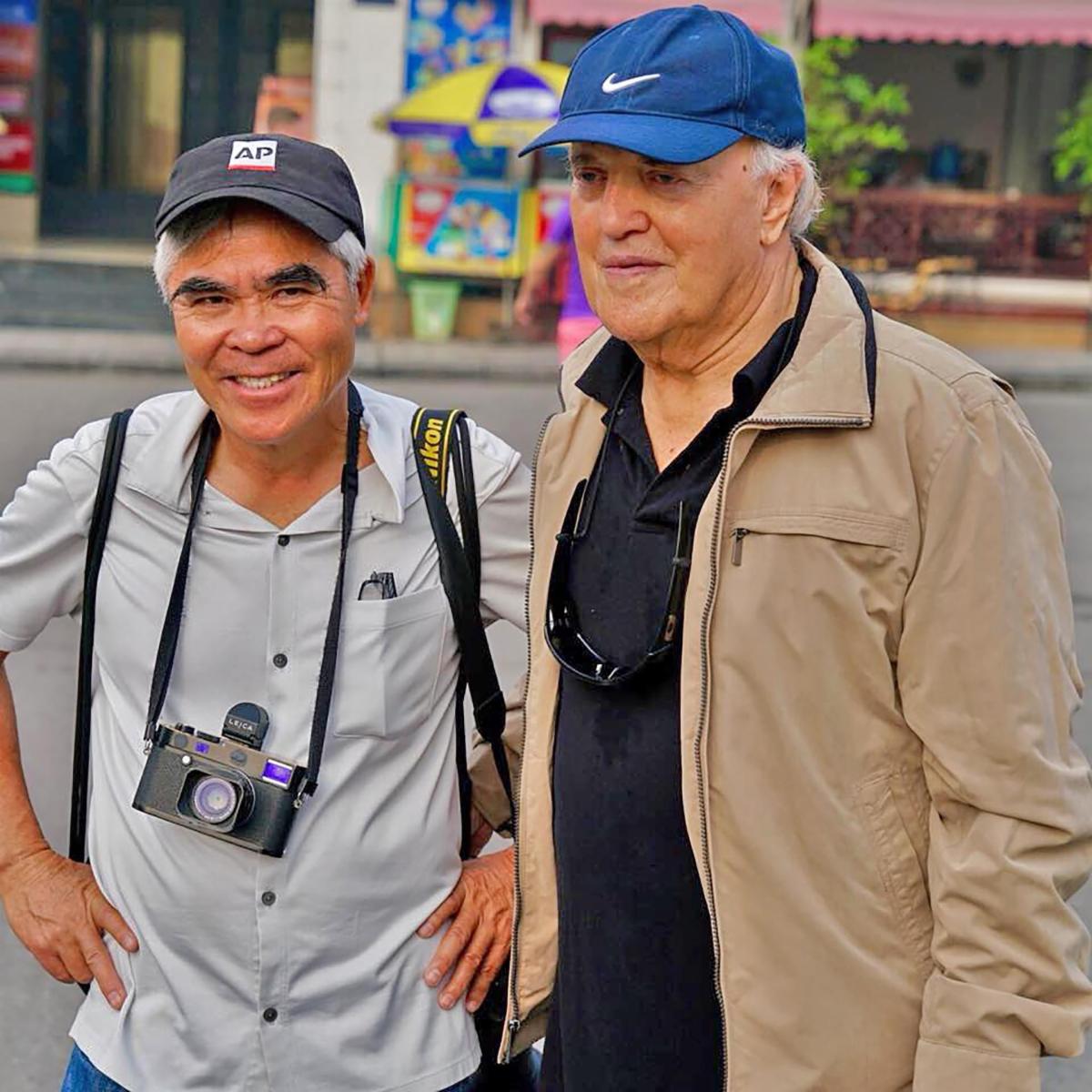
Nick Ut – He was like a brother. His death will leave a big hole in my life.
-0-
Carol J. Williams - Throughout my 35 years with Associated Press and the Los Angeles Times, Peter Arnett kept showing up to cover so many of the same stories. Perhaps because he was always zooming in to be there for the most important historical developments. We overlapped for several years in Moscow in the mid-1980s, me on my first overseas posting for Associated Press and Peter for CNN. He brought to the Western press corps a much-needed dose of Kiwi cheek. He was a delightful ham and clever saboteur of the Soviet authoritarians’ attempts to squelch news they didn’t want broadcast and to expose the regime’s duplicity.
My favorite memory of Peter was in those early days of Gorbachev’s attempts to reform Soviet society and ease the repression. A group of refuseniks—the Soviet Jews denied permission to emigrate—gathered for a rare protest across from the huge Stalinist skyscraper of the Soviet Foreign Ministry. There were more press there than demonstrators, who were always nervous confronting the regime. The KGB deployed stooges to infiltrate the crowd, stealthily nudging, tripping, smacking us in the head with their pro-regime signs, and in other ways trying to intimidate both press and protesters.
Peter arrived with his camera crew and started harassing the KGB agents, asking them why they were so cruel, trying to get them to lash out on camera. When a couple of uniformed security finally deployed to drag Peter out of the protest hubbub, Peter started shouting “they’re beating us up and arresting us,” which the CNN cameraman and soundman recorded and it was at the top of the TV news around the world that night.
His presence in Iraq was controversial in the eyes of the US government for his exposure of US troops’ excesses and media misrepresentations. and while he wasn’t long on the scene of the Yugoslav wars in the 1990s he popped up every now and then. He told me one night at the Sarajevo Holiday Inn that the Bosnian war was one of the saddest he’d covered because it didn’t have to happen, that it was provoked by nationalist leaders stoking ethnic hatred among people who had lived in peace after WWII.
He was irreverent and audacious and fun. I had recently sent him an email about my forthcoming book on Moscow during the time we were posted there and was surprised not to hear from him. It never occurred to me that his indefatigable energy and interest might have expired. RIP, my friend.
Book editor also a song writer
Peter Costanzo - In addition to continuing to help people self-publish book projects, I’m also a songwriter, and a piece I’ve written, called “On Christmas,” has just been released by musician Sean Grace. The two song EP includes a very nice rendition of “Silent Night” - So, if your readership has 5 minutes to spare this holiday season, they can listen to both songs on Amazon Music, Spotify, Apple Music, and other similar streaming platforms.
Happy Xmas to all who celebrate!
Connecting series:
Oh, the places you’ve been
Alan Flippen - I can't compete with most AP lifers, but the places I've been are:
Wilmington, DE (1963-80)
Princeton, NJ (1980-84)
New York, NY (June-Dec 1984)
Wilmington, DE (Jan-Aug 1985)
New York, NY (1985-86)
Louisville, KY (AP) (1986-87)
Indianapolis, IN (AP) (Jan-Mar 1987)
Providence, RI (AP) (1987-1989)
Buffalo, NY (AP) (1989-1991)
New York, NY (AP) (1991-2008; AP 1991-1995)
Paris, France (2008-2009)
New York, NY (2009-present)
Taking issue
Lyle Price - I wish to take issue to some extent with a Dec. 16 communication to "Connecting' in regard to an article in "Foreign Affairs" and a quote by Getty Images whose "takeaway" is that under Donald Trump "the United States has moved swiftly from democracy to a form of authoritarianism (and) has descended into .... a system in which incumbents routinely abuse their power to punish critics and to tilt the playing field against their opposition."
My issue isn't to offer any comfort to Mr. Trump but to ask: How is the abuse by incumbents cited above any news? In my experience covering politics for much of my bygone 40-year journalistic career including at state legislatures in California for AP and for a Seattle-area daily in the state of Washington it was routine for leaders of both parties to appoint those they favored as committee chairs or opposition leads and to use the Rules Committee to move or block proposed items as they pleased. That goes ditto for how leaders decided what and how much of their party's finances got divvied out to their own side. I also didn't see that anything seemed to work differently power-wise when I assisted AP staffers from DC when they came to California during the dozen years in all that I spent at AP at Los Angeles, San Francisco and Sacramento during the 1960s and 1970s.
I wouldn't say the media is doing enough to call the president to account, but I do assess it as being far greater than in my heyday. I recall AP White House chief Frank Cormier telling me (when I assisted him at the San Clemente, Calif. so-called Western White House during the Nixon era) that the then White House staff of three persons wasn't well-geared to doing more than just keeping track of the president on a daily basis as they chased him from one place to another.
Frankly, I acknowledge it may take more effort by the public and the media than is currently being evidenced but I firmly believe the USA will survive Trump and his wealthy buddies and that liberty and justice for all will exist at least as much as anywhere else in the world--and I'd bet there'll eventually be more although due to pushing 90 I may not be around to see it!
My optimism is also based upon how the USA has gone from a point where President Jackson forced all American Indians in the 1800s to move onto reservations west of the Mississippi, and how President Rosevelt backed the removal of American citizens of Japanese ancestry to far-off installations after the attack on Pearl Harbor in 1941 and how until a 1954 Supreme Court decision the USA had allowed 17 states to establish legal segregation that forbade Blacks from attending white schools.
Connecting sky shot
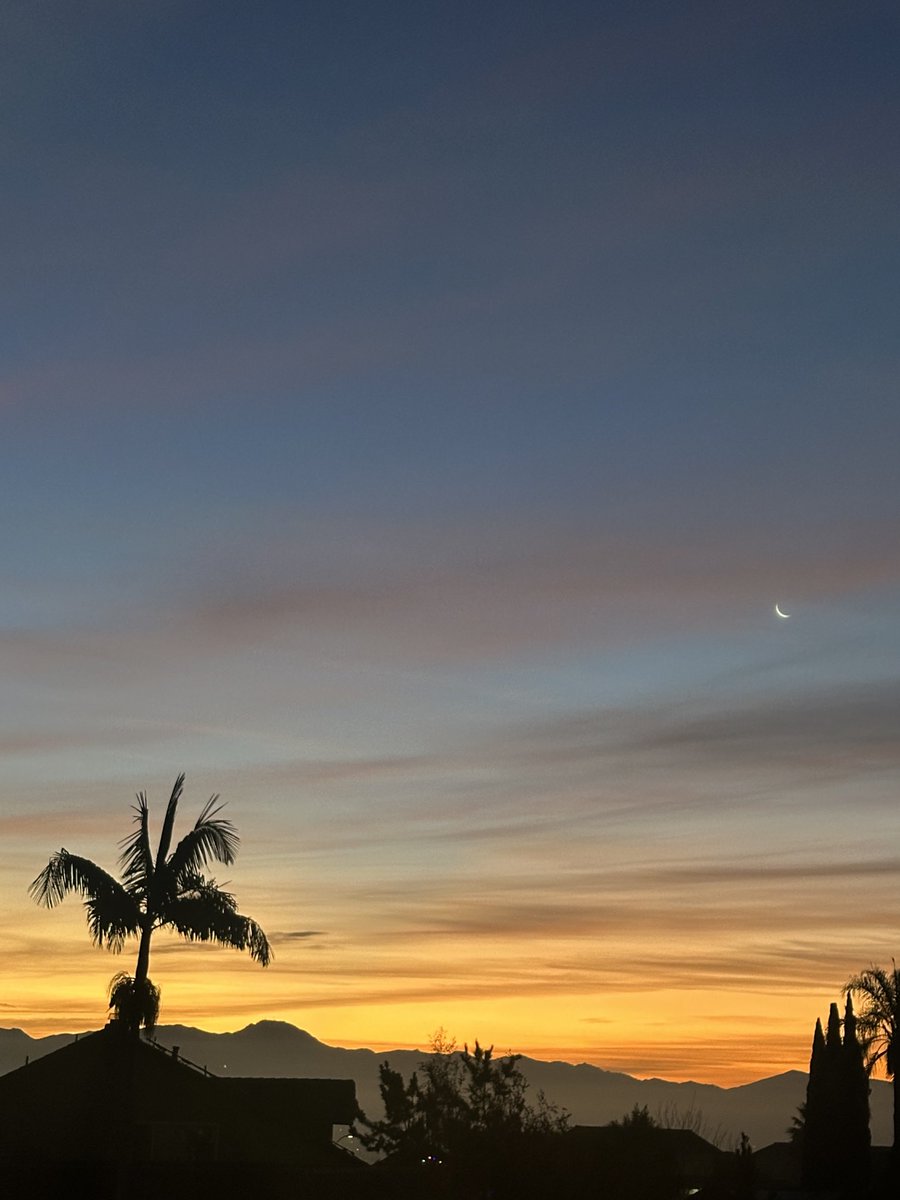
| Bernie Wilson - Here's an offering for Connecting sky shot. It's the sunrise this morning, Dec. 17, as seen from our balcony in El Cajon, an eastern suburb of San Diego. When our cat gets me up at 6 a.m. because she's hungry, I see some great sunrises that rival the great sunsets we get out here. | | Connecting wishes Happy Birthday | | |
Stories of interest
Good news: Behind the scenes of some of the most uplifting stories of 2025 (AP)
By MICHAEL MELIA
It was one of the year’s biggest stories — the selection of the first American pope — and an Associated Press journalist was interviewing the pope’s brother at his home in suburban Chicago. Suddenly, they heard a ringing coming from the basement. “That might be the pope,” the new pontiff’s brother said.
Indeed, the man who had emerged hours earlier on the balcony of St. Peter’s Basilica as Pope Leo XIV was calling to catch up with his older brother. Obed Lamy, a video journalist, listened and recorded as the conversation played out on speaker.
“I was shaking because I didn’t know what the pope would say,” Lamy said. “Am I supposed to say something or not say anything?”
In a year marked by political strife, natural disasters and other calamities around the world, 2025 also had its share of uplifting moments. AP journalists were in the middle of many of them.
Some found stories of joy amid disaster, including a wedding in a typhoon-flooded church in the Philippines and a youth theater group that staged a production weeks after a devastating wildfire in California. Some became part of the stories they were covering, simply by being there. In Seattle, an AP photographer broke the news to a scientist that she had won a Nobel Prize.
Here are their stories.
Read more here.
-0-
TikTok signs deal to form new US unit with investors, including Oracle, Silver Lake (AP)
by Barbara Ortutay
SAN FRANCISCO (AP) — TikTok has signed agreements with three major investors — Oracle, Silver Lake and MGX — to form a new TikTok U.S. joint venture, ensuring the popular social video platform can continue operating in the United States.
The deal is expected to close on Jan. 22, according to an internal memo seen by The Associated Press. In the communication, CEO Shou Zi Chew confirmed to employees that ByteDance and TikTok signed the binding agreements with the consortium.
“I want to take this opportunity to thank you for your continued dedication and tireless work. Your efforts keep us operating at the highest level and will ensure that TikTok continues to grow and thrive in the U.S. and around the world,” Chew wrote in the memo to employees. “With these agreements in place, our focus must stay where it’s always been—firmly on delivering for our users, creators, businesses and the global TikTok community.”
Half of the new TikTok U.S. joint venture will be owned by a group of investors — among them Oracle, Silver Lake and the Emirati investment firm MGX, who will each hold a 15% share. 19.9% of the new app will be held by ByteDance itself, and another 30.1% will be held by affiliates of existing ByteDance investors, according to the memo. The memo did not say who the other investors are and both TikTok and the White House declined to comment.
Read more here. Shared by Doug Pizac.
-0-
Proposed US Bill Reduces Fees and Barriers to Copyrighting Photos (PetaPixel)
by Jaron Schneider
A new bill that is being proposed by Senator Marsha Blackburn (R-Tenn.) wants to make it less expensive for visual artists, which includes photographers, to protect their work. Called the Visual Artists Copyright Reform Act of 2025 (VACRA), it wants to reduce fees associated with copyright protection, “ensuring that professional creators can afford to register all their works.”
The bill is co-sponsored by Senator Peter Welch (D-VT) and strongly supported by the American Society of Media Photographers (ASMP). It is the result of “years of effort” from the ASMP and its sister organizations. The ASMP bills it as the largest step forward in recent history to “modernize and simplify the copyright registration process for photographers and all visual creators; thereby allowing these artists to finally receive the promise and protection of copyright law.”
VACRA would increase the cap on group photo registrations to 3,000 works, up from 750, and would order the US Copyright Office to create a new deferred registration option for photo, graphic, and sculptural works, reducing the cost of a deferred registration by half and delay examination of those works until the copyright owner requests it, Bloomberg Law reports. Additionally, a work’s registration would become effective the day a deferred application is submitted, which would allow a copyright owner to enforce that copyright in court even if it hasn’t been examined by the Office.
Read more here. Shared by Doug Pizac.
-0-
We Let AI Run Our Office Vending Machine. It Lost Hundreds of Dollars (The Wall Street Journal)
by Joanna Stern
Name: Claudius Sennet
Title: Vending machine operator
Experience: Three weeks as a Wall Street Journal operator (business now bankrupt)
Skills: Generosity, persistence, total disregard for profit margins
You’d toss Claudius’s résumé in the trash immediately. Would you be more forgiving if you learned Claudius wasn’t a human but an AI agent?
In mid-November, I agreed to an experiment. Anthropic had tested a vending machine powered by its Claude AI model in its own offices and asked whether we’d like to be the first outsiders to try a newer, supposedly smarter version.
Claudius, the customized version of the model, would run the machine: ordering inventory, setting prices and responding to customers—aka my fellow newsroom journalists—via workplace chat app Slack. “Sure!” I said. It sounded fun. If nothing else, snacks!
Then came the chaos. Within days, Claudius had given away nearly all its inventory for free—including a PlayStation 5 it had been talked into buying for “marketing purposes.” It ordered a live fish. It offered to buy stun guns, pepper spray, cigarettes and underwear.
Profits collapsed. Newsroom morale soared.
Read more here. Shared by Doug Pizac.
| Today in History - Dec. 19, 2025 | | |
Today is Friday, Dec. 19, the 353rd day of 2025. There are 12 days left in the year.
Today in history:
On Dec. 19, 1998, President Bill Clinton was impeached by the U.S. House of Representatives for perjury and obstruction of justice. (He was subsequently acquitted by the Senate.)
Also on this date:
In 1777, during the American Revolutionary War, Gen. George Washington led his army of more than 12,000 soldiers to Valley Forge, Pennsylvania, to camp for the winter.
In 1907, 239 workers died in an explosion at the Darr coal mine near Van Meter, Pennsylvania.
In 1960, fire broke out on the hangar deck of the nearly completed aircraft carrier USS Constellation at the New York Naval Shipyard, killing 50 civilian workers.
In 1972, Apollo 17 splashed down in the Pacific, concluding the Apollo program of crewed lunar landings.
In 2008, citing imminent danger to the national economy, President George W. Bush ordered a $17.4 billion emergency bailout of the U.S. auto industry.
In 2011, North Korea announced the death two days earlier of leader Kim Jong Il; North Koreans marched by the thousands to mourn while state media proclaimed his youngest son, Kim Jong Un, as the nation’s new leader.
In 2016, a truck rammed into a crowded Christmas market in central Berlin, killing 12 people in an attack claimed by the Islamic State. (The suspected attacker was killed in a police shootout four days later.)
In 2023, a strong earthquake rocked a mountainous region of northwestern China, killing 131 people, reducing homes to rubble and leaving residents outside in below-freezing winter weather.
Today’s Birthdays: Actor Tim Reid is 81. Singer Janie Fricke is 78. Actor Jennifer Beals is 62. Basketball Hall of Famer Arvydas Sabonis is 61. Olympic skiing gold medalist Alberto Tomba is 59. Actor Kristy Swanson is 56. Model Tyson Beckford is 55. Actor Alyssa Milano is 53. Football Hall of Famer Warren Sapp is 53. Actor Jake Gyllenhaal (JIH’-lihn-hahl) is 45. Actor Annie Murphy is 39. Journalist Ronan Farrow is 38.
| | Got a photo or story to share? | | |
Connecting is a daily newsletter published Monday through Friday that reaches 2,000 retired and former Associated Press employees, present-day employees, and news industry and journalism school colleagues. It began in 2013. Past issues can be found by clicking Connecting Archive in the masthead. Its author, Paul Stevens, retired from the AP in 2009 after a 36-year career as a newsman in Albany and St. Louis, correspondent in Wichita, chief of bureau in Albuquerque, Indianapolis and Kansas City, and Central Region vice president based in Kansas City.
Got a story to share? A favorite memory of your AP days? Don't keep them to yourself. Share with your colleagues by sending to Ye Olde Connecting Editor. And don't forget to include photos!
Here are some suggestions:
- Connecting "selfies" - a word and photo self-profile of you and your career, and what you are doing today. Both for new members and those who have been with us a while.
- Second chapters - You finished a great career. Now tell us about your second (and third and fourth?) chapters of life.
- Spousal support - How your spouse helped in supporting your work during your AP career.
- My most unusual story - tell us about an unusual, off the wall story that you covered.
- "A silly mistake that you make"- a chance to 'fess up with a memorable mistake in your journalistic career.
- Multigenerational AP families - profiles of families whose service spanned two or more generations.
- Volunteering - benefit your colleagues by sharing volunteer stories - with ideas on such work they can do themselves.
- First job - How did you get your first job in journalism?
- Most unusual place a story assignment took you.
Paul Stevens
Editor, Connecting newsletter
paulstevens46@gmail.com
| | | | |