|
|
|
Connecting
July 24, 2023
Click here for sound of the Teletype
| |
|
Colleagues,
Good Monday morning on this July 24, 2023,
Back in the early 1940s, who in the AP newsroom at 50 Rockefeller Plaza would have guessed that newly hired copy boy Anthony Dominick Benedetto would one day become one of the most famous singers in history – Tony Bennett?
| 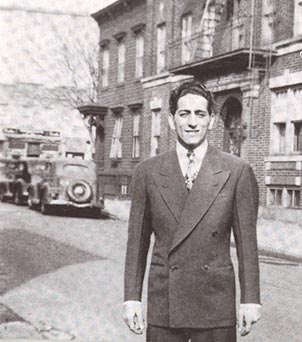 | |
Benedetto, son of Italian immigrants, was about 14 or 15 when, to help his family make ends meet, he dropped out of New York’s School of Industrial Art and was fired from one of his first jobs, as an elevator operator (“I couldn’t figure out how to get the elevator to stop at the right place,” he recalled. “People ended up having to crawl out between floors.”) before he came knocking at the AP’s doors.
The length of his AP employment is unknown, but it wasn’t long – he was drafted into the Army in 1944 during World War II.
In his autobiography, “The Good Life,” Bennett briefly recalled his time with AP.
“I did manage to hold down a job as a copy boy for the Associated Press. All day long I ran around with papers. But my bosses complained that I wasn’t moving fast enough. Since I studied drawing, what I really wanted was to get a look at the art department and see the cartoonists at work. But my bosses refused to let me; it was if they were imitating the way movies depicted hard-boiled journalists and showing a kid any kindness like that would have blown their image.”
At night he performed at amateur shows and worked as a singing waiter. He had just begun to get paying work as a singer, using the stage name Joe Bari, when he was drafted.
Years later, when the AP celebrated its 150th anniversary, the AP invited Bennett to AP headquarters as part of the celebration, but he was unable to attend. (This was in 1998, when AP celebrated its 150th anniversary. We then believed we were founded in 1848 instead of the correct year of 1846.)
Our colleague Robert Ingle, who was Trenton bureau chief for Gannett Newspapers at the time, wrote a column about his earlier work at the AP, and mentioned in it that singer Tony Bennett “was an AP guy.” Ingle recalled in an earlier Connecting: “(AP President/CEO) Lou Boccardi sent a note saying it was one of the best he saw and added ‘Tony Bennett was by recently. I think he left a part of his heart in the AP also. And so did a guy named Ingle.’”
We lead with memories of Tony Bennett shared by Connecting colleagues. Thanks to Lou Boccardi, Valerie Komor and Francesca Pitaro for their help in researching Bennett's AP ties.
Do you know of any other celebrities who worked for the AP? Share their story.
Here's to a great week ahead! Have a great day – be safe, stay healthy, live it to your fullest.
Paul
Remembering Tony Bennett
Norm Abelson - It wasn't until I read his NYTimes obit that I realized that I had anything at all in common with my beloved Tony Bennett: He was a drop-out (high school) as was I (college), and he had once been an AP copy boy (as was I). I know it doesn't seem like much, but when you have an idol, every little likeness matters.
I went so far, a couple of decades back, as to take pop and jazz singing lessons, and actually “performed” before small crowds trapped in my living room. I was impelled by my love of the treasure trove of musicians I adored, such as Ella Fitzgerald, Mel Torme, Rosemary Clooney, June Christie.
High on that list was Tony, who seemed to be a guy you could comfortably have a drink with at the neighborhood watering hole. And as bad as I knew I was at it, each time I heard his voice, it made me want to sing. He was a musical magician who made no effort to hide his tricks – he loved his songs, he loved his audience, he loved to perform, and he never held anything back.
To quote one of your top hits, Tony, “Because of you there's a song in my heart.” I'm sure you will continue to sound great now, being backed by a heavenly band of harp players.
-0-
Randy Evans - As kids from Iowa, our chests swell a little with home-state pride knowing that “Fly Me to the Moon,” one of Tony’s staples, was composed by Bart Howard, who was a Burlington native who grew up in SE Iowa before his talent took him to the coasts.
-0-
| 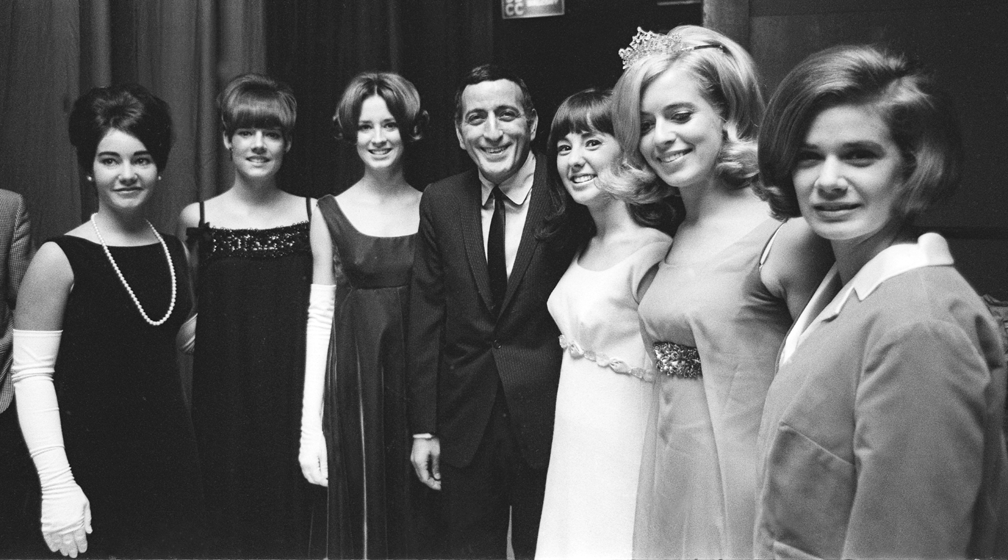 | |
Neal Ulevich - Tony Bennett...a long and extraordinary life. I saw him once when he provided the headline entertainment at the University of Wisconsin - Madison homecoming in 1966, no doubt a big moment for Homecoming Queen Betty Jo Bussman and her court. I probably snapped the picture for the student newspaper, The Daily Cardinal.
-0-
John Willis - I interviewed Tony Bennett in his dressing room at the Sahara Hotel in Las Vegas back in 1997. Took me two nights in between shows, and the second night he told me to bring my wife to the first show and we would have dinner together between shows. So I did. That feature also noted that he was a copy boy at The AP as a youngster - Anthony Benedetto. I also learned that he was a damned good painter, and I don't mean house painting. Sadly, he has ALZ now, they say, or some type of dementia. He could not have been a more cooperative subject for an interview 45 years ago, and I think he got more popular since than he was back in the 40s and 50s...
AP’s Josh Goodman among 2023 Maria Moors Cabot Prize Winners
Columbia Journalism School
Columbia Journalism School announced the 2023 winners of the Maria Moors Cabot Prizes for outstanding reporting on the Americas. The 2023 Cabot Prize Gold Medalists are June Carolyn Erlick, ReVista, The Harvard Review of Latin America, United States; Joshua Goodman, The Associated Press, United States; Carlos Eduardo Huertas, Connectas, Colombia; and Alejandra Xanic, Quinto Elemento Lab, Mexico.
In addition, the Cabot Jury selected two 2023 Special Citation recipients that honor journalists in Nicaragua and Mexico, countries where independent journalism is under threat. For their commitment to reporting the truth in the face of attacks, Miguel Mendoza, independent journalist, Nicaragua, and Nayeli Roldán, Animal Político, Mexico, will also be honored.
The Cabot Prizes honor journalists and news organizations for career excellence and coverage of the Western Hemisphere that furthers inter-American understanding. Godfrey Lowell Cabot of Boston founded the Maria Moors Cabot Prizes as a memorial to his wife in 1938. They are the oldest international journalism awards.
…about Josh Goodman:
Joshua Goodman, The Associated Press, United States
| |
For more than two decades, Joshua Goodman has reported from the Americas with groundbreaking, often unique investigations that combine deeply sourced knowledge with keen empathy. At The Associated Press, and previously at other news outlets, he has written trailblazing reports from some of South America’s most politically complex countries, including Brazil, Colombia and Venezuela.
It is in Venezuela where Josh made some of his most important contributions to the understanding of the region. When there was little reliable information emerging from a widely censored country, and when opinion and policy in Washington was completely distorted by partisan politics, Josh continued to dig. He was able to provide sometimes the only accurate accounts of what was happening amid the tragic collapse of one of the region’s wealthiest countries.
Finally, when the abuses of the Nicolás Maduro government made reporting from within Venezuela all but impossible, Goodman proceeded to produce scoops from Florida, Washington and elsewhere.
For his dogged determination, boundless attention to detail, nuanced storytelling and the wide scope of journalistic knowledge he has added to our comprehension of the region’s most important trends, the board is pleased to present Joshua Goodman with a Maria Moors Cabot Gold Medal.
Read more here. Shared by Kevin Noblet.
Thoughts on lengthy articles
Jim Bagby - Could not agree more with Malcolm Barr re: over-long articles. The KC Star decline has been caused in part by mid-day deadlines for a morning paper and being printed some three hours away, resulting in two-day-old news in the home editions. (Yes, I know they want us to read the e-editions; that’s another argument).
But the Star still has some fine writers. However, they apparently are encouraged to produce features and columns in lengths that frequently stretch to a half page or more. I’d add to Malcolm’s observation that time and inclination are necessary to dive into that much wordage. Often, so is familiarity with the wordsmith. I suggest most readers otherwise will not consider the reward of investing so much reading time when we encounter that yawning spread of white page and ink.
-0-
Harry Cabluck – Remembering an instructor from way back saying that it was handled in a single paragraph:
Is anybody else curious as to how AI would write the story of the creation?
Would it be possible for AI to produce that story in the style of one from the New York Poet’s Corner?
-0-
Jim Hood – There’s been some grousing in these pages lately from grizzled old AP veterans who take exception to what they regard as excessively lengthy stories, even going so far as saying that this condition is what ails newspapers today.
I’m not sure I agree with this. Newspapers are beset these days by short texts, pithy posts, streaming documentaries, e-books, dumb games and all manner of distractions that fill the idle time once set aside for perusing the local paper.
While we might long for a return to the good old days of what is sometimes called Police Said journalism, it’s probably not a recipe for success. News is all around us. Short and pithy doesn’t always cut it in the race for attention. Cynics may say that newspapers’ affection for section-filling stories has more to do with winning Pulitzers than winning readers, it’s really a rather short-sighted view, if you ask me.
There is a lot to be said for lengthy take-outs that goes beyond winning prizes and impressing other journalists. I’ll try to keep it short but in my experience, the narrative non-fiction form excels when done properly no matter the medium. It’s what attracted me to journalism in the first place, even though producing it is not often the path to a peaceful and prosperous existence.
When I was a callow student in the 1960s, most journalism instructors still favored the Police Said model. “A car went off route 23 Monday and hit a tree, killing the driver, police said” was seen as pretty much the highest and best form of reporting. Straight and to the point. No fluff. No hype. Not much else either.
This, along with most other hallowed notions, was beginning to be challenged as the rotten Baby Boomers picked the nation up and shook it.
“Did they have beards and sandals?” the local UPI correspondent asked when I phoned in a report about a civil rights demonstration that got a little out of hand one weekend. I suggested we might want to plug in some of the background but the harried scribe had to get the story on the wire and didn’t have time for idle gossip.
About this time, I ran across a course called Ecology 301. This was a trending topic at the time so I signed up to see what it was all about. It turned out to be all about water – ground water, to be precise. It had been called Hydrology 301 until the Big U decided to spiff up its catalog and get with the times.
The professor was – what else? -- a hydrologist and we learned all about water, which turns out to be the basis of just about everything. I must note that back in 1967 or so, this pocket-protector-wearing geek outlined in great detail what would happen if the current rate of global warming continued. (He in fact got it right on the nose, as the saying has it. Everything he warned of has happened and is continuing to do so).
Now, hydrology is admittedly a dry subject but I found it pretty fascinating in a dull sort of way and wrote a lengthy story about it for the weekly newspaper where I worked. It went over like a wet sponge. Readers complained the story was too long and so were a lot of the words in it. My editor, the publisher’s son, said he hadn’t read it but thought it took up a lot of space and, therefore, expensive paper and ink.
Thus inspired, I went into radio, which seemed to offer a lot of pay-the-rent jobs that would let me freelance lengthy pieces to magazines, something I successfully did for several years. While working in Arizona, I spent most of my days off writing about – what else? -- the state’s looming water crisis and the massive boondoggle known as the Central Arizona Project, a gully that would siphon water from the Colorado River to Scottsdale and other golf capitals. (It’s now run dry).
I also worked in many digs at Los Angeles while writing about the Hopi and Navajo tribes’ opposition to strip mining on their lands. The coal would be used to fire gigantic nearby power plants that supply power to Los Angeles so that Angelenos could feel good about using a burlap shopping bag when they drove over to Trader Joe’s.
These stories were whoppers. They were long as anything and had tons of information, local color and even a little humor here and there. I’m told many of them were referred to frequently for years after I had fled the scene.
Eventually, looking for a union-protected job, I went to work for the AP in Denver. I kept up my old habits, soon venturing down to Cortez, an isolated town in southwestern Colorado where children were dying of diphtheria because their parents didn’t believe in vaccine (sound familiar?)
I turned the story in to the night editor at AP. “We had this a few weeks ago,” he sniffed, producing a 350-word story condensed from the Denver Post. Since I had done it on my own time, I took it across the street to the Rocky Mountain News, which ran it in its Sunday supplement. A contingent of angry townsfolk soon appeared at the AP office, wanting to get their hands on me. Rob Dalton sent them over to the Rocky News and I made myself scarce for a few days.
Not to be too long-winded, the point I’m trying to make is that lengthy tell-all stories are what makes reading (and writing) fun to a lot of people, mostly people who like to read. These very people are, you might think, the ones who subscribe to newspapers so perhaps a lengthy, juicy, colorful story is just what they’re looking for.
Or maybe not. In which case, all you have to do is stop reading. It’s not like going to see Oppenheimer and finding yourself trapped in your seat for hours. It’s not even like being stuck listening to a podcast. I’ve never heard one of those but I’m told they’re quite dull.
The great thing about newspapers is that they just lie there fetchingly, daring you to pick them up and read them. But it only works if there’s enough eye candy and seat-gripping narrative to hang onto a reader once they’re (note careful use of neutral pronoun) snagged.
Anyway, that’s my story and I’m sticking to it.
-0-
Brent Kallestad - I operated under a maximum of 450 words and stuck mostly to the five W’s, if possible, in the lede. One of the joys of writing broadcast, brevity!
-0-
Carl P. Leubsdorf - Let me second my old colleague Malcolm Barr's excellent note about the unreadability of lengthy Washington Post stories. It must be that, when they have four bylines on a story, they are reluctant to cut the input of any of the contributors, lest they file a complaint of being disrespected by their editor. Of course, it is not the main reason for the problems of our business. The decision a quarter century ago to provide our content free on the internet, as well as the development of alternative advertising sites have both played a major role. But the length of too many daily news stories is certainly a disincentive toward reading any more than the top few grafs.
-0-
Harry Moskos - Malcolm Barr, as usual, was right on target in explaining a problem facing American newspapers: long news articles. (And I add early deadlines.)
In our local newspaper today (Friday, July 21) there were five half-page AP stories:
Heat wave update.
The Fargo, N.C. shooting incident and the story quotes what police said on Wednesday. (Yes, Wednesday.)
Update of the U.S. soldier who fled to North Korea. (There also was a half-page story on the same topic in Thursday’s edition.)
Trump legal woes. (Also a half-page story was in Thursday’s paper.)
U.S. Supreme Court ethics.
My opinion is local newspapers now have smaller staffs and thus less local news than when Malcolm and I were active in journalism. The result is to fill the paper with anything.
(Retired editor and a former AP staffer in Albuquerque and Honolulu. Malcom and I worked together in Hawaii.)
Second Chapters
Jeff Williams - Paul, seeing you and your wife in Elvis regalia opens all kinds of Connecting areas for you to fit in: Second Chapters, Selfies, A Silly Mistake That You Made, Most Unusual and of course Spousal Support....
As he leaves Phoenix’s blistering sun, AP’s climate news director reflects on desert life
| 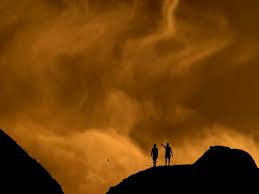 | |
People watch the sunset from a peak. (AP Photo/Charlie Riedel)
BY PETER PRENGAMAN
PHOENIX (AP) — I blink, and the edges of my eyelids feel like they are being singed. My cheeks burn as if they are being pressed with a hot iron ready to tackle a pile of wrinkled shirts. It is 4 p.m. I look at my 12-year-old son, whose face is flushed. He lets out a groan and puts his hand on his forehead to shield his eyes from the blistering sun.
It is 117 degrees Fahrenheit (47 degrees Celsius).
My family knows being in temperatures like this is dangerous. We’ve lived here for four years. This time, though, we are outside for only a few minutes to conduct an important experiment: How long will it take to cook a quesadilla on the sidewalk?
Such is life these days in Phoenix, one of the hottest cities in the world. But for us, this summer is our last here; this weekend, I’m moving with my family to New York for my job as — wait for it — The Associated Press’ global climate and environment news director.
I’M LEAVING TOWN DURING A UNIQUE SUMMER FOR PHOENIX
Working with AP journalists around the globe on climate change stories, as I have for the past year since taking on this role, I recognize the irony. I’m leaving a city that is having a major climate change moment during a summer we may remember as an inflection point both in the advancement of global warming and its devastating extreme weather impacts and the developed world’s consciousness of what is happening. Developing countries have long been hit particularly hard by climate change.
Read more here. Shared by Sibby Christensen.
Covering the heat wave in sizzling Phoenix, an AP photographer recounts a scare from heat exhaustion
| 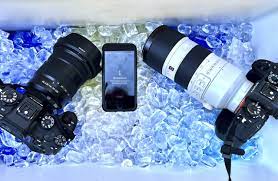 | |
The camera and cell phone of Associated Press photographer Ross Franklin sit on ice after the devices stopped working after overheating. Phoenix photographers keep coolers for cameras, and towels and water in their vehicles when covering extreme heat. AP Photo/Ross D. Franklin
BY MATT YORK
PHOENIX (AP) — Heat never scared me before.
I’ve spent 23 years covering Phoenix as a photographer for The Associated Press, shooting golf tournaments, baseball games and other outdoor sporting events, the city’s growing homeless population, immigration and crime.
And, of course, heat.
Like most people around here, I talk about temperatures being in the teens as if it’s a given that people know to always put a one in front of that number.
But this summer’s record-shattering heat wave has been like no other.
No amount of water or Gatorade can keep you going in these conditions without adequate cool-downs throughout the day.
My phone and cameras continually glitch out and stop working. Even my car’s air conditioning has struggled to keep up.
In my car, I keep a thermometer that I once used to check the temperature of chemicals in a darkroom. The heat inside when the air conditioner is off is way hotter than the air outside, and the thermometer often goes up to 125 degrees Fahrenheit (51.6 degrees Celsius).
In recent days it blew past that, with the needle registering well beyond where the numbers stop.
Read more here. Shared by Bill Sikes, Betty Pizac.
BEST OF THE WEEK — FIRST WINNER
AP reporters reveal how Supreme Court justices wield their influence and power
|  | |
National politics reporter Brian Slodysko and Washington reporter Eric Tucker spent months pouring through thousands of documents to capture how Supreme Court justices wield their influence and power in a series of powerful investigative stories that are loaded with new revelations.
Long before ethics abuses by justices became front-page news, the pair embarked on a project staggering in scope, ambition and workload. Over six months, Slodysko and Tucker obtained tens of thousands of pages of emails, invoices, contracts and other records from public records requests and requests to dozens of private institutions asking for everything from travel arrangements, dinner menus discussions about gifts and book purchases, and contracts or riders for the events, breaking down publishable details in categories including, “books,” “perks” and “meals.”
Broad storylines began to form that would become the basis for a series of powerful investigative stories, loaded with new revelations and key details. They found that: Justice Sonia Sotomayor’s staff was directly engaged in prodding colleges and universities to buy her books, even though ethics rules covering other branches of government don’t allow government resources to be used for outside activities; justices attended events with influential donors that schools hoped could generate future contributions for the institutions; justices commingled their college visits with politically tinged meetings and appearances; and justices participating in outside teaching gigs that were light in classroom instruction.
When contacted, the court, uncharacteristically, issued a detailed response that offered an explanation for some of the justices’ behavior, but did not directly dispute any of the facts in the stories. Importantly, the court also confirmed for the first time that Justice Sotomayor should have recused from several cases that came before the court involving her publisher and that screening procedures for conflicts have since been tightened.
Read more here.
BEST OF THE WEEK — SECOND WINNER
AP all-formats probe details harrowing abuse of Ukrainians in Russian prisons
| 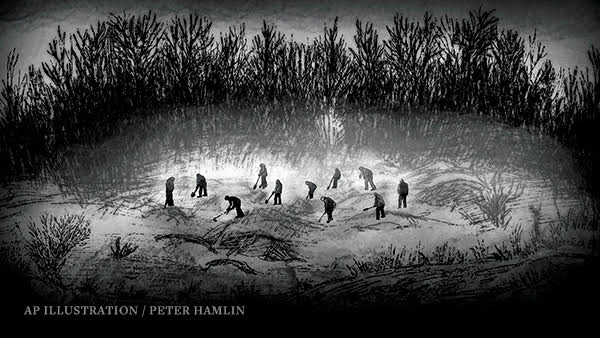 | |
The AP reported that thousands of Ukrainian civilians are held in Russian prisons and subjected to systematic torture and slave labor. Government documents reveal Russia’s plans to build many more despite refusing to acknowledge detainments.
An all-formats investigative and storytelling team of Lori Hinnant, Hanna Arhirova, Vasilisa Stepanenko, Peter Hamlin, Evgeniy Maloletka, Mark Vancleave, Marshall Ritzell and Michael Biesecker invested months of work into unmasking details of the abuse, which some have characterized as a new gulag in Russia.
Interviews with dozens of people, including 20 former detainees, along with ex-prisoners of war, the families of more than a dozen civilians in detention, two Ukrainian intelligence officials, and a government negotiator led AP journalists to first confirm what the world has long suspected: Ukrainian civilians, by the thousands, did not simply vanish last year; they were captured and subjected to abuses that may constitute “crimes against humanity” according to international law.
What’s more, Moscow has no apparent plans to stop. A Russian government document obtained by The Associated Press dating to January outlines plans to create 25 new prison colonies and six other detention centers in occupied Ukraine by 2026.
The reporters deftly handle the harrowing details of captivity, humanizing the story for a world audience two years into the wearying war. Vignettes include the note smuggled into a prison in a bag of crushed eclairs; the woman who trudges around building a Russian trench in boots five sizes too big; the loose-hanging coat that shows how much weight a prisoner has lost.
Read more here.
Stories of interest
Texas A&M University president resigns after Black journalist’s hiring at campus unravels (AP)
BY JIM VERTUNO
AUSTIN, Texas (AP) — Texas A&M University on Friday announced the resignation of its president in the fallout over a Black journalist who said her celebrated hiring at one of the nation’s largest campuses quickly unraveled due to pushback over her past work promoting diversity.
President Katherine Banks said in a resignation letter that she was retiring immediately because “negative press has become a distraction” at the nearly 70,000-student campus in College Station.
Her departure after two years as president followed weeks of turmoil at Texas A&M, which only last month had welcomed professor Kathleen McElroy with great fanfare to revive the school’s journalism department. McElroy is a former New York Times editor and had overseen the journalism school at the more liberal University of Texas at Austin campus.
But McElroy said soon after her hiring — which included a June ceremony with balloons — she learned of emerging pushback because of her past work to improve diversity and inclusion in newsrooms.
Her exit comes as Republican lawmakers across the U.S. are targeting diversity, equity and inclusion programs on college campuses. That includes Texas, where Republican Gov. Greg Abbott signed a bill in June that dismantles program offices at public colleges.
Read more here. Shared by Richard Chady, Doug Pizac, Paul Albright, Sibby Christensen.
-0-
A Decade Ago, Jeff Bezos Bought a Newspaper. Now He’s Paying Attention to It Again. (New York Times)
By Benjamin Mullin and Katie Robertson
During his tenure as executive editor at The Washington Post, Martin Baron ran into a persistent problem.
Jeff Bezos had purchased The Post for $250 million in 2013, less than a year after Mr. Baron had taken over. Mr. Bezos, who arrived at media ownership after founding Amazon and remaking online shopping, wanted his top editor to transform the newspaper from a regional news organization into a truly global one.
But Mr. Bezos, whose representatives kept an eye on the budget, didn’t believe The Post needed to add many new editors to accomplish that task. Reporters were classified as “direct” employees and editors as “indirect” — and his preference was to keep the “indirect” numbers down.
So, Mr. Baron came up with a workaround, according to his coming memoir.
“To avoid setting off alarms up the line, my deputies and I would strip the word ‘editor’ from proposed new positions whenever possible,” Mr. Baron writes. “‘Analyst’ or ‘strategist’ were among the limited set of workarounds.”
Read more here. Shared by Myron Belkind.
-0-
Google, Meta fight with Canada over law forcing them to pay for news (Washington Post)
By Amanda Coletta
TORONTO — When Google opened a new office in Kitchener, Ontario, in 2016, it welcomed a special guest.
Prime Minister Justin Trudeau, who months earlier swept to power in a campaign that leveraged digital tools, praised the tech giant for “always” working “very, very hard not just to be a good corporate citizen, but to be a strong and active player in Canada.”
But now, Trudeau appears to have a dimmer view of the company. His government is in a high-stakes showdown with Google and Meta, accusing them of unfairly profiting at the expense of Canadian news outlets and of using “bullying tactics” to intimidate officials.
Canada’s fight echoes frustrations in places around the world, from Indonesia to California, about power imbalances resulting from the tech giants’ dominance. And so how the dispute plays out here — who, if anyone, blinks first — is being closely watched.
Read more here. Shared by Doug Pizac.
The Final Word
Why Did 488 Golden Retrievers Gather in Scotland? (New York Times)
| 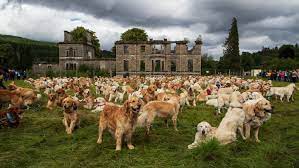 | |
The moment that everyone has been waiting for arrives at the Guisachan Gathering, a kind of convention for golden retrievers, when the group photo is taken. Credit...Roddy Mackay for The New York Times
By Judith Newman
What is the sound of 488 golden retrievers barking?
Imagine the sense of helplessness you might feel when someone’s baby is crying and you can’t solve the problem. Then multiply by, oh, 488. Then add in drenching rain and an onslaught of midges.
Why the cacophony? Around 4 p.m. on July 13, the dogs had been assembled on the broad lawn in front of the ruins of Guisachan House in the Scottish Highlands to take a group photo of the 2023 Guisachan Gathering, a kind of golden retriever convention, commemorating the anniversary of the founding of the breed.
For the photo, the owners were instructed to leash their dog to a stake in the ground and then scurry away for approximately 15 seconds so that the photographer, Lynn Kipps, could capture the wagging horde.
Read more here. Shared by Hank Ackerman.
| |
Today in History - July 24, 2023 | |
|
Today is Monday, July 24, the 205th day of 2023. There are 160 days left in the year.
ON THIS DATE IN HISTORY
On July 24, 1915, the SS Eastland, a passenger ship carrying more than 2,500 people, rolled onto its side while docked at the Clark Street Bridge on the Chicago River. An estimated 844 people died in the disaster.
On this date
1847 — Mormon leader Brigham Young and his followers arrived in the Salt Lake Valley in present-day Utah.
1866 — Tennessee became the first state to be readmitted to the Union after the Civil War.
1911 — Yale University history professor Hiram Bingham III found the “Lost City of the Incas,” Machu Picchu, in Peru.
1937 — The state of Alabama dropped charges against four of the nine young Black men accused of raping two white women in the “Scottsboro Case.”
1959 — During a visit to Moscow, Vice President Richard Nixon engaged in his famous “Kitchen Debate” with Soviet leader Nikita Khrushchev.
1969 — The Apollo 11 astronauts — two of whom had been the first men to set foot on the moon — splashed down safely in the Pacific.
1974 — The US Supreme Court unanimously ruled that President Richard Nixon had to turn over subpoenaed White House tape recordings to the Watergate special prosecutor.
2010 — A stampede inside a tunnel crowded with techno music fans left 21 people dead and more than 500 injured at the famed Love Parade festival in western Germany.
2016 — Ken Griffey Jr. and Mike Piazza were inducted into the Baseball Hall of Fame.
2019 — In a day of congressional testimony, Robert Mueller dismissed President Donald Trump’s claim of “total exoneration” in Mueller’s probe of Russia’s 2016 election interference.
Ten years ago — The House narrowly rejected a challenge to the National Security Agency’s secret collection of hundreds of millions of Americans’ phone records. A high-speed train crash outside Santiago de Compostela in northwest Spain killed 79 people. Pope Francis made an emotional plea in Aparecida, Brazil, for Roman Catholics to shun materialism in the first public Mass of his initial international trip as pontiff. It was announced that the newborn son of Prince William and Kate, the Duchess of Cambridge, would be named George Alexander Louis. Virginia Johnson, half of the renowned Masters and Johnson team of sex researchers, died in St. Louis at age 88.
Five years ago — The Trump administration said it would provide $12 billion in emergency relief to farmers hurt by trade disputes with China and other countries. Brian Kemp, a self-described “politically incorrect conservative” carrying the endorsement of President Donald Trump, won Georgia’s GOP gubernatorial runoff; he would go on to defeat Democrat Stacey Abrams in the general election. A federal judge in New York ordered the release of an Ecuadorean immigrant, Pablo Villavicencio, who had been held for deportation after delivering pizza to a US Army installation in Brooklyn; the immigrant had applied to stay in the country after marrying a US citizen with whom he had two young girls. Ivanka Trump announced the shutdown of her fashion line, which had been targeted by boycotts and prompted concerns about conflicts of interest.
One year ago — Pope Francis began a visit to Canada to apologize to Indigenous peoples for abuses by missionaries at residential schools, a key step in the Catholic Church’s efforts to reconcile with Native communities and help them heal from generations of trauma. Francis flew from Rome to Edmonton, Alberta, where his welcoming party included Canadian Prime Minister Justin Trudeau and Mary May Simon, an Inuk who was Canada’s first Indigenous governor general. The top American military officer said the Chinese military had become significantly more aggressive and dangerous over the previous five years as he began a trip to the Indo-Pacific, where the United States aimed to strengthen ties as a counterbalance to Beijing.
TODAY’S BIRTHDAYS - Political cartoonist Pat Oliphant is 88. Comedian Ruth Buzzi is 87. Actor Mark Goddard is 87. Actor Dan Hedaya is 83. Actor Chris Sarandon is 81. Comedian Gallagher is 77. Actor Robert Hays is 76. Former Republican national chairman Marc Racicot is 75. Actor Michael Richards is 74. Actor Lynda Carter is 72. Movie director Gus Van Sant is 71. Former Sen. Claire McCaskill, D-Mo., is 70. Country singer Pam Tillis is 66. Actor Paul Ben-Victor is 61. Basketball Hall of Famer Karl Malone is 60. Retired MLB All-Star Barry Bonds is 59. Actor Kadeem Hardison is 58. Actor-singer Kristin Chenoweth is 55. Actor Laura Leighton is 55. Actor John P. Navin Jr. is 55. Actor-singer Jennifer Lopez is 54. Basketball player-turned-actor Rick Fox is 54. Director Patty Jenkins (“Wonder Woman”) is 52. Actor Jamie Denbo (TV: “Orange is the New Black”) is 50. Actor Eric Szmanda is 48. Actor Rose Byrne is 44. Country singer Jerrod Niemann is 44. Actor Summer Glau is 42. Actor Sheaun McKinney is 42. Actor Elisabeth Moss is 41. Actor Anna Paquin is 41. Actor Sarah Greene is 39. NHL center Patrice Bergeron is 38. Actor Megan Park is 37. Actor Mara Wilson is 36. Actor Sarah Steele is 35. Rock singer Jay McGuiness (The Wanted) is 33. Actor Emily Bett Rickards is 32. Actor Lucas Adams is 30. TV personality Bindi Irwin is 25.
| |
Got a story or photos to share? | |
|
Connecting is a daily newsletter published Monday through Friday that reaches more than 1,800 retired and former Associated Press employees, present-day employees, and news industry and journalism school colleagues. It began in 2013. Past issues can be found by clicking Connecting Archive in the masthead. Its author, Paul Stevens, retired from the AP in 2009 after a 36-year career as a newsman in Albany and St. Louis, correspondent in Wichita, chief of bureau in Albuquerque, Indianapolis and Kansas City, and Midwest vice president based in Kansas City.
Got a story to share? A favorite memory of your AP days? Don't keep them to yourself. Share with your colleagues by sending to Ye Olde Connecting Editor. And don't forget to include photos!
Here are some suggestions:
- Connecting "selfies" - a word and photo self-profile of you and your career, and what you are doing today. Both for new members and those who have been with us a while.
- Second chapters - You finished a great career. Now tell us about your second (and third and fourth?) chapters of life.
- Spousal support - How your spouse helped in supporting your work during your AP career.
- My most unusual story - tell us about an unusual, off the wall story that you covered.
- "A silly mistake that you make"- a chance to 'fess up with a memorable mistake in your journalistic career.
- Multigenerational AP families - profiles of families whose service spanned two or more generations.
- Volunteering - benefit your colleagues by sharing volunteer stories - with ideas on such work they can do themselves.
- First job - How did you get your first job in journalism?
- Most unusual place a story assignment took you.
Paul Stevens
Editor, Connecting newsletter
paulstevens46@gmail.com
| | | | |