|
|
|
Connecting
June 13, 2023
Click here for sound of the Teletype
| |
|
Colleagues,
Good Tuesday morning on this June 13, 2023,
| |
|
Today’s Connecting brings news of the death of Moustafa Bassiouni, a longtime trusted driver and photo assistant for The Associated Press’ Cairo bureau, who died at age 64.
Family members had informed AP colleagues about this death in the past few days, sparking remembrances from the photo staff who long relied on Moustafa’s wiles on the street and quick reflexes behind the wheel to cover assignments across an ever-changing-yet-ancient Egypt.
He drove for generations of AP photographers, writers, bureau chiefs and regional managers through the rule of Hosni Mubarak, then the chaos that followed Egypt’s 2011 Arab Spring protests and the 2013 ouster of its first popularly elected president, Mohammed Morsi.
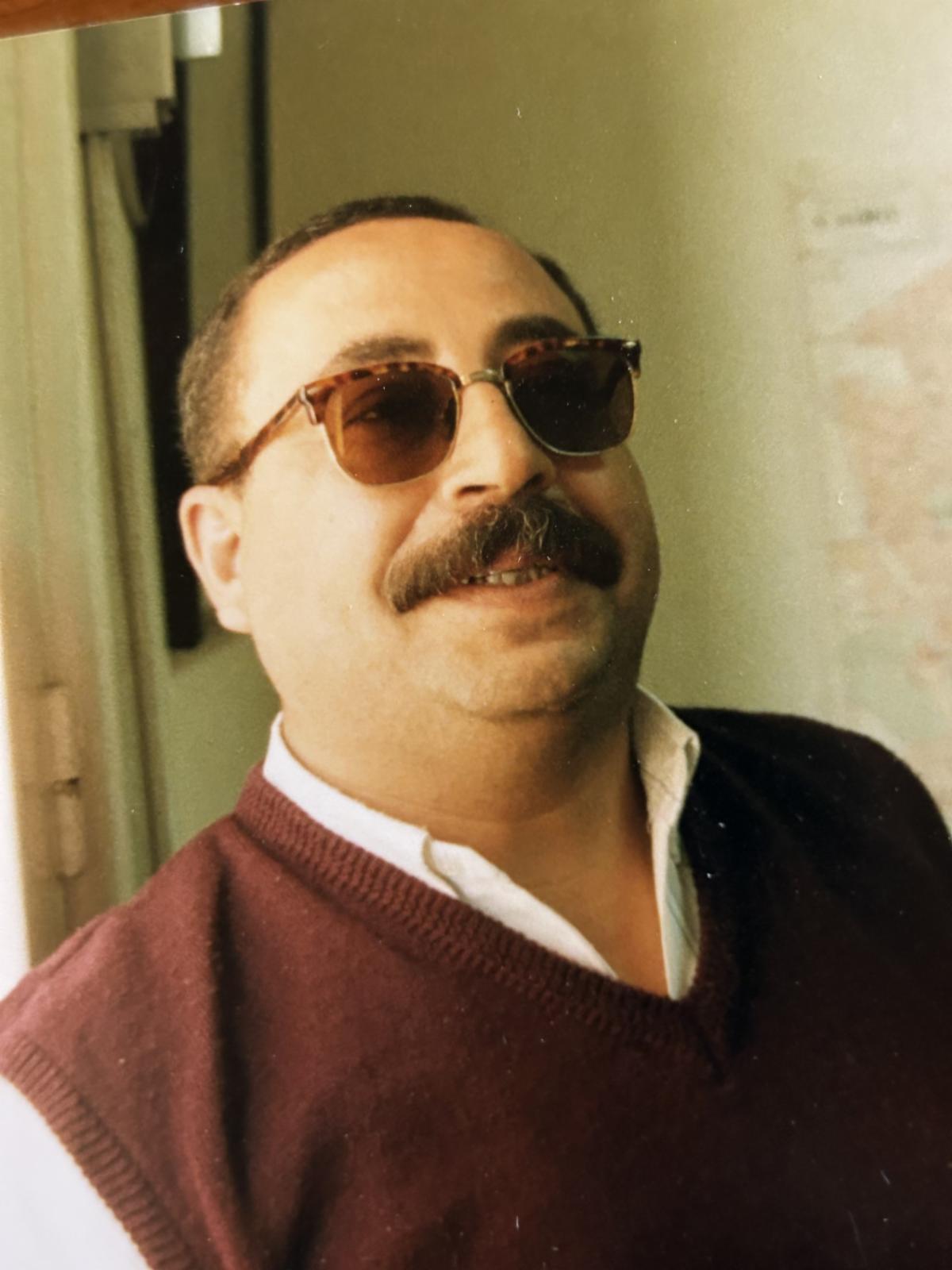
He is shown in this 1997 photo in the Cairo office by Enric Marti.
If you have a favorite memory of working with him, please share.
Have a great day – be safe, stay healthy, live it to the fullest.
Paul
Family members say beloved AP photo assistant, driver dies at 64
| 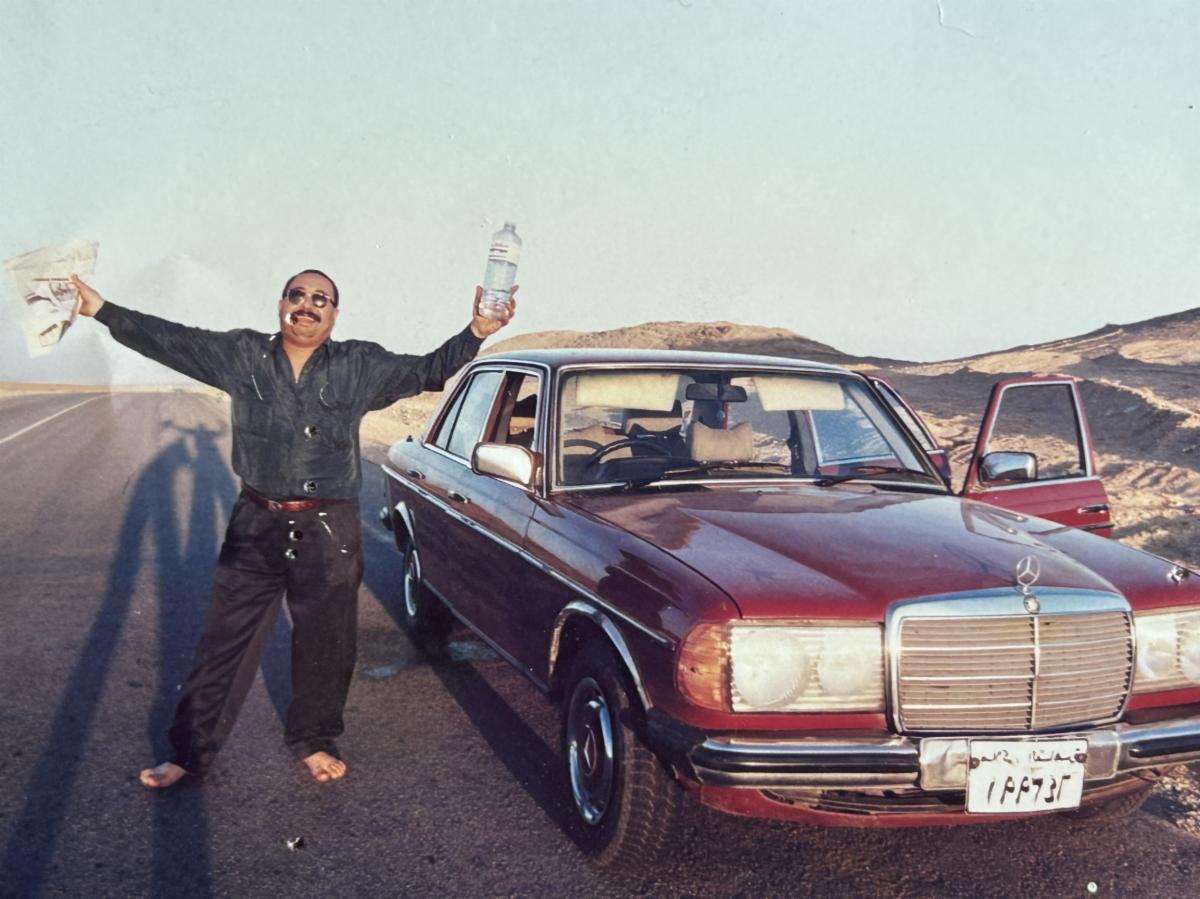 | Moustafa Bassiouni stands next to his Mercedes Benz sedan during a break in a long drive from Cairo to Sharm El Sheik in the Sinai Peninsula in 1997. Bassiouni, an intrepid photo assistant and driver for The Associated Press’ Cairo bureau, has died at age 64. His family said he died in a Cairo hospital on Saturday, June 10, 2023, after experiencing a heart attack. (AP Photo/Enric Marti) | |
|
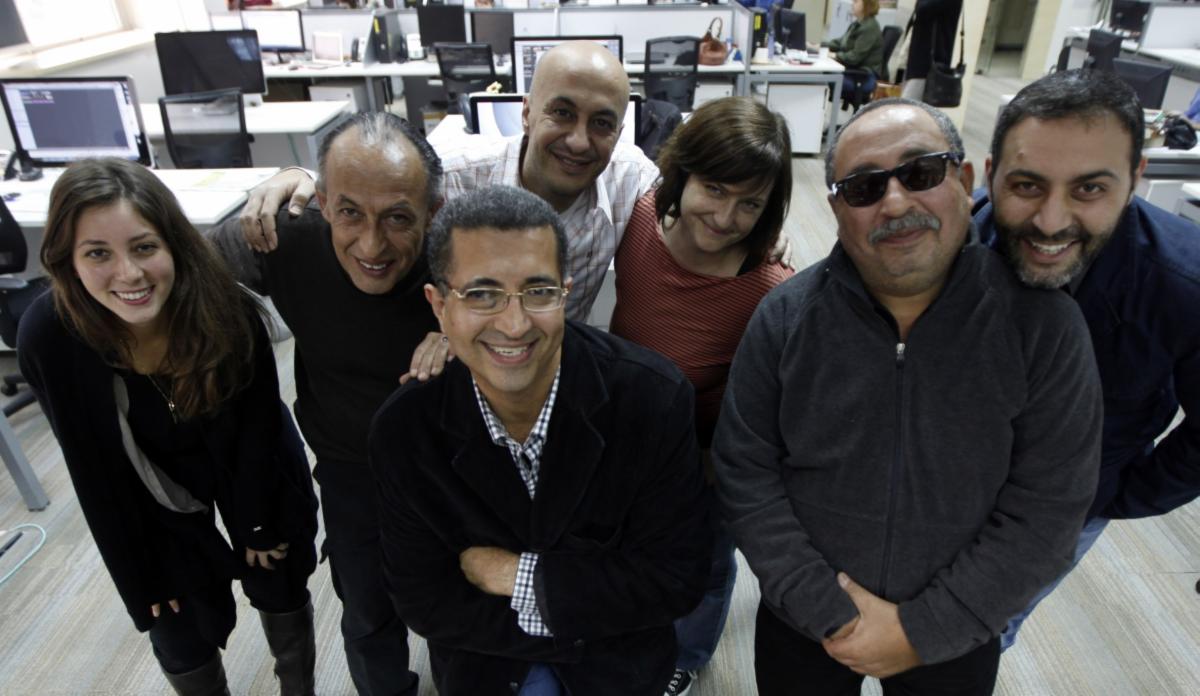
Moustafa Bassiouni, second from right, stands for a group photo with AP staff in Cairo on Nov. 30, 2011. From left are Nariman El-Mofty, Manoocher Deghati, Amr Nabil, Nasser Nasser, Maya Alleruzzo, Moustafa and Khalil Hamra. (AP Photo)
CAIRO (AP) — Moustafa Bassiouni, an intrepid photo assistant and driver for The Associated Press’ Cairo bureau, has died at age 64, family members said Monday.
The relatives said he died in a Cairo hospital on Saturday after experiencing a heart attack.
Bassiouni, who started as a driver for the bureau in 1991, became a pillar of the AP’s Cairo operation. Staffers relied on his street smarts and quick reflexes behind the wheel to cover assignments across the massive metropolis and wider Egypt.
He drove generations of AP photographers, writers, bureau chiefs and regional managers through the rule of former President Hosni Mubarak, the chaos that followed Egypt’s 2011 Arab Spring protests, and the 2013 ouster of the popularly elected but divisive President Mohammed Morsi. He was later promoted to photo assistant because of his inventiveness in getting access to difficult locations, including once by horseback. He retired in 2018.
“Moustafa was our driver, translator, fixer and most of all a good friend,” said AP’s Deputy Director of Photography for Global Enterprise, Enric Marti, who was based in Cairo from 1995 to 2001. “I personally wouldn’t have survived without him. And he also was one of the funniest people I’ve ever met.”
He was also a second set of eyes, vigilant and steadfast in precarious situations. AP photographer Amr Nabil recalled how Bassiouni spirited him back to Cairo after he sustained a grave eye injury while covering a 2005 anti-government protest in a Nile Delta town. Nabil said he would be completing this year’s hajj pilgrimage to Mecca in Saudi Arabia, a duty for all Muslims, in his former colleague’s honor.
Bassiouni was remembered by colleagues for his warm smile and an infectious laugh that echoed across the newsroom, but also his blunt expressions of frustration with Cairo’s snarling traffic.
“He was a wonderful person; generous, funny, smart and committed,” said Santiago Lyon, former director of photography for the AP who was based in Cairo between 1991-1995. “He truly understood the value of the work.”
Bassiouni is survived by his son Ahmed, daughters Reham and Sarah, and his wife, Manal.
Click here for link to this story.
Remembering Moustafa
Santiago Lyon - RIP dear Moustafa.
When I arrived in Cairo in 1991 for my first AP staff job, the great Cairo-based photographer Norbert Schiller introduced us with heartfelt recommendations as to his skills navigating the dusty chaos of Cairo. We clicked immediately and thus began a 32-year friendship.
| |
|
Once, after a rather uncomfortable 10-hour drive from Cairo to the remote Siwa oasis in his Peugeot car to investigate (false) claims about the alleged discovery of Alexander the Great’s tomb, I emerged with a very sore back - the French car’s suspension wasn’t great - and began figuring out how to get him a Mercedes, an idea that thrilled him no end. I also relished the notion of more comfortable transportation!
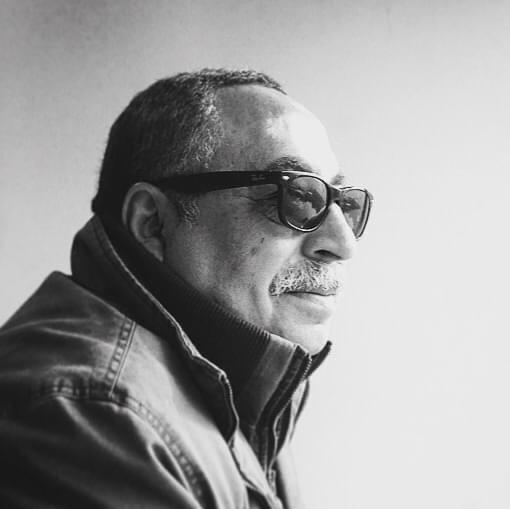
(Photo at left by Nasser Nasser)
After many months of searching, a modest financial investment on my part and the guarantee of regular work with the AP, we finally landed the beautiful red car that so many remember and which was his pride and joy for many years.
But beyond the car, Moustafa became my friend, confidant and so much more. He was warm, generous and ever so funny. He raised my spirits when I was down, kept them up when things were good and explained a great deal to me about Egypt and the way things work there.
He was also very committed to the work of the myriad journalists he guided around his country, much of which wouldn’t have been possible without him.
The four years I lived in Cairo were amazing, in no small part because of Moustafa and I am deeply saddened by his departure. That the AP chose to honor his memory with an obituary is a fitting testament to his legacy. Adiós amigo.
-0-
David Guttenfelder, former AP photographer now at National Geographic - He drove me in that burgundy car to Sharm, honking the horn in the empty desert every few seconds. When we arrived, he pulled it on to the tarmac and parked under the shadow of the wing of George Bush’s Air Force One. Classic.
-0-
Sally Buzbee, former AP Cairo bureau chief now executive editor of The Washington Post - Moustafa played an incredibly important part in all the journalism that AP did in Egypt over a very long time. He was a friend to me and a person who understood everything and made everything better - and certainly funnier.
-0-
| |
|
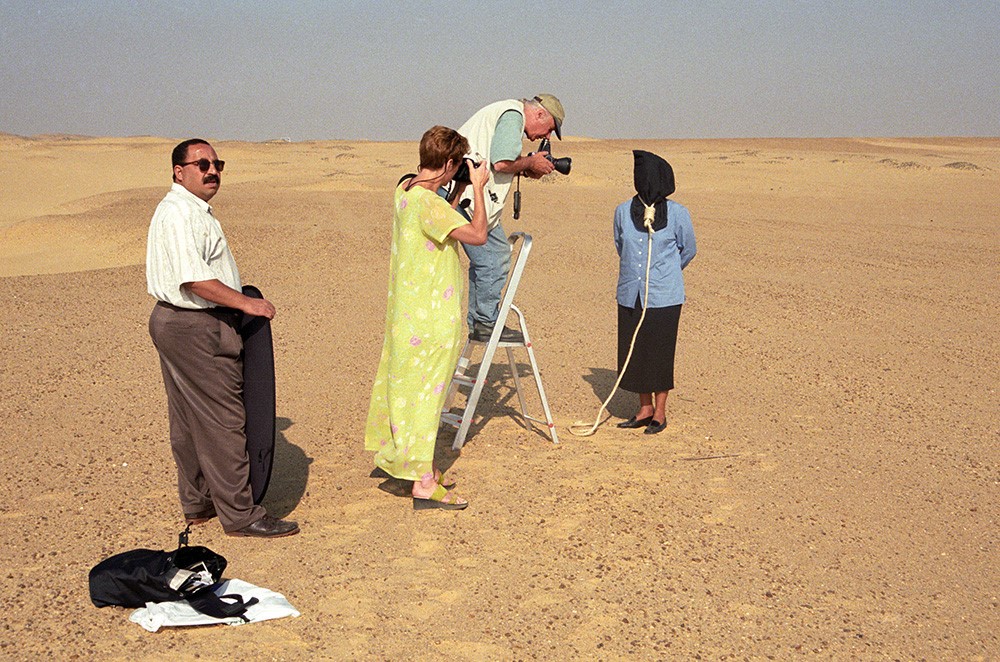
Moustafa Bassiouni, left, assists Pulitzer-prize winning photographer Eddie Adams and writer Kerri Kennedy Cuomo, working on a book about human rights heroes around the world, in Egypt circa 1999. (AP Photo/Norbert Schiller)
Norbert Schiller, former AP photographer - It is with great sadness that I learned of the passing of my dear friend, assistant, and fellow news warrior Moustafa el Bassiuni. Officially, Moustafa was a driver for the Associated Press photo desk in Cairo, where I also worked as a photojournalist for a decade during the 1990s. In reality, Moustafa was far more than that; he was a loyal friend and colleague who loved his work and never complained when the going got tough.
Moustafa and I were arrested numerous times, beat up by police and baltagiya (political party thugs), and caught in the crossfire between demonstrators and police. I can’t count the times we lay gagging together by the side of the road after being barraged with teargas. When I worked in the streets, he always had my back and was ready to pull me out of a thorny situation or to ferry my films (yes back in those days we used film) to the office to be developed. And it wasn’t just me, he was there for every photographer during that time who worked at the AP photo desk in Cairo. Moustafa was my go-to person when I had an urgent news assignment. When the AP news desk rang me in the middle of the night about a terrorist attack on a tourist bus or boat in Upper Egypt, I immediately called Moustafa who would turn up at my door in less than half an hour, sometimes still wearing his galabiya or night shirt.
We would race down the agricultural road to Upper Egypt, a journey which could take anywhere from 8 to 16 hours. On those long drives Moustafa never asked to stop for food, water, or rest. Besides gas, he only needed cigarettes as fuel for the trip. In the end we always came back with pictures to illustrate the story even at the expense of being detained. On the few occasions we were arrested, I would always count on Moustafa to sweet talk us out of trouble. He had an incredible sense of humor which he fell back on to entertain our captors. Often, he was interrogated alone, but when I heard laughter coming from the other room, I knew we were home free. When we stepped out of the police precinct Moustafa always had this look of relief on his face. But that ended the minute I said, “Hey Moustafa, we have to go back because we didn’t get any pictures! This time though we need to be more careful and not get caught.” Fortunately, we never got arrested twice on the same story.
When we drove for long stretches through the open desert Moustafa would play songs of the Iraqi singer Kadim el Saher known for his romantic and political songs. Moustafa knew the words to all the songs and would sing along choking with emotions.
Besides being a work colleague, Moustafa was a family friend. Zina, who also worked with him when she was an AP correspondent, became fond of Moustafa for his good nature and generous friendship. He knew both my children since birth and drove them to numerous birthday parties and other special occasions. They loved Moustafa and felt special riding with him in his neat red Mercedes car.
In fact, Moustafa, with his jovial and generous nature, touched all those who knew him at AP, especially the photo staff. Besides his professional services, he was always there to receive family and friends, drive them around when he wasn’t working, and be helpful in any way needed.
Farewell my dear companion. Whenever I reflect on those precious years in Egypt you are central to the memories that will forever remain dear to me. My condolences to your two lovely daughters Reham and Sarah, your son Ahmed, and your wife Manal. May you Rest in Peace.
Connecting series:
Your first published story or photo
Campbell Gardett - I was given a toy printing press when I was eight or nine. The type was made of eraser-colored rubber. Each letter was to be squeezed into a short metal track, which then fitted under rubber bands on the two ends of a drum. The drum was mounted on a shoe box-sized stand and had a handle to turn it. So Guttenberg would have recognized it, if he’d thought of the rotary press.
We lived on a short U-shaped street in Southern California. Across the street lived my friend Hugh Lewis. Hugh came over with his brother Glenn to experiment with the new printing press. They happened to mention that their mom was going to have another baby. My journalism gene lit up.
We composed the story, ground out 20 copies, and distributed them door-to-door around the “U.” It was wire-service short. It said:
MRS LEWIS IS PREGNANT – AGAIN!
I was surprised at the reaction of some neighbors when they met us at the door. To me it had seemed like a straight-forward piece of information of local interest. Later I learned we had caused quite a stir. And I experienced a secret delight. I had tasted power. I was hooked.
(**PS: Years later, I took an evening course on investigative reporting. This was at GW University in Washington, and the course was taught by Seymour Hersh of My Lai fame. On the last evening, Hersh said he was often asked why he became a journalist and what made a good investigative reporter. He said he had thought a lot about it. Then he said: “I think I enjoy making people uncomfortable.” No shit, Sherlock.)
Better late than…
| |
|
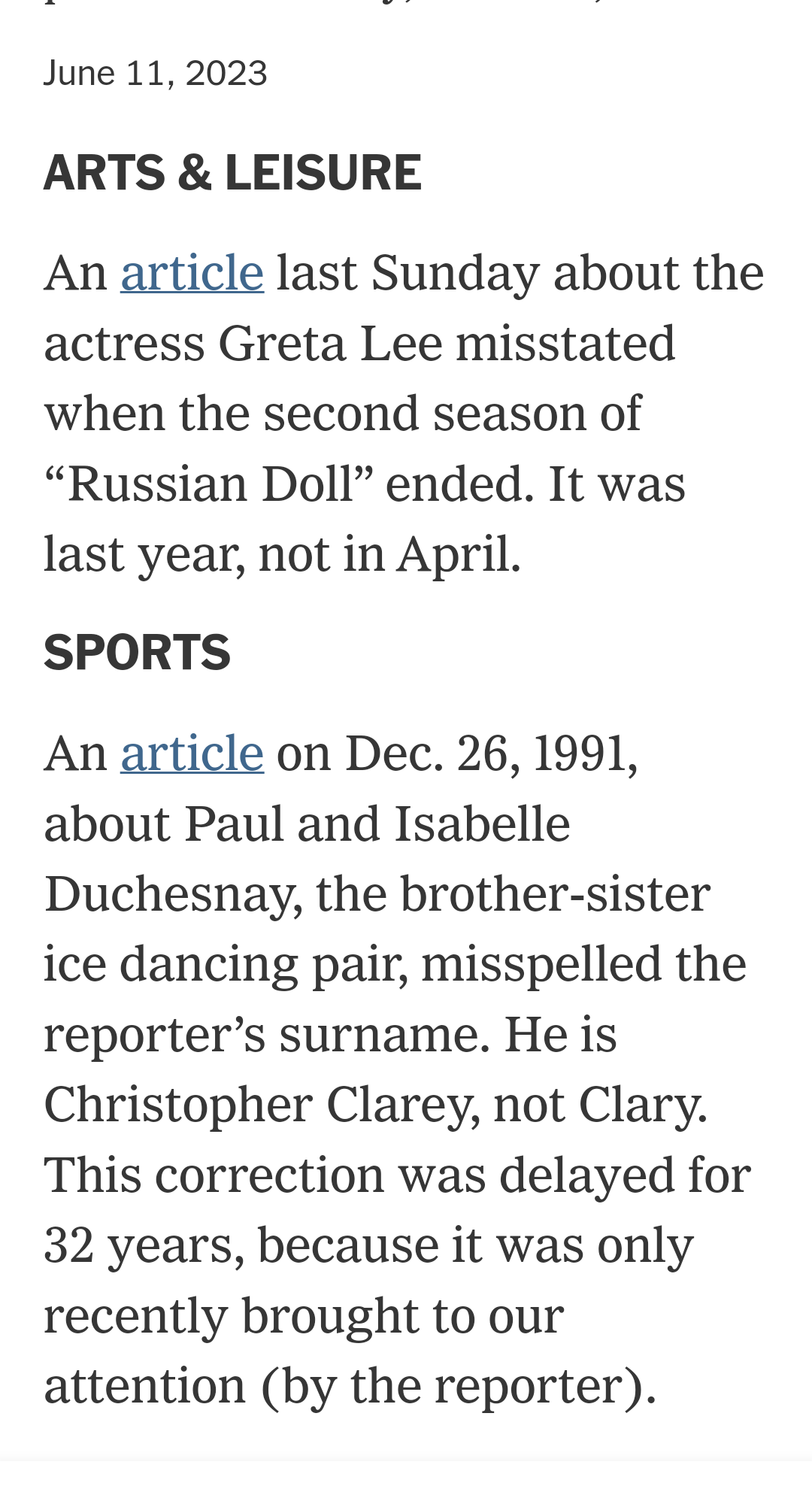
Peggy Walsh - The New York Times is famous for its corrections. This sports correction, printed Sunday, is one for the ages.
It makes you wonder if the reporter went through old clips or Googled himself and found it.
Color of nature
| |
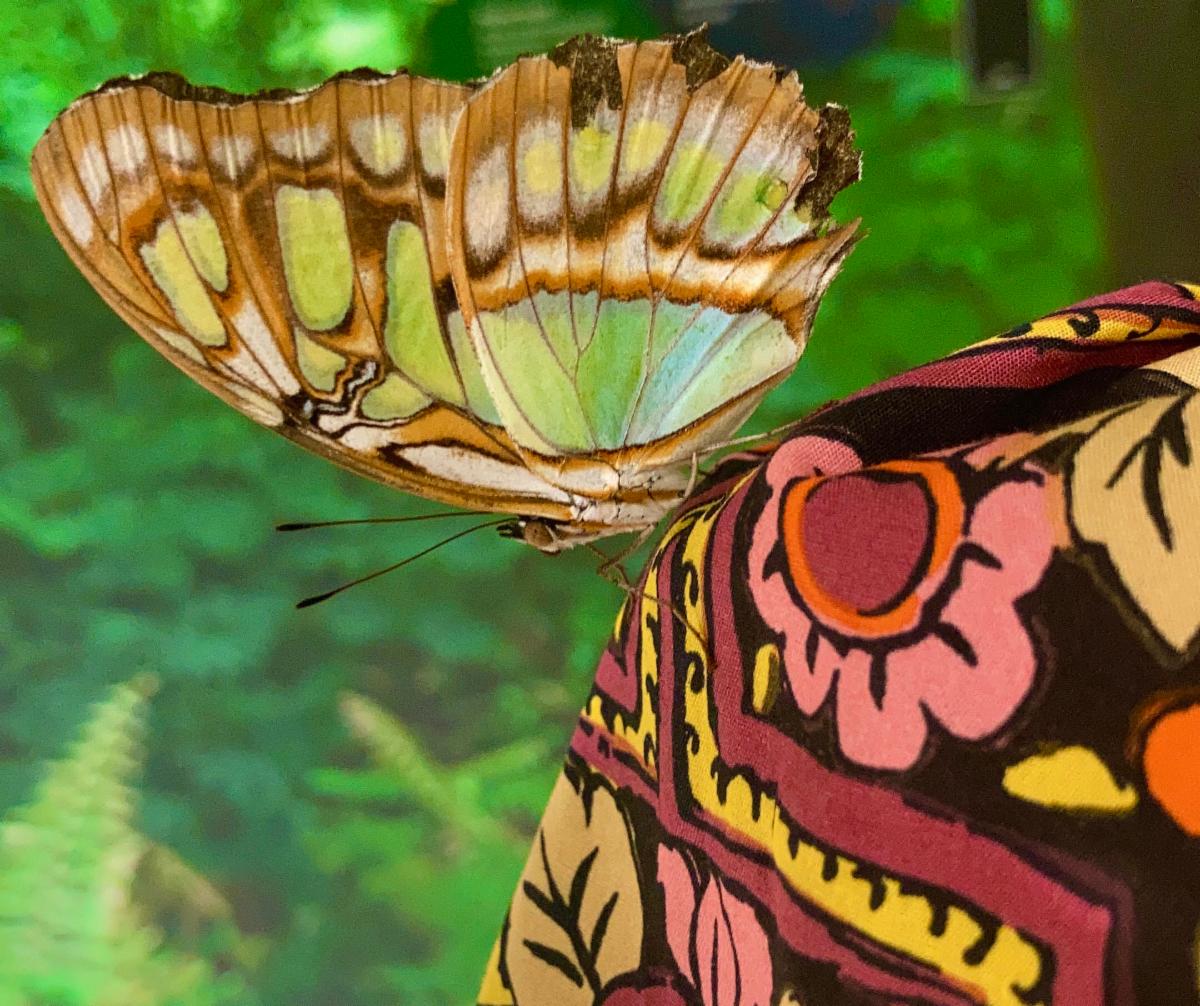
Malcolm Ritter - I volunteer in the live-butterfly exhibit at the American Museum of Natural History in New York. Hundreds of butterflies flit among the visitors and occasionally perch on them. Here a malachite butterfly chose a woman’s colorful dress. | |
Connecting wishes Happy Birthday |  | |
Stories of interest
Washington Post publisher Fred Ryan leaves paper after 9 years at helm (AP)
By DAVID BAUDER
Washington Post publisher and chief executive Fred Ryan, who presided over explosive growth during the Trump years but couldn’t avert the effects of the industry’s downturn over the past two years, said Monday he’s leaving the publication after nearly a decade.
Ryan, 68, will lead the newly formed Center on Public Civility at the Ronald Reagan Presidential Foundation, the newspaper said. He’ll be replaced at the Post on an interim basis by Patty Stonesifer, formerly chief executive of the Gates Foundation and a member of the Amazon board, newspaper owner and Amazon founder Jeff Bezos said.
Ryan, the former CEO and a founder of Politico, oversaw the appointment of Sally Buzbee — the former Associated Press executive editor — as the Post’s top editor, replacing Marty Baron, in 2021.
A year after Bezos bought the newspaper in 2013, Ryan was appointed to lead The Washington Post, taking over from Katharine Weymouth — granddaughter of legendary longtime CEO Katharine Graham — and ending the Graham family’s eight-decade tenure as leaders of the largest newspaper in the nation’s capital.
Read more here.
-0-
Furor Over L.A. Times Newsroom Cuts (Journal-isms)
By RICHARD PRINCE
The decision by the Los Angeles Times to eliminate more than 70 newsroom positions is meeting strong pushback from the newsroom, from the National Association of Hispanic Journalists and from the Times’ News Guild, with NAHJ noting that the decision will disproportionately affect Latino journalists.
“The departures include 34 white people and 39 people of color: 19 Latino people, 11 Asian American people, four Black people and five employees who identify as two or more races,” Meg James wrote for the Times Thursday, reporting on a Zoom meeting between “a raw and angry staff” and Executive Editor Kevin Merida.
“ ‘This is a setback for us,’ Merida acknowledged, noting that management was forced to follow the rules of the labor contract, which requires that layoffs be based on seniority.
“ ‘Diversity is always important. We need to look at it in every context of our work… That’s been a lifelong commitment for me, throughout my entire journalism career,’ he said.”
But Merida said the Times was facing a budget gap of “tens of millions of dollars,” which prompted the decision to cut dozens of staff members. Executives initially announced 74 layoffs, but the number was reduced by one on Thursday after a team leader volunteered to go.
Read more here. Shared by Linda Deutsch.
-0-
New Zealand public radio apologizes for publishing ‘pro-Kremlin garbage’ after wire stories altered (AP)
By NICK PERRY
WELLINGTON, New Zealand (AP) — The head of New Zealand’s public radio station apologized Monday for publishing “pro-Kremlin garbage” on its website after more than a dozen wire stories on the Ukraine war were found to have been altered.
Most of the stories, which date back more than a year, were written by the Reuters news agency and were changed at Radio New Zealand to include Russian propaganda. A digital journalist from RNZ has been placed on leave pending the result of an employment investigation.
Paul Thompson, the chief executive of taxpayer-funded RNZ, said it had found issues in 16 stories and was republishing them on its website with corrections and editor’s notes. He said he was commissioning an external review of the organization’s editing processes.
“It is so disappointing. I’m gutted. It’s painful. It’s shocking,” Thompson said on RNZ’s Nine to Noon show. “We have to get to the bottom of how it happened.”
Read more here. Shared by Paul Albright.
-0-
Scoop: Fox sends Tucker Carlson cease-and-desist letter (Axios)
By MIKE ALLEN
Fox News has sent a cease-and-desist letter to Tucker Carlson as he ramps up a competing series on Twitter that drew a combined 169 million views for its first two episodes, Axios has learned.
Why it matters: The contract battle between Fox and its former top host — who was taken off the air in April, after the network's historic Dominion settlement — has mighty repercussions for the conservative media ecosystem.
With "Tucker on Twitter," Carlson and his growing production team are working to elevate Elon Musk's social media site as a news platform.
Details: The cease-and-desist letter has "NOT FOR PUBLICATION" in bold at the top.
Read more here. Shared by Len Iwanski.
-0-
LEGO Ideas ‘Landscape Photographer’ Kit Pays Tribute to Ansel Adams (PetaPixel)
By JEREMY GRAY
A photography-themed LEGO set has garnered significant support on LEGO Ideas, LEGO’s community-centered portal for creative builders to share their creations and even make proposals for future official LEGO sets.
LEGO Ideas member LobsterThermidor has proposed a LEGO set called “The Landscape Photographer.” With nearly 6,700 votes of support, the project features a photographer set up on top of an old wood-panel station wagon, capturing a photo using a large-format analog camera. Photography enthusiasts may instantly recognize the scene in the LEGO Ideas set.
The Inspiration Behind the LEGO Ideas Design
LobsterThermidor, who is photographer and LEGO builder Nick Micheels, began designing his landscape photographer LEGO set as part of an official LEGO Ideas contest centered around nature activities.
LEGO Ideas 'The Landscape Photographer'
“The inspiration for this set came as a response to the LEGO Ideas platform hosting a challenge for fans to submit ideas based on the theme of nature activities. As a fan of photography and an amateur photographer myself, I knew I wanted to make a build focused on landscape photography, and I wanted to build a large format camera at minifigure scale,” Micheels tells DIY Photography.
Read more here. Shared by Doug Pizac.
| Shared by Len Iwanski, Adolphe Bernotas | Today in History - June 13, 2023 | |
|
Today is Tuesday, June 13, the 164th day of 2023. There are 201 days left in the year.
Today’s Highlight in History:
On June 13, 1967, President Lyndon B. Johnson nominated Solicitor-General Thurgood Marshall to become the first Black justice on the U.S. Supreme Court.
On this date:
In 1865, Nobel Prize-winning poet-playwright William Butler Yeats was born in Dublin, Ireland.
In 1942, a four-man Nazi sabotage team arrived on Long Island, New York, three days before a second four-man team landed in Florida. (All eight men were arrested after two members of the first group defected.) President Franklin D. Roosevelt created the Office of Strategic Services and the Office of War Information.
In 1966, the Supreme Court ruled in Miranda v. Arizona that criminal suspects had to be informed of their constitutional right to consult with an attorney and to remain silent.
In 1971, The New York Times began publishing excerpts of the Pentagon Papers, a secret study of America’s involvement in Vietnam from 1945 to 1967 that had been leaked to the paper by military analyst Daniel Ellsberg.
In 1977, James Earl Ray, the convicted assassin of civil rights leader Martin Luther King Jr., was recaptured following his escape three days earlier from a Tennessee prison.
In 1981, a scare occurred during a parade in London when a teenager fired six blank shots at Queen Elizabeth II.
In 1983, the U.S. space probe Pioneer 10, launched in 1972, became the first spacecraft to leave the solar system as it crossed the orbit of Neptune.
In 1996, the 81-day-old Freemen standoff ended as 16 remaining members of the anti-government group surrendered to the FBI and left their Montana ranch.
In 1997, a jury voted unanimously to give Timothy McVeigh the death penalty for his role in the Oklahoma City bombing. The Chicago Bulls captured their fifth NBA championship in seven years with a 90-86 victory over the Utah Jazz in game six.
In 2005, a jury in Santa Maria, California, acquitted Michael Jackson of molesting a 13-year-old cancer survivor at his Neverland ranch.
In 2016, a day after the Orlando, Florida, nightclub shooting rampage that claimed 49 victims, Donald Trump and Hillary Clinton offered drastically different proposals for stemming the threat of terrorism and gun violence; Trump focused heavily on the nation’s immigration system (even though the shooter was U.S. born) and redoubled his call for temporarily banning Muslims from the United States, while Clinton said that as president she would prioritize stopping “lone wolf” attackers and reiterated her call for banning assault weapons.
In 2020, Atlanta’s police chief resigned, hours after the fatal police shooting of Rayshard Brooks; protests over the shooting grew turbulent, and the Wendy’s restaurant at the scene of the shooting was gutted by flames.
Ten years ago: The White House said it had conclusive evidence that Syrian President Bashar Assad’s regime had used chemical weapons against opposition forces seeking to overthrow the government. The U.S. Supreme Court unanimously threw out attempts to patent human genes, siding with advocates who said the multibillion-dollar biotechnology industry should not have exclusive control over genetic information found in the human body.
Five years ago: President Donald Trump declared that his summit with Kim Jong Un had ended any nuclear threat from North Korea, though the meeting had produced no details on how or when weapons might be eliminated or reduced. On the eve of the start of the World Cup in Russia, FIFA voters chose to award the 2026 World Cup to North America.
One year ago: The committee investigating the Capitol attack was told that Donald Trump’s closest campaign advisers, top government officials and even his family were dismantling his false claims of 2020 election fraud ahead of Jan. 6, but the defeated president was becoming “detached from reality” and clinging to outlandish theories to stay in power. Nancy Brophy, a self-published romance novelist who once wrote an online essay called “How to Murder Your Husband,” was sentenced to life in prison with the possibility of parole in Portland, Oregon for murdering her husband in 2018. Philip Baker Hall, a character actor of film and theater who memorably hunted down a long-overdue library book in “Seinfeld,” died at age 90.
Today’s Birthdays: Actor Malcolm McDowell is 80. Former U.N. Secretary-General Ban Ki-moon is 79. Singer Dennis Locorriere is 74. Actor Richard Thomas is 72. Actor Jonathan Hogan is 72. Actor Stellan Skarsgard is 72. Comedian Tim Allen is 70. North Carolina Gov. Roy Cooper is 66. Actor Ally Sheedy is 61. TV anchor Hannah Storm is 61. Rock musician Paul De Lisle (Smash Mouth) is 60. Actor Lisa Vidal is 58. Singer David Gray is 55. R&B singer Deniece Pearson (Five Star) is 55. Rock musician Soren Rasted (Aqua) is 54. Actor Jamie Walters is 54. Singer-musician Rivers Cuomo (Weezer) is 53. Country singer Susan Haynes is 51. Actor Steve-O is 49. Country singer Jason Michael Carroll is 45. Actor Ethan Embry is 45. Actor Chris Evans is 42. Actor Sarah Schaub is 40. Singer Raz B is 38. Actor Kat Dennings is 37. Actor Ashley Olsen is 37. Actor Mary-Kate Olsen is 37. DJ/producer Gesaffelstein is 36. Actor Aaron Johnson is 33.
| |
Got a story or photos to share? | |
|
Connecting is a daily newsletter published Monday through Friday that reaches more than 1,800 retired and former Associated Press employees, present-day employees, and news industry and journalism school colleagues. It began in 2013. Past issues can be found by clicking Connecting Archive in the masthead. Its author, Paul Stevens, retired from the AP in 2009 after a 36-year career as a newsman in Albany and St. Louis, correspondent in Wichita, chief of bureau in Albuquerque, Indianapolis and Kansas City, and Midwest vice president based in Kansas City.
Got a story to share? A favorite memory of your AP days? Don't keep them to yourself. Share with your colleagues by sending to Ye Olde Connecting Editor. And don't forget to include photos!
Here are some suggestions:
- Connecting "selfies" - a word and photo self-profile of you and your career, and what you are doing today. Both for new members and those who have been with us a while.
- Second chapters - You finished a great career. Now tell us about your second (and third and fourth?) chapters of life.
- Spousal support - How your spouse helped in supporting your work during your AP career.
- My most unusual story - tell us about an unusual, off the wall story that you covered.
- "A silly mistake that you make"- a chance to 'fess up with a memorable mistake in your journalistic career.
- Multigenerational AP families - profiles of families whose service spanned two or more generations.
- Volunteering - benefit your colleagues by sharing volunteer stories - with ideas on such work they can do themselves.
- First job - How did you get your first job in journalism?
- Most unusual place a story assignment took you.
Paul Stevens
Editor, Connecting newsletter
paulstevens46@gmail.com
| | | | |