Connecting

Oct. 30, 2026


Click here for the sound of the Teletype

Top AP News

Top AP Photos

AP Merchandise

AP Emergency Relief Fund

AP Newsletters

AP Donations

AP News Tips

Colleagues,


Good Friday morning on this Oct. 30, 2026,


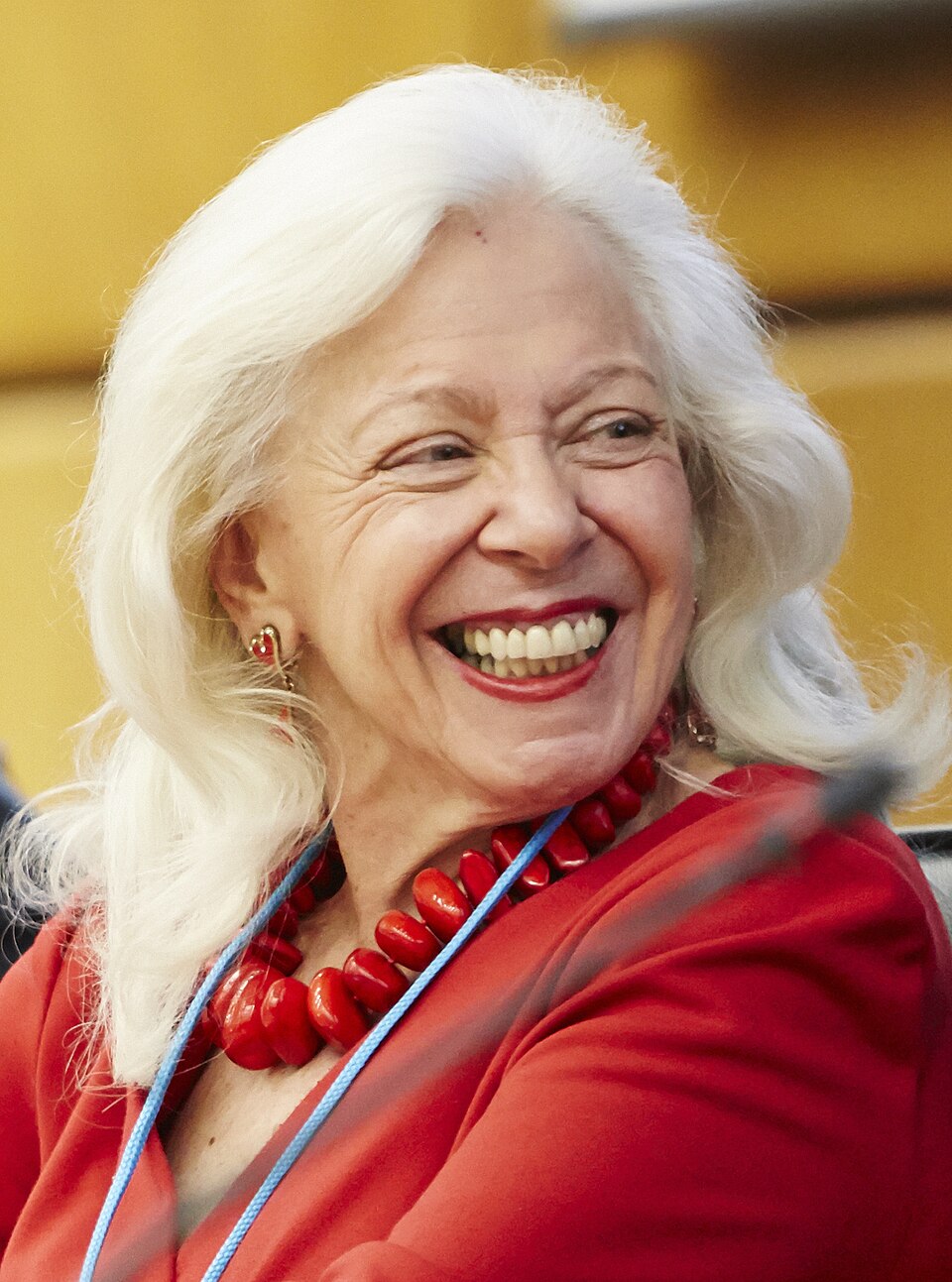
Edie Lederer – one of the finest and accomplished journalists ever to work for The Associated Press – is retiring at the end of the year.


That announcement was made to AP staff this morning by Julie Pace, AP executive editor and senior vice president.


During her 60-year AP career, Edith “Edie” Lederer has worked on every continent except Antarctica covering wars, famines, nuclear issues and political upheavals. She was the AP's first woman to lead a foreign bureau, overseeing coverage of Peru, Ecuador and Bolivia.

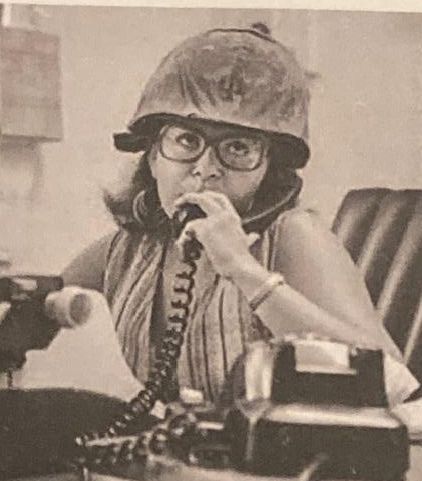
She was the first woman assigned full-time to the AP staff reporting the Vietnam War (photo at right). She also covered the 1973 Middle East war, the war in Afghanistan, the first Gulf War in 1990-91, the conflict in Northern Ireland, the end of the war in Bosnia, the civil war in Somalia and the aftermath of the 1994 genocide in Rwanda.


“What’s remarkable about Edie,” Pace said in her announcement, “is that she has never lost the drive to be where the news is happening or the curiosity to understand the world. That spirit is at the heart of the AP, and Edie has embodied it for more than six decades.”


For the past 28 years, Lederer has covered the United Nations, Pace said, “bringing her unparalleled understanding of the world to coverage of diplomacy, conflict, nuclear proliferation, climate change and human rights. Generations of diplomats, world leaders and fellow journalists know her as a formidable, deeply knowledgeable and relentless reporter.”


Lederer has received six lifetime achievement awards starting with the University of Missouri Honor Medal for Distinguished Service to Journalism. Others were from the Overseas Press Club, the International Women's Media Foundation, the Washington Press Club Foundation and the Newswomen's Club of New York. In 2023, she became the first AP journalist inducted into the Deadline Club’s New York Journalism Hall of Fame since it was established in 1975. The club is the New York chapter of the Society for Professional Journalists.


Lederer is the senior AP employee in terms of years of service, according to Connecting records earlier obtained from AP HR.


When asked by Connecting for comment, Lederer said: “I may be retiring from AP but I am not leaving journalism.”


If you have a favorite memory of working with Edie, please share with Connecting. And if you'd like to drop her a note - elederer@ap.org


Here’s to Edie, here's to a great weekend – be safe, stay healthy, live each day to your fullest.


Paul


Celebrating Edie Lederer's extraordinary AP career


Edie Lederer


This from Julie Pace, AP executive editor and senior vice president, in a note to staff today:


After 60 years with The Associated Press, Edie Lederer is retiring at the end of the year, capping one of the most remarkable careers in AP history. I know you will all join me in celebrating Edie and wishing her all the best in her very well-deserved retirement.


It's hard to imagine a place Edie hasn't been, a major world event she hasn't covered or a story she hasn't pursued with determination and curiosity. She has reported from nearly every corner of the globe, chronicling wars, political upheavals, humanitarian crises and the diplomatic efforts to resolve them. Along the way, she broke barriers for women in journalism and set an extraordinary example of what it means to dedicate a life to reporting.


Edie joined AP in New York in 1966, covering everything from student protests to politics before moving to San Francisco at the height of student unrest over the Vietnam War and the Black Power movement. It was there that she played a pivotal role in bringing the Tuskegee syphilis study to light, passing along documents from whistleblower Peter Buxtun to AP investigative reporter Jean Heller, whose reporting exposed the government's decades-long mistreatment of hundreds of Black men.


In 1972, Edie became the first woman assigned full-time to AP's staff covering the Vietnam War. It was the beginning of a foreign reporting career that would take her to some of the world's most dangerous and consequential places. She covered the Yom Kippur War, the war in Afghanistan after the Soviet invasion and pullout, the collapse of communism, the wars in Bosnia and Somalia, and the aftermath of the genocide in Rwanda, among countless other stories. She ran AP's operation in Saudi Arabia following Iraq's invasion of Kuwait and broke the news that the first Gulf War had begun.


She also made history as AP's first woman to lead a foreign bureau, overseeing coverage of Peru, Ecuador and Bolivia. Her tenure in Peru ended abruptly when the military government expelled her for accurately reporting that its air force had failed to sink a single one of the 20 decoy fishing boats it had targeted in a military exercise.


For the past 28 years, Edie has been a fixture at the United Nations, bringing her unparalleled understanding of the world to coverage of diplomacy, conflict, nuclear proliferation, climate change and human rights. Generations of diplomats, world leaders and fellow journalists know her as a formidable, deeply knowledgeable and relentless reporter.


What’s remarkable about Edie is that she has never lost the drive to be where the news is happening or the curiosity to understand the world. That spirit is at the heart of the AP, and Edie has embodied it for more than six decades.


Edie has reported from every continent except Antarctica, which she says remains at the top of her bucket list. After everything she has accomplished, I wouldn't bet against her getting there.


Please join me in congratulating Edie on an extraordinary career and thanking her for all she has given to AP, to her colleagues and to journalism. We wish her happiness and plenty of new adventures in retirement.


World Champs!


Jim Carlson - I was glad to see a copy of the "World Champs" Milwaukee Journal Sentinel cover page in Thursday's Connecting.


The Journal Sentinel used a somewhat different version on the home delivery edition we got Thursday morning. That's even though the game in Florida never ended until around 10:20 p.m. or so Wednesday, long after the newspaper's deadline, giving the Brewers a 4-1 victory over Tampa Bay for their first World Series championship. Soon after, TV coverage from St. Petersburg showed someone handing out copies as celebrating players crowded the field.


Of course, the actual Journal Sentinel for Thursday carried no other coverage of the final game because of its much earlier deadlines. Also, the paper is printed near Chicago and shipped to Wisconsin for morning delivery.


I suspect the cover sheet we got was printed and ready to go, so that it could be added before shipment in case the series ended with that game.


The one you used was from a commemorative edition and had photos from the game and awards presentation.


It was all quite an accomplishment for the newspaper, which is also offering a whole series of publications documenting the team's success. But it's a little sad, too, for those who remember when newspapers took pride in routinely including as many of the nighttime sports results and other news as possible in the morning editions. Now that's for the online editions.


GoFundMe established for Monica Rhor


Dolores Barclay - I am writing with some tragic news. Monica Rhor, who was with the Houston bureau from 2006-2009, is losing her battle with a glioblastoma. She has entered hospice care at a Houston hospital. Monica has two teenage daughters she was raising alone, and they are struggling, to say the least.


After AP, Monica joined the Houston Chronicle as a staff writer and later opinion writer before moving on to USAToday and ChalkBeat. Monica was among the first journalists to receive a fellowship from Columbia Journalism School’s Ira A. LIpman Center for Journalism and Civil and Human Rights, for which I am program director. I joined the Columbia faculty after leaving the AP in 2012.


For her fellowship, Monica wrote a brilliant series on the criminalization of young Black girls. The project won many accolades. Monica followed up by contributing to CJS panels and served as an editor for the Lipman Center’s seminal Uncovering Inequality project.


I worked with Monica while I was AP Arts Editor, and she is a phenomenal talent. Monica has won many journalism prizes, and will be honored next month at the NAHJ Excelencia Awards for her remarkable career and contributions as a longtime mentor to students at NAHJ and NABJ.


If anyone is inclined to help her daughters, a GoFundMe was created to help cover expenses that are piling up during Monica’s illness. Click here. My sister-in-law died from glioblastoma; it is a fast developing and wicked brain tumor — and inoperable.


Famous people from your hometown


Bill Sikes - Many famous people passed through my hometown of Tuscaloosa, Ala. Most were athletes and coaches at the University of Alabama: Bart Starr, Joe Namath, Ken Stabler, John Hannah, John Stallworth, and Paul “Bear” Bryant come to mind from my youth during the 1960’s. And more recently, Nick Saban.


However, research doesn’t reveal many famous folks were born there. Among the maybe-known: physicist and inventor Robert Van de Graaff, jazz singer Dinah Washington, and fellow THS schoolmate Sylvester Croom, Jr., first African American head football coach in the Southeastern Conference.


Two prominent people lived there when they were young. Former Secretary of State Condoleezza Rice resided there with her family for a couple of pre-teen years while her father was dean of students at HBCU Stillman College. And though his name isn’t as well-known as his musical talents, Chuck Leavell, keyboardist for the Allman Brothers then the Rolling Stones, moved with his family to Tuscaloosa when he was ten. It’s there in 1966 he started his first band, The Misfitz, who played at the weekly YMCA dance party on Friday night.


Memories of covering Patrick Stewart


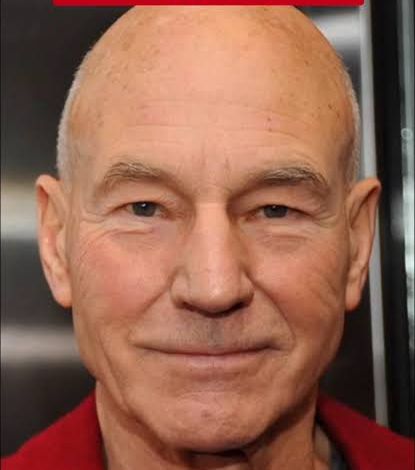
Mike Harris - I got the sad news Thursday on the internet that Star Trek and X-Man actor Patrick Stewart had died at the age of 86. I met and interacted with a lot of celebrities during my AP career, but Patrick was one of the nicest and most cooperative of them all.

I admit I have been a Trekkie since the original series with William Shatner, who I was lucky enough to meet and write about years ago. And I was a fan of Patrick's work before I met him. But I actually met the man several times and had a few meals and good conversations with him. The following story is what I wrote in September 2020 for my blog (A million and one National Anthems) about our first meeting a few years earlier:


The Long Beach Grand Prix was sponsored for many years by Toyota, which also supplied the cars for a Pro-Celebrity race as part of the support show each year.


Several professional drivers were invited to race against a group of celebrities on the street circuit in downtown Long Beach. Some of the amateurs had racing experience. Most didn't.


There was a practice session each year at Willow Springs in the California desert. But that really didn't prepare them for the street circuit, with it's menacing concrete walls and tight turns.


Each year, the PR people from Toyota would hook me up with one of the celebrities for a feature story. Most years, it was just a brief sit-down with the celebrity in the Toyota compound at the track. But, one year I got the bright idea of trailing the celeb for the whole weekend and doing an in-depth piece about their experience.


For whatever reason, Patrick Stewart, the intrepid Jean-Luc Picard of Star Trek Next Generation and Professor Charles Xavier in the X-Men series, agreed to let me hang out with him, starting with the Thursday practice session.


He could not have been nicer or more open, giving me real insight into his nervous anticipation of racing on Sunday.


We met in his hotel room across the street from the track and spent quite a bit of time standing at the window looking at the narrow race course as we spoke.


"I just don't want to crash and I don't want to finish last," Patrick said, his words sounding strange in that wonderful deep voice and British accent that lent itself to so many years as part of the Royal Shakespeare Company.


The desert practice session had gone well for Patrick, thanks at least in part to his new and unlikely friendship with Bill Goldberg, a mountain of a man who had played pro football and was making a living as a pro wrestler.


The three of us had lunch that first day and Bill kept reassuring Patrick that he was going to be "just fine" if he kept his cool and his focus in the race car.


The next day was busy for me, with qualifying and covering some preliminary events. But I eventually got to spend some time in the Toyota paddock with Patrick, who was pleased with his practice that day.


"I wasn't very fast, but I kept it off the wall," he said, grinning broadly. "This is just so much fun and so frightening at the same time."


He was very nervous as the race drew closer. But also very determined to do his best.


Finally, it was race time. As Patrick put on his helmet, he smiled at me and Bill and said, "I hope I don't make a fool of myself."


Bill laughed and replied: "Just follow me and you'll be fine."


Unfortunately for Bill, he made a big mistake midway through the race and crashed out. He was so mad, he slammed his fist into the steering wheel and broke a bone in his hand.


Patrick made it to the end, finishing well behind the leaders. Still, he was very proud of himself and very concerned about Bill.


The big man walked into the room with his hand in a cast and went straight to Patrick, lifting him up in a bear hug and saying, "You did it, man. You were great out there. I'm so happy for you."


Patrick was speechless. It was a wonderful moment between new friends.


And I got a great story out of it. I also got a nice thank you letter signed by Patrick, although it sounded a little impersonal and may have been written by an assistant. Still, it was fun to spend time with the captain of the Enterprise.


My Not-Exactly-Draft Story


Bruce Lowitt - I turned 18 at the end of April 1960. My brother, eight years older, had joined the National Guard three years earlier. He told me and our parents that the Guard was, for some reason, desperate for “enlistees” and was offering reduced service time - three years (six months' active duty, two-and-a-half years' inactive) instead of the usual six years – for people who joined between the ages of 17 and 18½. So in June 1980 I joined the National Guard.


After my two months basic training at Fort Dix in New Jersey, I remained there for the next four months doing clerical work, presumably training to be a company clerk, which I became during our weekly Wednesday night meetings in my National Guard unit at the Troop C Armory on Bedford Avenue in Brooklyn, N.Y.


My commanding officer, Capt. Raymond Watson, and I got along famously and we quickly came to an understanding that, not planning to make the military my career, I could decline a promotion to PFC (Private First Class) because, as I had learned, a stripe was accompanied by greater responsibility, none of which I neither wanted nor needed.


I brought along an 8mm movie camera during our unit's two weeks active duty at Camp Drum near Watertown in upstate New York, during which I was Capt. Watson's driver. At one point I asked to film him behind the wheel while I crouched in front of the shotgun seat. He agreed, I filmed him, then he said he'd continue driving while I sat next to him. A captain driving a Jeep suggests his passenger is of higher rank, so as we tooled along, soldiers – enlisted men but also lieutenants and captains, were saluting me. “Don't do it,” Capt. Watson said when I was about to return a salute. “Don't you dare.” But it was too enticing. I snapped off a salute to a major, the captain slammed on the brakes, we both laughed when I landed in the floor well, then we swapped seats and he returned salutes for the rest of the days we spent at Camp Drum with me behind the wheel.


Wednesday nights (and Sunday nights) also were when the New York Rangers played their home National Hockey League games, and I had been a rabid fan even before I became a teenager. On a few rare occasions when it was an “important” game, I would call the armory from Madison Square Garden around 8 p.m., Capt. Watson would pick up, I'd say I had a stomach ache (or something) and wouldn't be in that night, he'd ask, “What's the score?” I'd say, “Montreal up by two” (or whatever it was) and he'd say, “See you in a week.”


After a year and a half or so, Capt. Watson's tour of duty ended and we got a new commanding officer, whose name I can't remember. This guy was all business and it was obvious we would not have the same relationship – nor would I be watching any Rangers games in MSG. About a month after he arrived, the usual promotion sheet crossed his desk and he signed it before I had a chance to delete my name. When I asked to remove it he growled that he didn't want to have to do the paperwork all over again. I was a PFC and that was that. So my mother and I spent the next night sewing a stripe into my uniform shirts and jacket.


At the following Wednesday meeting the new commanding officer told me to go to the motor pool and supervise some guys “first echeloning” some vehicles – checking the fluids, batteries, tire pressure and so on. These guys were years older than me and for all I know were auto mechanics. They told me to get lost. I got lost for about 10 minutes. When I returned a sergeant was chewing them out for playing cards while they worked. The sergeant turned on me and when he found out I was supposed to have been supervising them, he chewed me out and said he'd get me busted, which he apparently did. A week later my mother and I spent a night removing a stripe from my uniform shirts and jacket.


In 1963 I retired as a private.


AP sighting

Carl Robinson - Now, this is really pushing the AP logo thing, close to one before the present-day, as I refilled my Citroen Diesel wagon at this bargain place in the Sydney suburb of Punchbowl, best price of the day as there's lots of discounting out there.  So, at A$2.61 per litre (US$1.68) that works out at US$6.35.   We already pay more for fuel down here anyway, but it has been a struggle like everywhere, and a good A$161 or $113 to fill up the tank and our drive home to the south.   

Connecting wishes Happy Birthday

Cheryl Arvidson


Richard Chady


Carl Manning


On Saturday to…


Gene Blythe


Mike Graczyk


On Sunday to...


Kiley Armstrong


Chuck Burton


Jacqui Cook


Mary Ganz


Mitchell Landsberg


John Lumpkin


John Marlow


Stuart Wilk

Stories of interest


‘You look like hell:' Trump blasts reporter over question about canceled Kansas trip


By The Associated Press


President Donald Trump lambasted a reporter who asked about his health and whether travel fatigue prompted him to cancel a Kansas rally over the weekend. Trump called him “disgusting,” and told him to get “in shape,” and said he’d hold a tele-rally for Sen. Roger Marshall instead.


Watch video here. Shared by Doug Pizac.


-0-


CNN, MS NOW and Politico ask court to make Trump access order permanent


By Laurie Kellman

The Associated Press


Three news outlets have beefed up their legal complaint against the White House over access, saying it is continuing to defy a judge’s orders by refusing to let them return to covering President Donald Trump in the Oval Office and on Air Force One — thus violating their free speech rights by continuing to keep them out of the rotating press “pool.”


CNN, MS NOW and Politico said Wednesday that the president is retaliating against them for reports he does not like, which violates U.S. District Judge Timothy Kelly’s previous orders for the administration to allow reporters for the outlets to fully return to the pool of journalists covering the president.


Even after those orders, the White House was continuing to block reporters for those outlets from covering Trump in “the very locations that the president most frequently engages with the press,” Theodore J. Boutrous Jr., the outlets’ attorney, said in a statement.


Read more here. Shared by Doug Pizac.


-0- 


Why most journalists are tired of fact-checking Donald Trump


By Howard Kurtz

Fox News


Nicki Minaj joins Trump at Michigan rally: ‘Will continue to support you forever’


As I look at a decade of coverage of the man who loves all things gold, I have to conclude that many journalists are suffering from Trump Exhaustion Syndrome.


It’s not about being physically tired, and of course there are exceptions. No, the syndrome involves throwing up your hands and abandoning basic fact-checking because, you know, they think, what the hell, everyone knows Trump says lots and lots of things that are untrue.


Much of this is tied to the surge in social media. After all, why do a second-day story analyzing what the president did or said when the hot story is Trump praising Nicki Minaj and her beautiful butt?


As for the truth-squadding part, don’t worry, I have the receipts.


The other day, the president came out and said he had ordered the Justice Department to intervene in the crazy Alaska election. It was right there. He didn’t hide it. Pronounced it out in the open.


Read more here. Shared by Dennis Conrad.


-0-


Photographing Election Day: NPPA offers guidance on access, safety and voter privacy


National Press Photographers Association


The National Press Photographers Association has published guidance to help visual journalists prepare for the 2026 elections, addressing polling-place access, photography restrictions, voter privacy and safety. The resource covers early voting, Election Day and vote counting.


NPPA emphasizes that entering a polling place, photographing a voter and photographing a marked ballot involve separate legal questions. Rules vary by jurisdiction, and a press credential does not automatically guarantee access or an exemption from camera restrictions. The association recommends contacting election officials before assignments, requesting written media policies and confirming where journalists may photograph and conduct interviews.


The guide also encourages newsrooms to establish check-ins, emergency contacts and exit plans, including for freelancers. Its ethical guidance cautions against staging voting scenes or treating photographs of long lines, arguments or malfunctioning equipment as proof of fraud. Links connect readers with additional legal, safety and election resources.


Read more here. Shared by Mark Mittelstadt.


-0-


Investigative Sports Reporting Kicks Up


By Amos Barshad

Columbia Journalism Review


For fifteen years now, Nick Harris, a British sportswriter, has been covering allegations that Manchester City—a perennial winner of the English Premier League, the richest soccer league in the world—was, as he puts it, “cooking the books.” The story, in brief, went like this: from 2009 to 2018, City allegedly engaged in widespread cheating by deceiving the Premier League with more than a billion dollars in sham contracts, which allowed it to spend beyond its limits to acquire some of the best players in the world. Eight years ago, the Premier League officially began investigating the allegations. Two years ago, an independent commission empowered by the league held an official hearing. City—whose majority owner is Sheik Mansour, a multibillionaire Abu Dhabi royal—has waged an expensive, extended fight against the league’s charges. Harris had started to believe that the investigation would continue “for years without us knowing the verdict.”


On September 29, the commission dropped its ruling: City was guilty of “extremely serious, significant, sustained and intentional or reckless breaches.” Harris was flabbergasted. “It was so utterly damning that it came as a shock,” he said. “It was properly oh my goodness.” City is now appealing, but if the verdict holds, “it’s not hyperbole to say this is the biggest scandal in the history of British sport.” The drama has blown up beyond soccer, as Andy Burnham, the prime minister of the United Kingdom and a steadfast supporter of Abu Dhabi’s investments, is now attempting to salvage his country’s relationship with the wealthy Gulf state.


Harris, formerly of the Mail on Sunday and now on Substack at Sporting Intelligence, has been chasing this story alongside peers including Rafael Buschmann, Christoph Winterbach, and Nicola Naber of Der Spiegel, Matt Slater of The Athletic, and Rob Harris of Sky Sports. Der Spiegel collaborated with more than a dozen media companies and nearly eighty journalists in a consortium called European Investigative Collaborations, sifting through more than seventy million documents known as Football Leaks. The coverage has collectively faced extreme pushback from fans, which meant the court decision represented not just vindication for reporters but a “relief that something is still happening,” as Winterbach told me. “It’s been such a long time since we started publishing these articles.”


Read more here. Shared by Doug Pizac.


-0-


Feminist publication Jezebel restores over 100 articles after Post story


By Scott Nover

The Washington Post


Jezebel restored more than 100 articles to its website following a Washington Post report Wednesday that found the women-focused website — a longtime staple of the feminist internet — had deleted the stories, many of which featured racy headlines.


The removals dismayed former staffers whose work disappeared from Jezebel’s website. Journalism ethics experts also told The Post that removing published articles was not standard practice for an outlet, especially when it did not publicly explain the decision to readers.


William Sagan, the publisher of Paste Magazine — which bought Jezebel in 2023 after it was shut down by a prior owner, G/O Media — had defended the site in a series of emails on Wednesday, saying that the articles were not deleted but temporarily unpublished to fix grammar or technical problems. He also said that no articles were targeted for removal based on the language in their headlines — including sexual or vulgar language.


By Thursday morning, hours after The Post’s report published, Jezebel had restored more than 100 articles that had previously been removed.


Read more here. Shared by Doug Pizac.


-0-


Embattled CBS leader Bari Weiss downplays concerns about weak 60 Minutes ratings


By Jeremy Barr

The Guardian


CBS News’ editor-in-chief, Bari Weiss, has spoken publicly for the first time about the ratings challenges the network has experienced under her year-long tenure, sidestepping concerns about diminished viewership at the Sunday show 60 Minutes by saying it was not her top priority.


“I could never build anything if I were focused on the precise number of people that happen to tune in to the second feature on 60 Minutes on a given Sunday,” she said at an industry conference on Wednesday organized by the tech publication the Information. The news organization did not offer press credentials.


Overall, Weiss said the show was doing “tremendously well”.


Read more here. Shared by Doug Pizac.


-0-


Poynter’s MediaWise launches global initiative pairing newsrooms with independent creators


By Adele Streissguth

Poynter


Around the world, more than a quarter of people now get at least some of their information from creators or influencers focused on current events. As more audiences turn to them alongside traditional news organizations, newsrooms and creators are increasingly reaching the same people.


To explore how they can work together, Poynter’s MediaWise, in partnership with Microsoft, announced the Creator + Newsroom Studio at Media Party in Buenos Aires, Argentina. The global initiative pairs five news organizations with independent content creators to co-produce social-first journalism by testing new approaches in producing and distributing news, and exploring AI literacy.


Participating organizations include Chicago Public Media in the United States, Todo Noticias in Argentina, Africa Uncensored in Kenya, Indigenous Community Television in Australia and Augsburger Allgemeine with Guenter Holland School of Journalism in Germany.


Read more here. Shared by Doug Pizac.


-0-


SPJ condemns FCC chairman’s warning to broadcasters over election polling


By Society of Professional Journalists


The Society of Professional Journalists condemns Federal Communications Commission Chairman Brendan Carr’s recent warning that broadcasters airing so-called “fake polls” could be violating FCC regulations prohibiting news distortion. Such warnings risk intimidating journalists and chilling legitimate election coverage.


In an Oct. 21 post on X, Carr warned broadcasters of an alleged surge in “fake” and “suppression” polls intended to interfere with elections and influence voter turnout. Carr said the FCC takes these issues seriously and warned broadcasters against violating federal prohibitions on news distortion and “broadcast hoaxes.”


Carr’s comments followed revelations that Wedgewood Polling had fabricated polling data as part of what it described as a “social experiment.” The organization’s fabricated data appeared in polling databases used by major news organizations.


“While deliberate fabrication of polling data raises serious ethical concerns, journalists who report polling information in good faith should not face the threat of regulatory punishment,” said SPJ National President Nicole DeCriscio. “Threats like these are intended to scare broadcasters into silence.”


Read more here. Shared by Doug Pizac.


-0-


A surprising tech revival holds an important lesson for news media publishers


By Guy T. Tasaka

Editor and Publisher


When did you last take a picture with your camera? Not your phone. An actual camera. A device whose only job is to make photographs.


I asked a room full of media executives this question last spring and watched them pause. Most had to think back years. Some couldn’t remember at all. That pause tells you everything.


For a decade, the story was clean and obvious: smartphones killed the point-and-shoot camera. From a peak of roughly 120 million units shipped globally in 2010, compact camera sales collapsed more than 90% from that peak — reaching roughly 1.7 million units by 2023. Industry analysts wrote the obituary. Manufacturers closed product lines. Camera stores disappeared.


Then something unexpected happened.


In 2025, global compact camera shipments hit 2.4 million units — a 30% increase year-over-year, according to the Camera & Imaging Products Association. Shipment revenue for compacts surged 49% in November 2025 compared to the prior year. And 2024 had already marked a rebound after years of decline.


Read more here. Shared by Doug Pizac.


-0-


Press Forward gave $20 million to 205 local newsrooms over two years. Here’s how some of them spent it.


By Sophie Culpepper

Nieman Lab


Most local newsrooms in the U.S. have one thing in common: They need more money, and many dream of dollars they can use however they want.


In 2024, Press Forward, the nonprofit trying to mobilize a philanthropic army for local news, announced it would give at least 100 small local newsrooms — those with annual budgets under $1 million — just that type of unrestricted funding. Almost 1,000 newsrooms applied. Ultimately, Press Forward distributed $20 million to 205 outlets. Most of them received $100,000 each, split over two years.


The grantees represented every U.S. state, came from cities, suburbs, and rural areas, and published in multiple languages. They included for-profits and nonprofits, print and digital-only publications, college newsrooms, and public radio stations. Statewide newsrooms with fully staffed teams like The Maine Monitor, scrappy news startups like 285 South, and community newspapers powered by freelancers and part-time staff like the Copper River Record in Alaska all received funding.


Read more here. Shared by Doug Pizac.

Today in History - Oct. 30, 2026

By The Associated Press

Today is Friday, Oct. 30, the 303rd day of 2026. There are 62 days left in the year.


Today in history:


On Oct. 30, 1974, Muhammad Ali, 32, knocked out George Foreman, 25, in the eighth round of a scheduled 15-round bout known as the “Rumble in the Jungle,” in Kinshasa, Congo (then Zaire), to regain his world heavyweight title.


Also on this date:


In 1912, Vice President James S. Sherman, running for a second term with Republican President William Howard Taft, died six days before Election Day. (Taft was defeated by Democrat Woodrow Wilson in the election).


In 1938, the radio play “The War of the Worlds,” starring Orson Welles, aired on the CBS Radio Network. The broadcast panicked some listeners in its portrayal of an invasion by Martians.


In 1961, the Soviet Union tested a hydrogen bomb, the “Tsar Bomba,” with a force estimated at about 50 megatons (over 3,500 times that of the atomic bomb dropped on Hiroshima). It remains the most powerful nuclear weapon ever detonated.


In 1972, an Illinois Central Gulf commuter train was struck by another train on Chicago’s South Side, killing 45 people and injuring about 350.


In 1975, the New York Daily News ran the headline “Ford to City: Drop Dead,” a day after President Gerald R. Ford said he would veto any proposed federal bailout of New York City, which was on the verge of bankruptcy. The city ultimately evaded bankruptcy despite weathering a severe fiscal crisis.


In 1995, voters in the province of Quebec narrowly defeated a referendum that called for sovereignty with a new economic and political partnership with Canada.


In 2005, the late Rosa Parks was the first woman to lie in honor in the U.S. Capitol rotunda; Parks became a civil rights icon by refusing to give up her seat on a segregated bus in Montgomery, Alabama, to a white passenger in 1955.


In 2018, gangster James “Whitey” Bulger was found beaten to death at a federal prison in West Virginia; the 89-year-old former Boston crime boss and longtime FBI informant had been transferred there just hours earlier.(Three inmates entered plea deals and were convicted in Bulger's killing).


In 2023, the United Auto Workers said it reached a tentative deal with General Motors, capping a whirlwind few days in which GM, Ford and Stellantis agreed to terms that would end the union’s targeted strikes over six week. (UAW members later ratified the contracts).


Today’s Birthdays: Author Robert Caro is 91. Football Hall of Fame coach Dick Vermeil is 90. Rock singer Grace Slick is 87. Songwriter Eddie Holland is 87. R&B singer Otis Williams (The Temptations) is 85. Actor Henry Winkler is 81. Country/rock musician Timothy B. Schmit (The Eagles) is 79. Actor Harry Hamlin is 75. Country singer T. Graham Brown is 72. Actor Kevin Pollak is 69. Actor Michael Beach is 63. Musician Gavin Rossdale (Bush) is 61. Actor Nia Long is 56. Actor Matthew Morrison is 48. Business executive and former presidential adviser Ivanka Trump is 45. Olympic gold medal gymnast Nastia Liukin is 37. NBA guard Devin Booker is 30. NHL defenseman Cale Makar is 28.

Got a photo or story to share?

Connecting is a daily newsletter published Monday through Friday that reaches more than 2,000 retired and former Associated Press employees, present-day employees, and news industry and journalism school colleagues. It began in 2013. Its author, Paul Stevens, retired from the AP in 2009 after a 36-year career as a newsman in Albany and St. Louis, correspondent in Wichita, chief of bureau in Albuquerque, Indianapolis and Kansas City, and Central Region vice president based in Kansas City.


Got a story to share? A favorite memory of your AP days? Don't keep them to yourself. Share with your colleagues by sending to Ye Olde Connecting Editor. And don't forget to include photos!


Here are some suggestions:


- Connecting "selfies" - a word and photo self-profile of you and your career, and what you are doing today. Both for new members and those who have been with us a while.


- Second chapters - You finished a great career. Now tell us about your second (and third and fourth?) chapters of life.


- Spousal support - How your spouse helped in supporting your work during your AP career. 


- My most unusual story - tell us about an unusual, off the wall story that you covered.


- "A silly mistake that you make"- a chance to 'fess up with a memorable mistake in your journalistic career.


- Multigenerational AP families - profiles of families whose service spanned two or more generations.


- Volunteering - benefit your colleagues by sharing volunteer stories - with ideas on such work they can do themselves.


- First job - How did you get your first job in journalism?


- Most unusual place a story assignment took you.


Paul Stevens

Editor, Connecting newsletter

paulstevens46@gmail.com