Connecting

Sept. 2, 2024


Click here for the sound of the Teletype

Top AP News

Top AP Photos

AP Merchandise

AP Emergency Relief Fund

Connecting Archive

AP Newsletters

AP Books

AP News Tips

Colleagues,


Good Monday morning on this Sept. 2, 2024,


Sadly, we bring you word of the death Sunday night of our colleague Linda Deutsch. She was 80.

Linda was a special correspondent for The Associated Press who for nearly 50 years wrote glittering first drafts of history for many of the nation’s most significant criminal and civil trials.


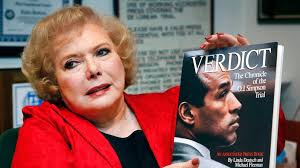
For nearly 50 years, Deutsch covered almost every major trial in the U.S., beginning with the 1969 conviction of Sen. Robert F. Kennedy’s assassin, Sirhan Sirhan. The case that brought her to a national television audience was the 1995 acquittal of NFL great O.J. Simpson on murder charges. (Photo of Linda with Verdict book by Nick Ut.)


Linda was a friend and a regular contributor to Connecting, sharing with her colleagues great stories from her career and also passing along stories of the news industry that she spotted as good reads.


Today's issue brings you the remarkable Connecting Profile that Linda wrote in January 2019, ending it with these words:


"I am so grateful that when I walked into the AP office all those years ago, Hub Keavy hired me. These days, I still attend AP/LA office parties and keep in touch with former colleagues. As the song says, 'We are Family.'"


Connecting will resume regular publication on Tuesday morning and will include your memories of working with Linda, as well as material you’ve shared over the Labor Day weekend.


Have a good Labor Day – be safe, stay healthy, live it to your fullest.


Paul


Linda Deutsch, AP trial writer who had front row to courtroom history, dies at 80

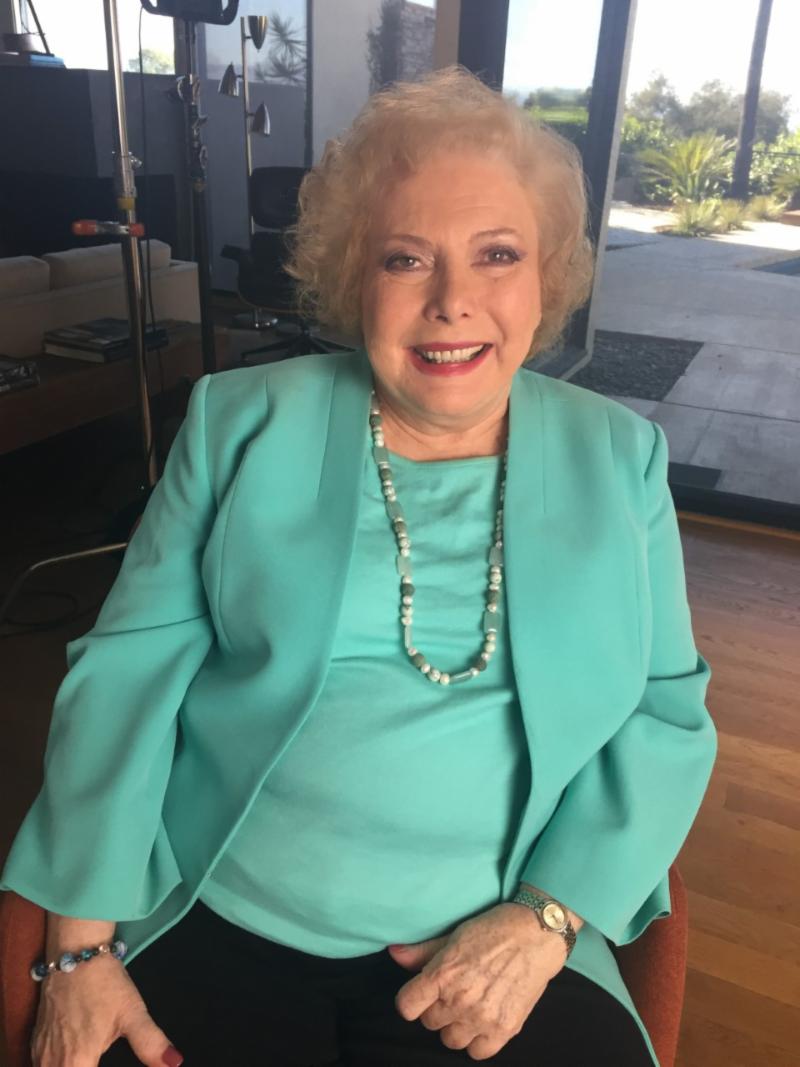
Linda Deutsch in Los Angeles, 2019. AP Photo/Damian Dovarganes

By JOHN ROGERS


LOS ANGELES (AP) — Linda Deutsch, a special correspondent for The Associated Press who for nearly 50 years wrote glittering first drafts of history from many of the nation’s most significant criminal and civil trials — Charles Manson, O.J. Simpson, Michael Jackson, among others — died Sunday. She was 80.


Deutsch was diagnosed with pancreatic cancer in 2022 and underwent successful treatment, but the cancer returned this summer. She died at her Los Angeles home, surrounded by family and friends, said nurse Narek Petrosian of Olympia Hospice Care.


AP chief United Nations correspondent Edith Lederer was among those with Deutsch at the end. They were friends for more than 50 years and trailblazing female reporters when they joined AP in the late 1960s.


“She was an incomparable friend to hundreds of people who will miss her wit, wisdom, charm and constant inquisitiveness,” Lederer said.


One of America’s best-known trial reporters when she retired in 2015, Deutsch’s courts career began with the 1969 trial and conviction of Sen. Robert F. Kennedy’s assassin, Sirhan Sirhan. She went on to cover a who’s who of criminal defendants — Manson, Simpson, Jackson, Patty Hearst, Phil Spector, the Menendez Brothers, “Night Stalker” Richard Ramirez, “Unabomber” Ted Kaczynski and the police officers charged in the beating of motorist Rodney King.


She was in a Los Angeles courtroom in 1995 for the conclusion of “The Trial of the Century” that saw Simpson, an NFL Hall of Famer, acquitted of killing his ex-wife and her friend. Thirteen years later, Deutsch was in a Las Vegas courtroom when Simpson was convicted of kidnapping and robbery and sentenced to prison.


“When a big trial loomed, AP’s assignment editors didn’t have to ask who should get the assignment. No, the instant question was, ‘Is Linda available?’” recalled Louis D. Boccardi, who served as AP’s executive editor for a decade and as president and CEO for 18 years. “She mastered the art of celebrity trial coverage and, in the process, became something of a media celebrity herself.”


For decades, Deutsch covered every appeal and parole hearing of each convicted Manson Family member. Other historic moments included witnessing the 1976 conviction of Hearst, the newspaper heiress found guilty on bank robbery and other charges; the 2005 acquittal of Jackson on child molestation charges; and the 2009 murder conviction of Spector, the famed music producer.


“Linda was a fearless reporter who loved being on a big story — and she indeed covered some of the biggest,” said Julie Pace, AP’s executive editor and senior vice president. “She was a true trailblazer whose command of her beat and tireless work ethic made her an inspiration to so many journalists at the AP and across our industry.”


Her work, always written with verve, was not limited to celebrity — other trials involved fraud, conspiracy, environmental disasters and immigration — and eventually earned her the title of special correspondent, the most prestigious byline for an AP reporter.


Defense attorney Thomas Mesereau, who represented Jackson, called Deutsch “the epitome of ethics and professionalism in journalism.”


“I can’t think of anybody who rises to her level,” he said of Deutsch when she retired.


Deutsch was just 25 when she covered the conviction of Sirhan. She then turned to the bizarre case of Charles Manson, a career criminal who had reinvented himself as a hippie guru, proselytizing and furnishing psychedelic drugs to a group of disaffected youth.


The Manson Family, as they came to be known, terrorized Los Angeles on successive summer nights in 1969, breaking into homes in two wealthy neighborhoods and killing seven people, including pregnant actress Sharon Tate. Most victims were stabbed multiple times, and their blood was used to scrawl “pig” and other words on the walls of the homes.


When Manson and three of his young female followers went on trial for murder in 1970, they turned the monthslong legal proceeding into a “surreal spectacle,” as Deutsch would write when Manson died in 2017.


“People were having LSD flashbacks in the courtroom and at one point Charlie is leaping across the counsel table at the judge with a pencil in his hand and the girls are jumping up and down singing,” Deutsch recalled during a 2014 interview.


With only one significant trial under Deutsch’s belt, the AP initially sent a more experienced reporter from New York to lead its Manson trial coverage. After a month of witnessing such antics, he returned home in disgust, leaving Deutsch in charge.


“I thought, ‘Oh, this is really something,’” Deutsch remembered with a laugh. “I didn’t know trials could be like this.”


Nonetheless, she was hooked, forming tight bonds with the journalists who showed up every day for nine months.


But an even bigger trial, born in the modern television era, would eclipse Manson more than two decades later. When Simpson, one of America’s most beloved celebrities and sports figures, was charged with fatally stabbing Nicole Brown Simpson and Ron Goldman in a fit of rage, news outlets from all over the world sent reporters to cover the case.


The judge made Deutsch, by then a familiar face around the courthouse, the only reporter to cover jury selection. She became ubiquitous on television, telling a worldwide audience what was going on in the courtroom.


After Simpson was acquitted 11 months later, he called to thank her for what he considered fair and objective coverage. The conversation led to what would be the first of a number of exclusive interviews he gave her over the years.


Not all her trials involved celebrities. Deutsch spent five months in Alaska covering the trial of Joseph Hazelwood, the captain of the Exxon Valdez oil tanker that caused one of the worst U.S. environmental disasters when it spilled 11 million gallons (41 million liters) of crude oil in 1989.


She was also at the 1973 espionage trial of Daniel Ellsberg, who leaked to The New York Times the top secret Pentagon Papers that revealed unsavory details about U.S. involvement in Vietnam. The Times published a series of articles about the contents that helped turn the public against the Vietnam War.


Deutsch covered the trial of Ramirez, the “Night Stalker” serial murderer, listening to testimony so gruesome it brought tears to the eyes of reporters. But it was the 1992 trial of four Los Angeles police officers who were videotaped beating King that shook Deutsch the most. Their acquittals triggered rioting in Los Angeles that killed 55 people and caused $1 billion in property damage.


“That almost destroyed my belief in the justice system,” she said in 2014. “I feel a jury usually gets it right, but in that case, no. It was the wrong conclusion. It was the wrong verdict and it nearly destroyed my city.”


Like so many others, Deutsch fell in love with Los Angeles after moving there from somewhere else. Born and raised in New Jersey, she traced her interest in journalism to age 12, when she founded an international Elvis Presley fan club newsletter in her hometown of Perth Amboy. The lifelong Presley fan traveled to the musician’s Graceland home in Memphis, Tennessee, in 2002 to cover the 25th anniversary of his death.


By her sophomore year at New Jersey’s Monmouth College — now Monmouth University — she had landed a part-time job at her hometown newspaper, where she persuaded her editor to allow her to travel to Washington, D.C., in 1963 to cover the Rev. Martin Luther King Jr.’s historic “I Have a Dream” speech.


Arriving in Southern California after graduation, she worked briefly for the San Bernardino Sun before joining the AP in 1967. Deutsch initially aspired to be an entertainment reporter and, for years, would take time off from the court beat to help cover the Academy Awards.


In 1975, after the fall of Saigon ended U.S. involvement in Vietnam, she was sent to the Pacific island of Guam to interview evacuees and help get locally hired AP staffers safely to the United States.


But it was always the drama of the courtroom that called her home.


“It’s as old as Shakespeare and as old as Socrates,” she said in a 2007 interview. “It’s an extremely powerful theater that tells us about ourselves and about the people on trial. And I think it’s ever fascinating.”


Funeral arrangements were pending.


___

John Rogers, the principal writer of this obituary, retired from The Associated Press in 2021.


Click here for link to this story.

Connecting profile

Linda Deutsch

 January 7, 2019


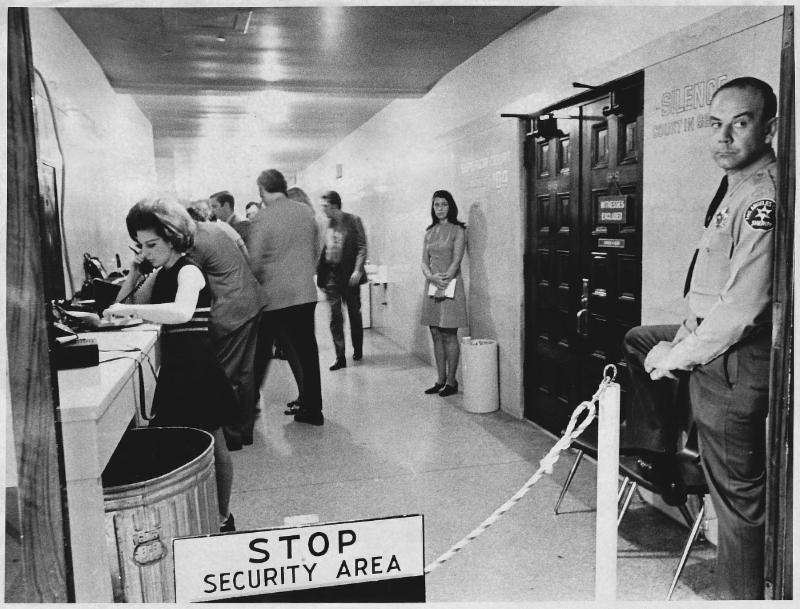
Linda Deutsch at left dictating from outside the courtroom during the Manson trial.

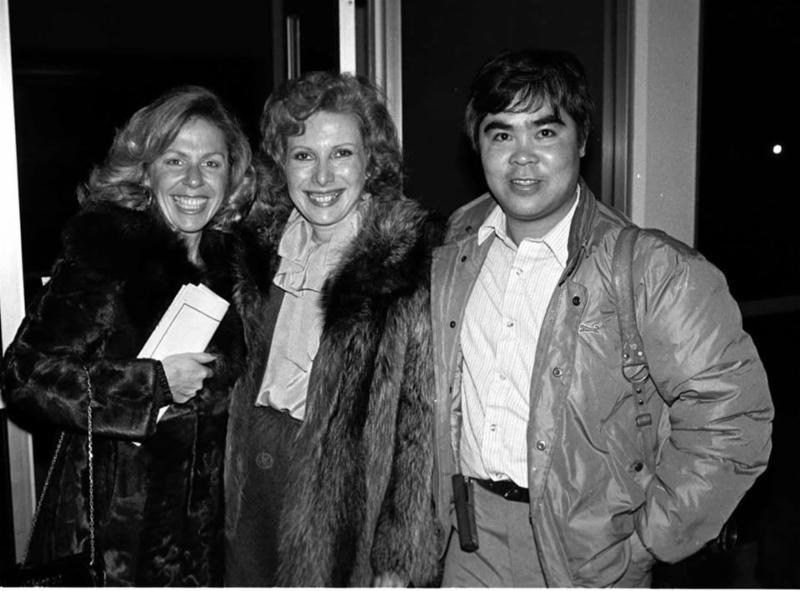
At a Vietnam journalists reunion in New York in the 1980s: from left, Edie Lederer, Linda Deutsch and Nick Ut.

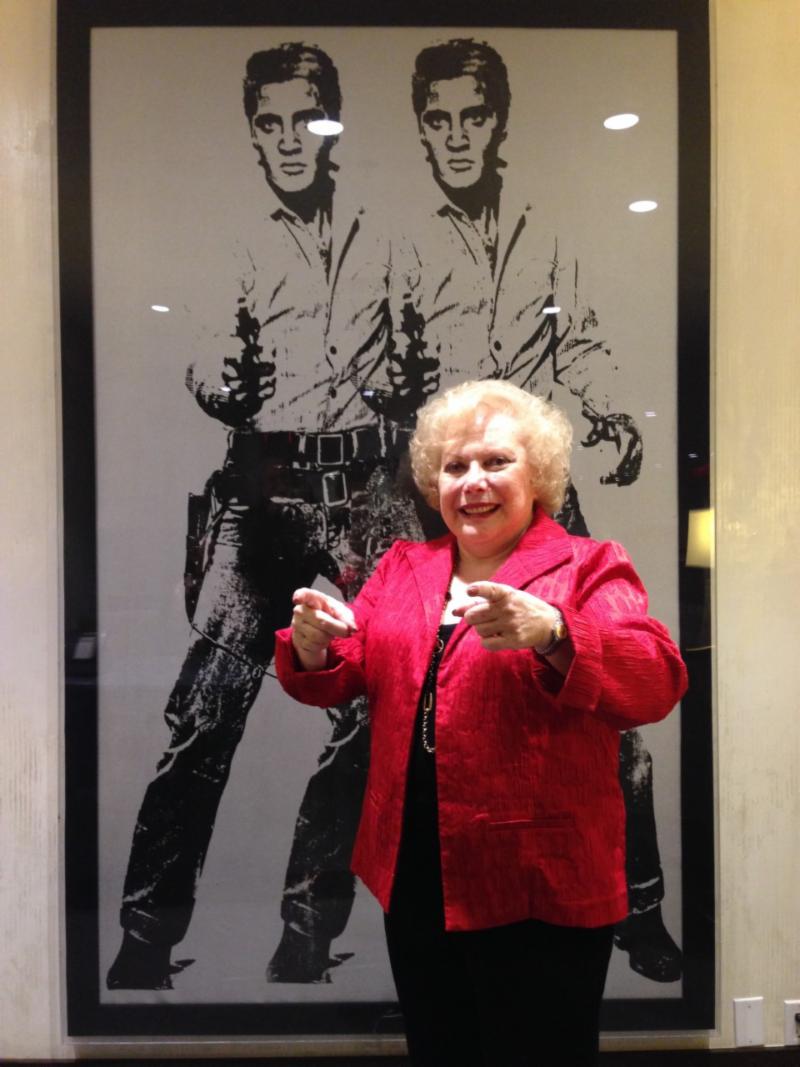
This photo from a retirement party in 2015 reminds me that at age 12, I started one of the first Elvis fan clubs and published a monthly newsletter, The Elvis Times. I have been interviewed at Graceland and listen to Elvis Radio obsessively.

I have had an extremely busy retirement, doing a lot of TV interviews for specials on famous trials I've covered, traveling to receive awards and continuing a very active social schedule. All of this was going great until last August when I had to undergo knee replacement surgery and hit the brakes on my life as I knew it. I was in rehab for three weeks, learning to walk and climb stairs all over again. I live in a house with three stories and 33 steps.  It has been a slow recovery and is still ongoing. But the holidays were my test. I am driving and managed to attend a total of about six parties. At each party I found a prefect ice breaker. Just say that I had knee surgery and at least four people in the crowd stepped forward to share their own experiences. It is as if we baby boomers now have a shared rite of passage. I don't like it, but, as with many unpleasant experiences, knowing someone else survived it is encouraging.


I moved back into the TV world shortly after I returned home, filming a lengthy interview for a TV special on the Robert Blake case. It should be showing up on your ABC stations soon. I'm also booked for what will be a number of interviews about the upcoming 50th anniversary of the Sharon Tate murders and the Manson trial.


I came to California from my native New Jersey in 1966, not long after my graduation from Monmouth University in West Long Branch, N.J. I had already been working at two New Jersey newspapers during college and after graduation. My uncle, Marvin Sosna, a veteran journalist who had worked in New York before migrating west to marry the love of his life, a California girl, urged me to consider a change of venue for my career. He had become city editor at the Ventura Star Free Press and later editor in chief of the Thousand Oaks News Chronicle. I always credit him as the guardian angel who led me into my blessed career as a journalist. He mentored me from the time I was in high school, helped me get on the path in college and later, when I was looking for a job, gave me the life changing advice: "Go west, young woman." He invited me to see the future, taking me on a tour of Southern California, dazzling me with all the wonders of Hollywood and the beauty of a landscape that I had only glimpsed in movies. He was a true newspaper man and he saw the opportunities for me. He recently observed his 91st birthday and is still going strong. I never worked for him, but I went back home, worked another year, earned money for a plane ticket, rent and a down payment on a red Volkswagen bug which was my magic carpet.


I never worked for my uncle, but he was always there guiding me. I came west, worked briefly for the San Bernardino Sun Telegram which was not a fit for me. I headed for Los Angeles where I was interviewed by the Los Angeles Times, the Herald Examiner and the AP. Marvin said he would put in a good word at AP since his paper was a member. That was where I met Hub Keavy, the legendary bureau chief and another of my angels. He looked at my already thick scrap book of clippings and hired me on the spot. I started on Jan. 3, 1967.


My first day at the AP is unforgettable. There were actually two bureaus, one at the Herald Examiner and one at the Times. The day office at the Herex was located in a tiny area that could be reached by climbing a fire escape. At the top I entered a smoke-filled room where the clatter of teletype machines was deafening. I loved it. I also realized immediately that I was he only woman on the staff. I found out later I was a replacement for another woman who had left to have a baby. All of the guys smoked either cigarettes or cigars and most were quite a bit older than I. The routine was pretty bizarre. In the afternoon, the copy boy would wrap up all the wire files that had moved that day, stuff them in a couple of suitcases for transport to the Times office. Reporters carried the suitcases, an itinerant crew that appeared off on a secret journey each day.


The Times office was considerably more modern. When I walked in, I saw a new nightside crew. The desk editor was Howard Heyn, a cigar chomping fellow who seemed very busy. He looked up from his papers, saw me arrive and muttered, "Oh no. Another new one!"  I wondered how bad this was going to be. But then he gave me a desk, handed me some incoming member copy and asked me to rewrite it as a story. I did as instructed, handed it over and watched him read it.


"I guess you'll do," he said. That was the beginning of a beautiful friendship. Like everyone else in the bureau he was a seasoned journalist. I swear I think I remember some of them wearing green eye shades.


In the beginning I did every job except one. I really did not know much about sports and was mystified by box scores. After I messed them up, I was allowed to pass on that assignment. I wrote for the radio wire, did rewrites for the print wire and, within a few days I was sent out to cover a big story. I learned quickly that at the AP, all stories were big stories. This one was the resignation of the state school superintendent. By now I had met the legendary AP/LA news editor, Jack Quigg, who sent me out on the assignment. When the press conference ended I called in, thinking I would go back to the office and write my story. No way. Quigg told me to DICTATE a story. I had no idea what he meant but I plunged in and that was the start of my storied career as an expert in dictation. Over the years, I dictated bulletins, urgents and many verdicts. I learned from the best when I was assigned to cover Nixon's Western White House and encountered the brilliant Doug Cornell who would rather dictate stories on presidents and politics than approach a typewriter.  Over the years I came to love dictation, and I know that many staffers have memories of taking my dictation. John Antzack with his flying fingers and quick wit took more of my stories than anyone including the entire Michael Jackson trial where there was no press room and everything had to be dictated. Jim Wilse, the San Francisco news editor insisted on taking my dictation himself on the Patty Hearst trial, trying to figure out how I did it. 


Asking who played the most significant role in my career is an impossible question. I had so many mentors it is impossible to count them. Just for starters there was Tom Pendergast, the bureau chief who trusted this newbie staffer to cover the Sharon Tate murders and the Manson trial by herself after the reporter who came in from New York opted out of such a crazy trial. He also collaborated with San Francisco bureau chief Paul Finch to send me to Northern California for the Angela Davis trial on which my reporting partner was Edie Lederer, another AP legend who would go on to glory in war reporting and now the United Nations beat. I worked for a lot of bureau chiefs and remember them fondly. Andy Lippman has a special place in my heart for guiding me through the O.J. Simpson trial and, when asked if I could go to Alaska to cover the Exxon Valdez trial, told the New York editor: "Well, she's available but she doesn't have the clothes. She lives in California." The man at the other end of the phone replied, "O.K., you can buy her some cold weather gear, but she can't have a mink coat." I went to Alaska in February with boots, a parka, thermal underwear and so much padding that people who knew me there did not recognize me when they encountered me in later years.


I must also mention two important New York executives. Lou Boccardi was the AP President and CEO when I covered a number of historic trials, notably O.J. Simpson. He changed my life by allowing me to go on TV, first as pool reporter for jury selection and then as a constant guest on Larry King and other shows. Until then, AP had frowned on having its reporters on TV, worried they would blurt out some opinion. Lou trusted me and together we gave the AP more visibility. These days many AP staffers appear on cable TV shows.


Another New York executive gave me a life changing assignment. In April of 1975, Executive Editor Bob Johnson called and said he wanted me to go to Guam. The Vietnam War was ending and a vast evacuation program was being staged by the U.S. Navy. We had no permanent staffer on Guam and were relying on stringers. I left for Guam a couple of days after he called and plunged into possibly the most historic assignment I ever had. Ultimately, 50,000 refugees were evacuated to a tent city on the island and I was the lone reporter for the world's largest news agency. I was joined by photographer Sal Veder and together we filed countless stories and pictures. I was also told that a group of more than 40 AP staffers, American and Vietnamese, were being evacuated and I had to negotiate getting them back to the states. It was there that I met many AP colleagues who would become like family.


One of them was named Nick Ut. He had just won a Pulitzer Prize and he was a kid. I found him with others in a tent. He peeked out at me, smiled and said, "You look like Edie." And that was how I learned the extraordinary reach of the AP family. My colleague Edie Lederer had gone to Vietnam after the Angela Davis trial. In later years, people often mistook us for each other.


Because of Bob Johnson, I learned the Vietnam story up close after having covered the Pentagon Papers trial. I never got to Vietnam but in subsequent years was included in our Vietnam reunions with those who played a role in that world changing story.


You asked would I do it all over again. Need you ask? I wouldn't change a moment of it. I lived a charmed life in journalism and I got out when the profession that was my passion began to change drastically. I continue to be a news junkie and am a constant presence on Facebook, now able to voice my opinions. 


My favorite hobby? I guess it is the movies and theater. I started my career wanting to cover entertainment and reviewed movies for AP for quite a while. I have friends who also love movies and we arrange to see everything significant.


You asked for my best vacation ever. I had many of them in Asia and Europe. But number one has to be a trip I took to India with my dear friend and colleague Edie Lederer. She and I took many trips together, but India was like visiting another planet. And through various connections, we got to meet former maharajas and business figures who entertained us in grand style. The highlight was when we were invited to lunch at the famed pink palace in Jaipur by the maharaja and maharani of Jaipur. Their previous guests included Jackie Kennedy. They were charming hosts.


Edie and I have taken several trips where we dined with local AP staffers. The legendary Bob Liu treated us to the culinary delights of Hong Kong. And the late George Esper and Jim Boudreau took us out in Bangkok. In later years I visited Jerusalem where bureau chief Steve Gutkin organized a staff luncheon for me. I know of no other news organization that has such a worldwide bond among its staffers.


I am so grateful that when I walked into the AP office all those years ago, Hub Keavy hired me. These days, I still attend AP/LA office parties and keep in touch with former colleagues.


As the song says, "We are Family." #


Today in History - Sept. 2, 2024 


By The Associated Press

Today is Monday, Sept. 2, the 246th day of 2024. There are 120 days left in the year.


Today in history:


On Sept. 2, 1945, Japan formally surrendered in ceremonies aboard the USS Missouri in Tokyo Bay, ending World War II.


Also on this date:


In 1666, the Great Fire of London began, which would destroy more than 13,000 homes and hundreds of additional structures, including St Paul’s Cathedral, over the ensuing three days.


In 1789, the United States Treasury Department was established.


In 1864, during the Civil War, Union Gen. William T. Sherman’s forces occupied Atlanta.


In 1935, a Category 5 hurricane slammed into the Florida Keys on Labor Day, claiming more than 400 lives.


In 1958, President Dwight D. Eisenhower signed the National Defense Education Act, which provided aid to public and private education to promote learning in such fields as math and science. 


In 1963, Alabama Gov. George C. Wallace prevented the integration of Tuskegee High School by encircling the building with state troopers.


In 1969, in what some regard as the birth of the Internet, two connected computers at the University of California, Los Angeles, passed test data through a 15-foot cable.


In 1998, a Swissair MD-11 jetliner crashed off Nova Scotia, killing all 229 people aboard.


In 2005, a National Guard convoy packed with food, water and medicine rolled into New Orleans four days after Hurricane Katrina.


In 2013, on her fifth attempt, U.S. endurance swimmer Diana Nyad became the first person to swim from Cuba to Florida without the help of a shark cage.


In 2018, a huge fire engulfed Brazil’s 200-year-old National Museum in Rio de Janeiro, as firefighters and museum workers raced to save historical relics.


In 2019, a fire swept a boat carrying recreational scuba divers that was anchored near an island off the Southern California coast; the captain and four other crew members were able to escape the flames, but 34 people who were trapped below died.


Today’s Birthdays: Former Sen. Alan K. Simpson, R-Wyo., is 93. Horse trainer D. Wayne Lukas is 89. Former United States Olympic Committee Chairman and former Major League Baseball commissioner Peter Ueberroth is 87. Football Hall of Famer Terry Bradshaw is 76. Basketball Hall of Famer Nate Archibald is 76. Actor Mark Harmon is 73. Tennis Hall of Famer Jimmy Connors is 72. Football Hall of Famer Eric Dickerson is 64. British Prime Minister Keir Starmer is 62. Actor Keanu Reeves is 60. Boxing Hall of Famer Lennox Lewis is 59. Actor Salma Hayek is 58. R&B singer K-Ci is 55. Electronic music DJ/producer Zedd is 35.

Got a photo or story to share?

Connecting is a daily newsletter published Monday through Friday that reaches 1,900 retired and former Associated Press employees, present-day employees, and news industry and journalism school colleagues. It began in 2013. Past issues can be found by clicking Connecting Archive in the masthead. Its author, Paul Stevens, retired from the AP in 2009 after a 36-year career as a newsman in Albany and St. Louis, correspondent in Wichita, chief of bureau in Albuquerque, Indianapolis and Kansas City, and Central Region vice president based in Kansas City.


Got a story to share? A favorite memory of your AP days? Don't keep them to yourself. Share with your colleagues by sending to Ye Olde Connecting Editor. And don't forget to include photos!


Here are some suggestions:


- Connecting "selfies" - a word and photo self-profile of you and your career, and what you are doing today. Both for new members and those who have been with us a while.


- Second chapters - You finished a great career. Now tell us about your second (and third and fourth?) chapters of life.


- Spousal support - How your spouse helped in supporting your work during your AP career. 


- My most unusual story - tell us about an unusual, off the wall story that you covered.


- "A silly mistake that you make"- a chance to 'fess up with a memorable mistake in your journalistic career.


- Multigenerational AP families - profiles of families whose service spanned two or more generations.


- Volunteering - benefit your colleagues by sharing volunteer stories - with ideas on such work they can do themselves.


- First job - How did you get your first job in journalism?


- Most unusual place a story assignment took you.


Paul Stevens

Editor, Connecting newsletter

paulstevens46@gmail.com