|
|
|
Connecting
Sept. 6, 2023
Click here for sound of the Teletype
| |
|
Colleagues,
Good Wednesday morning on this Sept. 6, 2023,
Connecting extends congratulations to Andrew Selsky, who in four decades has reported the news from all over the globe for The Associated Press, on his plans to retire at the end of this month.
| |
We bring you a profile of his career as our lead story in today’s issue.
“To say that it's been a great ride would be a big understatement,” Andrew said. “I fulfilled my ambitions and went way beyond. It has been a pleasure and a privilege to report on events around the world, for the world. I interviewed so many people from different walks of life. I thank them. I worked with so many talented and friendly colleagues, sometimes in difficult and dangerous situations. Thank you for the great collaboration. Thank you especially to my adventurous wife Zoe for being the best partner anyone could hope for, who moved from country-to-country with aplomb and made wonderful homes filled with love, and also worked as a photojournalist and teacher. Thank you to Sam and Blaine. I am so proud of you. What'll I do next? A retiree was asked that recently. His answer was great: Whatever I want.”
I had the pleasure of working with Andrew during his early Kansas City bureau days and all of us just knew that great things were ahead for him. He proved us correct!
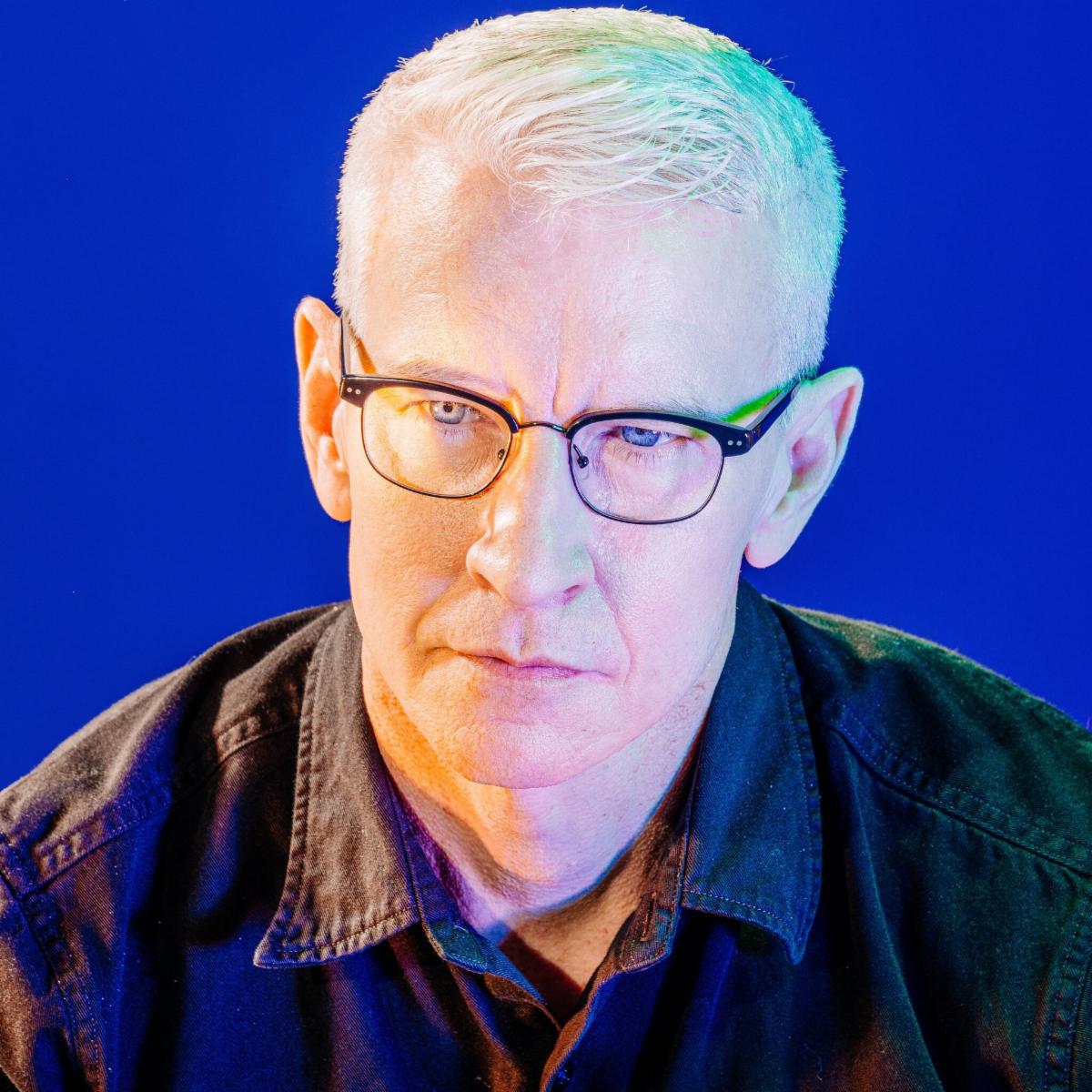
Another world-traveling journalist is profiled in the New York Times Magazine – CNN’s Anderson Cooper, and the final graf of the profile – which we bring to you in Stories of Interest - caught my interest:
…What interests me about my job is being able to go places and step into people’s lives. The business side of news — I used to worry about this stuff 20 years ago when I first started. I would stay up at night: “Do I have a future? What are my ratings?” That was not sustainable for me. I don’t like that sort of pressure. For me, the solution was to focus on what I had control over: getting better at interviews, improve my writing, stop saying “um.” I get all the business stuff. It just doesn’t interest me. Do I have a future? I’m 56 years old. How much longer can I be doing this? I don’t know. I fully expect someday my services will no longer be required or of interest and, like in a Charlie Brown spelling bee, some voice will go womp womp, and then I will blip off the screen. That is the way of this world, and I’ve been extraordinarily lucky. So I don’t worry about the long-term trajectory.
Here's to a great day – be safe, stay healthy, live it to your fullest.
Paul
Connecting retirement profile
Andrew Selsky
|  | |
Andrew and his wife Zoe “at home” in Stirling Castle in Scotland which they visited earlier this year.
How did you get your first job with the AP? Who hired you? What were your first days like?
My first AP job was as legislative relief newsman in Cheyenne, Wyoming. I was hired by (the late) Cheyenne correspondent Dennis Curran with approval from Denver COB Joe McGowan.
I had been living in Jackson, Wyoming, and stringing for the Casper Star-Tribune, when I decided to try to join a wire service. I had been a newspaper reporter in Texas, where I won two UPI Managing Editor awards, so I thought that might help my chances with UPI. The UPI correspondent in Cheyenne said he didn't have any openings but gave me the tip that AP across the hall was looking for help during Wyoming's legislative session. The first days were a blur of doing stories, handling member calls, fixing a jammed printer and walking to my hotel late at night in snowstorms.
What were your different past jobs in the AP, in order? Describe briefly what you did with each?
-Cheyenne, legislative relief temp, helped cover the statehouse and general news.
-Los Angeles, vacation relief temp, I did a lot of rewrites, covered (by phone) a plane crash and the first transplant of a baboon heart into a human, Baby Fae.
-Tegucigalpa, Honduras, local hire reporter and photographer. My first stories/photos were about a political crisis as the president tried to stay in power illegally. That would never happen in America, right? Much of the coverage focused on the war in Nicaragua since U.S.-backed Contras used Honduras as a base.
| 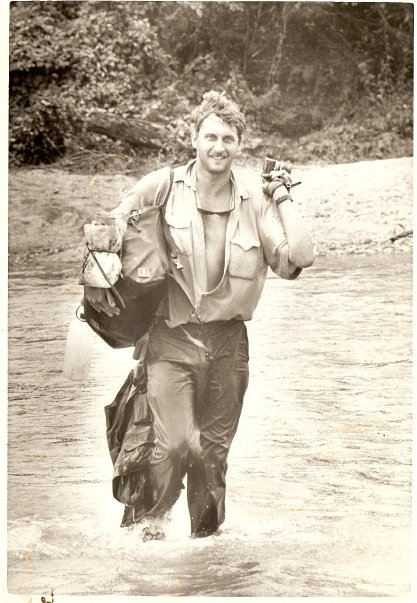 | |
Crossing a river during a week-long patrol with members of an elite Sandinista Irregular Warfare Battalion that was hunting for Contra rebels. Photo credit: Peter Morgan
-Managua, Nicaragua, local hire reporter and photographer. I covered the war and other news as the only English-language reporter in the Managua bureau.
-Newsman, Kansas City, my first AP full-staff position, hired by Ye Olde Connecting Editor (then KX COB) Paul Stevens!
-Editor, World and Foreign Desks, 50 Rock, New York, (which later combined as the International Desk and is now RIP). I also wrote a lot of enterprise stories after my shifts were over.
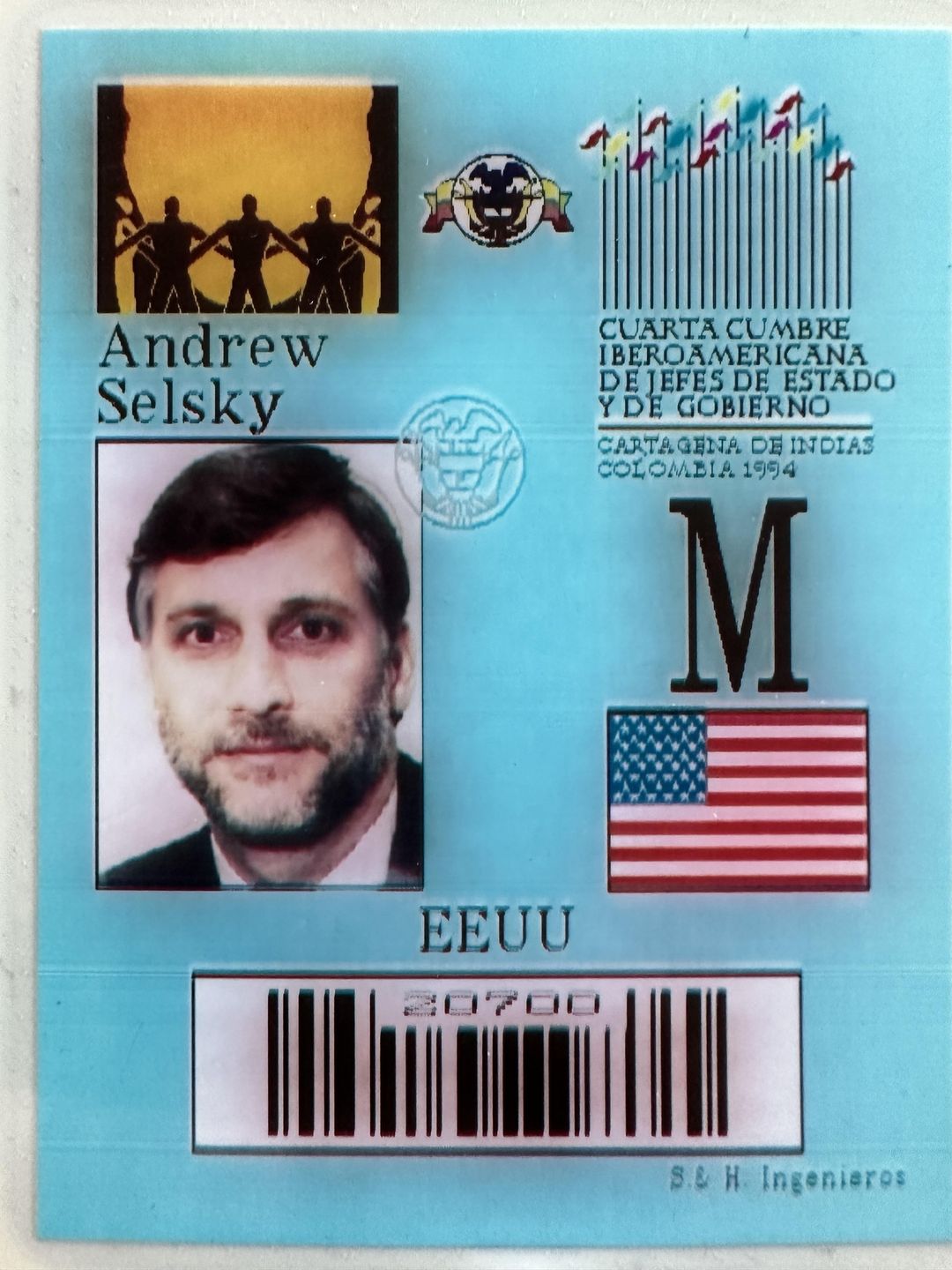
-Newsman, Bogota, Colombia. I was made acting COB after a few weeks and then formally promoted a few months later. Memorable trips included coverage of the U.S. military intervention in Haiti in 1994 and Hurricane Luis, a Category 4 storm that caused lots of damage in the Caribbean.
-Bureau chief for Spain and Portugal. I wrote about everything from bungling clandestine government kidnapping squads that targeted Basque separatists to the very long, and continuing, effort to build the fabulous Sagrada Familia cathedral in Barcelona. I also went to Afghanistan to cover the Taliban's first takeover of the country and continuing combat with the Northern Alliance.
| 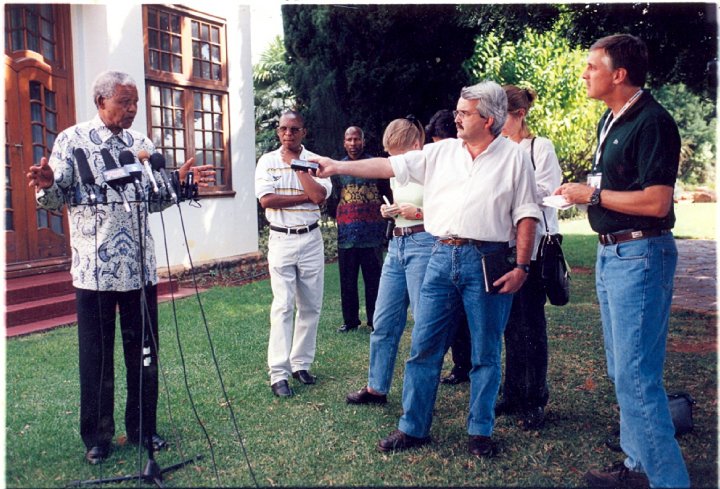 | Andrew Selsky, on the right, speaking with South African President Nelson Mandela during an impromptu press conference in Pretoria. Photo credit: Zoe Selsky | 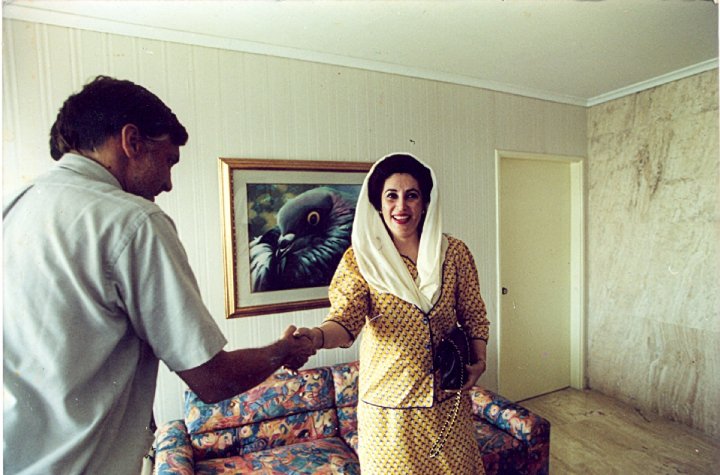 | |
Andrew Selsky greeting Prime Minister of Pakistan Benazir Bhutto before an interview at a non-aligned nations summit in Cartagena, Colombia. Photo credit: Roger Richards.
-Newsman, Johannesburg, South Africa. I covered the country's transition from apartheid to a multi-racial democracy under President Nelson Mandela and the terrible AIDS pandemic. I reported on developments throughout southern Africa, including assignments in Mozambique, Angola and Zimbabwe.
-Bureau chief, Bogota. I returned to Colombia just as the Clinton administration's $7 billion aid package, called Plan Colombia, to help the government battle powerful leftist rebels was getting underway.
-Bureau chief for the Caribbean, San Juan, Puerto Rico. Main coverage included the U.S. military prison at Guantanamo and uncovering secrets about who was being held there and why and the conditions there. Turmoil in Haiti and hurricanes were also prominent.
-Africa regional editor for text, in Johannesburg. I was in charge of the Africa Desk and all the bureaus, staffers and stringers in sub-Saharan Africa. Responsible for the news report, coordinating with photo and TV colleagues throughout Africa and their top managers in London. Shared responsibility for the safety of staffers and stringers.
-Correspondent, Salem, Oregon. I've covered politics, the pandemic, the state's legalization of recreational marijuana and decriminalization of hard drugs, right-wing extremism, etc., and contributed reporting and was the lead writer for several major national and international stories.
What was the biggest story or stories you covered or handled?
The shooting down of a clandestine U.S. flight in Nicaragua that was illegally delivering weapons to Contra rebels, which led to the Iran-Contra scandal. The killing of Medellin cocaine cartel chief Pablo Escobar. The Taliban imposition of strict Islamic rule. The death of Nelson Mandela. The storming by the Colombian military of a safe haven that the president had provided to rebels. The failed three-day coup against Venezuelan President Hugo Chavez.
Who played the most significant role in your career and how?
International Editor Tom Kent brought me to the world/foreign desks and later sent me overseas as a staff foreign correspondent and supported me throughout. There are so many other people and mentors who played roles and to whom I am indebted.
Would you do it all over again- or what would you change?
I achieved my dreams and went way beyond. I am so grateful for that.
What’s your favorite hobby or activity?
Tennis.
What’s the best vacation trip you’ve ever made?
This is maybe your toughest question! I asked my wife about this and we recall some fantastic vacations. It's impossible to choose one, so I will list only the most recent one, from this summer, that was fantastic: A few days in Paris, then Aix-en-Provence, then driving around Scotland (staying in Edinburgh, the Isle of Skye and the Highlands).
| 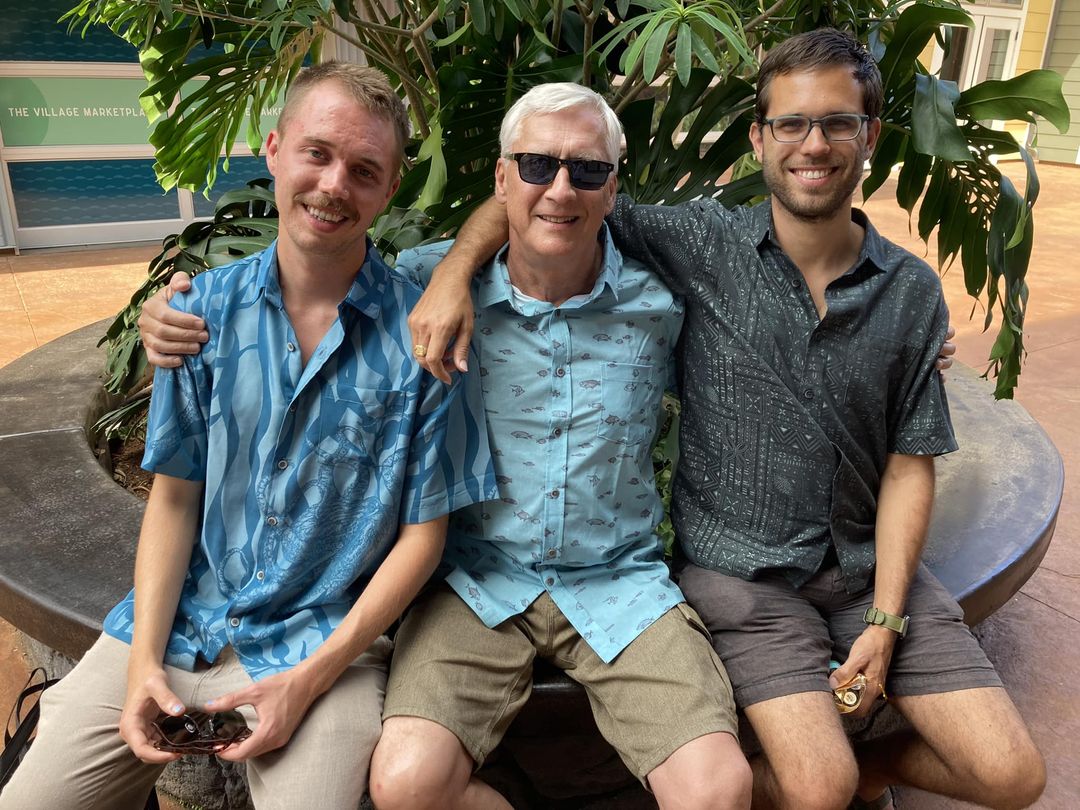 | |
Andrew with sons Sam (on the right) and Blaine in Hawaii last year. Photo by Zoe.
Names of your family members and what they do?
The spouse of an APer is also AP, especially for foreign service journalists. They have to deal with moves to other countries and all that entails. So my retirement from AP is as much Zoe's as it is mine. She was there throughout, hearing about good times on the job and not so good ones. Zoe was a teacher when I met her in 1985. Along the way, she became a successful photojournalist. In our move to San Juan, she went back to teaching. She currently is a high school teacher for English language learners. Our older son Sam, a PhD candidate in political science at the University of Texas, recently moved back to Seattle (where he graduated from the University of Washington) after enduring enough hot summers in Austin and will continue long-distance. Our younger son Blaine lives in Los Angeles and is an editor and writer for a company that prepares fund-raising messaging for non-governmental organizations.
What’s next?
My immediate plans for retirement are more tennis and learn more French, and to hold off on making plans for a while. I’m sure there will be a writing project or two down the road. There will be more travel, especially in the summers when Zoe is free, and then more year-round after Zoe retires in four years.
Andrew Selsky’s email – aselsky@ap.org
Remembering Gene Lahammer
John Dowling - Getting to know and work with Gene Lahammer was a highlight of my brief tenure as Minnesota news editor in the early 1990s. By then he was long established as one of the top journalists at the Capitol, teamed with correspondent Mary Sandok. What Gene didn’t know about Minnesota government and politics wasn’t worth knowing; all of us drew on his knowledge regularly. And he was the kindest, most genial, most dedicated person and journalist. At first, I thought he was too nice to be a political reporter. But I was from Chicago and this was Minnesota. Condolences to his family, friends and the many colleagues who will remember him fondly.
-0-
Diane Ferguson – daughter of the late Topeka AP correspondent Lew Ferguson - We are so sad to hear if the passing of our dad’s longest friend. They knew each other since St. Louis Park, Minn., days when they raised babies together. My parents were the godparents of their eldest son Doug. They continued their friendship into their 80s when Doug and his family incidentally ended up living about two blocks from me in Manhattan Beach, Calif., and our babies went to each other’s birthdays. They enjoyed talking and going to Uncle Bills restaurant for pancakes where the continued their political talks to the end.
A visit to Forum Anja Niedringhaus
| 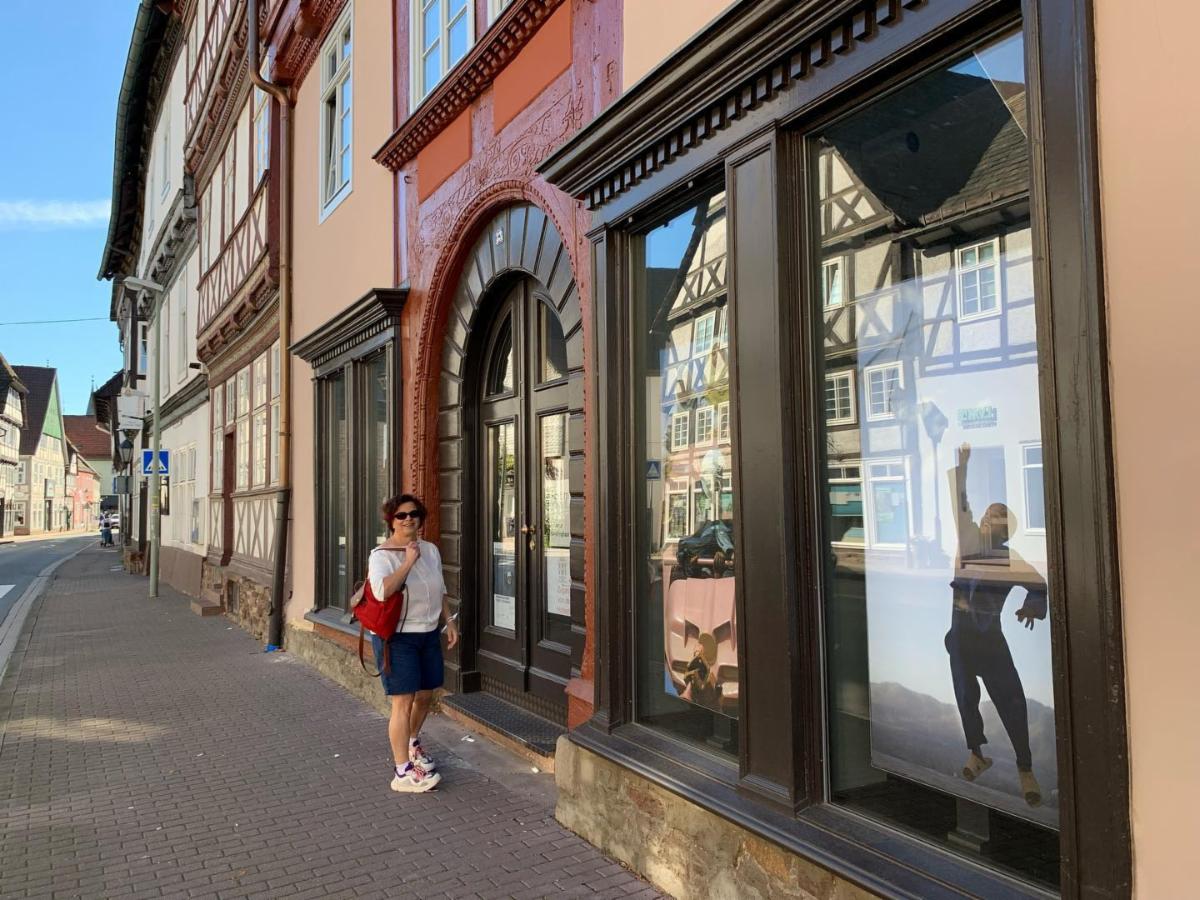 | 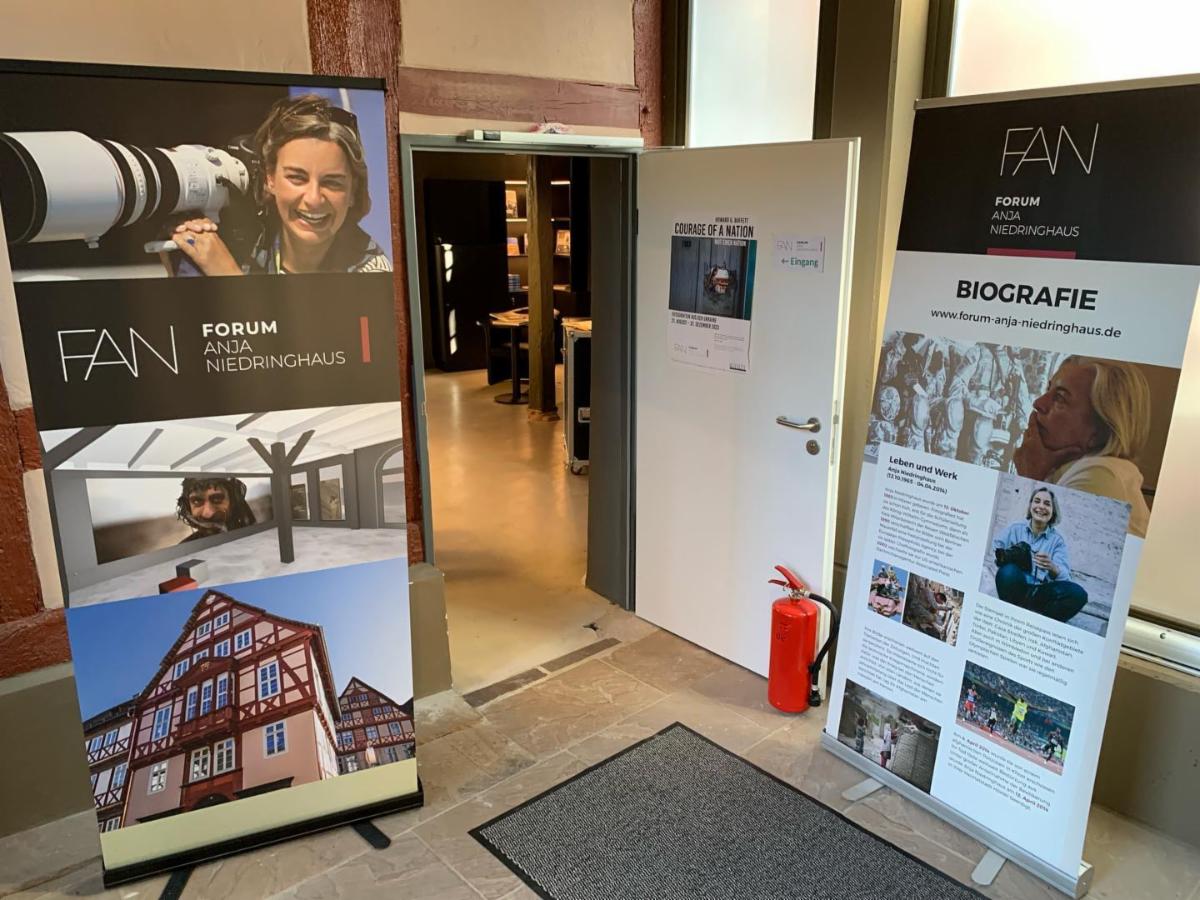 |  | |
Donna Abu-Nasr – AP newswoman from 1987-2011, in Beirut, Gaza, Washington DC, Cairo and Riyadh, where she opened AP’s first office in Saudi Arabia in 2008 - After reading about the opening of the Forum Anja Niedringhaus in Paul’s newsletter a few months ago, I decided to go to Höxter to visit the place and pay my respects to Anja. She and I didn’t really know each other. We met late January 2014 while we were both covering the Syrian peace talks in Geneva. I was with Bloomberg then and had stopped by the AP corner to say hello to Zeina Karam, who was at the time a news director based in Beirut. Anja and I exchanged contacts and promises to get in touch. A little over two months later, she was killed by an Afghan police officer in Khost.
Almost all of my German friends had not heard of Höxter. I later found out it’s a small town in eastern North Rhine-Westphalia with a big (UNESCO World Heritage) castle … and a serial killer who’s story is still in the news. And it’s beautiful. The journey from my home in Berlin took nearly 9 hours, thanks to Deutsche Bahn’s unreliable service. Upon arrival, I went to Anja’s final resting place, where I ran into residents who remember her fondly and who still feel the pain of her loss. On my second day, I stopped at the forum in a beautiful, historic building. It was touching to see the pictures she has taken, where her passion for her work is clearly reflected, and pictures of her smiling face all over the place.
I wish we’d had more than those few minutes together.
More of your Jimmy Buffett memories
Adolphe Bernotas - Until time or decline robs Marguerite and me of dancing, Jimmy Buffett will sing for our rumba.
Whenever we find music and a few square feet of floor, we ask for "Margaritaville," perfect rhythm for our favorite dance.
-0-
| |
|
Chris Carola - Fittingly, I was at my beach rental in Westport, Massachusetts, over the Labor Day weekend when I woke up to the news that Jimmy Buffett had died the night before. During 30-plus years of vacationing on Horseneck Beach, listening to his music was always part of our daily routine, as was taking photos of the spectacular late-summer sunsets that rival Key West's, Buffett's longtime haunt.
I was a Parrot Head before the term was coined, wearing out Buffett albums and cassette tapes and CDs, visiting Key West and his Margaritaville bar, going to his concerts, etc. The pre-concert tailgate scenes became legendary, outdoing any big-time college football or NFL games I have attended.
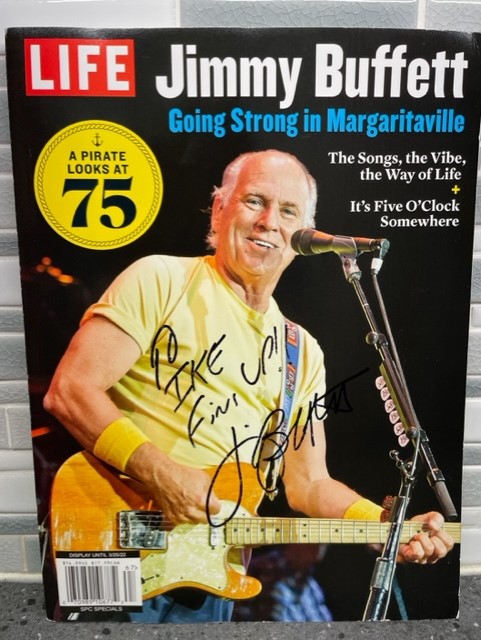
When Life published a special edition on Jimmy turning 75, I bought a copy and mailed it to a longtime friend from our college days who not only is a big fan of Buffett's music, he also had a connection to one of the entertainer's employees. I asked my buddy to send it to his connection for Buffett to sign, and requested that he sign it to "Ike" -- the nickname my friend bestowed on me at college 40-plus years ago.
It took a while, but last summer the magazine arrived in the mail, signed by Jimmy Buffett to Ike (see attached photo). Thanks for the great memories, Jimmy, and the autograph.
FYI, I believe that Buffett's last name may be the most misspelled in the history of popular American music. The last T often has been left off in way too many media stories, marketing promotions, press releases, social media postings and, unfortunately, the occasional AP story.
It must have been a common mistaken from the start of his music career, because he jokes about it in his cover of "On A Slow Boat To China" from the 1982 album "Somewhere Over China." At the start of the song, an MC in the grand ballroom of a cruise ship "proudly presents our boy singer: Jimmy Boofey."
-0-
| |
|
David Powell - Here’s the backstory to Bill Kaczor’s account yesterday of singer and songwriter Jimmy Buffett performing a duet with then-Florida Gov. Bob Graham in 1984 at the Capitol Press Corps Skits in Tallahassee:
In 1981, Buffett had emerged as a Florida-based musical talent and a cultural figure. His signature song “Margaritaville” had been a big hit a few years before. A devoted environmentalist and ardent Democrat, Buffett accepted an appointment from Graham as chair of the newly formed Save the Manatee Club. Saving the endangered mammal was a cause that Buffett actively served for many years.
I was correspondent in the Tallahassee bureau in 1981 and covered Graham’s press conference announcing Buffett’s enlistment in the campaign to save Florida’s official state mammal. Graham was in his first term as governor and had made lots of political hay fighting Florida’s epidemic of illegal drug smuggling; he had been chief advocate for a draconian bill that imposed minimum-mandatory sentences for drug-related crimes. Of course, Buffett’s reputation as a user of recreational user of illegal drugs was well established on the basis of his songs and his patter at concerts.
At the press conference, Buffett dazzled everyone. Graham reveled in Buffett’s reflected star power. I knew many of the starstruck reporters were Buffett fans—as was I. But I had to ask Graham the obvious question: Given the governor’s concern about illegal drugs in Florida, how could he appoint to a position of public responsibility a singer who glorified the use of illegal drugs?
You could have heard a pin drop. Buffett had this deer-in-the-headlights expression on his face but didn’t say a word. The governor, as astute a fielder of reporters’ questions as I ever saw, knew that the only answer that would be reported would be the one he gave. So, he dissembled: “David, you obviously don’t understand the lyrics in Jimmy’s songs. They’re about the hopelessness and despair of drug use.”
It became a running joke between Graham and me, and as Bill Kaczor reported yesterday, led to Buffett and Graham performing a role-switching duet at the 1984 skits, a ritual of reporters lampooning politicians to raise money for journalism scholarships. In their surprise counter-skit, Graham appeared as a dissolute singer and Buffett dressed in Graham’s trademark uniform, a navy-blue suit, white shirt, and red Florida tie for their irreverent rendition of “Tallahasseeville.” Well-briefed by Graham and his staff, Buffett called me out by name during the song. So he got the last laugh.
Graham finished his second term as governor in 1987 and served three terms in the Senate while I went to law school and then practiced law in Tallahassee for 30 years. Our paths crossed often. Each time Graham saw me in the audience he made a point of calling me out and giving an amusing account of that 1981 press conference, typically embellished with hilarious but imagined details of the original event. Graham even did it when my wife and I had a re-election fund-raiser for him in our home. It was always a crowd-pleaser, so Graham got the last laugh too.
-0-
Carl P. Leubsdorf - Noting Bill Kaczor's comment, I saw Jimmy Buffett once at an event in Miami for his good friend, Gov. (later Sen.) Bob Graham. Their duet was of "Tallahasseeville" was priceless.
Pronunciation brings a smile
Steven Anderson - The AP's On This Day in History pronouncer for Polish boxer Zbigniew Pietrzykowski made me smile: (Zuh-BIG’-nee-ehf pee-eht-chah-KAHF’-skee).
So happens I lived in Warsaw for a time, working for an English-language business paper. DYK that the third-largest city in Poland, Lodz (Łódź) is pronounced Wooodszh? Such a language! One Polish staff member said, "Even we have trouble with it sometimes."
Dobry wieczór (DOH-bree Vee-YET-tchohr),
- Steven Anderson
| |
Connecting wishes Happy Birthday | |
|
Stories of interest
Anderson Cooper Is Still Learning to Live With Loss (New York Times Magazine)
|  | |
By David Marchese
Photograph by Mamadi Doumbouya
For decades, Anderson Cooper, 56, has been a steady, humane and comparatively calm presence on TV news. But the longtime host of CNN’s “Anderson Cooper 360°” has recently entered an interesting and, in its way, fruitful period of emotional and professional flux. It started last year with “All There Is With Anderson Cooper,” his podcast about grief. (When Cooper was 10, his father, Wyatt, died from a heart attack; his older brother, Carter, died from suicide when they were both in their early 20s; his mother, Gloria Vanderbilt, died at 95 in 2019.) In doing so, he realized how little he had allowed himself to feel the losses and how much more feeling he still had to do. (Accordingly, a second season will air this fall.) He also spent time writing “Astor,” an upcoming nonfiction book about the storied, dynastic American family, which is a thematic follow-up to his best-selling 2021 book about his mother’s storied, dynastic American family, “Vanderbilt.” (The two books were written with Katherine Howe.) On top of all that, he and his colleagues at CNN underwent the brief and tumultuous tenure of its chairman and chief executive Chris Licht, who was fired in June after only 13 months on the job. “It all makes sense in my head,” Cooper says, about the twists and turns of his career. “Though it may not make much sense on paper.”
Read more here.
-0-
How one reporter covers the US Open for newspapers all over the country (Poynter)
By: Pete Croatto
Michael J. Lewis annually covers the U.S. Open, professional tennis’ fourth and final grand slam of the year. The Providence Journal puts in for — sponsors — his credential. Once among the throngs in Queens, New York, Lewis could also be writing on deadline for The Kansas City Star. Or The Cincinnati Enquirer. Or a small paper in Wisconsin that will only remember to pay him when snow hits the ground.
Should a Rhode Island story emerge, Lewis can pitch Bill Corey, the Journal’s sports editor. If Corey is game, Lewis will add it to the Word doc of assignments and leads that resides in his email. This is what will keep a one-man news service humming for three weeks.
Every August, Lewis pores over the Open’s participants — players in qualifying rounds, juniors — to see who’s playing and where they live. Then he matches players’ hometowns or colleges to local papers and promotes his strengths: He lives in Port Washington, New York, a 30-minute train ride to the USTA Billie Jean King National Tennis Center in Queens. An editor doesn’t have to pay for travel or rely on just-the-facts, ma’am wire copy — if there is any. He’s experienced. And he works cheap, which he stresses in his pitch. Last year, Lewis wrote 13 stories for nine papers and earned a little shy of $1,100 in addition to covering the Open’s juniors tournament for the International Tennis Foundation.
Read more here. Shared by Len Iwanski.
-0-
Disney, Spectrum direct customers to other TV services as dispute keeping ESPN off air continues (AP)
By DAVID BAUDER
NEW YORK (AP) — Both sides of a dispute that has left nearly 15 million cable TV subscribers without ESPN or other networks affiliated with The Walt Disney Co. are directing customers to other services where they can watch television.
The offers speak to the unusual nature of the business dispute between Disney and Charter Communications, and doesn’t auger a quick resolution.
Charter is telling its Spectrum TV customers about a special deal being offered by the Fubo live television streaming service to get two months at discounts of 25% or 30%, depending on the plan.
“I’ve covered carriage disputes for more years than I would like to remember, and I don’t recall a TV provider ever offering its customers a discount to another TV provider during a channel blackout,” wrote journalist Phillip Swann, who runs tvanswerman.com.
Read more here.
-0-
NPR CEO John Lansing will leave in December, capping a tumultuous year (NPR)
David Folkenflik
NPR chief executive John Lansing says he intends to retire at the end of 2023. His four-year tenure will be defined by his handling of the extreme challenges of the pandemic, a racial reckoning, and headwinds in the podcasting industry that led to severe layoffs.
"I haven't accomplished everything I wanted to accomplish, but I feel good about the time I had here," Lansing says in an interview.
Lansing says the network is currently back in the black, stabilized in part by additional subsidies from the NPR Foundation. And he says it's poised to prosper after making tough but necessary moves, including the job cuts and a reorganization of the network's executive ranks.
Read more here. Shared by Richard Chady.
| |
Today in History - Sept. 6, 2023 | |
|
Today is Wednesday, Sept. 6, the 249th day of 2023. There are 116 days left in the year.
Today’s Highlights in History:
On Sept. 6, 1901, President William McKinley was shot and mortally wounded by anarchist Leon Czolgosz (CHAWL’-gawsh) at the Pan-American Exposition in Buffalo, New York. (McKinley died eight days later.)
On this date:
In 1909, American explorer Robert Peary sent a telegram from Indian Harbor, Labrador, announcing that he had reached the North Pole five months earlier.
In 1943, 79 people were killed when a New York-bound Pennsylvania Railroad train derailed and crashed in Philadelphia.
In 1949, Howard Unruh, a resident of Camden, New Jersey, shot and killed 13 of his neighbors.
In 1972, the Summer Olympics resumed in Munich, West Germany, a day after the deadly hostage crisis that left eleven Israelis, five Arab abductors and a West German police officer dead.
In 1975, 18-year-old tennis star Martina Navratilova of Czechoslovakia, in New York for the U.S. Open, requested political asylum in the United States.
In 1991, the Soviet Union recognized the independence of Lithuania, Latvia and Estonia.
In 1997, a public funeral was held for Princess Diana at Westminster Abbey in London, six days after her death in a car crash in Paris. In Calcutta, India, weeping masses gathered to pay homage to Mother Teresa, who had died the day before at age 87.
In 2001, in a dramatic shift, the Bush administration abandoned the Clinton-era effort to break up Microsoft.
In 2002, meeting outside Washington, D.C. for only the second time since 1800, Congress convened in New York to pay homage to the victims and heroes of September 11.
In 2006, President George W. Bush acknowledged for the first time that the CIA was running secret prisons overseas and said tough interrogation had forced terrorist leaders to reveal plots to attack the United States and its allies.
In 2007, opera star Luciano Pavarotti died in Modena, Italy, at the age of 71.
In 2013, NASA’s robotic lunar explorer, LADEE, rocketed into space.
In 2017, Hurricane Irma, the most powerful hurricane ever recorded in the Atlantic to that point, pounded Puerto Rico with heavy rain and powerful winds; authorities said more than 900,000 people were without power.
In 2018, actor Burt Reynolds, one of Hollywood’s biggest stars of the 1970s in films including “Deliverance” and “Smokey and the Bandit,” died at age 82.
In 2021, actor Michael K. Williams, best known for his role on “The Wire,” was found dead in his New York apartment at age 54.
In 2022, Liz Truss began her tenure as U.K. prime minister. She would resign just 49 days later.
Today’s Birthdays: Comedian JoAnne Worley is 87. Country singer David Allan Coe is 84. Rock singer-musician Roger Waters (Pink Floyd) is 80. Actor Swoosie Kurtz is 79. Comedian-actor Jane Curtin is 76. Rock musician Mick Mashbir is 75. Country singer-songwriter Buddy Miller is 71. Actor James Martin Kelly is 69. Country musician Joe Smyth (Sawyer Brown) is 66. Actor-comedian Jeff Foxworthy is 65. Actor-comedian Michael Winslow is 65. Rock musician Perry Bamonte is 63. Actor Steven Eckholdt is 62. Rock musician Scott Travis (Judas Priest) is 62. Pop musician Pal Waaktaar (a-ha) is 62. Former New Jersey Gov. Chris Christie is 61. Television journalist Elizabeth Vargas is 61. Country singer Mark Chesnutt is 60. Actor Betsy Russell is 60. Actor Rosie Perez is 59. R&B singer Macy Gray is 56. Country songwriter Lee Thomas Miller (Songs: “The Impossible” “You’re Gonna Miss This”) is 55. Singer CeCe Peniston is 54. Actor Daniele Gaither is 53. Actor Dylan Bruno is 51. Actor Idris Elba is 51. Actor Justina Machado is 51. Actor Anika Noni Rose is 51. Rock singer Nina Persson (The Cardigans) is 49. Actor Justin Whalin is 49. Actor Naomie Harris is 47. Rapper Noreaga is 46. Actor Natalia Cigliuti is 45. Rapper Foxy Brown is 45. Actor Howard Charles is 40. Actor/singer Deborah Joy Winans is 40. Actor Lauren Lapkus is 38. Rock singer Max George (The Wanted) is 35.
| |
Got a story or photos to share? | |
|
Connecting is a daily newsletter published Monday through Friday that reaches more than 1,800 retired and former Associated Press employees, present-day employees, and news industry and journalism school colleagues. It began in 2013. Past issues can be found by clicking Connecting Archive in the masthead. Its author, Paul Stevens, retired from the AP in 2009 after a 36-year career as a newsman in Albany and St. Louis, correspondent in Wichita, chief of bureau in Albuquerque, Indianapolis and Kansas City, and Central Region vice president based in Kansas City.
Got a story to share? A favorite memory of your AP days? Don't keep them to yourself. Share with your colleagues by sending to Ye Olde Connecting Editor. And don't forget to include photos!
Here are some suggestions:
- Connecting "selfies" - a word and photo self-profile of you and your career, and what you are doing today. Both for new members and those who have been with us a while.
- Second chapters - You finished a great career. Now tell us about your second (and third and fourth?) chapters of life.
- Spousal support - How your spouse helped in supporting your work during your AP career.
- My most unusual story - tell us about an unusual, off the wall story that you covered.
- "A silly mistake that you make"- a chance to 'fess up with a memorable mistake in your journalistic career.
- Multigenerational AP families - profiles of families whose service spanned two or more generations.
- Volunteering - benefit your colleagues by sharing volunteer stories - with ideas on such work they can do themselves.
- First job - How did you get your first job in journalism?
- Most unusual place a story assignment took you.
Paul Stevens
Editor, Connecting newsletter
paulstevens46@gmail.com
| | | | |