|
December 2024 Connections
Information for caregivers to help children thrive!
| |
Share Joy this Holiday Season | |
|
Sending wishes for a joyful holiday season from all of us at DFX!
During this time of year when the days are short and the nights are long, holiday traditions include ways to share the light and lift our spirits. However you celebrate, we hope your holidays are filled with joy and that you'll find ways to let your light shine bright for your loved ones!
Happy Hanukkah, Merry Christmas, and Happy Kwanzaa!
May all your days be bright!
| |
THANK YOU FOR YOUR SUPPORT! | |
As of today, we've received nearly $35,000 in donations to our year end campaign. These generous supporters are helping us bring Therapy that Fits to more children, families, and educators. If you've already given, thank you for joining us on our journey to build a brighter future. | | |
|
|
We are grateful for the opportunities we have to touch the lives of so many children and families through our services in the clinic, partnerships with schools, and outreach to caregivers and clinicians via online and in-person courses and presentations.
This year, we've seen more than 470 children in our clinic and impacted the lives of literally thousands more though our other programs.
| |
Strengthening Connections Through Mindful Communication | |
|
As the winter break from school approaches and the holiday season unfolds, it’s easy to get swept up in the hustle and bustle. But beneath the busy schedules and sparkling decorations lies an incredible opportunity: a time to connect, tune into each other, and create lasting memories.
Following on November's theme of fostering connections and calm during the busy holiday season, we are sharing tips for communicating mindfully.
| |
While the holiday season brings plenty of opportunities to connect with loved ones, it can also present communication challenges that cause stress. Whether you're engaging with family, friends, or colleagues, small tweaks to your communication habits can increase understanding, ease tension, and foster deeper connections. | |
Here are some simple strategies to practice: | |
1. Listen to Understand, Not to Respond | |
Stephen Covey famously said, "Listen with the intent to understand, not the intent to respond." When someone is speaking, focus fully on their words, tone, and body language instead of formulating your reply. Show engagement with eye contact, nods, and brief affirmations like "I see" or "That makes sense." Asking thoughtful follow-up questions keeps the dialogue flowing and demonstrates that you value their perspective. | |
2. Be Mindful of Your Tone | |
|
How you say something often matters more than what you say.
Maintain a tone that conveys kindness and curiosity, particularly in challenging moments. If emotions start running high, pause and take a deep breath to steady yourself. This can help you communicate calmly and prevent conflict from escalating.
| |
|
3. Read the Room
Pay attention to nonverbal cues.
| |
If someone seems distracted - fiddling with their phone, turning away, or appearing disengaged - it's a good moment to reassess. Ask yourself: "Am I dominating the conversation?" "Do my listeners seem interested in what I am saying?” If the answer is no, pivot: invite them to participate, ask them to share their experiences and opinions. Empathy begins with understanding and adjusting to your audience's needs. | | |
|
|
Everyone appreciates feeling acknowledged. During conversations, take a moment to express thanks or appreciation, whether it's a simple "Thanks for sharing that" or "I'm so glad we got to talk." These small gestures can create a warmer, more positive atmosphere and strengthen your bonds with others.
| |
This holiday season, practice these four strategies: listen attentively, speak kindly, tune into nonverbal signals, and show appreciation. Doing this will help you navigate social interactions and build meaningful connections. | | |
|
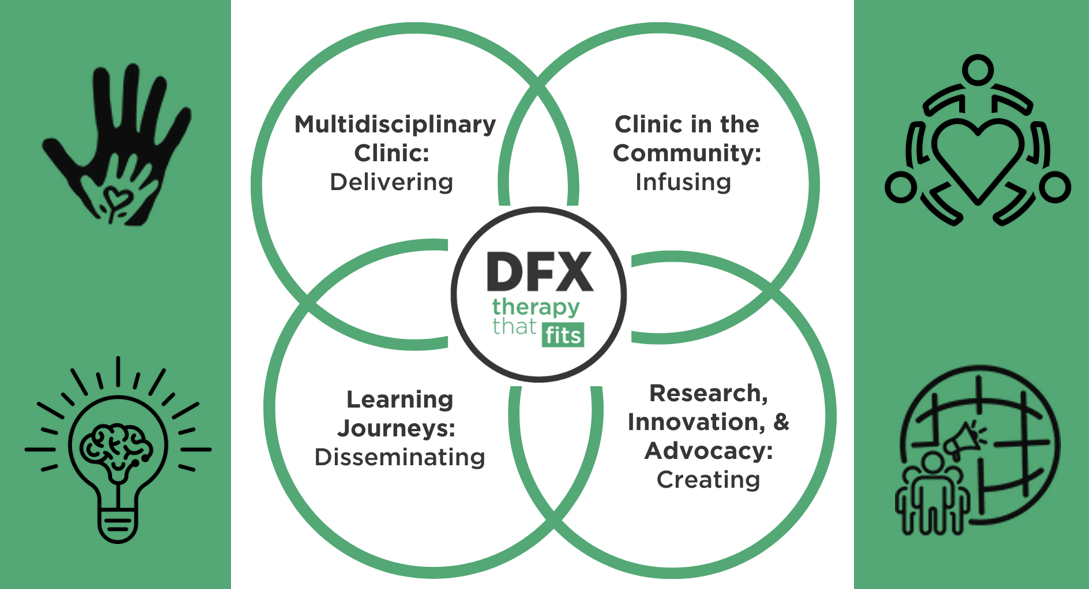
During this season of giving and reflection, we hope you will consider supporting our work. Our multidisciplinary team takes an individualized, strengths-based approach which we call Therapy that fits to helping children who are neurodiverse navigate the world around them. DFX is building a culture of belonging in which people of all abilities can feel understood, be supported, and thrive. | |
DFX is working to create systemic change by establishing a culture of engaged belonging in which children of all abilities and backgrounds will thrive. | | | | |