Best Practices for Teachers
|
This “best practices” list will grow over time as you and others send recommendations of what has proven successful.
Last Updated October 2018
|
|
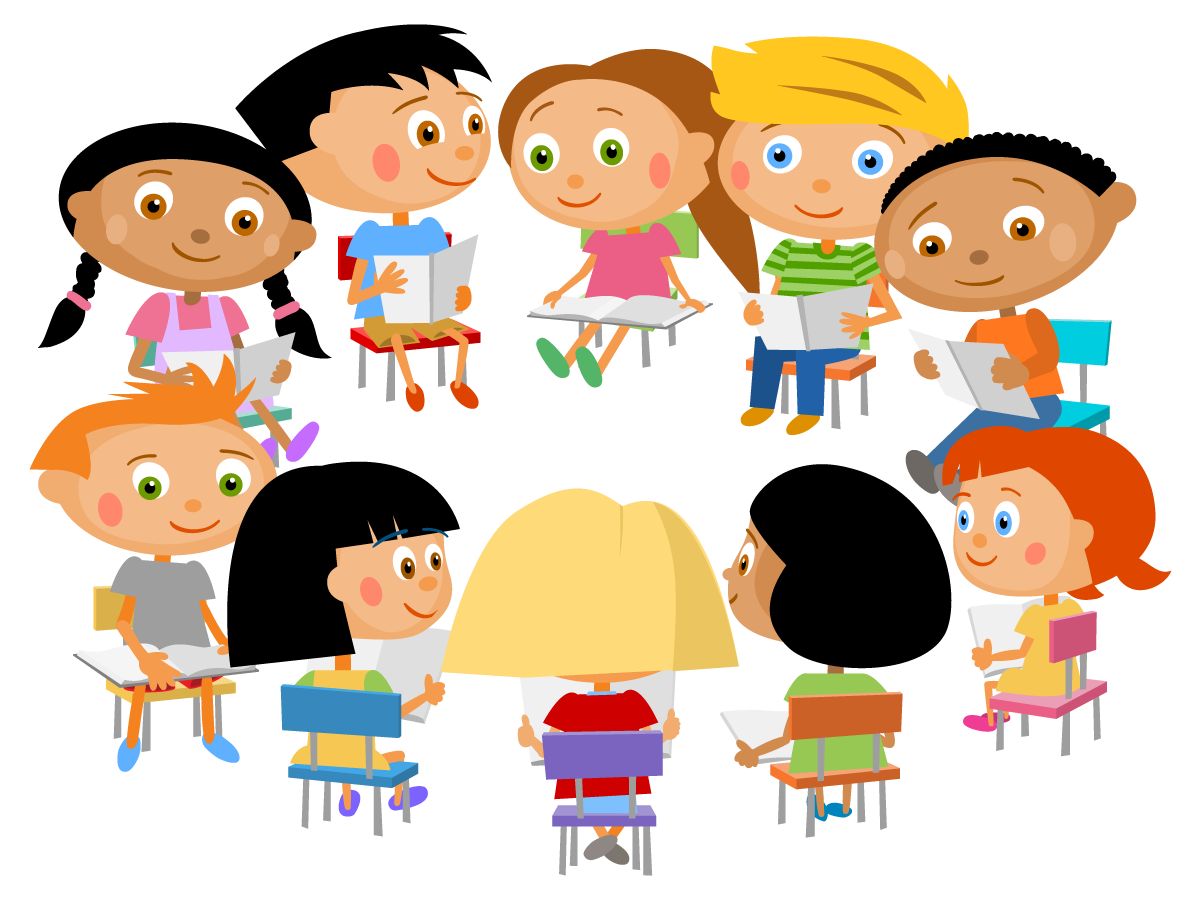
I learned about circle time from, Deborah Hungerford, a fifth grade teacher at Springhill Elementary School in Lafayette. She starts every class with circle time and has for twenty-eight years. Of all the tools available to a teacher, circle time seems to me to be the one with the greatest potential impact on a student’s compassion and empathy, particularly the way Deborah conducts hers.
Deborah shared her advice and recommendations;
“At the beginning of the school year in addition to setting goals, rules and expectations for my class I also begin preparing my students for daily Circle. This practice is modeled after the TRIBES Program, by Jeanne Gibbs. I received training in Tribes and Circle at the beginning of my teaching career and I have continued to incorporate Circle Time into my daily routine for the past twenty-eight years. I feel it is singularly the most beneficial aspect in creating a community of caring, empathetic people.
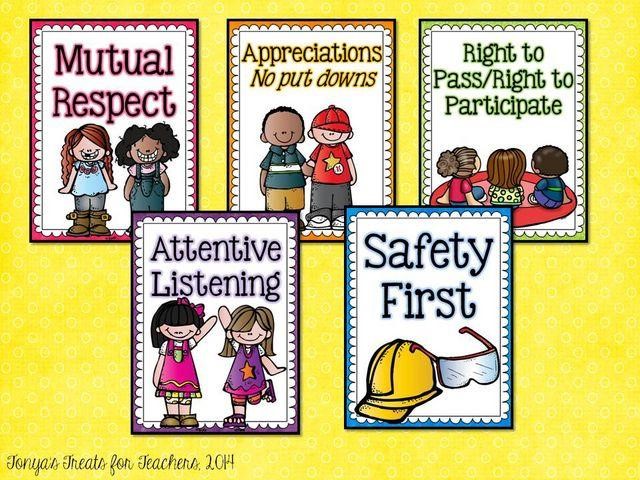
Before our first circle time I discuss and explain the following Tribes agreements:
➢ Attentive Listening
We will listen with our eyes, ears, and heart. This is the most important social skill of all to be taught and practiced.
➢ Appreciation/No put-downs. We will speak kindly to others and think of other people’s feelings.
➢ Right to pass
We have the right to pass in certain activities and know that the more we participate the more we gain.
➢ Confidentiality/Respect. We will treat people the way we want to be treated and keep what was shared in circle contained to our class.
|
My Circle time incorporates these three components:
A. "All students must share what they are feeling (this is not optional). The important lesson with this daily activity is to build their vocabulary of feeling words. Some students are not in touch with their feelings, but over the course of the school year, they begin to recognize their feelings and articulate what they are feeling with appropriate words.
B. After all students have shared their feeling they may ask questions of each other based on what has been shared (students have the option at this point to use their right to pass).
C. The third essential part of our circle time is to give appreciations. I call it ‘acts of kindness’ (This is optional but highly encouraged). We start with ‘in class’ acts of kindness and I stress that it is not appreciating friendships, but actively appreciating those little things students do for each other in the course of the school day. It could be as simple as sharing markers. It takes time for students to recognize the many simple acts they do for each other, and when they say them out loud, it is a positive and empowering experience for the both parties. I then give time for them to appreciate someone outside our classroom community. This often includes parents or coaches or others in their daily lives."
I was particularly impressed by Deborah’s requirement that students share how they are feeling every morning. I was in school for twenty years. I recall being asked my grades, my score on a test, whether my team won, whether I had scored any goals and what college I would be attending. In hindsight I was being judged and judged myself by how well I did in competing with my classmates. Not once was I ever asked how I was feeling nor do I recall asking the question myself.
I now realize how important sharing feelings among classmates is. Having feelings out in the open rather than stored inside can’t help but trigger empathy and compassion. Won’t students discover they share more in common than not and therefore be more likely to come to the aid of those in need? Looking back I realize that the greatest rewards in life come from the impact we have on the lives of others. The sooner children learn this lesson the happier and more rewarding their lives will be.
|
Thousands of schools throughout the United States, Canada, Australia and other countries have become Tribes Learning Communities, safe and caring environments in which students can thrive.
Tips for teaching the Tribe Agreements:
I have found it to be very beneficial to have the class play-act both positive listening skills and also negative listening skills. I emphasize ‘listening with the heart’. In other words, listening with empathy. This social skill is an on-going practice and it takes a lot of time for students to incorporate this trait into circle and their daily lives.
It is essential to create a safe classroom environment in order to have a genuine daily community circle time. I model positive character traits and behaviors, and over time I expect the class to develop these skills and exhibit them both in circle and in class. Circle Time provides the perfect opportunity for practice and reinforcement.
I have created a space in my room large enough for us all to sit on a carpet in a circle. In past years I have used a talking stick as it is important to have the students hold something to help ground them while talking. This year I have switched to a microphone as it has the added benefit of amplifying their soft quiet voices.
I have also started incorporating a silent mindfulness exercise time at the start of Circle. I ask the class to sit in silence and notice their breathing, their bodies, their feelings and what they are grateful for in their lives. I am gradually increasing the time and their endurance for this group silence. I have found it to be very effective in grounding the class and giving them time to consider what they are feeling and experiencing.
|
|
Their “toolkit” is described as follows;
“The Start Empathy Toolkit is the product of interviews with more than 60 educators and leading social entrepreneurs. We asked quite simply, “What works?” We wanted to know what it would take to create a classroom where kids’ social and emotional needs are met and how to cultivate the kinds of skills that are critical for success in today’s (and tomorrow’s) world. The result is not a prescription or a formula, or a silver-bullet fix. Consider this a living set of tools: tools that will grow and evolve over time, as each of us adds our own. We encourage you to think beyond your classroom walls to what it takes to mobilize your entire school community. Together, let’s creatively reimagine what change making education can look like.
The toolkit contains the combined wisdom of dozens of teachers, organizations, and people who live this everyday: tips and tools, lesson plans and examples, and, most importantly, insights that can help inform everything from how you design your classroom to your daily interactions with students and colleagues. Some exercises can be done in as little as two minutes, while others can take the form of months-long class projects, applied to a range of subjects. Others simply offer a strategy you can adapt to your existing lesson plans, and tips that are proven to improve teacher and student performance alike. Some you may be familiar with, and others may be new. We invite you to test these in your classroom, and use them to generate ideas of your own.”
|
2. Buddy Stops
An increasing number of schools are providing “Buddy Stops”, a bench or place on their campus where students can sit who need a friend. Harton Primary School in the UK selects students to serve as “playground Buddies” who are responsible for making certain that whoever goes to the Buddy Stop will have a friend. Having the students make, decorate and maintain a Buddy Stop bench would be a project they’d likely enjoy. There are also Boy or Girl Scouts who are likely to be willing to make a Buddy Stop or bench to earn a merit badge.
My father was a colonel in the United States Air Force. We moved every three or four years. Finding and establishing friends at new schools would have been much easier if all I had to do was sit on a Buddy bench.
3. Acts of Kindness Walls
Students are encouraged to observe others doing random acts of kindness and to write them on the board, or if someone is kind to them they can write the act of kindness on the board. At the end of each week someone reads a kindness note from each grade over the intercom and a student from each grade is honored for his/her act of kindness.
4.Teaching Children about Life in Other Countries
"One of my most powerful lessons is a lesson I teach about children in Guatemala that live in trash dumps. I am able to show my students pictures of families in Guatemala and how their lives are changed with the help of others. We compare how children live in other countries with how children live in the United States. We talk about how it might feel to go a whole day without food, or what it might feel like to not be able to go to school but instead stay home while your parents go to work, or what it might feel like to have to work at age seven or eight. Young children are very capable of putting themselves in the shoes of others and expressing how it might feel to live like them".
5. Slam Poetry
"This year we did Slam Poetry" and it was a huge success. Students had to write a slam poem and perform it in front of the class about something that is important to them. They had to spill their guts on stage. One student brought the whole class to tears with her tragic story of foster care. The next time she needed a pencil, ten students were begging to give her one. Another shared why she isn't in school everyday. Her anxiety keeps her home. A boy wrote about how he is "haunted by trouble" given that he is known as a trouble maker. These assignments lead to students showing compassion on a daily basis. The advice I would give to other teachers would be to incorporate empathy into your curriculum and find places that compassion is present and use those as teaching moments."
6. Peer Mediations
"There are often conflicts that arise among my students over various dramas around social media, bullying, feeling left out, etc. One of the techniques I use that does work for the most part is peer mediation. While I often lead the meditations, I utilize peers that have been trained in mediation to help facilitate the mediations. Peers often have more respect and empathy for each other than an older educator. During the meditations which we sometimes call “circles” students are encouraged to talk about the harm that was caused to them and how it made them feel. Students are encouraged to repair the harm and help move the situation forward so that everyone involved can feel heard and empathized with. The technique used to work better before social media began to dominate their social culture. Recently I find that as soon as a “circle” or “peer mediation” is complete, the students are back on social media talking about it. Until the school bans the use of phones in school, this is a major issue we will combat."
|
7. Restorative Justice Circles
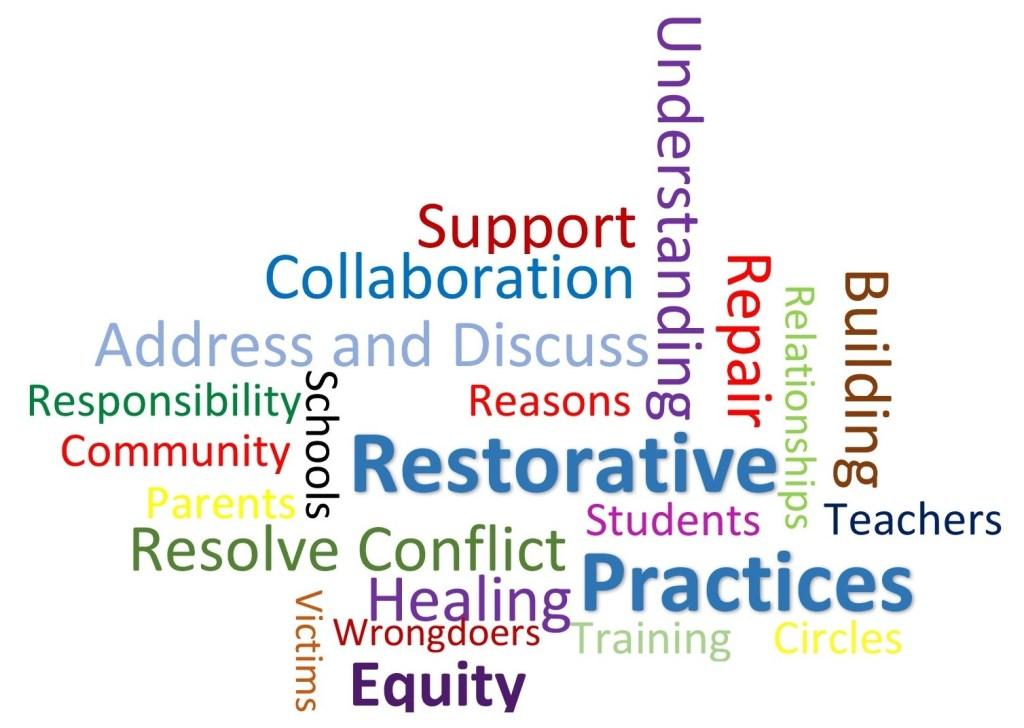
"Restorative justice takes more than two parties into account. Restorative justice does exactly that; it works with all parties involved in a harm caused. It is a specially designed program that has a training program for educators that I went to. Information about it can be found at
www.restorativejustice.org
. The training equips educators with notecards with questions on them to ask the parties involved. The training is extensive and allows educators to feel comfortable enough to run a circle that will have a positive outcome.
These restorative justice circles can also be used when the community suffers. For example, I had a ninth grader that was shot and killed this year and the students obviously had a really hard time with it. Having a “circle” was a helpful way to allow students an opportunity to express how they felt while hearing from others and encouraging empathy. The advice I would give others around teaching empathy is to not push too hard and allow students to have open forums to discuss emotions. It is also imperative to model good empathetic behavior. Telling them that “everything with be ok” when a friend has been killed or their parent disowns them is not helpful to their situation. I find that showing empathy and asking how I can help is the most useful way to model empathy. Students learn to do the same with each other. We as educators cannot always fix every situation, but sometimes showing empathy and being supportive are the most helpful things we can do".
8. Issue Bins or Boxes
“Our principal encourages teachers to conduct classroom meetings at least once a week to give students time to discuss issues or problems they are having. The topic discussed may be identified by the student, teacher, principal, playground supervisor, lunchroom aide, or other school staff. For example, if a student is having trouble finding someone to play with on the playground, the student would either tell a teacher or playground supervisor or write it on a note and deposit it into the “Issue Bin” in the classroom. The next time a meeting is held, the issue would be brought up and discussed. If the issue is pressing, the teacher may hold an impromptu meeting rather than waiting for the regularly scheduled meeting. If there is an issue in the lunchroom, such as students throwing food, the classroom meeting may address why this is problematic for students and the lunchroom staff. This helps students see issues/problems from another person’s perspective and to think about ways to solve these problems themselves.
|
9. Monthly Meetings with Guidance Counselors
"We also have monthly lessons with the school guidance counselor. Usually the topic of these lessons is decided by the counselor, but if a class is having a particular problem, the counselor may create a lesson specific to the issue. Teachers are required to stay in the classroom during the counselor’s lesson, rather than using the time for planning or lesson preparation. Listening to the guidance counselor’s lesson is very helpful because it gives everyone (students and teachers) the same language to use to discuss or address issues.
One lesson our guidance counselor shared with our students was the concept of “warm fuzzies” and “cold pricklies.” The former are things people say that make us feel good and the latter are things people say that make us feel bad. Students practiced giving each other “warm fuzzies.” They traced their hand on construction paper and then went around the room asking five people to write a warm fuzzy or compliment on each of the paper fingers. Throughout the year, teachers could use the concept of warm fuzzies and cold pricklies to help students think about how their words or actions made others feel."
10. Games Students Can Play
While surfing the web I stumbled upon an organization, Playworks, devoted to evaluating, improving and creating games that students can play. Its services include advising individual schools and coaches on what games are best under different circumstances and to achieve prescribed objectives.
What is particularly impressive about this organization is that it offers a “Playbook” that can be downloaded without charge and has offices located throughout the country enabling it to service many schools and school districts. The Playbook is 347 pages and includes an index of games at the end.
11. Let them eat cake
“In the Danish education system empathy is considered as important as teaching math and literature, and it is woven into the school’s curriculum from pre-school through high school. Included within their curriculum is Klassen Time (“Class Time”). Klassen time is described by Jessica Alexander, author of “The Danish way of Parenting”;
“The Class’s Hour” is set for a special time once a week, and it is a core part of the curriculum. The purpose is for all the students to come together in a comfortable setting to talk about any problems they may be having. Together, the class tries to find a solution. This could be an issue between two students or a group, or even something unrelated to school at all. If there are no problems to be discussed, then they simply come together to relax and hygge — or cozy around together.
This is where the “Klassen Time kage,” or “the Class Hour cake,” comes in. It’s a simple cake that students take turns baking every week for the occasion. If they don’t want to bake, they can bring in any kind of hyggelige (cozy) snack to enjoy together after the talk. The “Class Hour cake” is such an integral part of Danish culture that it even has its own recipe.
During the Class’s Hour, the teacher brings up any issues they may have observed, in addition to what the students themselves mention.
12. Have a conversation with someone you don’t know.
Have students pair up with a student they don’t know and provide the pairs with five questions to ask each other. Each student introduces their partner to the class, speaking as if they were their partner, while the rest of the class looks at the student being introduced. This exercise “helps students to see each other more deeply.”
13. Alliteration Nicknames
a. Ask students what characteristics or words describe a person of good character. Brainstorm ideas and write them on the board.
b. Tell students to think of a word that matches a character attribute and that begins with the same letter as their first name. This can be done individually, in pairs, or in groups with others whose first names begin with the same letter. Share an example using your own name. For example: Patient (Miss) Penny. Circulate the room and help students or groups as necessary.
c. Once students have chosen their attribute, have students say the word and their name together. For example, student Allie may choose the word altruistic. She would say aloud, “altruistic Allie.”
d. Tell students they just created alliteration. Explain that alliteration is what you get when a group of words begins with the same letter, (e.g., funny Frida; slow, silly snail).
e. Tell students that one of the best ways to develop a habit or practice a behavior regularly is to be reminded of it often. To remind each other to be more like their chosen attribute, the students and teacher should call each other by their alliteration nicknames.
f. To remember everyone’s new nicknames, tell students they will create nameplates.
g. Distribute a sheet of heavy stock paper and coloring utensils to each child and have the students create nameplates to place on their desk.
h.
Call students by their nicknames for the day (or the week, month, or school year) and remind them to think about living up to their chosen nicknames.
14. Use one another’s name in conversation and debate.
“Change can begin with a simple modification of daily routine. At Brooklyn’s High School of Telecommunication Arts and Technology, every teacher and student is required to use each other’s name in conversation and debate.“Kindness is the operating order for our school,” says assistant principal Jeffrey Osler. “All interaction should reflect that. When you use a person’s name, it shows respect to them and their ideas, no matter the context.”
15. A day in their shoes - literally
Education expert Molly Barker created an easy tool for younger kids to learn about empathy and compassion: Simply take a few pairs of shoes and label them. “Poor,” “rich,” “boy,” “girl,” “homeless,” “physically disabled,” “old,” “young,” “sick,” “from a different country,” “different religion,” “different
ethnicity,” and “different political beliefs.” She then asks the child to “walk” in another person’s shoes.
|
17. Mindfulness
I'm just learning about mindfulness. A considerable number of teachers and others swear by it. Deborah Hungerford notes that she is devoting more time to mindfulness during circle time. It has been suggested that circle times begin with mindfulness as a means of quieting students and getting them to focus.
James Butler, Austin Independent School District Teacher of the Year and Pre-K teacher at Gullett Elementary School, is bringing mindfulness into all Austin classrooms with his Mindful Classrooms Curriculum.
He has 16 years teaching experience, including teaching abroad for a year in rural Namibia. Early childhood education is his passion, and seven years ago he helped establish the Pre-K program at Gullett Elementary.
Overseas, he used mindfulness as a way to relieve stress and bond with his students. Back in Austin, he started incorporating mindfulness into his daily teaching routine. In the summer of 2015, AISD Superintendent Paul Cruz learned of Butler’s Mindful Classrooms curriculum and immediately helped to get it into more classrooms in the school district. Today, Mindful Classrooms is in 45 Austin area elementary schools. That’s 250 classrooms and counting.
|
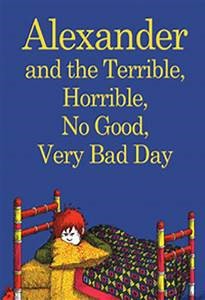
The children’s book by Judith Viorst, “Alexander and the Terrible, Horrible, No Good, Very Bad Day,” is one of Butler’s favorites to read with his students. “Everyone has bad days and makes mistakes. But can you learn from those mistakes?” That’s where the Mindful Classrooms curriculum really makes a difference. With five minutes of daily stretching and breathing practices, children are able to learn to be aware of what’s happening in the present moment, and thus are able to be more self-reliant and self-aware in potentially stressful moments.
In addition to national studies which confirm the mental and physical benefits of mindfulness, early AISD surveys show a 75% average improvement in the following categories: class atmosphere, students handling emotions, conflict resolution and teacher self-reflection. If that’s not enough, then just ask the students. One of Butler’s former students, now in third grade, shared: “Mindfulness helps me find peace and quiet.”
James Butler has uploaded videos to his YouTube channel and it is a free resource. It is recommended to watch the 5 Tips for Mindfulness Implementation video on his Mindful AISD YouTube playlist:
https://youtu.be/BQsnJfLFd5I
to get started.
18. Recommendations found in The Danish Way of Parenting:
A. “Mix children of different strengths and weaknesses and seat them accordingly. Students who are stronger academically are taught alongside those who are less strong; shier kids with more gregarious ones; and so on. This is done subtly… The goal is for students to see that everyone has positive qualities and to try to help each other reach the next level… This system fosters collaboration, teamwork, and respect.”
“Studies show that there is a huge learning curve in teaching others. Students who teach others work harder to understand the material, recall it more precisely, and use it more effectively. But they also have to try to understand the perspective of other students in order to help them where they are having trouble.”
B. Reading stories is of course a powerful means of communicating with children, enlisting emotions, feelings, observations and insights. Apparently, stories read to children in American schools are “nice stories” with happy endings while Denmark teachers read books that encompass all emotions, including negative and uncomfortable ones. Jane Alexander maintains that “dealing with reality, even at the level kids can handle, is honest and is proven to significantly improve empathy”. (page95).
C. “Children in the Danish school system participate in a mandatory national program called Step by Step as early as preschool. The children are shown pictures of kids who are each exhibiting a different emotion: sadness, fear, anger, frustration, happiness, and so on. The students talk about these cards and put into words what the child is sensing, learning to conceptualize their own and others’ feelings. They learn empathy, problem-solving, self-control, and how to read facial expressions. An essential part of the program is that the facilitators and children aren’t judgmental of the emotions they see; instead, they simply recognize and respect those sentiments.”
19. The Conversation Log – (sent to me by a teacher)
I do something I call a “conversation log.” The conversation log is a small memo notebook. At the beginning of the year I buy one for each of my students. I put their names on them. I keep them in a basket next to a mailbox (a real metal mailbox painted white with hearts on it) on a shelf. I tell students that it is a private conversation between the two of us. It is a place where they can tell me things that we don’t always have time to talk about during class. They might want to tell me about their soccer game, a Girl Scout camping trip, or a new movie they saw. But I also tell them they can tell me something they aren’t comfortable telling me in person. They might tell me that someone is picking on them, how they are feeling, or ask me for help or advice with something. Sometimes they just want to ask me questions like what my favorite food is or what is my dog’s favorite toy? They put it in the mailbox after they write me. They can do it during work on writing in Daily 5, intervention, or when they are finished with their work. I promise that I will write them back within 24 hours. I check it each night. Sometimes I just throw them in my bag, take them home, and write them back while I’m watching T.V. It is a great tool for many different reasons. I really get to know my students and they get to know me through doing this. I hate when I don’t have time to stop and listen to something they want to share with me, but with this I can say, “I really want to hear about this, can you write it in your conversation log?” They also have the opportunity to tell me when they are having problems with another student or a family member. I can get someone else involved to help if I need to.
20. No one Eats alone
This is a program initiated by and run by students to make certain no one eats alone during lunch. They not only make certain no one eats alone they also make a effort to have different groups eat together, in an effort to
|
|
Trust in Education
925.299.2010
www.TrustinEducation.org
|
|
|
|
|
|
|